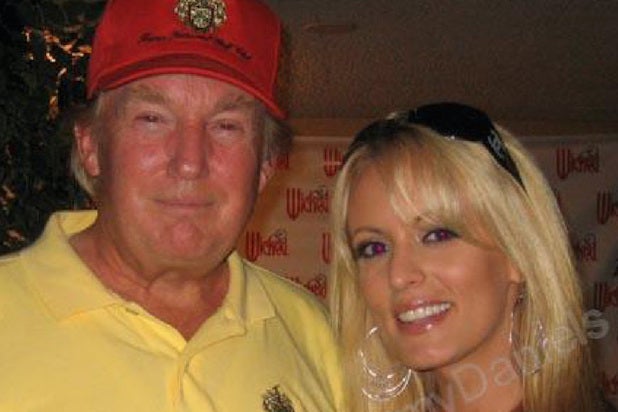
“There’s No Such Thing as ‘Free Money.'” Yes, there is, Mr. Greenhut.

Economics is a unique science.

It is the only science in which people who have no background, no education, no history, and no knowledge, feel absolutely confident in their opinions about it.

I’m sure they don’t feel confident in arguing about quantum mechanics or about relativity, or about rocket science, but when it comes to economics, everyone is an “expert” — often a laughable expert with a way-too-loud megaphone.

I suggest Steven Greenhut is one such “expert.” Here are excerpts from his recent article:

There’s No Such Thing as ‘Free Money’ or Meaningless Deficits
STEVEN GREENHUT, Reason Magazine

Vice President Dick Cheney famously said that “deficits don’t matter.”

Such conservatives weren’t interested in using federal spending to fight poverty and inequality, but they didn’t want growing deficits to curtail their military efforts in Iraq or quash their desire to step up tax cuts.

Greenhut is 100% correct about the motivations of the conservative right.

Cheney’s ideological heirs now argue that deficits are fine as long as interest rates are low and the Gross Domestic Product keeps growing.

Deficits not only are “fine,” but deficits are absolutely necessary for economic growth, and this has nothing to do with low interest rates.

Federal deficits add dollars to the economy. It is functionally impossible for an economy to grow, without the money supply growing.

In fact, the formula for Gross Domestic Product, our most common measure of economic growth, is a money measure.

GDP = Federal and Non-federal spending + Net Exports

When federal deficit spending doesn’t grow, the economy doesn’t grow. Reduced deficits cause recessions, and increased deficits cure recessions, as the following graph demonstrates:

Recessions (vertical gray bars) begin with reduced deficits; they are cured by increased deficits.

Sorry, but deficits and debt do matter.

There’s no short-term crisis, for sure, but debt “will depress economic growth over time and could potentially lead to a fiscal crisis if borrowers lose faith in the country’s ability to pay,” explained Yuval Rosenberg in The Fiscal Times.

Federal “debt” is nothing more than deposits into Treasury security accounts (T-bills et al).  The government pays back the “debt” every day simply by returning the dollars in those accounts.

And what does this phrase mean, “borrowers lose faith in the country’s ability to pay.”? Makes no sense, unless he means “lenders lose faith . . . ”

Even then, the federal government does not borrow. It accepts deposits into T-security accounts and it never touches those dollars.

The federal government, being Monetarily Sovereign, creates all the dollars it needs, ad hoc, each time it pays a creditor. The government never has any difficulty returning those dollars to the account holders.

See: It is 2019, and the phony federal debt “time bomb” still is ticking. Thursday, Jan 24 2019.

Periodically, I remind you about a disaster that was considered to be so imminent, it repeatedly was referred to as a “ticking time bomb.” I have evidence of the warning as early as 1940, and then every year thereafter.

I’m talking about the federal debt that not only was said to be a “ticking time bomb,” but “unsustainable” and “the time bomb of doom“!

Year after year, that time bomb of doom has kept ticking, and here we are, in 2019, with a  healthy economy, and still that bomb hasn’t exploded. Eighty years of warnings, eighty years of being wrong, eighty years, and people still believe the doomsday sayers.

The phony “time bomb” began to “tick” back in 1940, when the total debt was $40 Billion. Today, 80 years later, it has risen 52,500% (!) to $21 Trillion, and still it ticks.

Go to the above reference, and you’ll see that year, after year, after ridiculous year, “experts” like Greenhut repeatedly referred to the federal debt as a “ticking time bomb.”

Wrong for 80 consecutive years.

Continuing with his article:

Furthermore, he (Rosenberg) notes, debt hampers government’s ability to react to real emergencies “such as recessions, wars or natural disasters.

As debt soars, federal payments to service the debt will crowd out the government’s core spending responsibilities.

The above is a perfect example of closing one’s eyes and ignoring the reality standing before one.

Here we are, looking at 80 past years of a dramatically increasing debt (deposits), and the federal government’s continual “ability to react to real emergencies “such as recessions, wars or natural disasters.

Since 1940, America has fought dozens of wars, all over the world, had numerous recessions, and dealt with all manner of natural disasters. And today, the nation is wealthier than ever.

Explain that Messrs. Rosenberg and Greenhut.

In a way, these denials-of-the-obvious remind me of Mohammed Saeed al-Sahhaf  (aka “Baghdad Bob”). He was the Iraqui, who during Desert Storm, kept going on television to deny that American tanks were in Baghdad, while they were visible over his shoulder.

Rosenberg’s and Greenhut’s comments are that ridiculous.

And now for the source of their ignorance: They don’t understand the differences between personal financing and federal financing.

You could borrow an immense amount of money to upgrade the kitchen and take Hawaiian vacations and then claim that it doesn’t matter as long as you can cover the monthly interest payment.

But that’s a road to eventual ruin.

The federal government is Monetarily Sovereign, meaning it is sovereign over the dollar.

At the beginning of this nation’s existence, our new federal government created laws, and those laws gave the government the unlimited ability to create U.S. money.

So the government created millions of U.S. dollars — from thin air.

So long as those laws and others like them, exist, the federal government will continue to have the unlimited ability to create U.S. dollars.

Here’s how they do it:

To pay a creditor, the federal government sends instructions (not dollars) to the creditor’s bank, instructing the bank to increase the balance in the creditor’s checking account.

At the moment the bank obeys those instructions, brand new dollars are created.

So long as the federal government doesn’t run out of instructions, it won’t run out of dollars.

You and I don’t have this ability. Neither do our cities, counties, and states. And neither do France, Germany, and Italy, all of which don’t have a sovereign currency, but rather use the euro.

All are monetarily non-sovereign.

Ask Messrs. Rosenberg and Greenhut what “Monetary Sovereignty” means, and they won’t have a clue, even though it is the basis for modern economics.

Now we get to what Greenhut thinks is absolutely necessary and what he thinks, isn’t:

Some debts can’t be helped—e.g., capital expenses—but look at the nonsense that our massive federal budget is funding.

Easy debt drives easy spending. It enables our government to do things it shouldn’t do, such as wage unnecessary wars and create boondoggles like the Green New Deal or a space force.

Which capital expense “can’t be helped,” Mr. Greenhut? Building a wall on our southern border? Buiding cages to house children we have taken from their parents?

Which wars are “unnecessary” and which are necessary?

And as for the “Green New Deal,” it describes the various efforts to reduce climate change. To you, that’s a boondoggle?

We’ll end with Greenhut’s final bit of nonsense:

Deficit spending creates constant pressure for tax hikes. We shouldn’t spend what we don’t have.

“Constant pressure for tax hikes”???? You mean the recent tax cuts, that came with the billions in increased deficit spending?

Will someone please contact Messrs. Greenhut and Rosenbert with the facts so that they don’t continue to make fools of themselves.

It would be the charitable thing to do.

Rodger Malcolm Mitchell
Monetary Sovereignty
Twitter: @rodgermitchell
Search #monetarysovereigntyFacebook: Rodger Malcolm Mitchell

…………………………………………………………………………………………………………………………………………………………………………………………………………………………………………………………………………………………..

The most important problems in economics involve the excessive income/wealth/power Gaps between the richer and the poorer.

Wide Gaps negatively affect poverty, health and longevity, education, housing, law and crime, war, leadership, ownership, bigotry, supply and demand, taxation, GDP, international relations, scientific advancement, the environment, human motivation and well-being, and virtually every other issue in economics.

Implementation of The Ten Steps To Prosperity can narrow the Gaps:

Ten Steps To Prosperity:

1. Eliminate FICA

2. Federally funded Medicare — parts a, b & d, plus long-term care — for everyone

3. Provide a monthly economic bonus to every man, woman and child in America (similar to social security for all)

4. Free education (including post-grad) for everyone

5. Salary for attending school

6. Eliminate federal taxes on business

7. Increase the standard income tax deduction, annually. 

8. Tax the very rich (the “.1%”) more, with higher progressive tax rates on all forms of income.

9. Federal ownership of all banks

10. Increase federal spending on the myriad initiatives that benefit America’s 99.9% 

The Ten Steps will grow the economy, and narrow the income/wealth/power Gap between the rich and you.

MONETARY SOVEREIGNTY


Congress re. Medicare and the deficit: The easy we make impossible, but it takes longer

We already have created Medicare for seniors. The hard work was accomplished years ago. And in those years since, we have accumulated excellent knowledge in how to run a Medicare program.

Now, to create Medicare for All, we need only to do three simple things:

I. Eliminate FICA
The U.S. federal government is Monetarily Sovereign. It has the unlimited ability to create its sovereign currency, the U.S. dollar.

Unlike state and local governments, the federal government never can run short of dollars. Even if all federal tax collections fell to $0, the federal government could continue spending and paying its bills, forever.

Alan Greenspan: A government cannot become insolvent with respect to obligations in its own currency.”
Ben Bernanke: “The U.S. government has a technology, called a printing press (or, today, its electronic equivalent), that allows it to produce as many U.S. dollars as it wishes at essentially no cost.”
St. Louis Federal Reserve: “As the sole manufacturer of dollars, whose debt is denominated in dollars, the U.S. government can never become insolvent, i.e., unable to pay its bills. In this sense, the government is not dependent on credit markets (borrowing) to remain operational.”

Contrary to the popular myth, FICA does not fund Medicare. The dollars collected for FICA (and indeed, all federal tax dollars) are destroyed by the U.S. Treasury upon receipt.

The federal government creates brand new dollars, each time it pays a creditor.

And lest you believe increased deficit spending (necessitated by the elimination of FICA) would cause inflation, history says that is not so.

Federal deficit spending (red) does not cause inflations (blue)

Most inflations and all hyperinflations have been caused by shortages, (usually shortages of food and/or energy), not by excess money. These shortages often are caused by insufficient federal deficit spending.Image result for german money in a wheelbarrow

The “money-in-a-wheelbarrow” meme demonstrates a government’s response to inflation, not the cause of inflation.

1804-1812: U. S. Federal Debt reduced 48%. Depression began 1807.
1817-1821: U. S. Federal Debt reduced 29%. Depression began 1819.
1823-1836: U. S. Federal Debt reduced 99%. Depression began 1837.
1852-1857: U. S. Federal Debt reduced 59%. Depression began 1857.
1867-1873: U. S. Federal Debt reduced 27%. Depression began 1873.
1880-1893: U. S. Federal Debt reduced 57%. Depression began 1893.
1920-1930: U. S. Federal Debt reduced 36%. Depression began 1929.

II. Expand Medicare to include all age groups. This does not require a fundamental change, but rather an expansion of the already existing program, so that it covers everyone.

III. Make it more inclusive by removing deductibles and covering long-term care. The theoretical purpose of deductibles is to dissuade people from over-using Medicare.

But because Medicare costs taxpayers nothing, even possible over-use would pump growth dollars into the economy — a benefit to all Americans.

Further, long-term care eventually is needed by a high percentage of people, but it is unaffordable for many. Having the federal government pay would remove a great burden from most American families.

I was reminded of the above by the following article that appeared in the 8/1/19 Chicago Tribune (excerpts follow).

Many in GOP-led Senate torn over pact to boost debt limit
By Andrew Taylor Associated Press

WASHINGTON — A hard-won, warts-and-all budget pact between House Speaker Nancy Pelosi and President Donald Trump is facing a key vote in the GOP-held Senate, with many conservatives torn between supporting the president and risking their political brand with an unpopular vote to add $2 trillion or more to the government’s credit card.

Credit cards are, for you and me, a method of short-term borrowing. But unlike you and me, and state/local governments,  the federal government does not borrow.

Given its unlimited ability to create dollars, it has no reason to borrow dollars. What often and misleadingly is termed federal “borrowing,” actually is the acceptance of deposits into Treasury-security (T-bill, T-note, T-bond) accounts.

The federal government, being Monetarily Sovereign has no need for the dollars in those accounts, so does not touch them. Rather, the dollars remain in the accounts until maturity, at which time they, together with interest, are returned to the depositor.

The purposes of T-securities are to:

  1. Provide a safe depository for unused dollars, which stabilizes the dollar, and
  2. Assist the Fed in controlling interest rates.

They do not help the federal government pay its bills.

The Trump-supported legislation backed by the Democratic speaker would stave off a government shutdown and protect budget gains for the Pentagon and popular domestic programs.

It’s attached to a must-do measure to lift the so-called debt limit to permit the government to borrow freely to pay its bills.

The so-called debt limit is akin to burning your wallet to prevent you from paying your exisiting creditors. It is not “financial prudence,” as many politicians would have you believe.

The vote, expected Thursday, is a politically tough one for many Republicans.

The tea party-driven House GOP conference broke against it by a 2-1 ratio, but most pragmatists see the measure as preferable to an alternative fall landscape of high-wire deadlines and potential chaos.

The government otherwise would face a potential debt default, an Oct. 1 shutdown deadline, and the return in January of across-the-board spending cuts known as sequestration.

Hmmm . . . The choice is between high-wire deadlines, potential chaos, debt default, an Oct. 1 shutdown, and sequestration,  vs. simply eliminating the useless debt ceiling.

For new arrivals to the Senate, particularly those who ran against a broken Washington culture, the sweeping measure represents a lot of what they ran against: unrestrained borrowing and trillion-dollar deficits, fueled by a bipartisan thirst for new spending.

Unrestrained borrowing” does not exist, simply because the federal government (unlike state and local governments) does not borrow.Image result for nasa

Trillion-dollar deficits” add trillions of growth dollars to the economy.

New spending” is the method by which the federal government benefits Americans via spending for the military, health-care, anti-poverty efforts, science and technology, education,, anti-global warming, medical advances, national parks, disaster recovery, and the myriad other benefits we Americans expect and rely upon.

“This budget process, if we can even call it a process, put taxpayers at the mercy of a House speaker who has no interest in prudent budgeting,” said freshman Sen. Josh Hawley, R-Mo.

State and local taxpayers fund state and local government spending. But, contrary to popular myth, federal taxpayers do not fund federal spending.

To cut federal growth spending is not “prudent.” It demonstrates ignorance of federal financing and national needs.

Rand Paul, R-Ky., said the deal “marks the death of the tea party movement in America.”

Good riddance to the tea party, the party of austerity and hatred of the poor and middle-classes.

The pact is a victory for pragmatists eager to avert chaos caused by a potential government shutdown, a possible debt crisis, or a freeze to agency budgets — including the massive Pentagon budget — at current levels.

The agreement lifts the limit on the government’s $22 trillion debt for two years and averts the risk of the Pentagon and domestic agencies from being hit with $125 billion in automatic spending cuts that are the last gasp of the 2011 Budget Control Act.

Every debt crisis ends the same way: After ignorant statements about faux “prudence,” and ignorantly equating federal finances to personal finances, and falsly claiming that federal taxpayers will foot the bill, Congress and the President agree on a temporary fix.

This assures that, having learned nothing and proved nothing, Congress will expose the public to the same ignorance and chaos a few more months down the line.

And these are the people to whom we trust our futures.

Rodger Malcolm Mitchell
Monetary Sovereignty
Twitter: @rodgermitchell
Search #monetarysovereigntyFacebook: Rodger Malcolm Mitchell

…………………………………………………………………………………………………………………………………………………………………………………………………………………………………………………………………………………………..

The most important problems in economics involve the excessive income/wealth/power Gaps between the richer and the poorer.

Wide Gaps negatively affect poverty, health and longevity, education, housing, law and crime, war, leadership, ownership, bigotry, supply and demand, taxation, GDP, international relations, scientific advancement, the environment, human motivation and well-being, and virtually every other issue in economics.

Implementation of The Ten Steps To Prosperity can narrow the Gaps:

Ten Steps To Prosperity:

1. Eliminate FICA

2. Federally funded Medicare — parts a, b & d, plus long-term care — for everyone

3. Provide a monthly economic bonus to every man, woman and child in America (similar to social security for all)

4. Free education (including post-grad) for everyone

5. Salary for attending school

6. Eliminate federal taxes on business

7. Increase the standard income tax deduction, annually. 

8. Tax the very rich (the “.1%”) more, with higher progressive tax rates on all forms of income.

9. Federal ownership of all banks

10. Increase federal spending on the myriad initiatives that benefit America’s 99.9% 

The Ten Steps will grow the economy, and narrow the income/wealth/power Gap between the rich and you.

MONETARY SOVEREIGNTY

A psychopath slipped into the White House . . .

On May 12, 2016, I published the post, “Will our next President be a psychopath?” I suggest you read the post.

My post included the Robert Hare Checklist of Psychopathy Symptoms. It consists of 20 symptoms which are rated 0 to 2. Zero means “does not apply,” one ‘applies somewhat’ and two ‘applies fully’.  Subjects score between 0 and 40.

Normal individuals typically score less than five and many non-psychopathic criminals (who do actually have symptoms of antisocial personality disorder) may score 20 to 22.

A score over 30 on the Hare Psychopathy Checklist-Revised is used to diagnose the presence of psychopathy.

Here is the same list, but with expanded explanations, links and references to President Donald Trump, together with Trump’s scores:

1. GLIB AND SUPERFICIAL CHARM — the tendency to be smooth, engaging, charming, slick, and verbally facile. Psychopathic charm is not in the least shy, self-conscious, or afraid to say anything.

A psychopath never gets tongue-tied.

(“Trump said one thing for the cameras and the door shuts and then it’s like kumbaya,” said one person who was briefed on a meeting between Trump and a group of CEOs. “He likes to be seen as engaging and buddy-buddy with other big important business leaders.”)

Trump gets a “2” on this symptom.

Image result for trump
“I am a stable genius.”

2. GRANDIOSE SELF-WORTH — a grossly inflated view of one’s abilities and self-worth, self-assured, opinionated, cocky, a braggart.

Psychopaths are arrogant people who believe they are superior human beings.

(Donald Trump called himself the “smartest person” in America in a Tweet goading Howard Schultz, former Starbucks CEO.) (He repeatedly refers to himself as a “stable genius.”)

Trump gets a “2” on this symptom.

3. NEED FOR STIMULATION or PRONENESS TO BOREDOM — an excessive need for novel, thrilling, and exciting stimulation; taking chances and doing things that are risky.

Psychopaths often have a low self-discipline in carrying tasks through to completion because they get bored easily.

They fail to work at the same job for any length of time, for example, or to finish tasks that they consider dull or routine.

(“Except for an occasional passing look of queasiness, or anger, when someone came into his Trump Tower office and whispered the daily win/loss numbers at his Atlantic City casinos, he seemed to be bored out of his mind.”)

Trump gets a “2” on this symptom.

4. PATHOLOGICAL LYING — can be moderate or high; in moderate form, they will be shrewd, crafty, cunning, sly, and clever; in extreme form, they will be deceptive, deceitful, underhanded, unscrupulous, manipulative and dishonest.

(He tweeted that “an extremely credible source” had called his office to inform him that Obama’s birth certificate was “a fraud.”)(He has told more than 18,000 documented lies during his term of office.)

Trump gets a “2” on this symptom.

5. CONNING AND MANIPULATIVENESS — the use of deceit and deception to cheat, con, or defraud others for personal gain; distinguished from Item #4 in the degree to which exploitation and callous ruthlessness is present, as reflected in a lack of concern for the feelings and suffering of one’s victims.

(“I actually thought that people were very happy at [Trump University]” he said. “I was very surprised [by the criticism] That’s why I didn’t settle this case, which I could have settled very easily a long time ago.”) —Donald Trump Agrees to Pay $25 Million in Trump University Settlement

Trump gets a “2” on this symptom.

6. LACK OF REMORSE OR GUILT — a lack of feelings or concern for the losses, pain, and suffering of victims; a tendency to be unconcerned, dispassionate, coldhearted and unempathetic.

This item is usually demonstrated by a disdain for one’s victims.

(Trump ramps up rhetoric on undocumented immigrants: ‘These aren’t people. These are animals.)

Trump gets a “2” on this symptom.

7. SHALLOW AFFECT — emotional poverty or a limited range or depth of feelings; interpersonal coldness in spite of signs of open gregariousness and superficial warmth.

(Trump’s heartless decision [re. DACA])

Trump gets a “2” on this symptom.

8. CALLOUSNESS and LACK OF EMPATHY — a lack of feelings toward people in general; cold, contemptuous, inconsiderate, and tactless.

(In his usual coarse, tactless fashion before his meeting with PM May, Trump gave an interview where he praised her hard-Brexit supporting Party rival, the flamboyant and egregious Boris Johnson.)

Trump gets a “2” on this symptom.

9. PARASITIC LIFESTYLE — an intentional, manipulative, selfis, and exploitative financial dependence on others as reflected in a lack of motivation, low self-discipline and the inability to carry through one’s responsibilities.

(Fred Trump pulled his son’s bacon out of the fire with a series of personal loans totaling $7.5 million and another $1 million from one of the Trump family companies. That doesn’t count the “small loan of a million dollars” Trump has previously talked about. Newsweek concludes that Trump “is a self-made disaster who only avoided personal bankruptcy thanks to his father being there to clean up his mess.”)

Trump gets a “2” on this symptom.

10. POOR BEHAVIORAL CONTROLS —  expressions of irritability, annoyance, impatience, threats, aggression and verbal abuse; inadequate control of anger and temper; acting hastily.

(Tali Liben Yarmush described the shame that Trump evokes when he calls women fat, or when he described Rosie O’Donnell as a “pig.” “It is not meaningless to me that a man who is running for president thinks it is okay to tell a woman he disagrees with that she is a ‘fat pig.’”)

Trump gets a “2” on this symptom.

Image result for trump and stormy
Three wives + Stormy + dozens of gropings and rape accusations.

11. PROMISCUOUS SEXUAL BEHAVIOR —  a variety of brief, superficial relations, numerous affairs, and an indiscriminate selection of sexual partners; the maintenance of numerous, multiple relationships at the same time; a history of attempts to sexually coerce others into sexual activity (rape) or taking great pride at discussing sexual exploits and conquests.

(“I’m automatically attracted to beautiful women — I just start kissing them, it’s like a magnet. Just kiss. I don’t even wait. And when you’re a star, they let you do it. You can do anything,” he said in the 2005 conversation. “Grab ’em by the pussy.”)

Trump gets a “2” on this symptom.

12. EARLY BEHAVIOR PROBLEMS — a variety of behaviors prior to age 13, including lying, theft, cheating, vandalism, bullying, sexual activity, fire-setting, glue-sniffing, alcohol use and running away from home.

([Trump] was a 13-year-old with a history of trouble at school, and his father, Fred Trump, a prominent New York real estate developer, sent him to the academy to be straightened out.)

Trump gets a “2” on this symptom.

13. LACK OF REALISTIC, LONG-TERM GOALS — an inability or persistent failure to develop and execute long-term plans and goals; a nomadic existence, aimless, lacking direction in life.

(The White House has no long-term plans to deal with the situation in Syria beyond the airstrike President Donald Trump ordered.)

Trump gets a “2” on this symptom.

14. IMPULSIVITY — the occurrence of behaviors that are unpremeditated and lack reflection or planning; inability to resist temptation, frustrations and momentary urges; a lack of deliberation without considering the consequences; foolhardy, rash, unpredictable, erratic and reckless.

(“Donald just has no interest in information,” Wayne Barrett told Jennifer Gonnerman, shortly after the election. “He has no genuine interest in policy. He operates by impulse.”)

Trump gets a “2” on this symptom.

15. IRRESPONSIBILITY — repeated failure to fulfill or honor obligations and commitments; such as not paying bills, defaulting on loans, performing sloppy work, being absent or late to work, failing to honor contractual agreements.

(This [tax loophole for Trump] was available only to taxpayers who defaulted on loans or had certain kinds of investments in companies that defaulted on loans.)

Trump gets a “2” on this symptom.

Image result for hurray, i'm exonerated


16. FAILURE TO ACCEPT RESPONSIBILITY FOR OWN ACTIONS —  a failure to accept responsibility for one’s actions reflected in low conscientiousness, an absence of dutifulness, antagonistic manipulation, denial of responsibility, and an effort to manipulate others through this denial.

(After doing everything within his power to make the midterm elections even more of a referendum on his presidency that it already was, Donald Trump is now shrugging off any responsibility for a possible defeat.)

Trump gets a “2” on this symptom.

17. MANY SHORT-TERM RELATIONSHIPS — a lack of commitment to a long-term relationship reflected in inconsistent, undependable, and unreliable commitments in life, including in marital and familial bonds.

(The [high] turnover rate in the Trump administration has been noted by various publications. Several Trump appointees, including Michael Flynn, Reince Priebus, Anthony Scaramucci, and Tom Price, have among the shortest service tenures in the history of their respective offices.)

Trump gets a “2” on this symptom.

18. JUVENILE DELINQUENCY — behavior problems between the ages of 13-18; mostly behaviors that are crimes or clearly involve aspects of antagonism, exploitation, aggression, manipulation, or a callous, ruthless tough-mindedness.

(“In the second grade I actually gave a teacher a black eye — I punched my music teacher because I didn’t think he knew anything about music and I almost got expelled,” Trump says.)

Trump gets a “2” on this symptom.

19. REVOCATION OF CONDITION RELEASE — a revocation of probation or other conditional releases due to technical violations, such as carelessness, low deliberation or failing to appear.

(So far, Donald Trump has not been arrested, although his close associations with many convicted and accused criminals,  eventually may change that after he no longer enjoys Presidential immunity.

Robert Mueller provided 10 instances of Trump interfering with Russian election interference,  but felt prosecution was not an available option so long as Trump was President.

Alexander Hamilton seemed to feel that way: “The President of the United States would be liable to be impeached, tried, and, upon conviction of treason, bribery, or other high crimes or misdemeanors, removed from office; and would afterwards be liable to prosecution and punishment in the ordinary course of law.

That means you can’t indict and try a sitting president. He has to be removed first.)

Trump gets a “1” on this symptom.

20. CRIMINAL VERSATILITY — a diversity of types of criminal offenses, regardless if the person has been arrested or convicted for them; taking great pride at getting away with crimes or wrongdoings.g

(Trump’s criminal history should be front and center: What gets lost is his record of criminal activity and alleged criminal activity. It is as if the media and public assume that Trump cannot be both an outrageous buffoon and a criminal. Here is a summary of the most notable allegations against Donald Trump, conveniently all in one place.)

Trump gets a “2” on this symptom.

TRUMP’S TOTAL SCORE: 39 OUT OF A POSSIBLE 40.

Presumably, the people who still back Trump do not mind that he exhibits a remarkable 19 out of 20 Symptoms of Psychopathy, scoring an incredible 39 out of 40 possible points on the scoring.

Are you concerned that our great nation — the “leader of the free world,” a nation with the world’s most powerful military, capable of destroying our children’s futures and all life as we know it — is being led by a psychopath?

It concerns me. Only a fool would not be concerned.

Rodger Malcolm Mitchell
Monetary Sovereignty
Twitter: @rodgermitchell
Search #monetarysovereigntyFacebook: Rodger Malcolm Mitchell

…………………………………………………………………………………………………………………………………………………………………………………………………………………………………………………………………………………………..

The most important problems in economics involve the excessive income/wealth/power Gaps between the richer and the poorer.

Wide Gaps negatively affect poverty, health and longevity, education, housing, law and crime, war, leadership, ownership, bigotry, supply and demand, taxation, GDP, international relations, scientific advancement, the environment, human motivation and well-being, and virtually every other issue in economics.

Implementation of The Ten Steps To Prosperity can narrow the Gaps:

Ten Steps To Prosperity:

1. Eliminate FICA

2. Federally funded Medicare — parts a, b & d, plus long-term care — for everyone

3. Provide a monthly economic bonus to every man, woman and child in America (similar to social security for all)

4. Free education (including post-grad) for everyone

5. Salary for attending school

6. Eliminate federal taxes on business

7. Increase the standard income tax deduction, annually. 

8. Tax the very rich (the “.1%”) more, with higher progressive tax rates on all forms of income.

9. Federal ownership of all banks

10. Increase federal spending on the myriad initiatives that benefit America’s 99.9% 

The Ten Steps will grow the economy, and narrow the income/wealth/power Gap between the rich and you.

MONETARY SOVEREIGNTY
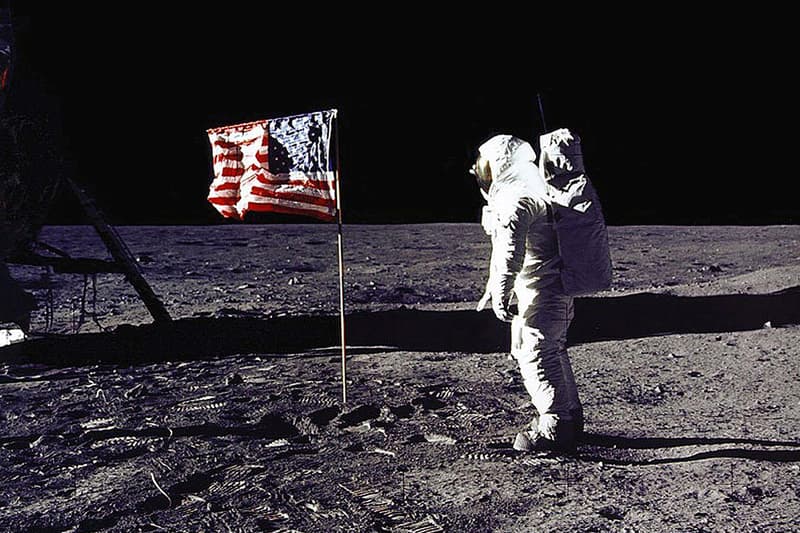
 

You may think you know the definition of the word, “hoax.” You don’t.

Image result for trump
“I am a very stable genius.”

*”Give me clean, beautiful and healthy air – not the same old climate change (global warming) bullshit! I am tired of hearing this nonsense. It’s a Russian hoax.

*Democratic lawmakers and even some members of Trump’s own party reacted with alarm to a series of inflammatory morning tweets in which the president called the prosecution of his former campaign chairman Paul Manafort “a hoax and escalated his attacks on the investigation led by special counsel Robert S. Mueller III.

* Russian interference in our elections: He brushed it off as a hoax. He mused that it might be China, or a guy from New Jersey, or “somebody sitting on their bed who weighs 400 pounds.” He said President Vladimir V. Putin of Russia had assured him it wasn’t true. And, he added, “I really believe that when he tells me that, he means it.”

Investigation of Russian interference: Robert Mueller is being asked to testify yet again. He said he could only stick to the Report, & that is what he would and must do. After so much testimony & total transparency, this Witch Hunt must now end. No more Do-Overs. No Collusion, No Obstruction. The Great Hoax is dead!

* The president called a New York Times report about overcrowded and unsanitary conditions at a Border Patrol facility in Clint, Texas, a “hoax.” “I think it’s a disgrace and the New York Times is basically a partner with the Democrats,” Trump said.

* President Donald Trump on Monday claimed Brett Kavanaugh’s Supreme Court nomination was “caught up in a hoax set up by the Democrats. The things they said about him, I don’t even think he ever heard of the words. It was all made up. It was fabricated and it’s a disgrace.

*After former Special Counsel Robert Mueller called President Trump’s previous remarks praising WikiLeaks beyond “problematic” on Wednesday, the president told reporters the group was a “hoax.” “So, WikiLeaks is a hoax, just like everything else. And all of those problems having to do with crime were the biggest hoax of all,” Trump said.

*President Donald Trump blasted House Democrats after they announced the launch of a new ‘abuse of power’ investigation. The targets include his sons Donald Trump Jr. and Eric Trump, son-in-law Jared Kushner, disgraced former lawyer Michael Cohen and former adviser Roger Stone. ‘It’s a political hoax,’ Trump said, ‘I cooperate all the time with everybody.’

*Trump on the Green New Deal: “That’s a hoax like the hoax I just went through… under that deal, everybody in this room gets fired. All of the thousands of guys and women standing on these buildings gets fired.

*Trump asserted that the official unemployment rate is “one of the biggest hoaxes in American modern politics.”

*In a desperate attempt to discredit adult film star Stormy Daniels, Donald Trump privately called her allegations a “hoax and said that the affair didn’t happen because she’s not his type, according to The Washington Post.

The real definition of the word hoax is this: Anything that is absolutely true, but which Donald Trump denies.

Now you know.

Rodger Malcolm Mitchell
Monetary Sovereignty
Twitter: @rodgermitchell
Search #monetarysovereigntyFacebook: Rodger Malcolm Mitchell

…………………………………………………………………………………………………………………………………………………………………………………………………………………………………………………………………………………………..

The most important problems in economics involve the excessive income/wealth/power Gaps between the richer and the poorer.

Wide Gaps negatively affect poverty, health and longevity, education, housing, law and crime, war, leadership, ownership, bigotry, supply and demand, taxation, GDP, international relations, scientific advancement, the environment, human motivation and well-being, and virtually every other issue in economics.

Implementation of The Ten Steps To Prosperity can narrow the Gaps:

Ten Steps To Prosperity:

1. Eliminate FICA

2. Federally funded Medicare — parts a, b & d, plus long-term care — for everyone

3. Provide a monthly economic bonus to every man, woman and child in America (similar to social security for all)

4. Free education (including post-grad) for everyone

5. Salary for attending school

6. Eliminate federal taxes on business

7. Increase the standard income tax deduction, annually. 

8. Tax the very rich (the “.1%”) more, with higher progressive tax rates on all forms of income.

9. Federal ownership of all banks

10. Increase federal spending on the myriad initiatives that benefit America’s 99.9% 

The Ten Steps will grow the economy, and narrow the income/wealth/power Gap between the rich and you.

MONETARY SOVEREIGNTY