A letter that every politician and every voter should read

I just received the following letter from a woman, Elizabeth Estrada Lopez, who read the recent post, Affordable housing laws are not a solution. They are a symptom.

I was so impressed by her situation and by her wisdom, I wanted to share her letter, and my response, with you. She wrote:

Lack of money or low wages is a valid point.

Affordable housing is not fair housing.

Many below & poverty level wage people, like myself, who work very hard and need affordable housing, are placed in impoverished areas or areas where there is no public transportation and end up paying more in gasoline to travel back and forth to work & grocery shopping that is it a lose-lose proposition.

People fail to thrive grouped in impoverished communities.

The environment is a daily discouragement creating more stress and low self-esteem. This is my experience and is not a blanket statement that covers the world.

I responded, “Thank you, Ms. Lopez. I hope you don’t mind that I intend to quote you in a future post. You make several good points that I would like to write about. Be well, Rodger Malcolm Mitchell.

She, in turn, wrote, “Yes Sir. I want to help society in any way I can.”

Oh, if only our politicians had the same attitude as Ms. Lopez.

As the article stated, the widespread, false belief that the federal deficit and debt are too high, “unaffordable.” and “sustainable” is fostered and disseminated by the rich to keep down those “below & poverty level” people like you.

The reason is “Gap Psychology, the desire to distance oneself from those below, on any comparative measure.

“Rich” is a comparative, not an absolute, term.  A man having $1,000 is rich if everyone else has $1,000, but he is poor if everyone else has $1 million. So, there are two ways to become richer: Obtain more for yourself, or force others to have less.

Poverty is not a lack of work. Poverty is not a lack of effort. Poverty is not a lack of intelligence. Poverty is a lack of money, and the solution to a lack of money is to give impoverished people money.

Period.

The federal government has infinite money. The federal government could and should give people money. Doing so, would eliminate, or at least dramatically reduce, poverty.

There is another, widespread, false belief, and that is, if the government gives people money, they won’t work.

The rich like to portray the poor as lazy and deserving of their poverty. So in the minds of the rich (and many in the middle-income groups) giving people money is immoral, in that is encourages sloth.

Utter nonsense.

The fact is that by any standard, the poor on average work harder than those above them, economically. No one labors less than the rich except for the very rich.

Sadly, even Modern Monetary Theory (MMT), an economic philosophy that understands the federal government’s unlimited money supply, offers as a solution, something they call a “Jobs Guarantee” (JG). It is a process by which the federal government finds or creates minimum-wage jobs for the unemployed.

The only thing the “Jobs Guarantee” guarantees is that the poor will work hard, stay poor, and live in the impoverished areas you described, and never escape.

Question for economists and politicians: If the poor need money, why give them minimum wage jobs? Why not give them the money they need?

Answer: Because of some deeply ingrained belief that “if given money, the poor won’t work. They need the moral pride that comes with having a job.”

Again, utter, puritanical and paternalistic nonsense. A minimum wage job does not provide morality or pride. It only provides insufficient money, together with the “daily discouragement creating more stress and low self-esteem” you, Ms. Lopez, described.

If a person loses her job, has she suddenly become lazy or immoral? Of course not, but it is a myth the rich like to spread.

Today’s America reminds me of a billionaire uncle who won’t help his impoverished nieces and nephews because of self-proclaimed “moral reasons.”

My heart goes out to you, Ms. Lopez. You write like an intelligent and decent woman, whose poverty is not due to any character flaw, but rather to fate.

When I read a letter such as yours, all I can think is, “There but for the grace of God, go I.

I will send a copy of your letter to a few Senators and Representatives. Perhaps they will think more seriously about how to help the impoverished, and not merely disparage them.

Meanwhile, you and your family, friends, and neighbors, please be sure to vote for the politicians most likely to empathize with your plight, and offer real solutions.

One day, Americans will understand the needs of the poor, the power of our government, and the solutions for the less fortunate. Some may say, “yes, but not now.” I say, “If not now, when?”

Much good fortune to you,

Rodger Malcolm Mitchell

Monetary Sovereignty Twitter: @rodgermitchell Search #monetarysovereignty Facebook: Rodger Malcolm Mitchell …………………………………………………………………………………………………………………………………………………………………………………………………………………………………………………………………………………………..

THE SOLE PURPOSE OF GOVERNMENT IS TO IMPROVE AND PROTECT THE LIVES OF THE PEOPLE.

The most important problems in economics involve:

Ten Steps To Prosperity:

  1. Eliminate FICA
  2. Federally funded Medicare — parts A, B & D, plus long-term care — for everyone
  3. Social Security for all or a reverse income tax
  4. Free education (including post-grad) for everyone
  5. Salary for attending school
  6. Eliminate federal taxes on business
  7. Increase the standard income tax deduction, annually. 
  8. Tax the very rich (the “.1%”) more, with higher progressive tax rates on all forms of income.
  9. Federal ownership of all banks
  10. Increase federal spending on the myriad initiatives that benefit America’s 99.9% 

The Ten Steps will grow the economy and narrow the income/wealth/power Gap between the rich and the rest.

MONETARY SOVEREIGNTY

The employer health-care insurance scam

In the posts, “‘The “Medicare for All’ controversy”, and “Ten Steps to Prosperity: Step 2. Federally funded Medicare — Parts A, B & D, plus long-term care — for everyone”, we describe how easily the federal government could provide free healthcare insurance to every man, woman, and child in America.

The program could pay for comprehensive, no deductible, no-coinsurance, no-limit, no out-of-pocket costs of any kind insurance, without levying a penny in federal taxes.

Instead of that, America, the wealthiest nation on earth has this:Even Golden Handcuffs Are Shackles

‘Focused on survival’: Millions of laid-off Americans still living without health insurance
Alexis Keenan·Reporter
Fri, September 25, 2020, 3:12 PM CDT
With hundreds of thousands of Americans filing new unemployment claims every week, sobering evidence of the difficulties faced by laid-off workers is showing up in the estimated number of U.S. adults now lacking health insurance.

Since the onset of COVID-19 in mid-March, workers who lost employment-based healthcare insurance (ESI) far outnumber those who gained coverage, either through a public or private option.

Approximately 4.6 million to 5.6 million workers who lost job-based coverage since March are now uninsured.

It’s common for those who have lost job-based insurance to go without it. Unless you have a serious health issue, insurance is just not on the priority list.

Medicaid eligibility largely depends on the state where the laid-off worker resides, and is based on current monthly income.

In states that have expanded Medicaid, those with current monthly income less than 138% of the federal poverty level are eligible. For a family of 3, the limit is approximately $2,500 per month. For an individual, the limit is approximately $1,466 per month.

In states that have not expanded Medicaid, eligibility is limited to parents with minor children whose median income is below 40% of the federal poverty level, or whose annual income did not exceed $8,532 for a family of three in 2019.

ESI is designed to seem like a wonderful perk. In most cases, the employer seems to pay most or all of the premiums, and you, the employee, usually are guaranteed coverage, even with pre-existing conditions.

Except:

  1. The employer really doesn’t pay. He’s just a go-between. When hiring, employers calculate the cost of employees to include all costs (salaries, perks, office space, expense accounts, etc.) The reality is, the employee pays for everything, with the only benefit being the tax benefits for running the costs through the employer. Salaries could be higher if the employer didn’t pay for healthcare insurance.
  2.  Most insurance plans charge according to experience, so the employers pay more for “expensive employees” (older employees and those with expensive medical conditions.) That is one reason why you “expensive employees” have more difficulty finding jobs. Employers quietly discriminate against you.
  3. If you lose your job, you may have difficulty finding healthcare insurance, or if you do, it probably will be at a high cost at just the time when your income has disappeared. So the “free” ESI is a pair of golden handcuffs (that you really pay for).

Especially, if you are in your 50s or older, the terror of losing your healthcare insurance, at just the time in your life when you will begin to need it  most, can leave you completely at the mercy of your employer.

And that is the whole point.

America’s rich write America’s laws, including tax laws.

From H&R Block:

In 2018, the IRS allowed you to deduct medical expenses that exceeded 7.5% of your adjusted gross income.

Beginning Jan. 1, 2019, all taxpayers may deduct only the amount of the total unreimbursed allowable medical care expenses for the year that exceeds 10% of their adjusted gross income.

You aren’t able to claim both an itemized tax deduction with your standard deduction. Essentially, your medical deduction needs to be significant, along with other itemizations, to give you a great deduction.

For the current tax year, the standard deduction is worth $12,000 for single taxpayers and $24,000 for married taxpayers filing jointly. If you’re filing as the head of household, it’s worth $18,000.

Get it? For a business, all medical expenses are tax-deductible. Businesses pay taxes on profits. But,, for you individually, medical expenses only are deductible after they go above 10% of your adjusted gross income or your standard deduction.

If, for instance, your income is $50,000, the first $5,000 of your medical expenses isn’t tax deductible.

Side note: The so-called “standard deduction” is not a deduction. It is the amount you can’t claim if you wish to itemize your expenses. The higher the “standard deduction,” the less you can claim as a deduction for expenses.

The above paragraph about standard deductions really should read, “For the current tax year, single taxpayers can’t take the first $12,000 expenses as deductions. Married taxpayers can’t take the first $24,000, and heads of households can’t take the first $18,000.”

That means the vast majority of Americans can’t take any expense deduction at all. By contrast, businesses can deduct almost all their expenses.

It’s just another con job by the rich.

Getting back to Medicare for All, if the federal government funded a comprehensive plan that covered all your hospital, doctor, equipment, and long-term care costs, not only could your salary be higher, but your employer would not “own” you. Losing your job would be far less traumatic.

The federal government already has done the hard work by creating Medicare for All (over 65), so the functional problems have been solved. It would be a simple matter to reduce the qualifying age to 0, and to eliminate deductibles and co-pays.

Except, that is not what the rich want. They want to widen the Gap between the rich and the rest, and one sneaky way to do it is via employer-provided healthcare insurance.

And now, we’ll entertain the false claims that Medicare for All is “unsustainable” and/or “socialism.”

Rodger Malcolm Mitchell

Monetary Sovereignty Twitter: @rodgermitchell Search #monetarysovereignty Facebook: Rodger Malcolm Mitchell …………………………………………………………………………………………………………………………………………………………………………………………………………………………………………………………………………………………..

THE SOLE PURPOSE OF GOVERNMENT IS TO IMPROVE AND PROTECT THE LIVES OF THE PEOPLE.

The most important problems in economics involve:

Ten Steps To Prosperity:

  1. Eliminate FICA
  2. Federally funded Medicare — parts A, B & D, plus long-term care — for everyone
  3. Social Security for all or a reverse income tax
  4. Free education (including post-grad) for everyone
  5. Salary for attending school
  6. Eliminate federal taxes on business
  7. Increase the standard income tax deduction, annually. 
  8. Tax the very rich (the “.1%”) more, with higher progressive tax rates on all forms of income.
  9. Federal ownership of all banks
  10. Increase federal spending on the myriad initiatives that benefit America’s 99.9% 

The Ten Steps will grow the economy and narrow the income/wealth/power Gap between the rich and the rest.

MONETARY SOVEREIGNTY

Why should we care about you losing your healthcare insurance? We’re OK.

Why should we care about you losing your healthcare insurance? We have great insurance and it’s all paid for by the government. Life is good (to us).


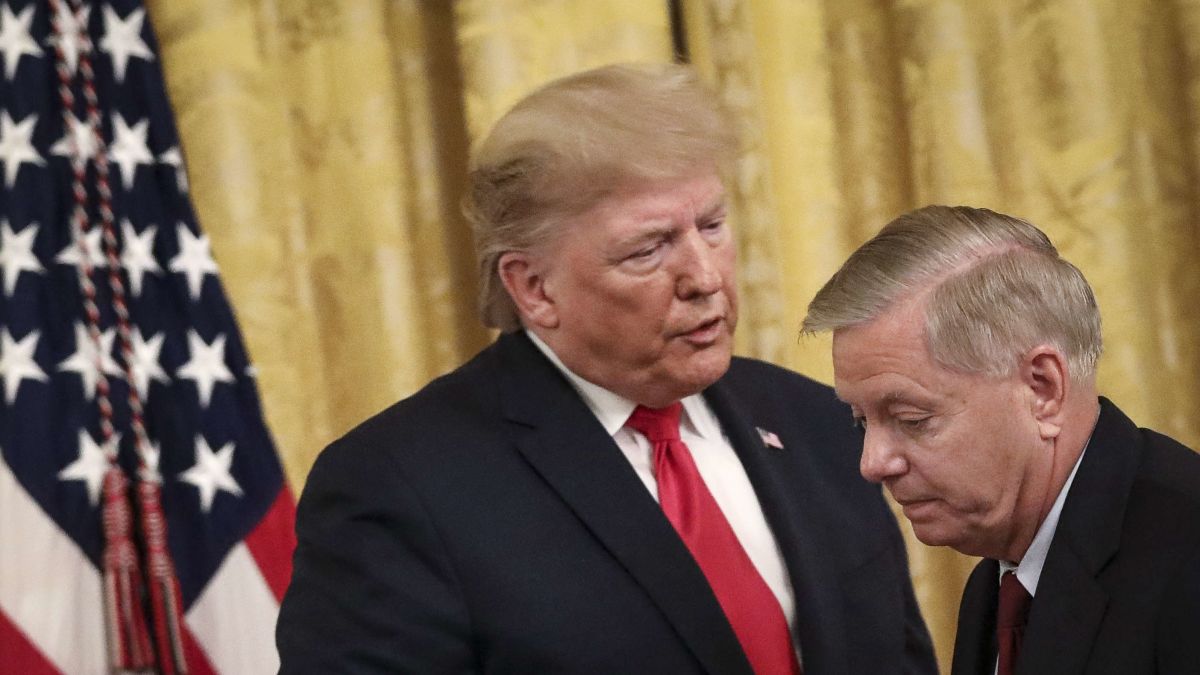
Is Lindsey Graham in trouble? - CNNPolitics
“That’s true, isn’t it, Lindsey?” “Yes sir, yes sir. It sure is, sir. Is that a smudge I see on your shoe?”


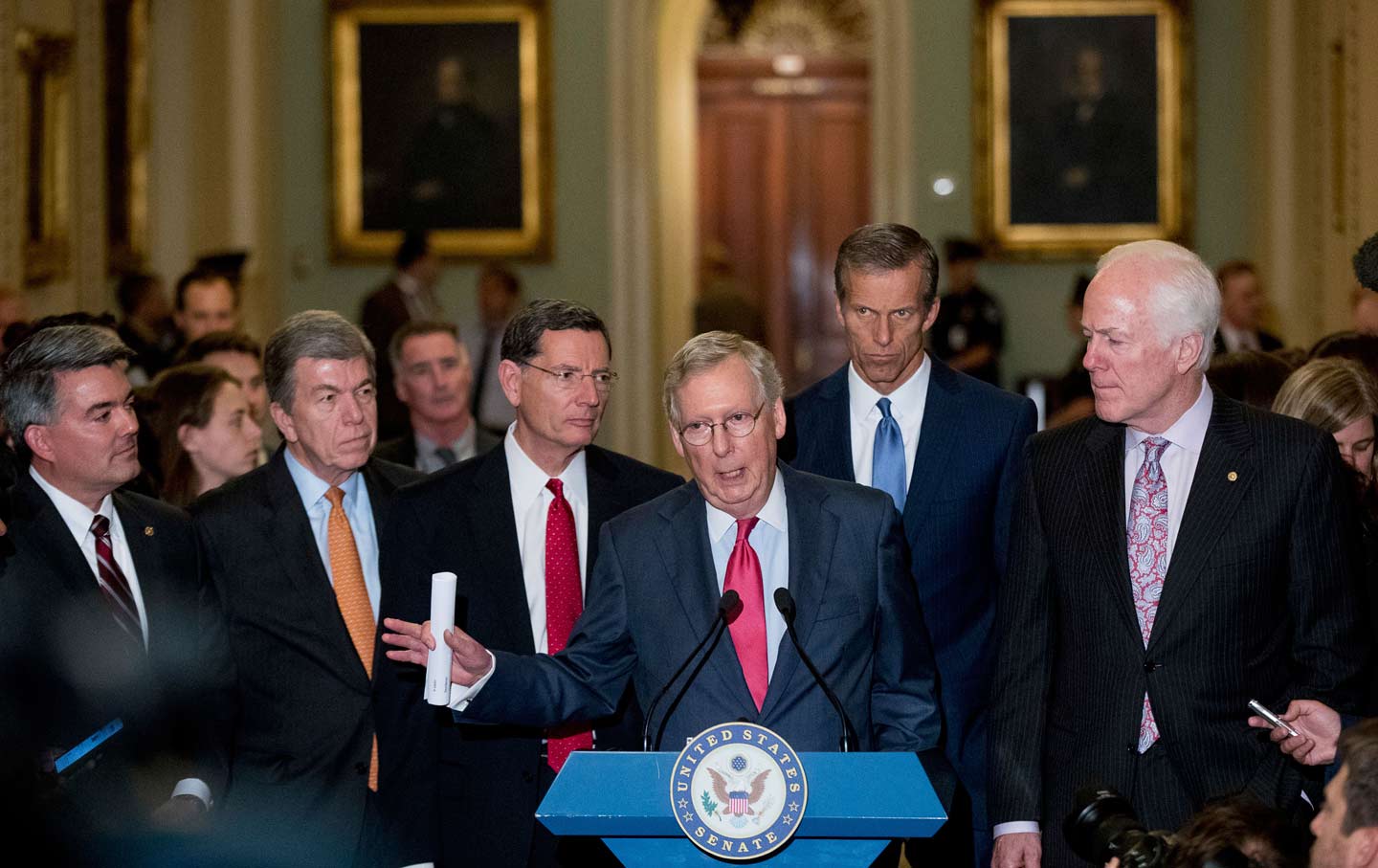
Senate Republicans Don't Really Want to Govern in the Era of Trump | The Nation
Cheer up, people. We’re OK. We have the votes — and the very best healthcare insurance. Don’t worry about the little people out there.

The “Medicare for All” controversy

Because I have Medicare coverage, I received in the mail, my copy of “Medicare & You, 2021.”   Feel free to read it by clicking the link.

Though it is a huge book, about 140 pages long, describing many Medicare rules and coverages, it is not comprehensive. Medicare rules are complex, and there is much more a person needs to know.

For instance, individual states have separate rules, so many questions need to be answered by individual state representatives. And all the costs must be found elsewhere.

There may be three people on earth who have read and understand all the Medicare laws — or maybe not even three.

Here is Medicare’s brief summary:

To Qualify For Medicare:
If you’re already getting benefits from Social Security or the Railroad Retirement Board (RRB), you’ll automatically get Part A and Part B starting
the first day of the month you turn 65.

If you’re under 65 and have a disability, you’ll automatically get Part A and Part B after you get disability benefits from Social Security or certain disability benefits from the RRB for 24 months.

If you live in Puerto Rico, you don’t automatically get Part B. You must sign up for it.

If you have ALS (amyotrophic lateral sclerosis, also called Lou Gehrig’s disease), you’ll get Part A and Part B automatically the month your Social
Security disability benefits begin.

If you don’t want Part B, let us know before the coverage start date on your Medicare card. If you do nothing, you’ll keep Part B and will have to pay Part B premiums through your Social Security benefits. If you choose not to keep Part B but decide you want it later, you may have to wait to enroll and pay a penalty for as long as you have Part B

Summaries of benefits:

And this doesn’t even touch on the ten (!) different “Medigap” plans that cover some of what original Medicare doesn’t. The descriptions of these ten plans begin on page 71.

And then there are the numerous Medicare Part D (prescription drugs) plans.  We won’t even get into the convoluted, complex rules, and various coverage alternatives described on pp 75-85.

Another of the big problems with the Medicare, Medicare Advantage, Medigap, and Part D program is: You cannot know which plan is best for you.

The reason: You don’t know what your health situation will be in the coming months and years. You are forced to guess. So if you choose a plan that doesn’t cover your future misfortune, you’re out of luck.

Further, if you have a serious condition, and wish to change Medigap plans, you may not be able to find one that will accept you.

There are a great many limitations on who and what the various Medicare plans will cover, and none of it is free. You supposedly pay for it as part of your payroll taxes. We say “supposedly,” because every penny you pay in any federal taxes — payroll, income, etc. — every penny is destroyed upon receipt.

So you pay needlessly for incomplete, complex plans. Additionally, Medigap and Part D require separate, out-of-pocket premiums.

In short, unless you are a rocket scientist who also can see the future, you probably can’t have the plan that’s best for you.

There is a better way. In addition to eliminating the useless and regressive payroll tax, Medicare itself can and should be improved.

Here is a suggested summary of a Medicare for All plan:

To Qualify for Medicare for All:
You are a citizen of the United States, or you have lived in the United States and its territories, for at least 6 months in the previous calendar year.

Summary of the benefits:
1. You can go to any doctor or hospital that is accepted by Medicare for All, anywhere in the world.
2. You do not need a referral to see a specialist.
3. All medical services, including doctor, hospital, medically necessary services, and pharmaceutical costs (including dental, vision, and periodical examinations and treatments are covered by Medicare for All. There are no co-pays, deductibles, or out-of-pocket costs.
4. No pre-approvals are necessary.
5. There are no cost-limits.

That’s it. There is no need to determine which plan is best for you. The one plan is comprehensive. The federal government will pay for everything.

And lest you think such a plan will be too costly, remember this: The U.S. federal government is Monetarily Sovereign. That means it has the unlimited ability to pay for anything. It never can run short of dollars.

Proof of that is occurring right now, as this year the federal government has pumped an additional $4 trillion+ into the economy to help America survive the economic costs of the COVID-19 virus.

The more the federal government spends, the more economic stimulus the economy receives.

And no, federal spending never causes inflation, which always is caused by shortages, usually shortages of food or energy. Those notorious Zimbabwe and Weimar hyperinflations were caused by scarcities, not the resultant money-printing.

Then, we come to Congressional fear of insurance companies. These companies are nothing but middlemen between you and your healthcare providers.

They bribe your Congressional representatives to maintain the status quo. They add nothing; they merely pass your money along, while extracting a piece for themselves.

Original Medicare eliminated some of the insurance middlemen. It now is time to eliminate the rest.

Finally, we come to the dreaded word, “socialism.” Although the vast majority of Americans favor Medicare and its benefits, any expansion and simplification of these benefits is immediately and wrongly attacked as “socialism.”

It isn’t socialism. Socialism is government ownership and control over resources, not government spending. Medicare and Social Security are not socialism. The biggest example of socialism in America is the U.S.

military. Shall we do away with the military?

The VA hospitals, the federal highway system, NASA, the FBI and CIA are socialism. Shall we do away with them?

The “socialism” epithet is a lie when applied to Medicare for All. It is a lie designed to keep you from having the same healthcare the rich have.

Bottom Line
The United States has one of the worst medical programs of any major nation. The reason solely is due to debt fear-mongers who falsely proclaim that federal spending is “unsustainable.”

Given the federal government’s unlimited access to dollars, a simpler, more comprehensive health-care plan, totally funded by the federal government, can and should be instituted.

The fact that America doesn’t have one is a disgrace. We have a whole suite of expensive, yet inferior, incomplete plans, foisted on us by Congressional and Presidential cowardice and ignorance.

You deserve better.

Rodger Malcolm Mitchell

Monetary Sovereignty Twitter: @rodgermitchell Search #monetarysovereignty Facebook: Rodger Malcolm Mitchell …………………………………………………………………………………………………………………………………………………………………………………………………………………………………………………………………………………………..

THE SOLE PURPOSE OF GOVERNMENT IS TO IMPROVE AND PROTECT THE LIVES OF THE PEOPLE.

The most important problems in economics involve:

Ten Steps To Prosperity:

  1. Eliminate FICA
  2. Federally funded Medicare — parts A, B & D, plus long-term care — for everyone
  3. Social Security for all or a reverse income tax
  4. Free education (including post-grad) for everyone
  5. Salary for attending school
  6. Eliminate federal taxes on business
  7. Increase the standard income tax deduction, annually. 
  8. Tax the very rich (the “.1%”) more, with higher progressive tax rates on all forms of income.
  9. Federal ownership of all banks
  10. Increase federal spending on the myriad initiatives that benefit America’s 99.9% 

The Ten Steps will grow the economy and narrow the income/wealth/power Gap between the rich and the rest.

MONETARY SOVEREIGNTY