Eliminating debt means eliminating money, which always is a recessionary/depressionary economic plan. GDP growth (by formula) requires debt/money growth. (GDP=Federal Spending + Non-federal Spending + Net Exports.)
Gap Psychology dictates that the rich get richer (widen the Gap) not only by increasing their ownership of debt/money, but by reducing the not-rich’s ownership of debt/money.
Federal “debt” is not debt, but rather it is deposits into privately-owned T-security accounts. The Treasury does not use those dollars. The accounts are paid off simply by returning their balances to the account owners. No tax dollars are involved. Thus misnamed federal “debt” is not a burden on the government or on future taxpayers.
The federal government is Monetarily Sovereign. It has the infinite ability to create dollars. Thus, it does not borrow dollars. It accepts deposits into T-security accounts, the purposes of which are not to provide spending funds, but rather to stabilize the dollar and to help the Fed control interest rates.
For the same reasons, federal taxes do not fund federal spending. Even if all federal tax collections totaled $0, the federal government could continue spending, forever. Federal taxes are destroyed (i.e. cease to be part of M1 or any other money supply measure) the instant they are received by the Treasury. That is why no one can answer the question, “How much money does the Treasury have?” The best answer is, “Infinite,” which remains “infinite” whether or not tax dollars are received.
The purpose of federal taxes is not to provide spending funds, but rather to control the economyby discouraging what the government doesn’t like and encouraging what it does like.
The income/wealth/power Gap is what makes the rich rich. Without the Gap no one would be rich; we all would be the same. The wider the Gap, the richer are the rich. The best way to narrow the Gap between the rich and the rest is for the federal government to provide benefits to the rest, which the federal government has the infinite ability to do.
No inflation in history has been caused by “excessive” federal spending. All inflations are caused by shortages of key goods and services, most notably shortages of food, energy, and labor. Federal spending actually can eliminate inflation by increasing the availability of the scarce goods and services.
Where does all the misinformation come from? It begins with, and is promulgated by, the “experts,” the economists.
Blame the incurious, intellectually lazy economics professors, who do not question what they were taught in college, but rather parrot it to their students, who continue the endless circle. Add to those pejoratives the word “greedy,” since this all is financed by the rich as a way to widen the Gap.
Thus today, we continue to see the same old misguided, disproven worries about federal “debt” and federal deficits, federal government “insolvency,” benefit “unaffordability,” government spending as a cause of inflation and “socialism,” and the false need for federal taxes to finance federal spending.
Remember all of the above as today, you hear the specious arguments about the “debt ceiling,” exacerbated by the stubborn partisanship that could crash the American economy and the economies of the world.
Gap Psychology describes the common desire to distance oneself from those “below” in any socio-economic ranking, and to come nearer those “above.” The socio-economic distance is referred to as “The Gap.”
Wide Gaps negatively affect poverty, health and longevity, education, housing, law and crime, war, leadership, ownership, bigotry, supply and demand, taxation, GDP, international relations, scientific advancement, the environment, human motivation and well-being, and virtually every other issue in economics.Implementation of Monetary Sovereignty and The Ten Steps To Prosperity can grow the economy and narrow the Gaps: Ten Steps To Prosperity:
Liberals think the purpose of government is to protect the poor and powerless from the rich and powerful.
Conservatives think the purpose of government is to protect the rich and powerful from the poor and powerless.
To be rich, there must be a wealth/income/power Gap between you and those who are not rich. If there were no Gap, everyone would be the same and no one would be rich.
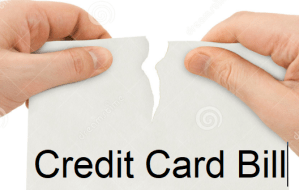
A “debt limit” law tears up a credit card bill rather than paying it. The law turns the debtor into a deadbeat.
The wider the Gap, the richer are the rich. That Amazon guy, who has what . . . $200 Billion . . . is rich because no one else has $200 Billion. If we each had $200 Billion, he would just be an average, middle-class bloke.
Clearly then, if the rich wish to become richer (and virtually all of them do), they either must increase their own wealth/income/power and/or decrease everyone else’s, the latter often being the easier path.
President Biden wants the federal government to spend upwards of $3.5 trillion, most of it landing in the pockets of the poor and the middle classes, thus narrowing the Gap. This is anathema for the rich and those who support the rich.
The panic already had begun, with the GOP, the Party of the Rich, vowing to do everything possible to kill the bill. A couple of pusillanimous Democrats, more worried about campaign contributions than with helping their constituents, are helping the GOP to succeed.
But, just to be on the safe side, that shameless mouthpiece for the rich, the Committee for a Responsible Federal Budget (CRFB), accelerates its Big Lie format and produces this bit of demagoguery:
No Score, No Vote: House Should Not Vote on Reconciliation Without a ScoreSeptember 27, 2021Speaker Nancy Pelosi (D-CA) recently called for the House of Representatives to pass its reconciliation bill, the Build Back Better Act, this week. However, the Congressional Budget Office (CBO) has only scored very small portions of the bill so far, and substantial revisions are expected before the House vote.The Committee for a Responsible Federal Budget has long opposed efforts to enact legislation, outside of an emergency, without a comprehensive score. Unless and until a CBO score of the legislation under consideration is released, the House should not vote on the Build Back Better Act.
Let’s be clear. The CRFB doesn’t give a hoot about the “score” unless the score is: Rich everything; everyone else crumbs.
The following is a statement from Maya MacGuineas, president of the Committee for a Responsible Federal Budget:Passing a reconciliation bill without a CBO score would make a mockery of the entire budget process.
Because the “budget process” omits the single most important element — the federal government, being Monetarily Sovereign, is not constrained by cost — the budget process already is a mockery.
The government is constrained only by effect, that is whether the proposal benefits America.
Right now, we don’t know whether the reconciliation package currently being considered would cost $3.5 trillion, $4 trillion, or $5 trillion, and we don’t know whether it is deficit-neutral or a huge budget buster.
Ah, good old “deficit-neutral,” that benign-sounding idol of the rich. If the government was run deficit-neutral, we would have recessions and depressions as huge as a rich man’s appetite for more, more, more.
Historically, during those eras when the rich have gained sway, that is exactly what has happened:
1804-1812: U. S. Federal Debt reduced 48%. Depression began 1807.
1817-1821: U. S. Federal Debt reduced 29%. Depression began 1819.
1823-1836: U. S. Federal Debt reduced 99%. Depression began 1837.
1852-1857: U. S. Federal Debt reduced 59%. Depression began 1857.
1867-1873: U. S. Federal Debt reduced 27%. Depression began 1873.
1880-1893: U. S. Federal Debt reduced 57%. Depression began 1893.
1920-1930: U. S. Federal Debt reduced 36%. Depression began 1929.
1997-2001: U. S. Federal Debt reduced 15%. Recession began 2001.
Most recessions (vertical gray bars) occur when deficit growth (blue line) has declined and nearly all are cured when deficit growth increases.
And we won’t know until CBO has a chance to score it. You wouldn’t buy a new house without knowing its price; why would you vote for transformative legislation without knowing the cost?
As always, the CRFB intentionally confuses personal (monetarily non-sovereign) finances with federal (Monetarily Sovereign) finances.
You can run short of dollars. The federal government cannot. The CRFB, servant to the rich, doesn’t want you to understand that.
Once Members of Congress know the cost of their proposal – and how much of it they have actually paid for so far – they can decide how to meet President Biden’s commitment to “pay for everything we spend.”
The government always “pays for everything it spends,” unless some dishonest Congresspeople vote for a restrictive debt ceiling.
“Paying” does not mean “taxing,” though these days a bribed Congress would have you think otherwise.
That debt ceiling is based on the lie that it prevents future spending (which would be a bad idea, anyway.)
But, in fact, the debt ceiling prevents the money creation that would pay for past (i.e Trump’s) spending.
Not only will the Republicans send the world into a depression, but they will deprive Americans of the following programs — programs that won’t cost you one cent:
The federal government would invest $200 billion in universal preschoolfor all 3- and 4-year-olds through a national partnership with states. The administration estimates it would benefit 5 million children and save the average family $13,000 when fully implemented.Have low- and middle-income households pay no more than 7% of their income on child care for kids younger than age 5. Parents earning up to 1.5 times the median income in their state would qualify. The president also wants to invest more in the child care workforce to bring their wages up to $15 an hour, from the typical $12.24 hourly rate they earned in 2020.Make community colleges tuition-free for two years. The federal government would cover about 75% of the average tuition cost in each state when the program is fully implemented. States would cover the rest.Increase the Pell Grant award and invest in historically Black colleges and universities, as well as other institutions that cater to students of color.Create the first paid federal and medical leave benefit, giving workers a total of 12 weeks of guaranteed paid parental, family and personal illness/safe leave by the 10th year of the program.Extend the $3,600 tax credit for each child under 6 and $3,000 for each one under age 18, the earned income tax credit and child and dependent care tax credit — all of which were enhanced as part of the Democrats’ $1.9 trillion coronavirus rescue plan but are only in effect for 2021.Add dental, vision and hearing benefits to Medicare, as well as lowering the eligibility age.Extend the enhanced Affordable Care Act subsidies that reduce the amount Obamacare enrollees have to pay to no more than 8.5% of their income and make assistance available to more Americans. Also, lower-income policyholders will receive subsidies that eliminate their premiums completely.Invest in home and community-based services to help seniors, the disabled and home care workers.Creating a new federal health program for Americans who live in states that have not expanded Medicaid under the Affordable Care Act. A dozen “red” states have yet to do so. More than 2 million low income adults fall into the coverage gap.Lower the price of prescription drugs.Implement new polluter fees, create new consumer rebates for home electrification and weatherization, provide clean energy, manufacturing, and transportation tax incentives and grants and electrify the federal vehicle fleet and buildings.expand education, health care and child care support, tackle the climate crisis and make further investments in infrastructure.Invest in agriculture conservation, drought and forestry programs to help reduce carbon emissions and prevent wildfires.More investments in infrastructure projects that would not be funded by the bipartisan infrastructure package.
In summary, if the Republicans have their way:
The U.S. default on its debt, will be a catastrophic event for the entire world’s economies, potentially initiating a deep and long-lasting depression (that would allow the rich to widen the Gap between them and the rest of the people).
The U.S. dollar no longer will be the world’s leading reserve currency, and more importantly, decimate America’s position as the world’s economic leader.
Deprive you of the above-mentioned economic benefits.
Exacerbate global warming
Salaries or benefits for federal or military personnel and retirees will not be paid
Social Security, Medicare, and Medicaid benefit payments would stop.
Student loan payments, tax refunds, and payments to keep government facilities open will stop.
And all will happen is because the Trump-controlled Republican party, in wanting to cripple President Biden, is willing to cripple America.
It all begins with the telling of the Big Lie that the federal government’s finances are like your and my finances.
Rodger Malcolm Mitchell
Monetary SovereigntyTwitter: @rodgermitchellSearch #monetarysovereigntyFacebook: Rodger Malcolm Mitchell
……………………………………………………………………..
THE SOLE PURPOSE OF GOVERNMENT IS TO IMPROVE AND PROTECT THE LIVES OF THE PEOPLE.
Gap Psychology describes the common desire to distance oneself from those “below” in any socio-economic ranking, and to come nearer those “above.” The socio-economic distance is referred to as “The Gap.”
Wide Gaps negatively affect poverty, health and longevity, education, housing, law and crime, war, leadership, ownership, bigotry, supply and demand, taxation, GDP, international relations, scientific advancement, the environment, human motivation and well-being, and virtually every other issue in economics.Implementation of Monetary Sovereignty and The Ten Steps To Prosperity can grow the economy and narrow the Gaps:
Ten Steps To Prosperity:
In one sense, economics is logically simple. One pillar of economics is based on money, or more specifically the difference between the issuersof money (i.e. Monetarily Sovereign) and the mere users of money (i.e. monetarily non-sovereign).
All issuers of money create money the same way. They begin by creating laws or rules from thin air. These laws have no physical existence, and that fact gives the issuers the infinite ability to create laws.
The laws, in turn, create money, which also has no physical existence. You cannot see, taste, feel, hear, or smell a law or a number, or money.
What, for instance, does the number “ten” look like. Does it look like this: 10? Like this: X? Like this: Ten? Like this: 2×5? Like this: 20/2? Like this: Diez?
Laws, numbers, and money merely are concepts. They may be representedby paper forms or on computer screens but the actual laws, numbers, and money exist only as ideas which is why their creation is limited only by the desires of their creators.
The Monetarily Sovereign U.S. government could, if it wished, create a million laws and/or a trillion, trillion dollars, tomorrow, at virtually no cost.
Monetary Sovereignty and Gap Psychology
A functionary merely presses a computer key and presto, money is created, sent, or destroyed — from thin air, through thin air, or back into thin air.
Store coupons, for instance, represent one form of money. The issuer (the store) can issue as many paper or electronic coupons as it wishes, and it sets their value.
Representations of coupons can appear in a printed mailer, or the local newspaper, or online.
Those who shop at, for instance, Bed, Bath, and Beyond, have come to realize there hardly is an end to the number of coupons a store can issue.
Yet, that retailer does not tax anyone to provide coupons, nor does it borrow coupons. It does not need a source of coupons. Its coupon limit is the amount of merchandise it wishes to discount.
The federal government doesn’t even suffer that limit.
The government literally has no limit. It cannot unintentionally run short of dollars. Contrary to common myth, the federal government needs not levy taxes nor borrow.
(Think about that the next time you send the Treasury your precious tax dollars or read about the useless battle about the “debt ceiling.”)
That one pillar of economics, Monetary Sovereignty, though unintuitive to some, is logicallysimple: The US federal government has the unlimited ability to create dollars from thin air and to determine their value.
But economics is simply illogical because the other pillar is human psychology, a study so complex and so bereft of certainty it makes quantum mechanics look like child’s play.
While quantum mechanics has predictable randomness, psychology is laden with unpredictable randomness. Perhaps the very center of this randomness, as related to economics, is Gap Psychology.
Gap Psychology, an extraordinarily powerful motivator, describes the common desire to distance oneself from those “below” in any socio-economic ranking, and to come nearer those “above.”
The socio-economic distance between any two persons or groups is referred to as “The Gap.”Gap Psychology dictates that while you may wish to narrow the Gap above you, those above you wish to widen that Gap.
Gap Psychology is the controlling motivator that makes you purchase luxury goods — cars, clothing, houses — rather than simply utilitarian products. It creates pride and shame, avarice and benevolence, desire and aversion. Beyond bare survival, Gap Psychology is the prime motivator for what we do, want, and believe.
The competing desires of the “have-more” and the “have-less” create a discord that is reflected in the aims of the two opposing political directions: The liberal vs. the conservative.
The real dissonance and complexity reveal themselves because all of us find ourselves, at times, in either camp. While the very top and the very bottom are less tergiversated, the vast middle majority is where much of the emotional conflict arises.
“Who am I”? “What am I?” “Where am I?” This is the sort of silent introspection most common at the middle, and most influenced by Gap Psychology.
You may be puzzled when someone of the middle-class shows scant concern for the plight of poor immigrants. You might have thought there would have been empathy rather than antipathy.
Yet, that person merely may have reflected the powerful push of Gap Psychology — the desire to widen the Gap below.
Example of Gap Psychology
To make matters even more complex, you also may have noted charitable generosity to the poor by someone of the middle class, and that could be a manifestation of the Gap Psychology pull — the desire of the middle to narrow the Gap above by acting as though they imagine a “have-more” acts.
You will see this play out in charitable organizations, where the donation amounts are announced for all to see. Universities and hospitals take advantage of Gap Psychology when they name buildings for large donors.
While this is heralded as “generosity” by the benefactors, mostly it is just a reflection of the desire to widen the Gap below and to narrow the Gap above.
Another example: You might wonder why anyone other than a “have-most” would vote Republican. After all, it is the Democrats who offer the free medical, educational, and social services needed most by the middle and lower levels of society.
The reasons are, first, the common ignorance about the finances of our Monetarily Sovereign federal government, and the false belief that federal taxes fund federal spending. As noted above, federal taxes fund nothing.
But beyond that, there is the antipathy many of the middle class have for those below them, an antipathy so powerful they even are willing to accept less for themselves, just so those below receive less yet.
For those middle-class Republican voters, widening the Gap below can be more important than narrowing the Gap, above.
That example of Gap Psychology — hatred and fear of the underclass — is the primary source of bigotry. It demonstrates why the particularly virulent forms of bigotry can be found in the lower-middle classes — those who fear most the narrowing of the Gap.
Dictators make use of Gap Psychology by first designating an underclass — a religion, a nationality, a political belief — then positioning that underclass as a grasping danger, and finally claiming that he, the dictator, is the only one who can widen the Gap between the underclass and the rest of the populace. Scapegoating is a symptom of Gap Psychology.
Gap Psychology also becomes an even greater issue when resources are limited. From an evolutionary standpoint, it then makes sense then to distance oneself from those who have less and to join with those who have more.
During recessions and depressions, Gaps tend to widen near the top, as the very rich are able to employ the rest at starvation wages, while not feeling the pinch of poverty themselves.
IN SUMMARY
The two great pillars of economics are Monetary Sovereignty and Gap Psychology.
As a science, the former is logically simple, in that it merely states: A Monetarily Sovereign money issuer has absolute control over the money it issues — its quantity and its value — and needs no exterior source of that money.
Though counterintuitive because of rampant false teaching, nothing could be simpler.
The latter is simply illogical “science,” because the goal of any science is predictability, while Gap Psychology relies on the unpredictable vagarities of human emotions and behavior.
Together, they determine the direction of all economics.
Rodger Malcolm Mitchell
Monetary SovereigntyTwitter: @rodgermitchellSearch #monetarysovereigntyFacebook: Rodger Malcolm Mitchell
……………………………………………………………………..
THE SOLE PURPOSE OF GOVERNMENT IS TO IMPROVE AND PROTECT THE LIVES OF THE PEOPLE.
Gap Psychology describes the common desire to distance oneself from those “below” in any socio-economic ranking, and to come nearer those “above.” The socio-economic distance is referred to as “The Gap.”
Wide Gaps negatively affect poverty, health and longevity, education, housing, law and crime, war, leadership, ownership, bigotry, supply and demand, taxation, GDP, international relations, scientific advancement, the environment, human motivation and well-being, and virtually every other issue in economics.Implementation of Monetary Sovereignty and The Ten Steps To Prosperity can grow the economy and narrow the Gaps:
Ten Steps To Prosperity:
Some laws are written by the ignorant for the ignorant. There is a website called “Stupid Laws” that lists many such laws.
For instance, the website lists (I can’t verify the truth of any of these):
See the amazing penniless federal government. It’s poor. It’s destitute. it’s impecunious. Would I lie to you?
Even if the above laws actually exist, their foolishness pales in comparison to this one, the ultimate law for the ignorant:
Democrats Press Ahead With Debt-Limit Vote Amid Standoff With GOPKristina Peterson, Kate DavidsonWASHINGTON—A partisan fight over raising the government’s borrowing limit is expected to ratchet up this week, with Democrats moving ahead with a vote in the face of strident GOP opposition, raising doubts about whether Congress will take action before the federal government runs out of cash.
Yes, we’re talking about the “Debt Ceiling,” that ultimate law for the ignorant.
The federal government, being Monetarily Sovereign, has the unlimited ability to create its own sovereign currency, the U.S. dollar.
The federal government has been creating dollars since the 1780s when it created the very first dollars from thin air.
It created as many dollars as it wished and gave those dollars the value it wished, imply by creating laws, also from thin air.
Since then, the only limits on federal dollar creation have been placed on the government by . . . the government.
Nothing limits the government’s ability to create laws, and nothing prevents those laws from creating dollars.
Interesting that no one complains about a law deficit, but people complain about a dollar deficit, when it is the laws that create the dollars.
GOLD STANDARDS
Intermittently in America, there have been periods of “gold standards,” in which the government declared, in essence, “We will create dollars only up to the amount of gold we have.”
But what does that limitation mean?
Assume the U.S. owned ten kilograms of gold. How many dollars would a gold standard allow the U.S. to create?
__________$10 million
__________$100 million
__________None of the above
__________All of the above
__________Whatever number Congress and the President want
See the problem? The answer depends on how many dollars per kilogram are allowed by U.S. government laws.
So, the answer is #5. All gold standards rely on Congress and the President to create laws that will determine the circumstances by which dollars will be exchanged for gold.
Through the decades, the government amended its laws that changed this exchange value many times, or when convenient, rid itself of a gold standard until, in 1971, President Nixon did away with all gold standards, on a permanent basis it is to be hoped.
Given that the government has the unlimited ability to create the laws that create dollars, and to endow these dollars with any value vs. gold it wishes, of what purpose is a gold standard?
Contrary to popular myth, gold never has “backed” the U.S. dollar, if “backing” means to give value or security to the dollar. The government, arbitrarily and without notice, can change the dollar/gold exchange rate, so exactly what value does gold provide to a dollar? None.
The U.S. dollar is a debt of the federal government.All debts are backed by collateral. Most debts have two or more levels of collateral: A physical item plus the full faith and credit of the debtor.
For instance, the collateral for a house mortgage is the value of the house plus the full faith and credit of the borrower. Together, they comprise the “backing” for the mortgage.
The only — ONLY — collateral for the U.S. dollar is the full faith and credit of the U.S. government. Nothing else ever has backed the dollar, not the Grand Canyon, not the Great Lakes, not the Missippi River, not the “amber waves of grain,” and not gold.
The acceptance of the dollar worldwide is based solely on the full faith and credit of the U.S. government, which fools in Congress now are determined to destroy.
The standoff has alarmed Wall Street analysts and business leaders, who in recent weeks have issued warnings about a rising risk of a technical default, in which the government might be unable to make all of its regular payments in full and on time. The threat of such a default could derail markets and hit U.S. economic growth.
There never is a time when the government is unable to make its payments. That “technical default” merely means the government would be unwilling to make its payments.
If you owe $100 that contractually is due for payment this coming Friday, but today, Wednesday, you decide you are not going to pay any more bills this week, does that mean you are unable to pay or actually are unwilling to pay?
Activating the so-called “debt limit” or “debt ceiling” merely means Congress arbitrarily has decided not to pay any more bills, even though it has the unlimited ability to create dollars.
The debt ceiling is not a budgetary method. It is not a way to rein in spending. It does not demonstrate fiscal wisdom. It demonstrates spiteful idiocy, the desire by one political party to damage the other political party, the American economy be damned.
The budgets and spending already have happened. The debt limit is nothing more than a method for stiffing creditors.
All those who favor the debt ceiling, knowingly or unknowingly, want the United States of American to become a (take your pick) a welcher, a moocher, a deadbeat, a freeloader, a sponge, a parasite, or a reneger.
Employing a debt-ceiling is not a sign of thrift or prudence. It is the mark of a crook.
House Majority Leader Steny Hoyer (D., Md.) said Friday that the chamber would vote this week on a measure to suspend the debt limit and a short-term measure extending the government’s funding beyond its expiration at month’s end.
The correct wording for the above paragraph should be, “House Majority Leader Steny Hoyer (D., Md) said Friday that the chamber would vote this week for the U.S. government to pay its bills.”
It’s a disgrace that the House actually has to vote on whether or not the government should pay what it legitimately owes. What next? A vote on whether or not to hold elections in the future? A vote on whether or not to create sensible laws?
The House will “ensure that America pays its bills on time,” Mr. Hoyer said in a letter to House Democrats Friday.
How very reassuring.
Raising the debt limit doesn’t authorize new spending, but rather allows the Treasury Department to issue new debtto cover spending that Congress has already authorized, including payments to bondholders, Social Security recipients and veterans.Republicans have said they won’t help Democrats raise the borrowing limit, as a protest over the trillions of dollars in new spending the party is moving through Congress.
Then we come to that oft-misused word, “debt.” In federal lingo, “debt” means T-bills, T-notes, and T-bonds, none of which are debt as you know it, and not even “bills,” “notes,” or “bonds.” And it definitely isn’t “borrowing.”
In the usual sense, borrowing is what one does when one wants money for some use. But the federal government always has had the unlimited ability to create dollars. So, it has no need to borrow.
Rather than “borrowing,” those T-securities represent deposits. When you invest in any T-security, you open a T-security account in your name and then make a deposit into that account.
The government — the so-called “borrower” — never touches those dollars as a borrower normally would. I doesn’t need your dollars.
Some time later, usually upon maturity, you take your money from that account. This erroneously is referred to a “paying off the debt,” but it actually merely means closing out your account and receiving your money.
Think of a bank safe deposit box. The bank never touches the contents. That is how T-security accounts operate.
Republicans have said they won’t help Democrats raise the borrowing limit, as a protest over the trillions of dollars in new spending the party is moving through Congress.
Again, it’s not “borrowing.” And it’s not frugality.
Let’s tell it like it is: The sole function of the debt ceiling is for the minority to obstruct the majority. There is no other purpose.
The “debt ceiling” has nothing to do with debt. It has nothing even to do with finances. It strictly is a political game, a dangerous political game, strictly played to thwart the opposing party.
It’s a game of “chicken,” with the future credit of the United States at risk.
“Let me be crystal clear about this: Republicans are united in opposition to raising the debt ceiling,” Senate Minority Leader Mitch McConnell (R., Ky.) told reporters last week. “If they want to do all of this on a partisan basis, they have the ability and the responsibility to ensure that the federal government not default, and they will have to take care of that,” Mr. McConnell said.Democrats have pointed out that they voted with Republicans to suspend the debt limit three separate times during the Trump administration, including in the fall of 2017, when the GOP sought to advance tax cuts using budget reconciliation.“We didn’t play games. We didn’t risk the credit of the country. We did it,” Senate Majority Leader Chuck Schumer (D., N.Y.) told reporters last week.
McConnell is a traitor in every sense of the word. He repeatedly has been willing to damage America if he feels that will benefit the Republican party.
Yet, you perhaps would be more impressed with the Democrats’ “holier than thou” position if they simply had voted to eliminate the useless, misleading, dangerous, downright stupid debt ceiling, altogether.
In a Sept. 13 letter, the heads of several financial-services industry trade groups urged congressional leaders to raise or suspend the ceiling and emphasized the vital importance of the U.S. Treasury market for investors around the world.A coalition of real-estate and mortgage-industry groups sent a similar letter Sept. 16 warning about potential instability in the housing market stemming from a debt-limit impasse, and permanently higher borrowing costs.Treasury Secretary Janet Yellen has said her agency could run out of cash to keep paying the government’s bills some time in October. Unless Congress raises the ceiling, the Treasury might need to halt more than 40% of its payments, including some to U.S. households, they estimated.“With no clear path toward debt-limit resolution over the near term, we are at the point where this could begin to impact financial conditions,” they said in a note to clients.The White House on Friday issued a more blunt warning: Failing to suspend the debt limit could lead to a recession, at a time when the Delta variant has already clouded the economic outlook.
The Republicans again demonstrate more loyalty to party over country, so a recession prior to the next election would be exactly what they want.
And guess which payments would be the first to be halted. All payments that benefit the poor and middle classes. The”Party of the Rich” will do nothing to hurt the rich.
And that’s what this game of chicken is all about.
Raising the debt limit wouldn’t facilitate future spending, and Congress would still need to raise the debt limit this fall even if no new major spending programs are enacted.That is because Congress has already approved spending and tax policies that result in large budget shortfalls, which the Congressional Budget Office projects will total $12 trillion over the next decade. In recent years, those budget gaps were driven by large bipartisan budget deals, a GOP tax cut and more than $5 trillion in pandemic relief.
The debt ceiling is the ultimate law for the ignorant. It is a con job on you, an innocent public, to make you believe it is a way for Congress to be thrifty.
But the whole notion of “thrift” for an organization that has the infinite ability to create money, makes no sense and is in fact dishonest. It is especially dishonest for the Republican party which specializes in giving tax breaks to the rich.
Sadly, by misusing words like “debt,” and “borrow,” and by equating the Monetarily Sovereign federal government with monetary non-sovereign states, counties, cities, business, and you, the two political parties have managed to convince you the government can’t afford to provide you with benefits.
So, no free Medicare for you and everyone. No free Social Security for you and everyone. No free college for your children. And, there are all those needless federal income taxes you pay, year after year.
You are being conned by the ultimate con job. Hello, sucker.
Rodger Malcolm Mitchell
Monetary SovereigntyTwitter: @rodgermitchellSearch #monetarysovereigntyFacebook: Rodger Malcolm Mitchell
……………………………………………………………………..
THE SOLE PURPOSE OF GOVERNMENT IS TO IMPROVE AND PROTECT THE LIVES OF THE PEOPLE.
Gap Psychology describes the common desire to distance oneself from those “below” in any socio-economic ranking, and to come nearer those “above.” The socio-economic distance is referred to as “The Gap.”
Wide Gaps negatively affect poverty, health and longevity, education, housing, law and crime, war, leadership, ownership, bigotry, supply and demand, taxation, GDP, international relations, scientific advancement, the environment, human motivation and well-being, and virtually every other issue in economics.Implementation of Monetary Sovereignty and The Ten Steps To Prosperity can grow the economy and narrow the Gaps:
Ten Steps To Prosperity:



 #Monetary Sovereignty - Mitchell