This is not a random accusation. It’s a sincere question that has troubled me for several years. It actually is a two-part question:
Are Republicans mean?
If so, why?
1. ARE REPUBLICANS MEAN?
Given the key problems of the day, Republicans seem to settle on the meanest possible solution.
GUNS:Another day, another mass gun murder.
More guns = more gun deaths.
There are more guns in the United States than there are people — over 393 million firearms in the United States, and this number only includes civilian-owned firearms, meaning it doesn’t count firearms in possession by the military, government agencies, or by law enforcement.
That number means that there are enough guns for every single person in the United States (including men, women and children) to own one, with 67 million guns left over.
That number is incredibly high, especially when you consider that only four in ten adults say they live in a home with a gun.
The United States has the most civilian owned firearms than any other country in the world at 120.5 per 100 people, with Yemen, a country that has been in a bloody civil war for several years, coming in a far second at 52.8 guns per 100 people.
What is the Republican solution to gun killings? More guns. Arm everyone. Armed guards in every school, (despite the fact there already was an armed guard in the Texas school).
“We can’t stop bad people from doing bad things,” Texas Attorney General Ken Paxton said in an interview with Fox News on Tuesday.
“We can potentially arm and prepare and train teachers and other administrators to respond quickly. That, in my opinion, is the best answer.”
Such a program already exists, to an extent: the Texas School Marshals Program, which was created in the wake of the 2012 shooting at Sandy Hook Elementary School.
That program allows teachers and administrators to act as “school marshals,” entitled to carry firearms after completing 80 hours of a training course conducted by a law enforcement academy.
(Reuters reports that the Texas State Teachers Association has opposed the program, arguing that the focus should be on taking guns out of schools.)
In fact, the armed guard at the Texas school did nothing. Armed police were in the school for an hour an armed man finally killed the murderer.
That’s a total of an hour and twenty minutes that fully armed people did nothing.
From the Chicago Tribune: Senate Majority Leader Chuck Schumer, D-N.Y. tried to nudge Republicans into taking up a domestic terrorism bill that had cleared the House quickly last week after mass shootings at a grocery store in Buffalo, New York, and a church in Southern California targeting people of color.
He said it could become the basis for negotiation.
But the vote failed along party lines, raising fresh doubts about the possibility of robust debate, let alone eventual compromise, on gun safety measures.
The final vote was 47-47, short of the 60 needed to take up the bill. All Republicans voted against it.
And then there are the military-style solutions:
During Fox News’s coverage Tuesday night of America’s most recent mass shooting, it was apparently too soon to discuss gun reform—but the right time to propose that schools be equipped with booby traps, armed military contractors, and bulletproof blankets.
Sean Hannity urged the U.S. government to hire military and police contractors to patrol schools.
“[Place] retired military, retired law enforcement outside the perimeter of every school in the country, they can donate their time, we can offer them tax breaks, no income tax in the state, no income tax federally, 10 hours a week, and we can have every school in America covered,”
Another solution pitched on the network came via Maureen O’Connell, a former FBI agent, who suggested that the onus is on parents to invest in bulletproof armor for their children.
Colion Noir, a gun-culture social media influencer, said on Fox News that American schools should be “so hardened”––i.e., heavily defended and inaccessible to the public.
If you think the above “solutions” are crazy, that’s only because you are not a right-wing viewer of Fox News, the home of the Republican, Trumpian gun-nut clan.
Reducing the number of guns and the number of people carrying gunsis unthinkable to Republicans, who always choose the most confrontational, warlike, aggressive, mean-spirited approach to any problem.
RELIGION:If you believe religion is about morality and the Golden Rule, you would be wrong with regard to the Republican party, or at least to its political efforts.
For the party (if not individuals), religion is about Christianity über alles. Other religions need not apply.
GOP pols Robinson, Walker, and Cawthorn align themselves with a movement seeking to end the separation of church and state.
A particular theme to which all three men have returned is that of persecuted Christianity and the need to institute religious teaching and principles into all areas of civic life, particularly public schools, which they say should be reformed according to their religious principles or abandoned by Christian families.
The American Renewal Project was launched by founder David Lane in the 2013-2014 election cycle. Its goal, as stated by Lane, is to “engage the church in a culture war for religious liberty, to restore America to our Judeo-Christian heritage and to re-establish a Christian culture.”
Robinson stated that the United States is and has always been a “Christian nation” and invited those who disagree with that premise to leave the country.
Mark Levin, a talk radio personality who hosts a weekend Fox News program, suggested that bringing “Judeo-Christian principles” and prayer into schools could help stop future mass shootings.
There is nothing wrong with someone having religious beliefs, but when those beliefs claim ownership of America, the eviction of non-Christians, and the establishment of a harsh theocracy, democracy is doomed.
ABORTION:The Republican solution favors punishment for women and children, vs. embryos and fetuses, even those embryos that clearly are not yet sentient.
Many Republicans favor no abortion at any stage, and some want to eliminate any form of birth control, like condums and IUDs, even when no embryo has yet formed. They choose a sperm over a human.
I won’t go through all the “side” effects of abortion banning, the inevitable deaths of mothers, the ongoing misery for financially, emotionally, or mentally unfit mothers birthing unwanted, unaffordable, and/or disabled children.
I merely argue that banning abortions, particularly in the first few weeks of pregnancy, is the meanest possible approach to the question of abortion.
Unauthorized immigrants removed or returned
IMMIGRATION: America is a gigantic nation, in area, population, and in resources.
As of March, 2022, we had 332,812,000 people living here, of whom about 12 million (3.6%) are undocumented.
In 2020, we removed or returned 406,000 immigrants, or about one-tenth of one percent of our population.
Had we accepted every single one of them, our population would have “soared” from 332,812,000 to 333,218,000. This would not have made a noticeable difference in any anti-immigration factor.
Why are they removed or returned? Mostly it’s because they are illegal according to current law, and our method for processing them is so inefficient and antiquated, they have little hope of becoming legal (except if you are rich, in which case there is no problem at all).
All of us are immigrants or descendants of immigrants (Yes, even you indigenous folks. Your ancestors came here from other lands). Yet, there is now the false claim that rather than being an asset to America, immigrants take, but don’t contribute.
They do not take jobs away from native-born Americans; they do not fill the rolls for public assistance; they are less likely to engage in criminal behavior than are the native-born, and they do pay taxes.
While both political parties suffer from an anti-immigrant delusion to some degree, the Republicans are more ruthless in their interpretation and utilization of immigration law.
They even want to send back the 650,000 “Dreamers,” who are among our very best people.
The Trump administration announced in September 2017 that it planned to scrap the Deferred Action for Childhood Arrivals (Daca) program created by the Obama administration to give temporary, renewable protections to these young people, nicknamed Dreamers.
Trump’s decision immediately threw Dreamers into turmoil and fear, while also triggering a legal battle that wound up in the supreme court last year and led to this June 2020 decision.
The program has been in limbo since the 2017 announcement.
HEALTH CARE: The right-wing is notorious for its attitude toward the not-rich. They wanted to eliminate the very popular ACA (Obamacare).
The U.S. Department of Health and Human Services (HHS) released a new report that shows 31 million Americans have health coverage through the Affordable Care Act – a record.
The report also shows that there have been reductions in uninsurance rates in every state in the country since the law’s coverage expansions took effect.
Today’s report shows the important role the ACA has played in providing coverage to millions of Americans nationwide.
The report also shows that between 2010 and 2016, the number of nonelderly uninsured adults decreased by 41 percent, falling from 48.2 million to 28.2 million.
All 50 states and the District of Columbia have experienced reductions in their uninsured rates since the implementation of the ACA, with states that expanded Medicaid experiencing the largest reduction in their uninsured rate.
To date, 37 states and the District of Columbia have expanded Medicaid to cover adults under the ACA.
Alabama, Florida, Georgia, Kansas, Mississippi, North Carolina, North Dakota, South Carolina, South Dakota, Tennessee, Texas, and Wisconsin. Guess which party they vote for.
There are more than 2 million people across the United States who have no option when it comes to health insurance.
They don’t qualify for Medicaid in their state, and make too little money to be eligible for subsidized health plans on the Affordable Care Act insurance exchanges.
Essentially, the federal government will cover 90% of the costs of the newly eligible population, and an additional 5% of the costs of those already enrolled. It’s a good financial deal.
An analysis by the nonprofit Kaiser Family Foundation estimates that the net benefit for these states would be $9.6 billion.
The reluctance among some Republican-led legislatures and governors to expand Medicaid may be a combination of partisan resistance to President Obama’s signature health law, and not believing “this kind of government intervention for these groups of people is appropriate.”
It’s not a financial decision by these Republican states. They do it out of meanness and a lack of concern for those who are not rich.
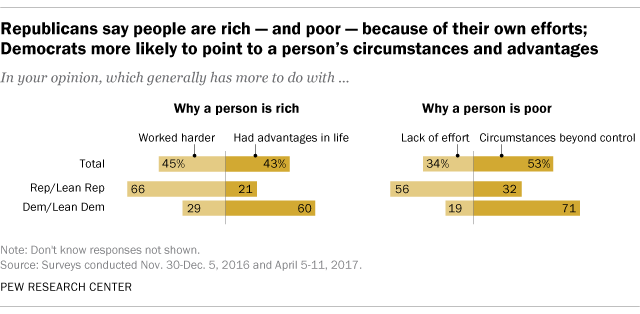
POVERTY: Republicans tend to blame the poor for being poor, and claim the poor are lazy, need to lift themselves by their bootstraps, and should not rely on help from the government.
Thus, Republicans slash programs that benefit the poor, despite the fact that:
The Republican House Committee on the Budget reported a budget resolution for 2017 calling for trillions of dollars in cuts to programs serving vulnerable populations.
Major cuts affecting low-income individuals include:
$2 trillion from Medicaid – up to $1 trillion from cutting the base program plus another $1 trillion from repealing the Affordable Care Act Medicaid expansion;
$887 billion from already-low non-defense discretionary funding levels, putting a broad array of programs serving low-income populations such as housing assistance, WIC, job training, and others at risk of deep funding cuts; $185 billion from federal college aid for low-income students;
$157 billion from the Supplemental Nutrition Assistance Program;
and $0.6 trillion from other income security programs, a category where most spending is for safety-net programs such as Temporary Assistance for Needy Families, child nutrition, Supplemental Security Income for the aged and disabled, Unemployment Insurance, refundable tax credits for low-income workers, and child care.net programs such as Temporary Assistance for Needy Families, child nutrition, Supplemental Security Income for the aged and disabled, Unemployment Insurance, refundable tax credits for low-income workers, and child care.
CRIME: Republicans oppose street crime (which is more often committed by poor people) than white-collar crime.
For street crime, Republicans favor harsh punishment after the fact as a future deterrent vs. prevention of the causes of street crime (poverty, poor education, poor housing, poor opportunities).
Republicans believe in more stringent sentencing laws for felons, support a database for convicted child murderers, support courts having the right to use the death penalty, and believe in stronger victim rights and harsher punishments for certain, especially heinous crimes.
They view stricter punishment as a deterrent to future crime, and believe this is the best way to address crime and criminals in today’s society.
They oppose prison reforms proposed by the Democratic Party that would see better higher education options and more comfortable accommodations in prisons.
IN SUMMARY, Republicans choose the most mean-spirited “solutions” to problems involving Guns, Abortion, Immigration, Health Care, Poverty, Religion, and Crime.
2. WHY DO REPUBLICANS CHOOSE THE MEANER SOLUTIONS?
The excuse often given is money, especially with regard to Immigration and Health Care.
But this excuse is belied by the fact that 12 states would have received an additional $9.6 billion from the federal government, had they accepted the expansion of Medicare.
Further, there is zero evidence that immigrants are a financial burden on America. On the contrary, they are the basis upon which America was built.
With regard to Guns, the excuse is that there is a Constitutional right for a citizen to carry a gun. But this is a manufactured excuse created by the intentional misreading of the 2nd Amendment.
Right-wingers argue that the first thirteen words of the 2nd Amendment — “A well regulated Militia, being necessary to the security of a free State” — are absolutely meaningless, the first and only time that self-proclaimed “originalists” have made such an extraordinary effort to ignore plain language in the Constitution.
More than money, the meanness of the right-wing has to do with power. Gap Psychology describes how people often wish to narrow the income/wealth/power Gap above us, and to widen the Gap below us.
Income is “high” or “low,” not in absolute, but in relative terms. An income of $20,000 a year is high if everyone else is making $2,000, but it is low if everyone else is making $200,000. Wealth and power are similarly subject to relativism.
Because hatred, anger, and meanness are childen of fear (See: Fear and hatred, the evil twins of human emotion) it is the fear of losing ground, especially to those “below,” that leads to hatred and its final expression: Meanness.
The “great replacement” is a conspiracy theory that states that nonwhite individuals are being brought into the United States and other Western countries to “replace” white voters to achieve a political agenda.
A white supremacist “Unite the White” demonstrator walks into Lee Park in Charlottesville, Va. Some marchers chanted, “Jews will not replace us.”
White supremacists argue that the influx of immigrants, people of color more specifically, will lead to the extinction of the white race.
The alleged supermarket shooter and other extremists claim the U.S. has to close its borders to immigrants.
The “great replacement” theory is sometimes seen in other ways such as claims of voter replacementand immigrants invading America.
The claim assumes that immigrants and nonwhite people will vote a certain way, ultimately drowning out the votes of white Americans.
White supremacists blame Jewish people for nonwhite immigration to the U.S., and the “replacement” theory is now associated with antisemitism.
President Donald Trump, the most powerful Republican leader in decades, condemned both neo-Nazis and white nationalists.
But, his first statement and subsequent defenses of it, referred to “very fine people on both sides.” implying a moral equivalence between white supremacists and those who opposed them.
Trump also referred to African countries, Haiti, and El Salvador as “shithole” nations and he asked why the U.S. can’t have more immigrants from (white) Norway.
Republicans are motivated by a GOP stoked-from-above fear that the Gap below them will narrow. They are afraid that immigrants will take their jobs, and that Jews will outcompete them. They are afraid of women making decisions.
The conservative men compare their own masculinity with that of black men, and find themselves wanting, which is why they idolize the hyper (though phony) masculinity of a Donald Trump, and fear gays.
Their fear manifests itself in the need to have, carry and even display the protection of guns, the bigger and more powerful, the better.
Republicans are “conservatives” whose fears demand that they protect themselves by conserving a mythical old moral order.
Sadly, the mythical old order that Republicans fondly embrace in their imaginations includes xenophobia, slavery, misogyny, hopes for a Christian theocracy, fear and loathing of the poor, and bigotry against non-whites, gays, Jews, Muslims, and other non-Christians.
In short, they fear being replaced.
Democrats are progressives, meaning they wish to progress beyond such archaic beliefs. No, they are not pure. They have their own selfish desires. But they don’t fear the future the way conservatives do.
That is why conservatives are anti-science. Science brings the changes conservatives fear.
In clinging to a mythical past, the conservatives also reject past realities to the point where they fear schools even discussing critical race theory (housing segregation, the impacts of criminal justice policy, and the legacy of slavery on all Americans).
They also dread teaching “Social and Emotional Learning“ (ethically managing one’s emotions, empathy for diverse groups, etc.) for fear that this lifts minority groups to parity with white Christians.
If you want to understand what motivates Trump worship, QAnon belief, Fox News viewership, white supremacy, gun hugging, extreme religiosity, harsh treatment of immigrants, criminals, and the poor, religious bigotry, attempts at a coup, and all the other craziness of today’s right-wing, the answer can be found in one word: FEAR.
These people exhibit all the symptoms of group terror. In various ways, the fear of being replaced is fundamental to the meanness and bigotry that has become more widespread in America.
Perhaps the only way to solve the problem is not to reason with Trumpist Republicans, which undoubtedly you have found doesn’t work, but rather to reassure them.
And the best way to do that is to maintain the Gaps in the lower strata.
This may seem like heresy, but I am coming to the belief that Gap Psychology — the part about not wanting the Gaps below you to be narrowed — is so baked in to the human psyche, that no amount of well-meaning, logical argument will overcome it.
While we should narrow the Gaps near the top where the billionaires currently reside, our efforts should be to lift the bottom and middle as one unit.
Examples: COVID vaccinations are available free to everyone, regardless of income. A Medicare for All program should cover everyone equally, regardless of income. So should Social Security for All.
Gap Psychology describes the common desire to distance oneself from those “below” in any socio-economic ranking, and to come nearer those “above.” The socio-economic distance is referred to as “The Gap.”
Wide Gaps negatively affect poverty, health and longevity, education, housing, law and crime, war, leadership, ownership, bigotry, supply and demand, taxation, GDP, international relations, scientific advancement, the environment, human motivation and well-being, and virtually every other issue in economics.Implementation of Monetary Sovereignty and The Ten Steps To Prosperity can grow the economy and narrow the Gaps: Ten Steps To Prosperity:
“Dr.” Jerome Powell: I am going to cure your anemia by applying leeches to drain your blood.
A medical doctor will tell you, if you want to prevent and/or cure a disease, it helps to understand and address the cause(s) of the disease. But first, do no harm.
And to identify and determine the cause of the disease, look at the symptoms. Today’s economy is diseased, and the symptom is inflation, which can precede a recession.
Inflation is a general increase in prices.
Every price increase can be attributed to scarcity.Barring government interference (i.e,. price controls, taxes, etc.) market prices do not rise on any product when there is a surfeit of that product.
“Dr. Powell’s treatment for inflation are:
Raise interest rates
Reduce money growth.
And he wishes to do this without causing a recession .
Today’s inflation is caused by multiple scarcities: energy, food, supply chain, fertilizer, computer chips, lumber, baby formula, rare earth elements, labor, etc., etc.
Powell believes that the inflation is caused by the federal government’s massive spending to prevent a COVID recession. In that regard, the spending worked.
Because of massive federal spending, COVID was able to cause only the briefest possible recession: Two quarters.
COVID killed almost 1 million Americans and hospitalized many millions more. Yet the federal government was able to limit the drop in GDP to just two quarters. The 4th quarter of 2019 and the first quarter of 2020.
This was an amazing feat, and will be remembered as a great financial success for the government..
Why did federal spending limit what otherwise would have been a long, harsh depression? You might remember that the Great Depression ended in 1941, the same year we entered World War II.
That was not a coincidence. Recessions and depressions are symptoms of shortages, and most shortages are symptoms of a lack of money.
Look again at the partial list of today’s shortages, and see what the causes are:
Energy: Lack of federal money spent on oil drilling and refining, exacerbated by the lack of money spent on the development of alternative energy sources (wind, nuclear, hydro, geothermal, solar. )
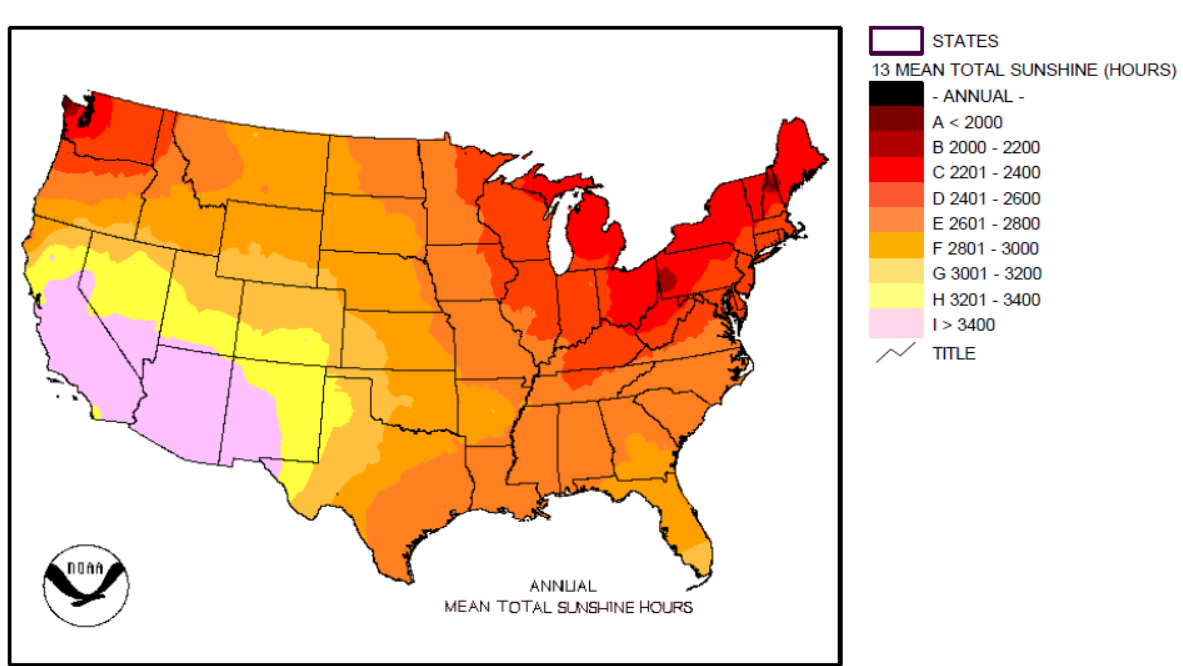
America has vast deserts and other areas that receive plentiful sunshine, perfect for solar energy.
Fertilizer and many other products: A big culprit is lack of money to create a safe, viable supply chain. Our current ports, truck lines and other segments of the supply chain all are at the minimum level required for normal times, with no backup. This always was an existential risk for the U.S. economy,
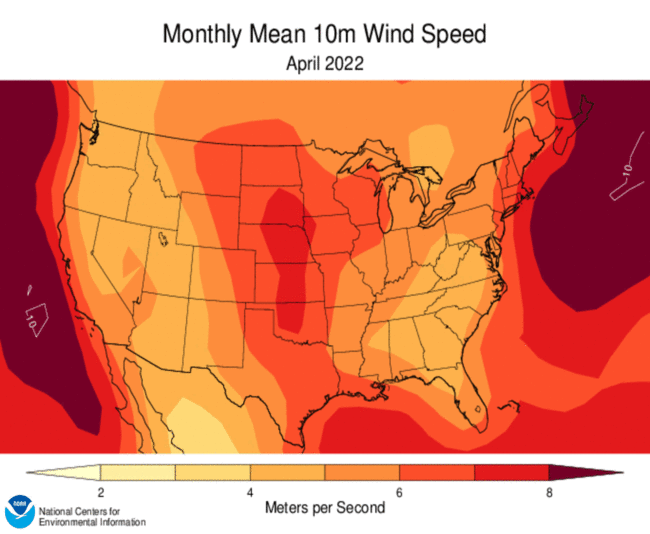
The Midwest and shore areas of America are good locations for wind energy.
and now COVID has disrupted the entire length of the chain. To protect America, the government should help strengthen the chain.
Computer chips: Most are produced in foreign nations. This is too vital a product to rely on foreign production. The federal government should provide money incentives for domestic production to safeguard our economy.
Labor: People won’t work for low salaries. Federal spending FICA and providing Medicare for All would give businesses financial room to raise salaries. Additional tax incentivesfor salaries would encourage businesses to raise pay.
None of the above problems will be addressed by “Dr. Powell’s” prescription of interest rate increases or by federal spending decreases. He is applying leeches to cure anemia.
Chairman Powell thinks the problem is too much money in the economy, when exactly the opposite is true. Too little money is available to cure the shortages that are the real cause of inflation.
The economy is not “overheated,” as Powell claims. Despite trillions having been spent, the current problem is lack of continued spending.
When COVID hit us, the federal government’s spending was good economic medicine that addressed the symptoms and prevented a deep recession, but the underlying shortage “diseases” remain.
Powell wants to discontinue the medicine because he wrongly believes, despite ample evidence, that federal spending causes inflation and recession.
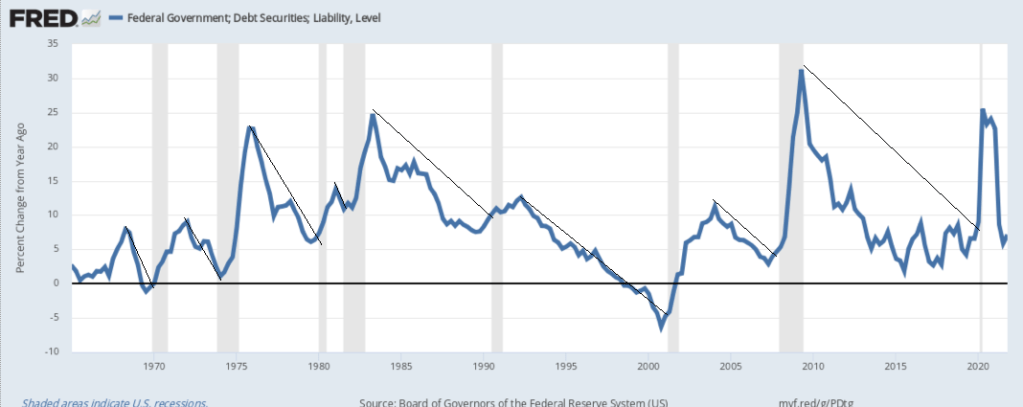
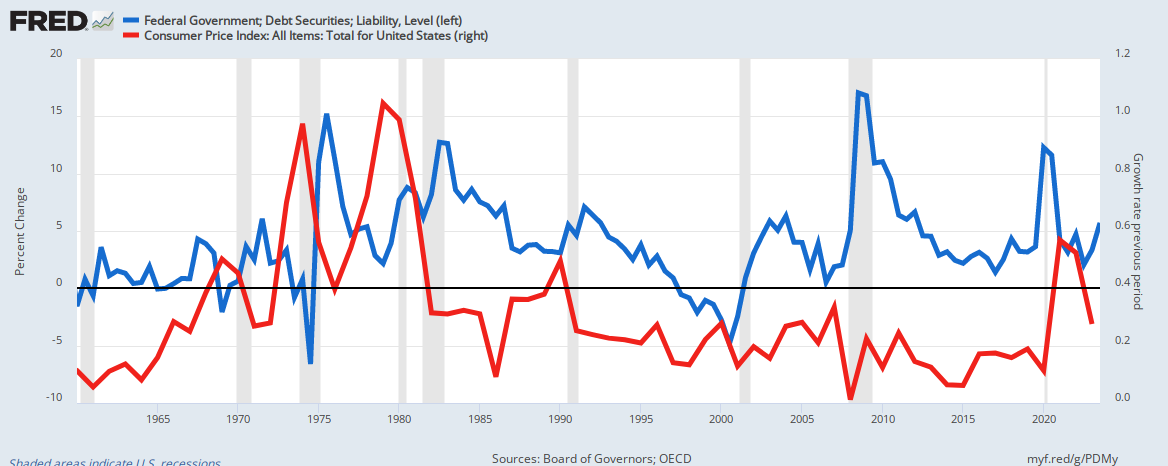
The blue line shows changes in federal deficit spending. Diagonal lines show reduced deficit trends leading to recessions. The vertical gray bars are the recessions caused by reduced deficit growth — exactly what Powell wants to do.
The trend lines show that recessions begin after periods of reduced federal deficit growth. Recessions are cured by increased federal deficit growth.
Inflation (red) vs. federal deficit spending (blue). Data do not indicate that federal deficit spending causes inflation.
Federal deficit spending does not cause inflations or recessions. The opposite is true. The lack of federal spending causes inflations and recessions.
In Summary, Chairman Powell figuratively is applying leeches to cure anemia. He is doing exactly the wrong things to cure inflation and to prevent recessions.
Increasing interest rates will not cure the problem that actually causes inflation: Shortages of key products and services. Nor will cuts to federal deficits prevent a recession.
The Fed cannot do what it was not designed to do. Congress, not the Fed, can and must act to cure the shortages that cause inflation.
Democrats beware: Powell’s policies will worsen the inflation and cause a deep recession, and unless Congress acts to cure the shortages, we will have a depression.
And Democrats will receive the blame.
//////////////////////////////
[No rational person would take dollars from the economy and give them to a federal government that has the infinite ability to create dollars.]
Gap Psychology describes the common desire to distance oneself from those “below” in any socio-economic ranking, and to come nearer those “above.” The socio-economic distance is referred to as “The Gap.”
Wide Gaps negatively affect poverty, health and longevity, education, housing, law and crime, war, leadership, ownership, bigotry, supply and demand, taxation, GDP, international relations, scientific advancement, the environment, human motivation and well-being, and virtually every other issue in economics.Implementation of Monetary Sovereignty and The Ten Steps To Prosperity can grow the economy and narrow the Gaps: Ten Steps To Prosperity:
Congress has given the Federal Reserve the task of controlling inflation without causing a recession.
When a product or service is in short supply, the price goes up. As you have read on this blog, inflation always is caused by shortages of key goods and services.
Not by government spending, not by government waste, not by interest rates — inflation always has the same cause: Shortages.
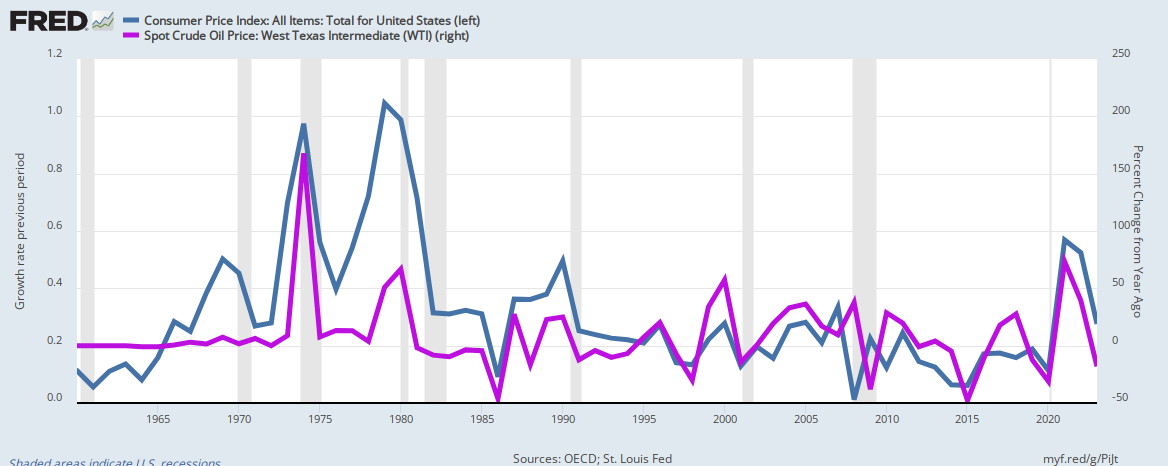
In this regard, the single most important group of inflation-causing products is energy: Oil, gas, solar, wind, geothermal, and nuclear, with a focus on oil.The blue line is inflation. The purple line is oil pricing. The vertical gray bars are recessions. Inflation tends to parallel oil pricing. Oil shortages cause oil prices to rise, which in turn, leads to inflation.
Other factors play some inflationary role, of course, but oil has been paramount. Thus, a powerful method for combating inflation would be to combat an increase in oil prices.
Lower oil prices can result from increased oil supplies and/or by increased use of alternatives to oil. All of this can be facilitated via federal deficit spending.
The government can reward directly or via tax laws, additional oil drilling, refining, and transportation. It can do the same for all other energy sources: Natural gas, solar, wind, ocean, geothermal, hydrogen, bio, and nuclear energy.
Additionally, it can reward and fund alternative energy uses: Electric cars, busses, planes, trains, energy-efficient appliances, homes, offices, and buildings.
Thus counterintuitively, the proper application of increased rather than decreased deficit spending can reduce inflation.
So-called “excessive” federal spending, and a so-called “overheated” (rapidly growing) economy, do not seem to cause inflation. Generally, they cause prosperity.
Again, the blue line is inflation. The red line represents federal deficit spending. No parallelism here.
The above graph also shows that the growth of federal deficit spending declinesin advance of recessions and rises during recessions (to cure recessions).
The reason: Economic growth requires money growth, and federal spending helps boost economic growth.
Without sufficient money growth we have recessions, and the only way those recessions are cured is with the federal input of dollars. That is how the government cured the short-lived COVID recession of 2020 and all previous recessions.
Reducing federal input now, will put us right back into a recession.
The Federal Reserve tells us it needs to increase interest rates to “cool” the economy. What does cooling the economy really mean? Why would we want to “cool” economic growth?
Again, the blue line is inflation. The red line shows interest rates (Fed Funds rate). The lines are reasonably parallel.
“Cooling” an economy means to backoff on federal deficit spending, which will recess the economy, i.e. move it toward recession.
The Fed has hoped to “cool” the economy without causing a recession. That is like draining blood while hoping not to cause anemia.
The above graph indicates that high interest rates are associated with high inflation and low interest rates are associated with low inflation. The Fed raises interest rates when it expects inflation, but that doesn’t cure the causes of inflation.
Compare interest rates to recessions (those vertical gray bars). We see a very strong tendency for interest rates to rise in advance of recessions and to come down during recessions. This demonstrates the recessionary effect of raising interest rates.
The Fed’s Data Show:
Inflations are caused by shortages of key goods and services.
Inflations are not caused by federal deficit spending, which if applied toward reducing shortages, actually can cure inflations.
Oil shortages cause the price of oil to rise. Oil prices affect the prices of most goods and services, which directly links shortages of oil to inflation.
The federal government has many financial tools to prevent oil shortages, including tax and money benefits for production plus tax and money benefits for reduced usage.
Federal deficit spending grows the economy by adding dollars to the economy. Reductions in deficit growth lead to recessions. Increases in deficit growth cure recessions.
Increasing interest rates can have a modest ability to temper inflations by increasing the dollar’s value. But these increases also lead to recessions by making investments more expensive.
The economy (i.e. the private sector) never should be “cooled,” in that “cooling” implies the recessionary slowing of economic growth.
Inflation should be fought by federal spending to increase the supplies of scarce products or services and by helping the people afford to spend on goods and services. That is what made the COVID recession brief.
Given its Congressional mandate to control inflation, what tools does the Fed haveto accomplish its mission?
Here is the opinion of a website named “the balance.”
How the Federal Reserve Controls InflationThe Fed has several tools it traditionally uses to tame inflation. Open Market Operations (OMO)The Fed buys or sells securities, typically Treasury notes, from its member banks. It buys securities when it wants them to have more money to lend. It sells these securities, which the banks are forced to buy.
Selling securities (which the Fed is doing now) reduces the private sector’s liquidity, which is recessive in that it effectively reduces the economy’s spending-money supply.
Fed Funds Rate (FFR)The FFR is the interest rate banks charge for overnight loans they make to each other.Discount RateThe Fed also changes the discount rate. That’s the interest rate the Fed charges to allow banks to borrow funds from the Fed’s discount window.
Interest rate increases supposedly mitigate against inflation by increasing the demand for (and price of) U.S. dollars (with which to purchase dollar-denominated bonds).
But that effect, if it exists, is quite small, as inflation does not seem to respond as the Fed predicts.
Managing Public ExpectationsFormer Chairman Ben Bernanke noted that public expectations of inflation are an important influencer of the inflation rate. Once people anticipate future price increases, they create a self-fulfilling prophecy. They plan for future price increases by buying more now, thus driving up inflation even more.
Tellingly, none of the Fed’s tools addresses the fundamental cause of inflation: Shortages of key goods and services.
Today’s inflation is due to shortages of food, lumber, computer chips, labor, supply chains, etc., and particularly of energy.
None of these shortages will be ameliorated by the Fed’s actions. In short, the Fed has been told to battle inflation and has been given, no weapons for the fight.
The Fed’s history of responding to inflation gives you an insight into what may work and what doesn’t.
Bernanke said the mistake the Fed made in controlling inflation in the 1970s was its go-stop monetary policy. It raised rates to combat inflation, then lowered them to avoid recession.
That volatility convinced businesses to keep their prices high.
It wasn’t the “stop-go” policy. The Fed failed, and still fails, to recognize that inflation is notcaused by the oft-quoted but mythical, “Too much money chasing too few goods.”Inflation, very simply, is caused by shortages — i.e. the “too few goods” part of the quote. In effect, the Fed has tried to cure a sprained ankle by an amputation.
Supply Chain Woes: There is a shortage of shipping containers because so many are full or stuck on vessels waiting to unload.Big rig trucks are sitting idle and unable to move goods to alleviate the backlog because mechanics are waiting on parts for repairs which are at the port waiting to be trucked. Equipment such as water pumps, NOX sensors, and rebuild kits are delayed for the want of a truck to deliver the parts. And manufacturers of new trucks are running into the same problem as car manufacturers — a chip shortage — creating a reported backlog of 260,000 truck orders.
Nothing the Fed has the power to do will alleviate the supply chain woes. Congress, however, does have the tools at its disposal.
It can pay for the import and/or production of shipping containers. It can pay for more truck imports or production. It can pay for more truck drivers. It can pay for more chips to be imported or manufactured.
Congress and the President uniquely have the power to fix what is wrong with the U.S. economy, including inflation, but to do so, they must recognize that the problem is scarcity, not “heat.”
The problem doesn’t seem to be getting better. It’s beginning to look like the supply chain crisis will persist through all of 2022.The most pressing problem in the supply chain is the shortage of semiconductor chipswhich has damaged many sectors, and is expected to last beyond 2022. This is the most critical shortage impacting manufacturing.If a product has any sort of electronics, it’s got a chip.Suppliers are planning on upping production, but the new facilities won’t be online to alleviate the shortfall until 2023 or 2024. Other experts are more optimistic.Intel is back in the chip game and plans to open two facilities in Arizona at a cost of $20 billion. TSMC is also building a plant in the state as well at a cost of $12 billion.Malaysia’s Unisem, a major chip assembler and tester, will close it’s Ipoh plants until September 15 to stop the spread of COVID-19 after three employees died.Rohm, who supplies chips to Toyota and Ford, expects the shortage to continue through 2022.
The Fed can do nothing to correct the chip problem. Congress can aid financially, in the purchase and production of chips.
New Automobiles, Used Vehicles and Parts“…the auto industry faces a volume drop of up to 36 million units over the next three years…”— AlixPartnersDue to a worldwide shortage of semiconductor chips, car manufacturers have cut back or stopped production on some new vehicles. An estimated 7.7 million vehicles will not be produced this year. This is driving up prices and demand for used vehicles, which is exacerbating ongoing delays for parts.Demand for used vehicles has been climbing, mostly due to the downturn in new car production and COVID. Auto manufacturers are reporting shortages of wiring harnesses, plastics and glass, in addition to the chip problem. This is impacting auto parts supplies. Also, it looks as if there may be a tire shortagein the future, according to Car and Driver.Arabica Coffee Beans:Coffee is one of the biggest imports. after petroleum for many nations. The price is the highest since 2014 and Arabica beans have risen 40%.Colombia and Brazil account for two-thirds of the world’s Arabica production and both nations’ output has been slashed. Lumber, Paper Pulp, Toilet Paper, Cardboard, Books. “Soaring lumber prices that have tripled over the past 12 months has caused the price of an average new single-family home to increase by $35,872.” — National Association of Home BuildersLabor shortages, and greater demand for boxes from online merchants is currently impacting many industries that rely on paper products. Wood pulp, a byproduct of wood used as a raw material for paper products, has increased 50.2% over the past year.The toilet paper shortage is currently as bad as it was at the beginning of the pandemic. Only 60% of orders to retailers are being shipped. Costco is reinstating purchasing limits across the nation.
Labor shortages have two fundamental causes, both of which can be addressed by the federal government: Insufficient mechanization and insufficient net pay to workers.
The federal government could help fund labor-saving mechanization via tax breaks and/or via direct subsidy.
The federal government could encourage more hiring by eliminating the useless, regressive FICA tax, which penalizes businesses for hiring and workers for working.
Additionally, offering free Medicare for All would eliminate another hiring cost from those companies that now fund healthcare insurance for workers.
Increasing Social Security benefits would eliminate the need for company-sponsored retirement plans.
Shortages of wheat, barley, beans, peas:Probably no shortage is more disconcerting than food, especially a staple product like wheat. You can blame a drought in Southwest, West, and Northern Great Plains states, affecting 98% of the spring wheat production.
The federal government should fund farmers for growing rather than paying them for not growing. This includes paying for labor and allowing more immigrant labor, in addition to funding farming education, equipment, and research into more productive crop species — things that will increase food production.
Shortages of HVAC equipment, parts, refrigerant: a decline of 40% of its annual productionContractors are reporting difficulty sourcing parts and refrigerant due to the supply chain disruption and chip shortage.The labor shortage has also visited the industry. Raw materials that go into these systems such as steel, aluminum, copper and plastics are in short supply. Also scarce are electrical components, such as motors and compressors, along with evaporator coils, resins for pans, and control boards.Shortages of Silicone rubber: Silicone rubber prices have increased up to 25% and further hikes are predicted. This shortfall in supply appears to be driven by scarcity due to the supply chain, increased demand, and labor shortage.Shortage of Appliances: COVID messed up both the supply and demand side of major appliances like refrigerators, freezers, dishwashers, dryers, dehumidifiers, and microwaves. Manufacturers are grappling with a shortage of stainless steel and a 20% increase in the cost of raw materials. Expect higher prices and delays of up to 8 months.Shortage of Chicken Wings: Climate change, along with rising demand has created a shortage of chicken wings. The price of wings is up a reported 87%.Shortage of Pool Liners, Chemicals, Chlorine Tabs: Shortages of PVC pipe, valves, tile, heaters, and concrete used in other industries is causing construction delays. The ongoing national labor shortage is negatively impacting pool and spa businesses.Chlorine tablets are in short supply after a fire at the BioLab facility, and of course, COVID-19. Shortage of Drywall: Thanks to the Texas spring blizzard, a facility producing latex was severely damaged. This, along with a shortage of synthetic gypsum, led to the a decline in inventory.Shortage of Printers and Ink: One of the unforeseen consequences of millions of people working at home was the increased demand for printers and ink. There is a backlog of billions of dollars of consumer goods waiting at the nation’s ports — in addition to all the supplies to keep the economy moving.The backlog at ports is stalling the moving of goods through the supply chain and now is threatening economic collapse on a global scale.
IN SUMMARY
The fundamental causes of all inflations are shortages. The fundamental effect ofinflations is they reduce the people’s ability to buy.
Congress and the President have the tools to combat both the causes and effects of inflation. To combat the causes, the government can use its infinite financial power to reduce shortages.
To combat the effects of inflation, the government can use its infinite financial power to provide the populace with net, take-home money.
The Fed cannot address the shortages that cause inflations, nor can it cure the effects of inflations. It doesn’t have the tools.
Raising interest rates and selling Treasuries to cure inflation is like using a sponge to cure a flood.
Congress and the President have the spending and tools to control all aspects of the economy, including inflation, deflation, recession, depression, and growth.
They should use them.
Rodger Malcolm Mitchell
Monetary SovereigntyTwitter: @rodgermitchellSearch #monetarysovereigntyFacebook: Rodger Malcolm Mitchell
……………………………………………………………………..
THE SOLE PURPOSE OF GOVERNMENT IS TO IMPROVE AND PROTECT THE LIVES OF THE PEOPLE.
Gap Psychology describes the common desire to distance oneself from those “below” in any socio-economic ranking, and to come nearer those “above.” The socio-economic distance is referred to as “The Gap.”
Wide Gaps negatively affect poverty, health and longevity, education, housing, law and crime, war, leadership, ownership, bigotry, supply and demand, taxation, GDP, international relations, scientific advancement, the environment, human motivation and well-being, and virtually every other issue in economics.Implementation of Monetary Sovereignty and The Ten Steps To Prosperity can grow the economy and narrow the Gaps:
Ten Steps To Prosperity:
If you are Black or Hispanic in a state that already limits access to abortions, you are far more likely than a white woman to have one
By Emily Wagster Pettus and Leah Willingham, Associated Press February 1, 2022
The numbers are unambiguous. In Mississippi, people of color comprise 44% of the population but 80% of women receiving abortions, according to the Kaiser Family Foundation, which tracks health statistics.
In Texas, they’re 59% of the population and 74% of those receiving abortions. The numbers in Alabama are 35% and 70%. In Louisiana, minorities represent 42% of the population, according to the state Health Department, and about 72% of those receiving abortions.
“Abortion restrictions are racist,” said Cathy Torres, a 25-year-old organizing manager with Frontera Fund, a Texas organization that helps women pay for abortions. “They directly impact people of color, Black, brown, Indigenous people … people who are trying to make ends meet.”
Why the great disparities? Laurie Bertram Roberts, executive director of the Alabama-based Yellowhammer Fund, which provides financial support for women seeking abortion, said women of color in states with restrictive abortion laws often have limited access to health care and a lack of choices for effective birth control.
Schools often have ineffective or inadequate sex education.
If abortions are outlawed, those same women — often poor — will likely have the hardest time traveling to distant parts of the country to terminate pregnancies or raising children they might struggle to afford, said Roberts, who is Black.
—–/////—–
The Turnaway Study conducted at the University of California, San Francisco, shows that women experience harm from being denied a wanted abortion.* These findings have far-reaching implications for lawmakers, judges, health agencies, and others as they consider policies that restrict abortion access.
Denying a woman an abortion creates economic hardship and insecurity which lasts for years.
• Women who were turned away and went on to give birth experienced an increase in household poverty lasting at least four years relative to those who received an abortion. • Years after an abortion denial, women were more likely to not have enough money to cover basic living expenses like food, housing, and transportation. • Being denied an abortion lowered a woman’s credit score, increased a woman’s amount of debt, and increased the number of her negative public financial records, such as bankruptcies and evictions.
Women turned away from getting an abortion are more likely to stay in contact with a violent partner. They are also more likely to raise the resulting child alone.
• Physical violence from the man involved in the pregnancy decreased for women who received abortions but not for the women who were denied abortions and gave birth. • By five years, women denied abortions were more likely to be raising children alone – without family members or male partners – compared to women who received an abortion.
The financial well-being and development of children is negatively impacted when their mothers are denied abortion.
• The children women already have when they seek abortions show worse child development when their mother is denied an abortion compared to the children of women who receive one. • Children born due to abortion denial are more likely to live below the federal poverty level than children born from a subsequent pregnancy to women who received the abortion. • Carrying an unwanted pregnancy to term is associated with poorer maternal bonding, such as feeling trapped or resenting the baby, with the child born after abortion denial, compared to the next child born to a woman who received an abortion.
Giving birth is connected to more serious health problems than having an abortion.
• Women who were denied an abortion and gave birth reported more life-threatening complicationslike eclampsia and postpartum hemorrhage than those who received wanted abortions. • Women who were denied an abortion and gave birth instead reported more chronic headaches or migraines, joint pain, and gestational hypertension than those who had an abortion. • The higher risks of childbirth were tragically demonstrated by two women who were denied an abortion and died following delivery. No women died from an abortion.
Women who receive a wanted abortion are more financially stable, set more ambitious goals, raise children under more stable conditions, and are more likely to have a wanted child later.
Don’t think we Supreme Court Justices care only about punishing women, especially poor women or women of color.
We also plan to void all laws that aid immigrants and immigrants’ children, birthright children, gays, Muslims, the elderly, and poor people.
We’re not going to feed them, educate them, house them, clothe them or help them to vote. We want them to be an impoverished, uneducated helpless underclass whom we can blame for crime and then imprison or enslave, like the good old days.
We’re pro-life except for guns and children already born.
And don’t kid yourself about us being independent arbiters. We’re as political as Chicago aldermen, and just as honest. (Hey, why would being married to a crazy white supremacist bar me from judging crazy white supremacists?)
In short, we will twist the words of the Constitution, while claiming we are “strict constructionists” (except for the 2nd Amendment, when we choose to ignore the first thirteen words).
We’ll also ignore changing times, so we can direct America into the most bigoted, narrow-minded, short-sighted, archaic, unAmerican, mean-spirited avenues available to us, so long as they don’t hurt the rich, white, and powerful.
We like the rich, white, and powerful, and the rich, white, and powerful like us (except for Justice Thomas who despises blacks even more than he despises whites).
We have lifetime appointments, so we can do anything we want. We love every detail of the law. Just don’t expect us to give a damn about you people, too.
Gap Psychology describes the common desire to distance oneself from those “below” in any socio-economic ranking, and to come nearer those “above.” The socio-economic distance is referred to as “The Gap.”
Wide Gaps negatively affect poverty, health and longevity, education, housing, law and crime, war, leadership, ownership, bigotry, supply and demand, taxation, GDP, international relations, scientific advancement, the environment, human motivation and well-being, and virtually every other issue in economics.Implementation of Monetary Sovereignty and The Ten Steps To Prosperity can grow the economy and narrow the Gaps: Ten Steps To Prosperity:







 Don’t think we Supreme Court Justices care only about punishing women, especially poor women or women of color.
 #Monetary Sovereignty - Mitchell