We Americans are accustomed to puffing out our chests and claiming that we are the greatest nation on earth. We probably have the greatest fighting force (or did until Trump appointed a clown to lead it), but otherwise we have fallen far from the top.
(And please no smart-ass “Love it or leave it” comments. If that’s your best, you are a FOX News viewer without the intelligence or honesty to understand facts. So stop reading now, and get the rest of your information from Donald Trump.)
Here is an example of the greatest nation on earth:
By Sriparna Roy. March 12, 202612:03 AM EDT Updated March 13, 2026
Unlike state and local governments, the U.S. federal government never can run short of dollars. Even if it stopped collecting taxes, while tripling its spending, it still would not run short of money.
March 12 (Reuters) – Roughly one-third of Americans cut back on food, utilities or other daily expenses to pay for healthcare last year, research from the West Health-Gallup Center showed on Thursday, as steeper prices and rising living costs hit households.
A nationally and state-representative survey of nearly 20,000 U.S. adults in all 50 states and in the District of Columbia, conducted from June to August 2025, found that 33% of respondents had made at least one trade-off in daily expenses to pay for healthcare.
This was far more common among Americans who do not have health insurance, with 62% of those surveyed saying they have made at least one sacrifice to pay for healthcare, including 32% who had to borrow money and 24% who had prolonged their current medication.
Among those with insurance, close to three in 10 have made at least one sacrifice, the survey found.
Most Americans with private health insurance are paying higher premiums and steeper out-of-pocket costs in 2026, including millions of people in the government-subsidized Affordable Care Act plans in which extra COVID pandemic-era subsidies have expired.
One-third of Americans had to cut back on food, utilities, or daily expenses to pay for healthcare? The greatest nation on earth??
Hah. Gimme a break.
It’s not that the “greatest nation on earth” can’tafford healthcare. It’s simply that the right-wing government of the greatest nation on earth doesn’t want to pay for it because …uh…it would benefit the poor, whom everyone knows are lazy, good-for-nothings who want everything free. Right?
Oh, and then there’s the right-wing excuse that aiding the poor is “Socialism” while aiding the rich (via tax dodges) is good old capitalism.
Here is what some capitalists say about that:
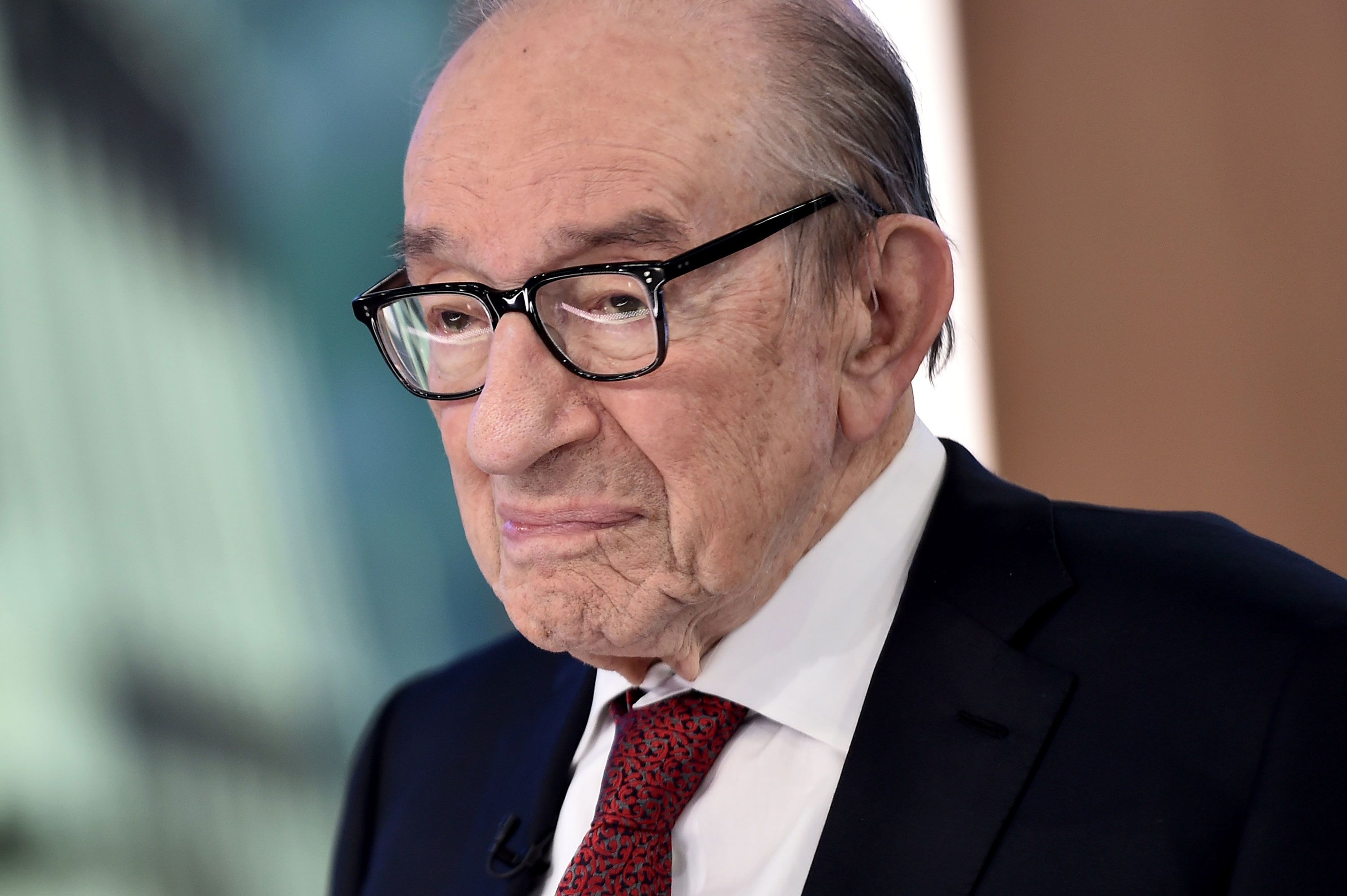
Fed Chair Greenspan
Former Federal Reserve Chairman Alan Greenspan: “A government cannot become insolvent with respect to obligations in its own currency. There is nothing to prevent the federal government from creating as much money as it wants and paying it to somebody. The United States can pay any debt it has because we can always print the money to do that.”
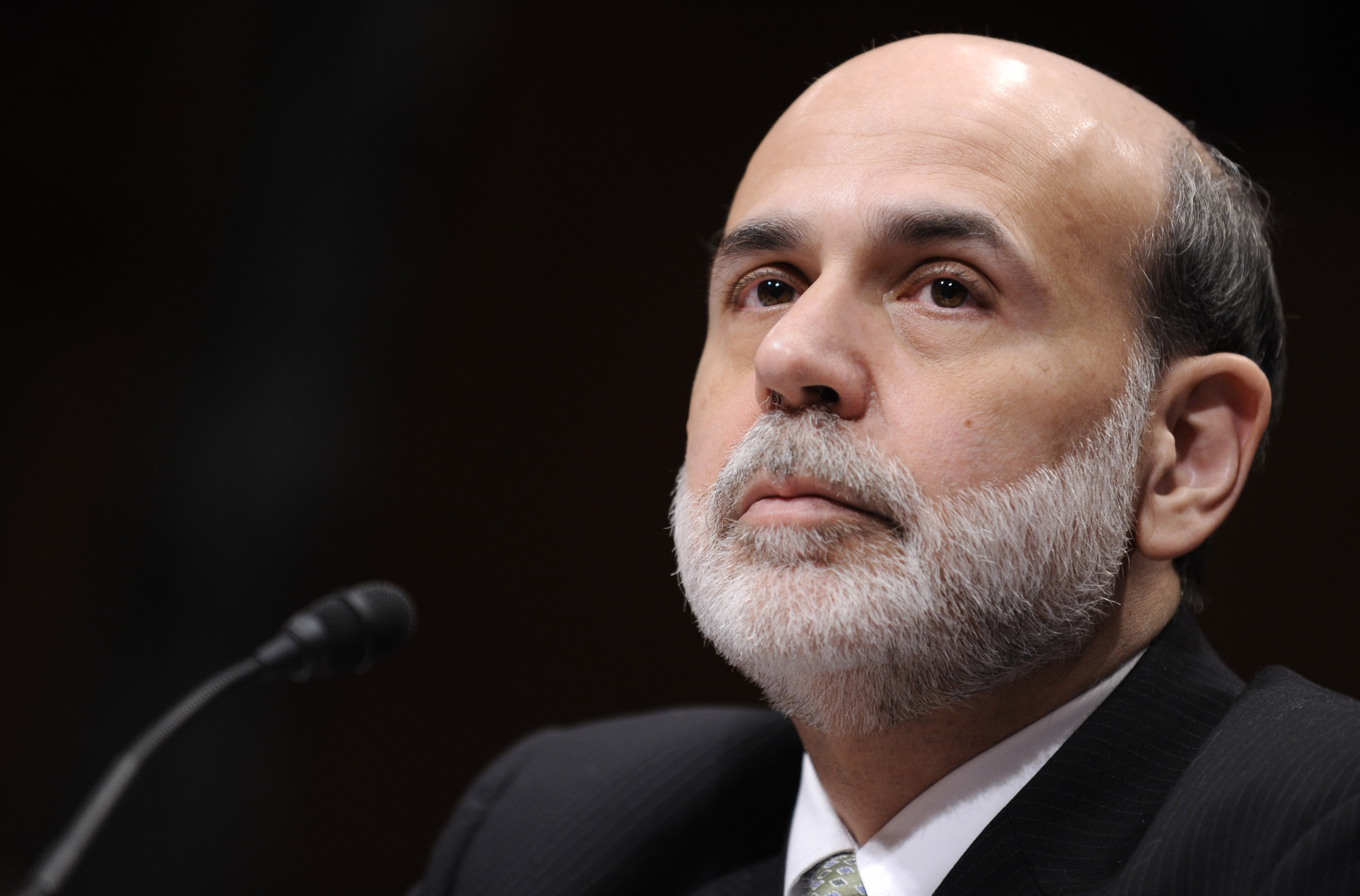
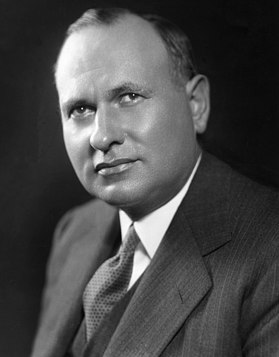
Fed Chair BernankeFed Chair Beardsley Rummel
Ben Bernanke: “The U.S. government has a technology, called a printing press (or, today, its electronic equivalent), that allows it to produce as many U.S. dollars as it wishes at essentially no cost. It’s not tax money… We simply use the computer to mark up the size of the account.
Former Federal Reserve Chairman Beardsley Ruml: “The necessity for a government to tax in order to maintain both its independence and its solvency is true for state and local governments, but it is not true for a national government. The public purpose which is served should never be obscured in a tax program under the mask of raising revenue.”
Federel Reserve Chairman Jerome Powell stated, “As a central bank, we have the ability to create money digitally.
Former Secretary of the Treasury Paul O’Neill
Statement from the St. Louis Fed: “As the sole manufacturer of dollars, whose debt is denominated in dollars, the U.S. government can never become insolvent, i.e., unable to pay its bills. In this sense, the government is not dependent on credit markets to remain operational.” You can find it in their publication titled “Why Health Care Matters and the Current Debt Does Not”
Former Secretary of the Treasury Paul O’Neill: “I come to you as a managing trustee of Social Security. Today we have no assets in the trust fund. We have promises of the good faith and credit of the United States government that benefits will flow.”
Former President of the ECB and Prime Minister of Italy Marie Draghi
The European Central Bank (ECB), like the U.S. government, is Monetarily Sovereign. Press Conference: Mario Draghi, President of the ECB, 9 January 2014 Question: I am wondering: can the ECB ever run out of money? Mario Draghi: Technically, no. We cannot run out of money.
Paul Krugman, an award-winning economist
Paul Krugman (Nobel Prize–winning economist): “The U.S. government is not like a household. It literally prints money, and it can’t run out.” — Numerous op-eds/blog posts
Hyman Minsky (Economist, key influence on MMT) “The government can always finance its spending by creating money.”
Eric Tymoigne (Economist) “A sovereign government does not need to collect taxes or issue bonds to finance spending. It finances directly through money creation.”
Yes, though the compulsive liars of FOX News may disagree, true experts will tell you that the U.S. government has the unlimited capacity to finance healthcare insurance for every man, woman, and child in America, while still having sufficient funds for any future wars that Presidents may initiate to distract voters from the latest scandals.
Then, in a last-ditch effort to take dollars from the pockets of the poor, the right wing will falsely claim that “too much” federal spending causes inflation. (“too much” is any amount that helps the poor but doesn’t enrich the President’s family).
You will notice that there always is enough money to start wars and to prosecute enemies. As this is being written, the Conservatives request an additional $200 billion to fight an unnecessary war, which will subsequently require billions more to replenish our depleted munitions.
Those brave fighters won’t be deterred by the loss of human life or myths about inflation.
The next time you are forced to choose between paying for health care vs. food, clothing, or school for your kids, do remember to thank the Republican Party and President Trump, and name another street after him.
One would hope that historians, and especially economists, would understand the differences between federal financing (Monetary Sovereignty) and personal financing (monetary non-sovereignty).
Sadly, any such hopes seem dashed by this MSN article.
The national debt has grown to $38 trillion. The United States’ national debt, currently standing at $38 trillion and exceeding 120% of annual economic output, demands action, experts warn.
The article lists and describes the panic-stricken statements from “experts” about the federal debt from 1940 through today. In 1940, it was $43 billion— roughly 44% of GDP at the time.
As debt and the debt-to-GDP ratio rose, the economy grew and prospered. Yet, the panic has continued, and the screams have become ever more strident. Now, the so-called “debt” (that isn’t really debt; it’s deposits) has grown nearly a thousand-fold, the sky has not fallen, and we continue to be pummelled with articles like Nick Lichtenberg’s.
Having learned absolutely nothing in the past eighty-five (!) years, the experts continue to panic and scream, hoping you, too, will panic and scream. For your amusement, and perhaps sorrow, here’s the latest.
The nonpartisan Peter G. Peterson Foundation gathered a series of distinguished national economists and historians from outside the foundation in a collection of essays published Thursday.
They analyzed risks to U.S. economic strength, dollar dominance, and global leadership.
Ah, yes, distinguished national economists and historians — distinguished by their misunderstanding of the difference between federal government financing vs. state/local government financing. The former is Monetarily Sovereign; the latter is monetarily nonsovereign — two different animals.
The experts also explored the national debt’s impact on interest rates, inflation, and financial markets, with some characterizing this moment in history as a crisis.
A crisis of ignorance.
Collectively, they argue that the nation is operating under a dangerous fiscal gamble.
Assessing the mounting liabilities delivered a stark judgment: “In simpler terms, we are guilty of spending our rainy-day fundin sunny weather.” Meaning, the government has little “dry powder” left to fund a major military effort or stimulate the economy during a crisis.
And what exactly is our “rainy-day fund”? How much is it? Where is it stored? And that “dry powder,” how much is it and where is it stored?
Feel free to ask Council on Foreign Relations President Emeritus Richard Haass and NYU professor Carolyn Kissane. However, they won’t know, because the fund and powder do not exist, not in real or even metaphorical terms.
Well, in one sense, they do exist in the Monetary Sovereignty of the U.S. government, which has the infinite ability to create dollars (and dry powder) merely by pressing computer keys.
Who says so? A few real experts, not the self-proclaimed, self-aggrandized, overly anointed kind:
Former Fed Chairman Alan Greenspan: “A government cannot become insolvent with respect to obligations in its own currency. There is nothing to prevent the federal government from creating as much money as it wants and paying it to somebody. The United States can pay any debt it has because we can always print the money to do that.”
Former Fed Chairman Ben Bernanke: “The U.S. government has a technology, called a printing press (or, today, its electronic equivalent), that allows it to produce as many U.S. dollars as it wishes at essentially no cost. It’s not tax money… We simply use the computer to mark up the size of the account.”
Fed Chairman Jerome Powell: “As a central bank, we can create money digitally.”
Statement from the St. Louis Fed: “As the sole manufacturer of dollars, whose debt is denominated in dollars, the U.S. government can never become insolvent, i.e., unable to pay its bills. In this sense, the government is not dependent on credit markets to remain operational.”
Former Secretary of the Treasury Paul O’Neill: “I come to you as a managing trustee of Social Security. Today, we have no assets in the trust fund. We have promises of the good faith and credit of the United States government that benefits will flow.”
Nobel Prize–winning economist Paul Krugman: “The U.S. government is not like a household. It literally prints money, and it can’t run out.” — Numerous op-eds/blog posts.
Economist Hyman Minsky: “The government can always finance its spending by creating money.”
Economist Eric Tymoigne: “A sovereign government does not need to collect taxes or issue bonds to finance spending. It finances directly through money creation.”
Now, back to the fun:
The debt crisis has reached a critical threshold. The U.S. now spends approximately $1 trillion annually servicing its debt—a figure that surpasses its defense spending.
And why is spending more on interest than on defence significant? It isn’t. Spending is spending. All federal spending adds to GDP. The phrase was just a desperate attempt to shock you. It shouldn’t.
The federal government can pay infinite interest, and the more it pays, the healthier the economy is. Here’s the evidence:
Gross Domestic Product = Federal Spending + Nonfederal Spending + Net Exports
Get it? The more the federal government spends, and the less it taxes (i.e., the greater the deficit), the more Gross Domestic Product grows.
What would be truly shocking is if the federal debt declined. History shows us examples of that decline:
Every Depression in U.S. History Came On the Heels of a Reduced Federal Debt
1804-1812: U. S. Federal Debt reduced 48%. Depression began in 1807.
1817-1821: U. S. Federal Debt reduced 29%. Depression began in 1819.
1823-1836: U. S. Federal Debt reduced 99%. Depression began in 1837.
1852-1857: U. S. Federal Debt reduced 59%. Depression began in 1857.
1867-1873: U. S. Federal Debt reduced 27%. Depression began in 1873.
1880-1893: U. S. Federal Debt reduced 57%. Depression began in 1893.
1920-1930: U. S. Federal Debt reduced 36%. Depression began in 1929.
1997-2001: U. S. Federal Debt reduced 15%. The recession began in 2001.
Economist Heather Long wrote that the 2020s are “fast becoming the era of big permanent deficits” with annual budget gaps projected to remain high (around 6% of GDP) even though unemployment is low, a startling departure from U.S. historical norms.
Let us pray for an “era of big permanent deficits.” The alternative is small deficits or surpluses (which lead to recessions or depressions).
When deficit growth decreases, we have recessions (vertical gray bars), which are cured by increases in deficit growth.
Economists warn that solutions that worked in the past—such as the post-World War II debt reduction or the 1990s surpluses—are unavailable today. Economist Barry Eichengreen explained that the debt’s steep decline after World War II was supported by a highly favorable interest-rate-growth-rate differential (low real interest rates and fast GDP growth). Likewise, the 1990s reduction was fueled by the “peace dividend,” enabling deep cuts in defense spending. “None of these facilitating conditions is present today.”
The only necessary “facilitating conditions” for economic growth are increased federal deficit spending — exactly the thing that creates economic growth.
The Threat to National Security and the Dollar
Eichengreen, for his part, noted that current security threats from Russia, Iran, and the South China Sea create pressure for defense spending increases, not cuts.
Defense spending increases, if they occur, will grow the economy.
Compounding the problem is political polarization, which is cited as the most robust determinant of unsuccessful fiscal consolidation.
“Successful fiscal consolidation” is economics-speak for reduced deficit spending, which causes recessions and depressions.
With major entitlement programs politically protected, this fiscal gridlock leaves raising additional revenueas the most viable path, given that the United States is a low tax-revenue economy compared to its peers.
As the real economists — Greenspan, Bernanke, and Powell — stated above, the federal government neither needs (nor even uses) revenue. It creates all its spending money in three easy steps:
Congress votes.
The President signs
Federal employees press computer keys
And voila, all the millions and billions of dollars the federal government spends are magically created. No tax dollars are involved. It’s all bookkeeping notations.
The debt is framed not just as a financial strain but as a direct threat to security. Haass and Kissane emphasized that money spent on borrowing is “money not available for more productive purposes, from discretionary domestic spending to defense,” a classic case of crowding out.
The above statement is ridiculous on its face, for two, what-should-be-obvious reasons:
The federal government has the infinite ability to create dollars and,
The dollars the government spends go into the economy, where the private sector can use them for productive purposes.
There never has been “crowding out,” and never will be. The government can’t run short, and every dollar spent is added to the economy, boosting spending.
Other underfunded programs—including cybersecurity and public health—hollow out internal capacities that protect the homeland.
It is unclear how an entity with the unlimited ability to create dollars can be “hollowed out,” nor is it explained how an economy that receives more dollars is being “hollowed out.”
I imagine there is no explanation simply because it cannot be explained. It is utter nonsense.
The crisis was characterized by Haass and Kissane as moving in “slow motion,” the most challenging type for democratic governments to address effectively. Avoiding a sudden “cliff scenario” in which bond markets crash, experts argue, is not avoiding the crisis itself; they added: “The day will come when the boiling water finally kills the frog.”
Ah, yes, “slow motion” because it isn’t happening yet, even though we’ve been predicting it for 85 years. And that darn old frog simply doesn’t understand that it’s supposed to have died by now.
The institutional integrity undergirding the U.S. dollar is also at risk. Historian Harold James wrote that he sees the situation as “the middle of a very dangerous experiment with the U.S. dollar, and with the international monetary system, whose fundamental driver is a fiscal gamble.” Erosion of the rule of law, accountability, and transparency raises the “specter of political risk in U.S. sovereign bond markets,” making it harder to maintain dollar dominance. Disturbingly, the potential for political interference in institutions, such as the Federal Reserve or the tampering with national statistics—as seen in Argentina’s cautionary tale—further erodes confidence.
Historian Harold James probably doesn’t realize it, but he’s not talking about the federal debt. Instead, he’s talking about dictator wannabe Donald Trump, and a cowardly do-nothing Congress, plus the morally compromised right wing of the Supreme Court.
They are the ones — not the essential debt growth –who are creating and countenancing the fall of the American economy, .
James’ colleague, Princeton politics professor Layna Mosley, cited the famous comment from the French statesman Valéry Giscard d’Estaing, who described the “exorbitant privilege” the U.S. enjoyed on the back of the dollar. She noted that, by virtue of the global role of the U.S. dollar and the U.S. leadership of the international financial system, the U.S. government has been able to borrow significant amounts on generous terms. But now, government actions and policy generate uncertainty and instability and “undermine the rules-based liberal international order from which the U.S. benefited greatly.”
Sounds frightening, except for one small detail. The U.S. federal government does not borrow.
As the representative of the St. Louis Fed correctly stated (above), “the government is not dependent on credit markets to remain operational.”
The federal government creates all the dollars it spends just by pressing computer keys. The government neither needs nor uses any income, whether from borrowing or taxes.
Rather than providing spending money, the purposes of federal taxes are to:
Control the economy by taxing what the government wishes to discourage and by giving tax breaks to what it wishes to reward.
Assure demand for the U.S. dollar by requiring taxes to be paid in dollars.
The purposes of Treasury securities (T-bills, T-notes, T-bonds) are to:
To help the Fed control interest rates by providing a “floor” rate.
To provide dollar holders with a safe, interest-paying place to store unused dollars, which supports the value of dollars.
This loss of credibility empowers bond markets, and their displeasure can lead to sudden, painful economic consequences for everyday Americans through surging mortgage and loan interest rates. Haass and Kissane turned to another metaphor, saying the situation is akin to “forgoing fire or automobile insurance just because the odds are you will not suffer from a fire at home or an accident on the road.”
The above metaphor is a backward attempt to explain why all those “doomsday” predictions have been wrong. The better advice would be: “Don’t bet your life savings on misinformation from the media, the politicians and many economists, because for 85 years, you’d have lost.”
Learn from experience. The only loss of credibility will be endured by the noted historians and economists who, once again, as they have for the past eighty-five years, will be forced to come up with excuses for why the economy does not obey their dire predictions.
You can’t blame the public for not understanding economics when economists themselves struggle to comprehend it.
Here are excerpts from two articles that demonstrate the incredible ignorance (or perhaps, intentional misleadingness) from people who should (or perhaps do) know better.
The first is from Paul Krugman, who is billed as having won the Nobel Prize (He didn’t. It was the Nobel Memorial Prize in Economic Sciences, officially the Sveriges Riksbank Prize in Economic Sciences in Memory of Alfred Nobel ).
The following article ran July 3, 2025.
Trump’s Big Beautiful Debt Bomb
The budget bill is both devastatingly cruel and deeply irresponsiblePaul Krugman, Jul 03, 2025Do readers remember the debt panic of the early Obama years? For a while scare stories about national debt dominated discussion in the media and inside the Beltway.
I got a lot of grief at the time for bucking that consensus, urging people to relax about government debt. The United States, I argued, had lots of “fiscal space” — ability to run up debt without losing investor confidence — so it should focus instead on the importance of restoring full employment, which required running substantial deficits.
So far, so good. He was right to tell people to “relax about government debt.”
His argument, though, about “fiscal space” is troubling, because it hints that there are times when we don’t have “fiscal space, and should worry about government debt (which isn’t government and isn’t debt.)
The money is owned by the public, not by the government, and resides in Treasury Security deposits. If it were debt, the government would own the money and owe it to the creditors.
Depositing dollars into an account that you own — dollars you always own and the government never touches — does not create “government debt.” (Think of a safe deposit box, and you will have a better understanding of Treasury Securities accounts.)
These days, however, many though not all of the people who were screaming about debt back then have gone quiet. Funny how that happens when there’s a Republican in the White House.
Republicans scream about benefits for the poor and taxes on the rich. Funny how “solutions” to the debt always seem to involve cuts to Medicaid, Medicare, Social Security, food stamps, childcare, and other benefits enjoyed by those who are not rich.
You never hear about the elimination of tax loopholes that benefit the rich.
Yet there is much more reason to be worried about debt now than there was then. On one side, there’s no longer any good economic reason to be running large deficits.
That statement is utterly wrong, diametrically wrong, even more wrong than the notion that Krugman won a real Nobel Prize.
The reasons to run large deficits never change and are quite obvious:
Being Monetarily Sovereign, the government canrun any size deficits at no cost to anyone — not to you, not to me, and not even to Paul Krugman. All deficit spending is funded not by taxes, but by the creation of new money, which the federal government can do endlessly.
The formula for economic growth clearly shows why the government must run deficits. Gross Domestic Product = Federal Spending + Nonfederal Spending+ Net Exports. Government deficits fund both bolded terms in the equation.
Every depression in U.S. history has resulted from the lack of federal deficits (aka “surpluses.”)
Almost all recessions have resulted from deficits that were too small, and all have been cured by increased deficit spending.
Here is the evidence:
Changes in Gross Domestic Product closely parallel changes in “federal debt.” Recessions are preceded by reduced “debt” growth and are cured by increased “debt” growth.
Every depression in U.S. history has followed years of federal surpluses:
1804-1812: U. S. Federal Debt reduced 48%. Depression began 1807.
1817-1821: U. S. Federal Debt reduced 29%. Depression began 1819.
1823-1836: U. S. Federal Debt reduced 99%. Depression began 1837.
1852-1857: U. S. Federal Debt reduced 59%. Depression began 1857.
1867-1873: U. S. Federal Debt reduced 27%. Depression began 1873.
1880-1893: U. S. Federal Debt reduced 57%. Depression began 1893.
1920-1930: U. S. Federal Debt reduced 36%. Depression began 1929.
1997-2001: U. S. Federal Debt reduced 15%. Recession began 2001.
On the other, America has changed in ways that have greatly reduced our fiscal space, our ability to get away with a high level of debt.
There is nothing to “get away with.” Not only is the “federal debt” not federal or debt, but running deficits is necessary. What we can’t afford to do is not to rundeficits.
And the One Big Beautiful Bill Act, which just passed the Senate and will probably pass the House, will make things even worse.
It is one of the worst bills ever to pass Congress and the President, but not because it causes deficits. That’s the good part. The bad part is that the entire bill is devoted to taking money from the low- and middle-income groups and giving it to the very rich.
Why was I relatively relaxed about debt back in the day? Largely because history tells us that advanced nations can normally run up large debts without experiencing crises of confidence that send interest rates soaring.
Look, for example, at the debt history of the UK, which ran up huge debts relative to GDP during the Napoleonic Wars and the two world wars without losing investor confidence:
Why are advanced countries normally able to pull this off?
Not all advanced countries — only those that are Monetarily Sovereign, like the UK. The euro nations, many of which could be called “advanced” (France, Germany, Italy, et al), cannot run up large debts without experiencing crises of confidence.
However, the Monetarily Sovereign European Union (EU) can incur any amount of debt it wishes without problems. It has the infinite ability to create euros.
First, they’re normally run by serious people, who don’t try to govern on the basis of crackpot economic doctrines and will take responsible action if necessary to stabilize their nations’ debt.
“Serious people”? Do you know what that means? I don’t.
Second, they’re competent: They have strong administrative states that can collect a lot of tax revenue if necessary. The United States collects 25 percent of GDP in taxes, but could collect much more if it chose. Some European nations collect more than 40 percent.
This is utterly wrong:
While state and local taxes dopay for state and local government spending, federal (Monetarily Sovereign) spending is not funded by taxes. Even if the U.S. federal government collected no taxes, it could continue spending indefinitely. Amazingly, the Nobel winner seems not to understand the differences between Monetary Sovereignty and monetary non-sovereignty.
Not only does federal tax collection not fund federal spending, but it reduces GDP by reducing non-federal spending. Federal tax collections are anti-growth.
These factors normally lead investors to give advanced countries the benefit of the doubt, even when they run big deficits. That is, investors assume that the people running these countries will take action to rein in debt once the emergency justifying deficits ends, and that they will be able to take effective action because they have effective governance.
No, smart investors know that Monetarily Sovereign nations easily can fund deficit spending by creating their sovereign currencies.
It isn’t emergencies that justify deficits; it’s economic growth that makes deficits necessary.
And what is the “effective action” Krugman is talking about? In the 65 years since 1960, there has been only one short period when America failed to run a deficit — 1998-2001 — and that caused the recession of 2001.
And, as usual, the recession was cured by — you guessed it — deficit spending.
Reductions in deficit growth (red line) lead to recessions (represented by gray vertical bars). Recessions are cured by increased deficit spending. The reason: Federal deficits, which never are funded by taxes, increase the supply of growth dollars in the economy, at no cost to anyone.
And that’s why I was a deficit dove in, say, 2011. America needed to run substantial deficits to recover from the 2008 financial crisis.
But I didn’t think this would cause trouble down the road, because we were a serious country run by serious people, easily able to do what was necessary to stabilize the debtonce the economic emergency was past.
Again, with the “serious” business? Serious people would understand Monetary Sovereignty.
We didn’t “stabilizethe debt.” We ran “substantial deficits to recover”, i.e., to grow the economy, after the 2008 financial crisis. (Why we should wait for a financial crisis to grow the economy, never is explained.)
We ran larger deficits than ever, which coincided with substantial GDP growth and low inflation.
But that, as I said, was then.
Right now we are running big budget deficits even though we aren’t fighting a war, facing high unemployment, or dealing with a pandemic. We should be taking action to bring those deficits down.
Why? What is the supposed harm that deficits are causing? There is none. Why turn off the engines when the plane is flying well?
Instead, Republicans have rammed through the One Big Beautiful Bill Act, which will add trillions to the deficit even as it causes mass misery.
I think he means “adding trillions to the debt,” but either way, this is one of the few good parts of the Bill — deficit spending to add growth dollars to the private sector.
The bad part is that not only with the rich get more money, but the poor will get less. When an economy widens the Gap between the rich and the rest, there always is much suffering among the millions while a few thousand prosper.
Money aside, the way Congress was bullied into passing that bill and the lies used to sell it show that we are no longer a serious country run by serious people.
Republicans are using transparently dishonest accounting to hide just how much they’re adding to debt — hey, we aren’t really cutting taxes, just extending tax cuts that were scheduled to expire.
And they’re also claiming that the OBBBA’s tax cuts (the ones that they say aren’t really happening) will generate a miraculous surge in economic growth.
If there were real tax cuts they would, in fact, stimulate economic growth. But Trump’s tariffs will hurt the economy in two ways:
Tariffs are taxesthat remove dollars from the economy. We Americans pay Trump’s tariffs out of our pockets. Foreigners do not pay our taxes. Trump is hitting us on the head with a tariff hammer, to punish them.
Tariffs also are inflationary, affecting the prices of all products, even those not directly subject to a tariff.
I’ve had my differences with the Committee for a Responsible Federal Budget, but it’s an honest, highly competent think tank, and its (appropriately) incredulous analysis of Trump officials’ economic projections is titled “CEA’s fantastical economic assumptions.”
The CRFB is honest and competent if you agree with their endless calls to cut benefits to the middle- and lower-income groups as a way to grow the economy. Otherwise, one might think they are a group of wealthy individuals catering to the greed of other wealthy individuals.
Add in Trump’s bizarro claims about what his tariffs will achieve. Again, do we look like a serious country run by serious people?
Moreover, mass deportation and incarceration of immigrants, aside from being a civil liberties nightmare, will inflict severe economic damage and significantly worsen our debt position.
Totally agree. Is this the same Donald Trump whose party complains Americans are not having enough children to support a growing economy — so he’s sending away immigrants who do the work and pay taxes, but receive few benefits??? Absolutely senseless.
Finally, how long will we have an effective government that can collect taxes when necessary? Elon Musk’s DOGE failed to find significant amounts ofwaste, fraud and abuse, but it did degrade the functioning of the federal government and demoralize hundreds of thousands of civil servants.
Like little puppets, the Republicans mouth the phrase “waste, fraud and abuse.” It’s always exactly the same — “waste, fraud, and abuse.” Never, “fraud, abuse, and waste.” Never “abuse, waste, and fraud.”
Always exactly the same words, which not only are symptoms of rehearsed madnessbut have also been proven untrue.
Republicans have done all they can to eviscerate the IRS and make tax evasion great again. Even if control of the government is eventually returned to people who want to govern the country rather than pillage it, it will take years to recover competence in taxing faith in America.
I don’t mourn for the IRS. Federal taxes pay for nothing at all. The sole purposes of federal taxes are:
To control the economy by taxing what the government wishes to discourage and by rewarding what the government wishes to encourage.
To assure demand for the U.S. dollar by requiring taxes be paid in dollarsl
To widen the Gap between the rich and the rest by providing tax loopholes only the rich can crawl through, allowing them to pay a lower percentage of their incomes than the rest of us do.
Get it? Federal taxes don’t fund federal spending.
But I don’t think they fully realize, even now, that the risk of a U.S. debt crisis is vastly higher now than it was when Republicans were yelling about Obama’s deficits.
There was no “debt crisis” then. There is no “debt crisis” now.
The issue is that we have a dangerous, hateful criminal as President, a group of unethical supporters in Congress and the Supreme Court, and a sufficient number of misinformed voters to enable it.
A concern of conservative Republicans is that the bill adds to both the national debt and deficit,Jackson Richman,Josep h Lord, Nathan Worcester, 7/2/2025
WASHINGTON—House Republicans appear stuck on July 2 when it comes to advancing President Donald Trump’s One Big Beautiful Bill Act.
House Republicans are working overtime to bring their ideologically-divided caucus—split between moderates and conservatives who often want opposing outcomes—on board with the mammoth bill. With Republicans controlling 220 seats to Democrats’ 212, House Speaker Mike Johnson (R-La.) can spare no more than three defections.
Here are some of the biggest unresolved divisions in the bill.
Pricetag
Many conservatives have expressed concerns about the bill’s impact on the national debt as well as the deficit.
“The changes the Senate made to the House passed Beautiful Bill, including unacceptable increases to the national debt and the deficit, are going to make passage in the House difficult,” Rep. Marlin Stutzman (R-Ind.) wrote on X.
Mathematically, they are talking about “unacceptable increases in Gross Domestic Product.” Crazy or ignorant? You decide.
The conservative Freedom Caucus said in an X post on June 30: “The Senate’s version adds $651 billion to the deficit—and that’s before interest costs, which nearly double the total. That’s not fiscal responsibility. It’s not what we agreed to.”
It is not “fiscally responsible” to assume federal financing is the same as personal financing. How are people so ignorant of economics elected to Congress?
Rep. Ralph Norman (R-S.C.), a caucus member, told The Epoch Times on July 1 that he would vote against the legislation. Norman and other fiscal hawks have called for at least $2 trillion in spending cuts, while the bill delivers $1.5 trillion in cuts.
Translation: Norman and other fiscal hawks have called for at least $2 trillion in cuts to economic growth.
There are also concerns about the Congressional Budget Office’s (CBO) prediction of a $3.2 trillion deficit increase under the bill.
Translation: There are also concerns about the Congressional Budget Office’s (CBO) prediction of a $3.2 trillion increase in Gross Domestic Product
Rep. Jeff Van Drew (R-N.J.) took a different perspective.
“People are going to have more money to spend, the economy is going to do well, and people are going to be happy,” Van Drew told reporters.
OMG! Is Van Drew the only member of Congress who understands that federal deficits put money into people’s pockets?
Johnson and Trump have argued that the bill will reduce the deficit by kindling economic growth and have criticized the CBO numbers for relying on a lower growth rate .
Translation: Johnson and Trump have argued that the bill will reduce the deficit by increasing taxes, which somehow will grow the economy.
Cut Provisions
Rep. Chip Roy (R-Texas), who also voted against advancing the bill through the House Rules Committee, posted on X that the Senate eliminated provisions passed in the House version of the legislation
This included getting rid of “provisions to terminate the ‘green new scam’ subsidies in the House bill,” removing “key provisions we put in the bill to stop illegal aliens from getting Medicaid,” and eliminating “key provisions we put in the bill to stop taxpayer funding of transgender surgeries.”
Translation: The government should spend fewer growth dollars to cut global warming and healthcare, but don’t cut tax loopholes for the rich.
The Freedom Caucus document alleges that the Senate watered down a House provision to cut waste, fraud, and abuse from the Supplemental Nutrition Assistance Program (SNAP), which issues food stamps, as “it fails to prevent blue states from gerrymandering counties and cities to get around the work requirements.”
There are those words again, in the exact order, as spoken by zombie puppets: “Waste, fraud, and abuse,” which DOGE failed to find.
Translation: Cut the food stamps that save children in blue states from starvation, because they help Democrats.
MedicaidWhile the Freedom Caucus sought deep Medicaid cuts, this is a concern for moderates such as Rep. Don Bacon (R-Neb.). The Senate cut Medicaid by more than $1 trillion, while the House version cut it by $800 billion. Both figures are over the span of a decade.
Translation. Rep. Don Bacon is concerned about health, but he will vote for the bill because Trump told him to.
In a June 24 letter to Senate Majority Leader John Thune (R-S.D.), a group of moderates wrote that the “House’s approach reflects a more pragmatic and compassionate standard.”
Translation: To Republicans, “pragmatic and compassionate” means cut healthcare, but a bit less.
They also wrote that they are “concerned about rushed implementation timelines, penalties for expansion states, changes to the community engagement requirements for adults with dependents, and cuts to emergency Medicaid funding” as “these changes would place additional burdens on hospitals already stretched thin by legal and moral obligations to provide care.”
Translation: Yes, cut all those benefits to the poor; just do it slower, until after the midterm elections.
Rep. Dusty Johnson (R-S.D.), a leader in the moderate Main Street Caucus, said he and many other moderates had, nevertheless, had their concerns assuaged by their meeting with Trump.
Asked about the meeting, Johnson said Trump “and particularly [Centers for Medicare & Medicaid Services Administrator] Dr. [Mehmet] Oz did a good job of working through some of the specifics.”
“The president is the best closer in the business, and he got a lot of members to ‘Yes’ in that meeting,” he said.
Translation: “Concerns assuaged by Trump” means “he won’t campaign against me or put up a competing candidate.”
Rep. John McGuire (R-Va.), a supporter of the bill, said that Republicans’ changes to the currently “unsustainable” program will ensure that it’s “available for people who need it for future generations.”
Translation: McGuire falsely claims the government can run short of dollars, so we have to cut benefits to the poor while giving the rich more tax loopholes. And please don’t ask us to cut tax loopholes. Why do you think we cut IRS staffing?
Rep. Greg Murphy (R-N.C.) told reporters: “We’re going after waste, fraud, and abuse. People shouldn’t be on the system who are not eligible.”
“Waste, fraud, and abuse,” again. All rich people are eligible. The people who do the actual labor are not eligible.
Additionally, an issue with the bill, according to the document, is that it does not phase out quick enough the green credits under the Inflation Reduction Act as it “guts the benefit by including a last-minute carveout for projects that ‘begin construction’ a year after enactment, which will create a race to do the minimum 5 percent construction spending to lock in subsidies well past 2027.”
Translation: Those Democrats will sneak in measures to reduce global warming if we don’t phase out benefits for those who pollute less. Anyway, global warming doesn’t exist, and if it does exist it isn’t a threat to the rich, so why should we care?
Finally, an issue with the bill, according to the document, is that it includes $50 billion for rural hospitals—which they call a “slush fund”—and a “100 percent tax deduction for meal expenses on Alaskan fishing boats, and special lower thresholds for waivers for Alaska for SNAP work requirements and state cost share requirements, even after giving them a blanket waiver through 2028.”
Translation: “How awful. How can we increase benefits for the rich if we help rural hospitals, provide deductions for meal expenses on fishing boats, and make it easier for starving children to get food?”
I don’t blame the Republicans or even Trump for this monstrosity of a bill — a bill that will sicken and starve millions of innocent people.
I blame the ignorant, cruel, un-American voters, who carry their bigotry and hatreds into the voting booth with them. They think the rich Republicans will protect America from the black, brown, yellow, gay, poor, lazy, non-Christian foreigners who are “trying to take over.”
The MAGA version of the Statue of Liberty doesn’t carry the welcoming torch of freedom. She gives the middle finger to all those self-proclaimed “good Christians,” who actually are polar opposites of Christ.
Ironically, poetically, the red-state voters who are not wealthy will suffer the most. I do not feel sympathy for them. They will receive what they deserve. deserve.
I feel bad for their children, who will be harmed by the wanton cruelty foisted upon them by their parents.
You may have heard that inflation is too much money chasing too few goods and services. You’re about to learn that it simply is not true.
Question:Does massive federal spending cause inflation?
First, let us answer the intermediate question: Can our Monetarily Sovereign federal government massively spend without raising taxes?
Alan Greenspan, former Federal Reserve Chairman: “A government cannot become insolvent with respect to obligations in its own currency. There is nothing to prevent the federal government from creating as much money as it wants and paying it to somebody. The United States can pay any debt it has because we can always print the money to do that.”
Ben Bernanke, former Federal Reserve Chairman: “The U.S. government has a technology, called a printing press (or, today, its electronic equivalent), that allows it to produce as many U.S. dollars as it wishesat essentially no cost. It’s not tax money… We simply use the computer to mark up the size of the account.”
Jerome Powell, Federal Reserve Chairman: “As a central bank, we have the ability to create money digitally.
St. Louis Fed, in their publication titled “Why Health Care Matters and the Current Debt Does Not”:
“As the sole manufacturer of dollars, whose debt is denominated in dollars, the U.S. government can never become insolvent, i.e., unable to pay its bills. In this sense, the government is not dependent on credit marketsto remain operational.”
Paul O’Neill, former Secretary of the Treasury: “I come to you as a managing trustee of Social Security. Today, we have no assets in the trust fund. We have promises of the good faith and credit of the United States government that benefits will flow.”
Mario Draghi, former president of the (Monetarily Sovereign) European Central Bank, asked, “Can the ECB ever run out of money?”
Mario Draghi: Technically, no. We cannot run out of money.
Paul Krugman, Nobel Prize–winning economist: “The U.S. government is not like a household. It literally prints money, and it can’t run out.”
Hyman Minsky, Economist: “The government can always finance its spending by creating money.”
Eric Tymoigne, Economist: “A sovereign government does not need to collect taxes or issue bonds to finance spending. It finances directly through money creation.”
Three Federal Reserve Chairmen, the Secretary of the Treasury, the President of the European Central Bank, and three economists agree that the Monetarily Sovereign U.S. can never run short of dollars. This means it can always pay all its debt without borrowing or taxing.
Warren Mosler (MMT Founder): “Federal taxes don’t pay for anything. They function to remove money from the economy. The government doesn’t need taxes to spend—it taxes after spending to manage demand.
Frank Newman (Former Deputy Secretary of the U.S. Treasury): “The government creates money when it spends. Taxes are just a way to remove money.”
Stephanie Kelton (Economist, former Senate Budget Committee Chief Economist): “The U.S. government is not like a household. It is the issuer of the currency. It doesn’t need to ‘get’ money from anyone else—not from taxpayers, not from China.”
James Galbraith (Economist, advisor to Congress): “The U.S. government spends money into existence. It does not need to collect taxes to spend.”
Federal deficits and debt (i.e., the total of deficits) are not burdens on the federal government.
Concerns about the size of a federal deficit or the federal debt are misplaced. The federal debt, no matter how large, never is a burden on the government or on taxpayers.
Even if federal tax collections fell to $0, the government could continue spending forever. Think about this the next time someone says Medicare and Social Security are running short of money. This cannot happen unless Congress and the President want it to.
Why then does the government collect taxes, if not to pay for spending:
To control the economy by taxing what it wishes to discourage and by giving tax breaks to what it wishes to reward.
To assure demand for the U.S. dollar by requiring taxes be paid in dollars.
All those articles you read and speeches you hear expressing horror at the size of a federal deficit or the U.S. debt result from ignorance or an attempt to mislead you.
Federal deficits and debt are necessary to grow the economy. When the federal government runs a deficit, it pumps growth dollars into the economy.
Recessions occur when deficits are too small for economic growth.
Recessions (vertical gray lines) immediately follow declines in federal deficit spending growth. Recessions are cured by increases in federal deficit spending growth.
Federal deficit spending adds growth dollars to the economy. Rather than calling it a “federal deficit,” it should be called an economy’s surplus.
This brings us to the central question: Does massive federal spending cause inflation?
Here are the inflations that have occurred since 1940, the start of World War II
U.S. Inflations Since 1940 — Causes Explained
1941–1947, Inflation Peak: ~20% in 1947
Cause: World War production and rationing replaced production for the economy, causing shortagesof oil, food, rubber, steel, and other war goods.
Consumer goods were scarce.
The inflation was not caused by “too much money” but by total war mobilization stretching supply chains.
1950–1951 – Korean War Inflation Inflation Peak: ~9% in 1951
Cause: Sudden demand surge for military goods. Civilian supply shortages as factories shifted to war production.
Another classic case of resource reallocation causing shortages.
1966–1969 – Vietnam War + Great Society Buildup Inflation Peak: ~6% by 1969
Cause: High military spending. Shortages of labor created wage/price pressures. Fed kept rates too low, allowing demand to overrun capacity.
1973–1975 – First Oil Shock Inflation Peak: ~12% in 1974
Cause: OPEC oil embargo caused energy shortages. Gasoline, transportation, and heating costs soared. Knock-on effects on food prices and shipping. Classic inflation from a shortage of a critical resource—oil.
1979–1981 – Second Oil Shock + Supply Constraints Inflation Peak: ~14.8% in 1980
Cause: Iranian Revolution disrupted oil supply. Ongoing energy bottlenecks from the 1970s. Rising wage expectations and commodity prices. Again, a supply-side crisis, not monetary excess.
1990 – Gulf War / Oil Price Spike Inflation Peak: ~6% in 1990
Cause: Oil price spike due to Iraq’s invasion of Kuwait. Temporary, short-lived inflation driven by energy costs. Again, a supply-side external shock—oil.
1992–2019 – Low and Stable Inflation
Cause: Globalization, technology, slack labor markets, and stable commodity supply kept inflation low. Despite massive federal deficit spending, the Fed met its 2% inflation target (or missed below it) for most of this era. No notable inflation episodes for ~30 years because there were no serious shortages.
2021–2022 – Pandemic Inflation Inflation Peak: ~9.1% in June 2022
Cause: COVID-19 supply chain disruptions. Labor shortagesand shipping bottlenecks. Oil/gas price surge from Russia–Ukraine war. Housing and car shortages(semiconductors, construction delays). Not simply “too much stimulus”—inflation started after supply chains snapped, not when money was spent.
2023–2025 – Disinflation (Monetary Sovereign view fits here: shortage-driven, not money-driven.Inflation Falling)
Inflation has been falling steadily, despite continued government spending. Supply chains have recovered, and energy prices normalized. A strong example of how inflation eases when shortages ease—even with ongoing deficits.
There is no relationship between federal deficit spending (green) and inflation (red). Deficit spending does not cause inflation.
However, there is a strong relationship between an oil shortage and inflation.
Oil prices respond quickly to oil shortages, and because oil prices affect all other pricing, oil shortages cause inflation.
While oil shortages are important, shortages of other products can also affect inflation: Other energy sources, food, transportation, steel, lumber, labor, housing, and computer chips all contribute to inflationary pressure.
And it’s not only in America. Here are a few foreign hyperinflations and their causes:
Weimar Germany (1921–1923)
Cause: War reparations from the Treaty of Versailles had to be paid in foreign currency. The shortage of foreign currency plus shortages caused by the loss of industrial capacity in the Ruhr region after French and Belgian occupation.
Zimbabwe (2007–2008)
Cause: The land reform program disrupted agricultural production, especially of tobacco and maize, key exports.
There was a massive drop in food and export production. Severe shortages of food and essential goods caused inflation to spiral.
Hungary (1945–1946)
Cause: After World War II, Hungary’s infrastructure and economy were destroyed, leading to shortages of goods, services, and production capacity.
Yugoslavia (1992–1994)
Cause: War and sanctions after the breakup of Yugoslavia led to the loss of industrial output and massive shortages.
Venezuela (2016–present)
Cause: The collapse of oil production and exports, which were the main source of foreign exchange. The import-dependent economy faced extreme shortages of food, medicine, and goods.
In every case, shortages caused prices to rise.However, rather than address the scarcities, the governments printed currency, which gave the illusion that the currency caused inflation.
SUMMARY
While “excessive federal spending” is often blamed for inflation, the data do not support that common belief.
The data show that inflation is caused by shortages and is cured by addressing them.Printing currency merely pours gasoline on the fire that would be quenched by removing the fuel—the shortages.
So the next time you read or hear that the federal debt or deficit is too big, write or ask the authors to show you proof. If they say that Germans pushed wheelbarrows filled with money or merely claim that Zimbabwe is an example, show them this article and see if they can pick it apart.
Inflation is most definitely not “too much money” chasing anything. Inflation is too few goods and services. Cure the shortages, and you cure the inflation.





 #Monetary Sovereignty - Mitchell