Why is medical care unaffordable for so many Americans?

We’ll begin with a few facts:
  1. The U.S. federal government is Monetarily Sovereign (See: Monetary Sovereignty.)  It created the first U.S. dollars from thin air, and it retains the unlimited ability to create more U.S. dollars. The government never unintentionally can run short of U.S. dollars. Even if all federal tax collections ended, the federal government could continue spending forever.
  2. State and local governments are monetarily non-sovereign. They can and often do run short of dollars.
  3. Because the U.S. government cannot run short of dollars, it has no need for tax dollars. In fact, it destroys all tax dollars upon receipt at the Treasury. (See: “Does the Federal Government Really Destroy Your Tax Dollars?“) Taxes are paid with dollars from the M2 money supply, and when they reach the Treasury, they cease to exist in any money supply measure. Thus, the federal government does not spend taxpayers’ dollars.
  4. By contrast, state/local governments do need and spend taxpayers’ dollars.
  5. Contrary to popular wisdom, federal spending does not cause inflation. Inflation always is caused by shortages of critical goods and services, usually oil, food, and labor. (See: “Cause of Inflation.”) Inflations can be cured by additional government spending to cure shortages.
  6. Federal deficit spending is necessary for economic growth. The greater the spending, the greater the growth. (See: “Four Reasons Why Federal Deficits Are Absolutely Necessary.“)
Keep those facts in mind as you read excerpts from the following article:New Oxfam Poll: Most Americans Believe We Should Help Working Poor |  HuffPost Impact

The Commonwealth Fund Health Care Affordability Survey, fielded for the first time in 2023, asked U.S. adults with health insurance, and those without, about their ability to afford their health care — whether costs prevented them from getting care, whether provider bills left them with medical debt, and how these problems affected their lives.

Many Americans have inadequate coverage that’s led to delayed or forgone care, significant medical debt, and worsening health problems.

While having health insurance is always better than not having it, the survey findings challenge the implicit assumption that health insurance in the United States buys affordable access to care.

Difficulties affording care are experienced by people in employer, marketplace, and individual market plans, as well as people enrolled in Medicaid and Medicare.

Private insurance is burdened by the profit motive, which restricts the number and amount of benefits offered. However the federal government has no profit motive and has the unlimited ability to create dollars. So why is Medicare inadequate?

For the survey, our analysis focuses on 6,121 working-age respondents, those 19 to 64. 

Survey Highlights

    • Large shares of insured working-age adults surveyed said it was very or somewhat difficult to afford their health care: 43 percent of those with employer coverage, 57 percent with marketplace or individual-market plans, 45 percent with Medicaid, and 51 percent with Medicare.
    • Many insured adults said they or a family member had delayed or skipped needed health care or prescription drugs because they couldn’t afford it in the past 12 months: 29 percent of those with employer coverage, 37 percent covered by marketplace or individual-market plans, 39 percent enrolled in Medicaid, and 42 percent with Medicare.
    • Cost-driven delays in getting care or missed care made people sicker. Fifty-four percent of people with employer coverage who reported delaying or forgoing care because of costs said a health problem of theirs or a family member got worse because of it, as did 61 percent in marketplace or individual-market plans, 60 percent with Medicaid, and 63 percent with Medicare.
    • Insurance coverage didn’t prevent people from incurring medical debt.Thirty percent of adults with employer coverage were paying off debt from medical or dental care, as were 33 percent of those in marketplace or individual-market plans, 21 percent with Medicaid, and 33 percent with Medicare.
    • Medical debt leads many people to delay or avoid getting care or filling prescriptions: more than one-third (34%) of people with medical debt are in employer plans, 39 percent in the marketplace or individual-market plans, 31 percent in Medicaid, and 32 percent in Medicare.
Healthcare insurance, whether private or government-funded, is inadequate. Given the fact that the federal government has infinite dollars, why are so many Americans suffering with too-costly-but-inadequate insurance? Medicare, for instance, is far less than comprehensive. Why does Medicare have Part A, Part B, Part C, and Part D, each with different options and costs? Why not simply a Medicare that covers everything for everyone at no cost? What Medicare Doesn't Cover Why, if the federal government has infinite money, are these expenses not covered, and why are there deductibles and added costs to complete coverages? You have been told, falsely, that the federal government is like state/local governments, business, you and me, in being monetarily non-sovereign. You have been told falsely, that the federal government spends taxpayers’ dollars and can run short of dollars. You have been told, falsely, that to provide benefits, the federal government must levy taxes and spend taxpayers’ money. It’s all a lie.

Alan Greenspan: “A government cannot become insolvent with respect to obligations in its own currency. There is nothing to prevent the federal government from creating as much money as it wants and paying it to somebody. The United States can pay any debt it has because we can always print the money to do that.”

Quote from former Fed Chairman Ben Bernanke when he was on 60 Minutes: Scott Pelley: Is that tax money that the Fed is spending? Ben Bernanke: “It’s not tax money… We simply use the computer to mark up the size of the account. The U.S. government has a technology, called a printing press (or, today, its electronic equivalent), that allows it to produce as many U.S. dollars as it wishes at essentially no cost.”

Statement from the St. Louis Fed: “As the sole manufacturer of dollars, whose debt is denominated in dollars, the U.S. government can never become insolvent, i.e., unable to pay its bills. In this sense, the government is not dependent on credit markets to remain operational.”

The U.S. government is not the only Monetarily Sovereign entity. For example:

Press Conference: Mario Draghi, President of the ECB, 9 January 2014 Question: I am wondering: can the ECB ever run out of money? Mario Draghi: Technically, no. We cannot run out of money.

Given its infinite money supply, why does the federal government not provide free, comprehensive, no-deductible insurance to every man, woman, and child in America? Why must you, as an American, risk bankruptcy, sickness, and death because your insurance is inadequate? What is the Big Lie? The Big Lie is the claim that federal taxes fund federal spending. To pay its bills, the federal government creates new dollars ad hoc by tapping computer keys. Whenever you read an article claiming the federal government is “spending taxpayers’ dollars; it is a lie. State and local governments spend taxpayers’ dollars; the federal government does not. Why are you being lied to, and where are the lies coming from? The lies are coming from the healthcare insurance industry, the media, the economists, and the politicians. It’s easy to understand why the insurance industry lies about the federal government’s not funding healthcare insurance: The profit motive. The insurance industry does not want to lose the huge profits in selling healthcare coverage. But why do the media, economists, and politicians lie? Because they are bribed. The media are bribed by advertising dollars and by ownership. The economists are bribed by university contributions and by promises of lucrative jobs in “think tanks.” The politicians are bribed by campaign contributions and by promises of lucrative jobs with industry. Who is doing the bribing? The very rich? Why are the rich bribing? Gap psychology says people grow richer and more powerful by widening the Gap between them and those below them in any income/wealth/power measure. That is the primary way the rich make themselves more affluent. How do the rich widen the Gap below them? They get more for themselves, but importantly, they make sure those below them get less. They use their influence to reduce the federal benefits paid to those less wealthy. The rich disseminate the lie that Medicare and Social Security are running short of dollars, so benefits must be reduced, and taxes must be increased (See: “Starve the Poor.”) What should be done? First, the useless, harmful FICA tax should be eliminated. Like all federal taxes, it funds nothing. Worse, it punishes the low-income worker and widens the Gap between the rich and the rest. Second, the federal government should pay for free, comprehensive Medicare for All, with no limits and no deductions. One free plan for everyone; no Part A, B, C, D. No Medicaid. No “Donut holes.” No Medicare Advantage plans. The public must learn that federal spending is beneficial, and it costs nothing. The more the federal government spends on healthcare, the more the overall economy will grow and prosper. Ignorance is the weapon used by the rich to dominate the rest. That is the reason medical services are unaffordable for so many Americans. Rodger Malcolm Mitchell Monetary Sovereignty Twitter: @rodgermitchell Search #monetarysovereignty Facebook: Rodger Malcolm Mitchell

……………………………………………………………………..

The Sole Purpose of Government Is to Improve and Protect the Lives of the People.

MONETARY SOVEREIGNTY
Four reasons why federal deficits are absolutely necessary for economic growth

Every day, U.S. dollars are created by federal government spending and by private sector lending.

And every day, dollars are destroyed by federal taxing and by private sector loan repayment.

Because private sector loans eventually are repaid, they do not permanently add dollars to the economy. By contrast, federal spending seldom is balanced by federal taxes — the government runs deficits almost every year — and those deficit dollars not offset by taxes, are permanently added to the economy.

Thus, federal deficits are the primary way dollars are permanently added to the economy.

The trajectory of Gross Domestic Product (GDP – red) parallels the M2 money supply trajectory.

America’s population is growing, and we have inflation every year. Further, our imports generally exceed our exports, so dollars leave the economy.

Just to remain level on a real (inflation-adjusted) per capita basis, our economy requires a growing supply of dollars:

GDP = Federal Spending + Nonfederal Spending + Net Exports

Mathematically, the economy (GDP) can’t grow unless the money supply increases. Without federal deficit spending, both “Federal Spending” and “Nonfederal Spending” would decrease, and “Net Exports” already is below zero.

In summary, the federal government must grow GDP to account for:

    1. Inflation: According to the Bureau of Labor Statistics consumer price index, the average inflation rate of the US dollar between 1970 and today was 3.98% per year. This means that today’s prices are 7.93 times as high as average prices since 1970. So far, in 2023, the inflation rate has been about 8%. The Federal Reserve aims for 2% inflation.
    2. Population growth: According to the United Nations, the population of the United States in 1970 was 205,052,174. As of 2023, the population of the United States is estimated to be 339,996,563. Therefore, the population of the United States today is approximately 65.8% higher than in 1970. The current population of U.S. in 2023 is 339,996,563, a 0.5% increase from 2022 or about 2 million more people.
    3. Net imports: According to the World Bank, the U.S. trade balance for 2021 was $ 861.71B, a 37.32% increase from 2020.
    4. Economic growth. Just to achieve zero economic growth, the U.S. government must run deficits that overcome Inflation, Population growth, and Net imports of $861B. For economic growth, the federal government must run additional deficits.
Federal deficits add growth dollars to the economy. Federal taxes take growth dollars away from the economy.

There are various ways to calculate how much the federal deficit needs to be to achieve economic growth.

Here is a genuinely rough estimate, only as an example. The most recent GDP increase was $414 Billion.

That increase was achieved with a $1.7 Trillion deficit and $861 Billion Net Imports. This left about $839 Billion in the economy.

At 8% inflation, achieving the same level of GDP growth, Population Growth, and Net Imports would require a federal deficit of (108% x 1.7 Trillion) $1.8 Trillion.

Again, this is just “back of the envelope” stuff, leaving out many variables. It’s only to demonstrate one fact: Deficits are necessary for economic growth. Period.

$10 trillion in added debt shows ‘Bush and Trump tax cuts broke our modern tax structure’ Jon Queally, Common Dreams, October 22, 2023, 7:05AM ET $10 trillion in added debt shows ‘Bush and Trump tax cuts broke our modern tax structure.’

The “modern tax structure” is broken, but not because of “added debt.” It’s broken because the purpose of federal taxes differs from the purpose of state/local taxes.

Federal taxes do not fund federal spending. Our Monetarily Sovereign government funds its spending by creating new dollars ad hoc.

No tax dollars are used. Taxes are paid with dollars from the M2 money supply measure. But when they reach the Treasury, they disappear from any money supply measure. The Treasury has infinite dollars; no measure exists.

Federal tax dollars effectively are destroyed upon receipt.

Today, federal taxes have two explicit purposes and one hidden purpose.

        • Federal taxes help the government control the economy by taxing what the government wishes to discourage and giving tax breaks to what the government wishes to reward.
        • Federal taxes also assure demand for the U.S. dollar by requiring dollars to be paid for all tax obligations.
        • The hidden purpose is to enrich the wealthy by widening the income/wealth/power Gap between the rich and the rest of us. The tax structure contains tax loopholes not available to the rest of us. These were put there via political bribes from the rich.

The U.S. Treasury Department on Friday released new figures related to the 2023 budget that showed a troubling drop in the nation’s tax revenue compared to GDP — a measure that fell to 16.5% despite a growing economy — and an annual deficit increase that essentially doubled from the previous year.

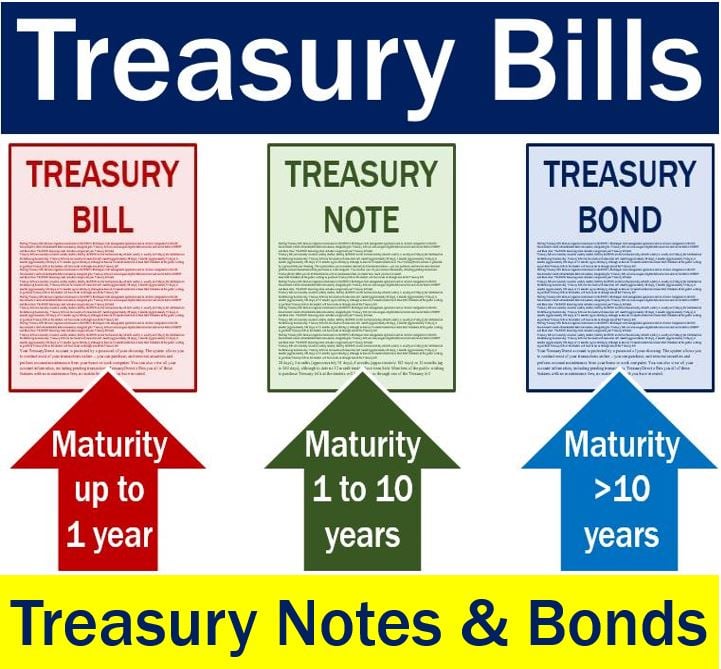
This above is an oblique reference to the meaningless Federal debt/GDP ratio. It is a ratio that compares two unrelated measures. Federal “debt” is nothing like actual debt. It is deposits into Treasury Security accounts (T-bills, T-notes, T-bonds). 

These accounts are held by the government but are owned by the depositors (the buyers of those T-securities). The government never uses those dollars other than to add interest.

Upon maturity, the government merely transfers the dollars from the depositors’ T-security accounts to the depositors’ checking accounts. It is a simple asset transfer like moving dollars from your savings account to your checking account. 

This so-called “debt” is not a financial burden on anyone — not on the government or on taxpayers. 

The purpose of those accounts is not to provide spending money to the government. Rather, they are a safe place to store unused dollars, which stabilizes the dollar and helps provide demand for the dollar.

The other side of the Debt/GDP ratio, GDP, is total spending in America. It is not related in any way to deposits into T-security accounts.

The Debt/GDP ratio predicts nothing. It measures nothing. The ratio does not indicate the federal government’s ability to pay its bills, an infinite ability. The federal government cannot run short of dollars. Not now. Not ever.

The ratio does not indicate the economy’s health, which is characterized by such measures as inflation, employment, unemployment, GDP growth, healthcare, etc.

Look at any list comparing the ratio among the world’s various nations, and you will not be able to discern anything about those nations. For example:

Countries with the Highest Debt-to-GDP Ratios (%) Venezuela — 350% Japan — 266% Sudan — 259% Greece — 206% Lebanon — 172% Cabo Verde — 157% Italy — 156% Libya — 155% Portugal — 134% Singapore — 131% Bahrain — 128% United States — 128%

Countries with the Lowest Debt-to-GDP Ratios (%) are Brunei — 3.2%, Afghanistan — 7.8%, Kuwait — 11.5%, Congo (Dem. Rep.) — 15.2%, Eswatini — 15.5%, Burundi — 15.9% Palestine — 16.4% Russia — 17.8% Botswana — 18.2% Estonia — 18.2%

As you can see, the debt/GDP ratios tell you nothing about the economies of any country. Low ratios mean nothing. High ratios mean nothing.

Similarly, tax revenue/GDP means nothing. Yet the author, Jon Queally, finds it “troubling.”

That ratio tells you nothing about the government’s ability to pay its bills (which, again, is infinite). It tells you nothing about the current or future health of the economy. 

The only thing this ratio tells you is how many dollars the government is taking from the private sector compared to spending in the private sector. While Queally is concerned about the ratio being too low, he really should be concerned about it being too high.

Taking money from the economy is recessionary. The higher the tax revenue/GDP ratio, the fewer growth dollars remain in the economy. In finding the reduced ratio “troubling,” Queally has it all backwards, which is typical for people who do not understand Monetary Sovereignty.

It is far more troubling that economists find a meaningless ratio “troubling,” 

“The deficit unexpectedly jumped this year to roughly $2 trillion.”

Bobby Kogan, senior director for federal budget policy at the Center for American Progress, has argued repeatedly that growing deficits in recent years have a clear and singular chief cause: Republican tax cuts that benefit mainly the wealthy and profitable corporations.

Federal deficits add growth dollars to the economy. The bigger the deficit, the more GDP growth.

The problem arises not because the deficits are too large but rather because they benefit the very rich by narrowing the income/wealth/power Gap between the rich and the rest.

The solution is not to levy more taxes on the general public or to reduce federal spending, both recessionary. The solution is to narrow the Gap by taxing the rich more and the rest of us less.

The first step should be to eliminate the FICA tax. It is America’s most regressive tax, punishing low-level salaried people the most.

Despite claims that FICA funds Medicare and Social Security, it does nothing of the sort. Medicare and Social Security benefits are funded by federal government money creation. If FICA were eliminated, this would have no effect on the government’s infinite ability to pay benefits.

Like all tax dollars, those FICA dollars are destroyed upon receipt by the U.S. Treasury.

In response to the Treasury figures released Friday, Kogan said that “roughly 75%” of the surge in the deficit and the debt ratio, the amount of federal debt relative to the overall size of the economy, was due to revenue decreases resulting from GOP-approved tax cuts over recent decades. “

Of the remaining 25%,” he said, “more than half” was higher interest payments on the debt related to Federal Reserve policy.

Federal tax cuts and federal interest payments both add growth dollars to GDP. It is hard to explain why anyone would wish to take more dollars from the private sector and give them to the Monetarily Sovereign federal government.

“We have a revenue problem due to tax cuts,” said Kogan, pointing to the major tax laws enacted under the administrations of George W. Bush and Donald Trump. “

The Bush and Trump tax cuts broke our modern tax structure. Revenue is significantly lower and no longer grows much with the economy.”

Is it possible for an economist to be too ignorant to understand that taxes take dollars out of the economy, which is recessionary?

And he offered this visualization about a growing debt ratio:

“The point I want to make again and again and again is that, relative to the last time CBO was projecting stable debt/GDP, spending is down, not up,” Kogan said in a tweet Friday night. “

It’s lower revenue that’s 100% responsible for the change in debt projections. If you take away nothing else, leave with this point.”

This truly is beyond ignorant. Kogan claims taking money from the economy is good for the economy, while adding dollars to the economy is bad for the economy.

In a detailed analysis produced in March, Kogan explained that, “If not for the Bush tax cuts and their extensions — as well as the Trump tax cuts — revenues would be on track to keep pace with spending indefinitely, and the debt ratio (debt as a percentage of the economy) would be declining.

It’s difficult to understand how a thinking human could claim that taking dollars from the monetarily non-sovereign private sector and giving them to the Monetarily Sovereign federal government somehow is good for America.

Shall we now apply leeches to cure anemia? Same ignorance.

Instead, these tax cuts have added $10 trillion to the debt since their enactment and are responsible for 57 percent of the increase in the debt ratio since 2001, and more than 90 percent of the increase in the debt ratio if the one-time costs of bills responding to COVID-19 and the Great Recession are excluded.

As we have shown, the debt/GDP ratio is meaningless.  And as for the federal “debt,” it isn’t even debt. It is deposits into Treasury Security accounts, which more than anything, resemble safe deposit boxes.

The federal government does not spend the dollars in T-bill, T-note, and T-bond accounts. The government never touches those dollars, all of which are the property of the depositors.

Those so-called deposits are not a debt burden on the federal government. As each account reaches maturity, the dollars in the accounts are returned to their depositors.

It’s a simple asset exchange from the depositor’s T-security account to the depositor’s checking account.

Just as with deposits into safe deposit boxes, the contents of T-security accounts are not owed or owned by the federal government.

“Tax giveaways for the wealthy are continuing to starve the federal government of needed revenue: those passed by former Presidents Trump and Bush have added $10 trillion to the debt and account for 57 percent of the increase in the debt-to-GDP ratio since 2001,” read the statement.

“If not for those tax cuts, U.S. debt would be declining as a share of the economy.”

It is not possible to “starve the federal government” of dollars. It creates all the dollars it needs, at the touch of a computer key.

Kogan has no idea what Monetary Sovereignty means. He seems to think federal finances are like personal finances.

Whitehouse, who chairs the Senate Budget Committee, said the dip in federal revenue and growth in the overall deficit both have the same primary cause: GOP fealty to the wealthy individuals and powerful corporations that bankroll their campaigns.

GOP “fealty to the wealthy individuals” is well known. The only people more ignorant that those who worry about the meaningless Debt/GDP ratio are the middle- and lower-income people who vote for the party that tries to cheat them every day.

“In their blind loyalty to their mega-donors, Republicans’ fixation on giant tax cuts for billionaires has created a revenue problem that is driving up our national debt,” Whitehouse said Friday night.

“Even as federal spending fell over the last year relative to the size of the economy, the deficit increased because Republicans have rigged the tax code so that big corporations and the wealthy can avoid paying their fair share.”

The “giant tax cuts for billionaires” is not a federal debt problem. The debt is no problem at all.

The tax cut for billionaires is a Gap problem. The wider the Gap between the rich and the rest, the wealthier and more powerful the rich become and the poorer and more powerless the rest of us become.

Offering a solution, Whitehouse said, “Fixing our corrupted tax code and cracking down on wealthy tax cheats would help bring down the deficit.

It would also ensure teachers and firefighters don’t pay higher tax rates than billionaires, level the playing field for small businesses, and promote a stronger economy for all.”

The goal is not to “bring down the federal deficit.” The deficit enriches the economy. The goal is to narrow the Gap between the rich and the rest.

None of the latest figures — those showing that tax cuts have injured revenues and therefore spiked deficits and increased debt — should be a surprise.

Tax cuts reduce federal revenues. Federal revenues come out of the economy. Tax cuts enrich the economy. Is this so hard to understand? Growing GDP requires growing the money supply.

In 2018, shortly after the Trump tax cuts were signed into law, a Congressional Budget Office report predicted precisely this result: that revenues would plummet; annual deficits would grow; and not even the promise of economic growth made by Republicans to justify the giveaway would be enough to make up the difference in the budget.

“The CBO’s latest report exposes the scam behind the rosy rhetoric from Republicans that their tax bill would pay for itself,” Sen. Chuck Schumer (D-N.Y.), and now Senate Majority Leader, said at the time.

“Republicans racked up the national debt by giving tax breaks to their billionaire buddies, and now they want everyone else to pay for them.”

The Republicans lie; the Democrats lie. The media lie. The politicians lie. The economists lie. They all tell the Big Lie that federal spending is funded by federal taxes.

The purpose of the Big Lie is to make you believe the federal government cannot afford to give you benefits unless taxes are increased.

The plan is to make you ignorant so you will not demand increases in Medicare and Social Security benefits, poverty aids, infrastructure aids, and all the other benefits that supposedly are “unaffordable.”

For all the empty promises and howling from the GOP and their allied deficit hawks, the economic prescription they forced through Congress has resulted in an annual deficit of more than double, all while demanding the nation’s poorest and most vulnerable pay the price by demanding key social programs—including food aid, education budgets, unemployment benefits, and housing assistance — be slashed.

And being ignorant about federal finances, many of the “poor and most vulnerable” keep voting for Republicans.

Meanwhile, the GOP majority in the U.S. House — with or without a Speaker currently holding the gavel — still has plans to extend the Trump tax cuts if given half a chance.

In May, a CBO analysis of that pending legislation found that such an extension would add an additional $3.5 trillion to the national debt.

In other words, it would add 3,5 trillion growth dollars to the economy.

“Republicans racked up the national debt by giving tax breaks to their billionaire buddies, and now they want everyone else to pay for them,” Whitehouse said at the time.

“It is one of life’s great enigmas that Republicans can keep a straight face while they simultaneously cite the deficit to extort massive spending cuts to critical programs and support a bill that would blow up deficits to extend trillions in tax cuts for the people who need them the least.”

It’s one of life’s great mysteries why people who author articles about economics fail to understand that federal taxes remove growth dollars from the economy, federal deficit spending adds growth dollars to the economy, and the federal government never can run short of dollars but the economy can..

Rodger Malcolm Mitchell
Monetary Sovereignty

Twitter: @rodgermitchell Search #monetarysovereignty
Facebook: Rodger Malcolm Mitchell

……………………………………………………………………..

The Sole Purpose of Government Is to Improve and Protect the Lives of the People.

MONETARY SOVEREIGNTY

Beating Russia by tapping computer keys

Russia, as it has been governed for the past few decades, is an enemy of America and America’s allies. It has a long history of aggression. The North Atlantic Treaty Organization was formed with Russia’s aggressions in mind. Ukraine is only the latest in Russia’s many attempts to rule over its neighbors. Two years ago, if anyone had said we dramatically could degrade Russia’s military capabilities without losing a single American soldier and without costing America’s taxpayers a single penny, the vast majority of Americans — including the Republican Party — would have been all in. For the past 20 months, that is precisely what has happened. In February 2024, Russia invaded Ukraine, and to the world’s — especially Vladimir Putin’s — surprise, Ukraine fought back. In the succeeding months, Ukraine has killed many of Russia’s best soldiers — and some not so “best” — and destroyed many of Russia’s military weaponry, including guns, bullets, tanks, planes, and even some ships.
Trump has been on Putin's side in Ukraine's long struggle against Russian aggression | CNN Politics
If Russia takes over Ukraine and then begins to move on Norway (its next target), and our weakness emboldens China to act militarily, and American soldiers are sent overseas to die, the right-wing finger-pointing and bleating will blame the “libs.”
The degradation is happening much faster than Russia’s ability to restock. Not a single American soldier has been wounded or killed. Perhaps more importantly, considering the current discourse, no tax dollars were taken from American pockets to accomplish this, which is this post’s central point.

WAR IN UKRAINE Has aid for Ukraine peaked? Some fear what’s happening By Steven Erlanger The New York Times

WARSAW, Poland — Clearly anxious, President Volodymyr Zelenskyy of Ukraine went in person last week to see NATO defense ministers in Brussels, worried that the war between Israel and Hamas will divert attention — and needed weapons — from Ukraine’s long and bloody struggle against the Russian invasion.

American and NATO officials moved to reassure Zelenskyy, pledging another $2 billion in immediate military aid.

But even before the war in the Mideast began, there was a strong sense in Europe, watching Washington, that the world had reached “peak Ukraine” — that support for Ukraine’s fight against Russia’s invasion would never again be as high as it was a few months ago.

The new run for the White House by former President Donald Trump is shaking confidence that Washington will continue large-scale support for Ukraine. But the concern, Europeans say, is larger than Trump and extends to much of his Republican Party, which has made cutting support for Ukraine a litmus test of conservative credibility.

Even in Europe, Ukraine is an increasingly divisive issue.

Voters in Slovakia handed a victory to Robert Fico, a former prime minister sympathetic to Russia. A vicious election campaign in Poland, one of Ukraine’s staunchest allies, has emphasized strains with Ukraine. A far-right opposed to aiding Ukraine’s war effort has surged in Germany, where Chancellor Olaf Scholz is struggling to win voters over to his call for a stronger military.

“There’s less pushback against the anti-Ukrainian stuff already out there,” said Toomas Hendrik Ilves, the former president of Estonia, mentioning the Republican right wing and influential voices like Elon Musk.

“Europe cannot replace the United States,” he said, even as it proposes more aid. “Certainly, we can do more, but the United States is something indispensable for the support to Ukraine.”

That same day, President Vladimir Putin of Russia said that without Western aid, Ukraine could not survive more than a week.

Meanwhile, Ukrainian officials reported intense combat as Russian forces relentlessly assaulted the eastern Ukrainian city of Avdiivka for a fifth consecutive day Saturday. Around 1,600 civilians remain within the city, a stark contrast to its prewar population of about 31,000.

Why Republicans Oppose Aid to Ukraine This is former GOP US Rep. Adam Kinzinger’s opinion:

The Trump effect. The former president so dominates the party’s consciousness that his doubts about Ukraine aid have enormously affected Republicans.

Before Donald Trump, Republicans did not abandon a fight for a strategic partner’s democracy, handing a potential victory to Russian President Vladimir Putin. We were the warriors of the Cold War who brought about the collapse of the Soviet Union.

With Trump, who has embraced Putin, some Republicans are learning to let go of America’s role as the bulwark of democracy and freedom. These Republicans are choosing, instead, the tragic isolationism of those who opposed joining the fight against Hitler.

There are several theories about why Trump consistently has been Putin’s ally. Most have to do with finances, a potential Trump Tower Moscow, and/or incriminating evidence against Trump Putin may hold. The notion that Trump followers, who use the word “communist” as an all-purpose insult, should follow a man who loves Putin (and Kim) can only be evidence of MAGA cultish insanity.

Back then, radio priest Charles Coughlin had a powerful voice among do-nothings. Today, they find comfort on Fox News.

Trump has framed his position in a way typical of his petty approach to policy. He said he would threaten to halt war funding to get documents from the federal investigation into the business dealings of President Joe Biden’s son, Hunter.

The US should “refuse to authorize a single additional shipment of our depleted weapons stockpiles,” Trump said last month, until “the FBI, DOJ, and IRS hand over” evidence in congressional Republicans’ Biden family investigation. He also has said the US should prioritize school safety over Ukraine aid.

The idea that, somehow, school safety and Hunter Biden should have anything to do with helping Ukraine is, on the surface, absurd.

But when faced with Trump’s absurd ideas, MAGAs mindlessly fall in line.

In July, 70 House Republicans voted to cut off Kyiv entirely.

This number is not enough to change things, but the opponents come from the party’s extreme right wing, which plays an outsized role in primaries. This power means candidates are being pressured to join the anti-aid crowd.

Gone is the party of Reagan, which was steadfast in its stand against tyranny. In its place is rising a GOP that seems immune to the world’s need for American leadership and uninterested in the suffering of a country we should aid until the fight ends.

Then there is another reason Republicans oppose aid for Ukraine

Why the GOP Extremists Oppose Ukraine The budget fight was about vice signaling, not spending. By Tom Nichols, The Atlantic

It’s Not About the Money Some $6 billion of aid to Ukraine was removed from the budget, a temporary casualty of the near shutdown.

Republicans are trying to cloak their opposition to military and humanitarian assistance to Ukraine in a lot of codswallop about oversight and budget discipline. But the opposition to aid for Ukraine among Republican extremists on the Hill is not about money.

Most congressional Republicans are in favor of helping Ukraine.

The extremists warned Joe Biden last month that they would oppose additional assistance to Kyiv. The list is a roster of shame, including the new America Firsters in the Senate (J. D. Vance, Rand Paul, Mike Lee, and Tommy Tuberville among them) and the grotesque caucus-within-a-caucus of some of the most unhinged and weirdest members of the House, including Clay Higgins, Harriet Hageman, Andy Biggs, Anna Paulina Luna, and that titan of probity and prudence, Paul Gosar.

And let us not forget the battling ladies, Marjorie Taylor Greene and Lauren Boebert, who only agree on one issue: Allowing Ukraine to die under the Russian bear’s claws.

The drumbeat of propaganda from these members and their “amen” chorus in the right-wing media is having an effect: For the first time, most Republicans now support aid reductions. Fortunately, Americans overall are still holding firm in their support for Ukraine in its fight against Russian imperialism.

First, foreign aid is always an easy hot button for the know-nothing right to push. Most Americans have no idea how much the United States spends on foreign aid, and they grossly overestimate how much goes to such programs.

Most Americans think it’s about 25 percent of the U.S. budget and want it reduced to about 10 percent. Their wish is already granted: It’s about 1 percent.

They also do not understand that most foreign assistance is not a cash handout: Money is spent to buy weapons, food, and other products made in America, which we then ship to other nations.

Instead, many Americans think of assistance—mistakenly—as bags of untraceable money handed to foreigners to do with as they will, which is why opportunists such as Ron DeSantis (who once supported aid to Ukraine) try to exploit provocative terms such as blank check to describe helping Ukraine. DeSantis knows better; so do other Republican leaders.

What the American public doesn’t know, and what the politicians don’t want them to know, is that federal spending costs taxpayers nothing. Tax dollars do not fund federal spending. Our government is Monetarily Sovereign, meaning it has the infinite ability to create its sovereign currency, the U.S. dollar. The U.S. government never unintentionally can run short of dollars. Never. The real purpose of federal taxes is not to provide spending funds to the government. Rather, taxes help the government control the economy by taxing what the government wishes to discourage and by giving tax breaks to what the government wishes to reward. Unlike taxes paid to monetarily non-sovereign state and local governments, dollars paid to the federal government are destroyed upon receipt. Those tax payment checks you write come from what is known as the M1 money supply measure. But the instant they reach the U.S. Treasury, they cease to be part of any money supply measure. (There is no measure for Treasury money because of that infinite ability to create dollars.) They simply disappear from any measure. To pay its bills, the government creates all new dollars ad hoc. No tax dollars were used. Even if the government collected $0 in taxes, it could continue supporting Ukraine and every other federal project forever.

Most Americans recognize the immense threat that Russia’s war of conquest poses to our allies, global peace, and the security of the United States.

Republicans once stood at the forefront of opposition to Kremlin aggression—Ronald Reagan’s steadfast opposition to Moscow was one of the reasons I was a young GOP voter in the 1980s—but now the party is saddled with a group of shortsighted appeasers, buttressed by a squad of right-wing cranks, who would doom tens of millions of innocent people to Russian President Vladimir Putin’s butchery just to own the libs.

Also, we should not ignore a nauseating truth about the extremist caucus within the GOP: Some genuinely admire Putin and what he has created in Russia.

Tucker Carlson, after all, didn’t get taken off the air for supporting Putin in ways that would have made Cold War Soviet propagandists blush; he got canned only after a defamation lawsuit from an election machine company.

These GOP extremists have swallowed the gargantuan lie that Putin is a godly defender of white Christian Europe against the decadent West and its legions of militant drag queens. 

Finally, some Republicans oppose aid to Ukraine because of the more general and bizarre countercultural obsession that has seized the American right: Whatever most of their fellow citizens approve of, they must oppose, or else they risk losing their precious claims to being an embattled minority.

If they were to support aid to Ukraine, how would they be different from everyone else, and especially from Biden?

How would they mark their tribal loyalty if they crossed party lines to oppose a dictator—while supporting a wannabe dictator of their own?

 As a commenter on social media said to me today, if liberals were opposed to aiding the Ukrainian war effort, “the GOP would shut down the government to ensure aid, and you’d see Ukrainian flags waving on the back of pickups.”

SUMMARY The famously anti-communist MAGAs refuse to continue helping Ukraine against communist Russia because Putin-loving Trump tells them to refuse. As their excuse, they falsely claim the money can be used elsewhere even though:
  1. The U.S. has infinite dollars.
  2. Ukraine spending costs taxpayers nothing.
  3. The vast majority of aid is spent right here in America, helping American industry and military readiness.
This is another example of how Donald Trump, a liar and traitor to America, by every measure liars and traitors are measured, has damaged and continues to harm our nation. Yet, all the blame cannot be put on his shoulders. Much should be shared by the ignorance and bigotry of Trump’s MAGA-lemming followers who will believe any damn-fool thing he says, no matter how crazy and damaging. These people think that waving a flag makes them patriots and hatred keeps them safe. They are the same senseless organisms who claim anti-abortion is “pro-life” while they vote against aid to impoverished mothers and children. But if Russia takes over Ukraine and then begins to move on Norway (its next target), and our weakness emboldens China to act militarily, and American soldiers are sent overseas to die, the right-wing finger-pointing and bleating will blame the “libs.” Rodger Malcolm Mitchell Monetary Sovereignty Twitter: @rodgermitchell Search #monetarysovereignty Facebook: Rodger Malcolm Mitchell

……………………………………………………………………..

The Sole Purpose of Government Is to Improve and Protect the Lives of the People.

MONETARY SOVEREIGNTY

Economics is to reality as astrology is to astronomy

This is what passes for “science” in the world of economics:
  1. Raising interest rates increases the prices of everything. Therefore, raise interest rates to cure inflation.
  2. Inflation happens when the economy grows too much (“overheated”). Therefore, to cure inflation, cause a recession or depression.
Any normal scientist would scoff at these beliefs, but economists are neither normal nor scientists.  They are believers. They are cultish followers of the standard thinking, as exhibited in the following article.

Inflation Won’t Go Away Until Congress Gets the Deficit Under Control The Federal Reserve’s higher interest rates were supposed to trigger changes to fiscal policy. So far, that hasn’t happened. ERIC BOEHM | 10.12.2023 12:30 PM

When a hypothesis doesn’t work, a scientist uses that information to develop a new hypothesis. In economics, when a hypothesis doesn’t work, the economist merely shrugs and continues to claim it works. Before COVID, the economy was growing massively, with interest rates near zero, massive deficits, and without inflation? Then, during and after COVID, we had inflation, with interest rates at elevated levels. Did the economists learn anything from these events? Hmmm. Now, let me think. Why did we have no inflation before COVID and elevated inflation during and after COVID? What changed? Two things”
  1. We had shortages of oil, food, shipping, computer chips, metals, lumber, labor, and almost every other important good and service
  2. The Fed raised interest rates, instantly making every product more expensive.
What didn’t change?
  1. The government still is spending massively with huge deficits.
Analyze the following graph: The red line is Inflation, i.e., the year-to-year changes in prices. The blue line is the year-to-year changes in federal deficits. If federal deficit spending caused inflation, you might expect these lines to be essentially parallel. If deficit spending did not cause inflation, you would expect the lines to look exactly like they look. If you were a real scientist whose hypothesis was that federal deficit spending causes inflation, you immediately would discard that hypothesis and look for something else, perhaps something like this: The green line is the year-to-year change in oil prices. Because oil is a fungible product, its price changes are based on supply changes. The price goes up when oil is scarce and goes down when oil is plentiful. A real scientist would notice that although there seems to be no relationship between federal deficits and inflation, there is a robust relationship between oil scarcity and inflation. Sadly, despite having massive data available, economists are not scientists. They are believers in a religion where dogma cannot be questioned. Look at any inflation in world history, from Germany to Argentina to Zimbabwe, etc. Every inflation has been caused by scarcity of critical products or services, especially oil and food. When supply cannot meet demand, prices go up. That’s basic. What changed suddenly in 2020 to cause inflation to go from an average below 2% to zoom above 8%? Did demand suddenly rise in that year? No, it was COVID-related scarcities. Like all inflations worldwide and throughout history, our current inflation is caused by shortages. The current inflation rightfully could be called the “COVID inflation.” Because of COVID, we had shortages of oil (exacerbated by the Saudis), food, etc.

Inflation has fallen from the shocking highs reached last year, but the Federal Reserve’s efforts have not successfully returned the beast to its cage.

The problem is supply, so what does the Fed do? It tries to control demand. Why? Because that is the only tool it has. Because Congress is so inept, it has tasked the Fed with preventing and curing inflation. But the Fed can’t do it. Who can control inflation? Congress and the president can control inflation by controlling shortages.
  1. Oil shortage: Financial rewards to oil companies to find more, pump more, hire more, and lower prices
  2. Food shortage: Financial rewards to farmers, wholesalers, and retailers to reduce risk, reward growth and lower prices
  3. Labor shortage: Eliminate FICA plus Medicare for All to make employment less expensive and to encourage higher net salaries.
  4. Federal rewards to all other industries involved with scarce goods and services.
Do you notice a commonality among the solutions? They all require more deficit spending, not less.

If rising prices are to be fully tamed, it increasingly looks like Congress will have to get the deficit under control first.

Rather than attacking the cause of inflation, scarcity, Boehm attacks the cure for inflation, federal deficit spending to cure shortages.

Prices are up 3.7 percent over the past year, according to new inflation data released by the Bureau of Labor Statistics on Thursday morning. But so-called “core inflation,” which filters out the more volatile categories like food and fuel prices, rang in at 4.1 percent in the newest report.

Oil and food are the “core inflation” goods. Their shortages and resultant price increases cause most inflations, worldwide. Typical for the pseudo-science of economics, economists filter out the two most common causes of inflation — oil and food scarcity — when measuring inflation. It’s like a sports team filtering out points scored and allowed when analyzing the team’s won/lost record. Senseless.

To control inflation, the Federal Reserve raised interest rates at 11 consecutive meetings starting in March last year.

Every one of those interest rate increases raised the prices of goods and services. So, surprise! Inflation increased.

Since July, the central bank has left interest rates unchanged—the Fed’s current base rate is 5.5 percent, up from 3.25 percent a year ago.

Higher interest rates seem to have brought inflation down, but prices are rising nearly twice as fast as the Federal Reserve’s target of 2 percent annually.

No, oil, food, labor, metals, shipping, etc. scarcities moderated, so inflation moderated despite continuing interest rate increases.

We may have reached the limit of what the Federal Reserve can accomplish regarding taming inflation through monetary policy.

We reached that limit on the first day. Raising interest rates is inflationary. Period.

The federal government’s $33 trillion national debt and rising budget deficits are creating inflationary pressure in ways that remain underappreciated.

Economists ignore when the national “debt” and deficits rise without inflation (as often happens). But when we have inflation, the “debt” and deficit (which we have almost yearly) are blamed.

The big problem is that higher interest rates are helping curb inflation but worsening the federal government’s deficit.

No, the big problem is that while higher interest rates exacerbate inflation, the federal deficit can be directed toward inflation-curing programs, like Medicare for All and the elimination of FICA — both costs of doing business.

Writing at CNBC, Kelly Evans gets at the heart of this conundrum: “If we don’t quickly close the gap between spending and revenues, the debt load will keep growing, and interest costs will keep on rising, and the deficit will thus stay elevated, which grows the debt load even more.”

de Rugy
There is no debt load. It isn’t even debt. It’s deposits. They are not any sort of burden on the federal government or on the economy. Those dollars are not owed by the federal government. The creditors all have been paid. The deposits are owned by the depositors, who are paid off when deposits are returned to them.

So, what does that have to do with inflation?

As Reason contributor Veronique de Rugy, an economist at George Mason University, explains at National Review, there is an assumption built into monetary theory that says fiscal contraction—that is, smaller deficits—will necessarily follow a monetary contraction like the rising interest rates of the past year.

In other words, when central banks make it more expensive to borrow, they assume the politicians in charge of fiscal policy will respond by borrowing less. 

But that hasn’t happened, and there is little indication that it will in the near future.

This assumption relies on federal politicians not understanding that spending by our Monetarily Sovereign federal government is not dollar-constrained. The government has the infinite ability to create and spend dollars on interest or anything else. For that reason, the federal government does not borrow dollars. It does not need to obtain dollars from anyone. The assumption also relies on the federal government spending less, which is recessionary. It is the false belief that recession is the cure for inflation when there is zero supporting evidence.

The federal budget deficit nearly doubled in the fiscal year that ended on September 30, and bigger deficits are expected in the next few years—in significant part because of the feedback loop between higher interest rates and rising debt costs.

That is not a “feedback loop” it is a tautology. The feedback loop is: Raise interest rates -> inflation –> raise interest rates again –> still higher inflation endlessly.

To fully get inflation under control, de Rugy says the country must experience a period of negative wealth effects—that is, a decline in demand driven by consumers choosing to rein in spending due to declining wealth.

Without her word salad, she says, “The country must experience a recession.” The Libertarians believe recessions cure inflation. Have they never heard of “stagflation”?

That’s hardly something worth cheering for, but it might be the only way to truly tame inflation—and it probably won’t happen until Congress curbs spending, too.

“The only way to get a reduction of total demand, which will ultimately rein in inflation, is for the fiscal authority to implement fiscal consolidation, hence creating a negative wealth effect,” writes de Rugy. “Absent that fiscal contraction, inflation will rise.”

Increased demand did not cause the sudden inflation of 2020. Demand didn’t suddenly appear overnight. But COVID made shortages occur overnight.

Changes to monetary policy have brought inflation down from last year’s near-record highs. Still, the monetary theory upon which that policy is built assumes that fiscal policy will finish the job by reducing deficits.

Congress, so far, doesn’t seem interested in cooperating—so expect prices to keep rising at an annoyingly fast rate.

You have just read the Libertarians’ false excuse for their cure not working. They claim the government’s massive spending (which has been in force for many years) suddenly decided to cause our inflation. In short, because bleeding the patient with leeches didn’t cure his anemia, it must be that the patient is eating too much good food. Such is the nonsense that permeates economics today. Rodger Malcolm Mitchell Monetary Sovereignty Twitter: @rodgermitchell Search #monetarysovereignty Facebook: Rodger Malcolm Mitchell

……………………………………………………………………..

The Sole Purpose of Government Is to Improve and Protect the Lives of the People.

MONETARY SOVEREIGNTY