Intelligence can be measured in many ways, depending on what is being tested, the nature of the test itself, the method of scoring, the testing experience of the tester, and the testing experience of those being tested.
That said, two reasonably good criteria for intelligence are:
- The ability and willingness to evaluate data, and
- The refusal to accept opinions from proven liars and charlatans.
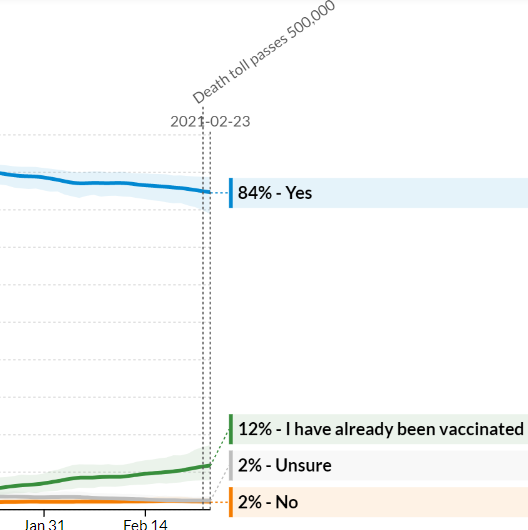
Here is one small example of what one might consider to be a test of intelligence:
Percent who say they are unsure or will not take the COVID-19 vaccine
Survey of U.S. registered voters, Nov. 9, 2020, to Feb. 23, 2021

Reproduced from Civiqs; Chart: Axios Visuals
Now let’s view the extremes. First the bottom:
Do you plan to take a coronavirus vaccine if it becomes available?
Refined by: Party: Republican; Gender: Male; Age: 18-34; Race: White; Education: Non-College Graduate

The people least likely to take the vaccine are White, Republican males, age 18-34, who have not graduated college.
Then the top:
Do you plan to take a coronavirus vaccine if it becomes available?
Party: Refined by: Party: Democrat; Gender: Male; Age: 50-64; Race: White; Education: College Graduate
Unfortunately, those having low intelligence are not intelligent enough to understand that their opinions are based on low intelligence. So they follow others of low intelligence or others who will do them harm.
The clearest symptoms of low intelligence are acting indefensibly and defending the indefensible — for example, the people who encouraged, participated in, or defend the attempt to overturn the American elections by force, and/or who now speak longingly of secession from the United States.
Because truth and logic seldom penetrate the minds of the unintelligent (who usually prefer to believe and repeat rumors, conspiracy theories, and outright lies), the only hope is that these unintelligent people do not cause irreparable harm to the world.
Rodger Malcolm Mitchell
Monetary Sovereignty Twitter: @rodgermitchell Search #monetarysovereignty Facebook: Rodger Malcolm Mitchell …………………………………………………………………………………………………………………………………………………………………………………………………………………………………………………………………………………………..
THE SOLE PURPOSE OF GOVERNMENT IS TO IMPROVE AND PROTECT THE LIVES OF THE PEOPLE.
The most important problems in economics involve:
- Monetary Sovereignty describes money creation and destruction.
- Gap Psychology describes the common desire to distance oneself from those “below” in any socio-economic ranking, and to come nearer those “above.” The socio-economic distance is referred to as “The Gap.”
Wide Gaps negatively affect poverty, health and longevity, education, housing, law and crime, war, leadership, ownership, bigotry, supply and demand, taxation, GDP, international relations, scientific advancement, the environment, human motivation and well-being, and virtually every other issue in economics. Implementation of Monetary Sovereignty and The Ten Steps To Prosperity can grow the economy and narrow the Gaps:
Ten Steps To Prosperity:
- Eliminate FICA
- Federally funded Medicare — parts A, B & D, plus long-term care — for everyone
- Social Security for all or a reverse income tax
- Free education (including post-grad) for everyone
- Salary for attending school
- Eliminate federal taxes on business
- Increase the standard income tax deduction, annually.
- Tax the very rich (the “.1%”) more, with higher progressive tax rates on all forms of income.
- Federal ownership of all banks
- Increase federal spending on the myriad initiatives that benefit America’s 99.9%
The Ten Steps will grow the economy and narrow the income/wealth/power Gap between the rich and the rest.
MONETARY SOVEREIGNTY
 #Monetary Sovereignty - Mitchell