“Chainsaw Elon” and how to lose weight

In the last thirty years of my business career, I specialized in turning around unprofitable small (under $10 million) businesses. There are two ways to improve profitability: Reduce costs and increase sales. I did both, but mostly the latter. When cutting costs, one must be careful to cut fat without cutting too much meat. Growth requires keeping good people, not merely keeping fewer people. Short term, it’s easy to increase profitability. Merely fire everyone. Long term such a path can destroy a company. Watching cost-cutter Elon Musk and his boss, Donald Trump, I am reminded of the notorious Albert John Dunlap. From Wikipedia:
Albert John Dunlap (July 26, 1937 – January 25, 2019) was an American corporate executive. He was known at the peak of his career as a professional turnaround management specialist and downsizer. The mass layoffs at his companies earned him the nicknames “Chainsaw Al” and “Rambo in Pinstripes”, after he posed for a photo wearing an ammo belt across his chest.

Can Chainsaw Al Really Be A Builder? America’s most ferocious cost cutter says he wants to make Sunbeam bigger. Jan, 1998.

When Sunbeam announces year-end results in January, people will see that sales, not just profits, are rising dramatically. (Dunlap eliminated) 16 of 26 factories, five of six headquarters, and half the 12,000 employees, Dunlap extracted $225 million in annual savings.

Then again from Wikipedia:
It was later discovered that his reputed turnarounds were elaborate frauds, and his career was ended after he engineered a massive accounting scandal at Sunbeam Products, now a division of Newell Brands, that forced the company into bankruptcy. Dunlap is on the lists of “Worst CEOs of All Time” published by several business publications. Read the list and you’ll find that many of the “worst” were massive job cutters, whose overall philosophy was. “We don’t need people. Just pay me more.” Fast Company noted that Dunlap “might score impressively on the Corporate Psychopath measure” and in an interview, Dunlap freely admitted to possessing many of the traits of a psychopath but considered them positive traits such as leadership and decisiveness.
“Mass layoffs, “frauds,” “bankruptcy,” psychopathy” “accounting scandal,” — do those terms remind you of our leaders? Consider these articles:

FRAUD and ACCOUNTING SCANDAL New York judge rules Trump committed fraud and lied about his net worth for years The judge, Arthur Engoron, also denied Trump’s bid to dismiss the New York attorney general’s $250 million lawsuit against him and his company.

According to the ruling, which allows the civil trial to begin next week, Trump lied to banks and insurers by both overvaluing and undervaluing his assets when it was to his benefit while exaggerating his net worth to the tune of billions of dollars.

BANKRUPTCY Why Donald Trump’s Companies Went Bankrupt, Details About the 6 Trump Corporate Bankruptcies The New York Times, which conducted an analysis of regulatory reviews, court records, and security filings, reported in 2016 that Trump “put up little of his own money, shifted personal debts to the casinos and collected millions of dollars in salary, bonuses, and other payments.

“The burden of his failures,” according to the newspaper, “fell on investors and others who had bet on his business acumen.”

PSYCHOPATHY How much of a psychopath is Donald Trump? Worse than Hitler, apparentlyImage result for hurray, i'm exonerated Saddam Hussein tops the list ahead of Henry VIII and Idi Amin

According to the Hare psychopath checklist, psychopaths tend to feel a lack of remorse for destructive acts, but they are unable to feel empathy, impulsive, manipulative and sexually promiscuous.

MASS LAYOFFS Trump officials fired nuclear staff not realizing they oversee the country’s weapons stockpile. by Rene Marsh and Ella Nilsen Trump administration officials fired more than 300 staffers Thursday night at the National Nuclear Security Administration — the agency tasked with managing the nation’s nuclear stockpile — as part of broader Energy Department layoffs, according to four people with knowledge of the matter.

Fired federal workers decry ‘arbitrary,’ ‘haphazard’ terminations

Carly Arata received an email around 9 p.m. on Thursday saying her position in the federal government had been terminated. When she saw the email, Arata told ABC News that she “screamed.”

“I didn’t think it was real at first, so I reread it like three times, then kind of started crying because I was relying on this job,” Arata said. “My husband and I just purchased this house in December, and now we’re not really sure what we’re going to do.”

Arata is one of possibly more than 200,000 workers affected by mass firings of probationary employees.

Arata had been a probationary employee since September with the Department of Agriculture’s Natural Resources Conservation Service but had worked as a contractor in the role for a year before that. Arata, who turns 32 on Sunday, has experience in this area. She obtained her bachelor’s degree in environmental science and her master’s degree in ecological restoration.

“We’re relying on this job and we’re qualified for this job, and yet, we’re losing it just because we’re under a year,” Arata said.

“Chainsaw Al” fired his good, experienced workers, not for efficiency reasons but to demonstrate his frugality. Cutting payroll initially increased profits but losing good people helped destroy his company. Trump/Musk are firing their good, experienced workers, also not for sound efficiency reasons, but to demonstrate frugality. The two are destroying government services, especially services to the middle-classes and the poor. Does the Trump/Musk Joint Presidency claim a good way to lose weight is to cut off your arms and legs? THE CHAOS PRESIDENT The computer people have a slogan, “Move fast and break things.” Musk seems to believe this idea defends his wild and reckless firing and deporting of good people. The saying embodies a Silicon Valley ethos that encourages rapid change, even at the expense of stability or quality. But what may be acceptable for electronic program development is completely wrong for government programs that are supposed to “Improve and Protect People’s Lives.” The destruction of a test rocket, as Musk has often done, doesn’t equate with the mass destruction of people’s jobs, lives, and financial protections. Firing an entire police force will save money, but it opens the door to crime. If you have hoped that the U.S. would completely depart from democracy and adopt a dictatorship, your dreams are being answered. Now, the Supreme Court. having given Trump limitless power, must worry that he will use the power to ignore and disobey every Court’s ruling. According to SCOTUS, Trump cannot be punished for any crime, so long as he can claim it was an official act within the scope of his presidential duties. If Trump believes the Democratic Party is a threat to America, he could jail Democrats. He already has claimed that Barack Obama, Hillary Clinton, and Joe Biden, along with all the judges who have ruled against him, are corrupt and should be jailed. The Supreme Court has opened that opportunity. Trump even claims he is king. Recently he said, quoting Napoleon, “He who saves his Country does not violate any Law.” Apparently, SCOTUS doesn’t realize flouting the law is not a Trumpian bug; it’s a feature of the Trump persona and the solid step toward a dictatorship, where courts are puppets of the leader. In short, SCOTUS has voted for its own irrelevance. IN SUMMARY Elon Musk and Donald Trump (MT) are clueless about the differences between business goals [monetarily non-sovereign finances] vs. federal goals [Monetarily Sovereign finances]. In the MT business world the primary goal is to maximize profits, while spending is limited by income and borrowing. When MT began to cut federal expenses, mostly by mass firings, the naive public believed this benefitted the government and taxpayers. But federal cost cutting benefits no one, not the public, not the government, not anyone. Given the infinite power to create dollars, the federal government does not use taxpayers’ money to pay for things. To pay for everything, the federal government creates new dollars, ad hoc. Taxpayer dollars are destroyed upon receipt. They begin as part of the M2 money supply measure, but when they reach the U.S. Treasury they instantly cease to be part of any money supply measure. They effectively are destroyed. The sole purposes of federal taxes are to assure demand for the U.S. dollar by requiring taxes to be paid in dollars, and to control the economy by taxing what Congress wishes to discourage and by giving tax breaks to what Congress wishes to reward–not to provide spending money for the federal government. (State and local taxes do provide spending money to monetarily non-sovereign state and local governments.) By contrast, in the federal world, the goal is to “Improve and Protect the People’s Lives, and the spending is unlimited. Federal deficit spending benefits the public and grows the economy at no cost to taxpayers. By attempting business solutions to federal government problems, the MT pair solves nothing while causing great harm. While other nations (particularly oil nations) are pouring vast amounts of money into artificial intelligence (AI) and massive infrastructure projects, the Make America Great Again bunch tries to make America smaller, weaker, and even more bigoted than ever — much like its current leaders. MT are pushing for a $2 Trillion reduction in federal spending, based on the formula, GDP = Federal Spending + Non-federal Spending – Net Imports, this is what would happen to the economy: Estimated GDP: $29.2T: Federal Spending: $6.5T: Non-Federal Spending: $22.83T: Net Imports: $0.1335T. Superficially, GDP would fall 2T or 7% However, Federal Spending also affects Non-federal Spending and Net Imports. A reduction in federal spending leads to:
  1. Fewer government contracts for businesses. This could lead to less spending and less investment by businesses
  2. Private sector layoffs, reducing consumer income and spending.
  3. Fewer government workers, further reducing consumer income and spending
  4. Federal funds often support state programs (infrastructure, education, healthcare). A federal cut may force state governments to reduce their own spending, further shrinking GDP.
  5. A spending cut could lower the deficit, leading to lower interests, i.e. less federal interest paid to the private sector by federal T-securities.
If we assume each $1 cut in federal spending reduces non-federal spending by $0.50 (admittedly a guess, based on the certainty there would be some negative effect on Non-federal Spending), then:
  • Direct Federal Cut: $-2.0T; Indirect Non-Federal Spending Reduction: $-1.0T; Total GDP Reduction: $-3.0T
So instead of just a $2T drop, GDP could fall by $3T, making the contraction even more significant. A reduction in GDP is defined as a recession or a depression, depending on length. Therefore:

The Musk/Trump (MT) spending reduction promise is, in fact, a promise to cause a recession or a depression.

Fortunately, the MT pair seldom keeps its promises, so they probably will fail, at which time they will blame Hillary Clinton, Barack Obama, Nancy Pelosi, the “fake” media, “crooked judges,” Joe Biden, and the entire Democratic Party. Rodger Malcolm Mitchell Monetary Sovereignty Twitter: @rodgermitchell Search #monetarysovereignty Facebook: Rodger Malcolm Mitchell; MUCK RACK: https://muckrack.com/rodger-malcolm-mitchell; https://www.academia.edu/

……………………………………………………………………..

A Government’s Sole Purpose is to Improve and Protect The People’s Lives.

MONETARY SOVEREIGNTY
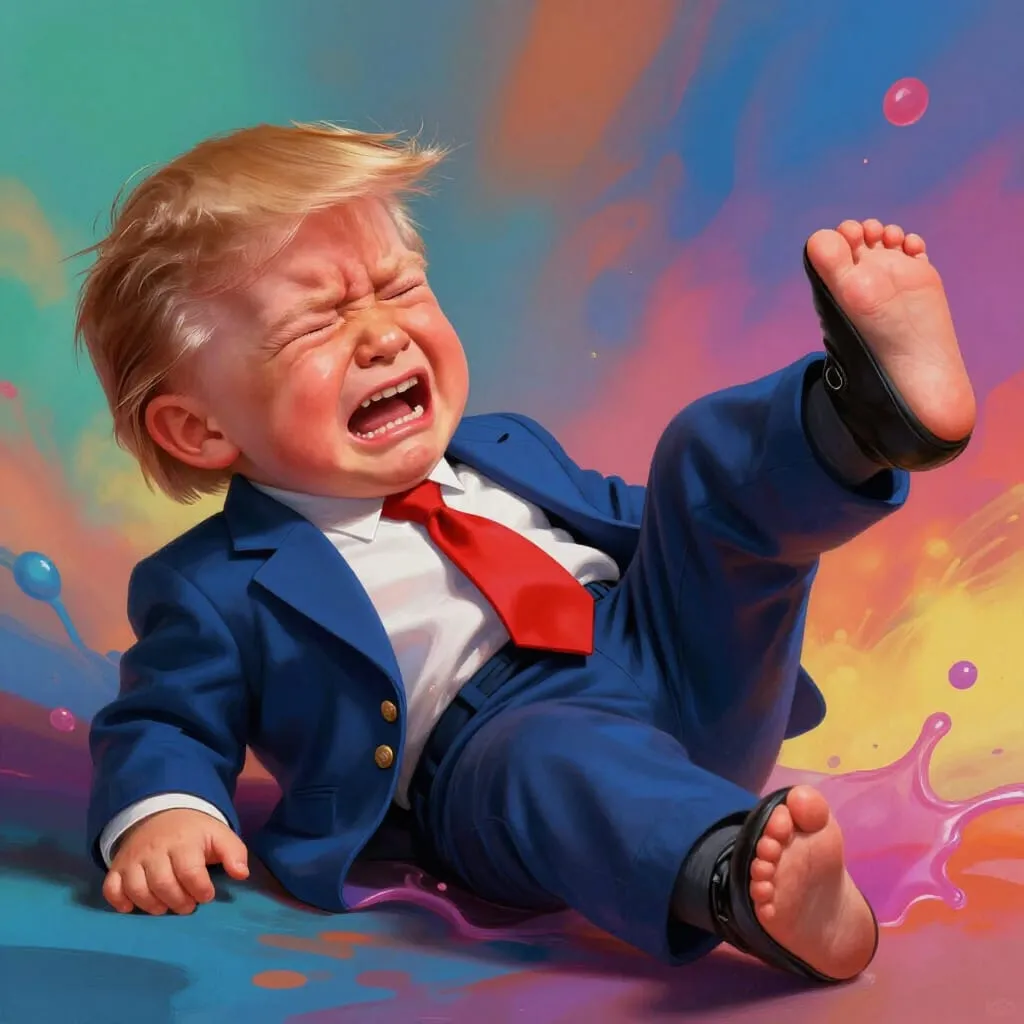
The Art of the Ukraine/Russia deal

O.K., I’ll give you Ukraine and you give me the Trump Tower, Moscow. Also, destroy those tapes of me with Russian hookers. Do we have a deal?

U.S. Wealth Account

Sometimes, you don’t know whether to laugh or cry. That’s when you encounter an idea that is so bad the people who favor it are wrong, and those who oppose it are also wrong. Now, that is a bad idea. Here (in red) is a short article from the February 14th THE WEEK Magazine:
President Trump wants the United States to be in the investment business, said Jenny Leonard and Katherine Burton in Bloomberg. This week, Trump signed an executive order directing officials to create a national wealth fund. Trump floated the idea of a sovereign wealth fund –in essence, an investment fund owned by the government– during the campaign, proposing the “money from tariffs” could be used to “invest in manufacturing hubs, defense, and medical research.”
The Monetarily Sovereign U.S. government does not use any income for spending. It does not use taxes or “money from tariffs” (which effectively are taxes on American consumers). Having the infinite ability to create dollars, the federal government destroys all the dollars it receives and newly creates every dollar it spends. Even if the U.S. government did not receive a single tax or tariff dollar, it could continue spending dollars forever. Thus, the “wealth fund” could pay any amount it chose, at any time, to whomever it chose. Unlike a privately owned fund, a government fund can do whatever it wants with investors’ money, including keeping it. Witness America’s Social Security, which changes the rules every year. You have been told that your FICA dollars fund Social Security. They don’t. If they did, the government couldn’t change the qualifying dates at will and couldn’t tax the benefits you supposedly paid for. Trump and the Republicans have promised to eliminate income taxes on Social Security benefits, which they have the power to do. Or they could double the taxes, at will. The “wealth fund” could pay you any amount it chose, whenever it chose, and change the rules every day, at whim. So, what would be the purpose of a government investment fund, and how would that be different from accepting deposits in T-bills, T-notes, and T-bonds? Further, funds must have an investment philosophy. That is, will the fund mimic the S&P? The largest growth stocks? The total stock market? Include foreign stocks? Or will it be traded according to some other formula, and if so, which? Never one to be bothered with details, Trump doesn’t say. But those are vital questions.
Other wealth funds generally exist in nations with excess money, either from “large foreign exchange reserves, like China, or revenue from the sale of oil.”
Uncle Sam sitting on a giant pile of money
The U.S. government has infinite dollars.
The U.S. always has “excess money” because it has infinite money. When a government can create money at will and at no cost, at what point could it be said to have “excess money”? China has funds in dollars and other currencies. It can exchange those dollars for yuan if it wishes to use them for spending (on oil, which is traded in dollars) or do anything else.

Trump floated the suggestion that “the fund could facilitate the sale of TikTok.”

Utter nonsense. The U.S. government has the financial ability to buy TikTok along with FaceBook, X, and every other app, and still has plenty left for politicians to pave their local streets in gold.
Let’s hope this doesn’t go anywhere, said Dominic Pino in National Review.  A sovereign wealth fund makes sense for oil-rich states like Saudi Arabia and the United Arab Emirates, which pull in massive revenues and “don’t have a ton to spend it on.”

According to the U.S. Energy Information Administration, the United States has produced more crude oil than any nation at any time, according to our International Energy Statistics, for the past six years.

Crude oil production in the United States, including condensate, averaged 12.9 million barrels per day (b/d) in 2023, breaking the previous U.S. and global record of 12.3 million b/d, set in 2019.

Average monthly U.S. crude oil production established a monthly record high in December 2023 at more than 13.3 million b/d.

A sovereign wealth fund in oil-rich nations facilitates the foreign exchange of local currencies and eliminates the need to rely on foreign exchange markets. The money is invested and banked, transforming into whatever currency the nation desires. In dollars, the U.S. is the world’s second-largest oil exporter. That fact has nothing to do with the U.S. creating a government-owned fund. The U.S. government has infinite money and infinite things to spend it on.
Among Western countries, “Norway is the canonical example of a successful sovereign wealth fund,” But it has money to spend, averaging a budget surplus of 10 percent of GDP since the 1970s.
A “budget surplus” means the government takes more money out of the economy than it puts in. The formula for GDP is GDP=Total Spending + Net Exports. Norway is a major exporter, and though it technically is Monetarily Sovereign, when was the last time you accepted payment in Norwegian Krones? Still, it has the unlimited ability to pay its own people in Krones, so its fund cannot run short of money unless the government wants it to. And finally, we come to the most naive statement in the entire article.
The U.S. is running enormous deficits, “would have to borrow even more money to start a wealth fund,” and is a “poor steward of the money it already controls.
The authors display that they have no idea about the differences between Monetary Sovereignty and monetary non-sovereignty. 1: The U.S. government never borrows dollars. Think about it. Given the unlimited ability to create dollars, why would it ever borrow? It makes no sense. The economically naive think that allowing deposits in Treasury Security Accounts (T-bills et al.) represents borrowing. It doesn’t. A borrower takes ownership of money to spend or invest that money. However, the U.S. government never takes ownership of T-security dollars, and it never spends those dollars. Think of T-security dollars as being similar to dollars placed in a bank safe deposit box. The bank takes possession of the dollars but does not have ownership of the dollars. The T-security dollars remain the property of the depositors; the federal government never touches those dollars. It doesn’t use them for spending purposes. It only possesses the dollars. This is not borrowing. It is safekeeping. T-securities’ sole purposes are to help the Fed control interest rates and provide a safe storage place for unused dollars. They do not provide spending money to the government. 2:  Federal deficits are not a burden on the federal government. Unlike you, me, business, and the state and local governments, the federal government could deficit spend, forever. It neither needs nor uses tax dollars or any other form of income. 3:  Federal deficits are essential for GDP growth. Every depression in history has come when the federal government ran a surplus; government surpluses take dollars out of the economy, which reduces GDP. A reduction in GDP is known as a recession (short term) or a depression (long term). The federal government would not have to borrow even one dime in order to start a wealth fund. It could begin to one tomorrow — a fund containing a trillion dollars or a trillion, trillion dollars — at the touch of a computer key. (The government also has the Constitutional power to create a multi-trillion dollar platinum coin, and deposit in the General Account from which to write checks. It’s unnecessary, but legal.) And as far as the government is a “poor steward of the money it already controls,” who does the author think would control the investments in the wealth fund if not the “poor steward” federal government? In summary, both the proponents and opponents of the “wealth fund” demonstrate ignorance about federal financing. Their pro and con comments apply to a private-sector fund, not to a Monetarily Sovereign government fund. Trump, as usual, wants something he can twist into his own self-enrichment. Imagine him controlling a few trillion in assets, that the Supreme Court has ruled he can steal at will because he is immune to prosecution for actions taken as part of his official duties.  You can be sure that pumping a few billion or trillion into Trump properties will be considered “official duties” by the compliant Republican-controlled Senate and House. These bodies currently have no duties but to attend, vote “Yes,” and leave. And yes, to cash their paychecks and take advantage of their ill-gotten perks. Rodger Malcolm Mitchell Monetary Sovereignty Twitter: @rodgermitchell Search #monetarysovereignty Facebook: Rodger Malcolm Mitchell; MUCK RACK: https://muckrack.com/rodger-malcolm-mitchell; https://www.academia.edu/

……………………………………………………………………..

A Government’s Sole Purpose is to Improve and Protect The People’s Lives.

MONETARY SOVEREIGNTY

A straightforward question for students of Constitutional law

Here is a straightforward question for students of Constitutional law: What is the purpose of the Republicans in today’s Congress? (i.e., what exactly do they do, and why are they given a salary, office, healthcare insurance, and other perks?)

Rodger Malcolm Mitchell

Monetary Sovereignty

Twitter: @rodgermitchell

Search #monetarysovereignty

Facebook: Rodger Malcolm Mitchell;

MUCK RACK: https://muckrack.com/rodger-malcolm-mitchell;

https://www.academia.edu/

……………………………………………………………………..

A Government’s Sole Purpose is to Improve and Protect People’s Lives.

MONETARY SOVEREIGNTY