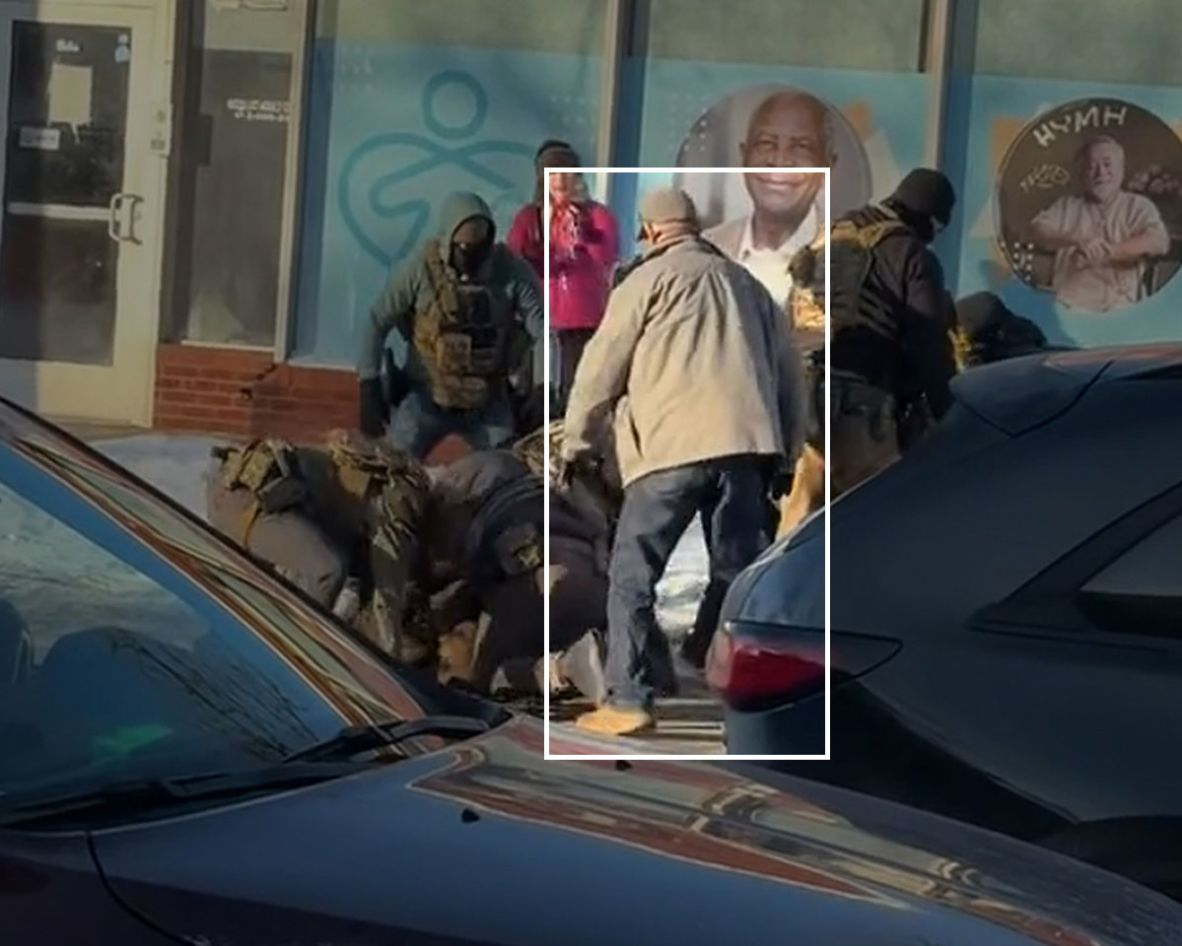
They work. They buy. They pay taxes. They are assets, not burdens.
They have children, many of whom are citizens. They are not criminals, for if they were, they would be arrested like any other criminals are.
They are good human beings, whose only crime is not having a piece of paper. Why do we wish to destroy their lives? How do we benefit from their deportation? How do we benefit from their pain?
What is wrong with us, that we have lost our compassion and our morals? Why have we fallen so far?
Court lets Trump end protected status for 350,000 VenezuelansDavid G. Savage and Andrea Castillo, Los Angeles Times
WASHINGTON — The Supreme Court ruled Monday that the Trump administration may seek to deport nearly 350,000 Venezuelans who were granted “temporary protected status” under the Biden administration to live and work in the United States.
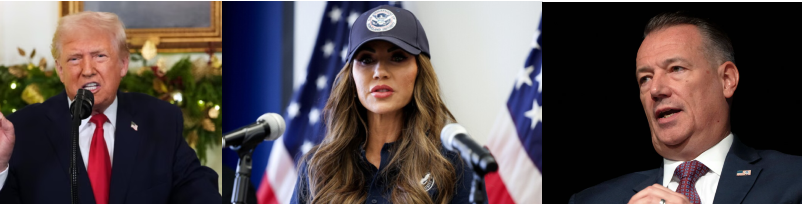
In a brief order, the justices granted a fast-track appeal from Donald Trump’s lawyers and set aside the decision of a federal judge in San Francisco who had blocked the repeal announced by Homeland Security Secretary Kristi Noem.
Justice Ketanji Brown Jackson voted to deny the appeal.
Trump’s lawyers said the law gave the Biden administration the discretion to grant temporary protection to Venezuelans, but also gave the new administration the same discretion to end it.
The court’s decision does not involve the several hundred Venezuelans who were held in Texas and targeted for speedy deportation to El Salvador because they were alleged to be gang members. The justices blocked their deportation until they were offered a hearing.
But it will strip away the legal protection for an estimated 350,000 Venezuelans who arrived by 2023 and could not return home because of the “severe humanitarian” crisis created by the regime of Nicolas Maduro. An additional 250,000 Venezuelans who arrived by 2021 remain protected until September.
“This is an abuse of the emergency docket,” said Ahilan Arulanantham, a UCLA law professor who is representing the Venezuelan beneficiaries of the temporary protected status, or TPS.
He added: “It would be preposterous to suggest there’s something urgent about the need to strip immigration status of several hundred thousand people who have lived here for years.”
It was one of two special authorities used by the Biden administration that face possible repeal now.
Last week, Trump’s lawyers asked the Supreme Court to also revoke the special “grant of parole” that allowed 532,000 immigrants from Cuba, Haiti, Nicaragua and Venezuela to legally enter the United States on personally financed flights.
A judge in Boston blocked Noem’s repeal of the parole authority.
The Biden administration granted the TPS under a 1990 law. It said the U.S. government may extend relief to immigrants who cannot return home because of an armed conflict, natural disaster or other “extraordinary and temporary conditions.”
Dirtbags, not humans.
Shortly before leaving office, Alejandro Mayorkas, Biden’s Homeland Security secretary, extended the TPS for the Venezuelans for 18 months.
While nationals from 17 countries qualify for TPS, the largest number from any country are Venezuelans.The Trump administration moved quickly to reverse course.
“As its name suggests,” TPS provides “temporary — not permanent — relief to aliens who cannot safely return to their homes,” Solicitor Gen. D. John Sauer wrote in his appeal last week.
Shortly after she was confirmed, Noem said the special protection for the Venezuelans was “contrary to the national interest.”
She referred to them as “dirtbags.”
Apparently, Noem is not just a mean-spririted dog killer.
In a TV interview, she also claimed that “Venezuela purposely emptied out their prisons, emptied out their mental health facilities and sent them to the United States of America.”
A lie, of course. But what else would you expect?
The ACLU Foundations of Northern and Southern California and the Center for Immigration Law and Policy at the UCLA School of Law filed suit in San Francisco. Their lawyers argued the conditions in Venezuela remain extremely dangerous.
U.S. District Judge Edward Chen agreed and blocked Noem’s repeal order from taking effect nationwide. He said the “unprecedented action of vacating existing TPS” was a “step never taken by any administration.”
He ruled Noem’s order was “arbitrary and capricious” in violation of the Administrative Procedure Act because it did not offer a reasoned explanation for the change in regulations. It was also “motivated by unconstitutional animus,” he said.
“They think a President should have decency and compassion!”
The judge also found that tens of thousands of American children could be separated from their parents if the adults’ temporary protected status were repealed.
When the 9th Circuit Court refused to lift the judge’s temporary order, the solicitor general appealed to the Supreme Court on May 1.
Last week, the State Department reissued an “extreme danger” travel advisory for Venezuela, urging Americans to leave the country immediately or to “prepare a will and designate appropriate insurance beneficiaries and/or power of attorney.”
“Do not travel to or remain in Venezuela due to the high risk of wrongful detention, torture in detention, terrorism, kidnapping, arbitrary enforcement of local laws, crime, civil unrest, and poor health infrastructure,” the advisory states.
Trump’s lawyers downplayed the impact of a ruling lifting TPS. They told the justices that none of the plaintiffs is facing immediate deportation.
Each of them “will have the ability to challenge on an individual basis whether removal is proper — or seek to stay, withhold or otherwise obtain relief from any order of removal — through ordinary” immigration courts, he said.
Arulanantham said the effect will be substantial. Many of the beneficiaries have no other protection from deportation. Some have pending applications, such as for asylum.
But immigration authorities have begun detaining those with pending asylum claims. Others, who entered within the last two years, could be subject to expedited deportation.
Economic harm would be felt even more immediately, Arulanantham said. Once work permits provided through TPS are invalidated, employers would be forced to let workers go.
That means families would be unable to pay rent or feed their children, as well as result in economic losses felt in communities across the country.
A decision based on a false belief, will probably be a bad decision.
Rep. Jay Obernolte (R., Calif.), a Budget Committee member, said the Republican plan would unquestionably put the country on a stronger fiscal footing. “If you have to pick between a higher-tax, higher-spending regime and a lower-tax, lower-spending regime, the latter is always better for economic growth,” he said.
That belief may be common, but it is not supported by fact. Using it as a basis for Trump’s “big, beautiful” tax cut for the rich adds greater falsity.
1. Obernolte’s statement conveniently omits the questions, “Lower tax for whom?” and “Lower spending for whom?”
In the case of Trump’s tax cut, the answers are: “Lower tax for the rich” and “lower spending for the rest of America.”As is usual for the right wing, the tax cut makes the rich richer and the rest poorer.
2. Because the U.S. government is Monetarily Sovereign, we never “have to pick between a higher-tax, higher-spending regime and a lower-tax, lower-spending regime.” We can and should have a lower tax (especially for the poorer), higher spending regime.
3. Federal debt and deficits are not a burden on the federal government or on taxpayers. Being Monetarily Sovereign, the federal government has infinite dollars to fund any debt
4. The so-called “federal debt” is neither “federal” nor “debt.” It is the total of dollars deposited into Treasury Security accounts, wholly owned by depositors and held for safekeeping by the government (Think: Safe deposit boxes).
5, The “debt” is not a burden on taxpayers. Tax rates have nothing to do with the “debt.” Federal tax rates are arbitrarily chosen by Congress for political reasons, not to fund spending.(By contrast, state and local taxes do fund monetarily non-sovereign state and local spending.)
6. The purposes of federal taxes are:
A. To control the economyby taxing what the government wishes to discourage and by giving tax breaks to what the government wishes to reward
B. To assure demand for the U.S. dollar by requiring taxes to be paid in dollars.
7. Federal deficit spending does not cause inflation. See: “At long last, let’s put this inflation question to bed.” Inflations, i.e, general increases in prices, are based on shortages of crucial goods and services. Federal deficit spending does not create those shortages.
Even during wars, it’s not the federal spending that causes shortages; it’s the war needs. If during a war, federal spending was lower, inflation would be worse, as there would be even fewer consumer goods.
In fact, federal deficit spending can cure inflation when the spending supports the availability of scarce goods and services.
Example: The notorious Zimbabwe inflation was caused by a food shortage. It could have been cured by government spending to aid farming and imports of food. Instead, the government simply printed currency, which created the illusion that the currency creation caused the inflation.
The most recent inflation was caused by COVID-related shortages of oil, food, metals, paper, lumber, shipping, labor and other needs. Government spending has helped reduce those shortages and inflation.
8. Just as federal deficit spending does not cause inflation, it also does not force interest rates up.
A. Interest rate increases add to business costs, which result in higher, not lower prices.
B. Interest rate increases are an arbitrary option of the Federal Reserve because of the mistaken belief that they cure inflation. The Fed also raises rates to encourage the purchase of Treasury Securities. This takes spending dollars from the economy, and therefore is recessive.
The federal government does not need to sell Treasury securities to pay its bills. It pays all its bills with newly created dollars, not by so-called borrowing.
Because inflation is supply-based, not demand-based, recessions do not cure inflation. In fact, we can have both simultaneously. It is called “stagflation.”
There are those of a Libertarian bent who simply do not like government (except when they receive such benefits as Medicare, Medicaid, Social Security, highways, military defense, police defense, schools, parks, disaster relief, food and drug inspection, new drug R&D, FBI, CIA, etc.)
They invent false reasons why government spending should be cut (except for programs that benefit them).
Federal deficit spending is necessary for economic growth. It is part of the formula for Gross Domestic Product:
GDP = Federal Spending + Non-federal Spending + Net Exports
As you can see from the following graph, relative declines in federal spending (green) precede recessions (vertical gray bars). Increases and decreases in federal deficit spending are generally associated with increases and decreases in GDP.
Is anyone fooled by the pols who pretend outrage at the federal deficit and debt, and then pass legislation that widens the income/wealth/power Gap between the rich and the rest?
Those folks simply are the greedy rich. I don’t know what to say about the media and economists who go along with that charade.
Bottom line: The economy always does better when the federal government spends more and taxes less. That’s simple algebra. Given the power, my first act would be to eliminate FICA, and give everyone Medicare.
Should the President of the United States be allowed to offer unlimited pardons, no matter what offense?
What if the President is a convicted felon?
Why does the President have that right?
Should state Governors or other elected or unelected officials have the right of pardon?
We then listed President Trump’s pardons together with the convicted criminals’ names, offenses, and sentences.
By way of reminder, Article II, Section 2, Clause 1 of the Constitution states: “The President… shall have Power to grant Reprieves and Pardons for Offences against the United States, except in Cases of Impeachment.”
Don’t worry. No matter what crimes I tell you to commit, they can’t do a thing. I’ll just pardon everyone and say your conviction was “unfair.”
Given today’s circumstances, we asked you also to consider more specifically the unlimited right to pardon all criminals, along with the SCOTUS decision that a President cannot be prosecuted for “official actions.”
Laws are bounded by extremes, and Trump tests those boundaries.
Should a President have the unlimited right to enlist people to commit crimes by promising them immunity from prosecution and conviction?
This question has special relevance today, when the President himself is a convicted felon.
We have already seen Trump attempt to game the Constitution by invoking the Alien Enemies Act of 1798. He tries to justify deportations without trial, claiming that the United States is facing an “invasion” by foreign criminal gangs such as Venezuela’s Tren de Aragua.
The Alien Enemies Act is a wartime statute enacted in 1798, originally designed to allow the president to detain or deport non-citizens from nations with which the U.S. is at war or under threat of invasion.
Only by the widest stretch of meaning could one consider the U.S. to be “at war with” or under threat of “invasion by” a gang of criminals.
Though the Supreme Court blocked this attempt for lack of due process, it highlights this administration’s, and possibly future administrations’, attempts to bend the Constitution in ways not anticipated.
Another example of Trump’s willingness to distort and stretch the meaning of the Constitution: His attempt to end the Constitutionally permitted birthright citizenship for children born in America of non-citizen parents by claiming that the children are not “subject to the jurisdiction” of the United States.
(This outrageous claim would mean the children could commit any crime and not be punished.)
Trump’s proclivity, if allowed, sets a precedent. He does America a service by demonstrating how far a corrupt President would go if unchecked by Congress and the Supreme Court.
Why was the President given the right of pardon?
Alexander Hamilton said, “Humanity and good policy demand a power of clemency in the executive, especially in seasons of insurrection or rebellion.” Are we now in a season of insurrection or rebellion?
To correct judicial mistakes: Courts can err. A pardon lets the President fix unjust convictions or excessive sentences when the law provides no other remedy. Have Trump’s pardon corrected judicial mistakes?
To promote national unity and reconciliation. In times of crisis—rebellions, civil wars, insurrections—the President might need to pardon large numbers of people to restore peace. Did Trump’s pardons come at time of rebellion, civil war or insurrection? Did they help restore national unity, reconciliation, and peace?
To act swiftly and decisively: A single executive could act faster and more compassionately than a board or legislature. The framers feared delay and indecision. Hamilton said, “A well-timed offer of pardon to the insurgents may restore the tranquility of the commonwealth.” Did Trump’s pardons restore tranquility?
To demonstrate moral judgement. The pardon power reflects trust in the president’s character and judgment. It is difficult to see the words, “moral,” “character,” and “judgement” in the same sentence as “Donald Trump” without laughing.
Most of Trump’s pardons have been given to political allies who committed crimes, some of which were in furtherance of Trump’s political agenda, and some were for personal reasons.
Consider that the President of the United States takes an oath in which he promises to “preserve, protect, and defend the Constitution of the United States.”
He has broken this oath not only by defying any reasonable interpretation of the Constitution.He also has raged against the legal foundations of Ameirca by calling called judges who rule against him, “a “so-called judge,” a “troublemaker” an “agitator,” a “radical lunatic, ” “unfair,” “unhinged,” “disgraceful,” having “Trump degrangement syndrome,” a “hater,” a “Mexican” (for a judge born in Indiana), and a “certified Trump hater.”
I have been alive for 90+ years and never have I heard anyone, let alone a President, publicly disrespect the Judiciary like Trump does. The man is a vicious hatemonger, spreading contempt for all those who do not exhibit total fealty to him — judges, the media, economists, other politicians, businesspeople, voters, vote counters, anyone.
As we have said, laws are bounded by the extremes, and Trump is an extreme case, never seen before and not anticipated by the founders.
So the question is, what shall be done to prevent his extremism from becoming the future standard?
Here are some thoughts:
The President’s rights would not be for a pardon, but to order a new trial during which a new judge and a jury would hear and re-evaluate the evidence given at the original trial. No lawyers. Just a reading of all the evidence presented at the trial to determine whether the decision was appropriate.
Or, same as above but with new lawyers, provided by the Justice Department, plus any new evidence not presented at the previous trial(s).
Or, the President would be able to require a totally new trial. Start from the presumption of innocence.
For mass pardons in the name of unity and reconciliation, Congress would have to agree.
The goal would be to prevent amoral Presidents from creating crime syndicates that commit every sort of felony with no laws to prevent or punish them, while allowing for the preference to free a guilty person over punishing an innocent one.
Should the President of the United States be allowed to offer unlimited pardons, no matter what offense?
What if the President is a convicted felon?
Why does the President have that right?
Should state Governors or other elected or unelected officials have the right of pardon?
By comparison:
Most U.S. governors have pardon power, which allows them to: Pardon state crimes, Commute sentences, Issue reprieves or clemency. Some states restrict this power, requiring: A recommendation from a state board of pardons or approval by other officials
For example: The Governor of California can grant clemency, but must get a majority recommendation from the state Supreme Court for multiple-offense felons.
The Governor of Texas needs a recommendation from the Board of Pardons and Paroles. In Georgia, the State Board of Pardons and Paroles, not the governor, holds that power.
To provide context to the questions, here are some examples found on the Internet. We have not checked these for accuracy. The data was posted by the U.S. Department of Justice.
As you go through the list, you will find many different kinds of offenses, from contempt of court to murder. If there is any reasonably common element, it might be the support of right-wing causes or, more specifically, the support of Donald Trump, regardless of the seriousness of the offense or whether the conviction was questionable..
So the question becomes: Does the unlimited right to pardon all criminals, along with the SCOTUS decision that a President cannot be prosecuted for “official actions,” give a lawless President the unlimited right to enlist people to commit crimes by promising them immunity from prosecution and conviction?
That is, what exactly is an action that Donald Trump or future Presidents could not claim is an “official action”?
12 months’ imprisonment and three years’ supervised release, conditioned upon six months’ home confinement and the performance of 100 hours’ community service (August 19, 2016)
Five years’ probation, conditioned upon eight months’ community confinement and the performance of one full day per week of community service; $30,000 fine (September 23, 2014)
Four months’ imprisonment; three years’ supervised release (May 25, 1995)
Conspiracy to steal firearms and other goods as part of an interstate shipment; theft from shipment in interstate commerce; theft of firearms shipped in interstate commerce
24 months’ imprisonment (as amended); three years’ supervised release; 5,400 hours of community service; $200 million fine (August 5, 1992)
Conspiracy; securities fraud; mail fraud; tax fraud; filing false reports with the Securities and Exchange Commission (SEC); assisting a brokerage firm in violating its net capital requirements
Obstructing the administration of the Internal Revenue Laws; aiding in the preparation of a false income tax return; making false statements on a loan application; making false statements (five counts)
Life imprisonment; five years’ supervised release (March 21, 1997)
Conspiracy to possess with intent to distribute cocaine; attempted possession of 12 kilos of cocaine with intent to distribute; attempted possession of 9 kilos of cocaine; attempted possession of 75 kilos of cocaine; attempted possession of 10 kilos of cocaine; conspiracy to commit money laundering; money laundering ($1.5 million); structuring monetary transactions
Conspiracy to operate off-road vehicles on public land closed to off-road vehicles; operation of off-road vehicle on public lands closed to off-road vehicles
660 months and one day’s imprisonment (amended to time served); 36 months’ supervised release (November 16, 2004)
Possession with intent to distribute marijuana (five counts); possession of a firearm in furtherance of a drug trafficking crime (three counts); possession of a stolen firearm (two counts); possession of a firearm with a removed serial number; use of a controlled substance in possession of a firearm (two counts); money laundering (three counts)
30 days’ imprisonment; two months’ supervised release conditioned upon compliance with the immigration process of the Bureau of Immigration and Customs Enforcement; $20,000 fine (April 3, 2018)
Three years’ probation, conditioned upon one year’s home confinement and 100 hours’ community service; $250,000 fine; $44,579.47 restitution (March 20, 2008)
180 months’ imprisonment; 36 months’ supervised release (as amended on September 5, 2019) (April 13, 2015)
Voluntary manslaughter, aiding and abetting and causing an act to be done (13 counts); attempt to commit voluntary manslaughter, aiding and abetting and causing an act to be done (17 counts); using and discharging a firearm during and in relation to a crime of violence and aiding and abetting and causing an act to be done
168 months’ imprisonment; 36 months’ supervised release (as amended on September 5, 2019) (April 13, 2015)
Voluntary manslaughter, aiding and abetting and causing an act to be done (eight counts); attempt to commit voluntary manslaughter, aiding and abetting and causing an act to be done (12 counts); using and discharging a firearm during and in relation to a crime of violence and aiding and abetting and causing an act to be done
151 months’ imprisonment; 36 months’ supervised release (as amended on September 5, 2019) (April 13, 2015)
Voluntary manslaughter, aiding and abetting and causing an act to be done (six counts); attempt to commit voluntary manslaughter, aiding and abetting and causing an act to be done (11 counts); using and discharging a firearm during and in relation to a crime of violence and aiding and abetting and causing an act to be done
144 months’ imprisonment; three years’ supervised release; $2,000 fine (as amended November 12, 2008) (October 19, 2006)
Assault with a dangerous weapon, and aiding and abetting; assault with serious bodily injury, and aiding and abetting; discharge of a firearm in relation to a crime of violence; deprivation of rights under color of law
132 months’ imprisonment; three years’ supervised release; $2,000 fine (as amended November 13, 2008) (October 19, 2006)
Assault with a dangerous weapon and aiding and abetting; assault with serious bodily injury and aiding and abetting; discharge of a firearm in relation to a crime of violence; deprivation of rights under color of law
40 months’ imprisonment; 24 months’ supervised release conditioned upon performance of 250 hours’ community service; $20,000.00 fine (February 20, 2020)
Obstruction of proceeding; false statements (five counts); witness tampering
1. Eastern District of Virginia2. District of Columbia
1. 47 months’ imprisonment; three years’ supervised release; $50,000 fine; $25,497,487.60 restitution (as amended by court order on March 21, 2019) (March 7, 2019)2. 73 months’ imprisonment; 36 months’ supervised release (concurrent); $6,164,032 restitution (March 13, 2019)
1. Subscribing to false United States individual income tax returns for 2010-2014 tax years (five counts); failure to file reports of foreign bank and financial accounts for calendar years 2011-2014; bank fraud/Lender B/$3.4 million loan; bank fraud/Lender C/$1 million loan2. Conspiracy against the United States; conspiracy to obstruct justice (witness tampering)
1. Northern District of Georgia2. Northern District of Georgia3. Northern District of Georgia
1. 12 months’ imprisonment; three years’ supervised release; $20,000 fine (July 1, 1998)2. 27 months’ imprisonment (concurrent); three years’ supervised release (August 26, 1999)3. 27 months’ imprisonment (concurrent); two years’ supervised release; $1,100,000 restitution (as amended on February 12, 2004) (May 29, 2002)
1. Structuring transactions to avoid reporting requirements (four counts)2. Willfully attempting to evade personal income tax (three counts)3. Wire fraud
52 months’ imprisonment (as amended by the Bureau of Prisons pursuant to court orders on March 5, 2014, and November 2, 2015); five years’ supervised release (January 11, 2013)
Conspiracy to possess with intent to distribute cocaine hydrochloride
Two years’ probation conditioned upon 100 hours’ community service per year and continued payment of balance owing to the Securities and Exchange Commission (August 15, 1995)
One year’s probation conditioned upon four months’ home confinement; $10,000 fine; restitution in accordance with the plea agreement (December 6, 1999)
Two years’ probation conditioned upon six months’ home confinement and 160 hours’ community service; $10,000 fine (as amended on October 3, 2016) (September 20, 2016)
Conspiracy to commit an offense against the United States; causing false records; causing false campaign contribution reports; false statements scheme
1. Eastern District of Arkansas2. Southern District of Indiana3. Eastern District of Arkansas4. Western District of Kentucky5. Western District of Kentucky
1. Three years’ imprisonment; five years’ probation (February 4, 1985)2. 33 days’ imprisonment (September 26, 1986)3. 407 days’ imprisonment; five years’ probation (January 20, 1987)4. Three years and 120 days’ imprisonment (May 23, 1990)5. 508 days’ imprisonment (February 20, 1992)
1. Conspiracy to distribute cocaine2. Violation3. Violation4. Violation5. Violation
84 months’ imprisonment; three years’ supervised release; and a $2,500 fine (September 23, 2013)
Conspiracy to obstruct justice; destruction, alteration, falsification of records, aiding and abetting, causing an act to be done; accessory after the fact; obstruction of justice, aiding and abetting
Conspiracy to defraud the United States; fraud by wire, radio, or television (35 counts); scheme to defraud: money, state tax stamps (transportation of stolen property (14 counts); money laundering – racketeering (laundering monetary instruments conspiracy) (indicted – no further resolution to date)
45 days’ imprisonment; two years’ supervised release, conditioned upon an unspecified term of home confinement and community service; $20,000 fine (as amended) (January 20, 1995)
18 months’ imprisonment, including approximately four months’ community confinement; three years’ supervised release; as amended June 7 and June 19, 1994 (May 7, 1993)
Conspiracy to possess with intent to distribute and to distribute marijuana and cocaine
1. District of Connecticut2. District of South Carolina
1. Three years’ probation, conditioned upon cooperation with the IRS in resolving $100,000 in unpaid taxes for the years 1991 and 1992; $4,000 fine (June 9, 2000)2. Five years’ probation, conditioned upon six months’ home confinement; $412,000 restitution
1. Payment to non-licensed physician; attempt to evade or defeat tax2. Mail Fraud
36 months’ imprisonment; three years supervised release; $25,000 fine (October 28, 2013)
Conspiracy to commit extortion, attempted extortion and wire and mail fraud; honest wire services wire fraud (six counts); conspiracy to commit money laundering; concealment of money laundering; transactions with criminally derived funds (two counts); extortion under color of official right (two counts); conspiracy to make false statement; insurance fraud (two counts); racketeering
18 months’ imprisonment; two years’ supervised release; $15,000,000 fine (June 24, 2010)
Conspiracy to commit securities and mail fraud; fraud in connection with Brocade stock, aiding, abetting and willfully causing; false SEC filing, aiding, abetting and willfully causing (three counts); falsifying books, records and accounts, aiding, abetting and willfully causing; false statement to accountant, aiding, abetting and willfully causing (four counts)
Espionage – conspiracy to gather or deliver national defense information (two counts); violation of Subversive Activities Control Act – receiving or obtaining classified information by foreign agent
Conspiracy to commit mail and wire fraud and honest services mail and wire fraud; conspiracy to commit federal programs bribery; money laundering conspiracy; wire fraud and honest services wire fraud (six counts); federal programs bribery (two counts); filing a false tax return
Kwame Kilpatrick Conviction: Racketeering conspiracy, extortion, bribery, mail and wire fraud, and tax offenses during his tenure as Detroit mayor. Sentence: 28 years in prison. Commutation: Sentence commuted by President Trump in January 2021
January 6 Capitol Riot Pardons In a sweeping move, President Trump granted full pardons to individuals convicted of offenses related to the January 6, 2021, Capitol attack. Notable recipients include: Joseph Hackett Ethan Nordean Joseph Biggs Zachary Rehl Dominic Pezzola Jeremy Bertino GQ
Reports indicate that dozens of the convicted individuals had prior criminal convictions, including serious offenses such as rape, manslaughter, domestic violence, and drug trafficking.