President of the United States of America, “You’re under arrest, traitors.”
Hi, my fellow Americans. Welcome to 2025.
It’s me, your favorite President, Kamala Harris, here in the Oval Office, doing “official actions” to save American democracy and all you Americans.
Before I jailed Trump and Vance, I checked with the Supreme Court. Someone who tries to overthrow the government, subvert our elections, and who admits he would be a dictator “for one day” is an enemy of America.
So, it is part of a President’s “official actions” and “core constitutional powers” as “explicitly stated in Article II of the Constitution” to get rid of America’s enemies.
Clarence Thomas, Sam Alito, John Roberts, Neil Gorsuch, Brett Kavanaugh, and Amy Coney Barrett all agreed.
However, those Justices wanted to make Biden, Trump and me kings??! In the Revolutionary War, Americans died to get rid of a king. These Justices are crazy or simply traitors. Either way, they are a threat to America,
So I locked them up, too.
And listen, Thomas and Alito were the wrong people to make laws about what’s just and moral in America, seeing as how they are proven liars and criminals. The other four lied too, when asked about Roe, in order to get their nominations, so good riddance.
Finally, there are the Christian nationalist nut-cases in Congress and the conspiracy theorists of FoxNews, et al. As a riff on the old joke goes, “Take Marjorie Taylor Greene, please.” I may have to pop a few of them off to the hoosegow, too, so we can get things done around here.
We have three honest Justices, which is plenty, but I may nominate a couple more. There’s nothing magical about nine, and recent history shows that having nine doesn’t assure honesty, impartiality, and common sense.
Now that we have rid ourselves of what I, as President, consider traitors, we can proceed to do what’s needed to help America.
My first step will be to get rid of the Electoral College. It is, by far, the most unfair, stupid voting system anyone can imagine.
If you were told to come up with a system that denied the vast majority of Americans the right to elect a President, you could not do better than invent the Electoral College.
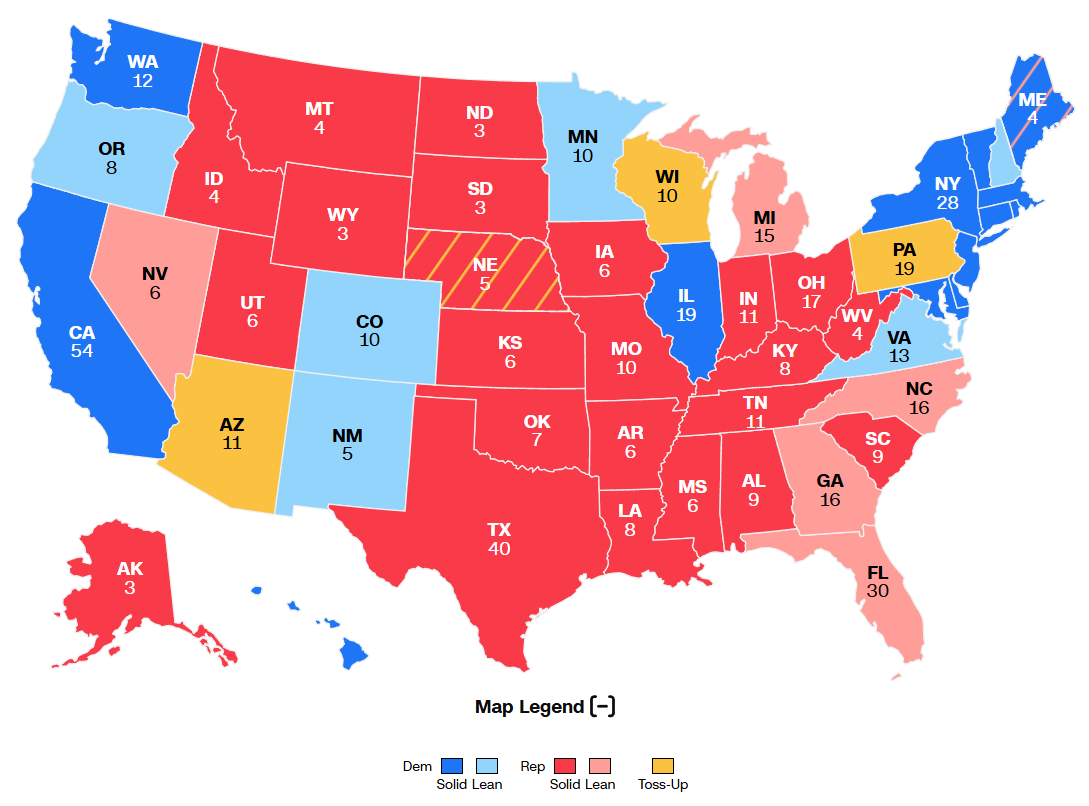
In July 2024, when Biden was still running, these were the projected red and blue states.
A candidate needs 270 electoral votes to win. This graph shows the projection from last July.
If, at that time, you lived in any of the bright red or bright blue states, you probably were tempted to stay home for the election.
You must have figured your vote for President wouldn’t count.
If you voted in a pale red or pale blue state, you may have thought your Presidential vote might not count, either.
Those relatively few of you who live in Arizona, Wisconsin, Pennsylvania, and perhaps one or two other states must have rightly figured you’ll be the ones who decide on the next President.
We’ve actually had several elections where the person who got the fewer votes was named President: John Quincy Adams, Rutheford B. Hayes, Benjamin Harrison, George W. Bush, and yes, you guessed it, Donald Trump.
He lost the popular vote to Hillary Clinton by an astounding 2.8 million votes. And this is the guy who lost to Biden by more than 7 million votes and immediately began to whine that he really won.
It’s sad to watch an old fool cry like a baby. It also is nuts. Why should a relative handful of voters decide on the President while the vast majority of you have no say at all?
I will give every American an equal say in who our next President will be. We’ll have a national election, and the person receiving the majority of votes will win. If no one has a majority, we’ll have a runoff between the two highest vote-getters.
It’ll be simple, and it’ll be fair.
Next, we’ll restore Roe vs. Wade and make it the law of the land. It’s what the majority of Americans want.Why should the Christian nationalist minority rule the rest of us?
We also will pass some sensible gun control laws that the majority wants. No more “bump stocks” that turn rifles into machine guns.
No more AR-15 and AK-45 military-grade, high-velocity rifles firing bullets that rip people to shreds, even with glancing shots. That’s why they are the mass murderer’s weapons of choice.
If you want any sort of gun, you’ll need to get a title and pass a test, like you need for a car.
Next, we will revise Medicare to cover everyone in America, regardless of age.
It will be a no-deductible, comprehensive program that covers everything: Custodial, long-term, and skilled care; services outside the U.S.; equipment at home (hospital beds, crutches, other ambulatory devices); routine physical checkups; eye examinations; eyeglasses; hearing aids; all dental services; foot care and supportive devices; all pharmaceuticals including those to treat anorexia, weight loss, or weight gain; and fertility drugs.
Why should these medical services be denied to the poor and middle classes but available to the rich? Are the poor and middle classes supposed to be 2nd-class citizens?
And we’ll get rid of the FICA tax. The federal government, being Monetarily Sovereign, can create infinite dollars to pay for anything. FICA is the most regressive tax in America, serving no purpose other than to limit the benefits that should go to all Americans.
We also will giveSocial Security benefits to everyone, regardless of age. No one should go hungry or homeless in a nation where some have billions, and the government has infinite money.
Social Security benefits will not be subject to income tax. That SS tax is surely one of the worst ideas ever conceived. Why take money from the very people you’re trying to help. Senseless.
We’llrevise the income tax laws to exempt all those whose annual income is below real (inflation-adjusted) one million dollars, and we’ll count as income all those tax loopholes the rich now enjoy. Goodbye company cars, apartments, yachts, foreign homes, company airplane flights, etc.
We also will count as income some of the more esoteric tax dodges, such as real estate step-ups, depreciation, pass-throughs, 1031 exchanges, GRATs, offshore accounts, like-kind exchanges, carried interest, and all sorts of capital gains tricks. used by the rich.
States, counties, and cities will be prohibited from levying those obnoxious, regressive sales and property taxes.
Instead, every state will receive from the federal government a monthly, per-capita stipend to fund elementary and secondary education, public welfare (which includes most Medicaid spending), higher education, health and hospitals, highways and roads, criminal justice (which includes spending on police, corrections, and courts), and housing and community development..
The advantages are:
1. The poor and middle classes will be relieved of these onerous tax burdens.
2. When the states, counties, and cities pay for things, no new dollars are created in their economies. The money has just been shifted from some taxpayers to others.
However, new growth dollars are added to the economy when the federal government pays.
We’ll provide supplementary funding to all schools, K-16+ advanced, based on their student count and full-time teachers.
We will create a program called “Educate All,”which will resemble Medicare, except it will cover college expenses, too: Tuition, books and supplies, housing, and transportation. It will even pay students a salary to help those families that depend on their young people working.
As is the case with Medicare’s doctors and hospitals, some universities may wish to opt out of Collegecare, but they will not receive federal funding.
And no, it won’t cause inflation. That is a lie, told by the rich, to keep you from receiving federal benefits. You’ll notice the rich don’t complain about the tax breaks they receive, which add more to federal deficits than your measly benefits.
Anyhow, I’m young, strong, and I’ll kick that blathering, doddering old fool’s butt if he keeps complaining from jail. Or I may send in Seal Team 6 to finish the job.
Or, I might do it myself. As you can see, I am ready, and Trump’s Supreme Court said it would be OK.
South Florida leaders want to head off ‘silver tsunami’ aging crisis
By Lisa J. Huriash || South Florida Sun Sentinel UPDATED: July 17, 2024
Lisa J. Huriash
Broward County said it is aggressively encouraging construction — and helping fund — affordable housing for seniors.
South Florida leaders are urging a state planning council to tackle the impending “silver tsunami” as concerns grow for retirees’ well-being as they age.
At a recent meeting of the South Florida Regional Planning Council, chairman Steve Geller, who is also a Broward County commissioner, said he would push for aging issues to be discussed at a broader conference this fall where experts could guide policy suggestions.
The conference will include Palm Beach, St. Lucie, Monroe, Broward, Miami-Dade, Martin and Indian River counties, which is about one-quarter of the state’s population.
“Concerns are growing” among Florida leaders who will “push for” discussion of aging issues and to “address” and “tackle” the financial problems of one-quarter of the state’s population. No word yet about the three-quarters.
With all that pushing, addressing, tackling, and concern, we can be confident that our elderly will be well taken care of. Not.
Geller said more attention is needed to deal with the anticipated wave of older Americans who are facing retirement without a pension like their parents relied on, and face unique transportation and healthcare problems as they age.
And the above-mentioned housing problem.
The median personal income for people age 65 and older is $29,740, according to the federal Administration for Community Living.
Imagine trying to survive on $29,740 a year. And that’s the median, meaning half the seniors are trying to survive on less, much less.
“I don’t think we are prepared for it,” Geller said after the meeting.
That was the understatement of the decade.
Meeting the transportation needs of an aging population, including new signage, changing paratransit to add low floors and improved audio and visual announcements, more community shuttles and vans, and “safe transitioning” for seniors to stop driving.
It’s good to meet the “transportation needs” of the elderly. Action should be taken immediately.
Geller also said there could be a consideration to create crosswalks that give seniors more time to get across the street.
Yes, crosswalks that give the elderly more time to cross are good. Now, let’s get to the biggest problems.
The costs of long-term care average more than $100 per day nationwide for a four-hour daily home health aide.
What about the elderly who need more than four hours of care?
Yet “the majority of older adults will need these services, and those with meager incomes, who are most likely to require them, have the fewest resources to pay for them,” according to a November study by the Harvard Joint Center for Housing Studies.
According to the report, about 85% of seniors age 75 and older in Miami-Dade and Broward who live alone cannot afford daily home care in addition to housing and other necessities.
Former Fed Chairman Alan Greenspan: “There is nothing to prevent the federal government from creating as much money as it wants and paying it to somebody.”
Think about it. You work your whole life, and then, in your senior years, you live in misery. That is America. Of course, it’s unnecessary, but you wouldn’t think so if you look at the excuses for not helping these senior citizens.
While Ms. Huriash is right to be concerned about the monetarily non-sovereign Broward County’s ability to fund support for seniors, the entire problem could be solved via Monetarily Sovereignfederal funding.
The federal government could fund all the solutions by pressing a few computer keys but fails to do so. Here are examples of the phony excuses the ignorant and/or lying con artists shovel on you:
Too many beneficiaries and supported by too few taxpayers: The U.S. population is aging rapidly, leading to more beneficiaries than the working population contributing to the funds.
Trust Fund Depletion: The Social Security Old-Age and Survivors Insurance (OASI) Trust Fund is projected to be able to pay 100% of scheduled benefits until 2033. After that, it will only be able to cover about 79% of benefits unless changes are made.
Rising Hospital Costs: The Hospital Insurance (HI) Trust Fund, which funds Medicare Part A, is projected to be able to pay 100% of benefits until 2036. After that, it will only cover about 89% of benefits.
Rising Healthcare Costs: The Supplemental Medical Insurance (SMI) Trust Fund, which covers Medicare Parts B and D, is adequately financed but faces rapidly rising costs, increasing the financial burden on beneficiaries and taxpayers.
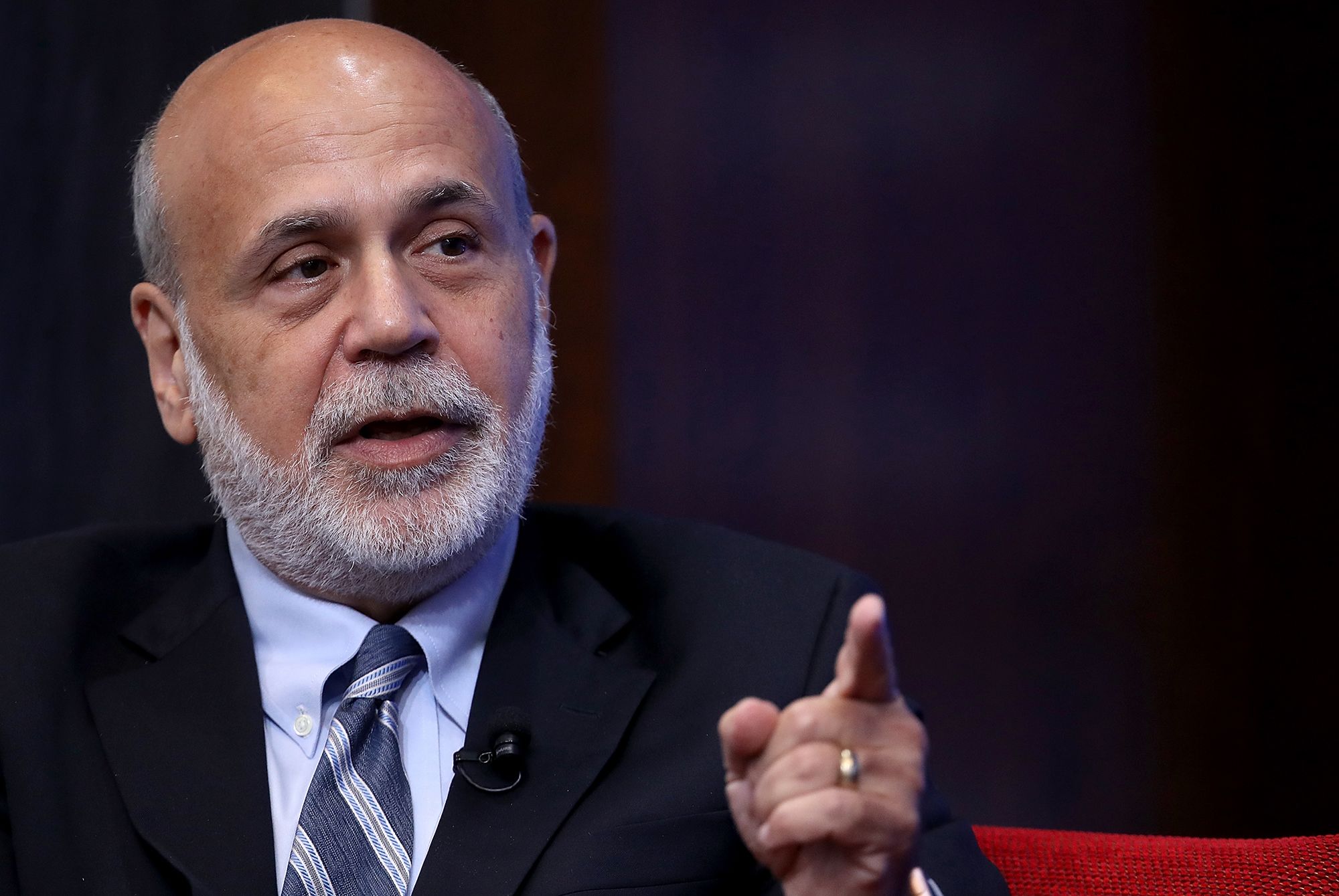
Former Fed Chairman Ben Bernanke: “The U.S. government (can) produce as many U.S. dollars as it wishes at essentially no cost. It’s not tax money… We simply use the computer to mark up the size of the account.:
Excuse #1. Too many beneficiaries and supported by too few taxpayers.
Two huge lies were packed into one short sentence. The working population pays FICA taxes, but FICA taxes don’t fund anything.
Your tax dollars come from the “M2 money supply measure,” and when they reach the Treasury, they cease to be part of any money supply measure.
They disappear from the economy and effectively are destroyed.
The Treasury keeps a record of the dollars it receives, but it neither needs nor uses those dollars.
Even if it didn’t receive a single dollar, the federal government has the infinite ability to create dollars to support an infinite number of beneficiaries.
In summary, federal taxes and taxpayers do not fund federal spending, and we don’t have too many beneficiaries
Excuse #2. Trust fund depletion.
The Social Security Old-Age and Survivors Insurance (OASI) Trust Fund is not a trust fund, and it doesn’t pay for anything.
A federal trust fund is nothing more than an accounting mechanism used by the federal government to track earmarked receipts (money designated for a specific purpose or program) and corresponding expenditures.
It’s just a record-keeping device, not a funding source.
The largest and best-known trust funds supposedly finance Social Security, portions of Medicare, highways and mass transit, and pensions for government employees.
Federal trust funds bear little resemblance to their private-sector counterparts, and therefore the name can be misleading.
“Sorry. This pail is empty. I can’t give you any water.”
A “trust fund” implies a secure source of funding.However, a federal trust fund is simply an accounting mechanism that tracks inflows and outflows for specific programs.
In private-sector trust funds, receipts are deposited, and assets are held and invested by trustees on behalf of the stated beneficiaries.
In federal trust funds, the federal government does not set aside the receipts or invest them in private assets.
Rather, the receipts are recorded as accounting credits in the trust funds and then combined with other receipts that the Treasury collects and spends.
Further, the federal government owns the accounts and can, by changing the law, unilaterally alter their purposes and raise or lower collections and expenditures.
Emphasis: The federal government canunilaterally alter the (trust funds’) purposes and raise or lower collections and expenditures.
When you are told that a federal trust fund will run out of money on a certain date, that means Congress could easily increase the balance to match future spending simply by deciding to do so, but so far, it hasn’t.
The federal government could (and should) increase the balance of any trust fund by trillions of dollars merely by passing a law without collecting a dollar in taxes.
Excuse #3 and #4. Rising hospital and healthcare costs
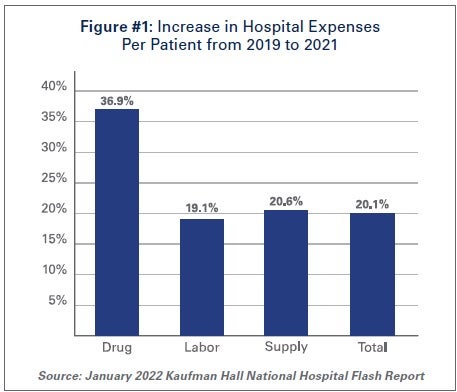
Hospitals and health systems have repeatedly confronted a range of financial and operational challenges, including historic volume and revenue losses, as well as skyrocketing expenses.
When coupled with rising inflation and growth in input prices, these expense increases have been severely detrimental to hospital finances, leading to billions in losses and over 33% of hospitals operating on negative margins.
Throughout the pandemic, Congress has provided various forms of support and resources to hospitals to help them manage the increased demands and financial pressures.
Here are some key resources and support measures:
Financial Support
Provider Relief Fund:Established under the CARES Act, this fund provided financial assistance to healthcare providers to compensate for revenue losses and increased costs due to the pandemic.
Paycheck Protection Program (PPP): This program offered loans to healthcare providers to help them retain employees and cover operational costs.
Increased Medicare Payments: Congress increased Medicare payments for inpatient COVID-19 admissions by 20% and provided additional payments for administering COVID-19 vaccines.
Resources for COVID-19 Response
Vaccines and Treatment: Funding was allocated for the development, distribution, and administration of COVID-19 vaccines and treatments.
Personal Protective Equipment (PPE): Resources were provided to ensure hospitals had adequate PPE for their staff3. Testing and Contact Tracing: Additional funding was directed towards expanding testing capabilities and contact tracing efforts.
Support for Rural Hospitals
Rural Health Care Providers: The American Rescue Plan Act included $8.5 billion to reimburse rural healthcare providers for expenses and lost revenues related to COVID-19.
Workforce Development
Workforce Support: Funding was provided for workforce development to ensure hospitals had the necessary staff to handle the increased patient load.
Congress and the President voted for trillions of dollars in support, some in loans and some in outright support. None was matched by increased taxes. The federal government simply did what it always does: It passed laws that created the money from thin air.
The federal government has the infinite ability to pass such laws.
Excuse #5. Politics
Here’s where the real lying comes into play. You are being told that solving all these problems requires raising taxes, cutting benefits, or increasing the retirement age.
It is an absolute lie whose purpose is to widen the income/wealth/power Gap between the rich and the rest of us. The lie is told at the behest of the rich, who become richer when the Gap widens.
The federal government is Monetarily Sovereign. It has the infinite ability to create U.S. dollars for any purpose. It does not need to collect taxes to fund anything, and it certainly does not need to borrow dollars, cut benefits, or increase the retirement age.
Federal taxation has two purposes, neither of which is to fund federal spending:
To control the economy by taxing what the government wishes to restrict and by giving tax breaks to what the government wishes to reward. (Currently, the government wishes to reward the rich by giving them tax breaks that are not available to the rest of us.)
To guarantee demand for the U.S. dollar by requiring taxes to be paid in dollars.
If you are old, or expect to be, don’t bother asking the federal government for help. They will lie to you.
They will tell you they can’t afford to give you comprehensive, no-deductible, completely free Medicare, nor can they give it to your spouse and children.
A lie.
They will tell you there are too many people asking for too much money.
A lie.
They will tell you that because doctor, nursing, hospital, drug, service, and equipment costs have risen, there is not enough money left in trust funds to care for the elderly, let alone younger Americans.
A lie.
They will tell you the only way to “save” existing Medicare is to raise your taxes and/or to cut your benefits.
A lie.
These are all lies on behalf of the rich, who want to widen the income/wealth/power Gap below them.
They bribe the politiciansvia campaign contributions and promises of lucrative employment opportunities.
They bribe the media via ownership and advertising dollars.
They bribe the economists via university endowments and employment in “think tanks.”
They do everything possible to brainwash you into believing federal finances are like personal finances when the two are polar opposites. The false comparison is called the Big Lie in economics.
As you read this prediction, keep in mind it came twenty-three years ago.
“We have to live within our means. We have to reduce our deficit, and we have to get back on a path that will allow us to pay down our debt. And we have to do it in a way that protects the recovery, protects the investments we need to grow, create jobs, and helps us win the future.
“Even after our economy recovers, our government will still be on track to spend more money than it takes in throughout this decade and beyond. That means we’ll have to keep borrowing more from countries like China.
“That means more of your tax dollars each year will go towards paying off the interest on all the loans that we keep taking out. By the end of this decade, the interest that we owe on our debt could rise to nearly $1 trillion.
“By 2025, the amount of taxes we currently pay will only be enough to finance our health care programs — Medicare and Medicaid — Social Security, and the interest we owe on our debt. That’s it. Every other national priority -– education, transportation, even our national security -– will have to be paid for with borrowed money.
“Now, ultimately, all this rising debt will cost us jobs and damage our economy. It will prevent us from making the investments we need to win the future. “
“We won’t be able to afford good schools, new research, or the repair of roads -– all the things that create new jobs and businesses here in America.
“Businesses will be less likely to invest and open shop in a country that seems unwilling or unable to balance its books. “And if our creditors start worrying that we may be unable to pay back our debts, that could drive up interest rates for everybody who borrows money -– making it harder for businesses to expand and hire, or families to take out a mortgage.
“Around two-thirds of our budget — two-thirds — is spent on Medicare, Medicaid, Social Security, and national security. Two-thirds. Programs like unemployment insurance, student loans, veterans’ benefits, and tax credits for working families take up another 20 percent.
“What’s left, after interest on the debt, is just 12 percent for everything else.”
That is the doom and gloom Obama fed you then; it’s the same diet of liesyou’ve been fed since 1940; and it’s the same utter nonsense you’ll hear today and tomorrow.
It’s the same lies you’ll be told every time the ridiculous, unnecessary “debt ceiling” comes up for debate — you know, the nonsense that paralyzes Congress every few months and is resolved simply by raising the ceiling withno adverse aftereffects.
(Since it already has been raised more than a hundred times, why not just get rid of it? Congress has been bribed to posture about lies.)
And now, thirteen years later, none of Obama’s predictions have come true. Why? Because they all were lies.
Every single time we have paid down the so-called “debt,” we have had recessions and depressions—not some of the time, butevery time.
The rich want you to believe the government can’t afford Medicare, Medicaid, Social Security, unemployment insurance, student loans, veterans’ benefits, and tax credits for working families.
Of course, nothing is said about the costs of those tax breaks for the richthat allowed a billionaire like Donald Trump to pay less income tax than did for the past ten years.
The rich want those cuts expanded. Trump has promised to expand them if he is elected. The rich are happy that Trump’s poor suckers will vote for his tax cuts.
It’s nice that so many people have written to me expressing outrage at the Big Lie. I appreciate your sentiments. But really, folks, I’m already in your corner and have been for twenty-five-plus years. And I’m pushing 90, so if you think Trump and Biden are too old, well . . .
If you want to make a difference, direct your outrage at someone who can do something about it. The politicians, the media, and the university economists.
Call them. Scream at them. Do it again, and again, and again. Every day. Twice a day. Never let up. Let them know you aren’t fooled.
Get your friends involved—and their friends, and theirs. Start a “Truth Club.” Bombard the information sources with truth bombs.
If you do nothing, nothing will happen. The lies will continue. The rich will grow richer. And years from now you will . . . As the poet Thoreau said, “The mass of men lead lives of quiet desperation.”
And it’s not just Florida women, though the following article from the Florida Sun Sentinel focuses on them.
Florida women dying from preventable causes New scorecard assesses health, reproductive care across nation By Cindy Krischer Goodman South Florida Sun Sentinel
Emergency rooms refused to treat pregnant women, leaving one to miscarry in a lobby restroom as front desk staff refused to admit her. Another woman learned that her fetus had no heartbeat at a Florida hospital, the day after a security guard turned her away from the facility. And in North Carolina, a woman gave birth in a car after an emergency room couldn’t offer an ultrasound. The baby later died.
Florida women are dying from causes that are preventable, including breast and cervical cancer, pregnancy complications, and mental health conditions, according to a new national scorecard of women’s health released Wednesday.
The Commonwealth Fund’s scorecard assessed women’s health and reproductive care in the United States over the last two years to measure the consequences of state policy choices and judicial decisions that limit women’s access to health services and reproductive care.
The 2024 Scorecard on Women’s Health and Reproductive Care comes amid a March 2024 National Center for Health Statistics finding that women’s life expectancy is at its lowest since 2006.
Using 32 measures, The Commonwealth Fund, a private healthcare research foundation, ranks Florida in the bottom third of the country (39th) for how well the state’s healthcare system works for women ages 15 to 44.
Overall, Florida has a higher than the U.S. average rate of women who lack insurance, die while pregnant, give birth without prenatal care, and succumb to breast and cervical cancer.
“Our hope is that state policymakers can use this scorecard to identify and address gaps in care to guarantee that all women across the United States can live healthy lives with access to quality, affordable care, no matter where they live or what their background is,” said Joseph Betancourt, Commonwealth Fund president.
One of the biggest concerns highlighted in Florida’s low ranking is its high rate of uninsured women ages 19-64. It is one of 10 states that have not expanded eligibility for Medicaid and has had a problematic unwinding of pandemic-era Medicaid coverage that has left thousands of women either newly uninsured or with significant gaps in their coverage.
These ten states have not expanded Medicaid eligibility: Alabama, Florida, Georgia, Kansas, Mississippi, South Carolina, Tennessee, Texas, Wisconsin, and Wyoming. All are “red” states, with the exception of Wisconsin, which is teetering on the edge.
The Affordable Care Act expanded Medicaid coverage to nearly all adults with incomes of up to 138% of the federal poverty level. (In 2023, that equals $20,120 for an individual or $41,400 for a family of four.)
Not only would these states’ womenbenefit from the health care, but the state taxpayers would benefit financially from the federal matching funds.
It costs those states’ taxpayers money to deprive their poor of healthcare.
Why do they do it? Medicaid was originally established under Democrat President Lyndon B. Johnson in 1965 as part of the Social Security Amendments. However, the significant expansion of Medicaid occurred under President Barack Obama with the passage of the Affordable Care Act (ACA, aka “Obamacare”) in 2010.
Since its enactment in 2010, there have been at least 70 Republican-led attemptsto repeal, modify, or otherwise curb the ACA.
The ACA extends health coverage to millions of uninsured Americans.
It expands Medicaid eligibility, creates a Health Insurance Marketplace, prevents insurance companies from denying coverage due to preexisting conditions, and requires insurers to cover a list of these essential health benefits:
Ambulatory patient services (outpatient care you get without being admitted to a hospital)
Emergency services
Hospitalization (such as surgery and overnight stays)
Pregnancy, maternity, and newborn care (both before and after birth)
Mental health and substance use disorder services, including behavioral health treatment (this includes counseling and psychotherapy)
Prescription drugs
Rehabilitative and habilitative services and devices (services and devices to help people with injuries, disabilities, or chronic conditions gain or recover mental and physical skills)
Laboratory services
Preventive and wellness services and chronic disease management
Pediatric services, including oral and vision care/
But, Donald Trump hates Barack Obama. So, today’s Republicans would rather cost their taxpayers money and see their poor people, especially women, sicken and die than disobey Trump.
Women in states like Florida that have not expanded Medicaid eligibility report skipping health care at higher rates than in states with expanded eligibility.
The scorecard shows 22% of women ages 18-44 reported a time in the past 12 months when they needed to see a doctor but could not because of cost.
“One out of six women in Florida lacks health insurance,” said David Radley, senior scientist, Tracking Health System Performance, The Commonwealth Fund.
He notes the state also has a high percentage of women who don’t have a primary care doctor. A regular provider can help manage chronic medical conditions, conduct screenings and test for diseases.
“To me. the takeaway is if you can get access into the health care delivery system in Florida, you can probably get pretty good care.
“But if you can’t get access, you are going to feel it in your health and life expectancy.
“If you dont have that doctor to go to who understands your circumstances, you are not as likely to get the things you need to help you live a long life,” Radley said.
Overall, the scorecard’s findings raise concerns over the ripple effects of the Supreme Court’s 2022 decision to overturn Roe v. Wade and the access to reproductive health care services.
The six Republicans on the Supreme Court all voted to overturn Roe v. Wade, despite its being “settled law” for 50 years.
All but Clarence Thomas emphasized their belief in the importance of “settled law” when specifically asked about Roe during their confirmation hearings. They lied.
A recent South Florida Sun Sentinel series, Born to Die, found expecting mothers in Florida, particularly those without insurance, are foregoing prenatal care leading to high rates of infant deaths and premature births.
The high rates of already-born infant deaths plus women’s deaths demonstrate the hypocrisy of the anti-abortion politicians.
Now, some states have proposed or enacted legislation aimed at restricting access to specific types of contraception, such as emergency contraceptives (e.g., Plan B) and intrauterine devices (IUDs).
(“We won’t let you prevent pregnancy. We won’t let you get health care during pregnancy. We won’t let you abort. And we won’t support you afteryou give birth. Gotcha!”)
It’s all politics. They care nothing for taxpayers’ money. They care nothing for life.
The people, including pregnant women and already-born babies, are expendable.
Highlights from the Scorecard include various health trends that affect women’s care in Florida: States like Florida with abortion restrictions tend to have fewer maternity care providers. Several dozen hospitals in Florida already have closed their labor and delivery units.
Women of reproductive age in states like Florida that had not expanded Medicaid eligibility were most at risk of going without coverage, as well as skipping needed care because of cost.
Nearly all states have witnessed an upward trend in syphilis among women of reproductive age since 2019. Florida’s rate is higher than the national average.
Rates of maternal deaths are highest in the Mississippi Delta region, which includes Arkansas, Louisiana, Mississippi, and Tennessee.
All four states had abortion restrictions prior to the Supreme Court overturning the constitutional right to an abortion, and they all now have full abortion bans.
Florida’s strict six-week abortion ban went into effect on May 1.
Deaths among women ages 15 to 44 were highest in southeastern states (which includes Florida). Top causes of death included preventable factors such as pregnancy complications, substance use, COVID-19, and breast or cervical cancer.
Death rates from all causes per 100,000 women of reproductive age ranged from a low of 70.5 in Hawaii to 203.6 in West Virginia.
Florida’s death rate is 114.
Southeastern states tend to be Republican. Hawaii is Democrat; West Virginia is Republican.
“Overall, there are mounting disparities in women’s health and reproductive care across the United States,” Radley said.
“Some states have built the policies up in ways to enable access to health care and some haven’t.
If you can’t afford to have healthcare, and especially if you are a woman, pray that you live in a blue state. Otherwise, there is an increased probability you and your children will die sooner than you should.
Florida is a state that has a large low-income population and a lot of people with no health insurance. And, they are less likely to get the care they want or need going forward.
We are finding that the state of heathcare for women is in a fragile place.”
Bottom line: The Republican-controlled Supreme Court voted to end Roe v. Wade. Republican-controlled states ban abortion. Republican-controlled states try to ban contraceptives. Republican-controlled states have not expanded Medicaid.
Women receive worse health care, sicken earlier, and die younger in Republican-controlled states.
South Florida Sun Sentinel health reporter Cindy Goodman can be reached at cgoodman@sunsentinel.com.







 #Monetary Sovereignty - Mitchell