What is consciousness? The hard problem. And the “sensingness” solution.

Have you ever tried to define consciousness? Every definition seems to cover human consciousness or that, plus nearly everything else. Wikipedia says,

Consciousness, at its simplest, is awareness of internal and external existence. However, its nature has led to millennia of analyses, explanations, and debates by philosophers, theologians, and all of science.

Opinions differ about what exactly needs to be studied or even considered consciousness. In some explanations, it is synonymous with the mind and at other times, an aspect of the mind.

In the past, it was one’s “inner life”, the world of introspection, private thought, imagination, and volition.

Today, it often includes any kind of cognition, experience, feeling, or perception.

It may be awareness, awareness of awareness, or self-awareness either continuously changing or not. The disparate range of research, notions, and speculations raises curiosity about whether the right questions are being asked.

Hmm. “Awareness, awareness of awareness, self-awareness, mind, aspect of the mind, introspection, thought, imagination, volition, cognition, experience, feeling, or perception” — well, that narrows it down.The Differences Between Your Conscious and Subconscious Mind | Blog Given those definitions, what is conscious? A human being? Yes, of course — except when the human is unconscious or semi-conscious (?). Which of these is conscious: A sleeping human? A dreaming human? A lucid dreaming human?  A chimpanzee? A dog? A porpoise? A fish? A bee? A spider? A mosquito? A sperm? A tree? Grass? A computer? A lake? A stone? A flame? The sun? The earth? The universe? Since generations and millennia of brilliant and not-so-brilliant thinkers have offered opinions, I might as well give you mine. In quantum mechanics, at the smallest level, objects do not have definite states, but rather a probability range of states until they are measured, at which point they “collapse” into one state. I believe “consciousness” is similar. Consciousness is not a “thing”; it is a range of “things,” with the “things” being reactions to stimuli. Consciousness is like the wave function that collapses when measured. Since everything reacts to stimuli, everything is, to some degree, conscious. You can measure that range and call what you measure, “conscious.” You believe your brain is conscious because that belief is part of how it reacts to stimuli. A stone is conscious because that is how it reacts to stimuli. So, is a mosquito conscious? Yes, to a degree. One might object that a mosquito lacks self-awareness and introspection. But does that mean a newborn human baby is not conscious? How, relative to consciousness, is that newborn different from a mosquito?
Consciousness isn't just the brain: The body shapes your sense of self | New Scientist
Consciousness isn’t just the brain: The body shapes your sense of self | New Scientist
So, are plants conscious? Yes, to a degree. Here is what Microsoft Bing AI says about plants:

Tropisms: Plants grow towards or away from a stimulus, such as light, gravity, or touch 12. Nastic movements: These are reversible movements in response to stimuli, such as the opening and closing of flowers in response to light. Hormonal responses: Plants produce hormones that regulate growth and development in response to stimuli, such as the production of abscisic acid in response to drought stress. Electrical signals: Plants can generate electrical signals in response to stimuli, such as the Venus flytrap’s electrical signal in response to touch. Chemical responses: Plants can produce chemicals in response to stimuli, such as the production of alkaloids in response to herbivory.

One might object, that though plants do sense and react to stimuli, they lack emotions. But who is to say that plants really do lack emotions? In Plutchick’s Wheel of Emotions,  each core emotion can be expressed at different intensities:

Joy ranges from serenity to ecstasy Trust ranges from acceptance to admiration Fear ranges from timidity to terror Surprise ranges from uncertainty to amazement Sadness ranges from gloominess to grief Disgust ranges from dislike to loathing Anger ranges from annoyance to fury Anticipation ranges from interest to vigilance

Can a plant’s ability to grow towards or away from light, move, produce hormones, generate electrical signals, and produce chemicals, be considered plant emotions? Gardeners often say their plants show “distress” or look “sad.” They ascribe animal emotions to their plants. Plants communicate via sounds and chemical signals. When a plant receives such a communication from a fellow plant, it reacts. Is that reaction akin to an emotion? If having emotions is a criterion for consciousness, then is every animal conscious? Yes. An angry swarm of bees fits that definition of consciousness. And if bees, why not spiders, mosquitoes, and ants? What about a stone? Depending on its ingredients, it reacts to heat, water, compression, impact, gravity, radiation, wind, light, sound, and various chemicals — as does your brain.

How do two new books on consciousness close in on the elusive field? The Four Realms of Existence by Joseph LeDoux and Consciousness by John Parrington tell us a lot about human cognition, brain structure and evolution – but most of all they demonstrate how far this most tricky of quests still has to go, by Susan Blackmore, 22 November 2023

LAST month, two new books on consciousness added to the growing pile of literature on this contentious and difficult subject. One claims to give us a “new view of what makes us who we are”; the other offers “a radical new theory of human consciousness”. Bold claims indeed, but do they succeed?

Both authors take an evolutionary approach to the origins of language, thought and self, and survey research on perception, learning and memory in humans and other animals. Both are materialists: they try to fit consciousness into the physical world of living bodies and brains, where everything, including mental states and consciousness, results from material interactions between material things. 

LeDoux’s aim is to provide a new theory of being human by dividing our evolutionary past into four realms: biological at the bottom, then neurobiological, cognitive and conscious. 

Along the way are excellent accounts of the evolution of brain structures and cognitive abilities. Exploring jellyfish that move and hunt without a brain, as well as the capabilities of flies, birds and mammals, LeDoux tries to place each in its realm.

Parrington also tells an evolutionary tale, but his aim is to explain inner speech and thought, as well as the human capacity for self-conscious awareness. For him, the critical abilities are language and tool use.

Both authors mention the “hard problem” of explaining how subjective experience arises from the objective workings of a physical brain, but neither questions whether this is a soluble or well-posed question.

They also imply that since most other animals can’t sustain higher-order thoughts, they can’t be conscious. LeDoux doesn’t deny they might be, but says that “consciousness itself must be measured” if we are to find out.

In the current state of consciousness science, we have no idea whether “consciousness itself” even exists, nor can we separate it from the functions of brain and behaviour – let alone measure it.

While LeDoux has neither solved nor seriously questioned the validity of the hard problem, he is at least talking about subjective experience.

Parrington is not. Weirdly, although “consciousness” is mentioned on almost every page, he doesn’t explain any of the major ideas about it or propose his own. His work is devoted to understanding the neural circuits involved in perception, action, behavioral control and self-modelling, and his goal is to develop “a material explanation of human consciousness”.

I’ll interrupt to opine that no bright line ever will be found between human consciousness and other consciousness, just as no line will be found between human life and other life, or non-life, or human existence and other existence. I suggest the operative word is a “continuum.” Some things are more alive than others. The “alive-or-dead” debate about viruses demonstrates the difficulty.

He has done a great job of exploring material explanations of thought, perception, self-representation and behavioural control, but none of this gets at the deeper questions about subjective experience.

Equating consciousness with subjective experience at least moves us to declare that all living creatures are conscious, since all animals and even plants have what arguably could be called subjective experience. That would include bacteria, and it’s only a short step to viruses, which mutate in response to immune responses.

Are we humans different from other creatures? With his materialist understanding, Parrington puts the burden on human tool use and the inner speech other creatures lack.

Except that many non-human animals use tools, and how do we know what “inner speech” plants may have?

Yet he gives us no clue as to how inner speech can give us the ineffable experiences of the sky’s blueness, the smell of coffee, emotions of fear or sensations of hunger.

Shall we admit that plants are capable of experiencing the color of the sky, odors, hunger, and something that resembles human fear in avoidance.

In consciousness studies, there have been three main ways of facing the hard problem. The first accepts the problem as valid but claims it is too hard and works instead on the “easy problems” of cognition, perception and so on. 

The second approach also accepts the problem as valid and tries to explain how subjective experiences “arise” from brain processes. No one has succeeded in doing this, including these authors.

The third way is to reject the idea that consciousness arises from brain activity. This is known as “illusionism”, which, in several guises, calls for the hard problem to be replaced with the “illusion” problem of how our false ideas about consciousness arise.

I’m not sure how “illusionism” does not arise from brain activity, but in any event, what says that not having a brain indicates a lack of consciousness? Trees and jellyfish might disagree. An octopus, which has nine brains, might experience the “illusion” of superiority.

These two books have much to teach us about human cognition, brain structure and evolution, but, above all, they show how far consciousness studies has to go.

In summary, the “hardness” of the consciousness problem lies with its definitions, or lack thereof. I suggest that consciousness is a range of reactions to stimuli, external and internal. You are conscious of your internal systems, your feelings of hunger, fullness, pain, temperature, fear, etc. You sense these things and your sensing is your consciousness. The “hardness” of the problem relates to the arbitrary requirement is that “consciousness” must be done by life — more specifically, “higher animal life” — and no one knows what life is, much less, “higher.” Eliminate the “higher animal life” requirement and the problem becomes less hard. The sun senses its internal and external systems; it is conscious of them, the number and type of elements it has created, its internal temperatures, its internal plazma flow, its corona and coronal ejections, the gravity of its planets, other objects, and gasses. It senses them and so, it reacts to them. Since by that measure, everything can be said to be conscious. The question is not about conscious vs. unconscious or non-conscious, but rather how conscious. Where on the consciousness continuum does each thing lie? The answer to that question requires an evaluation not of the thing, but of the thing’s ability t0 sense and react to what it senses. If you prick a conscious person with a pin, they will react in a way far different from a semi-conscious person or an unconscious person. But there are people who have CIPA, a rare disease that causes a person to not be able to feel pain or sweat. Prick them with a pin and they will not react. Are they conscious? Yes, but somewhat less so. They are not conscious of pain. The blind and the deaf are lower on the continuum of consciousness, though some blind people have greater hearing ability, which would raise them up the consciousness continuum. Many animals perceive light and sound at higher or lower frequencies than we can, so on those parts of the sensing continuum, they are higher. Plants can sense and react to chemicals we can’t sense, much less, react to. Bacteria can sense, communicate and react.

Quorum Sensing: How Bacteria Communicate, by Bonnie Bassler

Bacteria can communicate, and they speak multiple languages! Bacteria use chemicals as their “words.”

They use chemical communication to distinguish their own species from others, and in doing so, presumably reveal friend from foe.

Bacteria release their chemical communication molecules into the extracellular environment. When the level of these chemicals builds up to a critical level, a signal is relayed to the cell interior, which alerts each bacterial cell that other bacterial brethren are in the neighborhood and that they have reached a “quorum.”

The entire population of bacteria then act as a large, coordinated group, carrying out tasks that would be unsuccessful if a single bacterium acted alone. This process, called “quorum sensing,” controls bacterial behaviors ranging from symbiosis to virulence to biofilm formation to natural product production.

By most reasonable measures, quorum sensing and other bacterial communications, could be termed “consciousness.” When a person dies he/she loses some consciousness, but not every cell dies instantly. Often, some bodily functions continue for a time, and those cells continue to be conscious of the cells and chemicals around them. We die, bit by bit. Even our brains die bit by bit. At what point is our consciousness gone? A person who is brain-dead, might be kept alive, artificially, by heart and breathing machines. His body will continue to be conscious of its internal workings — digestion and oxygen consumption for instance. But he will have drifted down the consciousness continuum. I suggest that rather than embracing the hard problem (actually impossible problem) of “consciousness” we should talk about “sensingness,” the ability to sense and react to stimuli. Consciousness is a “hard problem” only because philosophers arbitrarily have made it hard. They made the unnecessary decision that something they call “consciousness” requires life, and not just life, but so-called “advanced life,” having a human-style brain. But why? Give me one good reason why science limits consciousness to human-style brains. I challenge you. It’s especially mystifying when you realize that many creatures have far superior abilities to sense their environment, and to communicate, than we do. (One is reminded of problems in geometry where mathematicians arbitrarily decided the problems must be solved using only a compass and straightedge. Because some problems could not be solved using just those tools, the problems were considered impossible to solve.) (One also is reminded of arguments about defining “beauty.” A bacterium might feel a warm, phosphorus laden pool is the ultimate of beauty.) Rather than arbitrarily limiting our investigations to something called consciousness — something that has no real definition —  we should decide how much sensingness each object has. “How sensing is an adult person? How sensing is a dog, an octopus, a sunflower, a virus?” How much ability do they have to sense and react to stimuli? Suddenly, the problem becomes straightforward. It’s a big number, a monster number, but there is an algorithm: A finite sequence of instructions to solve a problem. List and measure every conceivable stimulus an object receives, and list the object’s reaction to each stimulus individually and in combination with all other stimuli, and you have its total sensingness. Yes, we can argue about the relative values of different stimuli, but at least with sensingness, we would argue in concrete terms, not in the vague, hazy, undefined, wonderworld of consciousness. Rodger Malcolm Mitchell Monetary Sovereignty Twitter: @rodgermitchell Search #monetarysovereignty Facebook: Rodger Malcolm Mitchell

……………………………………………………………………..

The Sole Purpose of Government Is to Improve and Protect the Lives of the People.

MONETARY SOVEREIGNTY

Inflation is not what the media and the Fed claim it to be.

You know what inflation is. Higher prices. That’s simple. So, why do the media, the politicians, and even the economists seem confused by it?

According to my friendly Artificial Intelligence site:

“Inflation describes the general increase in prices of goods and services over time. It can be measured by the average price increase of a basket of selected goods and services over time.”

Measuring is where things get tricky.

Nokia c3 hi-res stock photography and images - Alamy
What is the price of a phone?

The most commonly used inflation indexes are the Consumer Price Index (CPI) and the Wholesale Price Index (WPI). The CPI measures the average change in prices paid by consumers for goods and services, while the WPI measures the average change in prices paid by businesses for goods and services.

According to Investopedia:

“While it is easy to measure the price changes of individual products over time, human needs extend beyond just one or two products. Individuals need an extensive, diversified set of products and services to live comfortably.

They include commodities like food, grains, metal, fuel, utilities like electricity and transportation; and services like healthcare, entertainment, and labor.

Inflation aims to measure the overall impact of price changes for a diversified set of products and services. It allows for a single value representation of the increase in the price level of goods and services over time.

Each person in America has a different set of purchases. A rich man might spend money on a yacht, fine wines, travel, expensive meats, high-end clothing, restaurants, an expensive home, and furnishings.

A poor woman’s purchases will be the opposite. Similarly, a family with young children will spend on different things from a single individual, an old person will spend differently from a young person, and a person with health problems will spend differently from a person with perfect health.

There is no “average person” with average spending.

And then, there is the issue of time. Products change. All electronic products — phones, TVs, music players, etc. have changed significantly. You cannot compare five-year-old phones and TVs with today’s versions.  If the price of a phone or a TV changes, is that inflation? Or is it just the price of a different product.

Production systems change. Computerization of production has become more standard. Three-dimensional printing replaces hand-made. Even some homes are being three-dimensionally printed, not to mention the vast differences in home pricing.

Tastes change. Natural fur has been replaced by artificial fur and other materials. Steel yields to composites. Farming methods change. New seeds are more productive than old ones.

In myriad ways, obsolescence affects prices.

If you drive to work while I work from home, you may feel changes in gas prices, car prices, car repair prices, work-clothing prices, and restaurant prices far more than I do. 

To distill all those changes — among people, products, and production methods — into one number can be a fool’s errand. Your inflation is different from my inflation. 

Inflation is a comparison between the prices of things and the prices of dollars. While determining the costs of what people use is impossible, the money price is even less accurate.

Money can’t be viewed in a vacuum. Its price is mainly related to something else, while the costs of things relate to supply and demand. In one sense, the demand for money is infinite, and the pool is infinite for the federal government but constrained for the economy.

And all that is the source of confusion.

The Fed treats inflations as though they are money supply and demand problems. The reason: It’s all the Fed can control. This reminds one of the old saying, “To a hammer, every problem is a nail.”

To the Fed, every problem involves money supply and demand. Thus, to fight inflation, the Fed increases the demand by raising interest rates, while other Libertarian economists see money supply as the problem. They criticize “excessive federal spending” as causing inflation.

The consensus view among economists is that sustained inflation occurs when a nation’s money supply growth outpaces economic growth.

The Fed and the economists are wrong. Data does not support the intuition that federal spending causes inflation.

The peaks and valleys of inflation (red) do not line up with the peaks and valleys of federal current (blue) or total (Green) spending.

Similarly, data does not support the notion that “excessive” money supply causes inflation.

Inflation (red) does not parallel the money measures M3 (purple dashes) or M2 (dots). 

Examples often are given of hyperinflations — Zimbabwe, Germany, Argentina, et al. Massive money creation by the central government provided a cause/effect illusion.

However, in every case, it was shortages of key goods — mostly food and energy — that created the hyperinflations, with the money-creation being a useless government reaction.

Had those governments used their financial powers to obtain or encourage the production of the scarce goods, the hyperinflations would have ended. 

Raising interest rates increases the demand for dollars, T-securities, and private debt, both of which are money. This increased demand for dollars increases the dollar’s value, which fights inflation.

Meanwhile, raising interest rates increases the amount of interest the federal government pays, which increases the supply of dollars, an inflationary effect. 

Yet contrarily, raising interest rates reduces the demand for private borrowing — mortgages and business borrowing, and is recessive, reducing the demand for dollars. However, the government’s added interest spending increases the economy’s supply of production dollars, an anti-inflationary effect.

In short, the Fed’s myopic focus on interest rates causes numerous opposing effects, which are slight individually but almost non-existent together.

It’s as though the Fed is rowing backward with one oar and rowing forward with the other.

The Effects of Raising Interest Rates

  1. Increases the demand for dollars by increasing the reward for owning dollars. This makes dollars more valuable and is anti-inflationary.
  2. Increases the supply of dollars by requiring the Treasury to pay more for its T-securities. This is presumed to reduce the value of a dollar, which is inflationary.
  3. The added dollars increase the supply of production dollars, which is anti-inflationary.
  4. Increases the costs of doing business. These costs resemble taxes in that they are passed on to consumers, which is inflationary.
  5. Increasing business costs lead to recessionary and deflationary profit losses.
  6. With cost increases, many businesses tend to cut Research & Development, which reduces GDP growth and is recessionary but not anti-inflationary.

The Fed’s focus on interest rates causes numerous offsetting effects; on balance, they are recessionary but not anti-inflationary because none of them address the fundamental cause of inflation: Shortages of critical goods and services.

You don’t need a degree in economics to know that when something is in short supply — i.e., demand exceeds supply — its price will go up. And when many things are in short supply, many prices will increase. 

And the word for that is “inflation.” 

So, the question becomes, what shortages can cause many prices to rise?

In today’s economy, the one shortage that affects nearly all other products is energy, specifically oil. The cause of most inflations is an oil shortage, and the cure is increased oil production.

The price of oil is reflected in the price of nearly every product and directly reflects the oil supply. Increased prices mean reduced supply and decreasing prices mean increased supply.

Thus, inflation parallels oil prices, which are inverse to oil supply.

Inflation (red) parallels oil prices (blue).

Oil shortages are the most critical cause of inflation. Second to oil in price importance is food, a universal need. Food prices reflect weather, oil prices, labor costs, shipping costs, and other production costs. When food prices rise, we have inflation.

Food prices (green) parallel inflation (red).

Ironically, economists use a “core” inflation measure, which omits food and oil prices. I see that as baking a cake without flour and sugar. “Core” inflation misses the two most essential inflation ingredients.

CURING INFLATION

Today’s inflation rightly should be called “the COVID inflation.” It was caused by shortages of oil, food, shipping, lumber, steel, computer chips, labor, and other needs related to COVID-19.

The cure for COVID-caused inflation is to cure COVID and the resultant oil, food, shipping, computer chip, metal, lumber, labor, etc., shortages, all of which is happening now.

Cure the shortages, and you cure the inflation. Period

28" Kids Electronic Backseat Driver Toy Steering Wheel with Lights & Sounds  - Walmart.com
Federal Reserve Chairman, Jerome Powell, thinks he controls inflation by steering interest rates.

So, while the Fed will pat itself on the back for curing inflation without a recession, the cure has come from additional oil, food etc., etc. production. The Fed’s interest rate manipulations accomplished very little if anything.

Though the Fed claims among its missions: “To promote maximum employment, stable prices, and moderate long-term interest rates in the U.S. economy,” it can do only one of those. It can “moderate” (whatever that means) long-term interest rates.

The Fed cannot promote maximum employment or stable prices. Those are the jobs of Congress.

We often have compared the Fed to a child sitting in the back seat of a car, spinning a toy steering wheel, and thinking he is steering the car.

Because the Fed cannot control the availability of oil, food, computer chips, shipping, metals, lumber, and labor, it cannot control inflation.  Only Congress can.

The false perception persists because the Fed likes the illusory power, and Congress likes avoiding the responsibility.

IN SUMMARY

  1. Inflation is caused by shortages of key goods and services, most notably oil and food.
  2. Inflation is not caused by “excessive” federal spending or “excessive” money creation.
  3. Curing inflation requires curing the shortages that caused the inflation.
  4. The Fed cannot control the shortages that cause inflation. 
  5. The Fed cannot control inflation via interest rate manipulation.
  6. Today’s inflation was caused by COVID-related shortages.
  7. Today’s inflation is being cured by curing the COVID-related shortages.
  8. Only Congress and the President can control inflation.

Rodger Malcolm Mitchell
Monetary Sovereignty

Twitter: @rodgermitchell Search #monetarysovereignty
Facebook: Rodger Malcolm Mitchell

……………………………………………………………………..

The Sole Purpose of Government Is to Improve and Protect the Lives of the People.

MONETARY SOVEREIGNTY

Forget “cancel culture.” Ignorance is bliss, the right-wing mantra

Remember when conservatives criticized so-called “cancel culture.” That’s gone. Now they are the “kings of cancel.” Today, right-wingers have a fundamental belief (pun intended) that exposing children to harsh facts (i.e., “woke”) injures their little brains. Keeping children ignorant of realities helps them in some unknown way. These beliefs are based not on scientific research but on religious and political interpretations and intuition. So, young children should not be told about sex, sexuality, bigotry, crime, war, slavery, vaccination, or anything else that some parents don’t like. Never mind that other parents may want their children to have this information. Conservatives believe keeping children ignorant takes precedence over providing them with “dangerous, irreligious, or just plain icky” information. Also, never mind that children will receive twisted versions of the facts from their peers, and having no contrary factual information, they’ll believe the lies. As the right-wing tells you, learning the playground versions of sex, bigotry, crime, war, slavery, etc., is good. Learning actual facts in school is bad. Thus, gay people either do not exist or should be bullied, unprotected sex is OK, so long as it’s done in ignorance, and slavery either never happened or was benign or even beneficial because that’s what all the little playground friends and Tucker Carlson say. I was reminded of our return to the dark ages when I saw excerpts from an article in the local Sun-Sentinel, a Florida newspaper.

Some topics in AP African American Studies dropped. New curriculum gives DeSantis a few wins but still has the potential for another showdown. By Sommer Brugal and Ana Ceballos Miami Herald

MIAMI — The organization in charge of Advanced Placement courses offered in high schools across the country released the final version of its new African American Studies course, notably leaving out some lessons. Gov. Ron DeSantis and the Florida Department of Education called out earlier this year for what they said was an effort to “push an agenda” on students.

The “agenda” has to do with slavery facts that might embarrass some white students. Presumably, it also has to do with queer facts that might embarrass some straight students. And some other facts that might embarrass certain Christian denominations. Seemingly, embarrassment is the test of education in right-wing minds.

A review of the 300-page course shows the College Board decided to exclude topics on the Black queer experience— a case DeSantis has singled out in his criticism — and only include the Black Lives Matter movement and the reparations debate as optional, meaning they won’t be required or contained on the final AP exam.

As every right-winger knows, there are no black gay people, and if there are, they should be ignored because being gay is a choice – a wrong choice – and those gay people simply should just straighten up (again, no pun intended) I can’t remember when I first made the decision to be straight, but it must have happened before I read any gay-oriented books, or I might have been convinced to be gay. Or so the right wing tells us.

However, the course includes Black authors and scholars flagged as inappropriate by Florida education officials, such as Kimberlé Crenshaw and Angela Davis. Ideas rejected by the DeSantis administration, such as intersectionality and race-related concepts, remained in the curriculum.

It’s easy to understand why thought leaders like Ron DeSantis would object to Kimberle Crenshaw because, as Wikipedia says:

She is a leading scholar of critical race theory (CRT), an interdisciplinary academic field devoted to analyzing how social and political laws and media shape (and are shaped by) social conceptions of race and ethnicity.

CRT also considers racism to be systemic in various laws and rules and not only based on individuals’ prejudices. The word critical in the name is an academic reference to critical thinking, critical theory, and scholarly criticism rather than criticizing or blaming individuals. 

So clearly, her ideas are subversive because if there is one thing we wish to avoid, it is having our children think critically about race. It is much better to pick up bigotry from their parents and other kids.

And as for Angela Davis:

She is an American revolutionary Marxist and feminist political activist, philosopher, academic, author, and professor at the University of California, Santa Cruz. Davis was a longtime member of the Communist Party USA (CPUSA) and a founding member of the Committees of Correspondence for Democracy and Socialism (CCDS).  Here, the theory is the fewer kids know about Communism, the greater their ability to resist the siren song of communism (although being a revolutionary, she should be welcomed by Donald Trump, who attempted a coup. There’s nothing more revolutionary than a coup.)

In January, DeSantis argued against the inclusion of critical race theory and an attempt to use Black history for “political purposes.”

“Political purposes” is a bit mysterious. Perhaps it means telling kids that slavery was evil, which could reflect poorly on any Southerners who still fly the revolutionary rebel flag.

DeSantis and the Florida Department of Education are willing to prohibit content they deem “liberal indoctrination” in schools.

(As opposed to conservative indoctrination?)

Despite being challenged by the DeSantis administration and state reviewers of the coursework, ideas such as intersectionality — a concept that refers to how racism, sexism, and classism can overlap and affect people — and the plight of African Americans throughout history are highlighted as “essential knowledge” for students, meaning they must demonstrate mastery of the topic for the exam.

In one unit, “Freedom, Enslavement, and Resistance,” the College Board considers it essential for students to know how slavery prevented Black people from building wealth and has led to present-day wealth disparities along racial lines — a concept reviewers in Florida previously said could violate state laws and rules because it “supposes that no slaves or their descendants accumulated any wealth.”

Seed, it’s like this. If we can show that at least one slave or slave descendent accumulated at least a little wealth, then there is no reason for Florida students to understand how slavery prevented Black people from building wealth. Sounds reasonable — to conservatives.

The state Board of Education earlier this year approved new academic standards for instruction about African American history that include teachings about how enslaved people benefited from their bondage.

As every conservative knows, slavery was great for the slaves, and indeed, we all wish we had been slaves so we could have “benefitted from our bondage.”

Another unit, “The Black Feminist Movement, Womanism, and Intersectionality,” addresses the framework for understanding Black women’s “distinct experiences through the interactions of their social, economic, and political identities with systems of inequality and privilege.”

Themes such as migration and the African diaspora, intersections of identity, creativity, expression, and the arts; and resistance and resilience run throughout the course.

However, one of the most significant changes featured in the final work is the “Further explorations week,” said College Board officials.

The section, which would be taught during the final week of lessons, includes a list of optional topics, such as the Black Lives Matter movement and the reparations debate. Incarceration and abolition, Black women writers and filmmakers, African-American art, and culinary traditions are other topics that can be taught.

Conservatives don’t want our children to learn any of that stuff. It’s much better to claim it never happened, put up statues of traitors, wave rebel flags along with American flags, and deny elections. And then there’s this article, also in the Sun Sentinel:

Sanitizing public school libraries Moody

If you thought the purpose of a public school library was to enrich a student’s education, you’re wrong, according to Attorney General Ashley Moody.

As she sees it, it’s to promote the government’s points of view. Only.

That’s the gist of her breathtaking argument in a federal court lawsuit over how Escambia County bans books.

Public school libraries “are a forum for government, not private speech,” she has told the court. That is authoritarianism on steroids.

The case involves a well-known children’s book, “And Tango Makes Three,” about two male penguins who raised a chick at New York’s Central Park Zoo.

The book banners and burners have attacked it since it was published eight years ago. They claim it promotes homosexuality.

This all is based on the utter nonsense that talking about homosexuality makes kids gay. Supposedly, it’s something kids decide to do rather than it being inborn. Apparently, in a conservative world, there is a time when you make a conscious decision to be gay, and if you read or hear anything positive about gay couples, it will sound so wonderful you’ll make the “wrong” decision. I’m trying to remember the time when I made the conscious decision to be straight. I do recall that in my college fraternity, we had at least one openly gay guy, and it was all I could do to keep from turning gay. I mean, who could resist the taunts, bigotry, and ignorant hatred being gay engenders. Of course, it’s non-scientific idiocy. People may make a conscious decision to come out of the closet, but having homosexual feelings is not a decision. So, relax; reading about male penguins raising a chick will not turn your children gay. Why are the conservatives so terrified? My observation is that conservatives live in fear of everything. To begin, they fear change. That is the basic rule of conservatism: To conserve the past. They fear blacks, browns, yellows, reds, Jews, Muslims, gays, immigrants, and even women. That is why they exhibit so much bigotry toward these groups. Fear is the basis for hatred, and hatred is the basis for today’s Republican Party. They even hate each other as evidenced by their crazy House battles. They carry guns because they fear strangers. They fear “the deep state” and “woke,” though they have no idea what these are. And in their fear, they follow a “strong” (i.e., loud) leader who promises to destroy all whom they fear.

Escambia banned a range of books at the prompting of a teacher whom the suit claims was influenced by Moms for Liberty.

This Florida-based censorship lobby goes after books touching on Black and LBGTQ issues in particular. That teacher and others have challenged 218 books, according to the litigation.

In the conservative world, “Liberty” means constraining your kids from learning what conservatives fear. (Also, “patriotism” means attempting a coup and threatening to hang the Vice-President for not overturning an election.)

George Orwell revisited Moody’s argument in favor of the Escambia School Board is as extreme and dangerous as it could possibly be. It echoes the “Big Brother” dystopia of George Orwell’s prophetic fiction, “1984.”

It’s only a short, logical step away from saying that state university libraries and classrooms also can be purged of anything the government does not approve.

In fact, Florida is already halfway there. Laws promoted by the state’s other leading authoritarian, Gov. Ron DeSantis, forbid schools to teach about critical race theory or encourage diversity.

Anything about sexual orientation is taboo since the law depends on someone’s interpretation of what is age-appropriate.

That’s in what’s better known as DeSantis’ so-called “Don’t say gay” law, which was initially sold as applying only to kindergarten through third grade, then swiftly expanded through eighth grade by the Legislature the following year, and through 12th grade by the Florida Board of Education.

In the conservative world, 18-year-olds are too young to learn about sex, though old enough to marry, be executed for murder, or to kill and witness killing people in the military. Once censorship and bigotry blend, there is no limit to the books that can be burned. A case always can be made that any book is inappropriate for mass consumption, depending on the blueness of one’s nose. How about books about communism, for fear they will turn children into communists? Should DeSantis ban books about slavery that will make our children want to be slaves or slaveholders, and books about murder that will turn all our kids into murderers? It’s ridiculous. There is no limit to what the ignorance promoters can find to ban. Consider the following Hitlerian proposal. Read it slowly and imagine it being promoted in China or Russia:

A pending policy by the Board of Governors forbids Florida universities from fostering “Any activity organized with a purpose of effecting or preventing change to a government policy, action or function, or any activity intended to achieve a desired result related to social issues, where the university endorses or promotes a position in communications, advertisements, programs or campus activities.”

“Any activity” (including writing, talking, thinking, even doing nothing) . . . “effecting or preventing change” (for or against change; both would be illegal) . . . “government policy, action or function”” (say nothing about the government, for or against) . . . “desired result” (do not express any desire for anything to happen) . . . “social issues” (every issue can be construed as a social issue). . . where the university endorses or promotes a position in communications, advertisements, programs or campus activities” (which covers everything the university does). I challenge you to name one thing a Florida university can do that does not run afoul of some interpretation of this policy. It forbids Florida universities from doing anything at all, including teaching.  And this is all in the name of “Liberty.” Is that your interpretation of “liberty”?

That will spark more lawsuits in which Florida’s attorney general will oppose, rather than defend, freedom of speech and inquiry.

Moody wrote, “Viewpoint-based educational choices are constitutionally permissible because public-school systems, including their libraries, convey the government’s message, and, when the government speaks, it may ‘regulate the content…of its own message,’” 

This is from the party that rails against the “deep state” controlling our lives.

Rebutting the student plaintiffs in the Escambia case, she argues: “The government has no constitutional obligation to present educational material with which it disagrees.”

In short, teachers must parrot the government’s message, and no disagreement is allowed.

Without limits on that chilling thought, a Republican state could bar Democratic authors from its school libraries. Or vice versa.

Hers is a prescription for education bleached of anything even remotely controversial. A school board controlled by religious fundamentalists could ban Darwin’s “Origin of Species.” Or, indeed, Orwell’s “1984.”

An uneducated population is the raw material from which dictatorships are made.

That is why Donald Trump said, “I love the poorly educated.” And, in fact, Trump, with his dictatorial bent, has done exceptionally well among poorly educated voters. The less you know, the more likely you are to vote for a conservative.

It’s not Moody’s first deep dive into right-wing extremism, however.

Attacking abortion rights, she claims Florida’s constitutional privacy provision applies only to information, not to keeping the government out of your bedroom.

She seizes on any pretext to ask the Florida Supreme Court to bar from the ballot any voter initiative she doesn’t like — specifically, gun control, legalizing marijuana, or abortion rights.

She supports DeSantis’ claim, in a court case, that he has “executive privilege” to keep secret any document he wishes.

The best thing about Moody is that she’s term-limited. Someone else will be elected attorney general in 2026. We can only hope it is someone who better values a well-rounded education as a cornerstone of democracy.

Sadly, in Florida, that “someone else” probably will be another right-winger who will spout off about ‘Freedom” as a vague concept. Then they will do everything possible to eliminate the free discussion of racial bigotry, slavery, sex and sexual orientation, guns, voting rights, gerrymandering, immigration, and any government policy. To a right-winger, “freedom” means “freedom to do exactly as they want you to do.” Ignorance is bliss in the world of MAGA. So burn more books or let the Republicans burn them for you. Rodger Malcolm Mitchell Monetary Sovereignty Twitter: @rodgermitchell Search #monetarysovereignty Facebook: Rodger Malcolm Mitchell

……………………………………………………………………..

The Sole Purpose of Government Is to Improve and Protect the Lives of the People.

MONETARY SOVEREIGNTY

It’s happening. One step on the road to dictatorship

Much has been written about Donald Trump’s dictatorial proclivity. He has not been secretive about his desire to rule with an iron hand and to destroy those who disagree with him. His similarities to Hitler have been documented by many sources. Though America has had strong leaders, we have been fortunate in avoiding the most repressive, undemocratic forms of government. Even with a former leader who insisted he had won a lost vote and recruited followers to overturn an election, there have been no successful coups, the closest being the Civil War. Until now. Dictatorships generally begin with hatred. Hatred breeds fear, our single most powerful emotion. Strong emotions can stir a formerly passive population to follow a dictatorial leader. In fact, hate-mongering is the usual prelude to a dictatorship. One hate-mongering method is to control the sources of information, particularly the standard media and the schools. Donald Trump repeatedly calls the media “Fake,” especially when they say anything that is not worshipful of him. That, too, is well documented.
QAnon Pastor Holds Book Burning at His Church
Qanon Pastor Greg Locke Led His Congregation in a Book Burning of Stories like Harry Potter and Twilight.
He calls the government “the swamp,” which is ironic considering the low moral and legal level of the people he hired during his presidency. But this post is about schools where our youngest people are indoctrinated.

Faculty group: Higher education under assault from GOP Florida Sun-Sentinel, December 8, 2023 The report cites Florida laws, policy changes, and political maneuvers over the last 2 years. By Divya Kumar Tampa Bay Times

TAMPA — The American Association of University Professors has released a blistering assessment of higher education in Florida, saying its yearlong “special investigation” revealed a system under assault from Republican leaders determined to limit academic freedom and impose their worldview on the state’s public campuses.

The report, released Wednesday, cited a string of laws, policy changes, and political maneuvers over the last two years, concluding they amounted to an “ideologically driven assault unparalleled in US history.”

The report opens with a quote from Florida A&M University professor LeRoy Pernell, a plaintiff in a lawsuit against the state’s Intellectual Freedom Act, also known as the Stop Woke Act: “What we are witnessing in Florida is an intellectual reign of terror.”

“What is unfolding in Florida is horrifying,” the report said, comparing events in the state to far-right administrations across the world. “It should serve as a cautionary tale to all in higher education, but we are mindful that this tale has yet to reach its conclusion. The time for intervention has not passed — yet.”

Jeremy Redfern, a spokesperson for Gov. Ron DeSantis, called the report “a hoax” and pointed to some of the governor’s comments Tuesday while announcing his state budget for next year. DeSantis proposed $150 million for faculty recruitment and retention and touted a new state policy on tenure as a check on quality.

The policy calls for tenured faculty to be reviewed every five years and opens the possibility of termination.

This makes it easier to fire teachers who do not toe the Republican line.

”Everyone’s been complaining for years about college professors trying to indoctrinate and stuff,” DeSantis said. “For Florida, that’s not what we want with your tax dollars. We want academic rigor. We want the pursuit of truth.”

DeSantis’s version of “pursuit of truth” is to deny racism exists, and if it exists, it isn’t important.

Henry Reichman, a professor emeritus at California State University-East Bay and co-chairperson of the investigating committee, said he was “deeply moved” by the process of developing the report.

“One of the things that struck me was the pain,” he said. “In almost every single interview we had, there were people kind of mourning.”

Afshan Jafar, another co-chairperson and a sociology professor at Connecticut College, said “What we have seen in Florida, there’s just nothing like it.

Investigators said they encountered educators in crisis over their careers, unsure whether to quit and leave or stay and push through. Some wanted to resign, but circumstances stood in their way.

“They don’t know what to do,” Jafar said. “They have nowhere to go. They’re trying to find an outlet where someone would listen to them, hoping it would have an impact.”

In his remarks on Tuesday, DeSantis acknowledged talk of professors leaving the state but said it wasn’t a concern. ”Just understand: If you have Marxist professors leaving, that is a gain for the state of Florida,” he said. “That’s not a negative.”

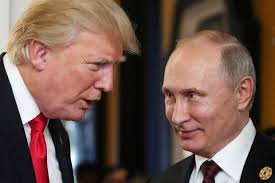
First, the professors are leaving not because they teach Marxism but because they aren’t allowed to teach the facts about racism and diversity (aka “woke”). Second, the irony is that the leader of the Republican Party, Donald Trump, is notoriously palsy-walsy with one of the world’s leading communists, Vladimir Putin. But DeSantis claims to hate Marxists. It boggles.

He also said his administration had kept costs down by eliminating universities’ diversity, equity, and inclusion programs, which he described as divisive. ”That’s a bureaucracy that can wither and go away,” DeSantis said.

The guy who wastes millions to ship immigrants all over the country is worried about the cost of teaching diversity, equity, and inclusion?? No intelligent person is fooled.

The investigation was broken into four sections: “The Takeover of New College,” “Academic Governance in Florida Higher Education,” “Academic Freedom,” “Bias and Discrimination” and “The Human Toll.”

In a detailed and heavily footnoted chronology, the committee reviewed this year’s events at New College of Florida in Sarasota — beginning with DeSantis’ appointment of six conservative trustees and continuing with their decisions to oust the president, replace her with former education commissioner Richard Corcoran, deny tenure to some faculty, disband the school’s diversity office and remove gender studies as a major.

The above, and the banning of books DeSantis doesn’t like, describe DeSantis’s “pursuit of truth.”

“What’s happening at New College is a disgrace,” former University of Florida president Bernie Machen told the committee.

The report also chronicled faculty leaving for other jobs outside the state or leaving academia. It cited a survey that found 300 of the 642 Florida professors who participated planned to seek employment elsewhere.

Andrew Gothard, president of the statewide union United Faculty of Florida, told the committee he predicted some universities would lose between 20% to 30% of faculty in the next year.

Several educators spoke about their decisions to leave or retire early. Some were based on the faculty member’s fear they could no longer teach their subject, while others were made because of their kids’ education.

Others felt inclined to move because of laws surrounding transgender health care and the climate toward LGBTQ+ people.

“It has impacted so many different aspects of people’s lives,” Jafar said. “It’s not just higher ed.”

The committee also said the governor largely controls Florida’s universities through board appointments.

And what is this “woke” that has DeSantis banning books and firing teachers? It means “alert to and concerned about social injustice and discrimination.”  Beginning in the 2010s, it broadened to include racial injustice, sexism, and LGBT rights. Unless your parents brought you up to be a raving bigot, you will welcome teaching about:
  1. The history of the Holocaust
  2. The history of slavery in America
  3. The history of bigotry in America
  4. The types of bigotry in America
  5. The effects of bigotry in America
  6. Fighting bigotry in America
Knowing these facts can prevent them from recurring. But DeSantis and other conservatives object to students learning the facts. By denying that bigotry existed and still exists, or worse yet, by claiming that opposing bigotry is itself a form of bigotry, tyrants like Trump and DeSantis attract not just fellow bigots but all those who are afraid the oppressed will rise up against them. No dictator can assume power without the backing of the people. They needn’t be a majority, just enough fearful people to make a noisy, passionate voting base. Today’s Republican party is bifurcated mainly into the rich, who expect and receive favorable financial treatment from the right wing and the angry mob, who resent and fear those below them on the socio-economic scale. By sowing fear of foreigners and immigrants, non-Christians, gays, the law, and “the establishment” or the “deep state,” Republicans can command loyalty even when operating outside conservative norms. That is why lying, adultery, bigotry, nihilism, corruption, treason, and incompetence — typically vote killers, especially among upright conservatives — are overlooked and in some cases, even viewed as a strength by the self-proclaimed religious. Fear is the most potent motivator humans experience. Using fear, the very powerful and those who view themselves as vulnerable form an unholy alliance to support a dictator who promises them protection. But it is a deal with the devil, and the hoped-for protection turns out to be a torture chamber. Education is the enemy of bigotry and, thus, the enemy of dictators. To learn that scapegoats are humans with hope, fears, and feelings is to gain empathy, the last thing a dictator wants the masses to have. Brainwashing students by depriving them of historical facts is a favorite and effective method for recruiting a “no-questions-asked” cadre of loyal followers who hate dictatorships like communism as concepts but love dictators as saviors. Sadly, once dictators gain power, they are tough to dislodge. We can only pray that America doesn’t learn that lesson from actual experience. The following 12 months should be pivotal in U.S. history. Rodger Malcolm Mitchell Monetary Sovereignty Twitter: @rodgermitchell Search #monetarysovereignty Facebook: Rodger Malcolm Mitchell

……………………………………………………………………..

The Sole Purpose of Government Is to Improve and Protect the Lives of the People.

MONETARY SOVEREIGNTY