Do you have any thoughts?
And what about this: https://mail.google.com/mail/u/0/#inbox/FMfcgzQgLrstMMwpZNPPSPmpPmWVMxNx
It just gets crazier and crazier.
And under the title, “There’s a (MAGA) sucker born every minute” we have this: https://www.msn.com/en-us/money/other/trump-phone-buyers-confront-59-million-refund-fine-print-as-company-promises-to-start-deliveries/ar-AA23fqfU?ocid=msedgntp&pc=EDBBAN&cvid=6a078c830da549c79390b20d9b0a4fa2&ei=34 These fools never learn
Author: Rodger Malcolm Mitchell
MBA Northwestern, business turnaround expert, economist
An especially pointed article by Robert Reich
Robert Reich (robertreich@substack.com) published an especially pointed article, today. Here it is in its entirety.
MAGAs may neither read nor understand it, but those who aren’t easily swayed by con artists, personal greed or bigotry may find the following helpful when responding to a MAGA rant.
—————————-
How to Describe this Catastrophe?
We must use words that accurately describe who Trump and his lackeys really are — and what they are actually doing to America
Robert Reich, May 15, 2026
Friends,
Words matter. When describing a government, they inevitably carry moral weight.
Over the last 16 months, Trump and his appointees have so profoundly undermined the United States government that we should use different words to describe these people than we’ve used to describe all previous administrations.
To begin with, they shouldn’t be called an “administration” at all. They should be referred to as a regime.
The Trump regime has flagrantly defied court orders. In February 2026, a federal judge (appointed by President George W. Bush) identified approximately 200 orders from the District of Minnesota alone that ICE had ignored since the start of the year, concluding that ICE had “likely violated more court orders in January 2026 than some federal agencies have violated in their entire existence.”
The regime has also vilified judges who rule against it and demanded their impeachment.
The regime has usurped Congress’s powers to declare war, issue tariffs, and appropriate public funds. It is using tariffs as cudgels for Trump’s political aims. The regime is seeking to stifle speech and silence criticism — in universities, law firms, and the media.
Secondly, this regime is not headed by a “president,” as the Constitution of the United States and our laws and history have designated the head of the executive branch of the U.S. government. To put the term “President” before Trump’s name defiles the Constitution. He is an authoritarian.
Trump has illegally fired more than 300,000 career civil servants. He has fired inspectors general who are charged with holding political appointees accountable. He punishes whistleblowers who protest abuses.
He attacks marginalized groups and foments bigotry. He is openly persecuting political opponents.
He has given out pardons to convicted felons who are political supporters or financial contributors — including nursing home fraudsters, a Honduran president who smuggled 400 tons of cocaine into the United States, and January 6 seditionists.
He has sent federal troops into states and cities headed by Democratic officials.
Thirdly, Trump has no interest in governing. He wants only to impose his will and make money from his office. His regime’s disregard for law is so monumental that it negates what we have come to understand as a “government of laws.” A better word for it is lawless.
During the first 16 months of Trump’s lawless regime, immigration agents have shot or killed 16 people, including three U.S. citizens. More people died last year in the custody of Immigration and Customs Enforcement — a total of 32 — than in the preceding 20 years.
People only suspected of being in the U.S. illegally have been detained or deported by masked and armed immigration agents, without a hearing. People only suspected of smuggling drugs have been murdered by the U.S. military in international waters, in violation of international law.
Meanwhile, Trump is accepting gifts from foreign powers. He blatantly promotes his family’s crypto business and implements policies favorable to it.
He has sued the Internal Revenue Service for $10 billion and is now in settlement negotiations with his own Justice Department, which reportedly has offered to drop any future IRS audits of Trump, his family, or his businesses.
Finally, the true test of a successful president of the United States and his (eventually her) administration is not how much power he accumulates or how much he gets done. The real test is how much better off are the American people and how much stronger is our democracy. By these measures, Trump and his regime are not just lawless. They are a catastrophe.
—————————–
There are only three types of people still backing Trump and the mental midgets of his compliant Republican Party:
- the wealthiest 5%, who care little for the other 95% so long as they can personally profit (They are the ones who joined Trump on his trip to China or who now claim his actions in Iran and supplication to Xi Jinping were successful);
- the haters and bigots, who claim to be good religious patriots while they take pleasure in seeing anyone different from them punished (They are the ones who six days a week relish the suffering of the powerless, then visit church one day a week to demand God’s support);
- the gullible, who believe whatever an obvious con artist tells them (They are the ones who sent billionaire Trump money for his Trump-branded water, playing cards and steaks).
You know them. Some are your long-time friends. Sad to say, some are my long-time friends, too.
Rodger Malcolm Mitchell
Trump finally admits the truth
When asked whether he was concerned that the Trump war, he promised not to wage, and still claims he isn’t waging, was hurting Americans, this is Trump’s exact response, word for word.
And for once, I believe him.
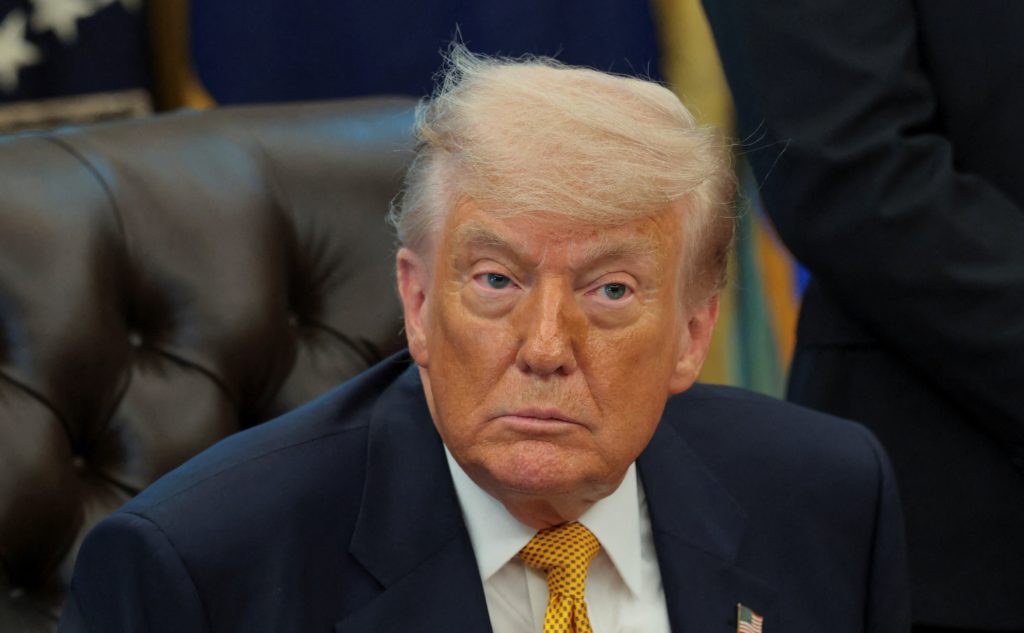
“The only thing that matters when I’m talking about Iran, they can’t have a nuclear weapon. I don’t think about Americans’ financial situations. I don’t think about anybody.”
The words of the billionaire who cancelled the nuclear deal with Iran that was working, and whose family has stolen billions of dollars during his Presidency.
Trump DOJ’s lawsuit settlement plans spark outrage
Trump is normalizing things that would have been scandals in his first term
President Trump’s legacy of corruption, four years and 3,700 conflicts of interest later
A Short List of Mr. Trump’s Immoral and Corrupt History*(See below).
He couldn’t do it without the help of the Republican voters and the Republican Party.
========================================
“Falsifying medical records to avoid the Vietnam draft; ;; Spitefully attacking decorated war veterans and Gold Star families; ;; ; Mocking the testimony of sex-assault survivor, Dr. Christine Blasey Ford; ;; ; Praising, siding with, and declaring his “love” for known murderers, war criminals, dictators, and enemies of the US, including those who actively imprison and murder Christians; ;; ; Deporting non-white service members of the US Armed Forces; ;; ; Abandoning US allies in Northern Syria in preparation for a Russian invasion; ;; ; Attempting to discredit and undermine US intelligence agencies, including the FBI and CIA; ;; ; Committing adultery with porn stars and Playboy Playmates; ;; ; Paying hush money to his mistresses in order to conceal his adulterous affairs; ;; ; Settling a $25 million class action lawsuit over his fraudulent Trump University; ;; ; Dissolving the Donald J. Trump Foundation by court order for bribery, links to foreign countries, and using charitable funds for paying off personal debt and political campaigns; ;; ; Being court ordered to pay $2 million for using charitable donations for personal purposes; ;; ; Having lost 38 lawsuits regarding breaches of contract, defamation, and sexual harassment; ; Having had over 36 tax liens against Trump properties for nonpayment of taxes; ; Having businesses and properties linked to domestic and foreign organized crime rings; ; Labelling desperate Mexican women and children as rapists and drug dealers; ; Labelling desperate women and children refugees as dangerous terrorists; ; Labelling Africans and Haitians as HIV-infected people from “shithole” countries; ; Separating infants, toddlers, and young children from their immigrant parents; ; Deliberately stoking cruel paranoia and xenophobia about blacks, immigrants, and Muslims; ; Bullying and making fun of the physically handicapped; ; Tactlessly provoking military and economic tension with foreign countries; ; Harming farmers and the US economy with unnecessary tariffs; ; Declaring any journalist, news report, or news agency that criticizes him as illegitimate; ; Banning or restricting Muslim immigrants and refugees from entering the United States; ; Making disparaging, misogynistic, and racist statements about women and racial minorities; ; Spreading sensationalistic propaganda and false conspiracy theories about his opponents; ; Publicly questioning the legitimacy of any federal prosecutor or judge who opposes him; ; Routinely hinting at his desire to eliminate government checks and balances and to remain in office indefinitely; ; Refusing to denounce white supremacist groups and leaders who endorse him; ; Calling members of a white supremacist faction “very fine people”; ; Inciting violence and hatred at his rallies; ; Refusing to denounce his supporters who perpetrate horrendous crimes in his name; ; Telling his supporters that he will pay for their legal expenses if they assault other Americans; ; Encouraging law enforcement personnel to engage in abuses of power; ; Impeding disaster relief aid to Americans living in Puerto Rico and California; ; Contributing to the increase in white supremacy, anti-Semitism, and Islamophobia; ; Frequently appointing white supremacists and their sympathizers to positions of power; ; Frequently appointing people with gross inexperience or conflicts of interest; ; Frequently appointing uncredentialed family members and close friends; ; Compulsively pronouncing over 13,435 false or misleading statements in under 3 years; ; Using his presidency to promote Trump brands, resorts, and Trump family merchandise; ;; ; Repeatedly violating the Emoluments Clause of the Constitution; ; Repeatedly sponsoring and supporting those who violated the House Ethics Committee; ; Publicly endorsing Roy Moore, an accused child molester; ; Seeking foreign interference in America’s political campaigns; ; Having well-documented ties to Russian officials, suggesting collusion with foreign countries; ; Bribing and extorting the President of Ukraine for personal political reasons by withholding Congressionally-mandated military aid to the country; ; Having officially been accused of committing a crime by the Government Accountability Office for violating the Impoundment Control Act; ; Engaging in a cover up about his bribing the Ukrainian President, resulting in his impeachment; ; Hiding tax returns from public and criminal inspection; ; Bragging about never paying taxes like other hard-working Americans; ; Taking measurable steps to oppose and suppress the rights of LGBTQ+ Americans; ; Taking measurable steps to restrict the rights and protections of labor workers; ; Taking measurable steps to harm the environment and endangered species, including denying the validity of climate science; ; Slashing funding for mental health, public housing, and children’s food programs; ; Disclosing confidential information about Twitter users and whistleblowers; ; Receiving several reprimands from the Office of Government Ethics; ; Removing and violating White House ethics training for department members; ; Being the subject of or involved in 12 congressional investigations, 10 federal criminal investigations, and 8 state and local criminal investigations; ; Engaging in witness tampering, obstructionist behavior, and witness intimidation; ; Being pathologically unrepentant and unremorseful about any of his sinful behavior.
Is this what Republicans are proud to support?
Rodger Malcolm Mitchell
The sheer lack of competency and decency on display in America
Eighth Amendment to the Constitution: “Excessive bail shall not be required, nor excessive fines imposed, nor cruel and unusual punishments inflicted.”
—————————————————————–
As a resident of Florida, I shouldn’t be happy when I see my state being cheated out to $600 million, but I’ll make an exception in this case. Perhaps it has to cost Florida’s taxpayers $600 million to realize what a mess the Republicans and Governor Ron DeSantis have made of this state.
Ron is a small man, and I don’t mean just in stature—I’m talking about his character. He is small-man cruel, which seems to be a MAGA prerequisite. When problems arise, DeSantis almost always opts for a “final solution” that hurts the most people, most, especially the poor and powerless.
Being a bully, he lacks courage, compassion and any sense of decency. He tries to out-Trump at being nasty and crooked, while lacking any compassion.
He built a Nazi-style concentration camp for immigrants, placed it in the middle of a swamp, and jovially called it “Alligator Alcatraz,” to stress the cruelty he inflicted on helpless people.
To quote from the following article from the May 8th Sun-Sentinel:
James Uthmeier, a Republican and DeSantis’ former chief of staff, had pushed to build the center at an old training airport, despite the lack of existing infrastructure.
Both men argued that it was crucial for the center to be in a remote location, saying that the inhospitable conditions would prompt immigrants to think twice about staying in the United States illegally and risking arrest.
Other states later opened immigrant detention centers of their own, though the one in the Everglades stood out as particularly unforgiving given that the site essentially consisted of tents.
In America, even convicted child rapists and murderers aren’t subjected to such cruel and inhumane conditions.
Yet the immigrants held in the horrifying environment at Alligator Alcatraz haven’t been convicted of anything—they’re simply people seeking better lives, like the rest of the immigrants who built America.
In DeSantis’s twisted view, these poor, powerless souls should be tortured before being deported –his way of “Making America Great Again.”
It’s hard to imagine what happened to him as a child that now could spark such hatred. Were his parents unusually cruel? Was he bullied by the other kids?
No normal human would create a place like that, yet there it is, right in the middle of Florida’s swamp.
Here is the article in its entirety:
Feds, state may shut Alligator Alcatraz
Homeland Security says detention center too expensive to keep open; Florida has not been repaid $608M in costs
By Patricia Mazzei and Hamed Aleaziz, The New York Times
Florida is in talks with the Trump administration to shut down a high-profile immigration detention center that opened last summer in the Everglades and has cost the state hundreds of millions of dollars to operate, according to a federal official, a former Immigration and Customs Enforcement official, and a person close to the administration of Gov. Ron DeSantis.
The shutdown talks are preliminary, the people said. But officials at the Department of Homeland Security have concluded that it is too expensive to keep operating the center, known as Alligator Alcatraz.
Homeland Security officials have also come to consider the center ineffective, the federal official said. All three people spoke on the condition of anonymity to discuss internal talks.
The DeSantis administration has been spending more than $1 million a day to run the center, which is in a swampy, isolated area between Miami and Naples. Some private vendors hired by the state to operate it have been struggling to front costs, according to the person close to the DeSantis administration.
The Department of Homeland Security did not respond to a request for comment. Neither did the Florida Division of Emergency Management, which operates the center, nor DeSantis’ office.
When politicians won’t answer questions, you can be sure they have much to hide.
DeSantis, a Republican, has repeatedly called the Everglades detention center a success, saying it has helped the Trump administration by providing more beds to house federal detainees. He has also said that the facility was intended to be temporary.
A success at what? Torturing people or spending money? And if it was such a success, and costs so much, why is it temporary?
But the center’s shutdown would be hailed by immigration lawyers, activists and many detainees and their families as a huge win. Critics have denounced what they describe as unsanitary and inhumane conditions at the center since it opened 10 months ago; state officials have consistently dismissed such descriptions as false.
As of last month, the center held nearly 1,400 detainees, all of them men, according to ICE data. The agency classified about two-thirds of the detainees in the center, which it calls the Florida Soft-Sided Facility South, as noncriminal.
Just think about it—two-thirds of the people in that monstrous insult to decency aren’t even criminals. And wasn’t this intentionally awful garbage dump supposed to be reserved for “the worst of the worst”?
DeSantis has said from the start that the federal government would pay back the state for operating the center. But Florida has yet to receive the $608 million federal reimbursement it requested to run the center for about a year. The money was held up in part by the partial shutdown of the Department of Homeland Security that ended last Thursday. It is unclear why the reimbursement continues to be delayed.
DeSantis believed Trump. When one miserable liar believes another miserable liar, taxpayers foot the bill.
The center became the nation’s first state-run facility to hold federal immigration detainees last July, as Florida pushed the boundaries of aggressive enforcement under President Donald Trump’s immigration crackdown. Its remote location and brazen name gained it international notoriety before any detainees arrived.
At the time, Trump and Kristi Noem, then the homeland security secretary, toured the center with DeSantis and Florida’s attorney general, James Uthmeier. Uthmeier, a Republican and DeSantis’ former chief of staff, had pushed to build the center at an old training airport, despite the lack of existing infrastructure.
Other states later opened immigrant detention centers of their own, though the one in the Everglades stood out as particularly unforgiving given that the site essentially consisted of tents.
Non-criminals were forced to live in tents in the middle of a swamp. That’s cruel by intent, and it sure is unusual. But hey, who cares about the Constitution?
Uthmeier, a Republican and DeSantis’ former chief of staff, argued that it was crucial for the center to be in a remote location, saying that the inhospitable conditions would prompt immigrants to think twice about staying in the United States illegally and risking arrest.
That’s the excuse for torture? That’s the excuse for inhumanity? Weren’t any whips, bone-crushers and fingernail pullers available?
But the location made it much more expensive to build and run. Vendors had to truck in things like tents, power generators and trailers for staff members to live in. They also had to constantly truck out sewage and other waste.
A lawyer for two detainees said in a federal court filing last month that guards beat and pepper-sprayed the men after detainees protested that their access to a phone inside the center had been cut off.
How dare those people demand their legal rights in America. Don’t they realize they’re in Florida?
As part of the sworn declaration, the lawyer submitted a photo of one of the detainees with a black eye. Also last month, a federal appeals court upheld an earlier decision to block a lower court’s order that the center dismantle operations because it had not conducted an environmental review required under federal law.
It was ordered dismantled, not because it was violating the Constitution and torturing people, but because it was violating the environment. Oh well, whatever will get the job done . . .
A panel from the 11th U.S. Circuit Court of Appeals found that the center was not under federal control, and thus was not subject to the environmental review.
It’s under state review, and DeSantis doesn’t care about two things: The environment and human decency.
A landing strip allows flights to arrive at and take off from the Everglades center, though itis unclear how frequently detainees have been moved in or out. At least some of the center’s detainees have been flown to larger federal detention centers in Louisiana and Texas, often as a final stop before they are deported.
Fly them here; fly them there. Since the Republican administration has no idea what it’s doing, the cost of uselessly flying people hither and yon is just a drop in the bucket of wasteful activities paid for by taxpayers.
And the people keep voting for the criminals who are on the outside of Alligator Alcatraz. MAGAs, is this your example of what makes America great?
This article originally appeared in The New York Times
Rodger Malcolm Mitchell
Twitter: @rodgermitchell
Search #monetarysovereignty
Facebook: Rodger Malcolm Mitchell;
MUCK RACK: https://muckrack.com/rodger-malcolm-mitchell;
……………………………………………………………………..
A Government’s Sole Purpose is to Improve and Protect The People’s Lives.
MONETARY SOVEREIGNTY

