EMERGENCY! THE FEDERAL GOVERNMENT IS RUNNING SHORT OF DOLLARS!
Who wants you to believe that nonsense? The rich, of course. They want to widen the income/wealth/power Gap between them and you — and REASON is happy to oblige.
They say the so-called “national debt” will be “more expensive.”
The definition of “more expensive” is: An entity having infinite dollars (the U.S. governement) will pump more stimulus dollars into the private sector (aka “the economy’), thus not only helping the private sector grow, but also accomplishing many important economic tasks.
That’s what REASON means by “more expensive.”
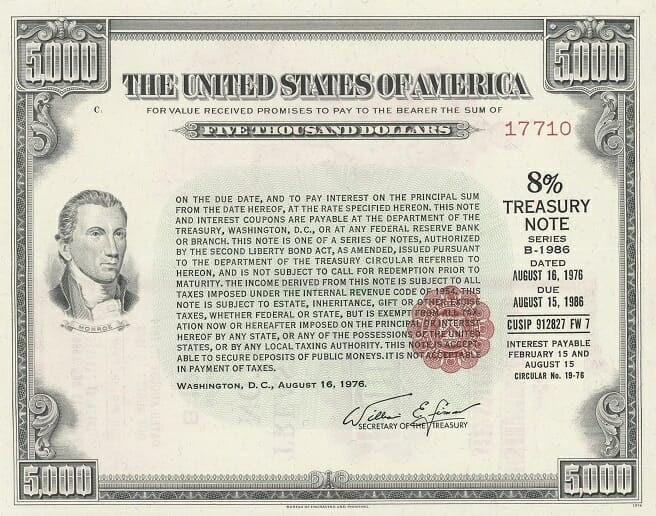
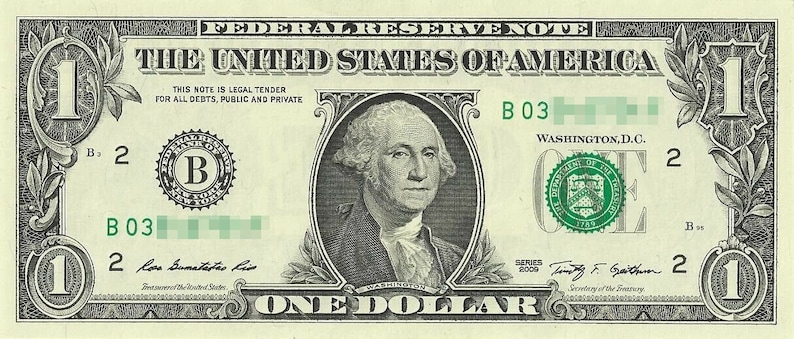
The U.S. government can’t run short of these, or these,or these.
The Treasury bond, the dollar bill and the Treasury check all are titles to dollars. Just as a car title is not a car, and a house title is not a house, the above three titles are not dollars. They merely represent dollars, which have no physical existence.
The so-called “national debt” refers to the total of dollars deposited from non-federal sources into T-security (T-bills, T-notes, T-bonds) accounts.
They are not debts of the federal government, which neither needs, uses, nor even touches the dollar in those accounts, except to return them upon maturity. Unlike real debts, the “national debt” is not a financial burden on the federal government or on taxpayers.
The sole purposes of the “national debt” are to provide a safe parking place for unused dollars (thus helping to stabilize the dollar), and to help the Federal Reserve control interest rates (by setting a base rate).
Recent comments from Federal Reserve Chair Jerome Powell hinted that the Fed may soon get serious about hitting the monetary brakes to slow the economy.
Until recently, inflation was described as transitory. But at some point, that story has to change.
For REASON, economic growth is bad, so the economy must be “slowed.” Actually, for REASON, government and all government spending are bad, and there is no acceptable level of either.
Price levels likely will rise into 2022. The all-item consumer price index (CPI) was up more than 5 percent on a year-over-year basis for July, August, and September. The increase for October was 6.2 percent—the largest jump since 1990.
The Fed considers 2 percent inflation to be its goal. Obviously, there is a large gap between that and what we are seeing.
The inflation rate is reflected in interest rates that borrowers must pay, especially for longer-term debt. Lenders hope to be paid back with at least as much purchasing power.
If they believe inflation will tick away at 4 percent, interest rates will tend to rise. Higher interest rates mean higher interest costs on all forms of public and private debt.
As a result, mortgage rates will rise, all forms of construction will suffer, and businesses will postpone making large investments in plants and equipment.
REASON, which wants the economy to “hit the brakes,” suddenly becomes conserned about construction, and businesses investing in plants and equipment, thus criticizing both sides of the same stimulus question.
Now consider the public debt—especially the federal debt, which ballooned as a result of large budget deficits in recent years. (In 2020, the federal government raised $3.4 trillion in revenue and spent $6.6 trillion.)
Translation: The federal government pumped $3.2 trillion net growth dollars into the economy, and you should be shocked.
The interest cost of the national debt was $253 billion in 2008, equivalent to $325 billion in 2021 dollars; it remained around that level through 2015.
Even though the debt doubled in those years, sharply falling interest rates and low inflation helped contain costs.
But that was yesterday. With today’s higher inflation and rising interest rates (perhaps with more to come), the Congressional Budget Office (CBO) estimates that the interest cost of public debt is $413 billion in 2021, stated in current dollars.
Obviously, any dollar spent on interest cannot be spent on government benefits or services.
REASON, demonstrates its ignorance about federal financing, by implying that if the government spends dollars on interest it doesn’t have enough dollars to spend on benefits or services (which REASON hates, anyway).
Of course, if REASON had evan an ounce of knowledge about federal financing, they would admit that the federal government has infinite dollars to spend, so interest payments do not in any way preclude other spending.
Looking ahead, the CBO expects more of the same. For 2026, it projects that the interest rate on 10-year Treasury bonds, currently 1.5 percent, will be 2.6 percent, and that the interest cost of the federal debt will rise to $524 billion.
For 2030, the projections are 2.8 percent and $829 billion, respectively, all stated in current dollars for the noted years.
In other words, the federal government will pump $524 billionand $829 billion interest into the economy in 2030.
Now we are talking about real money. To put $829 billion into perspective, in 2020 the United States spent $714 billion on the military, $769 billion on Medicare, and $914 billion on all nondefense discretionary spending, all stated in 2020 dollars.
Back-of-the-envelope calculations strongly suggest that some spending categories will have to give.
The above-mentioned “back-of-the-envelope calculations neglect to mention that the federal deficit spending is not constrained by lack of dollars. It is infinite.
Finally, we come to the heart of the issue.
The United States is experiencing an inflationary surge caused fundamentally by the injection into the economy of trillions of dollars—stimulus and other spending—without an accompanying rise in production of goods and services that might be purchased with the new dollars. It’s rising demand plus troubled supply.
All inflations are scarcity-based. None are spending-based. Increased deficit spending to cure shortages would end the inflation.
The government has been spending massively for many years, without the long-feared inflat
These forces will be with us until the stimulus dollars work their way through the economy and the federal government stops printing more money.
When the federal government stops “printing” (technically the wrong term) money we will have a recession, just as we always do when money creation stops.
Reductions in federal “debt” growth (blue line) cause receissions (gray vertical bars) which are cured by increases in federal “debt” growth.
As the process continues, our government—the source of inflation in the first place—will face hard choices when paying for past and future deficits and rising debt.
The federal government pays for all its spending, promptly. Yet, the so-called federal debt is composed of T-securities that are as much as 30 years old. They pay for nothing.
All federal obligations are paid for immediately. The government faces no “hard choices” when paying its debts. It has the infinite ability to create dollars.
The federal government cannot unintentionally run short of dollars.
The so-called “debt is about $25 trillion. The U.S. government does not owe anyone or any thing $25 trillion.
The government could pay off the $25 trillion of T-securities today simply by returning the $25 trillion dollars already deposited into T-security accounts. No burden on the government. No tax dollars involved. No taxpayers burdened.
BRUCE YANDLE is a distinguished adjunct fellow with the Mercatus Center at George Mason University, dean emeritus of the Clemson College of Business and Behavioral Sciences, and a former executive director of the Federal Trade Commission.
This does not speak kindly of the Mercatus Center and GME or of the FTC, who seem to be devoid of information about federal financing.
If you enjoy seeing something really, really stupid, take a look at this table and the graph that follows:
Polio Vaccine Mandates for Child Care and Elementary Schools
State
Childcare requirement
Elementary school requirement
Polio vaccine required?
Number of Polio vaccine doses required1
Date implemented
Polio vaccine required?
Number of Polio vaccine doses required1
Date implemented
Alabama
Yes
Age-appropriate
Longstanding
Yes
3-4
Longstanding
Alaska
Yes
Age-appropriate
Longstanding
Yes
3
Longstanding
Arizona
Yes
Age-appropriate
Longstanding
Yes
3-4
Longstanding
Arkansas
Yes
Age-appropriate
Longstanding
Yes
3
Longstanding
California
Yes
Age-appropriate
Longstanding
Yes
3-4
Longstanding
Colorado
Yes
Age-appropriate
Longstanding
Yes
3-4
Longstanding
Connecticut
Yes
Age-appropriate
Longstanding
Yes
3
Longstanding
Delaware
Yes
Age-appropriate
Longstanding
Yes
3-4
Longstanding
Dist of Columbia
Yes
Age-appropriate
Longstanding
Yes
4
Longstanding
Florida
Yes
Age-appropriate
Longstanding
Yes
3-4
Longstanding
Georgia
Yes
Age-appropriate
Longstanding
Yes
3-4
Longstanding
Hawaii
Yes
Age-appropriate
Longstanding
Yes
3-4
Longstanding
Idaho
Yes
Age-appropriate
Longstanding
Yes
3-4
Longstanding
Illinois
Yes
Age-appropriate
Longstanding
Yes
4-5
Longstanding
Indiana
Yes
Age-appropriate
Longstanding
Yes
3-4
Longstanding
Iowa
Yes
Age-appropriate
Longstanding
Yes
3-4
Longstanding
Kansas
Yes
Age-appropriate
Longstanding
Yes
3-4
Longstanding
Kentucky
Yes
Age-appropriate
Longstanding
Yes
3-4
Longstanding
Louisiana
Yes
Age-appropriate
Longstanding
Yes
3-4
Longstanding
Maine
Yes
Age-appropriate
Longstanding
Yes
4
Longstanding
Maryland
Yes
Age-appropriate
Longstanding
Yes
3
Longstanding
Massachusetts
Yes
Age-appropriate
Longstanding
Yes
3-5
Longstanding
Michigan
Yes
Age-appropriate
Longstanding
Yes
3-4
Longstanding
Minnesota
Yes
Age-appropriate
Longstanding
Yes
3-4
Longstanding
Mississippi
Yes
Age-appropriate
Longstanding
Yes
3-4
Longstanding
Missouri
Yes
Age-appropriate
Longstanding
Yes
3 or more
Longstanding
Montana
Yes
Age-appropriate
Longstanding
Yes
3-4
Longstanding
Nebraska
Yes
Age-appropriate
Longstanding
Yes
3
Longstanding
Nevada
Yes
Age-appropriate
Longstanding
Yes
3-4
Longstanding
New Hampshire
Yes
Age-appropriate
Longstanding
Yes
3-4
Longstanding
New Jersey
Yes
Age-appropriate
Longstanding
Yes
3-4
Longstanding
New Mexico
Yes
Age-appropriate
Longstanding
Yes
3-4
Longstanding
New York
Yes
Age-appropriate
Longstanding
Yes
3-4
Longstanding
North Carolina
Yes
Age-appropriate
Longstanding
Yes
3-4
Longstanding
North Dakota
Yes
Age-appropriate
Longstanding
Yes
3-4
Longstanding
Ohio
Yes
Age-appropriate
Longstanding
Yes
3-4
Longstanding
Oklahoma
Yes
Age-appropriate
Longstanding
Yes
3-4
Longstanding
Oregon
Yes
Age-appropriate
Longstanding
Yes
4
Longstanding
Pennsylvania
Yes
Age-appropriate
Longstanding
Yes
3-4
Longstanding
Rhode Island
Yes
Age-appropriate
Longstanding
Yes
4
Longstanding
South Carolina
Yes
Age-appropriate
Longstanding
Yes
3
Longstanding
South Dakota
Yes
Age-appropriate
Longstanding
Yes
3-4
Longstanding
Tennessee
Yes
Age-appropriate
Longstanding
Yes
3-4
Longstanding
Texas
Yes
Age-appropriate
Longstanding
Yes
3-4
Longstanding
Utah
Yes
Age-appropriate
Longstanding
Yes
3-4
Longstanding
Vermont
Yes
Age-appropriate
Longstanding
Yes
4
Longstanding
Virginia
Yes
Age-appropriate
Longstanding
Yes
3-4
Longstanding
Washington
Yes
Age-appropriate
Longstanding
Yes
3-4
Longstanding
West Virginia
Yes
Age-appropriate
Longstanding
Yes
3
Longstanding
Wisconsin
Yes
Age-appropriate
Longstanding
Yes
3-4
Longstanding
Wyoming
Yes
Age-appropriate
Longstanding
Yes
3-4
Longstanding
Reproduced from National Academy for State Health Policy. Map: Danielle Alberti/Axios
Yes, you’re reading that right. Every single state in America mandates — that’s MANDATES –3 TO 4 polio vaccinations.
Now look at this graph of COVID vaccine mandates and mandate bans.
Reproduced from National Academy for State Health Policy. Map: Danielle Alberti/Axios
Do you live in a stupid state or a smart state? (Sadly, I happen to live in a really, really stupid state.)
Yes, only 4 states are smart enough to mandate COVID vaccinations while 17 really, really stupid states, being led by really, really stupid governors and legislatures, not only don’t mandate COVID vaccinations, they actually BAN mandates!
Why?
And in many of those states, schools mandate vaccinations for measles, polio, and chickenpox. Why the difference?
No need to ask why. You know perfectly well, why.
Do these people care about themselves? Probably? Do they care about their children? Surely. Do they care about their friends, neighbors, and other loved ones? Certainly.
Do they care more for Trump and his cronies, toadies, and suckups? Maybe.
Or is it just pure stupidity?
Is it pure stupidity that for zero cost and minimal effort, someone could protect himself and his family from sickness and death, but refuses to do so?
And not just refuses, but angrily refuses. Marching and carrying signs, refuses. Is that pure stupidity?
PURE STUPIDITY?
Rodger Malcolm Mitchell Monetary SovereigntyTwitter: @rodgermitchellSearch #monetarysovereigntyFacebook: Rodger Malcolm Mitchell
……………………………………………………………………..
THE SOLE PURPOSE OF GOVERNMENT IS TO IMPROVE AND PROTECT THE LIVES OF THE PEOPLE.
Gap Psychology describes the common desire to distance oneself from those “below” in any socio-economic ranking, and to come nearer those “above.” The socio-economic distance is referred to as “The Gap.”
Wide Gaps negatively affect poverty, health and longevity, education, housing, law and crime, war, leadership, ownership, bigotry, supply and demand, taxation, GDP, international relations, scientific advancement, the environment, human motivation and well-being, and virtually every other issue in economics.Implementation of Monetary Sovereignty and The Ten Steps To Prosperity can grow the economy and narrow the Gaps: Ten Steps To Prosperity:
After 1/6/2021 I thought I heard Donald Trump telling people to “fight like hell” to overturn the election. Then I thought I saw thousands of crazed Trump followers, violently attempt to attack Congress, to overturn the election.
I thought I saw police being beaten with flagpoles, kicked, punched, crushed and otherwise physically and verbally abused, by Trump followers who were attempting a coup.
Then, it was my understanding, that despite pleas from Republicans, Democrats and Trump’s own family, to tell the rioters to stop, Trump did nothing for several hours, instead relishing in the attempted coup.
I was wrong. I did not see or hear any of those things.
How do I know? Fox told me. McConnell told me. Jordan told me. Hannity told me. Carlson told me. Ingraham told me. And the former (self-proclaimed current) President of the United States told me.
Even a few of my right-wing friends told me the whole thing was overblown, a figment of my imagination that never really happened.
And anyway, that thing that never happened was: The fault of Antifa. Or communists. Or Democrats. Or the left-wing media. Or the Capital police. Or just a peaceful visit to the Capital.
Yes, The attempted coup never happened. I must have been wrong. And so are all you people who insist on believing actual facts instead of the “truths” that Donald Trump tells you.
This fall, vote for what our former (really “current”) President tells you. Ignore facts. And please join the cult of ignorance.
Oh, and if you are a real MAGA, don’t vaccinate. No one can tell us what to do. Win a Darwin Award.
Rodger Malcolm Mitchell
Monetary SovereigntyTwitter: @rodgermitchellSearch #monetarysovereigntyFacebook: Rodger Malcolm Mitchell
……………………………………………………………………..
THE SOLE PURPOSE OF GOVERNMENT IS TO IMPROVE AND PROTECT THE LIVES OF THE PEOPLE.
Gap Psychology describes the common desire to distance oneself from those “below” in any socio-economic ranking, and to come nearer those “above.” The socio-economic distance is referred to as “The Gap.”
Wide Gaps negatively affect poverty, health and longevity, education, housing, law and crime, war, leadership, ownership, bigotry, supply and demand, taxation, GDP, international relations, scientific advancement, the environment, human motivation and well-being, and virtually every other issue in economics.Implementation of Monetary Sovereignty and The Ten Steps To Prosperity can grow the economy and narrow the Gaps:
Ten Steps To Prosperity:
The United States seemingly has puzzled with the problem of the growing Gaps between the rich and the rest of us. I say, “seemingly” because of the spectacular lack of success any remedial effort has had.
In 20 years, the share of American Net Worth held by the top 1% has risen from above 22% to above 32%.
Not only have the Gaps widened dramatically in the past 40 years, but there has been a stunning increase in just the past year.
To combat the economy-crushing effects of COVID, the government has pumped trillions into the private sector. An inordinate share seems to have benefited the upper 1%.
Although virtually all politicians pretend to bemoan the growing income/wealth/power Gap, the Democrats seem unable to enact a solution and the Republicans actively oppose one.
We are not alone in this conundrum. Japan faces a similar problem, as excerpts from the following article show:
Big tax break not enough for Japan’s employers to hike payJapan’s government wants employers to raise wages.By Ben Dooley and Hisako Ueno The New York Times
TOKYO — Over the past two years, Masataka Yoshimura has poured money into the custom-suit business his family founded over 100 years ago. He has upgraded his factory, installed automated inventory management systems and retrained workers who have been replaced by software and robots.
Japan’s prime minister wants him to do one more thing: Give his employees a substantial raise.
Wage growth has been stagnant for decades in Japan, the wealth gap is widening and the quickest fix is nudging people like Yoshimura to pay their employees more.
Higher wages, the thinking goes, will jump-start consumer spending and lift Japan’s sputtering economy.But raises are a nonstarter for Yoshimura. Increasing wages would be “truly fatal,” he said last month from his office at Yoshimura & Sons in Tokyo.
And he is far from alone in his thinking. Business groups, union leaders and others have questioned the feasibility of a plan by Prime Minister Fumio Kishida to offer sizable tax deductions to companies that raise pay.
That businesses would resist increasing wages even when essentially paid to do so shows just how intractable the problem is. Years of weak growth and moribund inflation rates have left companies little room to raise prices.
The prime minister is calling on employers to increase pay as much as 4% in 2022. Companies that comply will be allowed to increase their overall corporate tax deductions up to 40%.
Japan has many differences from the U.S. — cultural, economic, historical — but both nations seem to agree that the growing Gaps are a bad thing. They are bad, morally. They are bad, economically. They lead to oligarchy.
From Wikipedia:
Oligarchy is a form of power structure in which power rests with a small number of people. These people may or may not be distinguished by one or several characteristics, such as nobility, fame, wealth, education, or corporate, religious, political, or military control.
Throughout history, oligarchies have often been tyrannical, relying on public obedience or oppression to exist.
Aristotle pioneered the use of the term as meaning rule by the rich, for which another term commonly used today is plutocracy.
In the early 20th century Robert Michels developed the theory that democracies, like all large organizations, have a tendency to turn into oligarchies.
In his “Iron law of oligarchy” he suggests that the necessary division of labor in large organizations leads to the establishment of a ruling class mostly concerned with protecting their own power.
Thus, we have a problem (the Gaps), as viewed by the nation as a whole, divorced from those who seemingly can solve the problem (businesses), who don’t see it as a problem at all.
Leaving the solution to a problem in the hands of those who don’t view it as a problem, or even who benefit from the problem, can lead only to today’s outcome: The problem grows worse.
It’s like telling a woman the “problem” is that her sexy dress attracts too many men, when that is exactly what she wants. She is unlikely to solve the “problem.”
Business is unlikely to solve the problem of the widening Gaps when that is exactly what business leaders want.Gap Psychology dictates that people generally wish to widen the Gap below them.
Reality dictates that the rich wish to become richer, and the term “richer” implies a growing difference vs. “poorer.”
Without the Gaps, no one would be rich, and the wider the Gaps, the richer they are.
So both the motivation and the power to narrow the Gaps lies not with business, but with government, the sole question being how government should accomplish the narrowing process.
Some economists have suggested minimum wage laws, but clearly, these have failed even to approach the goal. The main problem is that wages are a business expense, and successful businesses devote themselves to minimizing expenses.
The undeniable fact that wage increases cut profits, stands as a concrete barrier to a business solution.
THE SOLUTION
The one entity that needn’t worry about profits is the federal government, and it has the perfect Gap-narrowing tool: Tax policy.
We must remember that unlike state/local taxes, which fund state/local government spending. federal taxes do not fund federal spending. In fact, the federal governmentdestroys all tax dollars it receives.
The federal government pays all of its bills with newly created dollars, ad hoc. It can do this endlessly. No limits.
Why then does the federal government collect taxes? The primary purpose of federal tax collection is to control the economy. The federal government taxes what it wishes to discourage and gives tax breaks to what it wishes to encourage.
Example: The federal government long has wished to encourage home building and ownership, so it provides to homeowners, manytax breaks that are not available to renters. (The rich mostly are owners, not renters.)
Think of tax breaks for: Property taxes, mortgage interest, certain home improvements, mortgage insurance, and deductions from capital gains when you sell your house.
The government’s use of tax laws to benefit those the government favors is the primary reason why the rich benefit from tax breaks not available to you.
If the government really wanted to narrow the income Gap between the rich and the rest, it first would eliminate the FICA tax. This ultimately regressive tax applies only to the first $137.7K of salary, and not to anything above that level.
The person have a salary of $150,000 pays exactly the same amount of FICA as does the person whose salary is $1 million. Half of FICA is deducted directly from paychecks and half ostensibly is paid by the employer.
In reality, however, all of FICA comes out of paychecks, because employers figure this cost when deciding what to pay workers.
The elimination of FICA (which contrary to popular wisdom, does not fund Social Security or Medicare), immediately would help narrow some of the income and wealth Gaps, particularly the Gaps between lower and middle-income salaried workers vs. upper income workers.
Second, the government could provide free, no-deductible Medicare for All. This is an expense ostensibly borne by those companies that provide health care insurance to workers. I say “ostensibly,” because it is a cost that companies consider when determining salaries.
Some other Gap-narrowing steps the federal government could take include:
Free college for All.
Social Security for All
Tax deductions for renters
Federally paid salary for attending school, grades K+
Eliminate income tax for all those earning less than $500K per year, adjusted annually for inflation
A reverse sales tax on food and clothing.
Free life insurance policies for all
A wealth tax
Tax the annual value appreciation of stocks and other capital
No-exception tax on inheritance.
In short, there are many steps the federal government easily could take, to narrow the Gap between the rich and the rest.
The sole problem is the rich. They don’t want the Gaps narrowed. The Gaps are what makes them rich. Without the Gaps, no one would be rich; we all would be the same. And the wider the Gaps, the richer they are and the poorer we are.
So, they use their massive financial power to bribe the politicians and to convince the populace, that these steps would be “unaffordable,” “unsustainable,” “socialism,” “undeserved” by the underclasses, and/or “inflationary.”
In truth, the federal government, being Monetarily Sovereign is unique in that it can afford and sustain any financial obligation. It never unintentionally can run short of dollars.
None of the above-mentioned steps are socialism, which involves government ownership and control, not just spending. Sadly, the people who cry loudest about “socialism” have the least idea about what socialism is.
The less-than-rich deserve the same kind of federal help as do the rich, who like Donald Trump, have found ways to pay zero taxes despite massive earnings.
And inflation always is caused by shortages of key goods and services, never by government spending.
The currently wide and widening Gaps are not inevitable. They are a choice, an insidious and harmful choice foisted on us by the rich.
The sole cure is to find, then elect, someone who understands the problem and the solutions, and who is not under the thumb of the rich — if such people actually exist.
Rodger Malcolm Mitchell Monetary SovereigntyTwitter: @rodgermitchellSearch #monetarysovereigntyFacebook: Rodger Malcolm Mitchell
……………………………………………………………………..
THE SOLE PURPOSE OF GOVERNMENT IS TO IMPROVE AND PROTECT THE LIVES OF THE PEOPLE.
Gap Psychology describes the common desire to distance oneself from those “below” in any socio-economic ranking, and to come nearer those “above.” The socio-economic distance is referred to as “The Gap.”
Wide Gaps negatively affect poverty, health and longevity, education, housing, law and crime, war, leadership, ownership, bigotry, supply and demand, taxation, GDP, international relations, scientific advancement, the environment, human motivation and well-being, and virtually every other issue in economics.Implementation of Monetary Sovereignty and The Ten Steps To Prosperity can grow the economy and narrow the Gaps: Ten Steps To Prosperity:





 #Monetary Sovereignty - Mitchell