Gift to Johns Hopkins. Why doesn’t the government do this.

We’ll introduce this short article with a few facts:

1. The U.S. federal government has infinitely more dollars than does Michael Bloomberg and the Bloomberg Philanthropies.

2. Unlike state/local taxes, which fund state/local spending, federal taxes do not fund federal spending.

The federal government creates new dollars, ad hoc, to fund all its spending.

3. When Bloomberg and/or his foundation give to any charity, this does not add as many growth dollars to the economy as federal spending.

(To the degree that charitable gifts reduce Bloomberg’s taxes, those dollars are not taken from the economy.)

4. America has a shortage of trained healthcare workers (See next:)

Staff Shortages Choking U.S. Health Care System, A growing shortage of health care workers is being called the nation’s top patient safety concern., By Steven Ross Johnson, July 28, 2022

The situation is quite serious and has been exacerbated by the COVID-19 pandemic. 

Physician Shortage: The nation is facing a projected shortage of up to 124,000 physicians by 2033.

Nursing Shortage: There is an urgent need to hire at least 200,000 nurses each year to meet rising demands and replace retiring nurses. Among support personnel, a shortage of home health aides is most acute.

Overall Health Workforce: The health care industry employed 16.3 million people in 2022, making it the largest employment sector in the U.S.

Despite this, there is still a shortage, with a projected need for 1.1 million new registered nurses across the U.S. to address retirements and the growing demand.

Impact of COVID-19: An estimated 1.5 million health care jobs were lost in the first two months of the pandemic. Although many of those jobs have since returned, health care employment remains below pre-pandemic levels.

Patient Safety Concerns: Staffing shortages are now the nation’s top patient safety concern, leading to longer wait times and even patients being turned away in life-threatening emergencies.

This shortage is affecting various levels of healthcare provision, from hospitals to private practices, and is a major concern for the future of healthcare services in the country.

So, the title question is, Why Doesn’t the Federal Government Do This? (I’ll tell you the answer.)

Most Johns Hopkins Medical Students to Receive Free Tuition After $1 Billion Gift Story by Alyssa Lukpat

A majority of medical students at Johns Hopkins University are set to receive free tuition after the school received a $1 billion gift from Bloomberg Philanthropies, making Hopkins the latest medical school to go tuition free because of a large donation.

Hopkins said Monday that students from families earning under $300,000 would receive free tuition starting in the fall.

And, of course, free tuition isn’t enough for many families, so:

Students whose families earn as much as $175,000 will have their living expenses covered.

The school estimates nearly two-thirds of its students would qualify for either of the benefits.

A growing number of philanthropists and medical schools are pushing to make education free for aspiring doctors and reduce the financial barriers that can deter them.

Another financial barrier often is overlooked. Many families rely on their young people to quit school and get jobs to help support the family.

The federal government should pay students a salary so parents would not be tempted to dissuade students from attending college.

Buoyed by donations, the Albert Einstein College of Medicine and the medical schools at New York University and Columbia University have given their students free tuition or scholarships if they have financial need.

Also, Kaiser Permanente Bernard J. Tyson School of Medicine Waived all tuition and fees for students entering between the fall of 2020 and 2025.

Cleveland Clinic Lerner College of Medicine at Case Western University offers full scholarships to all admitted students, to name a couple more.

The schools mentioned are all well-known and prestigious institutions within the United States. They have national and often international reputations for excellence in medical education and research.

Donors to such institutions tend to receive significant recognition for their contributions. America needs much more help than wealthy donors seeking applause can provide.

The cost of medical school has kept aspiring doctors out of the field, where they can graduate with hundreds of thousands of dollars in debt.

The student loan program is one of the most shortsighted, economically ignorant inventions the federal government ever has created.

It forces monetarily non-sovereign (meaning, limited dollars) students, to pay dollars to the Monetarily Sovereign (having unlimited dollars) federal government.

It’s a perfect plan if you want to discourage young people from attending college.

By offering financial freedom to more students, schools can give medical students the flexibility to choose jobs in important but lower-paying fields like internal medical and pediatrics.

Billionaire Michael Bloomberg’s philanthropic organization said Monday that the U.S. has a shortage of medical professionals yet the cost of attending school for these jobs is often too high.

“By reducing the financial barriers to these essential fields, we can free more students to pursue careers they’re passionate about,” he said.

Bloomberg has used his philanthropic organization, Bloomberg Philanthropies, to donate billions to several causes including public health, the environment and improving city governments.

Hopkins said Bloomberg’s donation would also be used to expand financial aid for nursing and public-health graduate students, in addition to graduate students in other fields.

“This new scholarship formula will ensure the most talented aspiring doctors representing the broadest and deepest range of socioeconomic and geographic backgrounds have the opportunity to graduate debt-free,” Hopkins said.

No, it doesn’t assure that at all.

It assures the relative handful of aspiring doctors, who can afford not to have any income for the next few years, will be relieved of many college costs.

And as vital as healthcare is, what about all the other specialties that are short of practitioners?

Consider the serious shortage of engineers.

Every year, the US will need about 400,000 new engineers.

Yet the next-generation skill sets that those engineers will require are sorely lacking, presenting the alarming possibility that nearly one in three engineering roles will remain unfilled each year through at least 2030.

This persistent talent gap risks short-circuiting the progress of several essential industries.

It may also seriously inhibit various US government initiatives intended to boost the economy and US competitiveness, such as the 2022 Build Back Better Act (BBBA) and the 2022 Chips and Science Act.

We also are short of trained people in Information Technology  (cybersecurity experts, data scientists, and software developers) and Teaching, particularly in STEM (Science, Technology, Engineering, Mathematics) subjects and special education.

Of course, this doesn’t include our shortages in trades not ordinarily associated with colleges but still requiring training: Electricians, plumbers, welders, HVAC technicians, truck drivers and logistics coordinators, agricultural workers, and skilled manufacturing workers who can operate complex machinery and robotics.

America relies on the private sector to pay for all this schooling and training.

Our state universities and colleges, for instance, are largely funded by the private sector, either through local and state taxes or private contributions and endowments.

All suffer from one common problem: Affordability.

1. Potential workers cannot afford to take the time and pay the costs involved in formalized training, whether in a college, university, or specialized school.

2. The private sector cannot afford to pay students and trainees for their time and costs involved in receiving training.

3. Schools and other training facilities cannot afford to provide their services without remuneration.

The federal government suffers no such limitations. It can:

1. Pay students salaries and personal expense allowances for attending schools and training facilities.

2. Remunerate students for their education and training costs

3. Remunerate educational and training facilities to provide their services without charge.

The private sector (which does not have unlimited funds) already does some of this—just not enough.

Sixty years ago, the company that employed me paid my tuition to Northwestern University for my MBA. They didn’t pay for my books, transportation, or time (night school), and I was locked into that company for the 3 years I attended, but it’s what a monetarily non-sovereign company chose to do.

The presumptive goal of government is to protect and improve people’s lives. Funding training and education is an important step in accomplishing that mission.

Why is funding left to the monetarily non-sovereign private sector?

Why are you forced to pay local taxes for grades K-12—taxes that, in most places, are insufficient to fund excellent schooling—when the Monetarily Sovereign federal government could easily fund higher teacher salaries and better facilities without charging you a penny in taxes?

The Lesson

Yes, it’s commendable that Mr. Bloomberg, in exchange for tax breaks and accolades, will provide a vanishingly tiny support for what the nation needs.

But why do we need to rely on the Bloombergs of the world when the money is there, waiting for the populace and our leaders to acknowledge its need and availability?

The tax breaks already demonstrate the government’s willingness and ability to fund about one-third of the support at Mr. Bloomberg’s whim.

There is no financial reason why the federal government cannot provide the entire nation with everything that Mr. Bloomberg provides to a select few.

What is the real reason it already is not happening? There are two reasons:

  1. The ignorance of the populace who have been brainwashed into believing that federal finances are like personal finances, and can’t afford to fund what America needs.
  2. The rich, who run America, do not want benefits that would narrow the income/wealth/power Gap between the rich and the rest.

Ignorance is the most expensive thing we can buy, yet each day, we pay mightily for another dollop of ignorance and allow the federal government to cry, “Poor.”


Rodger Malcolm Mitchell

Monetary Sovereignty Twitter: @rodgermitchell Search #monetarysovereignty Facebook: Rodger Malcolm Mitchell; MUCK RACK: https://muckrack.com/rodger-malcolm-mitchell; https://www.academia.edu/

……………………………………………………………………..

The Sole Purpose of Government Is to Improve and Protect the Lives of the People.

MONETARY SOVEREIGNTY
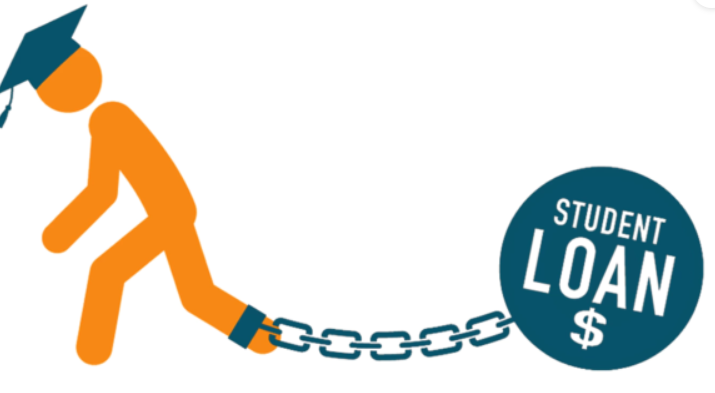
The Republican solution to student debt

Here is the Republican solution to student debt, as brought to you by the Libertarian Reason.com

Can Republicans Fix Student Debt? Unlike Democrats, Senate and House Republicans have released proposals that would actually tackle the root causes of increasing student loan debt. Emma Camp | 6.16.2023

As a long-awaited Supreme Court decision on President Joe Biden’s massive student loan forgiveness plan looms, Senate Republicans have unveiled a plan of their own to address the nation’s climbing student loan debt burden.

However, instead of promising blanket forgiveness, the Senate Republicans’ plan aims to reform how student loans are given out in the first place—seeking to direct students toward high-quality programs and limit access to schools that provide a poor return on students’ investment.

As you will see later in this “plan,” the Republicans believe the only purpose of attending college is to make more money. They measure “return on students’ investment” solely by the salaries students will receive after graduation.

The plan is composed of five separate bills. Three of the bills focus on ensuring that prospective borrowers are aware of the financial tradeoffs of taking out student loans and the financial outcomes for alumni of specific institutions.

The last two tackle the federal student loan system itself, cutting down the number of repayment plans and limiting the circumstances in which federal student loans can be given out.

The first bill in the package focuses on increasing transparency from colleges.

The bill seeks to require colleges and universities to provide a wide range of data on student outcomes and enrollment trends to the National Center for Education Statistics, which would create a database of this information aimed at helping prospective students make informed educational decisions.

Transparency is a good thing.

“Student outcomes” might have to do with graduation rates, dropout rates, advanced degrees, and employment after graduation. But they wouldn’t measure what students learn.

And most importantly, it doesn’t address the student loan indebtedness problem.

Can anyone tell me why a nation whose competitiveness relies on its young people to being educated wants to “limit the circumstances in which federal student loans can be given out?”

90+ Uncle Sam Money Illustrations, Royalty-Free Vector Graphics & Clip Art  - iStock | Taxes, Government spending, Uncle sam i want you If the Republicans ran a company, would they want to limit the circumstances in which the company could profit?

It’s absolutely nuts, especially since the U.S. federal government has infinite dollars.

The proposal’s second bill would require colleges and universities to use a standardized financial aid offer form to maximize transparency around the true cost of attending a given institution.

The third bill in the proposal has similar aims, requiring that students applying for federal student loans receive information detailing sample payments for their loans, as well as how long they would expect to be paying off their student loans and what income they can expect to make after graduating from a given school.

These two “solutions” are reasonable in that they provide borrowing information. But they still fall far short of solving the student loan indebtedness problem.

They merely say, “Here’s what it will cost you, and if you can’t afford it, don’t go to college or take out a loan.”

But the purpose of the student loan program is to enable more children to attend college, not to winnow down the number that can afford it.

The fourth bill cuts down on the number of repayment plans available to borrowers.

The bill would consolidate the host of current repayment options down to two—a standard 10-year repayment plan and a Revised Pay As You Earn (REPAYE) repayment plan with minor changes.

The REPAYE plan is an income-driven repayment (IDR) plan, which currently allows borrowers to pay a monthly amount fixed to their income, achieving forgiveness after at least 20 years of payments.

Importantly, the fourth bill also cuts off access to federal student loans for students attending programs that do not result in median earnings higher than those of adults who only have a high school diploma—or a bachelor’s degree, in the case of a graduate program.

To Republican minds, the purpose of attending college is to make more money. Otherwise, it supposedly is a waste of time and money.

The right-wing mentality says that the arts — music, dance, painting, theater, writing, sculpture, etc., — should be measured by how much money you can make from them.

History and philosophy also should be measured by the money you can make, not by their contributions to human culture. Mathematics, too. And teaching. And physics.

To the right-wingers, if your education doesn’t pay you more money, the government shouldn’t help you, no matter how valuable to America it might be. WHY?

Most importantly, the Republicans assume college has no social benefits. But, the 18 through 24 age period is a maturation time, a time to go from childhood to adulthood.

College provides the non-financial benefits of learning about the world along with other young people of like age.

Again, the Republicans measure everything by dollars, while falsely claiming the government doesn’t have enough dollars.

The final bill in the package would eliminate Graduate PLUS Loans—a type of federal student loan whose borrowing cap was removed in 2006.

The removal of this cap has been directly connected to a rapid increase in graduate school tuition, as—unlike for undergraduate programs—graduate students were able to borrow an unlimited amount from the federal government, incentivizing universities to jack up prices.

The function of the student loan program is to help more students afford college. So, of course, colleges have more room to “jack up” prices with more students able to pay. That is a fundamental result of affordability.

The government must pump more growth dollars into the economy when colleges increase prices. That benefits the economy.

Capping loans merely means that fewer students will be able to afford advanced degrees. How does that benefit America?  It doesn’t. It simply reduces the number of highly educated Americans and widens the income/wealth/power Gap between the rich and the rest.

Notably, House Republicans have also introduced their own legislation aiming to reform federal student loans.

Their proposal would provide “targeted” student debt relief to those who have consistently made payments but have seen their debt increase anyway.

The GOP (aka, “the party of the rich”) wants to give “targeted” relief to those who were able to afford debt payments, conveniently leaving out those who were financially weaker and unable to make payments.

The proposal would also reform existing income-driven repayment plans and mandate considerable warnings for borrowers before student loan payments resume in October.

“Colleges and universities using the availability of federal loans to increase their tuitions have left too many students drowning in debt without a path for success,” said Sen. Bill Cassidy (R–La.) in a Wednesday statement.

No, Sen. Cassidy, the government has left students drowning in debt by lending them money that should have been given.

Grades K-12 have been government supported for centuries. Grades 13+ also should be government-funded, not just at community schools, but top schools, too.

The more kids who decide to go for advanced degrees, the better off America will be.

“Unlike President Biden’s student loan schemes, this plan addresses the root causes of the student debt crisis. It puts downward pressure on tuition and empowers students to make the educational decisions that put them on track to academically and financially succeed.”

No, it cleverly disempowers poorer students and widens the education gap between the rich and the rest. It does nothing about the “root causes of the student debt crisis.”

The Republicans’ plans offer a constructive solution to the problems that plague the federal student loan system. Rather than focusing on short-term solutions—like Biden’s $400 billion student loan forgiveness boondoggle—Republicans’ plans target the sloppy government policies which directly cause rising student debt.

In particular, the Senate’s attempt to eliminate Graduate PLUS Loans and both plans’ proposals to reform income-driven repayment plans take direct aim at some of the most fiscally irresponsible federal student loan policies.

To Republicans, “fiscally irresponsible” means money going to the poor and middle classes. Notably, it does not mean the tax loopholes given to the rich.

While both bills face an unlikely path toward actually becoming law, they provide a clear template for what a sensible response to the student loan crisis looks like—and policies that are actually likely to lower the cost of college, not raise it.

Except, the bills ignore the fundamental purpose of education in America: To improve America.

The original Colonists understood that. Sadly, today’s inferior crop of politicians is so taken with what’s in it for them that they completely ignore the question, “What’s in it for America.”

THE ROOT CAUSES OF THE STUDENT DEBT CRISIS

Educating young people benefits America. That is why the American colonies mandated free education for our children.

And that came when reading, writing, and arithmetic were much less important to our agrarian society than they are today.

Yet, taxpayers willingly bore the cost of education.

Today, primary education and especially advanced education are far more critical. The world has advanced, and to remain competitive, America must rely on its educated young people.

There are three root causes of the student debt crisis:

  1. Attending college is expensive. Many families find tuition, food and lodging, books, and materials unaffordable.
  2. Not having a job is expensive. Many children can’t afford college because their families need them to stay home and work full-time. Even with a free ride that includes everything in point #1, some kids can’t afford not to work full time.
  3. The federal government, which has infinite dollars, lends rather than giving money to the students.

The latter point is an extension of the false belief that our Monetarily Sovereign government’s finances are like personal finances.

The ignorant idea that the federal government spends too much contradicts the simple formula: Gross Domestic Product (GDP) = Federal Spending + Nonfederal Spending + Net Exports.

GDP is the measure of our economy, so by formula, increased Federal Spending grows our economy, and decreased Federal Spending shrinks our economy. Simple algebra.

Thus, the Federal Government never should lend to Americans; it only should give to Americans.

The student debt crisis results from requiring students to borrow from the government rather than receiving dollars with no payback requirement.

The government neither needs nor even uses the dollars that are paid back. The solution to the student debt crisis is straightforward. Just as local governments fund local schools, the federal government should fund colleges and universities.

In fact, the federal government can do it more easily than can local governments because the federal government uniquely is Monetarily Sovereign; it cannot run short of dollars.

The federal government even should pay students a salary for attending college, so the students’ college attendance does not penalize the student’s family monetarily.

It is beyond stupid for the U.S. government to take dollars from students when America’s competitive position depends on our young people being educated, and the government has infinite money to pay for their education.

Of course, a government that refuses to recognize Monetary Sovereignty and the formula GDP = Federal Spending + Nonfederal Spending + Net Exports is already beyond stupid, so the extra stupidity is to be expected.

Rodger Malcolm Mitchell Monetary Sovereignty Twitter: @rodgermitchell

Search #monetarysovereignty Facebook: Rodger Malcolm Mitchell

……………………………………………………………………..

The Sole Purpose of Government Is to Improve and Protect the Lives of the People.

MONETARY SOVEREIGNTY