–What do you think about the issues and candidates?

Mitchell’s laws: Reduced money growth never stimulates economic growth. To survive long term, a monetarily non-sovereign government must have a positive balance of payments. Austerity = poverty and leads to civil disorder. Those, who do not understand the differences between Monetary Sovereignty and monetary non-sovereignty, do not understand economics.
=====================================================================

Presumably, people favor candidates whose views on the issues parallel their own. Which of the following is the single most important issue for you?

Pro or con?

Abortion
Adultery
Aid to other nations
Aid to the poor
Anti-terrorist security
Big government
Cutting the federal budget
Defending Israel
Gay marriage
Gun control
Immigrants
Marijuana
Preventing global warming
Protecting the ecology
Reducing Social Security benefits
Religion in government
School prayer
Tax cuts
Unions
Universal health care insurance

Speaking of issues and the candidates associated with those issues, what does this graph tell you about the issues and the voters?

Rodger Malcolm Mitchell
http://www.rodgermitchell.com


==========================================================================================================================================
No nation can tax itself into prosperity, nor grow without money growth. Monetary Sovereignty: Cutting federal deficits to grow the economy is like applying leeches to cure anemia. Two key equations in economics:
Federal Deficits – Net Imports = Net Private Savings
Gross Domestic Product = Federal Spending + Private Investment and Consumption + Net exports

#MONETARY SOVEREIGNTY

–The art of misdirection: How to keep the 99% in bondage, by seeming to punish the 1%.

Mitchell’s laws: Reduced money growth never stimulates economic growth. To survive long term, a monetarily non-sovereign government must have a positive balance of payments. Austerity = poverty and leads to civil disorder. Those, who do not understand the differences between Monetary Sovereignty and monetary non-sovereignty, do not understand economics.
==========================================================================================================================================

The wealthiest 1% domination over the other 99% is based, in part, on misdirection. Never allow the 99% to understand the real reasons they are dominated. Make them think their situation is natural, even inevitable, and that some other, unrelated situation should be the focus of their anger. Example:

Mr. Paul Krugman, noted Nobel winner, wrote about the federal tax code, specifically that the wealthy 1% paid the lowest rates – and how unfair this is.

Writing about the “unfairness” of the tax code is classic magician’s misdirection. Get people talking about raising taxes on the rich and they’ll miss the whole point. Federal taxes on the rich being too low is much less an issue than federal taxes an the non-rich that are too high. When people fret about rich people’s taxes, they forget about their own taxes.

Here are a few excerpts from Krugman’s article:

Taxes at the Top
By Paul Krugman, Published: January 19, 2012

Although disclosure of tax returns is standard practice for political candidates, Mitt Romney has never done so, and, at first, he tried to stonewall the issue. Then he said that he probably pays only about 15 percent of his income in taxes, and he hinted that he might release his 2011 return.

But the larger question isn’t what Mitt Romney’s tax returns have to say about Mitt Romney; it’s what they have to say about U.S. tax policy. Is there a good reason why the rich should bear a startlingly light tax burden?

In 2008, the most recent year available, the 400 highest-income filers paid only 18.1 percent of their income in federal income taxes; in 2007, they paid only 16.6 percent. The rich pay little either in payroll taxes or in state and local taxes, implying that they faced lower taxes than many ordinary workers.

Most of their income takes the form of capital gains, which are taxed at a maximum rate of 15 percent, far below the maximum on wages and salaries. Mr. Romney’s tax dance is doing us all a service by highlighting the unwise, unjust and expensive favors being showered on the upper-upper class.

Like a stage magician, Mr. Krugman misdirects us. He points our eyes at the rich paying too little, rather than at the BIG issue – the less-than-rich pay far too much.

Raising tax rates that most affect the rich, will do nothing for the middle class and the poor. You could tax every millionaire at the 100% on all their income, and that would not improve the average American’s lifestyle or wealth by even $1.

Almost every tax you can name — FICA, payroll tax, income tax, sales tax — not only is unnecessary, but it hurts the economy and the lower classes far more than the wealthiest.

Visualize this analogy. Each day, the richest 1% buy and wear brand new wardrobes of opulent clothing, and each day throw away the old. The clothing is made by the 99% — that’s their source of income — who themselves wear old rags.

Mr. Krugman tells the 99%, this is unfair; he suggests the 1% change clothing every two days instead of one. The 99% are mollified, because something has been done to hurt the rich, so forgetting they still wear rags.

The moral: If you truly want to keep the 99% in bondage, turn their focus to increasing taxes on the 1%, and make them forget about their own, unnecessary taxes – just as Mr. Krugman has done.

Rodger Malcolm Mitchell
http://www.rodgermitchell.com


==========================================================================================================================================
No nation can tax itself into prosperity, nor grow without money growth. Monetary Sovereignty: Cutting federal deficits to grow the economy is like applying leeches to cure anemia. Two key equations in economics:
Federal Deficits – Net Imports = Net Private Savings
Gross Domestic Product = Federal Spending + Private Investment and Consumption + Net exports

#MONETARY SOVEREIGNTY

–The Balance Sheet Boogie. Don’t you wish you could do it?

Mitchell’s laws: Reduced money growth never stimulates economic growth. To survive long term, a monetarily non-sovereign government must have a positive balance of payments. Austerity = poverty and leads to civil disorder. Those, who do not understand the differences between Monetary Sovereignty and monetary non-sovereignty, do not understand economics.
==========================================================================================================================================

Readers of this blog know dollars do not exist in a material form. You cannot see, touch or hold a dollar. It strictly is an accounting function — a number on a balance sheet — which the federal government has the unlimited ability to change.

This seems alien to the average person, who works his or whole life to obtain these ethereal numbers. But when dollars are viewed properly, it becomes easier to see why the federal debt is of so little import. It is under the total control of the federal government, which can change the debt simply by changing numbers in its balance sheets.

Washington Post
Treasury’s Thrift Savings Plan maneuver aims to keep government under debt cap
By Eric Yoder, Published: January 17

The federal government resorted to a favorite accounting maneuver Tuesday to stay under its debt limit, suspending the issuance of securities in a retirement savings program for federal and postal employees.

The Treasury Department announced the maneuver involving the Thrift Savings Plan’s government securities fund to keep the government below the $15.2 trillion debt ceiling, pending approval of a higher limit.

The fund, commonly called the G fund, consists of special-issue securities available only through the TSP. It operates much like a mutual fund for employees saving through the 401(k)-style program.

By not issuing new securities for the fund, the Treasury in effect frees up money on investment in the fund to stay below the debt limit. However, the G fund money remains on account with the Treasury, and investors “are guaranteed interest when Treasury securities are issued to the fund, and they are guaranteed interest when securities are not issued to the fund,” TSP spokesman Tom Trabucco said.

A statement from TSP Executive Director Greg T. Long posted at http://www.tsp.gov said the guarantee “has effectively protected G fund investors many times over the past 25 years. That protection, which was established by the Thrift Savings Plan Investment Act of 1987, will again work to ensure that G fund investors are completely unaffected by the limitation on securities issued by the U.S. Treasury. G fund account balances will continue to accrue earnings and be updated each business day, and loans and withdrawals will be unaffected.”

Trabucco said that the 1987 legislation “was enacted to protect investors in just this situation and keep them insulated from the politics of the debt limit.”

The Treasury has resorted to similar maneuvers about a dozen times during the TSP’s two-decade existence with no effect on investors, he said. The most recent occurrence was last spring and summer, when Congress and the White House deadlocked over raising the debt ceiling. An agreement was reached in August.

Imagine you own a business. You look at your balance sheet and find your liabilities exceed your assets. You have a negative net worth and can’t pay your bills. What do you do? If you’re our Monetarily Sovereign, federal government, you have the power to change the numbers and voila! You now have a positive net worth, and can pay all your bills.

This is why the federal government (unlike state and local governments and unlike the euro nations) never can run short of dollars, never needs to tax, never needs to borrow and never can be “broke” as so many uninformed politicians like to claim.

It’s the federal Balance Sheet Boogie. Don’t you wish you could do it?

Rodger Malcolm Mitchell
http://www.rodgermitchell.com


==========================================================================================================================================
No nation can tax itself into prosperity, nor grow without money growth. Monetary Sovereignty: Cutting federal deficits to grow the economy is like applying leeches to cure anemia. Two key equations in economics:
Federal Deficits – Net Imports = Net Private Savings
Gross Domestic Product = Federal Spending + Private Investment and Consumption + Net exports

#MONETARY SOVEREIGNTY

–Economics 101: To cure anemia, bleed the patient. Then starve the goose that lays the golden egg.

Mitchell’s laws: Reduced money growth never stimulates economic growth. To survive long term, a monetarily non-sovereign government must have a positive balance of payments. Austerity = poverty and leads to civil disorder. Those, who do not understand the differences between Monetary Sovereignty and monetary non-sovereignty, do not understand economics.
==========================================================================================================================================

As we struggle to recover from the recession, there are those who believe that in some magical way, federal taxes benefit the economy:

Honey, They Shrunk The IRS
Tue, 01/17/2012, David Cay Johnston, The National Memo.

(This opinion piece originally appeared at Reuters.com.)

Congress will spend a trillion dollars more than it levies this year, so how do Washington’s politicians respond to the 11th consecutive year of federal budgets in red ink? They plan to shrink the IRS.

Go figure. Cutting the IRS budget by more than 5 percent in real terms makes as much sense as a hospital firing surgeons or a car dealer laying off salespeople when customers fill the showroom.

Shrinking the IRS makes sense if you believe government is too big and that cutting everywhere is the best way to shrink government. But this is the staff that generates revenue, and there is easy money to be made. Instead of cutting, we should be expanding the revenue-generating staff because there is plenty of tax money to be had, even in this awful economy.

IRS data show that auditors assigned to the 14,000 or so largest corporations found $9,354 of additional tax owed for every hour spent testing tax returns in the 2009 fiscal year. The highest-paid IRS auditors make $71 an hour. Based on a 2,080-hour work year, that works out to around $19 million of lost revenue annually for every senior corporate auditor position cut from the payroll.

It makes no economic sense to trim the ranks of auditors who generate more than a hundred times their annual salaries. Run a business that way and you go broke.

The author demonstrates total ignorance of Monetary Sovereignty. He thinks monetarily non-sovereign, private business finances are similar to Monetarily Sovereign federal finances. Hello? Mr. Johnston? The federal government cannot go broke. Even if federal taxes were reduced to $0, the government would have no difficulty paying its bills.

So why would President Barack Obama and Congress cut the IRS budget? Their actions illuminate the rise of corporate power and values, and the diminishing voice of Joe Sixpack, thanks partly to how we finance election campaigns. Then there is the growing army of corporate lobbyists and the Supreme Court’s decision in Citizens United, which allows corporations (and unions) to spend all they can afford on influencing elections.

The IRS benefits “Joe Sixpack”? I wonder how that works. Here’s the author’s answer:

If the IRS budget is cut, the losers will be workers and ordinary investors, who will find it harder to get their questions answered and their problems resolved by the agency.

Got it. The real purpose of the IRS is not to grab more of our money: it’s to answer our questions. I never knew that.

The winners will be tax cheats among sole proprietors and other business owners, who are subject to less verification. The latest IRS tax gap report, issued Jan. 6, estimates that just one percent of wages escapes tax, while 56 percent of “amounts subject to little or no” verification do so.

America’s biggest corporations, those with more than $250 million in assets, also may escape some tax if the IRS budget is cut. These nearly 14,000 companies pay about 86 percent of corporate income taxes.

So business will pay less tax? And this is a bad thing? In the unlikely event America elects politicians who understand Monetary Sovereignty, one of their early acts will be to eliminate all business taxes, a step which greatly will benefit the American economy and reduce unemployment. Business is what supports us. Why we insist on stealing grain from the goose that lays the golden egg, is beyond my understanding.

IRS budget cuts worsen budget deficits and send a corrosive signal that only chumps file honest tax returns. So you have a choice. Do nothing and suffer the consequences or call your congressman, senators and the White House — today — and then vote in politicians who support, rather than undermine, tax law enforcement.

Ah, so it’s not a money issue; it’s now a moral issue? I didn’t know that, either.

Folks, be sure to call your political representatives and ask — no, demand — that more tax dollars be ripped out of your paycheck and sent to the federal government — the government that neither needs nor uses taxes or any other form of income. Then, if that makes you feel good, simply send the rest of your money to the Treasury. Or even more simply, burn all your dollar bills.

With friends like Mr. Johnston, we taxpayers don’t need enemies.

I award Mr. Johnston two, well-deserved dunce caps.
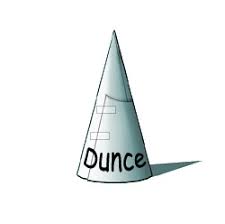
And he need not send one back to me as a tax payment. Like the federal government, I neither need nor use taxes. I’m dunce cap sovereign.

Rodger Malcolm Mitchell
http://www.rodgermitchell.com


==========================================================================================================================================
No nation can tax itself into prosperity, nor grow without money growth. Monetary Sovereignty: Cutting federal deficits to grow the economy is like applying leeches to cure anemia. Two key equations in economics:
Federal Deficits – Net Imports = Net Private Savings
Gross Domestic Product = Federal Spending + Private Investment and Consumption + Net exports

#MONETARY SOVEREIGNTY