Gift to Johns Hopkins. Why doesn’t the government do this.

We’ll introduce this short article with a few facts:

1. The U.S. federal government has infinitely more dollars than does Michael Bloomberg and the Bloomberg Philanthropies.

2. Unlike state/local taxes, which fund state/local spending, federal taxes do not fund federal spending.

The federal government creates new dollars, ad hoc, to fund all its spending.

3. When Bloomberg and/or his foundation give to any charity, this does not add as many growth dollars to the economy as federal spending.

(To the degree that charitable gifts reduce Bloomberg’s taxes, those dollars are not taken from the economy.)

4. America has a shortage of trained healthcare workers (See next:)

Staff Shortages Choking U.S. Health Care System, A growing shortage of health care workers is being called the nation’s top patient safety concern., By Steven Ross Johnson, July 28, 2022

The situation is quite serious and has been exacerbated by the COVID-19 pandemic. 

Physician Shortage: The nation is facing a projected shortage of up to 124,000 physicians by 2033.

Nursing Shortage: There is an urgent need to hire at least 200,000 nurses each year to meet rising demands and replace retiring nurses. Among support personnel, a shortage of home health aides is most acute.

Overall Health Workforce: The health care industry employed 16.3 million people in 2022, making it the largest employment sector in the U.S.

Despite this, there is still a shortage, with a projected need for 1.1 million new registered nurses across the U.S. to address retirements and the growing demand.

Impact of COVID-19: An estimated 1.5 million health care jobs were lost in the first two months of the pandemic. Although many of those jobs have since returned, health care employment remains below pre-pandemic levels.

Patient Safety Concerns: Staffing shortages are now the nation’s top patient safety concern, leading to longer wait times and even patients being turned away in life-threatening emergencies.

This shortage is affecting various levels of healthcare provision, from hospitals to private practices, and is a major concern for the future of healthcare services in the country.

So, the title question is, Why Doesn’t the Federal Government Do This? (I’ll tell you the answer.)

Most Johns Hopkins Medical Students to Receive Free Tuition After $1 Billion Gift Story by Alyssa Lukpat

A majority of medical students at Johns Hopkins University are set to receive free tuition after the school received a $1 billion gift from Bloomberg Philanthropies, making Hopkins the latest medical school to go tuition free because of a large donation.

Hopkins said Monday that students from families earning under $300,000 would receive free tuition starting in the fall.

And, of course, free tuition isn’t enough for many families, so:

Students whose families earn as much as $175,000 will have their living expenses covered.

The school estimates nearly two-thirds of its students would qualify for either of the benefits.

A growing number of philanthropists and medical schools are pushing to make education free for aspiring doctors and reduce the financial barriers that can deter them.

Another financial barrier often is overlooked. Many families rely on their young people to quit school and get jobs to help support the family.

The federal government should pay students a salary so parents would not be tempted to dissuade students from attending college.

Buoyed by donations, the Albert Einstein College of Medicine and the medical schools at New York University and Columbia University have given their students free tuition or scholarships if they have financial need.

Also, Kaiser Permanente Bernard J. Tyson School of Medicine Waived all tuition and fees for students entering between the fall of 2020 and 2025.

Cleveland Clinic Lerner College of Medicine at Case Western University offers full scholarships to all admitted students, to name a couple more.

The schools mentioned are all well-known and prestigious institutions within the United States. They have national and often international reputations for excellence in medical education and research.

Donors to such institutions tend to receive significant recognition for their contributions. America needs much more help than wealthy donors seeking applause can provide.

The cost of medical school has kept aspiring doctors out of the field, where they can graduate with hundreds of thousands of dollars in debt.

The student loan program is one of the most shortsighted, economically ignorant inventions the federal government ever has created.

It forces monetarily non-sovereign (meaning, limited dollars) students, to pay dollars to the Monetarily Sovereign (having unlimited dollars) federal government.

It’s a perfect plan if you want to discourage young people from attending college.

By offering financial freedom to more students, schools can give medical students the flexibility to choose jobs in important but lower-paying fields like internal medical and pediatrics.

Billionaire Michael Bloomberg’s philanthropic organization said Monday that the U.S. has a shortage of medical professionals yet the cost of attending school for these jobs is often too high.

“By reducing the financial barriers to these essential fields, we can free more students to pursue careers they’re passionate about,” he said.

Bloomberg has used his philanthropic organization, Bloomberg Philanthropies, to donate billions to several causes including public health, the environment and improving city governments.

Hopkins said Bloomberg’s donation would also be used to expand financial aid for nursing and public-health graduate students, in addition to graduate students in other fields.

“This new scholarship formula will ensure the most talented aspiring doctors representing the broadest and deepest range of socioeconomic and geographic backgrounds have the opportunity to graduate debt-free,” Hopkins said.

No, it doesn’t assure that at all.

It assures the relative handful of aspiring doctors, who can afford not to have any income for the next few years, will be relieved of many college costs.

And as vital as healthcare is, what about all the other specialties that are short of practitioners?

Consider the serious shortage of engineers.

Every year, the US will need about 400,000 new engineers.

Yet the next-generation skill sets that those engineers will require are sorely lacking, presenting the alarming possibility that nearly one in three engineering roles will remain unfilled each year through at least 2030.

This persistent talent gap risks short-circuiting the progress of several essential industries.

It may also seriously inhibit various US government initiatives intended to boost the economy and US competitiveness, such as the 2022 Build Back Better Act (BBBA) and the 2022 Chips and Science Act.

We also are short of trained people in Information Technology  (cybersecurity experts, data scientists, and software developers) and Teaching, particularly in STEM (Science, Technology, Engineering, Mathematics) subjects and special education.

Of course, this doesn’t include our shortages in trades not ordinarily associated with colleges but still requiring training: Electricians, plumbers, welders, HVAC technicians, truck drivers and logistics coordinators, agricultural workers, and skilled manufacturing workers who can operate complex machinery and robotics.

America relies on the private sector to pay for all this schooling and training.

Our state universities and colleges, for instance, are largely funded by the private sector, either through local and state taxes or private contributions and endowments.

All suffer from one common problem: Affordability.

1. Potential workers cannot afford to take the time and pay the costs involved in formalized training, whether in a college, university, or specialized school.

2. The private sector cannot afford to pay students and trainees for their time and costs involved in receiving training.

3. Schools and other training facilities cannot afford to provide their services without remuneration.

The federal government suffers no such limitations. It can:

1. Pay students salaries and personal expense allowances for attending schools and training facilities.

2. Remunerate students for their education and training costs

3. Remunerate educational and training facilities to provide their services without charge.

The private sector (which does not have unlimited funds) already does some of this—just not enough.

Sixty years ago, the company that employed me paid my tuition to Northwestern University for my MBA. They didn’t pay for my books, transportation, or time (night school), and I was locked into that company for the 3 years I attended, but it’s what a monetarily non-sovereign company chose to do.

The presumptive goal of government is to protect and improve people’s lives. Funding training and education is an important step in accomplishing that mission.

Why is funding left to the monetarily non-sovereign private sector?

Why are you forced to pay local taxes for grades K-12—taxes that, in most places, are insufficient to fund excellent schooling—when the Monetarily Sovereign federal government could easily fund higher teacher salaries and better facilities without charging you a penny in taxes?

The Lesson

Yes, it’s commendable that Mr. Bloomberg, in exchange for tax breaks and accolades, will provide a vanishingly tiny support for what the nation needs.

But why do we need to rely on the Bloombergs of the world when the money is there, waiting for the populace and our leaders to acknowledge its need and availability?

The tax breaks already demonstrate the government’s willingness and ability to fund about one-third of the support at Mr. Bloomberg’s whim.

There is no financial reason why the federal government cannot provide the entire nation with everything that Mr. Bloomberg provides to a select few.

What is the real reason it already is not happening? There are two reasons:

  1. The ignorance of the populace who have been brainwashed into believing that federal finances are like personal finances, and can’t afford to fund what America needs.
  2. The rich, who run America, do not want benefits that would narrow the income/wealth/power Gap between the rich and the rest.

Ignorance is the most expensive thing we can buy, yet each day, we pay mightily for another dollop of ignorance and allow the federal government to cry, “Poor.”


Rodger Malcolm Mitchell

Monetary Sovereignty Twitter: @rodgermitchell Search #monetarysovereignty Facebook: Rodger Malcolm Mitchell; MUCK RACK: https://muckrack.com/rodger-malcolm-mitchell; https://www.academia.edu/

……………………………………………………………………..

The Sole Purpose of Government Is to Improve and Protect the Lives of the People.

MONETARY SOVEREIGNTY

Don’t let your Congressperson get away with cheating you out of your benefits.

There are two primary ways in which U.S. dollars are created. The rhyming pneumonic is: Bank lending and federal spending.
580+ Adding To Pile Stock Illustrations, Royalty-Free Vector Graphics & Clip Art - iStock | Top up
Bank lending adds new dollars to the money supply.
1. Contrary to popular myth, when a bank lends, it does not lend depositors’ funds. It creates new dollars by increasing the borrower’s bank account balance. For example, when you take out a mortgage, your bank simply increases the balance in your checking account. That adds dollars to the M2 money supply measure. Your bank can’t do this endlessly. It is limited in its ability to create dollars by its reserves and its capital. The reserve limitation is termed “fractional reserve lending,” which means your bank must keep a fraction of its lending (often 10%) in reserve to handle a bank run. However, this is not a real limit because banks can borrow reserves from the Federal Reserve.  The real limit to bank lending is its capital. This is discussed in more detail here. Rather than the common “fractional reserve lending” term, the more correct limit should be called “fractional capital lending.” 2. Contrary to popular myth, the federal government does not spend tax dollars. Instead, it creates new dollars by spending.
920+ Shredding Money Stock Photos, Pictures & Royalty-Free Images - iStock | Lose money, Wasting money, Flushing money
You pay taxes with M2 money supply dollars. When they are received by the Treasury, he ceases to be part of any money supply measure.
Even if the federal government didn’t collect a penny in taxes, it could spend infinite amounts forever. Most people are amazed to learn that the federal government (unlike state/local governments) destroys all tax dollars upon receipt. When you pay taxes, you take dollars that are part of the M2 money supply measure and send them to the Treasury, where they instantly become part of no money supply measure. In effect, they cease to exist. (Treasury dollar holdings are not part of any money supply measure because the Treasury has the infinite ability to create dollars. Its supply is endless.) The sole purposes of federal taxes are not to provide spending money to the federal government but to:

A. Control the economy by taxing what the government wishes to discourage and giving tax breaks to what the government wishes to reward

B. Assure demand for the U.S. dollar by requiring taxes to be paid in dollars.

Unlike state and local government taxes, which do fund state and local government spending, federal taxes do not fund federal spending. The difference is that state and local governments are monetarily non-sovereign, while the federal government is Monetarily Sovereign. As the original creator of the U.S. dollar, the federal government rules over all aspects of the dollar, its supply, and its value. To pay a creditor, the federal government sends instructions (not dollars) to the creditor’s bank, telling the bank to increase the balance in the creditor’s checking account. When the bank does as instructed, new dollars are created and added to the M2 money supply measure. The bank can do this because it clears that money creation through the Federal Reserve, a federal government agency. In short the federal government approves its own instructions for the bank to create dollars. All of the above substantiates one simple point: The U.S. federal government has infinite dollars available to spend. If it wished, it could pay a creditor a trillion dollars or a hundred trillion dollars today at the touch of a computer key. Unlike state and local governments, the federal government is not burdened by debt and cannot be insolvent. All those worries you read, about the size of the federal debt, are misguided. It’s like worrying about whether the sun has enough light to cure the night’s darkness. Keep that in mind as you read an example of the Big Lie in economics:The Big Lie - Six Sigma

Lawmakers Might Increase Social Security’s Full Retirement Age to Avoid Benefit Cuts. Here’s How That Could Hurt Today’s Workers Big Time

Story by Maurie Backman, The Motley Fool

Social Security is not in the best financial shape. The program gets the bulk of its funding from payroll taxes.

But in the coming years, that revenue stream is expected to shrink as baby boomers exit the workforce in droves.

Wrong. Payroll tax dollars, which come from the M2 money supply measure, cease to be part of any money supply measure when they reach the U.S. Treasury. Thus, payroll tax dollars are destroyed upon receipt. The federal government always creates new dollars to pay its financial obligations. Social Security is an agency of the Monetarily Sovereign U.S. federal government, which has the infinite ability to create its sovereign currency, the U.S. dollar. It never can run short of dollars. Therefore, no federal government agency can run short of dollars unless Congress and the president want that.

Alan Greenspan: “A government cannot become insolvent with respect to obligations in its own currency. There is nothing to prevent the federal government from creating as much money as it wants and paying it to somebody. The United States can pay any debt it has because we can always print the money to do that.”

Ben Bernanke: “The U.S. government has a technology, called a printing press (or, today, its electronic equivalent), that allows it to produce as many U.S. dollars as it wishes at essentially no cost.”

There is nothing to prevent the U.S. government from creating and adding as many dollars as are needed to keep Social Security Solvent without collecting a penny in taxes:

Quote from former Fed Chairman Ben Bernanke when he was on 60 Minutes: Scott Pelley: Is that tax money that the Fed is spending? Ben Bernanke: It’s not tax money… We simply use the computer to mark up the size of the account.

Social Security can tap its trust funds to keep up with scheduled benefits for a period of time. But once those trust funds run dry, benefit cuts may have to happen. And recent projections call for a trust fund depletion date of 2034, which isn’t so far away.

The so-called “trust funds” are fake. They simply are line items on balance sheets that can be increased or reduced by the federal government whenever it wishes to.

Peter G. Peterson Foundation:

Federal trust funds bear little resemblance to their private-sector counterparts; therefore, the name can be misleading.

A “trust fund” implies a secure source of funding. However, a federal trust fund is simply an accounting mechanism used to track inflows and outflows for specific programs.

In private-sector trust funds, receipts are deposited, and assets are held and invested by trustees on behalf of the stated beneficiaries. In federal trust funds, the federal government does not set aside the receipts or invest them in private assets.

Rather, the receipts are recorded as accounting credits in the trust funds and then combined with other receipts that the Treasury collects and spends.

Further, the federal government owns the accounts and can, by changing the law, unilaterally alter the purposes of the accounts and raise or lower collections and expenditures.

Of course, it’s in lawmakers’ best interest to try to avoid benefit cuts and the senior poverty crisis they have the potential to cause. To that end, several solutions have been proposed to prevent that unwanted scenario.

Balance Scale Graphic Images – Browse 248,135 Stock Photos, Vectors, and Video | Adobe Stock
“Rich” is a comparative term. If you have $1,000, you are rich if everyone else has $10, but you are poor if everyone else has $10,000. Taking benefits from the poor makes the rich richer.
If it were in the “lawmakers’ best interest,” there would be no funding crises. Congress would simply vote to add dollars to Social Security. That is how Congress, the President, and all other federal agencies are funded. Congress votes and dollars are created from thin air. However, lawmakers have a different “best interest” from the masses. The very rich bribe lawmakers to widen the Gap between the rich and the rest. Since “rich” is a comparative term, widening the Gap makes the rich richer. Yes, that’s right. Making you poorer actually makes the rich richer. The “best interest” of the lawmakers is to receive dollars from wealthy supporters.

One idea that’s been gaining traction is increasing Social Security’s full retirement age (FRA), which is the age at which seniors can claim their monthly benefits in full without a reduction.

For workers born in 1960 or later, FRA is 67. However, some lawmakers suggest increasing FRA to 68 to 69 so that Social Security has more time before fully paying those benefits.

This is unnecessary and only makes the people poorer—more years without Social Security support. (Watch for attempts to do the same thing to Medicare—more years without healthcare insurance.)

It’s an idea that could potentially prevent benefit cuts.

But that is precisely what it is — a benefit cut. It’s more years without a benefit.

But it’s also an idea that might hurt workers in a very notable way. Here are some consequences that might ensue if the FRA for Social Security is raised by a year or two.

1. You may have to work longer

It’s possible to claim Social Security before reaching FRA. You can take benefits once you turn 62. But for each month you claim them ahead of FRA, they get reduced permanently.

Due to a lack of retirement savings, you may be unable to afford a cut to your Social Security income.

But if FRA is raised, you’ll have to wait longer to get your full monthly benefit without a reduction. That means you may have to work longer, which you may not want to do—especially if your job is stressful or harmful to your health.

In other words, it’s an unnecessary benefit cut.

2. You may have less opportunity to earn delayed retirement credits

Right now, seniors who postpone their Social Security claims past FRA get to accrue delayed retirement credits.

Those credits boost benefits by 8% a year so that someone with an FRA of 67 who files at 70 gets to snag a permanent 24% increase to their monthly Social Security check.

Currently, delayed retirement credits stop accruing at age 70. However, unless the rules change, if FRA is increased, today’s workers will be left with less opportunity to grow their Social Security benefits.

Another unnecessary benefit cut.

3. You may be subject to an earnings-test limit for longer

You’re allowed to work and collect Social Security at the same time. And once FRA arrives, you can earn any money without risking having benefits withheld.

However, the current rules dictate that Social Security recipients who work and have not reached FRA are subject to an earnings-test limit.

Earnings beyond that limit result in withheld Social Security income. If FRA is raised to help prevent Social Security cuts, workers could be subject to an earnings-test limit for longer.

This unnecessary benefit cut will hurt those who are not rich. Notice there is no call for ending tax breaks given to the rich. The federal government seems to have plenty of money for those tax gifts to the rich but, strangely, not enough to support Social Security and Medicare.

All told, increasing FRA for Social Security has some serious drawbacks. Lawmakers must weigh the pros and cons to determine whether pushing FRA to 68 or 69 is a good idea.

Rather than engaging in theatrical “struggles” to make less money to cover more people, the federal government could and should:
  1. Eliminate FICA. Those dollars do not increase the government’s ability to fund Social Security (and ability that is infinite)
  2. Provide Social Security benefits to every man, woman, and child in America, regardless of age, income, or wealth.
The rich bribe the lawmakers to make you believe federal taxes fund federal spending and give you benefits; taxes must be increased. This is the Big Lie in economics. The federal government has the financial power to provide:
  1. Social Security payments to you and every man, woman, and child in America.
  2. Comprehensive, no-deductible Medicare for you and every man, woman, and child in America
  3. Free college education for you and every American who wanted one.
  4. An end to poverty and hunger in America.
  5. An end to homelessness in America
  6. New roads and bridges wherever needed
  7. Financial support for every scientific research and development project imaginable.
In short, money is no object for the federal government. We need to understand that fact and then have the imagination and desire to use the money to build a better world. It you believe it sounds too good to be true, it’s because the rich have been successful in indoctrinating you with the Big Lie. Rodger Malcolm Mitchell Monetary Sovereignty Twitter: @rodgermitchell Search #monetarysovereignty Facebook: Rodger Malcolm Mitchell

……………………………………………………………………..

The Sole Purpose of Government Is to Improve and Protect the Lives of the People.

MONETARY SOVEREIGNTY

Is the cost of the White House unsustainable?

The federal government has more than a thousand departments and agencies, including The White House, the House of Representatives, the Senate, the Supreme Court, the Central Intelligence Agency (CIA), Medicare (CMS), and the Social Security Administration (SSA). Contrary to popular myth, all federal agencies and departments are funded in precisely the same way: Congress votes, and dollars are created from thin air. A few agencies are associated with so-called “trust funds.” According to the Peter G. Peterson Foundation:

A federal trust fund is an accounting mechanism the federal government uses to track earmarked receipts (money designated for a specific purpose or program) and corresponding expenditures.

The largest and best-known trust funds finance Social Security, portions of Medicarehighways and mass transit, and pensions for government employees.

Federal trust funds bear little resemblance to private-sector counterparts; therefore, the name can be misleading.

A “trust fund” implies a secure source of funding. However, a federal trust fund is simply an accounting mechanism that tracks inflows and outflows for specific programs.

In private-sector trust funds, receipts are deposited, and assets are held and invested by trustees on behalf of the stated beneficiaries.

In federal trust funds, the federal government does not set aside the receipts or invest them in private assets.

Instead, the receipts are recorded as accounting credits in the trust funds and combined with other receipts that the Treasury collects and spends.

Further, the federal government owns the accounts and can, by changing the law, unilaterally alter their purposes and raise or lower collections and expenditures.

Read that last sentence carefully, for it is the heart of this discussion. It consists of three truths:
  1. The federal government owns the accounts
  2. The government can change the law and unilaterally change the purposes of the accounts.
  3. The government unilaterally can raise or lower collections and expenditures.
This all adds up to a powerful but little-understood fact. The so-called federal “trust funds” operate entirely at the whim of Congress and the President. These “trust funds were created and operated according to the laws the Congress and the President control. By adjusting laws, Congress and the President can determine how much money each “trust fund” collects, has, and spends. Congress and the President arbitrarily can decide that any trust fund has $1, or $1 trillion, or $1,000 trillion, merely by passing laws. There is no limit to what laws Congress and the President pass, nor what those laws say regarding money in the “trust funds.” Keep this total control in mind as you read excerpts from this article, also by the Peter G. Peterson Foundation:

SOCIAL SECURITY REFORM: SHOULD WE RAISE THE RETIREMENT AGE? In their 2022 Annual Report, the Social Security trustees estimate that the program’s primary trust fund — Old Age and Survivors Insurance (OASI) — will spend more on payments to beneficiaries than it collects yearly until it is depleted in 2034.

At that time, an estimated 70 million beneficiaries would see a substantial reduction in their benefits. OASI would only be able to distribute as much in benefits as it collects in annual revenues.

Driving that impending depletion are the dual demographic trends of retiring baby boomers and lengthening life expectancies, which together have placed considerable strain on Social Security’s finances.

Many options exist to shore up OASI’s solvency, including increasing revenues dedicated to the program, raising the full retirement age, and decreasing the program’s benefits.

A balanced approach that combined components from each option would likely provide the fairest, most lasting, and least painful adjustment for the future.

Translation: The primary “trust fund” will spend more than it collects –according to current law, which Congress and the President can change at will, but the only law changes being considered are:
  • Higher taxes
  • Raising the retirement age, and
  • Reduced dollar benefits
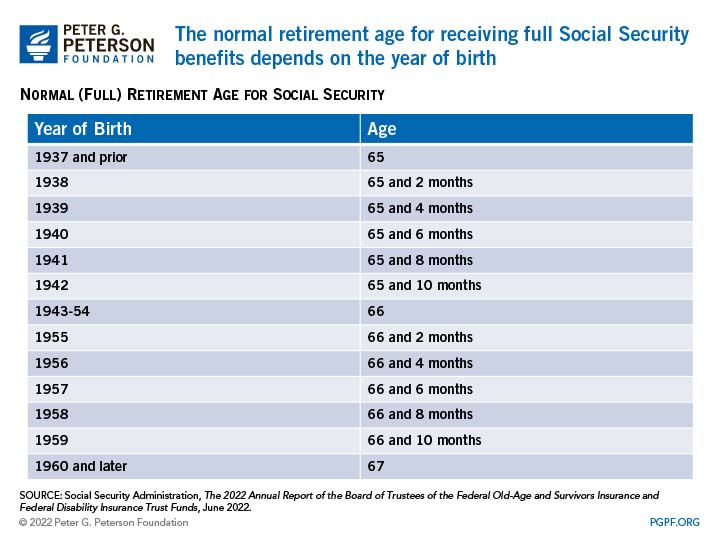
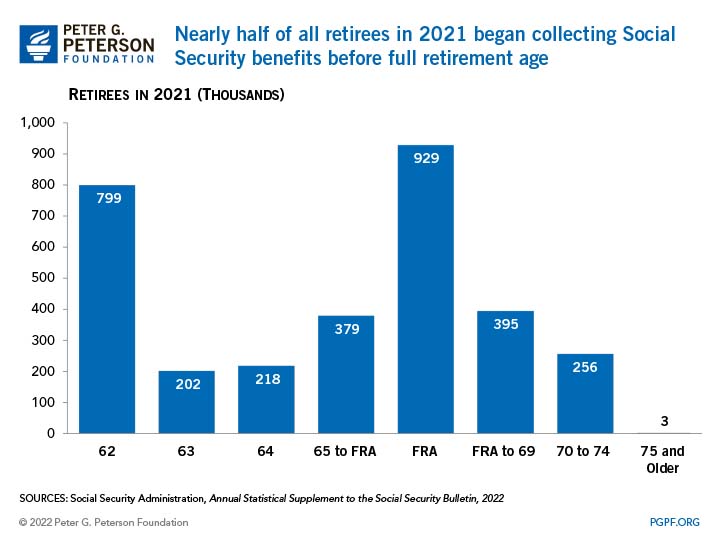
But here is another, even better approach: Congress and the President should simply vote to give Social Security more money, precisely as they do for the other thousand federal departments and agencies. There is no need to increase taxes. In fact, FICA should be eliminated. It is unnecessary and a double tax in that it is not deductible, but part of Social Security is taxed. It also punishes lower-income people. There also is no need to raise the retirement age. Social Security payments can and should be given to every man, woman, and child in America, Finally, there is no need to reduce dollar benefits. We should even end the faux “trust funds” and simply pay for Social Security the same way the federal government pays for nearly all of its other agencies: By recreating dollars from thin air.The normal retirement age for receiving full Social Security benefits depends on the year of birth The U.S. federal government is Monetarily Sovereign. It cannot run short of its own sovereign currency. To pay for your Social Security benefits, the federal government sends instructions (in the form of a wire or check) to your bank or you, instructing your bank to increase the dollar balance in your checking account. When your bank does as instructed, the balance in your account increases, creating new dollars and adding them to the M2 money supply measure, growing the economy. Sending instructions to banks is the primary way the federal government creates dollars. The federal government, being Monetarily Sovereign, has the infinite ability to send and clear instructions, thus, the endless ability to create dollars. (By contrast, everyone who writes a check or sends a wire can send instructions but not clear them. Checks that don’t clear are said to “bounce.”) Your bank then clears the transaction through the Federal Reserve, another federal agency. Thus, the federal government clears its own money-creation transactions, giving it the infinite power to create dollars.Nearly half of all retirees in 2021 began collecting Social Security benefits before full retirement age The government also has the infinite power to change Social Security laws, as demonstrated by the 12 benefit changes shown in this chart. More than half of all Social Security recipients take benefits before the official retirement age when benefits are reduced. This demonstrates an early need for benefits by those in lower-income groups.

WHAT EFFECT COULD RAISING THE FULL RETIREMENT AGE HAVE ON SOCIAL SECURITY’S LONG-TERM SOLVENCY? Given that more retirees are beginning to collect Social Security benefits earlier in their retirement and that overall life expectancy continues to increase, many policymakers have called for a modification to the program, wherein the full retirement age is gradually raised and ultimately pegged to average life expectancy.

According to an analysis from the Committee for a Responsible Federal Budget (CRFB), gradually increasing the full retirement age by two months per year until it reaches 69 and then indexing it for changes in overall life expectancy would save $90 billion over 10 years, but much more in future decades; CRFB estimates that the change would close over half of the structural mismatch between Social Security’s revenues and spending in the long run.

The above two paragraphs indicate ignorance of the difference between Monetary Sovereignty and monetary non-sovereignty. If Social Security were private insurance (i.e., monetarily non-sovereign), pegging benefits to life expectancy would be appropriate, even necessary. However, there are zero reasons for the federal government to do this. There is no fiscal reason why the federal government should try to extract $90 billion from the private sector. If one wishes to grow the U.S. economy, it is the worst possible course of action. This is what happens when the federal government closes the mismatch between revenues and spending“(i.e., runs a surplus). Federal surpluses extract dollars from the economy, causing depression or recessions:

U.S. depressions tend to come on the heels of federal surpluses.

1804-1812: U. S. Federal Debt reduced 48%. Depression began 1807. 1817-1821: U. S. Federal Debt reduced 29%. Depression began 1819. 1823-1836: U. S. Federal Debt reduced 99%. Depression began 1837. 1852-1857: U. S. Federal Debt reduced 59%. Depression began 1857. 1867-1873: U. S. Federal Debt reduced 27%. Depression began 1873. 1880-1893: U. S. Federal Debt reduced 57%. Depression began 1893. 1920-1930: U. S. Federal Debt reduced 36%. Depression began 1929. 1997-2001: U. S. Federal Debt reduced 15%. Recession began 2001.

Even without surpluses, just reducing federal deficits leads to recessions:
Reduced federal deficits (red line) lead to recessions (vertical gray bars). Recessions are cured by increased federal deficits.
Economic growth requires the federal government to spend more dollars into the economy than it extracts via taxes and fees (i.e., run deficits). Without federal deficits, we have depressions and recessions.
As federal deficits (spending and taxes) increase, the Gross Domestic Product increases—and that includes real (inflation-adjusted) Gross Domestic Product.
Those who argue against federal deficit spending may admit it grows the economy but sometimes claim it causes inflation. However, as the above graph indicates, the economy grows, even when adjusted for inflation. All evidence indicates that inflation is caused not by federal spending but by scarcities of critical goods and services.  Inflation usually is cured by federal spending to obtain and distribute the scarcities that caused the inflation. Federal taxes reduce non-federal spending (mostly private sector spending). Thus, no matter how one calculates it, increasing FICA and/or decreasing Social Security benefits will reduce economic growth. And it’s all unnecessary; the federal government has infinite money. It cannot become insolvent. Not understanding the differences between a Monetarily Sovereign government and the monetarily non-sovereign state/local governments, businesses and individuals is the single most significant cause of economic misery and self-defeating government spending decisions. In summary, if the White House, Congress, the Supreme Court, and hundreds of other federal agencies and departments are financially sustainable, so is Social Security and Medicare. There is no need for benefit cuts. There is no need for FICA tax increases. There is no need for FICA at all. The federal government can provide all its agencies and departments with every dollar they need at the touch of a computer key. Why Don’t They? Question: If the government can fund all its agencies and departments without taxes, why doesn’t it just do it? Answer: The very rich, who run the government, want you to believe the government can’t afford to give you benefits. “Rich” is a comparative term. A person having $1,000 would be rich if everyone else had only $100. But that person would be poor if everyone else had $10,000. You can grow richer if the income/wealth/power Gap below you widens and the Gap above you narrows. So, one major goal of the rich is to narrow the Gap below them, which requires limiting the benefits you receive from the government. To keep you from screaming about that, the rich bribe your sources of information — the media, the politicians, and the university economists — to convince you of the Big Lie that federal spending is funded by federal taxes. It’s a Big Lie because the federal government, being Monetarily Sovereign, creates all the money it uses. The only true purposes of federal taxes are to:
  1. Control the economy by taxing what the government wishes to discourage and by giving tax breaks to what the government wishes to reward and
  2. Assure demand for the U.S. dollar by requiring taxes to be paid in dollars.
That’s it. Federal taxes don’t fund anything. In fact, your precious tax dollars are destroyed the moment they are received by the U.S. Treasury. You pay with dollars that are part of the M2 money-supply measure. When your dollars reach the Treasury, they cease to be part of any money-supply measure and are effectively destroyed. Because the government has the infinite ability to create dollars, there is no point in trying to measure the government’s supply of dollars. Suppose you are made to believe the federal government is like monetarily non-sovereign state governments, relying on taxes. In that case, you won’t complain when your Social Security, Medicare, poverty aids, college tuition aids, etc. are cut for lack of money. The less you receive from the government, the richer are the rich. The rich still receive their federal benefits in the form of tax breaks. There never is a complaint about benefits for the rich being “unsustainable,” “unaffordable,” etc. Those terms are reserved for your benefits.  When you read articles telling you the Social Security age requirement must be raised, benefits must be decreased, or the FICA tax must increase, know this: It’s all part of the Big Lie fostered by the rich to make themselves richer. Rodger Malcolm Mitchell Monetary Sovereignty Twitter: @rodgermitchell Search #monetarysovereignty Facebook: Rodger Malcolm Mitchell

……………………………………………………………………..

The Sole Purpose of Government Is to Improve and Protect the Lives of the People.

MONETARY SOVEREIGNTY
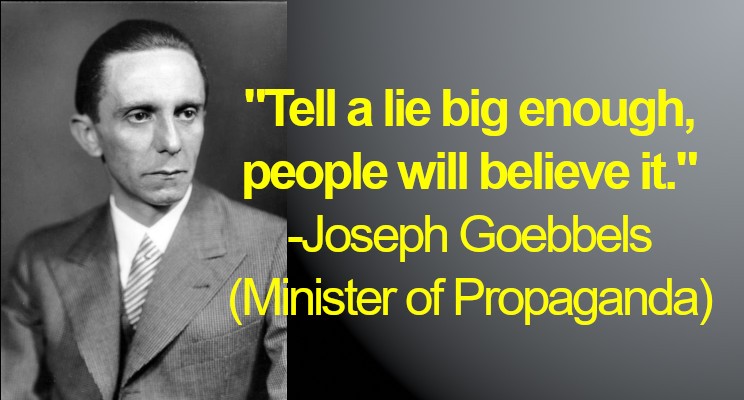
Believe it or not, the government lies to you.

I’m sure you will find this difficult to believe, but the U.S. government lies to you about many things, this time about its finances. The following is from the government Bureau of the Fiscal Service:

Executive Summary of the Fiscal Year 2022 Financial Report of the U.S. Government An Unsustainable Fiscal Path An important purpose of this Financial Report is to help citizens understand current fiscal policy and the importance and magnitude of policy reforms necessary to make it sustainable.

A sustainable fiscal policy is defined as one where the ratio of debt held by the public to GDP (the debt-to-GDP ratio) is stable or declining over the long term.

That is the definition of a “sustainable fiscal policy??? Who in the government invented such a definition? First, the debt/GDP ratio is a ridiculous, meaningless number with zero analytical or predictive power. A high ratio says nothing. A low ratio says nothing. A rising or declining ratio says nothing. The Debt/GDP ratio is a classic Apples/Oranges measure. GDP (Gross Domestic Product) is an annual, usually one-year measure of productivity. Debt is a decade-long measure of net deposits. GDP begins every year at 0. Debt is cumulative. Mathematically, it’s a silly fraction, no better than butterflies/butter churns. But it gets worse:

DEBT/GDP RATIOS BY COUNTRY

Countries with the Highest Debt-to-GDP Ratios (%) Venezuela — 350% Japan — 266% Sudan — 259% Greece — 206% Lebanon — 172% Cabo Verde — 157% Italy — 156% Libya — 155% Portugal — 134% Singapore — 131% Bahrain — 128% United States — 128%

Countries with the Lowest Debt-to-GDP Ratios (%) Brunei — 3.2% Afghanistan — 7.8% Kuwait — 11.5% Congo (Dem. Rep.) — 15.2% Eswatini — 15.5% Burundi — 15.9% Palestine — 16.4% Russia — 17.8% Botswana — 18.2% Estonia — 18.2%t

Do the above ratios tell you anything about whether a government’s fiscal policy is “sustainable”? Is Russia’s economy more “sustainable” than Japan’s and the US’s? Then there is this graph. What does it tell you about sustainability (whatever that supposedly means)?
Gross Federal Debt / DGP is red. GDP is dark blue. Real (inflation-adjusted) GDP is light blue.
The debt/GDP ratio rose during World War II. Then, for about 35 years, it declined until 1980, when it began to rise. In 1996, the ratio had a 5-year decline, after which it grew until 2020 and a short decline. Meanwhile, GDP has had relatively steady growth. So, what did the debt/GDP ratio tell you about the economy? What did it predict? What did the ratio say about “sustainability”? Nothing.

GDP measures the size of the nation’s economy in terms of the total value of all final goods and services that are produced in a year.

Considering financial results relative to GDP is a useful indicator of the economy’s capacity to sustain the government’s many programs.

I keep reading and rereading that phrase, “the economy’s capacity to sustain the government’s many programs. “ I can’t visualize what it means. Does it mean the government is running out of money (which, for a Monetarily Sovereign government is impossible)?

Former Federal Reserve Chairman Alan Greenspan: “There is nothing to prevent the federal government from creating as much money as it wants and paying it to somebody.” 

Does it mean the government doesn’t have enough people to run its programs? (Just hire enough people.) Or what? World War II tested the government’s “capacity to sustain many programs.” It merely spent more money, hired more people, and sustained very nicely, thank you. Since then, despite repeated claims that the federal debt is a ticking time bomb,” and much to the consternation of the debt Henny Penny crowd, the economy keeps growing and remaining healthy. Even COVID was only a short-term setback for the U.S. economy.

This report presents data, including debt, as a percent of GDP to help readers assess whether current fiscal policy is sustainable. The debt-to-GDP ratio was approximately 97 percent at the end of FY 2022, down from roughly 100 percent at the end of FY 2021.

The long-term fiscal projections in this report are based on the same economic and demographic assumptions that underlie the SOSI.

The Statement of Social Insurance (SOSI) presents the projected actuarial present value of the estimated future revenue and estimated future expenditures of the Social Security, Medicare, Railroad Retirement, and Black Lung social insurance programs which are administered by the SSA, HHS, RRB, and DOL, respectively. In short, the government is comparing probable expenses of these social programs with projected revenue — mostly tax receipts. There’s one small problem with that comparison. The federal government’s finances are nothing like the finances of monetarily non-sovereign entities like you, me, businesses, and local governments, which require income to pay bills. The federal government requires, and indeed uses, no income to pay its bills. Being Monetarily Sovereign, it creates new dollars every time it pays a creditor. In fact, paying creditors is how the federal government creates dollars.

To pay a bill, the government sends instructions (not dollars) to the creditor’s bank. The instructions are in the form of a check or wire, telling the bank to increase the balance in the creditor’s checking account (“Pay to the order of”).

When the bank does as instructed, new dollars are created and added to the M2 money supply measure.

Thus, even if the federal government received $0 taxes and any other revenue, it could continue spending forever simply by sending instructions to banks.

The current fiscal path is unsustainable.

To determine if current fiscal policy is sustainable, the projections based on the assumptions discussed in the Financial Report assume current policy will continue indefinitely.

The projections are therefore neither forecasts nor predictions.

Nevertheless, the projections demonstrate that policy changes need to be enacted for the actual financial outcomes to differ from those projected.

I don’t know what the above paragraphs are supposed to mean, but I’ll take a guess. See if you agree with this translation:

“The government can’t keep increasing deficits the way it has been for the past eighty years. We don’t know why, but it simply can’t.

“Although this isn’t a forecast or a prediction (if there is any difference between the two), something has to change, just because we say so.”

If there is another meaning, please let me know.

The debt-to-GDP ratio ratio was approximately 97 percent at the end of FY 2022. Under current policy and based on this report’s assumptions, it is projected to reach 566 percent by 2097.

The projected continuous rise of the debt-to-GDP ratio indicates that current policy is unsustainable.

Let’s return to the Debt/GDP graph. In 1974, the Debt/GDP ratio was 23%. By 2022, 48 years later, the ratio was 97%, a 4.217-fold increase. The government forecasts and predicts (Oops, supposedly it isn’t a forecast or a prediction) — let’s say it’s a WAG (wild ass guess) that by 2097, which is 75 years later, the ratio will be 566, which represents a 5.8% increase from the 97% of 2022. In short, we had a 4.217-fold increase in 48 years, and the WAG is for a 5.8-fold increase in 75 years. And that is supposed to be “unsustainable.” Except . . . Except the Treasury’s WAG is that future ratio growth proportionately will be less than the past ratio growth. Apparently, Wild Ass Guesses aren’t as accurate as they used to be. Not that it matters because, as we have seen, Debt/GDP for a Monetarily Sovereign entity is meaningless. Federal “debt” isn’t federal, and it isn’t debt. It’s deposits into T-security accounts that are wholly owned by the depositors and never invaded by the federal government. That’s right. The government doesn’t own or even touch those dollars. They belong to depositors. The government merely holds them in safe keeping, like it holds whatever is in your bank safe deposit box. To “pay off” the misnamed “debt,” the government merely returns the depositor’s’ dollars to the depositors. It does that every day. Think about it. Do you really think the government of China would turn over ownership of billions of their dollars to U.S. government usage? In summary, the Treasury supports the lie that the growing “Federal Debt/ GDP is in some way “unsustainable,” without ever saying what they mean by “unsustainable.” There never has been a time when the U.S. government has not been able to “sustain” (whatever that means) its “debt” (whatever that means). So why the lies? For much of the government, it’s pure ignorance. The people writing this stuff simply do not understand Monetary Sovereignty. But for some, it’s malevolence, paid for by the rich who run America. “Rich” is a comparative. There are two ways to become richer: Get more for yourself or make those below you have less. A millionaire is rich if everyone else has a thousand dollars. But a millionaire is poor if everyone else has a billion dollars. It’s the income/wealth/power Gap that determines whether you are rich or poor. Cutting the Debt/GDP ratio requires cuts to such programs as Social Security, Medicare, and/or other benefits for those who aren’t rich. Or it requires increases in FICA and income taxes — the taxes that most affect the not-rich. You seldom hear recommendations to reduce the tax loopholes enjoyed by the rich. By impoverishing the middle and the poor, the rich make themselves richer. So, they bribe the media, the politicians, and the university economists to tell you your benefits must be cut and your taxes increased because “the current policy is unsustainable.” They rely on the public’s ignorance about Monetary Sovereignty, and so far, that has worked. Rodger Malcolm Mitchell Monetary Sovereignty Twitter: @rodgermitchell Search #monetarysovereignty Facebook: Rodger Malcolm Mitchell

……………………………………………………………………..

The Sole Purpose of Government Is to Improve and Protect the Lives of the People.

MONETARY SOVEREIGNTY