

A. Control the economy by taxing what the government wishes to discourage and giving tax breaks to what the government wishes to reward
B. Assure demand for the U.S. dollar by requiring taxes to be paid in dollars.
Unlike state and local government taxes, which do fund state and local government spending, federal taxes do not fund federal spending. The difference is that state and local governments are monetarily non-sovereign, while the federal government is Monetarily Sovereign. As the original creator of the U.S. dollar, the federal government rules over all aspects of the dollar, its supply, and its value. To pay a creditor, the federal government sends instructions (not dollars) to the creditor’s bank, telling the bank to increase the balance in the creditor’s checking account. When the bank does as instructed, new dollars are created and added to the M2 money supply measure. The bank can do this because it clears that money creation through the Federal Reserve, a federal government agency. In short the federal government approves its own instructions for the bank to create dollars. All of the above substantiates one simple point: The U.S. federal government has infinite dollars available to spend. If it wished, it could pay a creditor a trillion dollars or a hundred trillion dollars today at the touch of a computer key. Unlike state and local governments, the federal government is not burdened by debt and cannot be insolvent. All those worries you read, about the size of the federal debt, are misguided. It’s like worrying about whether the sun has enough light to cure the night’s darkness. Keep that in mind as you read an example of the Big Lie in economics: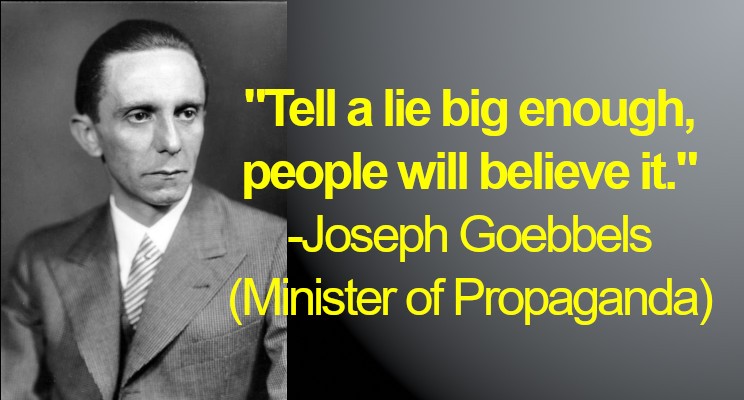
Wrong. Payroll tax dollars, which come from the M2 money supply measure, cease to be part of any money supply measure when they reach the U.S. Treasury. Thus, payroll tax dollars are destroyed upon receipt. The federal government always creates new dollars to pay its financial obligations. Social Security is an agency of the Monetarily Sovereign U.S. federal government, which has the infinite ability to create its sovereign currency, the U.S. dollar. It never can run short of dollars. Therefore, no federal government agency can run short of dollars unless Congress and the president want that.Story by Maurie Backman, The Motley Fool
Social Security is not in the best financial shape. The program gets the bulk of its funding from payroll taxes.
But in the coming years, that revenue stream is expected to shrink as baby boomers exit the workforce in droves.
Alan Greenspan: “A government cannot become insolvent with respect to obligations in its own currency. There is nothing to prevent the federal government from creating as much money as it wants and paying it to somebody. The United States can pay any debt it has because we can always print the money to do that.”
Ben Bernanke: “The U.S. government has a technology, called a printing press (or, today, its electronic equivalent), that allows it to produce as many U.S. dollars as it wishes at essentially no cost.”
There is nothing to prevent the U.S. government from creating and adding as many dollars as are needed to keep Social Security Solvent without collecting a penny in taxes:Quote from former Fed Chairman Ben Bernanke when he was on 60 Minutes: Scott Pelley: Is that tax money that the Fed is spending? Ben Bernanke: It’s not tax money… We simply use the computer to mark up the size of the account.
The so-called “trust funds” are fake. They simply are line items on balance sheets that can be increased or reduced by the federal government whenever it wishes to.Social Security can tap its trust funds to keep up with scheduled benefits for a period of time. But once those trust funds run dry, benefit cuts may have to happen. And recent projections call for a trust fund depletion date of 2034, which isn’t so far away.
Federal trust funds bear little resemblance to their private-sector counterparts; therefore, the name can be misleading.
A “trust fund” implies a secure source of funding. However, a federal trust fund is simply an accounting mechanism used to track inflows and outflows for specific programs.
In private-sector trust funds, receipts are deposited, and assets are held and invested by trustees on behalf of the stated beneficiaries. In federal trust funds, the federal government does not set aside the receipts or invest them in private assets.
Rather, the receipts are recorded as accounting credits in the trust funds and then combined with other receipts that the Treasury collects and spends.
Further, the federal government owns the accounts and can, by changing the law, unilaterally alter the purposes of the accounts and raise or lower collections and expenditures.
Of course, it’s in lawmakers’ best interest to try to avoid benefit cuts and the senior poverty crisis they have the potential to cause. To that end, several solutions have been proposed to prevent that unwanted scenario.

This is unnecessary and only makes the people poorer—more years without Social Security support. (Watch for attempts to do the same thing to Medicare—more years without healthcare insurance.)One idea that’s been gaining traction is increasing Social Security’s full retirement age (FRA), which is the age at which seniors can claim their monthly benefits in full without a reduction.
For workers born in 1960 or later, FRA is 67. However, some lawmakers suggest increasing FRA to 68 to 69 so that Social Security has more time before fully paying those benefits.
But that is precisely what it is — a benefit cut. It’s more years without a benefit.It’s an idea that could potentially prevent benefit cuts.
In other words, it’s an unnecessary benefit cut.But it’s also an idea that might hurt workers in a very notable way. Here are some consequences that might ensue if the FRA for Social Security is raised by a year or two.
1. You may have to work longer
It’s possible to claim Social Security before reaching FRA. You can take benefits once you turn 62. But for each month you claim them ahead of FRA, they get reduced permanently.
Due to a lack of retirement savings, you may be unable to afford a cut to your Social Security income.
But if FRA is raised, you’ll have to wait longer to get your full monthly benefit without a reduction. That means you may have to work longer, which you may not want to do—especially if your job is stressful or harmful to your health.
Another unnecessary benefit cut.2. You may have less opportunity to earn delayed retirement credits
Right now, seniors who postpone their Social Security claims past FRA get to accrue delayed retirement credits.
Those credits boost benefits by 8% a year so that someone with an FRA of 67 who files at 70 gets to snag a permanent 24% increase to their monthly Social Security check.
Currently, delayed retirement credits stop accruing at age 70. However, unless the rules change, if FRA is increased, today’s workers will be left with less opportunity to grow their Social Security benefits.
This unnecessary benefit cut will hurt those who are not rich. Notice there is no call for ending tax breaks given to the rich. The federal government seems to have plenty of money for those tax gifts to the rich but, strangely, not enough to support Social Security and Medicare.3. You may be subject to an earnings-test limit for longer
You’re allowed to work and collect Social Security at the same time. And once FRA arrives, you can earn any money without risking having benefits withheld.
However, the current rules dictate that Social Security recipients who work and have not reached FRA are subject to an earnings-test limit.
Earnings beyond that limit result in withheld Social Security income. If FRA is raised to help prevent Social Security cuts, workers could be subject to an earnings-test limit for longer.
Rather than engaging in theatrical “struggles” to make less money to cover more people, the federal government could and should:All told, increasing FRA for Social Security has some serious drawbacks. Lawmakers must weigh the pros and cons to determine whether pushing FRA to 68 or 69 is a good idea.
- Eliminate FICA. Those dollars do not increase the government’s ability to fund Social Security (and ability that is infinite)
- Provide Social Security benefits to every man, woman, and child in America, regardless of age, income, or wealth.
- Social Security payments to you and every man, woman, and child in America.
- Comprehensive, no-deductible Medicare for you and every man, woman, and child in America
- Free college education for you and every American who wanted one.
- An end to poverty and hunger in America.
- An end to homelessness in America
- New roads and bridges wherever needed
- Financial support for every scientific research and development project imaginable.
……………………………………………………………………..
The Sole Purpose of Government Is to Improve and Protect the Lives of the People.
MONETARY SOVEREIGNTY
 #Monetary Sovereignty - Mitchell