–Why are these people protesting? What do they want? 5 dunce caps

Mitchell’s laws: The more budgets are cut and taxes inceased, the weaker an economy becomes. To survive long term, a monetarily non-sovereign government must have a positive balance of payments. Austerity = poverty and leads to civil disorder. Those, who do not understand the differences between Monetary Sovereignty and monetary non-sovereignty, do not understand economics.
==========================================================================================================================================

Why are these people protesting? What do they want?

Monetary Sovereignty

Actually, I’m not sure what they want, but it’s clear what they don’t want. They don’t want to buy health care insurance. They seem to feel that the government telling them to buy health care insurance is an infringement on their freedom to go without health care insurance.

But, what will happen if they don’t have health care insurance? Will they simply grin and bear it when an appendix bursts or there’s that terrible pain on the left side of their chests? Will they tell their kids to ignore that broken arm?

Or, will they pony up the $25,000 – $50,000 or more that cancer or heart surgery costs, out of their own pockets? (Somehow, these folks don’t look all that wealthy.)

Or, (most likely) will they rush to the emergency room and force the hospital to accept them as charity patients, so that the people who do pay hospital bills can absorb the cost?

All these people so angry about being forced to have health care insurance — what next? Refusing to pay for food or to obey speed limits, as affronts to their “freedoms”? Or do they simply want someone else to pay for their health care?

Perhaps you readers know the answer. Please tell me: Why are these people protesting and what do they want?

I award 5 dunce caps to this entire fake-“freedom” protest movement, engineered by the so-called “religious” right.

Rodger Malcolm Mitchell
http://www.rodgermitchell.com


==========================================================================================================================================
No nation can tax itself into prosperity, nor grow without money growth. Monetary Sovereignty: Cutting federal deficits to grow the economy is like applying leeches to cure anemia. Two key equations in economics:
Federal Deficits – Net Imports = Net Private Savings
Gross Domestic Product = Federal Spending + Private Investment and Consumption + Net exports

#MONETARY SOVEREIGNTY

–The end of private banking: Why the federal government should own all banks.

Mitchell’s laws: The more budgets are cut and taxes inceased, the weaker an economy becomes. To survive long term, a monetarily non-sovereign government must have a positive balance of payments. Austerity = poverty and leads to civil disorder. Those, who do not understand the differences between Monetary Sovereignty and monetary non-sovereignty, do not understand economics.
==========================================================================================================================================

I have suggested that private banking in the United States should end, and all banking operations should be taken over by the federal government. I recognize that may be anathema to those who believe the government is too big and too powerful, and that private control always is better than public control.

Yes, “socialism” has become a popular pejorative. Yet, many aspects of our life are controlled by the federal and local governments, and we are better served for this control: The military. Road, bridge and dam building. Food and drug inspection. The courts.

Private ownership can be better, but not always. Sometimes public ownership provides better service.

I live near Chicago. The previous mayor sold Chicago’s parking meters and an important toll road to private industry. Parking costs and tolls immediately rose stratospherically, with zero improvement in service. The new meters are harder to use, and the road still needs work. Clearly, the people of Chicago were not well served by the transition from public to private ownership.

The private sector works on the profit motive, which often does not provide protections or service to the public.

Read the following excerpts, and see what you think about public ownership of the banking industry.

Global Economic Intersection:
Dallas Fed: Break Up the TBTF
March 30th, 2012

The Federal Reserve Bank of Dallas and its president Richard Fisher are generally known as conservative, hard money proponents. Often conservative economic thinkers are strong laissez-faire proponents. That is why the 2011 annual report of the Dallas Fed, released this month, has been such a surprise. A focal point of the report is very interventionist, calling for direct government action to force the break-up of the nation’s largest banks, the so-called TBTF (too big to fail) institutions.

The focus of the report is an essay by Harvey Rosenblum, Executive Vice President and Director of Research. Key points by Rosenblum include:

[Dodd-Frank] may not prevent the biggest financial institutions from taking excessive risk or growing ever bigger.

TBTF institutions were at the center of the financial crisis and the sluggish recovery that followed. If allowed to remain unchecked, these entities will continue posing a clear and present danger to the U.S. economy.

When competition declines, incentives often turn perverse, and self-interest can turn malevolent. That’s what happened in the years before the financial crisis.

The term TBTF disguised the fact that commercial banks holding roughly one-third of the assets in the banking system did essentially fail, surviving only with extraordinary government assistance.

A bailout is a failure, just with a different label.

The machinery of monetary policy hasn’t worked well in the current recovery. The primary reason: TBTF financial institutions. Many of the biggest banks have sputtered, their balance sheets still clogged with toxic assets accumulated in the boom years.

TBTF undermines equal treatment, reinforcing the perception of a system tilted in favor of the rich and powerful.
… virtually nobody has been punished or held accountable for their roles in the financial crisis.
… zero interest rates are taxing savers to pay for the recapitalization of the TBTF banks whose dire problems brought about the calamity that created the original need for the zero interest rate policy.

A financial system composed of more banks—numerous enough to ensure competition but none of them big enough to put the overall economy in jeopardy—will give the United States a better chance of navigating through future financial potholes, restoring our nation’s faith in market capitalism.

Taking apart the big banks isn’t costless. But it is the least costly alternative, and it trumps the status quo.

The road to prosperity requires recapitalizing the financial system as quickly as possible. Achieving an economy relatively free from financial crises requires us to have the fortitude to break up the giant banks.

Moving back to the Dallas Fed President’s letter, Fisher has not suddenly sprung this position of forced break-up of the largest banks out of thin air. He has been speaking out on that subject, as documented by Bloomberg last November:

“I believe that too-big-to-fail banks are too-dangerous-to-permit,” Fisher said in the text of remarks given in New York today. “Downsizing the behemoths over time into institutions that can be prudently managed and regulated across borders is the appropriate policy response. Then, creative destruction can work its wonders in the financial sector, just as it does elsewhere in our economy.”

The reason to break up the TBTF banks is simple: They cannot be trusted to work in the best interests of the public. Breaking them up presumably would make them easier to control (regulate), and less likely to do damage.

Why can’t banks be trusted? Their motive is profits, not service to the public. Their misdeeds have caused the recession, damage to the economy and the growing gap between those people with high income (1%) and the rest (99%). Congressional conservatives will not supervise the bank’s insatiable thirst for profits, which motivates all bank activities. Damage control by the federal government has become an increasing need.

All bank problems boil down to the profit motive. Rather than breaking up the TBTF banks into smaller, (hopefully) more controllable pieces, we should eliminate their fundamental problem, the profit motive. And, what better way to eliminate the profit motive, than to put banks under total government control, i.e. ownership?

Rodger Malcolm Mitchell
http://www.rodgermitchell.com


==========================================================================================================================================
No nation can tax itself into prosperity, nor grow without money growth. Monetary Sovereignty: Cutting federal deficits to grow the economy is like applying leeches to cure anemia. Two key equations in economics:
Federal Deficits – Net Imports = Net Private Savings
Gross Domestic Product = Federal Spending + Private Investment and Consumption + Net exports

#MONETARY SOVEREIGNTY

–Four more VIPs who are clueless about Monetary Sovereignty. Four dunce caps awarded.

Mitchell’s laws: The more budgets are cut and taxes inceased, the weaker an economy becomes. To survive long term, a monetarily non-sovereign government must have a positive balance of payments. Austerity = poverty and leads to civil disorder. Those, who do not understand the differences between Monetary Sovereignty and monetary non-sovereignty, do not understand economics.
==========================================================================================================================================

It never ceases to amaze at how educated people – people who are expected to understand the subject of their own expertise – in fact, are clueless.

Here are four important, highly regarded people. Read excerpts from an article they wrote.

Washington Post
AIG is still costing taxpayers

By Elizabeth Warren, Damon Silvers, Mark McWatters and Kenneth Troske, Published: March 29

Elizabeth Warren helped establish the Consumer Financial Protection Bureau and is a U.S. Senate candidate in Massachusetts. Damon Silvers is director of policy and special counsel to the AFL-CIO. Mark McWatters teaches taxation and directs the graduate programs at the Southern Methodist University Dedman School of Law. Kenneth Troske is chair of the economics department at the University of Kentucky. They served on the Congressional Oversight Panel established by the Emergency Economic Stabilization Act of 2008.

When the U.S. economy was in crisis in October 2008, Congress passed a $700 billion bailout of our financial system. The Troubled Assets Relief Program (TARP) was heavily scrutinized in the media and passionately debated on Wall Street and Main Street. Congress created a bipartisan committee — on which we served — to oversee the funds distributed through TARP. The committee conducted dozens of public hearings and produced 30 oversight reports.

Compare that experience with a recent event. AIG, a massive insurance company that received $182 billion in TARP and Federal Reserve bailouts during the financial crisis, reported in February that it had earned $19.8 billion in the fourth quarter of 2011. Its profits increased a staggering $17.7 billion — from a loss of $2.2 billion a year earlier — because of special tax breaks from the Treasury Department.

Yet there was no congressional debate, no front-page story, no special oversight committee. What happened?

When filing tax returns, companies must report whether they have turned a profit or lost money. If they have made a profit, they must pay the appropriate taxes. On the other hand, if they have suffered a loss, they may “carry forward” that loss to reduce future tax bills.

But (this) it opens a potential loophole. A business that wishes to lower its taxes might acquire companies with enormous past losses just to minimize its tax burden. To prevent this, U.S. tax law since 1986 has limited carry-forward losses when a company changes ownership.

By any reasonable definition, AIG changed ownership: A controlling stake passed from its stockholders to the federal government. As such, AIG should have been limited in rolling over past losses. Beginning in 2008, however, the U.S. Treasury jumped in with a special ruling that the financial rescue did not constitute a change in ownership. AIG was thus permitted to preserve its pre-bailout losses on its books, and now the company is using those losses to show enormous profits and dodge the taxes it owes on the billions it is earning today.

In the minds of Ms. Warren et al, corporate profits are bad and taxes are good.

This is wrong. At first glance, it may appear that the federal government comes out even because it owns AIG stock and benefits as a stakeholder. But the government owns only about 70 percent of the company, while the deal subsidizes all shareholders, including the private parties that own the remainder. Creditors also benefit because a more profitable company is less likely to default on its loans.

The Congressional Budget Office estimated in December that even without the special break, taxpayers will lose $25 billion on AIG.

And there you have it. Ms. Warren’s group does not understand Monetary Sovereignty. They believe a Monetarily Sovereign government is identical with a monetarily non-sovereign government.

But, the former does not use tax dollars. Why? Because it has the unlimited ability to create its sovereign currency. This is in contrast with the monetarily non-sovereign states and local governments, which do use tax dollars.

Because spending by our federal government is not supported by tax dollars, such spending does not cost taxpayers one cent. If tomorrow, the federal government were to spend $100 trillion, this act would create $100 trillion, and cost you, the taxpayer, zero. (Federal spending is the method by which the federal government creates dollars.)

How sad is it, that national leaders — one of whom teaches taxes and one of whom is a professional economist (yikes!) have no idea about the difference between Monetary Sovereignty and monetary non-sovereignty.

These educated people would rather see dollars flowing out of the private sector (aka “the economy”) to the federal government, which has zero need or use of them. And that kind of “thinking” is why the private sector (you and me) suffers financial problems.

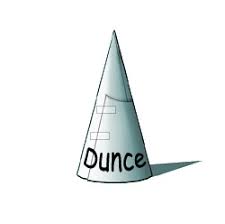
I award 4 dunce caps, one each to Elizabeth Warren, Damon Silvers, Mark McWatters and Kenneth Troske.
Rodger Malcolm Mitchell
http://www.rodgermitchell.com


==========================================================================================================================================
No nation can tax itself into prosperity, nor grow without money growth. Monetary Sovereignty: Cutting federal deficits to grow the economy is like applying leeches to cure anemia. Two key equations in economics:
Federal Deficits – Net Imports = Net Private Savings
Gross Domestic Product = Federal Spending + Private Investment and Consumption + Net exports

#MONETARY SOVEREIGNTY

–How the wealthy control the law.

Mitchell’s laws: The more budgets are cut and taxes inceased, the weaker an economy becomes. To survive long term, a monetarily non-sovereign government must have a positive balance of payments. Austerity = poverty and leads to civil disorder. Those, who do not understand the differences between Monetary Sovereignty and monetary non-sovereignty, do not understand economics.
==========================================================================================================================================

The Legislative branches, both nationally and locally, are bought and paid for by wealthy donors. No secret, there. The Executive branches too, though somewhat less so, merely because of the larger amounts of money given to both sides.

But what about the Judiciary? These are our referees, the people we depend upon to rein in the most outrageous acts of the other two branches. They are the ones from whom we expect fairness and impartiality.

Are they protected from — or controlled by — the rich?

Read these excerpts from an article in the Washington Post, then ask yourself, “Who represents the wealthy?”

Washington Post
Super PACs, donors turn sights on judicial branch
By Brady Dennis, Published: March 29

In Iowa, conservative activists in 2010 ousted three state Supreme Court justices who had upheld the legality of same-sex unions. Five groups from out of state spent nearly $1 million on that campaign. Four of them, including the National Organization for Marriage and the Citizens United Political Victory Fund, are based in the District or Arlington.

“I know you want us to not be scared that [because of] the way we rule on a given case, someone wants to take us out,” (Judge) Pariente told a crowd, saying she was outraged by the “faceless, nameless opponents” so eager to attack judges based on a select few rulings.

In a 2010 study that examined 29 judicial races, the watchdog group Justice at Stake found that the top five spenders averaged $473,000 apiece, while all other donors averaged $850. In addition, loopholes in disclosure laws gave those big donors ways to spend money “in substantial secrecy,” the report found.

Roy Schotland, a Georgetown University law professor and expert on judicial elections said state judicial races are increasingly becoming “floating auctions,” in which special-interest groups focus money and manpower in states where they can upend judges they don’t like.

“Judges around the country took notice; they talk about it,” Seth Andersen, executive director of the Iowa-based American Judicature Society, said of that effort. He said judges were facing the reality that one decision could attract the wrath of well-funded special interests.

In Florida, the driving force behind the ad hoc campaign in 2010 to unseat two Supreme Court justices was tea party activist Jesse Phillips.

Phillips is the face of Restore Justice 2012, a political group formed to undertake a “voter education campaign” aimed at unseating the three Florida Supreme Court justices facing retention votes in November.

“One of the great obstacles is the judicial branch,” Phillips said in an interview. “We can make all the strides we can make in the executive and legislative branch, and we can have all that thrown out if we don’t have a court that’s responsible to the will of the people.”

Phillips singled out the health-care ballot measure and other key decisions involving school vouchers and corporate liability. Also, he said, he would prefer to see Republican Gov. Rick Scott have a chance to leave his mark on the court.

As the November elections approach, determine whether you are part of the upper 1% or the 99%, and which candidates support, and are supported by, your income group.

If you’re part of the 99%, don’t let the wealthy steal what little is left of your freedoms. Vote your best interests.

But if you’re part of the 1%, things are looking good.

Rodger Malcolm Mitchell
http://www.rodgermitchell.com


==========================================================================================================================================
No nation can tax itself into prosperity, nor grow without money growth. Monetary Sovereignty: Cutting federal deficits to grow the economy is like applying leeches to cure anemia. Two key equations in economics:
Federal Deficits – Net Imports = Net Private Savings
Gross Domestic Product = Federal Spending + Private Investment and Consumption + Net exports

#MONETARY SOVEREIGNTY