The Federal Reserve Chairman, Jerome Powell, is valiantly battling against stubborn inflation.
He raised interest rates and continues to keep them high, but no matter what he does, inflation continues to mock him.
We took this much blood out of him, but he still has anemia, so we’ll continue to draw blood until his anemia is cured.
In a related story, medical doctor Dr. Jerome Powell has been valiantly battling a patient’s anemia by applying leeches.
But, for some unknown reason, the anemia is not responding to the blood draw, so Dr. Powell will continue to apply more and more leeches.
Doctors and economists the world over wonder why drawing blood doesn’t cure anemia and increasing costs by raising interest rates doesn’t cure inflation.
Americans are falling behind on their credit card bills.
Nearly one in five credit card users have maxed out on their borrowing, according to the Federal Reserve Bank of New York.
People under 30 and those who live in low-income neighborhoods are more likely to be at or close to their credit limit.
Don’t those people realize that Jerome Powell is trying to help them pay off their loans by increasing interest rates?
The debt is a sign borrowers are feeling the strain of rising prices and high interest rates.
“Most investors now think it’s going to be September before the Federal Reserve is ready to start cutting interest rates,” NPR’s Scott Horsley tells Up First.
Yes, another couple of months of drawing blood from the patient should cure his anemia, and another couple of months of increasing prices by raising interest rates should cure inflation.
Though inflation has come down from what it was several years ago, prices are still climbing faster than most would like.
Used car salesman Jerome Powell: “We charge you the highest interest rates to make your car more affordable.”
Perhaps increasing the cost of borrowing (which virtually every corporation, farmer, home buyer, car buyer, and appliance buyer does) will cure inflation.
More than half of all credit card users pay their whole balance every month, so they’re not affected by high interest rates.
But the other half pay interest on their purchases, so they are affected.
But don’t worry, Chairman Powell assures us that raising interest rates reduces the cost of everything (with the exception of everything you buy).
Because of this, there’s no incentive to stop spending, which makes it hard to get inflation under control.
Now, if everyone simply would stop spending, the resultant recession and depression might cure inflation.
Then again, there is a thing called “stagflation,” which is a combination of inflation and economic stagnation, so maybe the recession thing isn’t such a good idea.
Oh, someone mentioned that high oil prices cause inflation and that interest rate increases exacerbate inflation.
Ah, but those people were just using facts, not rumors and beliefs, so who could trust them?
Rodger Malcolm Mitchell
Monetary SovereigntyTwitter: @rodgermitchellSearch #monetarysovereigntyFacebook: Rodger Malcolm Mitchell
……………………………………………………………………..
The Sole Purpose of Government Is to Improve and Protect the Lives of the People.
Here is the situation: Chinese manufacturers, possibly with the financial aid of the Chinese government, are taking business from key American industries.
Quality and other marketing factors are not the real issues. The Chinese companies are doing this with low prices.I’m taking your money so you will buy American-made goods. I know this makes no sense, but I’m the government. Trust me.
How should the American government protect these important industries?
The American government essentially has two alternatives:
It can force American consumers and businesses to pay higherprices for Chinese goods while taking growth dollars out of the U.S. economy, or
It can help American consumers and businesses to pay lower prices for American goods while adding growth dollars to the U.S. economy.
Which alternative is better for American consumers and businesses?
The Biden administration, and the Trump administration before it, have chosen alternative #1: Higher prices for Chinese goods and reducing Gross Domestic Product by taking dollars out of the economy.
For reasons beyond logic and common sense, both administrations believe American consumers and businesses should pay higher prices for important commodities, and somehow this not only is beneficial but won’t be inflationary.
So they add high taxes, which Americans pay, to the prices of Chinese goods.
The alternative, of course, is to give American manufacturers tax breaks or other financial support, so they can compete on prices.
That, in fact, is the primary purpose of federal taxes: To control the economy by giving tax breaks to what the government wishes to encourage.
Increasing federal taxes should only be a last resort, a punishment when a reward doesn’t work.
Federal taxes do not fund federal spending.They are a tool for federal economic control.
But rather than use that tool, the federal government has chosen to punish American consumers with higher prices.
President Biden will slap tariffs on $18 billion of imports of goods from China including electric vehicles, semiconductors, and medical products to protect the strategic sectors and punish China for unfair trade practices.
To reduce inflation, my Inflation Reduction Act will give American businesses money so they can produce more, and charge consumers less. Then I’m going to charge those same consumers more with my new tariffs. Makes sense to me.
He could have given tax breaks and other financial support to America’s manufacturers of electric vehicles, semiconductors, and medical practices, thereby saving American consumers money and fighting inflation.
He will also keep in place the tariffs that former President Donald Trump had placed on more than $300 billion of imports from China.
He correctly criticized Trump for the tariffs that are paid for by American consumers.
Treasury Secretary Janet Yellen said in a statement that she raised concerns last month during a trip to Beijing about “artificially cheap Chinese imports,” concerns that she said many other countries share.
She said the new tariffs are necessary to protect American workers and companies from what could become a flood of unfairly traded products.
This “protects American workers and companies” by making them pay more for the products. Some protection that is.
The move comes as Biden pushes forward to implement three pieces of legislation that contain hundreds of billions of subsidies to boost the domestic manufacturing and clean energy sectors— and ahead of a presidential election where trade and jobs will again be an issue.
The Biden administration suffers from bipolar disease. On the one hand, they subsidize industries, and on the other hand, they charge them more in taxes.
“We know China’s unfair practices have harmed communities in Michigan and Pennsylvania and around the country that are now having the opportunity to come back due to President Biden’s investment agenda,” Lael Brainard, Biden’s top economic adviser, told reporters.
His investment agenda is good, but it’s being undone by his import duty agenda.
Additionally, duties take dollars out of the economy, which by formula, reduces Gross Domestic Product. This is a recessionary act.
If instead, the Biden administration stuck with subsidies, this would add dollars to the economy, a growth act.
Between growth and recession, Biden chose recession.
Here’s a list of the new tariffs. Most of the new tariffs cover items that the Biden administration has sought to have made in America through investments in the Inflation Reduction Act, the CHIPS and Science Act and the Bipartisan Infrastructure Law.
Some increases will take place this year. They include tariffs of:
100% on electric vehicles, up from 25%50% on solar cells, up from 25%50% on syringes and needles, up from zero25% on lithium-ion batteries for electric vehicles, and battery parts, up from 7.5%25% on certain critical minerals, up from zero25% on steel and aluminum products, up from a range of zero to 7.5%25% on respirators and face masks, up from zero to 7.5%25% on cranes used to unload container ships, up from 0%China makes cheap electric vehicles. Why can’t American shoppers buy them?
Other hikes will be phased in, including:
50% on semiconductors, up from 25%, by 202525% on other lithium-ion batteries, by 202625% on natural graphite and permanent magnets, up from zero, by 202625% on rubber medical and surgical gloves, up from 7.5%, by 2026
The White House says this is different from Trump’s approach.
No, it isn’t different. Give it any name you can invent and it still is a tax on purchases. It still takes dollars out of the economy. It still punishes consumers. It still is inflationary and recessionary.
Trump had made tariffs on China one of his signature policy moves when he was in the White House. At first, some Democrats warned this could really hurt the economy — and that American consumers would pay the price.
Biden’s team began reviewing those tariffs when he took office, and now has decided to keep them in place.
“One of the challenges is once tariffs have been imposed, it is quite difficult politically to reduce them — because the affected industry tends to get used to them, like them, operate with them as baked into their plans,” said Michael Froman, who was U.S. Trade Representative during the Obama administration.
It would be far more beneficial to the economy and consumers for industries to “get used to” subsidies, which grow the economy than to get used to taxes, which are inflationary and recessionary.
The White House has tried to distinguish its strategy from Trump’s approach.
It points to comments made by Trump in rallies and interviews that he would broaden tariffs on all imported goods, including targeting Chinese cars, if he wins the election — something that they said would hike consumer prices.
Huh? Taxes on Chinese cars would hike consumer prices, but taxes on the above-listed items will not hike consumer prices???
The White House has downplayed the risk that the new tariffs could spark retaliation from China, saying that the issues have been discussed during meetings of top U.S. and Chinese officials, and were unlikely to come as a surprise.
One could only hope that the Chinese government is as foolish as the American government, and increase tariffs on imports of American goods. That would be a blow to the Chinese economy.
SUMMARY
Raising federal taxes on the American consumer takes dollars out of the American economy, raises prices, and costs consumers money. It is the worst possible step the government could take.
To protect American businesses, the government should rely on tax breaks and other forms of financial support, which would add growth dollars to the economy and lower inflationary prices.
Rodger Malcolm Mitchell
Monetary SovereigntyTwitter: @rodgermitchellSearch #monetarysovereigntyFacebook: Rodger Malcolm Mitchell
……………………………………………………………………..
The Sole Purpose of Government Is to Improve and Protect the Lives of the People.
“Dark-age thinking” lacks imagination. It is anti-science, anti-art, and anti-exploration. It assures a lack of human progress because it can’t imagine what human progress looks like.
A hundred years ago, it would not have imagined the Internet, smart watches, smart phones, jet planes, GPS, supercomputers, 3-D printing, robotic surgery, antibiotics, genome editing, CRISPR, transistors, solar panels, and DNA structure.
A hundred years ago, Albert Einstein, using “useless” pure mathematics changed science. No one could have predicted what he discovered.
Today, our species faces many dangers to our survival: lack of food, lack of fresh water, air pollution, global warming, ocean rise, nuclear radiation, and new diseases.
Only science, preparedness, and our vision and will can protect us, or like so many species before us, we will disappear from the earth.
When schoolchildren ask, “Why do I have to learn math, art, history, or philosophy?” they exhibit the ignorance of youth. When adults ask, “Why do we spend money on pure science?” they exhibit dark-age thinking.
It is the fatal belief that learning must have an immediate, practical purpose, or it’s useless.
Here is just one example of dark-age thinking by our government:
Congressional approval of the 2024 federal budget earlier this year left NASA with roughly half a billion dollars less than the agency had in 2023 — and Mars science has taken the biggest hit.
Using its drill, NASA’s Perseverance rover (lower left) collected material from a rock nicknamed Rochette in September 2021 as part of a plan to bring back samples to Earth. The agency’s recent budget woes have placed the sample return project in turmoil.
Engineers are scrambling to figure out how a long-planned mission to bring samples back from the Red Planet might still be accomplished.
The dark-age thinker objects, “Who needs samples from Mars? Why waste the money?”
Probes intended for other planets and moons are delayed, and the venerable Chandra X-ray Observatory, which launched in 1999 and has transformed our view of energetic phenomena in the universe, is potentially on the chopping block.
Between 2014 and 2023, funding had increased more than 3 percent on average compared with the previous year.
Three percent is less than inflation, so the realNASA budget has been falling. Now, not just the real, but the numerical budget will fall more rapidly.
NASA’s Mars Sample Return mission had intended to bring rock and soil samples to Earth. The mission is on hold as NASA tries to determine if it can be done at all.
The rocks and soil could answer fundamental questions about the formation of the inner solar system and the history of water on Mars, and perhaps reveal signs of past life on the planet.
The Jet Propulsion Laboratory in Pasadena, largely responsible for designing and building the components of sample return, lost hundreds of millions of dollars functionally overnight.
Uncertainty over the budget had already prompted the center to dismiss 530 employees.
Scientific exploration and progress beget employment and economic growth. The dark-age thinker can’t see that.
A dedicated orbiter to explore the ice giant Uranus has seen its timeline pushed back. Because ice giants are among the most common types of exoplanets being discovered around other stars, researchers are keen to understand those in our own solar system.
DaVinci and Veritas, two missions to explore Venus, are also being delayed, and there’s now more uncertainty about which, if any, other probes on the drawing board — those intending to bring back samples from a comet or fly through the plumes of Saturn’s moon Enceladus — will go forward.
All this will mean less near-term researchon the formation and dynamics of planets and their moons.
“We forget how little we’ve explored the solar system we live in,” Dreier says.
Scientists are crying out to explore it, he adds, and that’s all being pushed back.
Powerful shock waves traveling through the guts of a dead star named Tycho’s Remnant glow brightly in high-energy wavelengths, allowing NASA’s Chandra X-Ray Observatory to take this beautiful picture.
The budget for this year and expectations for next year have prompted NASA to conduct a review of its existing flagship telescopes, the Chandra X-ray Observatory and the Hubble Space Telescope, to see if either can be wound down.
NASA’s Chandra X-Ray Observatory remains healthy but constrained funding at the agency could see it shut down.
Both were launched as part of the first generation of Great Observatories in the 1990s and early 2000s, and they’ve already seen their companions, the Compton Gamma Ray Observatory and Spitzer Space Telescope, shut off.
The dark-age thinkers ask, “What good is all this Mars, Venus, and Uranus exploration? What has Hubble really done for us? Why spend the money?”
There are three answers. First, the money is free. The U.S. federal government, being Monetarily Sovereign, has the infinite ability to create money without collecting a penny in taxes.
The U.S. government never can run short of dollars.
Second, the dollars grow the economy. Gross Domestic Product (GDP) = Federal Spending + Non-federal Spending + Net Exports. The more money the government and NASA spend, the more the economy grows.
Even totally “wasted” dollars, grow the economy, and cost taxpayers nothing.
The third, most important answer is that scientific research brings many benefits we can’t even imagine. It’s why they call it “research” and not just “development.”
Research breeds discovery which breeds more discovery. No one can foresee what useful things will evolve from research. Everything in our current world evolved from earlier discoveries, beginning with the creation of the wheel, flint tools, and the use of fire.
Stop reading now and skim thispartial list of NASA’s practical benefits to America and humankind.
Then, consider the International Space Station alone, only a third of NASA’s budget:
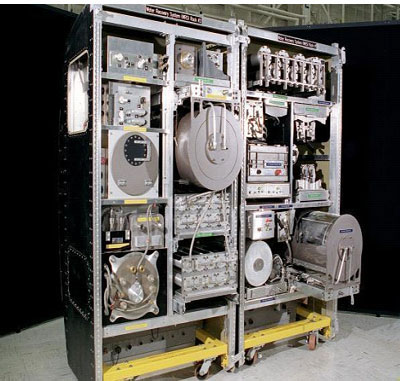
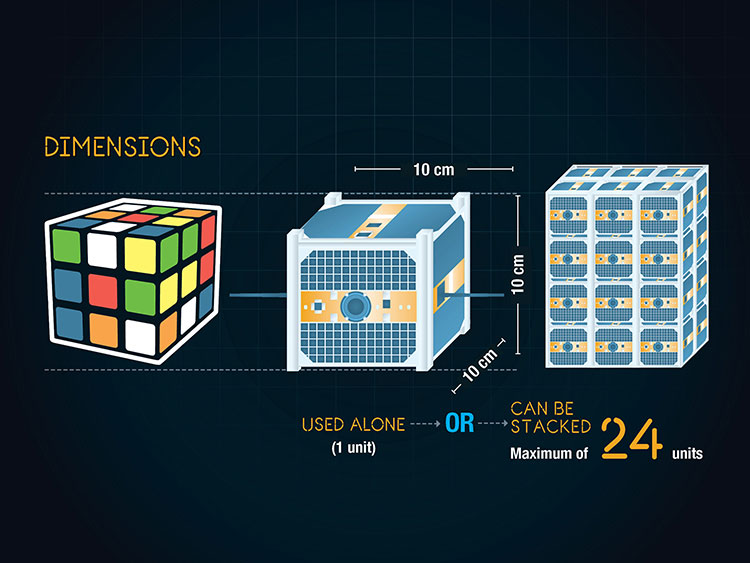
NASA’s current water recycling system on ISS is the Water Recovery System, part of the Environmental Control and Life Support System.20 Breakthroughs from 20 YearsFundamental disease research:Alzheimer’s Disease. Parkinson’s Disease. Cancer. Asthma. Heart Disease. If any of these conditions has affected your life, so has space station research.New water purification systems:Unfortunately, many people around the world lack access to clean water. At-risk areas can gain access to advanced filtration and purification systems through technology that was developed for the space station, enabling the astronauts living aboard to recycle 93% of their water.Drug development using protein crystals: Protein crystal growth experiments conducted aboard the space station have provided insights into numerous disease treatments, from cancer to gum disease to Duchenne Muscular Dystrophy.Methods to combat muscle atrophy and bone loss: Space studies have contributed greatly to our knowledge of bone and muscle loss in astronauts – and how to mitigate those effects. The knowledge gained also applies to people on Earth dealing with diseases such as osteoporosis.Exploring the fifth state of matter: 25 years ago, scientists first produced a fifth state of matter, called a Bose-Einstein condensate (BEC), on Earth. In 2018, NASA’s Cold Atom Lab became the first facility to produce that state of matter in space. This achievement may provide insight into fundamental laws of quantum mechanics.Tissue chips are built from human cells. Also called organs-on-chips, they mimic the structure and function of our heart, kidneys, lungs and other organ systems.Understanding how our bodies change in microgravity: When humans head to Mars, we need to know what challenges we face. Long-term stays aboard the space station have uncovered unexpected ways that the human body changes in microgravity.Testing tissue chips in space: Tissue chips are roughly thumb-drive-sized devices that contain human cells in a 3D matrix, representing functions of an organ. Chips have been sent to station, seeking to better understand the impact of microgravity on human health and to translate that understanding to improved health on Earth.Stimulating the low-Earth orbit economy: From satellite deployment to in-space research, a vibrant commercial space economy has developed, with a value that now exceeds $345 billion. The space station has been a key part of supporting that growth.CubeSatscan be used to test instruments, conduct science experiments, enable commercial applications and support educational projects.Growing food in microgravity: The ability to grow supplemental food can help humans explore farther from Earth. Many techniques for growing plants have been explored aboard the space station to prepare for these missions. On August 10, 2015, astronauts sampled their first space-grown salad, and astronauts now are growing radishes in space.Deployment of CubeSats from station: CubeSats are one of the smallest types of satellites and provide a cheaper way to perform science and technology demonstrations in space. More than 250 CubeSats have now been deployed from the space station, jumpstarting research and satellite companies.Monitoring our planet from a unique perspective: The capacity to host varying complements of instruments, both internal and external, has evolved the station into a robust platform for researchers studying Earth’s water, air, land masses, vegetation, and more while providing them additional views beyond those of NASA’s typical Earth remote-sensing satellites.Collecting data on more than 100 billion cosmic particles: The Alpha Magnetic Spectrometer – 02 has provided researchers around the globe with data that can help determine what the universe is made of and how it began.Discovery of steadily burning cool flames: When scientists burned fuel droplets in the Flame Extinguishing Experiment (FLEX) study, something unexpected occurred. A heptane fuel droplet appeared to extinguish, but actually continued to burn without a visible flame at temperatures two-and-a-half times cooler than a typical candle.A better understanding of pulsars and black holes: Two tools installed on the outside of the space station, NICER and MAXI, have worked in tandem to advance our knowledge of pulsars and black holes.Student access to an orbiting laboratory: Companies and professors are not the only ones using the space station for microgravity research. Station has given elementary- to college-aged students access to science in space and the opportunity to study microgravity’s effects.Capability to identify unknown microbes in space: Having the ability to identify microbes in real time in space without the need to send them back to Earth for identification would be revolutionary for the world of microbiology and space exploration. The Genes in Space-3 team turned that possibility into reality in 2017.Opening up the field of colloid research: Toothpaste, 3D printing, pharmaceuticals, and detecting shifting sands on Mars may not seem related to each other at all, yet each stands to benefit from improvements made thanks to research on colloids aboard the space station.The evolution of fluid physics research: Fluids cover our planet, but sending them to space can help us better understand how they flow. The study of fluids in space has progressed from fundamental research into the testing of technology applications ranging from advanced medical devices to heat transfer systems.3D printing in microgravity:The first item was 3D printed on the space station in 2014. Since then, we have explored 3D printing using recycled materials and even printing human tissue.Responding to natural disasters: With crew handheld camera imagery as a core component, the station has become an active participant in orbital data collection to support disaster response activities both within the U.S. and abroad.
Dark-age thinking cannot anticipate the seemingly “useless” discoveries that later have great value to humankind.
Dark-age thinking is why our public schools are underfunded, our teachers are underpaid, and millions of our children are poorly educated. All that brainpower is wasted.
It’s why we have hunger, homelessness, and poverty while our government has the infinite ability to fund food production and distribution, home-building and anti-poverty measures.
It’s why millions don’t have clean drinking water while governments have the infinite ability to fund water purification research, development, and installation.
It’s why people can’t afford healthcare, the aged live untended, and many diseases don’t have treatments.
In so many ways, we have little progressed from cave-dwelling savages, worshipping gods while belittling science.
There are those who give their limited funds to religion but oppose the government giving its unlimitedfunds to research.
It makes no sense. It’s blind. And that is the very definition of dark-age thinking.
It’s blind.
Rodger Malcolm Mitchell
Monetary SovereigntyTwitter: @rodgermitchellSearch #monetarysovereigntyFacebook: Rodger Malcolm Mitchell
……………………………………………………………………..
The Sole Purpose of Government Is to Improve and Protect the Lives of the People.
Seems like a simple question — “When will the U.S. government run out of U.S. dollars?”
Sadly, the media writers, economists, and politicians don’t seem to know. Some claim “soon.” Some claim “eventually.” A few say “never.”
Scott Horsley
For instance, Scott Horsley:
Scott Horsley is NPR’s Chief Economics Correspondent. He reports on ups and downs in the national economy as well as fault lines between booming and busting communities.Horsley spent a decade on the White House beat, covering both the Trump and Obama administrations. Before that, he was a San Diego-based business reporter for NPR, covering fast food, gasoline prices, and the California electricity crunch of 2000. He also reported from the Pentagon during the early phases of the wars in Iraq and Afghanistan.Horsley earned a bachelor’s degree from Harvard University and an MBA from San Diego State University.
Mr. Horsley seems to believe the government will run out of money in 2033 or maybe in 2036. I say that because of the article he wrote:
Congress has less than a decade to fix Social Security before the popular program runs short of cash, threatening a sharp cut in benefits for nearly 60 million retirees and family members, according to a government report released Monday.
Social Security (SS) is an agency of the U.S. government. The only two ways SS can run out of dollars are:
If Congress and the President want it to run out, or
If the U.S. government runs out.
Can the government run out of its sovereign currency, which it created from scratch in the 18th century?
For millions of years, there was no U.S., no U.S. laws, and no U.S. dollars. Then suddenly, in the late 1780s, a group of men created a government from thin air.
This government passed laws, also from thin air. Some of the laws created the U.S. dollar, again from thin air.
That government created as many laws as it wished, and those laws created as many dollars as the law-writers wished.
It all was arbitrary.
So, returning to the question, “When will the U.S. government run out of U.S. dollars?”
The report from Social Security trustees predicts the retirement program’s trust fund will be exhausted in November of 2033.
Despit what you repeatedly have been told, it isn’t a trust fund. It’s just a line item in a balance sheet. (See: “The phony trust fund controversy.“) The government can change those numbers to whatever it chooses at any time it chooses.
Congress votes; the President approves; someone presses a computer key; and a one billion dollar “trust fund” instantly becomes a fifty billion dollar “trust fund.”
At that point, benefits would automatically be cut by 21%, unless lawmakers adopt changes before then.
Among the laws the government created were the laws creating Social Security.
As an agency of the government, Social Security is funded the same way as every other agency: Congress votes, and the President approves.
Congress and the President have unlimited freedom to decide how much any agency will receive:
Mandatory spending – funding for Social Security, Medicare, veterans benefits, and other spending required by law. This typically uses over half of all funding. (Congress and the President make the law)
Discretionary spending – federal agency funding. Congress sets funding levels for these each year. This usually accounts for around a third of all funding. (Congress and the President set the levels)
Interest on the debt – this usually uses less than 10 percent of all funding. Congress and the President decide how much interest to pay and tax).
In short, every penny of federal spending ultimately is decided by Congress and the President. It all returns to the fundamental question, “When will the U.S. government run out of U.S. dollars?”
By now, I’m sure you know the answer: The U.S. government cannot unintentionally run short of U.S. dollars.People don’t realize that FICA doesn’t fund Social Security and Medicare and that those trust funds are fictions.
Even if the government had to pay someone a billion, a trillion, or a billion trillion dollars today, it could do so simply by passing a law and pressing a computer key.
Former Federal Reserve Chairman Alan Greenspan:“A government cannot become insolvent with respect to obligations in its own currency. There is nothing to prevent the federal government from creating as much money as it wants and paying it to somebody. The United States can pay any debt it has because we can always print the money to do that.”
Former Federal Reserve Chairman Ben Bernanke:“The U.S. government has a technology, called a printing press (or, today, its electronic equivalent), that allows it to produce as many U.S. dollars as it wishes at essentially no cost. It’s not tax money… We simply use the computer to mark up the size of the account.”
Statement from the St. Louis Fed:“As the sole manufacturer of dollars, whose debt is denominated in dollars, the U.S. government can never become insolvent, i.e., unable to pay its bills. In this sense, the government is not dependent on credit markets to remain operational.”
The answer to the question, “When will the U.S. government run out of U.S. dollars?” is a resounding, NEVER, unless Congress and the President make that arbitrary decision.
You and I are limited in our money supply. Your state, county, and city governments are limited. All businesses are limited. Banks are limited. Even euro nations are limited. All are monetarily non-sovereign.
They were not the original creators of the U.S. dollar.
By contrast, the U.S. government is Monetarily Sovereign. It was the creator of the dollar. It cannot unintentionally run short — not now, not in 2033, not in 2036, not ever.
So why do writers like Scott Horsley think SS and Medicare, agencies of the federal government, will run short?
There’s some good news in the new forecast. Thanks to higher-than-expected worker productivity and a decline in expected disabilities, Social Security isn’t burning through cash as fast as trustees predicted a year ago.
Still, the long-term demographic challenges haven’t gone away.
A growing number of baby boomers are collecting benefits, while there are fewer people in the workforce paying taxes for each retiree.
Given today’s low birthrates, that mismatch is not expected to change for decades, although a surge in immigration helps.
Remember what Ben Bernanke said, “It’s not tax money… We simply use the computer to mark up the size of the account.”
The federal government does not use your tax dollars to fund its spending. You (and Mr. Horsley) may be shocked to learn that every dollar you send to the U.S. Treasury is destroyed upon receipt.
When you pay taxes, the dollars come out of your bank account, where they were part of the “M2 money supply measure.”
When the dollars reach the Treasury, they instantly disappear from M2 and are not found in any money supply measure.
They join the Treasury’s infinite money supply. Adding dollars to infinite dollars still yields infinite dollars.
These dollars, which are not part of any money supply, no longer can be found. They have been destroyed.
Why does the federal government collect taxes if not to fund spending?
To control the economy by taxing what it wishes to discourage and by giving tax breaks to what it wishes to reward.
To assure demand for the U.S. dollar by requiring taxes to be paid in dollars.
To make you believe dollars are limited by taxes, so you will not request benefits. (This doesn’t discourage the rich from requesting and getting tax benefits unavailable to you.)
Proposed FixesCongress could fix the problem by raising taxes that support Social Security, reducing retirement benefits, or some combination of the two. But a politically palatable solution has been elusive.
Mr. Horsley can think of only two fixes: Raise taxes or cut benefits. Both fixes predictably would impact the middle and lower income groups, thereby widening theincome/wealth/power Gapbetween the rich and the rest.
This is exactly what the rich want because the wider the Gap, the richer they are. Increasing your taxes and lowering your benefits makes the rich richer.
And that is precisely what the rich bribe the media, the economists, and the politicians to do.
It’s not that Mr. Horsley himself has been bribed. He may simply be following the “party line” created by others who have been bribed — just going with the flow, and not thinking about the reality that the federal government can’t unintentionally run short of dollars.
“When you see the two major candidates running for president tripping over themselves to promise what they won’t do to fix the problem, you have to worry because those kinds of reforms really start at the top,” says Maya Macguineas, president of the Committee for a Responsible Federal Budget.
Ah, yes, the famous Maya Macguineas, who repeatedly implies that the federal government is running out of dollars — now there is a “reliable” source.
The Biden administration has pledged not to touch Social Security benefits.
“Seniors spent a lifetime working to earn the benefits they receive,” Treasury Secretary Janet Yellen, who leads the trustees, said in a statement.
“We are committed to steps that would protect and strengthen these programs that Americans rely on for a secure retirement.”
Yes, yes, blah, blah, blah. “Committed to steps,” “Protect and strengthen.” And more blah, blah, blah. But what exactly are those steps?
Congressional Democrats have proposed higher taxes on the wealthy to support Social Security.
Congressional Republicans have balked at that, instead calling for reducing the benefit formula and raising the retirement age for younger workers.
The classic Democrat/Republican false choices. The Dems want to soak the rich. The GOP wants to soak the rest of us.
“Those who want to cut Social Security couch it in affordability,” says Nancy Altman, who heads the advocacy group Social Security Works.
“But of course, there’s no question we can afford it. It’s really a question of values. And as polarized as we are, we’re not polarized over this.”
Altman is confident that lawmakers will find a solution before automatic cuts take effect.
“If they didn’t act, not only would they all be voted out of office,” she says. “They couldn’t even remain in Washington. They’d be chased down the street.”
Why aren’t they already being chased? Because the public has been fed so many lies by so many “reliable sources,” the people don’t realize they are being lied to.
On first reading of this post, most people will think, “That can’t be true.” But it’s true.
The federal government could fund a comprehensive, no-deductible Medicare for every man, woman, and child in America and a generous Social Security program for everyone, all without collecting a single penny in taxes.
Yes, there’s no question we can afford it. So? So? AFFORD IT!
But the clock is ticking, and delay has already been costly.
“Every year the trustees warn us we have to make changes and the sooner we make them, the better and easier it will be,” says Macguineas. “And every year we fail to make those changes.”
Medicare and disability solvencyWhile Social Security’s retirement program is in danger of running short of cash, a separate program that supports disabled people appears to be solvent for the long term, trustees said.
Medicare’s finances have also improved somewhat in the last year, thanks to a strong economy and lower-than-expected spending. Still, the program which provides health care for nearly 67 million people, is expected to face its own cash crunch in 2036.
You have been fed lie after lie after lie. Your information sources wring their hands in mock horror that one day soon, the federal government will run short of dollars, perhaps right after the universe runs short of stars and politicians become honest.
Even the densest among us can see the solution: The federal government should pay for Social Security and Medicare, period.Eliminate FICA. It doesn’t fund SS or Medicare. It doesn’t fund anything. Those FICA dollars are destroyed upon receipt.
FICA serves only as a convenient excuse (convenient for the rich) to limit and cut your SS and Medicare benefits, thus widening the income/wealth/power Gap and making the rich richer and you poorer.
In technical terms, that pisses me off, and it should piss you off, too. What are you going to do about it?
Rodger Malcolm Mitchell
Monetary SovereigntyTwitter: @rodgermitchellSearch #monetarysovereigntyFacebook: Rodger Malcolm Mitchell
……………………………………………………………………..
The Sole Purpose of Government Is to Improve and Protect the Lives of the People.








 #Monetary Sovereignty - Mitchell