Should we eliminate the U.S. Treasury to narrow the Gap between the rich and the rest??

Treasury Building (Washington, D.C.) - Wikipedia
U.S. Treasury. Soon to be hardly needed at all??

According to its website:

“The Department of the Treasury oversees the Bureau of Engraving and Printing and the U.S. Mint.

“These two agencies are responsible for printing all paper currency and minting coins, while the treasury executes currency circulation in the domestic fiscal system.

“The USDT collects all federal taxes; manages U.S. government debt instruments; licenses and supervises banks and thrift institutions; and advises the legislative and executive branches on fiscal policy matters.

In these days of computerized records, credit cards, smartphones, and payment apps, do we need paper currency and coins? 

I purchased online from Amazon yesterday, using only my laptop to pay. I bought milk and bread from the local Publix and paid with my credit card. And I went to the movie theater, having reserved and paid for my seat with my smartphone.

At dinner, I paid my restaurant bill with a credit card and paid for parking with my phone.

I seldom touch dollar bills and haven’t had a coin in my pocket for years.

I understand that not everyone operates that way. The poor, especially, are often limited, and I don’t suggest we eliminate paper and metal immediately, but it’s coming.

More importantly, the federal government seldom uses paper or metal to pay its bills. It pays virtually everything by sending instructions (in the form of wires or checks) to creditors’ banks, telling the banks to increase the balance in the creditors’ checking accounts.

Where does the government get the money it uses to pay for things?

One of the most essential functions of the Treasury Department is to “collect taxes.” If you believe — like most people — that is how the government gets the money to pay for things, you would be wrong. 

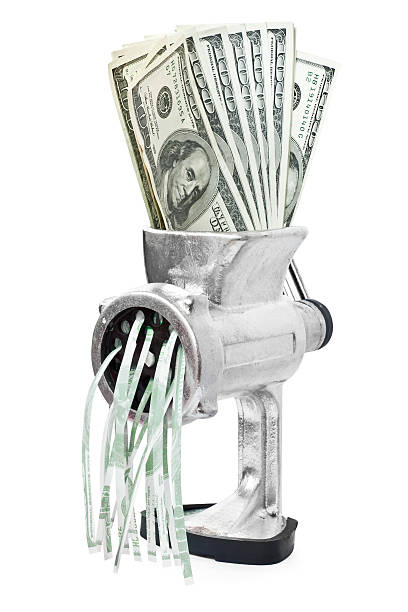
State and local governments get their funding from taxes, but the federal government does not. In fact, the federal government destroys all the tax dollars sent to it. It pays for everything by creating new dollars, ad hoc, i.e. by sending instructions.

If you are having trouble wrapping your head around the notion that your federal tax dollars are destroyed upon receipt, let me give you an example from the game of MONOPOLY. Perhaps that will help you visualize the process.

In the game, the “Bank” is a corollary to the U.S. Treasury because it distributes money by paying for things and by collecting taxes. Both the “Bank” and the U.S. government are Monetarily Sovereign.

That means the MONOPOLY Bank and the U.S. government have the infinite ability to create their sovereign currency.

According to the rules of MONOPOLY,

“The Bank never ‘goes broke.’ If the Bank runs out of money, the Banker may issue as much as needed by writing on any ordinary paper.” 

Similarly, the U.S. Treasury never goes broke. As Federal Reserve Chairmen have stated:

Alan Greenspan: “A government cannot become insolvent with respect to obligations in its own currency. There is nothing to prevent the federal government from creating as much money as it wants and paying it to somebody. The United States can pay any debt it has because we can always print the money to do that.”

Ben Bernanke: “The U.S. government has a technology, called a printing press (or, today, its electronic equivalent), that allows it to produce as many U.S. dollars as it wishes at essentially no cost. It’s not tax money… We simply use the computer to mark up the size of the account.

Imagine you and three friends — Tom, Mary, and Jim — decide to play MONOPOLY, but when you open the game’s box, you find no paper money. What do you do?

You could make a table like this:

Since the Bank has no paper dollars to distribute, you simply create dollars by marking up the size of each account, like this.

Notice that because the bank has no money, it has no column. It doesn’t need one because it creates dollars by marking up the size of player’s accounts.

In MONOPOLY, if a player lands on an income tax or luxury tax space, they must pay the corresponding amount — let’s say, $100 — to the bank.  But the bank has no column. 

If you are required to pay MONOPOLY taxes, here is what your scoresheet would look like:

You now have only $4900. But what happened to the $100 you paid for taxes? They simply disappeared.

When you pay MONOPOLY taxes or federal taxes, your MONOPOLY dollars and your federal tax dollars are destroyed. They no longer exist.

(Your tax dollars are paid from the M2 money supply measure. When they reach the Treasury, they no longer are part of any money supply measure. State and local tax dollars remain in the private sector, because they are stored in banks. They are not destroyed.)

When the MONOPOLY Bank wishes to pay for something, it creates new dollars, which is precisely what the U.S. Treasury does.

The MONOPOLY Bank collects tax dollars not because it needs or uses them but because widening the money Gap between the rich and the poor is the point of the game. Ultimately, only the richest survive.

The U.S. Treasury collects tax dollars not because it needs or uses them but:

1. To control the economy by taxing what the government wishes to discourage and giving tax breaks to what the government wishes to reward,

2. To assure demand for the U.S. dollar by requiring taxes to be paid in dollars.

And there is one more purpose, seldom acknowledged but similar to the MONOPOLY purpose:

3. To widen the income/wealth/power Gap between the rich and the rest of us.

The rich who run America continually wish to be richer. 

Being richer requires widening the income/wealth/power Gap below and narrowing the Gap above. To accomplish this, the rich need the willing compliance of the populace. 

The people must be made to believe that federal taxes are necessary to operate the federal government. Without that false belief, the people would refuse to pay taxes.

Suppose you and all Americans understood that your federal taxes do not pay for anything and are destroyed upon receipt. How willing would you be to keep unnecessarily sending the government those dollars you work so hard for? 

The three primary sources of your financial information — politicians, media, and economists — must go along with the scam.

The rich control politicians by bribing them with campaign contributions and promises of lucrative employment later.

The rich control and bribe the media with advertising dollars and outright ownership.

And the rich control university economists with donations to universities and promises of lucrative employment at think tanks.

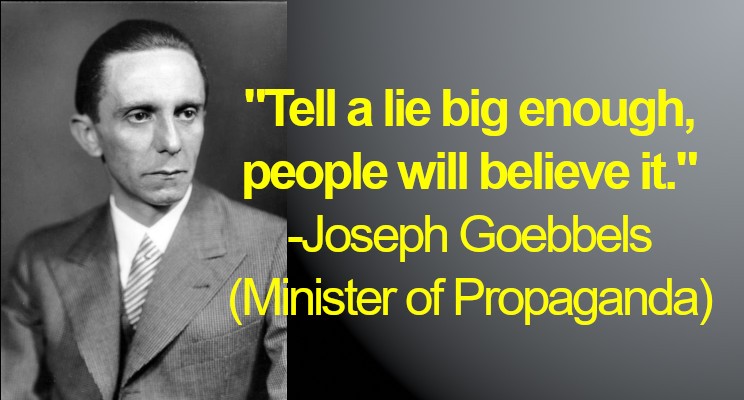
So, the politicians create favorable tax laws for the rich while the media and the university economists promulgate the myth that federal taxes fund federal spending. It’s the Big Lie in economics, which is:

“If you want benefits from the federal government, you have to pay for them. Otherwise, Medicare will go bankrupt, and Social Security will go bankrupt, and all poverty aids will end.”

It’s all a lie, a Big Lie. The federal government simply destroys the tax dollars you send, just as the MONOPOLY Bank destroys all the tax dollars it receives.

The federal government can create endless dollars by sending instructions to banks. Nothing is “unaffordable” or “unsustainable.”

On average, the rich pay a lower percentage of their income in taxes than you do.

Though supposedly, the rich are in higher tax brackets than you, that is a subterfuge. If you are the typical salaried worker, all your income is taxed. Additionally, your first $168,600 is subject to the FICA tax. There also is a 0.9% surtax on top of the standard 1.45% Medicare tax for those who earn over $200,000 (single filers) or $250,000 (joint filers).

While your salaries are taxed at a high rate, the rich get most of their income from tax-free or reduced tax sources. Long-term capital gains, tax-free municipal bonds, company-paid expenses, and numerous tax loopholes allow the rich to keep a much higher percentage of their much higher incomes than you can.

That is how Donald Trump paid less federal tax in the past 10 years than you did.

The rich make more and save a much higher percentage, and they pass along far more to their heirs than you do. So, over the generations, as the tax laws continually chip away at what you earn, those same tax laws help the rich grow in wealth, power, and influence.

The Gap widens.

SUMMARY

The U.S. Treasury prints paper dollars and mints coins; it collects taxes and manages debt instruments. Over time, paper dollars and coins will disappear.

When the populace begins to understand the “Big Lie” (the lie that federal tax dollars pay for federal spending) Federal taxes will have only restricted use (i.e., “sin” taxes), as will debt instruments (the purpose of which is to provide a safe place to store unused dollars.) 

The whole operation will be handled out of a closet, and all Americans will receive comprehensive Medicare and Social Security, the poor will be supported, and no American child will go hungry or be homeless.

Most importantly, you won’t allow our tax laws to favor the rich, so the Income/wealth/power Gap between the rich and the rest will narrow. Because of your knowledge about the Big Lie, you will have more money and power.

You never again will hear the pitiful and misleading bleating of the rich that programs aiding people are “unsustainable” and “unaffordable,” or the other lie the rich tell you, that helping people is “socialism.”


Rodger Malcolm Mitchell
Monetary Sovereignty

Twitter: @rodgermitchell Search #monetarysovereignty
Facebook: Rodger Malcolm Mitchell

……………………………………………………………………..

The Sole Purpose of Government Is to Improve and Protect the Lives of the People.

MONETARY SOVEREIGNTY

Lest we forget: The shameful events and those who deny them.

To some of us, it seems so long ago. To others, it was yesterday. And to others still, it never happened at all.

Photo emerges of Republican barricading chamber doors during US Capitol attack after he compared rioters to 'tourists' | The Independent
Congressman Andrew Clyde (center) helping to barricade the House door against the insurrectionists. Later, he would claim it was “just a normal tourist visit.”

The man who caused it denies it. His followers deny it. An entire major political party denies it.

Republican Congressman Andrew Clyde said it was a “normal tourist visit.”

Republican Rep. Paul Gosar claimed that Capitol officers were “harassing peaceful patriots.”

Right-wing commentator Tucker Carlson said, “These were not insurrectionists, they were sightseers.”

Republican Congresswoman Liz Cheney was ousted from her role as Republican conference chair after she held Donald Trump accountable for the Capitol riots.

Yet, there it is. Videos show it. Numerous courts have affirmed it.

Perpetrators have been tried by judges and juries, and jailed for it.

The most powerful nation on earth rocked. Democracy shook.

Yet it held.

For now.

Here is an inside view of what happened and how close we came.

Inside the US Capitol during the Jan. 6, 2021, insurrection Sarah D. Wire, Los Angeles Times

WASHINGTON — Many Americans watched video footage of the crowd attacking the Capitol on Jan. 6, 2021, but few have a firsthand account of what happened inside.

Three years ago, Times reporter Sarah D. Wire wrote about her experience, typing it out on a cellphone from the House safe room. She was one of three reporters to make it inside.

Now, with the aid of time and surveillance footage recently made available by the House, along with additional firsthand accounts from Rep. Norma Torres, D-Pomona, Sen. John Boozman, R-Ark., and freelance congressional correspondent Matt Laslo,

Wire provides a more expansive view of what it was like inside the Capitol that day.

I knew there was going to be a massive protest in Washington on Jan. 6, 2021. Then-President Donald Trump had been talking about it for weeks. I knew violence was likely.

A mid-December MAGA event had become violent. Social media platforms were full of open calls for civil war and revolution, and dozens of news outlets had written about it.

But I worked inside the U.S. Capitol, the safest place on Earth, as I reminded my husband the night before — I was worried about the reporters who would be outside.

While I obliged my husband’s pleas to wear plain clothes and get into the building as swiftly as possible, I never thought twice about working that day.

There was nothing I loved more than being in the House or Senate chambers for important events, including a ceremonial moment like the counting of the electoral college votes. Many Americans never get to set foot in their Capitol, and I felt a responsibility to tell them what happens there.

I arrived about 11:15 a.m. COVID-19 restrictions had greatly reduced the number of people allowed on Capitol Hill.

Rather than the thousands of staff members and tourists who typically fill the building, I passed just handfuls of people on their way to offices or the Capitol.Republicans block independent probe of US Capitol riot | Politics News | Al Jazeera

Rep. Norma Torres, D-Pomona, worried that protesters might cause traffic, had arrived early.

She bought a Boston cream pie doughnut on her way in, a nod to the Día de Los Tres Reyes celebration she would normally have on Jan. 6 with her staff, who were working from home.

Since then, she’s been unable to eat Boston cream pie doughnuts.

“I have purchased at least half a dozen, and they stay and rot in my bag,” she said.

The joint session begins I settled into my seat in the press gallery above the speaker’s dais at about 12:45 p.m. and prepared to watch the joint session of Congress convene for the electoral vote count.

I’ll always consider that front-row spot my seat.

Capitol Police lost control of the first barrier on the west side of the building at 12:53 p.m. as senators walked to the House chamber.

Rioters were streaming over fences and barricades by the time then-House Speaker Nancy Pelosi, D-San Francisco, gaveled in the joint session of Congress at 1:05 p.m.

Because of COVID-19 precautions, only members chosen to present for their states were allowed on the House floor. Many watched from their offices. Torres joined the members sitting in the gallery above the chamber.

Senators and representatives counted the votes in alphabetical order of states. When they reached Arizona, Sen. Ted Cruz, R-Texas, and Rep. Paul Gosar, R-Ariz., objected to recording the state’s 11 electoral votes.

The House and Senate retired to their respective chambers to debate the objections.

I stayed in the House. Just half a dozen lawmakers had spoken when I learned there might be trouble. My phone buzzed at 1:41 p.m. — I received a Capitol Police alert saying House office buildings had been locked down.

Sen. John Boozman, R-Ark., said he had no inkling of what was happening as senators headed back to their chamber to debate.

He’s used to the noise; protests are common on Capitol Hill. Boozman joked with his old friend Mike Pence before the then-vice president ascended the dais that they needed to go golfing.

“He said, ‘Well, I’ve got plenty of time to do it now,’” Boozman recalled.

At 1:42 p.m., congressional correspondent Matt Laslo noticed Pence’s Secret Service detail in the hallway outside the Senate chamber.

“You could feel their nervousness,” Laslo said.Capitol Riots: Democratic Lawmakers Join Lawsuit Against Giuliani, Trump - The New York Times

He watched through a second-floor window as the crowd surged up the steps under the inaugural platform to reach the West Terrace.

The Capitol shook with the force of percussion grenades, and smoke rose above the crowd.

At 2:11 p.m., Laslo recorded the rioters’ first breach of the Capitol, at the Senate-wing doors.

“You felt the roar of the crowd as they entered,” he said.

Meanwhile, inside the Senate chamber, Boozman realized something was wrong when he saw someone whisper in Pence’s ear.

“We have lots of drills around here. And there’s a difference in having a drill and then looking at the sergeant of arms … seeing a look of worry on their face,” he said. “You could just tell that they were very concerned.”

Officers scrambled to lock the chamber doors at 2:13 p.m.; Sen. Charles E. Grassley, R-Iowa, third in line for the presidency, was pulled out of the chamber one minute later.

Senate staff members scurried to gather their belongings and raced into the chamber. Capitol Police officers barricaded one of the senators-only stairways with office furniture.

Laslo saw Capitol Police officer Eugene Goodman tell Sen. Mitt Romney, R-Utah, who was leaving the chamber, to turn around because he would be safer inside.

Goodman ran downstairs and slowed rioters’ ascent to the second floor, buying time to lock the Senate chamber.

Laslo raced up the stairs to the third-floor windows to take photos of what was happening outside. The hallway was empty; the officers who’d been stationed outside the Senate public galleries had been called elsewhere.

“There was this weird calm before the storm” on the third floor, he told me. “You could tell stuff was happening down there, but up here was just dead quiet.”

The Capitol locks down At 2:13 p.m., I walked into the House press offices in time to hear the emergency radio crackle to life.

“Due to an external security threat located on the West Front of the U.S. Capitol Building, no entry or exit is permitted at this time,” a panicked voice said. “You may move throughout the building[s], but stay away from exterior windows and doors. If you are outside, seek cover.”

I ran back to my seat in the House gallery to alert my editors. I looked over the railing into the chamber and noticed that Pelosi, second in line to the presidency, had been spirited away by her security detail.

Torres received a text at 2:18 p.m.: “Capitol: Internal security threat: move inside office/lock doors, seek cover and remain silent. USCP.”Four officers who warded off US Capitol attack died of suicide | Politics News | Al Jazeera

Behind me, about a dozen reporters were ushered into the gallery from the press offices before police shut and locked the doors.

Officers interrupted the proceedings to announce that tear gas had been deployed in the Capitol rotunda.

They told representatives to pull air filtration hoods from beneath their seats.

A staff member handed out more hoods in the gallery, and we passed them down the row until everybody had one.

Rep. Ruben Gallego, D-Ariz., a former combat Marine, stood on a table and yelled instructions to other members on how to use the hoods.

Suddenly, the doors to the chamber closed one by one. It was about 2:20 p.m.

“When these wooden doors that are 8 foot tall slam, that echo is so disturbing,” Torres said.

Police began to escort lawmakers off the House floor through the Speaker’s lobby.

Representatives in the gallery were told to get on their hands and knees and crawl. Suddenly there was a frantic demand to get up and run for the center door.

Torres stayed behind to help representatives who couldn’t run. The doors to exit the gallery slammed shut before she and the members could reach them.

“I didn’t think we were going to ever leave,” she said. “We started to look for [makeshift] weapons. How are we going to defend ourselves? How are we going to fight back?”

A few lawmakers still on the floor assisted plainclothes officers in shoving a bookcase in front of the chamber’s main entry — the same one the president passes through for the State of the Union address.

Officers on the floor shouted at reporters to move from their seats across from the main doors and get out of a direct line of fire.

We scrambled over railings and chairs.Is This Really Happening?': The Siege of Congress, Seen From the Inside - POLITICO

“Crouch on the floor!” an officer shouted. “Get as low as you can!”

I slid to my belly behind a row of chairs in the box where the first lady sits during the State of the Union.

Outside the chamber, Capitol Police were quickly overwhelmed as they fought to prevent access to the building at multiple points on the east and west fronts of the Capitol, while others worked to secure representatives and senators.

If COVID-19 hadn’t limited the number of people in the building that day, Torres said, there’s no telling what might have happened.

“I’m terrified what it would have been like if the gallery would have been full of people, innocent members of the public who come here to see … magic happen on this floor or to just participate in the ceremony,” Torres said. “And every member of Congress [would have been] here. What would Capitol Police have been able to do?”

The Senate evacuates The Secret Service rushed Pence out of the Senate and down a private set of stairs at 2:25 p.m.

Five minutes later, officers moved the furniture barricading the stairs, and senators and staff evacuated, winding down several flights to reach the subway between the Capitol and Senate office buildings. Officers headed in the opposite direction and into the Capitol building.

Women took off their heels to run down the lengthy tunnel to the Senate office buildings. Staff members carried large boxes full of electoral votes, preventing rioters from gaining control of the official records sent by the states declaring which candidate received the most votes.

Boozman noticed Sen. Dianne Feinstein, D-Calif., who had been deteriorating physically and mentally, fall toward the back of the pack of senators.

She was on the phone and looked confused, he said, ignoring a young staff member who urged her to hurry up.

“I could talk to her in a different way than he could,” Boozman said. “So I said, ‘Senator, you need to put your phone away. This is very serious. We need to go,’ essentially.

And so she put her phone away, and I kind of grabbed her and started walking.”

Boozman placed his arm across Feinstein’s back and clasped his hand around her upper arm as he led her away.

As they walked down Senate tunnels toward a safe room, Feinstein recounted finding the bodies of San Francisco Mayor George Moscone and Supervisor Harvey Milk after they were assassinated in 1978.

Boozman had heard the story many times during their time together in Washington.

“She was aware of what was going on in the sense that that immediately came to her mind,” he said.Insurrection at Capitol followed lies in Congress - Colorado Newsline

Two floors above them, at 2:44 p.m., the first rioter reached the door Pence used to escape from the Senate.

Realizing the door was locked, the rioter dropped to his knees and began to pray.

More rioters arrived and rifled through staff desks in search of keys to get in.

Soon rioters entered the Senate gallery. They jumped down onto the floor, looked through senators’ desks and opened the doors to let the waiting crowd inside.

Leaving the House gallery Meanwhile, officers were doing everything they could to slow the crowd’s progress from the rotunda and buy time for representatives to evacuate the House floor, surveillance footage shows.

In a burst of strength, the crowd shoved police officers backward until they reached the main House chamber doors at 2:36 p.m.

The glass on the main doors began to crack and shattered. I peeked over a chair into the chamber as then-Rep. Markwayne Mullin, R-Okla., attempted to reason with the rioters who were trying to push their way in.

Inside the chamber, officers aimed their service weapons through the shattered glass.

“Oh, my God, they are going to fire on them,” Torres said in a video she recorded at the time.

An officer told representatives to get as low as possible. There was a frenetic pounding on the second-floor doors to the chamber and to the gallery doors on the third floor.

The second-floor crowd expanded, filling the east hallway. The officers guarding the House chamber and the east exterior entrance doors had moved into the chamber. Rioters opened the exterior doors to the throngs outside.

The crowd reached the entrance to the Speaker’s Lobby behind the House chamber. The rioters pounded on the glass doors, which had been barricaded shut with antique furniture, and broke the glass with their fists, flagpoles and helmets. Just yards away, more than a dozen members of Congress evacuated through the lobby.

San Diego Air Force veteran Ashli Babbitt began crawling through a hole in the glass. She was struck by a single, fatal gunshot to her left shoulder, fired by a Capitol Police officer at 2:44 p.m.

A minute later, officers fired tear gas in an effort to break up the crowd outside the main House doors. After receiving little response, officers fired more canisters. A cloud of gas billowed to fill the hall. Finally, the crowd dissipated.

“You could see the smoke coming up [into the House chamber],” Torres said. “I couldn’t believe it, any of it.”Officer who shot Ashli Babbitt during Capitol riot breaks silence: 'I saved countless lives'

The gunshot and the tear gas immediately quieted the crowd.

Representatives’ prayers and the whine of the air-filtration hood motors echoed in the chamber.

That whine would be a constant throughout the day, and still haunts my nightmares.

I crawled over to Torres. She took a photo of me to share online so my bosses would know I was safe.

I tried to shake the thought that it might be the last photo of me alive.

“Can I do the hardest part of my job and ask you what you are thinking right now?” I asked her.

“It’s horrible that this is America, this is the United States of America, and this is what we have to go through because Trump has called homegrown terrorists to come to the Capitol and invalidate people’s votes,” she replied.

Feet from us, in the hallway outside the locked doors, the crowd on the third floor had grown. Security footage shows the rioters pounding on doors, rattling doorknobs and filing in and out of an unlocked office.

Officers started retaking control of the hall by 2:45 p.m.

Lawmakers and police officers argued inside about whether to run for it. One of the doors briefly opened, and a few people made it out before the rioters noticed. Officers locked the door from inside seconds before the rioters reached it.

“We were saying, ‘Where are we going to go?’ We were scared what was going to be on the other side of the door,” Torres said. “The pounding on the doors was horrible.”

Video shot by Torres shows a female officer telling people in the gallery to prepare to move quickly and calmly once the door opened again.

“Wait for the direction. They are going to make sure it is clear first,” the unidentified officer said, her voice rising to be heard.

Security footage at that time shows a phalanx of officers carrying assault-style weapons marching up a flight of stairs and ordering rioters to the ground. One officer pointed a grenade or tear gas launcher at the rioters’ heads.

The evacuation of the House gallery began at 2:51 p.m. I zeroed in on the rioters peering up at us from the floor and was shaken by how close they were. A few feet from me in the crowd, Torres first saw blood on an officer, she said.

Torres and other members screamed when white officers in plainclothes ran toward them, thinking they were rioters.

“I never thought I would be afraid of a person because of the color of their skin or how they look. These experiences were all new to me,” Torres said.

As my foot hit the first step of the marble staircase that was our escape route, I realized that I hadn’t told my husband I was safe.

“I’m ok. Being evacuated,” I texted him at 2:57 p.m., too overwhelmed to give details.

“Big exhale,” he replied. “Ok. Keep me updated. Love you.”

As she started down the stairs, Torres took a phone call from one of her sons.

“I regret so much saying to him that I was running for my life. He’s a police officer, and he was watching on TV, and it looked horrible,” she said.

Torres asked staff to update her family the rest of the day.

She knew she would lose composure if she spoke to her husband or her other children.Ashli Babbitt's Family Suing Capitol Police, Officer Who Shot Her: Report

We passed the tear-gas-filled hall on the second floor and made our way down a warren of hallways, a winding staircase and a long tunnel.

I interviewed lawmakers on the way.

The representatives who had evacuated from the House floor carried gas masks and weapons made from broken furniture or anything else they found along the way.

They reached the safe room by 2:50 p.m., security footage shows.

Somehow, I wasn’t blocked like other reporters and made it into the safe room, where I continued my interviews.

As members typed on their phones and received updates from security officials, staff handed out snacks and bottles of water.

A member pleaded with colleagues not to give interviews, worried we might accidentally betray our location.

“Lady, I’m in here too,” I thought.

Fleeing the Senate Meanwhile, in the Senate safe room, senators, reporters and staff watched coverage of the riot happening around them.

“You could actually see on television what was happening to the areas that you just left,” Boozman said. “I think that’s really when we realized the full extent of what was going on.”

Surveillance footage shows officers clearing Senate staff and reporters from third-floor offices at about 3:20 p.m.

While reporters waited to be evacuated, they pulled down signs on desks identifying the news organizations that used them, turned off lights and hid so they couldn’t be seen through a window in the door.

Laslo hung a blazer over the sign for the radio-TV press gallery. He prepared for the possibility that reporters would have to get out of the building on their own by hiding his press pass and ripping his shirt to expose his tattoos.

He armed himself with a wrench and a wooden doorstop that he fashioned into a shiv.

“I was walking around all the booths looking for anything that could be a makeshift weapon,” he said.

Laslo took a shot of moonshine from the bottle in his desk and left with another reporter at 3:54 p.m. He spotted a Gadsden flag left behind by rioters and ripped it from its pole, thinking he might drape it over himself to blend into the crowd.

At 4:01 p.m., Laslo passed the Senate-wing windows from which he had filmed rioters breaking in hours before, finding they were blocked with broken furniture. Officers braced the barricade with their bodies as the crowd outside screamed at them through broken panes.

Moments later, Laslo caught up with a group of about 25 staffers who had hidden under a conference-room table for hours as the mob ransacked Pelosi’s suite.

Security footage shows officers amassing on the upper West Terrace around the same time to repel rioters who remained on the presidential inauguration stand or the West Lawn.How the Jan. 6 insurrection led the GOP to the 2023 House Speaker vote mess • Missouri Independent

After police separated Laslo from Pelosi’s team, he spent hours waiting in a cafeteria with dozens of other reporters and staffers, watching teams of armed federal agency officers rush down the halls toward the Capitol or up the stairs of the office building to look for rioters hiding inside.

At one point, Laslo climbed out an upper-story window, planning to jump to a nearby tree in order to get off Capitol grounds.

“I was getting claustrophobic,” he said. “I needed to be gone.”

An officer at the street level waited for Laslo to finish a cigarette, then ordered him back inside.

In the House safe room, then-Rep. Jackie Speier, D-Hillsborough, repeatedly put her hand on my shoulder as she walked by. I realized I was visibly trembling. It would be hours before I stopped.

Congress finishes its work Around 5:30 p.m., the House’s top security official announced that the Capitol was secure. He urged members to stay in the safe room until the grounds were cleared. At 5:45 p.m., police regained control of the West Terrace and West Lawn.

At about 6:30 p.m., Pelosi entered the room. She condemned the “mobs desecrating the halls of the Capitol of the United States” and declared that the House and Senate would return immediately to finish their work.

Laslo and others in the cafeteria were allowed to leave at 7:14 p.m. He walked to the edge of the Capitol campus and hailed a taxi. It took him hours to make it home.

Representatives were allowed to leave the safe room at roughly the same time.

On my way back to the House gallery to finish covering the electoral count certification, I slipped in the tear gas and fire extinguisher residue that coated the floors.

Custodial staff who had remained hidden for hours as the insurrection raged worked quickly to clean up glass shards, broken furniture, blood and even feces smeared on the walls so that Congress could resume its work.

At 8 p.m., the Capitol complex was officially declared secure.

“Today was a dark day in the history of the United States Capitol,” Pence said when he gaveled the Senate back into session six minutes later.

Boozman said he stayed until the very end.

“I think the consensus on both sides was, ‘We’re going to do our job,’” he said. “‘We’re not going to succumb to any delay based on that kind of activity.’”

Torres sat in the last row of seats on the House floor as deliberations resumed.

“That’s when my skin started burning,” she said. A few minutes later, an officer cautioned members that the tear gas hadn’t been cleaned off the chairs.

Debate continued for hours. Torres headed back to her office around midnight.

“I felt so scared and alone,” she said. “I grabbed a baseball bat from the [congressional] women’s softball team, and I cleared my offices with that to make sure nobody was in there, nobody had gotten in there. And once I did that, I sat down and cried, and I finally called my husband.”

At 3:44 a.m., Congress certified Joe Biden’s win.

====================================================

And this is the reaction of the man who started it all.

An NPR review of social media posts, speeches and interviews found that Trump has made calls to “free” Jan. 6 defendants or promised to issue them presidential pardons more than a dozen times.

Trump has said he would issue those pardons on “Day 1” of his presidency, as part of a broader agenda to use presidential power to exact retribution against his opponents and deliver “justice” for his supporters.

“We’ll be looking very, very seriously at full pardons,” Trump told an interviewer in 2022. “I mean full pardons with an apology to many.”

“LET THE JANUARY 6 PRISONERS GO,” Trump posted on his social media site, Truth Social, in March 2023.

Later that year, Trump reposted a Truth Social post stating, “The cops should be charged and the protesters should be freed.”

In the immediate term, a pardon for Jan. 6 defendants would free them from prison as well as other court-ordered supervision, and it would end ongoing prosecutions.

The pardon would also allow the hundreds of defendants convicted of felonies to legally own guns again.

Some judges in Jan. 6 cases have imposed sentences that include requirements to seek mental health care and restrictions on viewing “extremist media.”

A full pardon would lift those requirements too.

If we allow it all to be denied or forgotten, it will happen again.  And again.

And America will cease to exist.

When we deny or forget, America will die as a democracy, as have so many other nations throughout history.

Rodger Malcolm Mitchell

Monetary Sovereignty Twitter: @rodgermitchell

Search #monetarysovereignty Facebook: Rodger Malcolm Mitchell

……………………………………………………………………..

The Sole Purpose of Government Is to Improve and Protect the Lives of the People.

MONETARY SOVEREIGNTY
ErikSlader on X: ""An evil enemy, will burn his own nation to the ground... to rule over the ashes." - Sun Tzu #historyquotes📜📚 https://t.co/LTxM76lYHB" / X

NASA’s biggest problem and how to solve it.

NASA’s biggest problem is not putting humans on the moon, exploring Mars, or entering deep space. They already have done those things. Their biggest problem could be solved by the touch of a computer key. But so far, it has proved intractable. The problem is dollars, which the U.S. government pretends doesn’t have the legal and physical ability to create in infinite amounts.solar system dollars Below, you will read excerpts from an article that appeared in the January 2024 issue of Scientific American Magazine. As you read this post, keep in mind three facts:

1. The U.S. federal government, being Monetarily Sovereign, never can run short of U.S. dollars. It has the infinite ability to pay any invoices denominated in dollars.

(Alan Greenspan: “A government cannot become insolvent with respect to obligations in its own currency.

“There is nothing to prevent the federal government from creating as much money as it wants and paying it to somebody.

“The United States can pay any debt it has because we can always print the money to do that.”)

Unlike state/local governments, the federal government does not spend tax dollars. It destroys all the tax dollars it receives and creates new dollars, ad hoc when it spends. Even if the federal government collected $0 in taxes, it could continue spending forever.

2. NASA employs some of the most outstanding scientists and mathematicians the world ever has known.

NASA’s math and predictions differ markedly from economist’s math and predictions. NASA must focus on exactitude. A one percent or half a degree difference can mean a trajectory misses by millions of miles or a rocket explodes. By contrast, economics is filled with estimates, approximations, unproven beliefs, and unrealized projections. No one can be confident in predictions about next year, next month, or even tomorrow. So economists feel comfortable with missed estimations, and in fact, if any economist, by blind luck, happens to predict next year’s ending S&P score, he will be hailed as a genius, at least in his own mind. For that reason:

3. Economists have a rare ability to ignore facts in favor of reputation. So, when someone of repute claims that “A” causes “Z,” he/she will be widely believed within the community and worldwide, even when facts disagree.

If you are a regular reader of this blog, you may have guessed that I am talking about the easily and often debunked notion that federal taxes fund federal spending, aka “The Big Lie” in economics. No NASA mathematician could get away with being so wildly wrong. And now for excerpts from the Scientific American article:

Here’s How to Bring Mars Down to Earth: Let NASA Do What NASA Does Best Increasing NASA’s budget would ease pressure and allow it to dream even bigger

BY PHIL PLAIT

NASA has a planet-sized problem on its hands.

Ironically, its source is here on Earth: Congress, which has the penny-wise but pound-foolish policy of releasing just a trickle of funding to the space agency every year, hobbles many of NASA’s mission goals that require thinking past a two-year House or six-year Senate term.

This hurdle has repercussions that can be felt across the solar system.

On Mars, the Perseverance rover collects small samples inside the 45-kilometer-wide Jezero Crater, which held a vast lake billions of years ago. Scientists consider it one of the best places to scout for evidence of ancient life on Mars or at least to see whether conditions were ripe for its genesis.

These Martian souvenirs safely rest inside hermetically sealed cylinders stored onboard the rover or dropped strategically on the planet’s surface. A future Mars-bound mission will pick them up and bring them to Earth for study.

The problem? That later mission currently does not exist—and it’s unclear when it will.

Suppose you are among those who believe that space exploration is a waste of time and money and that NASA already spends dollars better used for cutting taxes and preventing immigration. In that case, you might as well stop reading now and instead turn to your local sports section or Fox News. But if you believe space exploration aids the survival of the human species (see here), there is a solution to NASA’s money woes. Yes, the obvious solution is for the federal government, which has infinite money, to allocate more of that money to NASA. But the real problem is getting Congress and the President to vote for it. We’ll discuss that solution in this post, but first, a bit more about NASA’s finances.

Last September, an independent review board investigated the current state of a Mars sample return (MSR) mission and found that NASA could meet a 2030 deadline but for $10 billion, making it among the most expensive science projects NASA has ever undertaken.

The National Research Council’s Planetary Science Decadal Survey for 2013–2022, created by a panel of dozens of leading scientists, stated that an MSR was a “highest-priority flagship mission” for that decade.

A 2008 NASA preliminary planning document reported that half of 55 critical investigations into Mars would be addressed by an MSR. Looking into the idea of life on Mars, whether ancient or extant, is clearly an essential scientific goal for NASA with potentially immense significance for humanity.

Where does this leave things? The MSR could be canceled, but that is clearly the worst possible option. Given the mission’s scientific importance—and all the time and money already invested, as well as the efforts undertaken by Perseverance—this idea shouldn’t be considered seriously.

So here’s my radical thought: Fund it. Fully. Give NASA what it needs to make this mission work, including a wide enough margin for technical safety considering the problematic nature of the engineering and management required.

By “fund it,” I don’t mean taking needed money away from other deserving endeavors, as has happened when other NASA missions have run over budget. And I don’t think it should become a separate line item in NASA’s budget, as the James Webb Space Telescope did when its costs bloated. That approach might suffice for this particular case, but it is not a long-term solution for NASA’s predicament.

This increase would also fix many of the management problems pointed out in the 2023 MSR report, allowing NASA to hire more technical and administrative staff.

This funding shouldn’t be controversial, but NASA’s finances are hugely exaggerated in public perception compared with the actual budget.

According to one poll, in 2018, the average American thought NASA received more than 6 percent of federal spending when it only gets 0.5 percent. 

From a strictly economic point of view, NASA returns far more money than it is given. The agency estimated that it generated an economic output of $71.2 billion in 2021; that puts its return on investment at around $3 for every $1 going in. 

Let me interject that the percentage of return on investment is meaningless for a Monetarily Sovereign entity like the U.S. federal government. Think about this very carefully: If you have infinite money, why would you be concerned about the return on investment percentage? The U.S. federal government has endless dollars. Even a .0000001% return on your investment puts you ahead of the game. The point is that routine business considerations do not apply to a Monetarily Sovereign government. As former Federal Reserve Chairman Ben Bernanke said, “The U.S. government has a technology, called a printing press (or, today, its electronic equivalent), that allows it to produce as many U.S. dollars as it wishes at essentially no cost.” Creating money costs the government nothing, so any return is a plus.

Increasing NASA’s resources should be a no-brainer. Instead, Congress has tended to target NASA whenever a budgetary ax is wielded.

This makes zero sense, given how small a portion the agency gets. Cutting NASA’s funding is like making room on your computer’s hard drive by deleting tiny text files while ignoring the gigabytes of movies you’ve already watched.

Worse, cutting NASA’s funding is like deleting tiny text files when your computer’s hard drive already has infinite spare room.

Please note that I’m talking about what we ought to do. That may be a stretch with a Republican-led U.S. House of Representatives that in 2023 proposed bludgeoning NASA with a 22 percent cut that would kill the MSR, end moon landings, and lead to 4,000 layoffs. Perhaps if the public were more vocal, Congress might listen. Might.

A monkey wrench in all these works is the bipartisan Fiscal Responsibility Act of 2023, intended to thwart debt default by the federal government.

There is the Big Lie in action. The Monetarily Sovereign federal government cannot default unless Congress wants it to default. The Fiscal “Responsibility” Act does nothing to prevent a default that only Congress can initiate.

Part of the fallout from this act, which became law last June, is a cap on NASA’s budget until 2025. This cap has had an impact already: NASA officials are considering cuts to the Hubble Space Telescope and the Chandra X-ray Observatory, two of the space agency’s workhorses.

Increasing the budget for an MSR is essentially impossible as long as this act is in effect, and the uncertainty about funding makes it difficult for NASA to know exactly how to move forward on any new designs.

If the MSR and NASA can weather these setbacks for the next two or three years, there may be a path forward. Despite all this havoc, the argument for increasing NASA’s overall budget still stands.

Boosting it by, say, 20 percent to $30 billion a year would ease a vast amount of pressure the agency finds itself under when proposing and building new missions. Even doubling its funding would hardly dent national spending, and the payoff would be tremendous.

This isn’t to say that everything NASA does is cost-effective; for instance, I have been vocal about the enormously bloated and decreasingly useful Space Launch System rocket. But that project’s delays and overruns can be traced to congressional meddling.

With less pork-barrel legislation and better management, NASA could deliver on its promise of bringing the universe to Earth.

The author, Phil Plait, embraces the Big Lie when he derides “pork-barrel” legislation, meaning spending money on politically demanded but economically useless projects. He and all the budget worriers don’t acknowledge that even the most apparent pork barrel projects cost the federal government and taxpayers nothing but are beneficial to the economy. They put dollars into the pockets of American workers.

NASA benefits the economy by creating jobs, jumpstarting businesses, and growing the economy. Through all NASA activities, the agency generated over $64.3 billion in total economic output during fiscal year 2019 and supported more than 312,000 jobs nationwide. NASA-developed technologies benefit society in health and medicine, transportation, public safety, consumer goods, environmental and agricultural resources, computer technology, and industrial productivity.

THE SOLUTION Earlier, we said, “The obvious solution is for the federal government, which has infinite money, to allocate more to NASA. But the real problem is getting Congress and the President to vote for it. Often, you must solve a problem by solving earlier problems. Let’s say the problem is getting water. You need to dig a well. For that, you need a shovel. For that, you need a blade. For that, you need metal. For that, you need fire. In the immediate case, the problem is getting Congress and the President to vote for more NASA funding. You need the politicians to accept that the federal government has infinite money. For that, you need the voters to accept that fact. For that, you need an influential leader to understand The Big Lie and to promulgate the truth. NASA’s solution would be to work with some MMT (Modern Monetary Theory), and Monetary Sovereignty people who can help make the facts public — people like Stephanie Kelton, Warren Mosler, John Harvey, and many others (yes, including me.) NASA has good relationships with Congress and the public. It has used those “ins” to foster the scientific benefits NASA creates, but NASA hasn’t tried to show the “money-really-is-no-object” financial facts to the public. In short, most people agree with NASA’s scientific goals but wonder where the money will come from. Given NASA’s loud megaphone, MMT economists could broadcast the facts across the nation. One simple solution cannot often be the basis for solving many problems. Still, federal funding is that solution, and help from economists who understand Monetary Sovereignty is the path to the solution. The combination of NASAs influence and reputation plus intelligent, knowledgeable economists could deliver the money NASA so urgently needs. Rodger Malcolm Mitchell Monetary Sovereignty Twitter: @rodgermitchell Search #monetarysovereignty Facebook: Rodger Malcolm Mitchell

……………………………………………………………………..

The Sole Purpose of Government Is to Improve and Protect the Lives of the People.

MONETARY SOVEREIGNTY
How do the rich grow richer at your expense.?

The question is a simple one that few people can answer correctly, mainly because the rich have bribed the media, the economists, and the politicians to promulgate the wrong answer. The real question, for which the rich know the answer, is: Do federal taxes fund federal spending? The correct answer is: Unlike state/local governments, the federal government uniquely is Monetarily Sovereign. So, while state/local taxes fund state/local spending,  federal taxes do not fund federal spending.  All federal spending is funded by new dollars created ad hoc and totally unrelated to taxes. You can see discussions of that misunderstood fact here. Even if the federal government collected zero tax dollars, it still could continue spending forever.Income Gaps Between Very Rich and Everyone Else More Than Tripled In ... The rich try to discourage federal benefits to the poor by claiming that such benefits require tax increases. That is why you read false articles about how Social Security and Medicare will soon run out of money unless taxes are increased or benefits are reduced. Consider the absurdity contained in the following article:

A Shock for Many Retirees: Social Security Benefits Can Be Taxed When older Americans earn above a certain income level, they are often taken aback to find they owe federal income taxes on their benefits. By Brian J. O’Connor, Published Dec. 16, 2023, Updated Dec. 17, 2023

Jennie Phipps, a semi-retired writer and editor, had been married to a certified public accountant. When she retired, she thought she was well prepared for any taxes she might face.

Ms. Phipps, 72, said that her annual income consisted of money withdrawn from an individual retirement account, about $50,000 from Social Security and $20,000 from a pension. She also earns some money from part-time work.

But when she first started drawing Social Security benefits, she was shocked: Federal income taxes were due on 85 percent of those benefits.

The absurdity is that FICA tax dollars supposedly are collected to fund Social Security, and then the benefits are taxed supposedly to fund other federal spending. Thus, you are taxed on the same dollars twice — once supposedly to pay for your benefits and then again when you receive the benefits. Not only is the double taxation a fraud, but all those tax dollars are destroyed upon receipt. You pay with dollars that are part of what is called “the M2 money supply,” but when those dollars reach the Treasury, they no longer are part of any money supply measure. They disappear into the bookkeeping totally controlled by the federal government and are effectively destroyed. If your federal taxes are paid for deposits into Social Security funds, you should not be taxed when you receive Social Security benefits. But when you are taxed on benefits, you should not be taxed to “pay for” those benefits. Of course, there is no reason for you to be taxed at all.

Former Fed Chairman Ben Bernanke: “The U.S. government has a technology, called a printing press (or, today, its electronic equivalent), that allows it to produce as many U.S. dollars as it wishes at essentially no cost.

“Many people are amazed to find out that Social Security benefits can be taxable,” said Luis Rosa, a certified financial planner in Los Angeles.

“Then they have to take more money out of their I.R.A.s to compensate for the difference, and it becomes a never-ending cycle of taking money out to pay taxes and then paying taxes on that money.”

And if you think taxing your income from Social Security is just a regular tax on income, it isn’t. It’s a relatively new scam:

Social Security benefits weren’t taxed at all until 1984. Then, in 1993, Bill Clinton signed legislation that expanded tax thresholds, making up to 85 percent of benefits taxable for recipients with combined incomes of more than $34,000 ($44,000 for joint filers).

Those who earn less could be subject to taxes on up to 50 percent of their benefits. Combined income consists of a filer’s adjusted gross income, untaxed interest (such as from municipal bonds), and half of one’s annual Social Security payments.

The federal government didn’t “need” the money until 1984; then, suddenly, it “needed” more money or, instead, found a way to screw lower-income people by widening the income/wealth/power Gap between the rich and the rest.

Over the past 39 years, both Social Security payments and federal income tax brackets have continually shifted upward to compensate for inflation — but the income thresholds that result in a retiree’s benefits being taxed have not.

And here is the real irony:

Most states do not apply state income taxes to Social Security benefits.

States are monetarily non-sovereign. They use tax dollars to pay their bills but don’t tax Social Security benefits. Our Monetarily Sovereign government neither needs nor uses tax dollars for anything, but inexcusably, they tax Social Security benefits.

Because the cutoff isn’t benchmarked to inflation, more and more beneficiaries are subject to the tax.

The result is that a single filer collecting the average $1,844.76 monthly benefit could be taxed on up to half of her Social Security benefits if her annual total earned income — from wages, a pension, withdrawals from taxable retirement accounts, interest payments, gambling winnings, or any other taxable source — was just below $14,000.

Add another $9,000 of income, and that filer would face taxes on up to 85 percent of her benefits. For joint filers, the tipping point is about $9,900 to hit the 50 percent tax threshold, and it’s a bit less than $22,000 for the 85 percent threshold.

Why the sliding scale? No good reason. The idea is to project the notion that somehow this benefits the poor while ignoring the fact that taxing Social Security, along with the regressive FICA tax, cheats the lower-income people. Cheating people who are not rich is no accident. It’s the point of the whole exercise. It dramatically helps widen the Gap between the rich and the rest. And widening the Gap is how the rich become richer. The wider the Gap, the richer they are. That is the definition of “rich” — having a wide income/wealth/power Gap below you.

Avoiding the tax is possible, but it becomes more challenging once a Social Security recipient turns 73 and must start taking required minimum distributions from I.R.A.s and other tax-deferred accounts.

These IRA distributions are taxed at the highest level. The rich don’t pay at that level. They have trusts and other tax-free devices to insulate them.

The required distribution for a 73-year-old with $370,000 could be enough to activate the tax on 50 percent of her benefits. The interest portions of annuities also are counted in the income calculation.

Like any government program, there’s nothing simple about it. You almost need a 20-page manual to calculate what will be taxable.

The rich have tax advisors who help them pay a lower percentage of their income than you do.

Despite significant changes to retirement accounts in the Secure 2.0 Act, passed last year, there hasn’t been any effort to change the laws governing taxes on Social Security benefits.

There hasn’t been an effort because the rich who run America don’t want changes.

In fact, keeping income limits fixed was part of the original plan, according to the Social Security Administration, to shore up the Social Security Trust Fund against a potential shortfall.

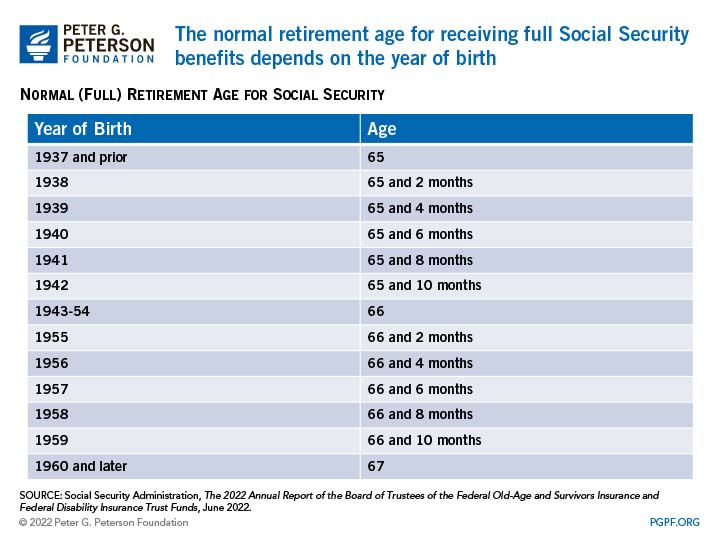
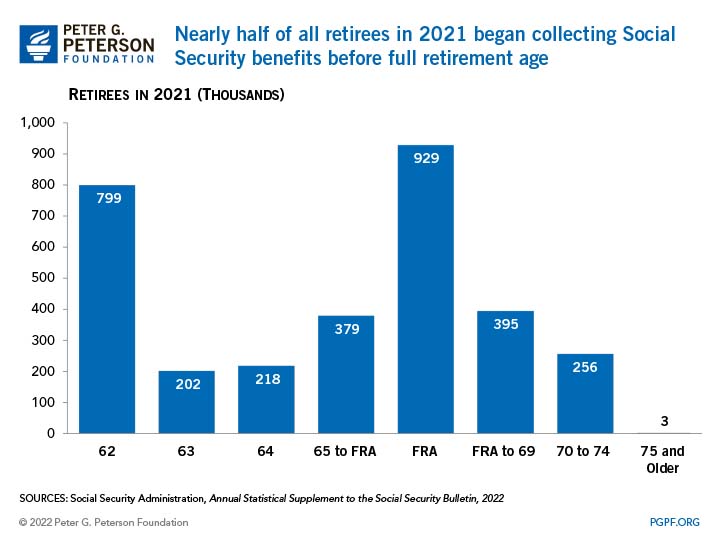
The so-called SS “Trust Fund” isn’t a trust fund. It’s a fake: As the right-wing  Peter G. Peterson Foundation website tells you:

Federal trust funds bear little resemblance to private-sector counterparts; therefore, the name can be misleading.

A “trust fund” implies a secure source of funding. However, a federal trust fund is simply an accounting mechanism that tracks inflows and outflows for specific programs.

In private-sector trust funds, receipts are deposited, and assets are held and invested by trustees on behalf of the stated beneficiaries.

In federal trust funds, the federal government does not set aside the receipts or invest them in private assets.

Instead, the receipts are recorded as accounting credits in the trust funds and combined with other receipts that the Treasury collects and spends.

Further, the federal government owns the accounts and can, by changing the law, unilaterally alter the purposes of the accounts and raise or lower collections and expenditures.

SUMMARY The federal government has total control over its “trust funds.” It can add to them or subtract from them at will. If Congress and the President wished, they could add $100 trillion to the Social Security “Trust Fund” tomorrow or empty it. There is no need for FICA or for taxing SS benefits. These taxes hurt the economy by taking dollars out of the private sector.

According to the administration, taxes paid on Social Security benefits go to the fund, making up 4 percent of its 2022 income.

No. Taxes go nowhere. There is no fund. It’s all a charade. The government can set the balance in the fake fund at any level it chooses. The bottom line is: >The federal government, being Monetarily Sovereign, cannot run short of U.S. dollars, so >No federal agency can run short of dollars unless Congress and the President want it to. >Federal taxes do not support any federal agency — not Social Security, Medicare, Congress, the Supreme Court, the White House, the military nor any other federal agency. All federal agencies receive their money at the whim of Congress and the President. The purpose of federal taxes is not to fund federal spending but rather to: >Control the economy by taxing what Congress wishes to discourage and by giving tax breaks to what Congress wishes to reward >Assure demand for the U.S. dollar by requiring dollars to be used to pay taxes>Help the rich grow richer by widening the Gap between the rich and the rest. >The rich bribe the thought leaders to brainwash America into believing the government’s finances resemble your finances. They bribe:

-The media via advertising dollars and ownership. -The economists via contributions to universities and promises of lucrative employment in think tanks. -The politicians via campaign contributions and promises of lucrative employment.

If all of this does not outrage you enough to contact your Congressperson and demand an end to the Big Lie, you are rich, lazy, or still don’t understand how federal financing works. Rodger Malcolm Mitchell Monetary Sovereignty Twitter: @rodgermitchell Search #monetarysovereignty Facebook: Rodger Malcolm Mitchell

……………………………………………………………………..

The government’s Sole Purpose is to Improve and Protect People’s Lives.

MONETARY SOVEREIGNTY