The easy we make difficult, but it takes a long time.

The U.S. military has a motto: The difficult we do immediately. The impossible takes a little longer.

I suggest a motto for the science of economics: “The easy we make impossible, but it takes forever.”

I say that because of my 25 years critiquing economics articles, and most recently because of an article titled, “Do Budget Deficits Cause Inflation?”

The answer to the question is, “No, not for Monetarily Sovereign nations,” and the article comes to that “No” conclusion. Except:

  1. It never differentiates between Monetarily Sovereign governments (which create and control the value and supply of the money they use) and monetarily non-sovereign governments (cities, counties, states, euro nations, nations that use another nation’s currency, and nations that peg their currency to another nation’s currency}.
  2. It never mentions shortages of critical goods and services, most commonly oil, food, and labor, which are the real causes of inflation.
  3. It complexifies a straightforward solution: To cure a problem, eliminate the cause of the problem. In the case of inflation, the cause is shortages. To cure inflations, eliminate the shortages.

Keith Sill
Keith Sill, Senior Vice President of Research and Director of the Real-Time Data Research Center. keith.sill@phil.frb.org (215) 574-3815

Here are some examples from  “Do Budget Deficits Cause Inflation?”, by Keith Sill.

In 2004, the federal budget deficit stood at $412 billion and reached 4.5 percent of gross domestic product (GDP).

Though not at a record level, the deficit as a fraction of GDP is now the largest since the early 1980s.

Moreover, the recent swing from surplus to deficit is the largest since the end of World War II.

Comment: The deficit as a fraction of GDP is irrelevant to inflation. Federal deficits are beneficial because they add GDP growth dollars to the economy.

Federal surpluses take dollars from the economy, causing depressions and recessions. Mr. Sill could have answered the title question with two simple graphs:
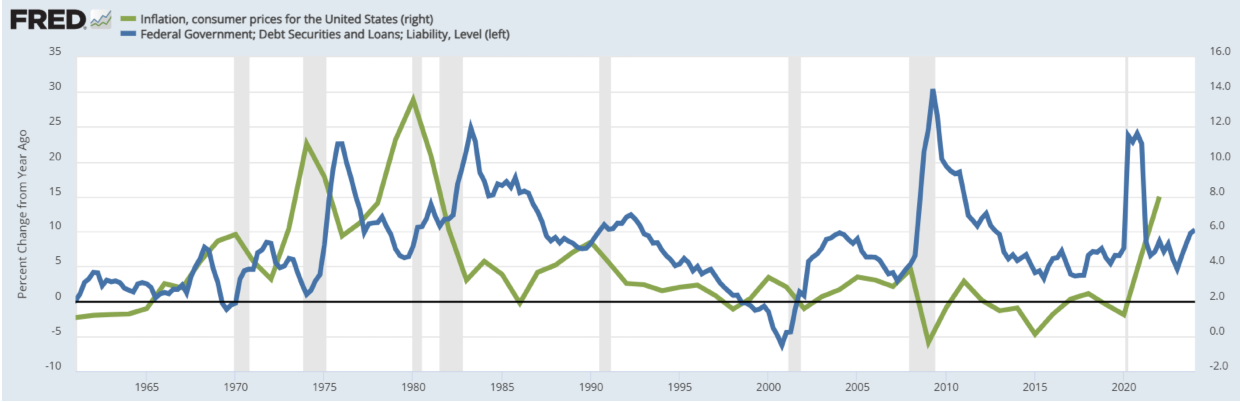
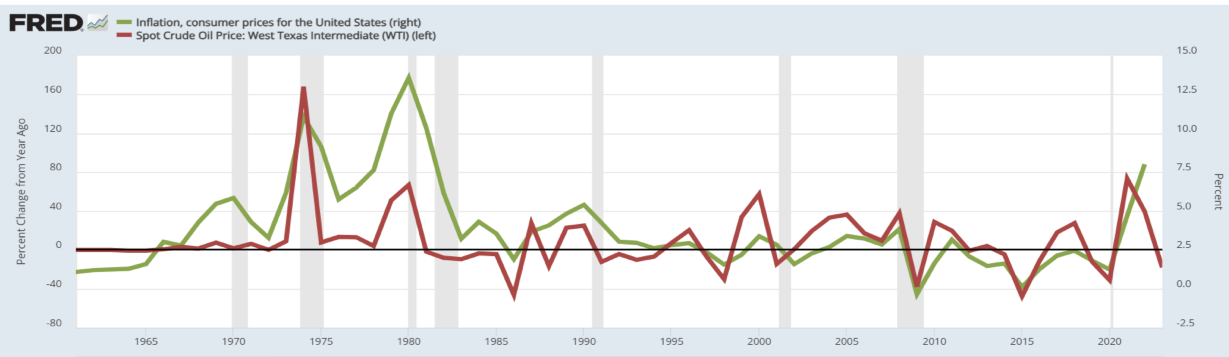
There is no relationship between federal deficit spending (blue line) and inflation.
There is a strong relationship between the oil supply (red line) and inflation.

Inflation is caused by shortages of critical goods and services, most often oil, food, and labor.

The flip side of deficit spending is that the amount of government debt outstanding rises: The government must borrow to finance the excess of its spending over its receipts.

Comment: The federal government, being Monetarily Sovereign, never borrows. Why would it? It has the infinite ability to create its sovereign currency, the U.S. dollar, at virtually no cost (aka, “seigniorage”).

Further, unlike state/local government taxes, which fund state/local spending, federal taxes do not fund federal spending.

Federal taxes are destroyed upon receipt, while state and local tax dollars remain in the economy’s private banks. To finance all its spending, the federal government creates new dollars ad hoc.

It does this regardless of taxes collected. Even if federal tax collection totaled $0, the government could continue spending forever.

For the U.S. economy, the amount of federal debt held by the public as a fraction of GDP has been rising since the early 1970s. It now stands at a little over 37 percent of GDP.

The debt/GDP fraction is meaningless. It has no predictive or analytical power and does not tell anything about an economy’s health.

Do government budget deficits lead to higher inflation? When looking at data across countries, the answer is: it depends. Some countries with high inflation also have large government budget deficits. This suggests a link between budget deficits and inflation.

Yet for developed countries, such as the U.S., which tend to have relatively low inflation, there is little evidence of a tie between deficit spending and inflation.

Mr. Sill falsely equates “developed” with Monetary Sovereignty. However, there are “developed” nations – for example, Italy, France, Greece, etc. that are monetarily non-sovereign. They use the euro.

Why are budget deficits are associated with high inflation in some countries but not in others? Government deficit spending is linked to the quantity of money circulating in the economy through the budget restraint, i.e. the relationship between resources and spending.

Money spent has to come from somewhere: In the case of local and national governments, from taxes or borrowing.

But, national governments can also use monetary policy to help finance the government’s deficits.

I believe that Mr. Sill’s use of “resources” means the amount of money a government can spend, which it gets from taxes or borrowing.

Since he doesn’t differentiate among Monetarily Sovereign, monetarily non-sovereign, and “nationally,” his comments are either partially or totally wrong. First, a reminder about the differences between monetary policy and fiscal policy:

  • Monetary policy involves changing the interest rate and influencing the money supply.
  • Fiscal policy involves the government changing tax rates and spending levels to influence aggregate economic demand. (“Aggregate demand” is Gross Domestic Product at a specific time.)

Here are the sources of confusion:

1. Raising interest rates causes prices to rise. The cost of every product includes the cost of interest. Amazingly, this is the Fed’s tool to combat inflation. The Fed’s theory seems to be that raising prices will reduce demand, causing a recession that supposedly will cure inflation.

In short, the Fed causes inflation to cure inflation while claiming to hope a recession doesn’t occur but secretly relies on recession to cure inflation. (Clear?)

Of course, a result can also be stagflation, a combination of recession and inflation, at which point Fed Chairman Jerome Powell, having no solutions, will hide in his closet and pray. (The cure for stagflation is federal deficit spending to obtain and distribute the scarce products while adding growth dollars to the economy.)

2. As the issuer of its money, only a Monetarily Sovereign government can change interest rates by fiat. It sets the lowest rate on its Treasury Securities.

Because a monetarily non-sovereign government is not an issuer of money, it cannot unilaterally change interest rates. It must rely on markets or the issuer of its money.

For example, Italy cannot arbitrarily raise interest rates on euro-based loans. It uses the euro but is not the issuer.

3. Monetarily Sovereign governments don’t borrow their own currency. The above-mentioned Italy, being monetarily non-sovereign, borrows euros.

In short, Sill, an economist at the Fed (!), is confused about what different kinds of governments can do. Next, he confuses households with our Monetarily Sovereign government:

Budget constraints are a fact of life we all face. We’re told we can’t spend more than we have or more than we can borrow.

The U.S. government “has” infinite dollars, so it does not borrow dollars. Those federal T-securities are not a form of borrowing, which is what a monetarily non-sovereign government does when it needs money.

Rather than providing the U.S. government with dollars, T-securities:

  1. Provide a safe parking place for unused dollars — safer than any other storage place (i.e., bank accounts, safe deposit boxes, etc.) The government never touches those dollars. They remain the property of the depositors.
  2. Assist the Fed in controlling interest rates by setting a floor rate.

In that sense, budget constraints always hold: They reflect the fact that when we make decisions, we must recognize we have limited resources.

See the confusion? “We” and the Italian government have limited resources (money), but the U.S. government does not. It has unlimited money. Next, Mr. Sill expressly shows us his confusion between federal finance and personal finance:

Imagine a household that gets income from working and from past investments in financial assets. The household can also borrow, perhaps by using a credit card or getting a home-equity loan.

The household can then spend the funds obtained from these sources to buy goods and services, such as food, clothing, and haircuts.

It can also use the funds to pay back some of its past borrowing and to invest in financial assets such as stocks and bonds.

The household’s budget constraint says that the sum of its income from working, from financial assets, and from what it borrows must equal its spending plus debt repayment plus new investment in financial assets. 

Not one word of the above applies to the U.S. government.

The government does not borrow or use dollars obtained from any source. It creates ad hoc all the funds it spends. Any income the federal government receives is destroyed upon receipt. (See: “Does the U.S. government really destroy your tax dollars?“)

The only federal budget constraint is not a budget constraint at all. Federal agencies routinely exceed budgets. The restraint is whatever Congress and the President say it is at any given moment.

Congress and the President have the unlimited ability to create dollars and stimulate the economy, plus a strong, though not unlimited, ability to obtain and distribute the scarcities causing inflation.

Mr. Sill continues with an explanation that is irrelevant to federal financing.

The household’s sources of funds and spending are all accounted for, and the two must be equal. The household may use borrowing to spend more than it earns, but that funding source is accounted for in the budget constraint.

If the household has hit its borrowing limit, fully drawn down its assets, and spent its work wages, it has nowhere else to turn for funds and would, therefore, be unable to finance additional spending.

I have no idea what Mr. Sills hoped to accomplish by giving household finances as his explanation for federal finances. The two are fundamentally opposite.

Here, Mr. Sills makes sure to show you that he doesn’t understand the difference between the federal government’s Monetary Sovereignty and your household’s monetary non-sovereignty:

Just like households, governments, face constraints that relate spending to sources of funds.

Governments can raise revenue by taxing their citizens, and they can borrow by issuing bonds to citizens and foreigners. In addition, governments may receive revenue from their central banks when new currency is issued.

Governments spend their resources on such things as goods and services, transfer payments such as Social Security to its citizens, and repayment of existing debt.

Central banks are a potential source of financing for government spending, since the revenue the government gets from the central bank can be used to finance spending in lieu of imposing taxes or issuing new bonds.

No, the U.S. government is not “just like households. It does not raise revenue by taxing you. It doesn’t borrow from the central bank. It doesn’t have an existing debt to repay.

And it finances its spending not with taxes or bonds but by creating new money ad hoc. Who says so, Mr. Sill? Your former bosses:

Former Fed Chairman Alan Greenspan: “A government cannot become insolvent with respect to obligations in its own currency. There is nothing to prevent the federal government from creating as much money as it wants and paying it to somebody. The United States can pay any debt it has because we can always print the money to do that.”

Former Fed Chairman Ben Bernanke: “The U.S. government has a technology, called a printing press (or, today, its electronic equivalent), that allows it to produce as many U.S. dollars as it wishes at essentially no cost. It’s not tax money… We simply use the computer to mark up the size of the account.”

Mr. Sill’s article continues for many more paragraphs, so I will just quote one more thought:

There may be limits on the government’s ability to borrow or raise taxes. Obviously, if there were no such limits, there would be no constraint on how much the government could spend at any point in time.

Congress and the president are the only constraints on federal spending. Unlike your checking account, There are no financial constraints. That is why net spending (spending vs. taxing) has risen to $32 trillion.

Certainly governments are limited in their ability to tax citizens. (That is, the government can’t tax more than 100 percent of income.) But are governments constrained in their ability to borrow?

Monetarily non-sovereign governments are constrained by their full faith and credit, i.e., their credit rating. Monetarily Sovereign governments have no need to borrow, so there is no constraint.

Indeed they are. Informally, the value of government debt outstanding today cannot be more than the value of the government’s resources to pay off the debt.

The U.S. government has the infinite ability to pay for anything. Just ask Fed Chairmen Greenspan and Bernanke.

How do governments pay their current debt obligations? One way is for the government to collect more tax revenue than it spends. In this case, the surplus can be used to pay bondholders.

Wrong. All a federal surplus does is reduce Gross Domestic Product, i.e., cause a recession or depression.

Another way to finance existing debt is to collect seigniorage revenue and use that to pay bondholders.

Half right, half wrong. “Collect seigniorage” is a fancy way to say “print money.”

Seigniorage is the difference between the face value of dollars and the cost of creating them, which comes close to zero. However, holders of U.S. Treasury bonds are paid in two ways: Seigniorage pays the interest, and the principal is paid by returning the bondholder’s deposit.

Finally, the government can borrow more from the public to pay existing debt holders.

Wrong again. The federal government does not borrow, though monetarily non-sovereign governments do borrow.

SUMMARY

It is discouraging to read an article written by the Senior Vice President of Research and Director of the Real-Time Data Research Center for the Federal Reserve that displays so little understanding of Monetarily Sovereign finance.

The article claims that federal finance is similar to personal finance, but it does not demonstrate any knowledge of the vast differences.

Cities, counties, states, businesses, and euro nations can run short of money. The federal government cannot, and a key figure in the Federal Reserve seems to not understand that.

The answer to the title question is, “No, deficits do not cause inflation. Inflation is caused by shortages of key goods and services, most often oil, food, and labor.

Deficit spending can cure inflation by paying for scarce goods and services and ending shortages.

Rodger Malcolm Mitchell

Monetary Sovereignty Twitter: @rodgermitchell Search #monetarysovereignty Facebook: Rodger Malcolm Mitchell; MUCK RACK: https://muckrack.com/rodger-malcolm-mitchell

……………………………………………………………………..

The Sole Purpose of Government Is to Improve and Protect the Lives of the People.

MONETARY SOVEREIGNTY

Why people become MAGAs and why they leave.

MAGA is a cult.  Like all cults, it is authoritarian and believes in authoritarianism. Cults are the antithesis of democracy. A democratic cult would be an oxymoron. Cults are led by psychopaths. See the Robert Hare Checklist of Psychopathy Symptoms — the 20 criteria for psychopathy — here. MAGAs don’t really believe the Biden/Trump election was stolen because they don’t believe in elections. Thus, no amount of evidence could convince them any election Trump loses was fair. Today, they are already preparing to claim that the next election was stolen if Trump loses. They believe in the authoritarian power of the cult leader, and they believe this authoritarian power is what was taken from Donald Trump. When MAGAs chant “Stop the steal,” they don’t mean the steal of an election. They mean the steal of Trump’s unconditional, god-like power.
Mao: A psychopath who was never wrong. Demanded absolute obedience.
Donald Trump acknowledged MAGA is a cult when he said he could “shoot someone on 5th Avenue and not lose any followers.” Recent events prove him correct; his indictments and criminal convictions yielded more campaign contributions from his followers. To a MAGA, evidence of Trump’s guilt merely is proof that the “deep state” did something dishonest. Trump follows the familiar scripts used by Charles Manson, Jim Jones, Saddam Hussein, Joseph Stalin, Adolf Hitler, Mao Zedong, and other dictators. One sure symptom of a cult is when a leader can commit any crime, no matter how heinous, and not lose followers. The irony of Trump’s followers brandishing American flags is lost on them. They genuinely think they are being patriotic by supporting the man who sent a mob to overturn an election he lost by over 7 million votes and 74 electoral votes,Mao: We describe cult realities in The Most Common Personality Traits of a Cult Leader. A comment on that post came from reader “rawgod” who asked, “How do people protect themselves from falling into the clutches of a cult, especially one as widespread as MAGA?” Opinions about that can be found in many places on the Internet. Here is my take: Some people are forced into cults by parents and caretakers. Some join willingly. Cults offer the willing members something they do not receive elsewhere: Protection from their fears. While cults can be fearsome, they exist partly because members feel that “the fear I know is better than the fear I don’t understand.” The fears can include one or more of the following. Fear of: Blacks, browns, yellows, reds, gays, men, women, immigrants, foreigners, a religion, peers, parents, siblings, loss of status, strangers, a political group, a secret organization, and or the government.
Führerbefehl – Wikipedia
Hitler: A psychopath who was never wrong. Demanded absolute obedience.
There may be others that are less common but no less fearsome. Fear is the mother of hatred. One cannot hate someone or something without fearing it. A cult leader plays on the fears of his/her followers. Donald Trump is an expert fearmonger. He calls Mexicans “rapists.” He says blacks come from “shithole countries.” He tells his followers that immigrants are “poisoning the blood of the nation,” an example of replacement theory. His message always is some variant of: “These people want to destroy you, but I will protect you.” Who are the people who fall for his blatant lies? Who are the gullible people who would vote for him, even if he “shot someone on 5th Avenue”? Begin with the rich, who care about one thing: money, or more accurately, The Income/Wealth/Power Gap between them and those who have less. They fear and despise the poor. They invent reasons: “I work hard for my money. I pay taxes. Why should they be able to do nothing and get everything free from my tax money?” Never mind that lower-income people generally work harder than upper-income people (unless one considers numerous vacations, living in mansions, riding in private planes and the chauffer-driven cars of the rich to be “work.”) Never mind that lower-income people do not benefit from the tax breaks the rich receive and the fact that in a Monetarily Sovereign nation, federal taxes do not fund benefits to the poor. See: Monetary Sovereignty)
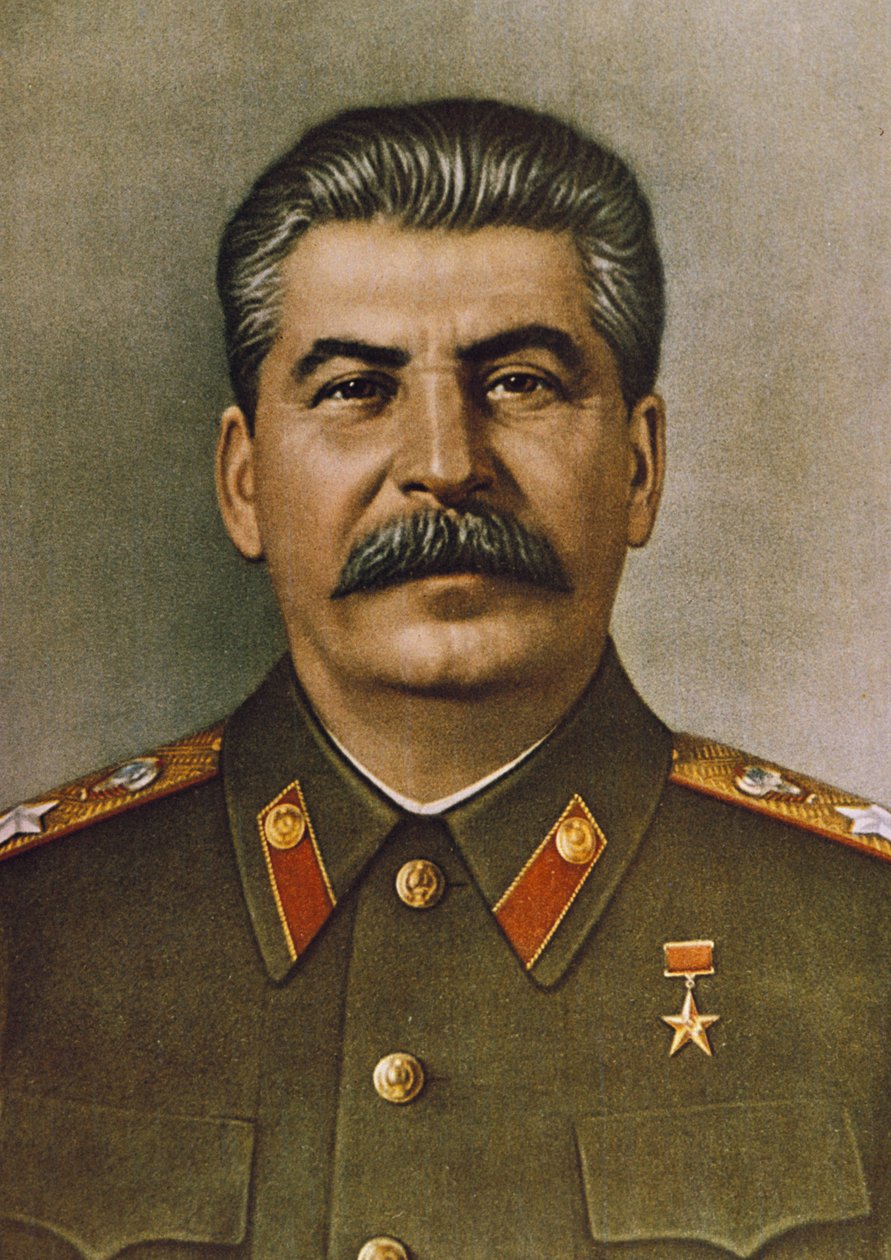
Portrait of Joseph Stalin.
Stalin: A psychopath who was never wrong. Demanded absolute obedience.
One thing is clear: Facts don’t matter to cults. They invent their own facts, “alternative facts.”

“Alternative facts” was a phrase Kellyanne Conway used to defend Sean Spicer’s false claim about the attendance numbers at Donald Trump’s presidential inauguration.

When Chuck Todd pressed her to explain why Spicer would “utter a provable falsehood,” Conway stated that Spicer was giving “alternative facts.” Todd responded, “Look, alternative facts are not facts. They’re falsehoods.”

Donald Trump made more than 30,000 false or misleading statements during his four years as President of the United States. MAGAs don’t care about Trump’s lies. Loyalty to Trump is the only measure that matters in the cult. The astounding figure, which roughly equates to 21 false statements per day during his tenure at the White House, comes after he spent weeks falsely alleging that the 2020 election was “stolen.” He continues to make the false claim, which his followers want to believe despite 60+ lawsuits, investigations, and recounts finding no evidence to support it. In a cult, the only evidence members need is the leader’s utterance. Nothing else matters. If facts don’t matter, what is the answer to rawgods’ question? Being in a cult resembles being addicted to alcohol or other drugs. Physical addiction and psychological addiction have similar symptoms and similar results. To an addict or cult member, facts are evidence of a secret effort to hide the facts. Cult members often don’t believe they are in a cult. They believe the “truth” is whatever the cult leader tells them. Cult “truths” can range from “The world is coming to an end” to “You always must obey (the leader)” to “The election was stolen.” You can see some cult “truths” and realizations at 20 Cult Members Talk about The Moment They Knew. Alcoholics Anonymous suggests a 12-step program for escaping alcoholism, which resembles a cult, with the leader being alcohol. Sadly, the program suggests that alcohol could be replaced by “a higher power.” Cult leaders generally claim to be that higher power.
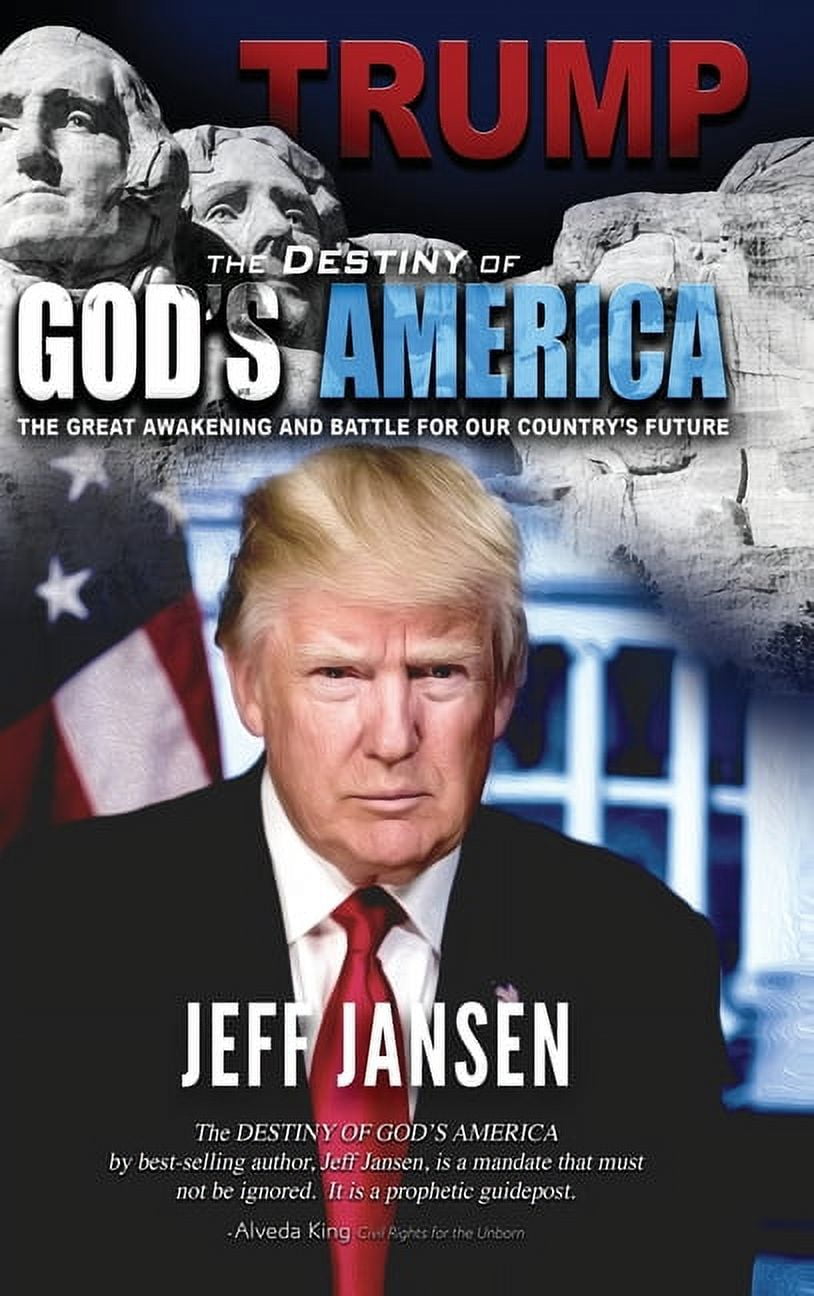
Trump: The Destiny of God's America (Hardcover)
Trump: A psychopath who is never wrong. Demands absolute obedience.
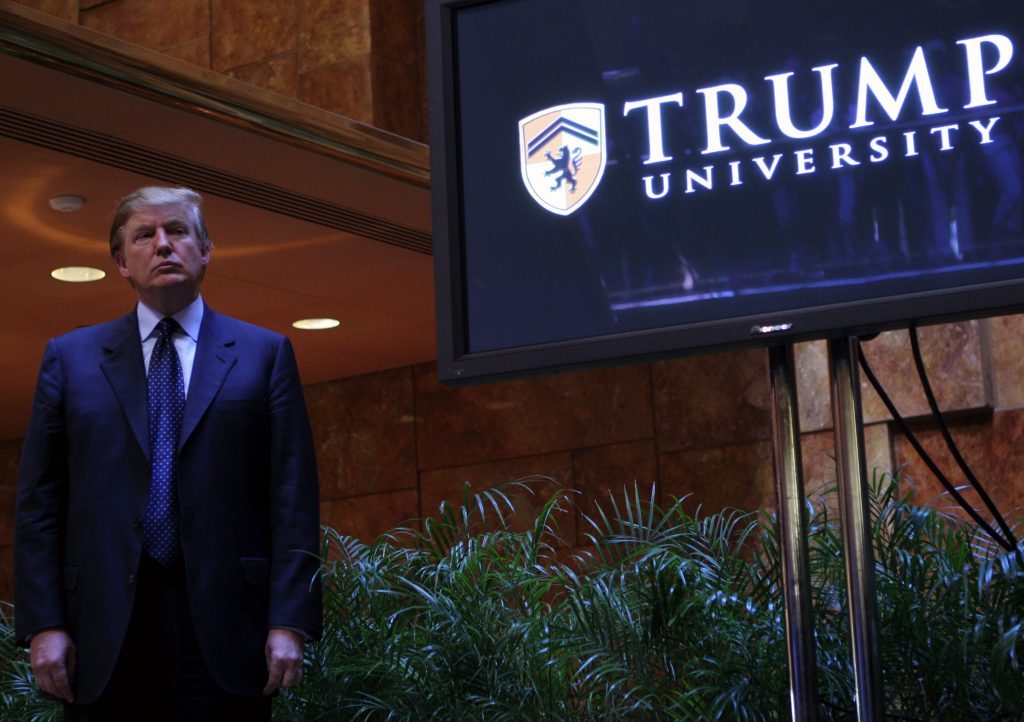
As one cult member said, “Fundie (fundamentalist) cults are the worst.” This is not to suggest that religion, per se, is bad. On the contrary, religion benefits many people. Rather, for all groups, religious or otherwise, the group has transitioned into a cult when the belief becomes so powerful that the leader can do no wrong. Some of the most populated cults are sects (a subgroup of a religious, political, or philosophical belief system, usually an offshoot of a larger group).  The power of religious sects comes from the leader’s claim that he/she speaks for God. When you are part of a group that sets strict rules against what your common sense says, you may be in a cult. If you are punished for disagreeing with the leader, you may be in a cult. When your leader can make thousands of easily disprovable claims, and you don’t care, you may be in a cult. When you are proud that your leader is a convicted criminal, you may be in a cult. When your status in an organization relies on the depth of your love for and obedience to the leader, you may be in a cult. When the group leader orders you to commit acts that are not in your best interest but are in the leader’s best interests, you may be in a cult. If your leader says he could shoot someone on 5th Avenue and not lose any followers, you are in a cult. When you are in a cult, you have given your beliefs, ideas, creativity, compassion, sympathy, love, and indeed your humanity to another person. You are less than human. In that sense, you resemble a pet, an obedient dog. You accept unquestioningly your master’s words. He may kick you, but you forgive him and lick his hand. Children can be forced into a cult. Some people willingly accept that subservient role. Devoted MAGAs do not question Trump. They not only believe his lies, but they don’t even question them. When he was proven in courts of law to be a traitor and a convicted criminal, they sent him money. When he offered them worthless online pictures, which one easily could access by turning on a smartphone, they sent him money. When Trump said, “I was never indicted,” and then boasted that he’s been indicted more times than Al Capone, MAGAs accepted both opposing statements and sent him money. When he sold gold sneakers at four hundred dollars a pair, MAGAs bought them, even though the website explicitly said, “Trump Sneakers are not designed, manufactured, distributed or sold by Donald J. Trump, The Trump Organization or any of their respective affiliates or principals.” When he sold T-shirts showing his arrest mugshot, MAGAs bought them. MAGAs ignored Trump’s cheating of students with his fake Trump University and fraudulent Trump Foundation. Trump claimed he would “drain the swamp.” MAGAs believed him. What do you think “Drain the swamp” means? Do any of these names sound familiar? What do you know about these people? What do they have in common?

Steve Bannon, Tom Barrack, Elliot Broidy, Kenneth Chesebro, Michael Cohen, Chris Collins, Jenna Ellis, Michael Flynn, Igor Fruman, Rick Gates, Rudy Giuliani, Scott Hall, Duncan Hunter, Brian Kolfage, Ken Kurson, Corey Lewandowski, Paul Manafort, George Nader, Peter Navarro, George Papadopoulos, Lev Parnas, Brad Parscale, Sam Patten, Sidney Powell, Roger Stone, Allen Weisselberg, Imaad Zuberi

Trump still talks about “draining the swamp.” MAGAs still believe him. So, in answer to reader “rawgod’s” question, I suspect people cannot protect themselves from falling into the clutches of a cult. Just as with a dog, this propensity relies on a combination of DNA and upbringing, the teachings one receives through life. Some people have grown up to meekly accept authority. Some believe that rebellion from authority requires the acceptance of a harsher authority. Some are emotionally or even physically trapped by authority. If facts don’t matter to cult members, what does? Their fears. The path out of a cult is built with protection from a member’s unique fears. It requires identifying those fears and reassuring the member that protection will come from outside the cult. And therein lies the rub. It’s an enormously complex problem that is beyond my pay grade. But that is the direction one must take. To escape from an addiction, the addict first must recognize that he is addicted and that life without the addiction would be better. To escape from a cult, members first must recognize that they are in a cult and that what they fear is less onerous than submitting their life and common sense to a psychopath. A MAGAs sudden realization that Donald Trump is a fraud and a psychopath is the first step to reality. Rodger Malcolm Mitchell Monetary Sovereignty Twitter: @rodgermitchell Search #monetarysovereignty Facebook: Rodger Malcolm Mitchell; MUCK RACK: https://muckrack.com/rodger-malcolm-mitchell

……………………………………………………………………..

The Sole Purpose of Government Is to Improve and Protect the Lives of the People.

MONETARY SOVEREIGNTY

Most common personality traits of a cult leader

Is this as perfect a description of Donald Trump and his MAGA Republicans as you ever have seen?

The 9 Most Common Personality Traits In Cult Leaders Story by Caroline Bologna • 3mo •© Provided by HuffPost

“Cult leaders are notable for the enormous amount of power they have over their group,” Ashlen Hilliard, a cult intervention specialist and founder of People Leave Cults, told HuffPost. “This power is what many look for when defining a cult, but it’s not the only aspect that creates a cult leader.

When you take a closer look, a cult leader often exhibits a classic set of traits and behaviors. Although there is variety in how these traits present, certain themes tend to ring true.”

We asked Hilliard and other experts to break down some of those common characteristics. Here’s what they said:

CHARISMA “Cult leaders are often highly charismatic and persuasive, with a magnetic personality that can attract and influence followers,” Hilliard said.

Cult leaders tend to be charming and clever, and use that charm to persuade people that doing what the leader commands is the best way to achieve their personal goals.

Trump vows to delay census after stand-off with the Supreme Court - ABC listen
Trump refused to  visit the Aisne-Marne American Cemetery graves of Americans who died in WWI. “Why should I go to that cemetery? It’s filled with losers.” He referred to marines as “suckers” for getting killed.

“They would never have followers if they didn’t know how to make people feel special and like they’re actually the center of attention,” said mental health counselor and leading cult expert Steven Hassan.

They say the right words, but it’s not genuine. It’s acting.”

Social psychologist and cult expert Alexandra Stein emphasized that being charming is not inherently toxic, however.

“Charisma is a personality trait that may be common amongst cult leaders, but if you know someone who is charismatic, that certainly doesn’t mean that they are on the pipeline to becoming a cult leader,” Stein said.

“I like to ask the following questions: How are they utilizing their charisma? Is there the potential for abuse? How would they respond to criticism of their actions?”

History Repeats: The Parallels Between Trump and Hitler
Hitler in America. Why a bigot can win the Presidency — Posted July 15, 2015

AUTHORITARIAN CONTROL “Cult leaders often have a strong need for control and may exhibit authoritarian behaviors, such as dictating the beliefs and actions of their followers,” Hilliard said.

The cult leader’s typical objective is to gain power over others, and to make their followers feel unable to break free.

“Coercive control is a pattern of behavior used to dominate, intimidate, and manipulate someone,” Hilliard explained.

“This can include a range of tactics, such as isolating the victim from friends and family, monitoring their movements, controlling their access to money and resources, and using threats or physical force to maintain control.”

When a cult group or leader applies coercive control to a follower, that person may be left feeling that their only viable path is to remain in the group ― even if unspeakable acts are committed.

There tends to be “a gradual escalation of abusive behavior,” as the leader employs psychological, emotional or physical tactics to maintain power.

“When a cult group or leader applies coercive control to a follower, that person may be left feeling that their only viable path is to remain in the group ― even if unspeakable acts are committed,” Hilliard added.

That’s why cults often operate with strict routines and particular eating and sleeping habits.

“Cult leaders even manipulate people into not having personal preferences,” said Robin Stern, a psychoanalyst and co-founder of the Yale Center for Emotional Intelligence. “Some people who grow up in cults don’t even know how to recognize their own emotions because they were told what to feel and [that] certain feelings weren’t allowed.”

She added that most cult leaders are master gaslighters who assert their reality over the reality of their followers, sow divisions and undermine people’s perceptions of their own feelings and beliefs.

Trump insists he did 'NOTHING wrong' in calls to Georgia officials after 2020 vote
“It was a perfect phone call.”

INABILITY TO TOLERATE BEING WRONG “Cult leaders are not able to tolerate being wrong, nor do they want to have to take any responsibility for having wronged you,” said Rachel Bernstein, a licensed marriage and family therapist and host of the “IndoctriNation” podcast.

“So if you have been hurt by them, it’s somehow your fault, because you must have done something to deserve it, and it’s your weakness that caused their mistreatment of you to bother you,” Bernstein continued.

“They are ultimately emotionally protected and impervious.”

She also noted that cult leaders tend to answer to no one and live by their own rules. It’s their world, and others need to learn how to exist in it.

They often feel they are above the law, are beyond reproach, and enjoy shaming those in the group who defy them, disagree with them or, in essence, hurt their ego in any way,” Bernstein added.

That’s why it’s difficult to try to confront or reason with a cult leader.

“When cult leaders are confronted, or somebody questions anything they’re doing, they are likely to turn it to blame someone else and say they’re thinking in the wrong way or they’re being influenced by an outside force, like a parent or loved one,” Stern said.

“Sometimes when followers have contact with [their] family members, they question what the cult leader is doing or asking [the cult follower] to do,” Stern added. “Often then, the cult leader is critical of the family and puts them down or tries to gaslight the cult member into thinking that their family does not have their best interest at heart.”

MALIGNANT NARCISSISM Many cult leaders ”are malignant narcissists — those who have sociopathy and simply do not care about the pain they inflict, the damage they cause, and the lives they derail in order to get their very powerful ego needs met,” Bernstein said.Many Trump supporters believe God has chosen him to rule

“They are insatiable in their neediness and no amount of devotion and sacrifice ever quite feels like enough.

So followers of these kinds of cult leaders often feel they are failing, and they need to work harder and sacrifice more of themselves each day.”

She said narcissistic cult leaders tend to lack empathy for others and may stop at nothing to get what they want.

[E]verything they did or were asked to do was in the service of the narcissistic needs of the cult leaders ― often their financial needs or sexual desires.Robin Stern, psychoanalyst.

“They often use doing charitable work or speaking about caring about others as a way to come across as loving, but ultimately it’s a way to launder their reputations,” Bernstein added. “When we look at the fact that most cult leaders are malignant narcissists, those with this disorder don’t often come with an ethical core that drives them.

They don’t think about how to make a difference in the world, but rather craft a world where they are the gods and others are to live their lives doing good for them.”

Cult leaders frequently make their followers feel as though they need to work hard to earn the leader’s trust, rather than the other way around.

“I’ve heard from people in cults that they felt their life was going really well and that they were doing something special in the world,” Stern said. “They felt seen, heard and understood.

But what they didn’t see for some time ― sometimes a long time ― was that everything they did or were asked to do was in the service of the narcissistic needs of the cult leaders ― often their financial needs or sexual desires.”

The Radical Unpredictability of Donald Trump
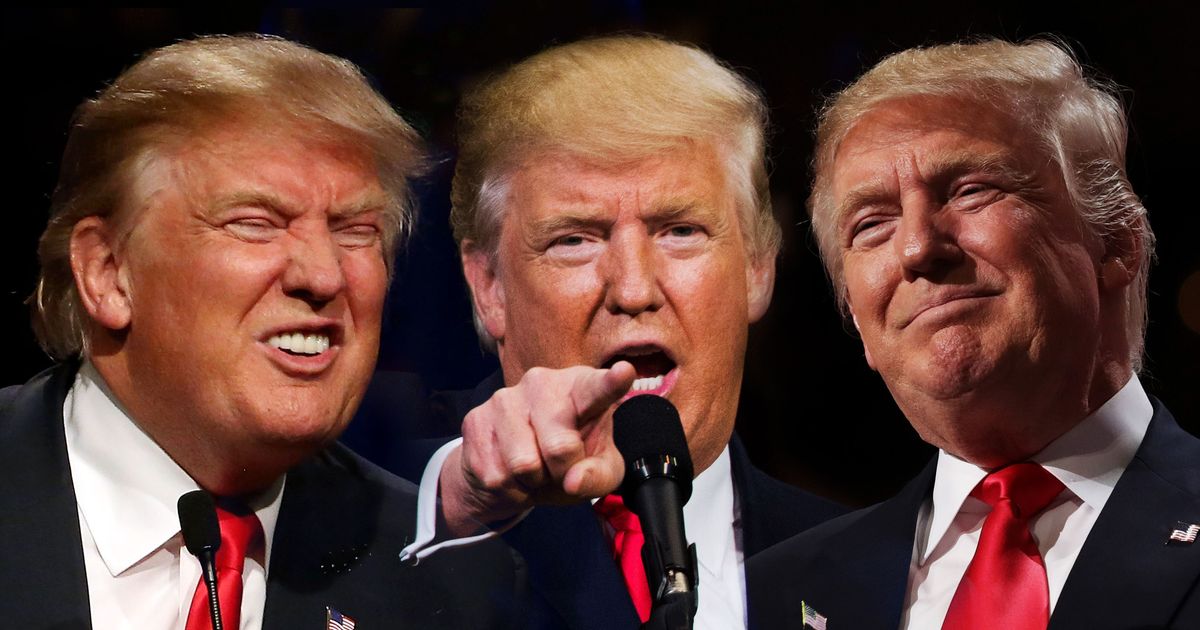
The multi-faces of Trump.

UNPREDICTABILITY Unpredictability is a common trait in cult leaders as well.

“A cult leader often benefits from members and outside authorities not knowing their next move,” Hilliard said.

“This can add to an air of divine inspiration or help convince devotees of [the leader’s] supernatural powers.”

By sowing chaos and uncertainty, cult leaders can establish their mere leadership presence as the only constant, even if their own behaviors are inconsistent.

Followers are left with the singular goal of pleasing their leader.

“They keep followers in an unstable relationship with them, walking on eggshells,” Stein said. “The followers never know if the ‘nice’ leader or the angry, cruel leader is going to appear at any given time.”

Hardcover Too Much and Never Enough: How My Family Created the World's Most Dangerous Man Book
“Donald was abused by his father.” Mary Trump

INSECURE ATTACHMENT ISSUES “The latest theory amongst mental health professionals is that people with this level of disorder had insecure attachment in their first few years,” Hassan said.

He emphasized the power of loving caregivers. Growing up with someone who offers support and encouragement helps people develop a healthy sense of self.

“But these cult leaders have a hole where they should have a sense of self, so they’re always trying to compensate by getting people’s attention or feeling power over others, because they felt so helpless as a child,” Hassan added. “That’s a common profile.”

He noted that many cult leaders grew up in cults themselves and learned patterns of manipulation, control and abuse from adults, instead of developmentally appropriate, empowering and authoritative ― not authoritarian ― parenting.

DELUSION “Cult leaders may hold unconventional or bizarre beliefs that are not grounded in reality, and may promote these beliefs to their followers as absolute truths,” Hilliard saiWhat does Donald Trump mean when he says he is a 'very stable genius'? - Quorad.

The role of delusional beliefs in cults tends to generate headlines.

Much of the recent attention on the Twin Flames Universe revolved around members’ fervent commitment to idea that they needed to be with one specific person ― even if it meant stalking that person or violating a restraining order.

Members of the Love Has Won cult consumed colloidal silver for extended periods of time, even after seeing the physical harm it could cause.

“Some cult leaders are suffering with a delusional disorder, but their charisma causes them to attract others who … believe their delusions,” Bernstein said.

They are the ultimate judge and jury, deciding who moves up in the ranks and who gets demoted on a daily basis, so everyone is on edge, not ever knowing where they truly stand or where they will stand tomorrow.

Trump announces digital trading cards of himself for $99
Trump sells digital (not real) playing cards of  himself to followers for $99. Essentially, they get nothing.

SENSE OF GRANDIOSITY “When someone is beguiled into a cult, they’re working for the good, the pleasure or narcissistic needs of the cult leader, but they’re often told their work has some higher purpose and they’re going to find meaning and happiness in a way they’ve never had,” Stern said.

“It’s very effective, especially when the process of gaslighting and brainwashing is enhanced by tactics such as sleep deprivation, food control and isolation from their previous life.”

She pointed to the way many leaders create steps and levels of ascension into power for their followers ― and then use that system to make their followers feel important and recruit even more members.

“They are the ultimate judge and jury, deciding who moves up in the ranks and who gets demoted on a daily basis, so everyone is on edge, not ever knowing where they truly stand or where they will stand tomorrow,” Bernstein said.

“This is a way to get people to be working day and night to prove their allegiance in order to keep themselves safe in the group and liked by the leader, the person whose approval matters now more than anyone else’s.”

She noted that cult leaders tend to get “drunk with their power of being a Pied Piper.” As their following grows, so too does their self-importance and their craving for even more admiration and attention.

“They lie, build grandiose life stories, often with a kind of ‘once was blind but now I see and therefore have all the answers’ narrative,” Stein added.

Trump's personal attacks on judge spark GOP concerns | PBS NewsHour
Trump had to pay $25 million to followers who believed this scam.

EXPLOITATION “Cult leaders may exploit their followers financially, sexually or emotionally, using their position of power to gain personal benefits at the expense of their followers,” Hilliard said.

They exert undue influence on followers ― meaning they pressure or persuade people to do things that they wouldn’t otherwise do and that often run counter to their own best interests.

“For instance, a cult leader may convince a follower to sign over properties, businesses, or financial assets to the group to show their commitment,” Hilliard said.

“Once those exchanges take place, the follower may feel that they have to remain in the group or risk losing everything.

Undue influence can be difficult to identify, as the person being influenced may not be aware that they are being manipulated or may feel too intimidated to resist.”

She highlighted the many crimes committed by notorious cult leaders like Charles Manson and Jim Jones ― murder, terrorism, sex trafficking, sexual abuse, fraud, drug smuggling and more.

“It takes more than charisma to convince people to go along with ― or commit ― acts like these,” Hilliard said.

Stern stressed that people in cults usually lose their sense of personal identity.

“They often stop what they were doing before they met the leader ― going to school, having a job, being connected with friends and family,” she explained.

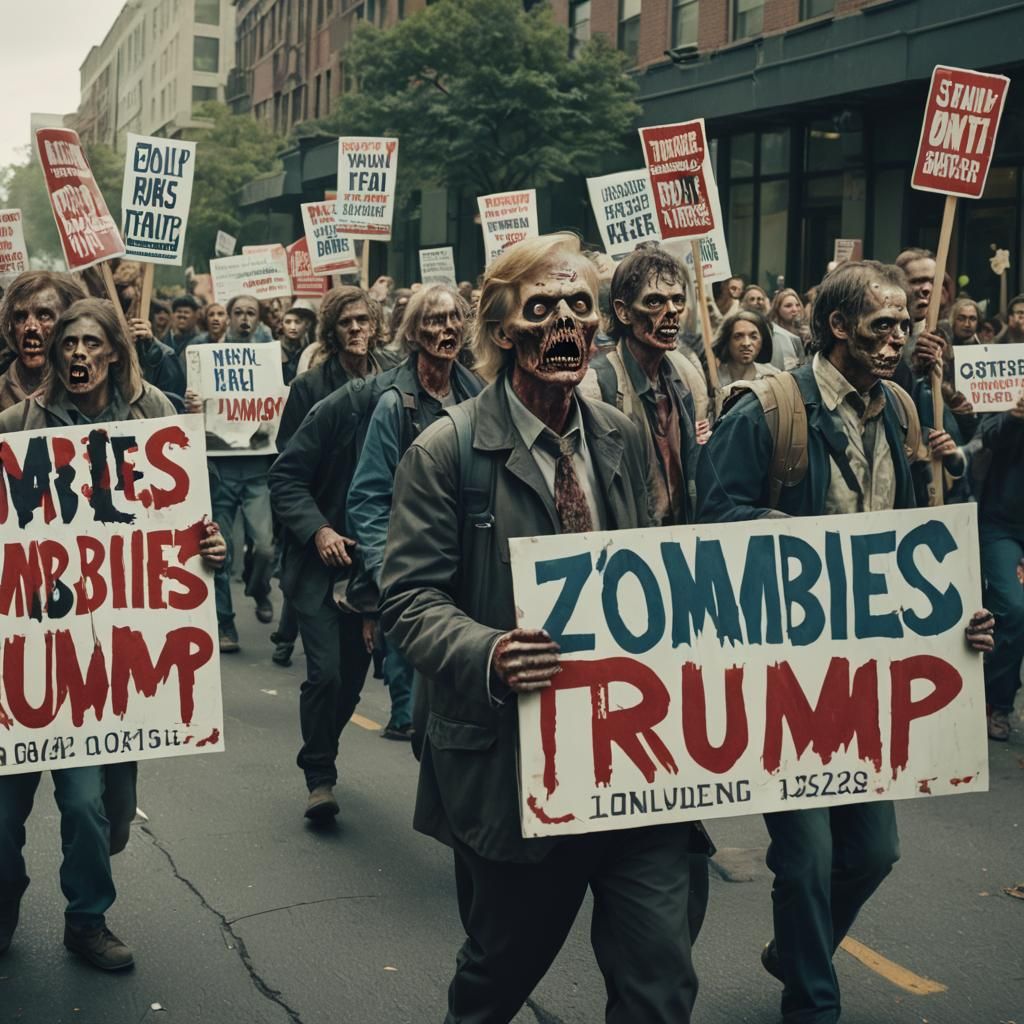
zombies carrying Trump signs
God said the election was stolen. There is no evidence, but we believe. We believe.

“They are often seduced into a psychological state where they are disinterested in anything other than working for the cult and the promise of the cult.”

Democracy is the antithesis of a cult. The MAGAs have been led to believe they are making their own decisions. The reality is that they have surrendered their judgment and willpower to Donald Trump. He decides. They believe and obey. Evidence does not support what the cult leader says. This tension between belief and reality creates emotional pressure on the followers, leading to extreme hostility and anger. That is why Trump’s MAGAs so often are filled with hatred and outrage, leading to violence. He has filled his followers with so much misinformation they quite literally have lost their minds.

The day Joe Biden lost the November 2024 election

Admirably, President Bident wishes to narrow the income/wealth/power Gap between the rich and the rest of us. I agree with this sentiment because the current Gap, very simply, is bad economics and bad for humanity. Wide Gaps negatively affect health and longevity, education, housing, law and crime, war, leadership, ownership, bigotry, supply and demand, GDP, international relations, scientific advancement, the environment, human motivation and well-being, freedom, and virtually every other issue in economics and the human condition. To narrow the Gaps, Biden proposes changes to federal law.  In broad strokes, he has just three options:
  1. Increase taxes on the rich (“rich” by any arbitrary measure).
  2. Reduce taxes on those who are not rich.
  3. Provide supplementary income and benefits to those who are not rich.
All three would narrow the Gap, though in different ways. From the standpoint of the U.S. economy, as measured by Gross Domestic Product, #1 would have a dramatically different effect than #2 and #3. Increasing taxes on the rich (if the rich actually paid those increased tax levels) would take dollars out of the economy. #2 and #3 would add dollars to the economy). In short, #1 is recessive, and #s 2 and 3, would grow the economy. This is demonstrated by the formula:

GDP = Federal Spending + Nonfederal Spending – Net Imports.

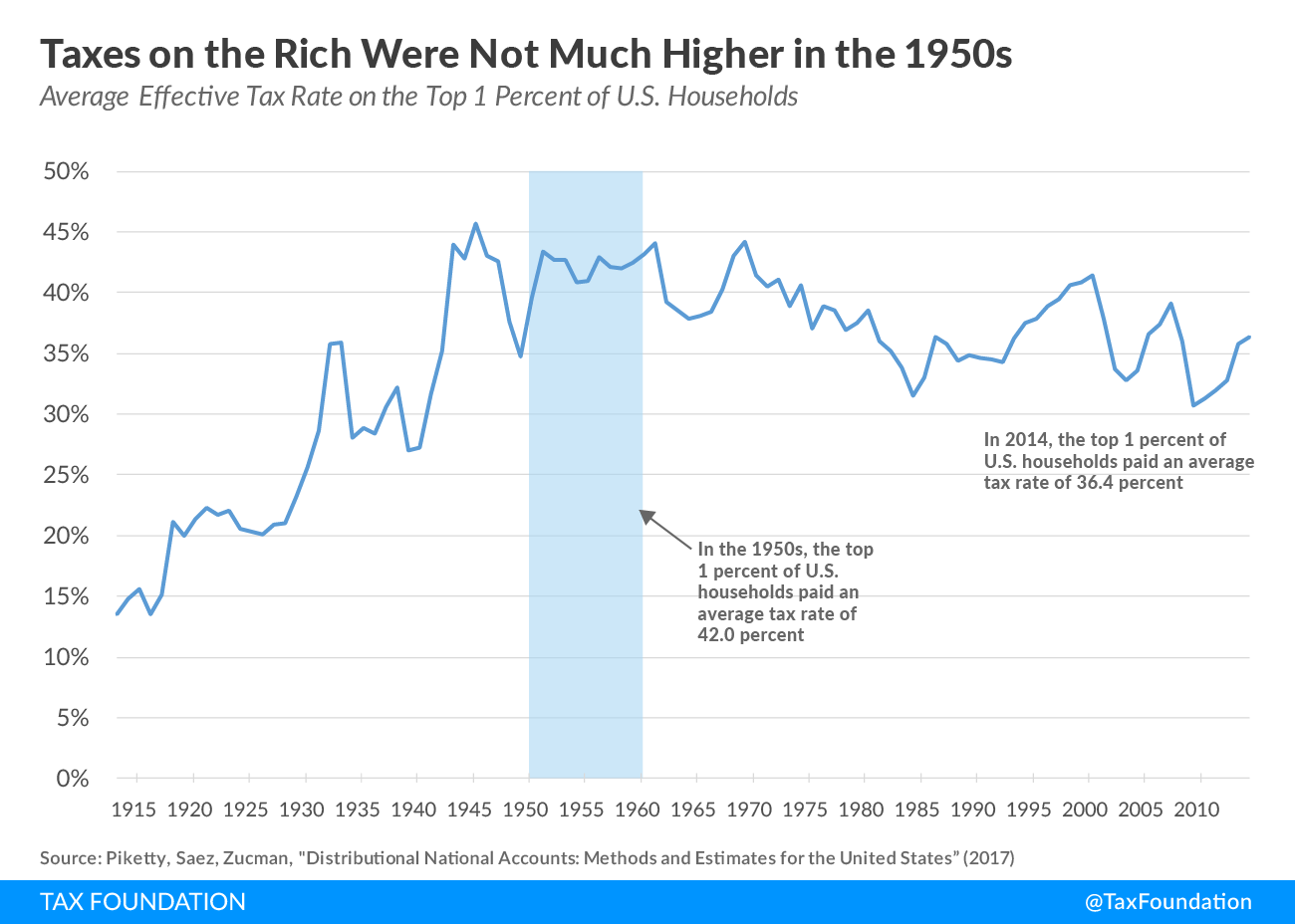
If the rich paid more taxes (#1), Nonfederal Spending would decline. The amount of the decline would be determined by various factors, most having to do with how much the rich actually pay. History indicates that payment would be less than anticipated because of existing loopholes and/or new loopholes the rich would bribe Congress to enact. Average Effective Tax Rate on the Top 1 Percent of U.S. Households Considering that the top tax rate in the 1950s was 90%, the rich did not pay much more in that period than they do now. And some of the richest among us pay little if anything. For example, Donald Trump paid no income taxes at all, during ten of the fifteen years, 2000-2015, despite being a billionaire. Tax laws, favorable to the rich, gave him the ability to claim losses on investments that an ordinary taxpayer may not look at as “losing” money. In summary, using federal taxation of the rich to narrow the Gap is bad economics. History shows the rich would find ways to avoid paying higher rates. But, even if the rich were forced to pay more, the higher rates would take dollars out of the economy and recess the economy. Option #1 is a “heads-you-lose (the rich don’t pay more), tails-you-lose” (GDP falls) plan. Sadly, that is the plan Biden seems to have chosen, and it will cost him the November election. The electorate may be ignorant about economics, but the rich would make sure the voters understood that raising taxes — anyone’s taxes — would hurt the economy. It’s simple math. The more the federal government takes out of the economy, the less the economy (GDP) has. Reducing federal taxes and/or providing supplementary benefits to those who are not rich, (#2 and #3) are the sole economically sensible ways to narrow the income/wealth/power Gap. Sadly this sensible approach is blocked by the non-sensible belief that federal deficit spending is “unsustainable.” That’s associated with the equally wrong belief that “excessive” federal spending or an “overheated” economy cause inflation. The fact: Inflation is not caused by “heat” (whatever that is) or by federal spending. All inflations are caused by shortages of critical goods and services, most often oil and food. Inflation can be cured by additional federal spending to acquire and distribute the scarce goods and services. Here is what the right-leaning Tax Foundation thinks:Details and Analysis of President Biden’s Fiscal Year 2025 Budget Proposal

March 22, 2024, By: Garrett Watson, Erica York, William McBride, Alex Muresianu, Huaquin Li, Alex Durante

11-Year Revenue (Trillions) Long-run GDP Long-Run Wages Long-Run FTE Jobs

+$2.2T

-2.2%

-1.6%

-788k

In plain English, the government would remove from the economy, an additional $2,2 Trillion. This would cause GDP to fall by 2.2%, wages to fall by 1.6%, and Full-Time Equivalent Jobs to shrink by 788 thousand.

Because the Tax Foundation has a right-wing agenda, one may doubt the specifics of their calculations, but I believe they are on the right track. When the federal government collects more taxes, the economy loses money. When the economy loses money, the GDP, wages, and jobs all shrink. It’s straightforward math.

The tax changes Biden proposes fall under three main categories: additional taxes on high earners, higher taxes on U.S. businesses—including increasing taxes that Biden enacted with the Inflation Reduction Act (IRA)—and more tax credits for a variety of taxpayers and activities.

The combination of policies would move the tax code further away from simplicity, transparency, and neutrality while making the U.S. economy less competitive.

The increase in the corporate tax rate and the additional taxes on top earners would result in U.S. top marginal tax rates on income that are among the highest in the developed world.

I urge you to read the entire Details and Analysis of President Biden’s Fiscal Year 2025 Budget Proposal as this post offers you the barest outline. Everything Biden may propose is based on two false assumptions:
  1. The federal government is running short of money while the private sector has too much money.
  2. The middle- and lower-income taxpayers will not understand that taking dollars from the economy is recessive, and instead will happily vote for a “soak-the-rich” administration.
The ignorance and cynicism of these beliefs cannot be overstated. Biden seems to believe that taking the populist approach will gain him votes. But, it is such government deceit that keeps you from:
  1. The end of the FICA tax deduction from your salary
  2. Comprehensive, no deductible Medicare for every adult and child.
  3. Social Security benefits for everyone of all ages
  4. Food cost aid
  5. Free college for those who want it
  6. Free public transportation
  7. Housing aid
  8. And a myriad of other benefits our Monetarily Sovereign government easily could afford, while preventing recessions and inflations.
Biden could beat Trump in a “truth vs. lies” competition, but he will not be able to out-lie Trump. If he tries, he will lose. Narrowing the Gap is good economics, but doing it by taxing businesses and the rich is a lie. It may be a good time to repeat a few facts:

•Those, who do not understand the differences between Monetary Sovereignty and monetary non-sovereignty, do not understand economics. •Any monetarily NON-sovereign government — be it city, county, state or nation — that runs an ongoing trade deficit, eventually will run out of money. •The more federal budgets are cut and taxes increased, the weaker an economy becomes. •Liberals think the purpose of government is to protect the poor and powerless from the rich and powerful. Conservatives think the purpose of government is to protect the rich and powerful from the poor and powerless. •The single most important problem in economics is the Gap between rich and poor. •Austerity is the government’s method for widening the Gap between rich and poor. •Until the lower 99% understand the need for federal deficits, the upper 1% will continue to rule. •Everything in economics devolves into motive, and the motive is the Gap between the rich and the rest.

Rodger Malcolm Mitchell Monetary Sovereignty Twitter: @rodgermitchell Search #monetarysovereignty Facebook: Rodger Malcolm Mitchell; MUCK RACK: https://muckrack.com/rodger-malcolm-mitchell

……………………………………………………………………..

The Sole Purpose of Government Is to Improve and Protect the Lives of the People.

MONETARY SOVEREIGNTY