Employing illegal aliens to build his casinos, then cheating them out of their wages didn’t do it.
Groping women didn’t do it. Consorting with whores didn’t do it. Cheating on three wives didn’t do it.
Blackmailing Ukraine didn’t do it. Secret meetings to support Putin and to gain Putin’s support didn’t do it. Love letters to Kim didn’t do it.
More than 35,000 lies didn’t do it. Repeatedly taking the 5th Amendment after saying that taking the 5th was for criminals didn’t do it.
Insulting gold-star parents didn’t do it. Saying soldiers who died for their country were “suckers” didn’t do it.
Equating fascist and anti-semites with people who oppose fascists and anti-semites didn’t do it
Spreading lies and bigotry about Mexicans, Blacks, Muslims, gays, and pregnant women didn’t do it.
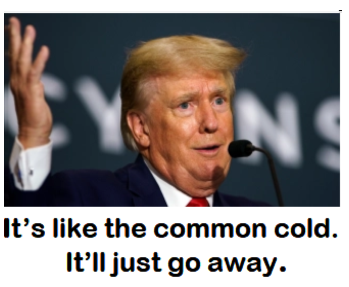
First denying COVID, the delaying response so that hundreds of thousand of Americans unnecessarily died
Cheating on his income taxes didn’t do it.
Running a fraudulent “university” to cheat thousand of students didn’t do it.
Running a fraudulent foundation didn’t do it.
Paying $25 million in fines for his criminality didn’t do it.
Fifty failed lawsuits to overturn the election didn’t do it. Threatening and pleading with state government officials to take illegal actions to steal the election didn’t do it. Saying that Vice President Pence deserved to be hung didn’t do it.
Consorting with, and hiring, dozens of criminals, didn’t do it.
Planning and encouraging a coup against the American government didn’t do it. Refusal to halt the insurrection didn’t do it. Telling the Proud Boys and other traitors, “We love you” didn’t do it.
Continuing to this day, spreading lies about the stolen election didn’t do it.
Encouraging the ouster of good Republicans simply because they told the truth didn’t do it.
Being ousted from social media for lying didn’t do it.
Trying to take healthcare insurance from the poor didn’t do it. Giving tax breaks to the rich didn’t do it.
Being an ineffective President who spent most of his time playing golf and tweeting insults didn’t do it.
None of those things turned a cowardly, immoral, compliant GOP against Trump.
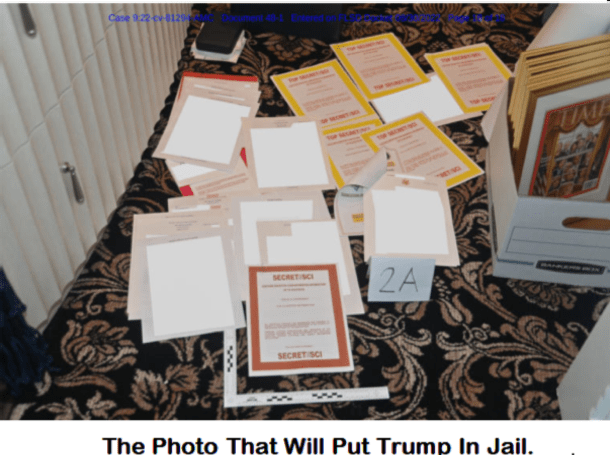
But this picture finally will put him in jail, though the GOP only will turn against him, not for ethical or occupational reasons, but for a political reason: He will lose elections and go to jail.
And this picture of illegally held classified documents, found at Mar-a-Lago will put him there:
Situation #1: I am a wealthy man. From my own pocket, I unexpectedly hand you $10,000, with no strings attached. Would you be pleased or angry? Would that gift be fair?
Situation #2: I am a wealthy man. From my own pocket, I unexpectedly hand you $10,000, with no strings attached. I also give some people $20,000 and to others, I give $0. Would you be pleased or angry? Would that gift be fair?
Situation #3. I am a wealthy, new charity called “Student Help And Payment of Expenses” (SHAPE). You and millions of others give to SHAPE, which provides aid to many people for many purposes. This year SHAPE has begun to offer financial assistance to college students based on their income, grades, and other criteria.
You qualify based on one criterion, so SHAPE gives you $10,000. SHAPE gives people who qualify on two criteria $20,000, and to those who do not qualify on any criteria, it gives $0. Would you be pleased or angry? Would that gift be fair?
Think about your answers before reading further.
Granderson was the 2009 winner of the GLAAD Award for online journalism and was nominated for the award again in 2010. He received a GLAAD Award in 2022 for his ABC News podcast, Life Out Loud with LZ Granderson
Is Biden’s student debt forgiveness plan fair?LZ Granderson, Los Angeles Times 8/30/2022
What is fair?
That is the question of the hour, as politicians and everyday Americans on both sides of the aisle debate the pros and cons of President Joe Biden’s plan to forgive student loan debt.
Is it fair to those who didn’t go to college? Is it fair to those who “did the right thing’ and paid off their loans? In short: Is it fair to me?
Take this short “fairness perception” test. Each question has two answers.
One answer is your opinion about “fair” or “unfair.” The other answer is whether you are angry about it. For example, you might feel something is unfair, but it doesn’t anger you.
Yes or no, is it fair or unfair, and in either case, does it anger you that:
. . . . . . . . . . . . . . . . . . . . . . . . . . . . . . . . . . . . . . . . . . . . . . . . FAIRANGERS ME
You pay more federal tax than Donald Trump?
You pay less tax than some people who are poorer than you?
You do not receive food stamps?
You do not receive rent assistance?
You drive a more expensive car than do some other people?
You can afford a less expensive house than can some other people?
You have more money than some people? (Yours was inherited.)
You have less money than some people who inherited money?
Older people receive Social Security, but though many people pay FICA taxes, most do not yet qualify”?
The qualifying age for Medicare has been raised?
Medicare doesn’t pay for some medicines and procedures?
You paid for your college education, but some people receive scholarships?
Depending on your financial situation, your compassion, and your personal standards, your answers will be individual to you.
I personally find the answers to questions #1, 9, 10, and 11, to be anger-provoking and unfair. How about you?
Why?
My anger mostly comes from the fact that federal taxes do not pay for federal benefits, and the federal government has infinite money but lies about it.
[Your taxes are paid from the M1 money supply measure–bank checking accounts. When the federal government receives those dollars, they no longer are counted in any money supply measure, because the government has infinite dollars. Effectively, your federal tax dollars are destroyed.By contrast, your state/local tax dollars go into private sector banks and remain in the M1 money supply measure. They are not destroyed.]
The White House says the average cost is $24 billion a year.
Considering we’re already nearly $31 trillion in debt and Jerome Powell, the Federal Reserve chairman, recently indicated that efforts to reduce inflation could bring “some pain to households and businesses,” asking how are we going to pay for this is a pressing question.
As readers of this blog know, “we” don’t pay for federalspending, although “we” do pay for state/localgovernment spending and for private charity spending.
The difference is the federal government is Monetarily Sovereign while state/local governments are monetarily non-sovereign.
The federal government collects taxes but does not spend them; it destroys them. The state/local governments collect taxes and spend them.
But to me, the most important question is actually who is going to pay for this? As in, who pays for what society needs to remain whole and healthy and who pays when it falls short?
Anyway, my buddy Neil never had any children but for more than 40 years he has had a portion of his tax dollars pay for services he does not use, like public schools.
Now, is that fair to Neil and other taxpayers without children? Or is paying for education for the next generation necessary to be part of a healthy society?
A society where someone in Arizona can see Kentuckians struggling in the wake of devastating floods and be thankful the Federal Emergency Management Agency is there to help those people — as opposed to being resentful that no disaster requires FEMA aid in Arizona?
Those are good questions, though the author demonstrates he does not understand the differences between monetarily non-sovereign state/local financing (the public school question) vs. federal financing (the FEMA question).
Taxpayers fund the former but do not fund the latter.
The answer to “who is going to pay for this?” is always “we are” — whether on the front end by addressing issues as a society or paying for the more expensive fallout from ignoring our problems.
Time and time again, we are forced to face the reality that we are all in this together.
Certainly the expected cost of $300 billion for Biden’s loan forgiveness plan is significant. But what of the effect of having 45 million borrowers grappling with $1.6 trillion in student loan debt? What of the societal and fiscal cost of those millions of Americans stymied in their futures?
Because no taxpayer pays a penny for federal loan forgiveness, the cost is not the issue. The issue is fairness and the fact that we are all in this together and that America needs educated people.
The federal government, which costs you nothing, pays many different benefits to millions of different people. You personally receive only a tiny fraction of those benefits. Is that fair? Does it anger you?
But we don’t think like that, we don’t vote like that and we don’t govern like that.That is why history is replete with billions spent on fixing problems that would have taken millions to prevent. Look no further than the homelessness crisis, which used to be “someone else’s problem” until it wasn’t.
Much has been made about the likes of Rep. Marjorie Taylor Greene, R-Ga., and the other Republicans who have rabidly denounced student loan cancellations.
The irony is that the GOP aids the rich while appealing to the angry envy of the poor, who are not informed enough to understand how the GOP cheats them.
Turns out, they had their own far larger Paycheck Protection Program loans forgiven.
We know they have no shame and their supporters are not deterred by their blatant hypocrisy. And that’s how it has always been.
But for people genuinely asking about fairness or economic impact, there are issues to consider. If postsecondary education is the route to the middle class, is not college debt a sign of someone trying to pull themselves up?
That is the real point. Education is vital for the success of America.
That is why our founders mandated free education for all children. Today, it is a given that all children be afforded grades K -12 (though some parents opt to pay for private schools or homeschooling).
But what once was considered an advanced education — a high school diploma — today, we believe college+ to be advanced.
Sure, we can find examples like Republican Texas Sen. Ted Cruz’s hypothetical slacker barista, who game the system, but we can also point to examples of businessmen who repeatedly file for bankruptcy and still get loans — but that doesn’t mean it’s the norm.
It also doesn’t mean that supporting college is unnecessary for America, especially since nations advance not by the high schoolers but by the college-educated. College is the accurate measure of a first-world country.
I was one of those individuals who graduated from college with student loan debt and went to bed hungry at times because of it. And when I was able to pay it off, I was happy.
And I’m happy a portion of my tax dollars may go to relieve someone of that burden.
Author Granderson, it should make you even happier to learn that not one penny of your tax dollars relieves anyone of anything. Although, that may make you angry that you are forced to pay tax dollars the Treasury destroys upon receipt.
Right now, millions of Americans, including the very poor, are drowning in student debt.
I see this very much like a FEMA moment, and I’m thankful government is stepping up to help. Call me crazy but isn’t assisting those in need a principle of fairness as well?____LZ Granderson is an Op-Ed columnist for the Los Angeles Times.
Mr. Granderson’s article is an excellent example of American patriotism. Unlike the flag-wavers who attacked Congress and the traitors who still defend it, Granderson is a true American.
He understands what “love-of-country” really means.
I only wish he understood Monetary Sovereignty.
Rodger Malcolm Mitchell
Monetary SovereigntyTwitter: @rodgermitchellSearch #monetarysovereigntyFacebook: Rodger Malcolm Mitchell
China, like the U.S., is Monetarily Sovereign. It never can run short of its own sovereign currency, the renminbi. Keep that fundamental fact in mind as you read excerpts from the following article:
Russia’s terrible war generates headlines, but China’s growing debt crisisis mostly ignored. And yet, it will have profound negative effects on the global economy.
In just three generations, Beijing built a middle class bigger than America’s entire population. But now Chinese many face ruination.
China’s domestic real estate bubble, due to deregulation, is so gargantuan that much of its middle class has been damaged.
So far, the article refers to private sector debt. The private sector (people, banks, businesses) is not Monetarily Sovereign. Those elements can run short of money.
However, the Chinese government has the power to service any private sector debt should it wish to prevent private sector insolvency.
A massive mortgage revolt is underway, and as banks fail, protests grow. Today, 50 million empty or unfinished units bought on “spec” in hundreds of urban areas may never be completed or paid for, equivalent to one-third of all housing units in the United States.
Should China wish to end the mortgage revolt, it simply could pay some percentage of the mortgages — as with Biden’s student loan support.
Similarly, China could support or nationalize troubled banks to keep them solvent.
Besides that, Beijing itself is owed $1 trillion by struggling governments around the world that cannot afford to pay back loans for Belt and Road Initiative project,
Being Monetarily Sovereign, China does not need to receive payment on loans made in renminbi. If the loans were made in U.S. dollars or some other currency, China has the power to buy those currencies with renminbis.
The problem with that approach is that depending on the size of the exchange, it could create chaos in currency markets.
The result of this domestic and foreign borrowing is that this year China’s debt is expected to reach the equivalent of 275 percent of its GDP due to massive borrowing and economic slowdown. The United States, by comparison, is expected this year to reach a debt level of 98 percent of its GDP.
The debt/GDP ratio is meaningless. Japan’s debt/GDP ratio is 266%, and the nation’s economy is vibrant and is nowhere near collapse.
The result of the property bubble is unusual defiance by Chinese people toward their authoritarian government. Unrest has grown because real estate speculation has been widespread for years, and most Chinese consider property ownership as a way to get ahead and secure an adequate retirement income.
But years of unbridled speculation has led to ever-increasing prices and overbuilding by aggressive developers, and now there is a glut, collapse in prices and widespread social discontent.
There is a glut of housing so housing prices are low. This is a problem for sellers, not buyers, that if it were deemed serious, easily could be solved by the central government. For example, levy a tax on future construction and sales.
Unrest spreads by word of mouth, which is a dangerous development in a country of 1.4 billion people, where putting deposits and owning several condos had become commonplace.
Essentially, China is a debt disaster in terms of foreign and domestic borrowing.
In rare acts of defiance, Chinese gather in public to object to the situation, and millions are refusing to repay loans on their unfinished apartments.This massive mortgage boycott movement began in early July and has now spread to 100 cities, involving 320 massive property development projects and many banks.
Recently, China’s Politburo issued a statement assuring property buyers that the government would help cash-starved developers finish such projects and that $44 billion would be dispensed to prop up their companies and their banks.
But this is a paltry amount, and millions of Chinese buyers need financial relief or else they will be left in the lurch.
And there is a solution to the problem. The Monetarily Sovereign Chinese government has the infinite ability to “prop up” developers, banks, and buyers. A large, Monetarily Sovereign nation has the ability to solve any money-related problem.
“China’s real estate slump has sucked in both banks and provincial governments, threatening a bigger impact on the world’s second-largest economy,” reports Nikkei Asia.
“Defaults have soared over the past 12 months. Real estate has been a key driver of the Chinese economy in the last two decades.
Real estate and related activities now account for around 29 percent of gross domestic product, up from less than 10 percent at the end of the 1990s.”
The first crack appeared when Evergrande Group stopped paying its debts or finishing projects. It had obtained free land from politicians in smaller urban centers and mortgage financing from local banks, then convinced people to snap up multiple units in the belief that demand and prices would never drop.
If it wished, the Chinese government could bail out every borrower and lender.
Now China must bail out lower levels of governmentbecause they depended on revenue from these land sales to provide education, health care, retirement benefits and other social services to their communities.
Their hardship means that services will be chopped, which could turn investor calamity into widespread national unrest.
There is no need to “chop services” for lack of money. The Chinese government could provide the needed money.
Clearly, China’s living standards have already suffered, given that one-quarter of its economy and more than 70 percent of household wealth is tied up in real estate that has dropped in value.
A Wall Street Journal op-ed headlined “Xi Tries to Ride a Real-Estate Tiger, and We All May Get Mauled” concluded that this “places the entire Chinese economic miracle model at risk” and cautions that “global financial markets, central banks and democratic leaders should brace for turbulence.”
Not only does China have the unlimited ability to create its money, but it also has the unlimited ability to create its money rules.
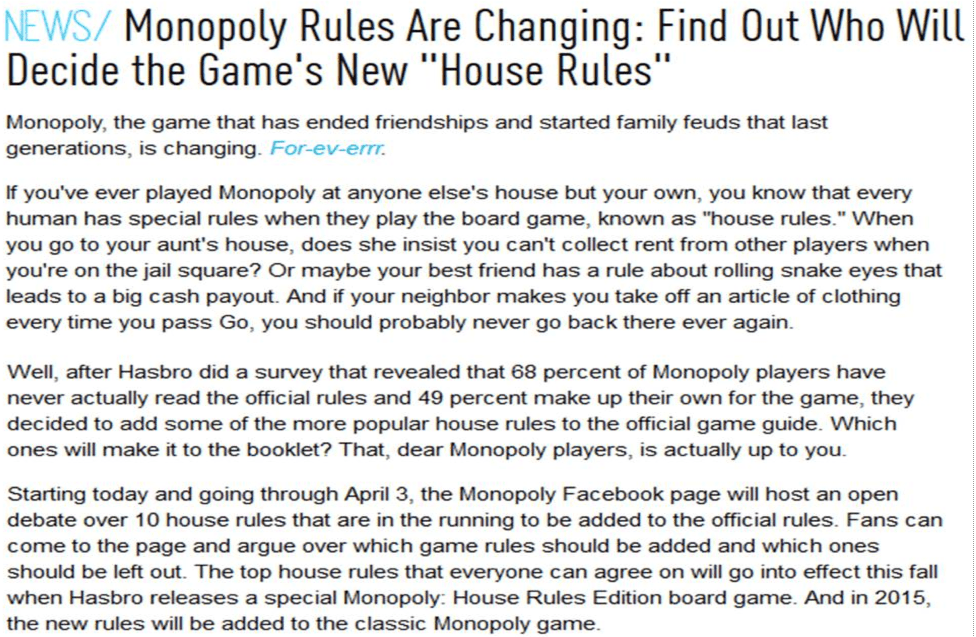
In “The Genius of the Board Game, Monopoly,”we described how money-making and rule-making ability can affect the game.
Players can change the game at will. They can begin the game by giving each player any amount of Monopoly money they choose.
When any players are on the verge of bankruptcy, the other players can lengthen the game by changing the rules to provide money to the troubled players.
The players arbitrarily can change the price of properties, houses, and hotels. They can increase or decrease taxes. They can change the traditional “$200 for passing ‘Go'” to any number they choose. They can charge for property sales. They can do anything.
The Chinese government has the same powers.It can bail out anyone, reward anyone, and penalize anyone. Like Monopoly players, the Chinese are omnipotent when dealing with domestic financial matters.
Then there is the Belt and Road Initiative debacle. Bloomberg reported that 19 emerging economies (such as Sri Lanka, Lebanon, El Salvador and Pakistan) are virtually bust due to huge indebtedness to China as a result of unaffordable, ambitious infrastructure projects.
These loans were granted without concern for credit ratings or the ability to repay and accused of being politically motivated “debt traps.”
But these have become China’s “debt traps,” and now protests and pushbacks take place in these countries against Beijing. China must forgive loans, restructure them or walk away and let more Sri Lankan-style collapses occur.
China forgiving loans would cost China nothing. It has infinite renminbi. Forgiving those loans might be a brilliant foreign policy strategy.
China’s immediate past has been truly impressive. It has lifted itself out of abject poverty.
But given Xi’s economic mismanagement, combined with his loyalty to Putin, who is the sworn enemy of all his Western customers, China’s future looks not only dim but potentially disastrous.
These are all money problems. China’s future might look “dim” and “disastrous” if it were not Monetarily Sovereign. But it has absolute, total control of its money.
One is reminded of the bleating and moaning about Social Security’s and Medicare’s fake impending insolvency, and insolvency that easily could be prevented by U.S. federal money creation.
Diane Francis is a non-resident senior fellow at the Atlantic Council in Washington at its Eurasia Center. She is editor at large at National Post in Canada, a columnist with Kyiv Post, author of 10 books and specializes in geopolitics, white-collar crime, technology and business. She writes a newsletter about America twice weekly on Substack.
If Diane Francis understood Monetary Sovereignty, she would have written a much different article.
Rodger Malcolm Mitchell
Monetary SovereigntyTwitter: @rodgermitchellSearch #monetarysovereigntyFacebook: Rodger Malcolm Mitchell
And it all was based on two Big Lies that the federal government can run short of dollars, and that federal deficits cause inflation.
Both Big Lies are so obvious, so easily debunked, that it’s hard to believe they are accidental or based on ignorance. Lies that big and easily seen simply must be intentional.
Powell: Fed’s inflation fight could bring ‘pain,’ job losses By CHRISTOPHER RUGABER August 26, 2022
JACKSON HOLE, Wyoming (AP) — Federal Reserve Chair Jerome Powell delivered a stark warning Friday about the Fed’s determination to fight inflation with more sharp interest rate hikes:It will likely cause pain for Americans in the form of a weaker economy and job losses.
Powell believes the way to fight inflation is to cause a recession (aka a weaker economy and job losses).
But inflation is not the opposite of recession.The opposite of inflation is deflation. We can have inflation and recession at the same time. It’s called “stagflation,” a problem for which the Fed knows no cure (though there is one).
The message landed with a thud on Wall Street, sending the Dow Jones Industrial Average down more than 1,000 points for the day.
“These are the unfortunate costs of reducing inflation,” Powell said in a high-profile speech at the Fed’s annual economic symposium in Jackson Hole. “But a failure to restore price stability would mean far greater pain.”
The pain is wholly unnecessary. Inflation is not a problem. It is the symptom of a problem, the shortage of crucial goods and services.
Today’s inflation is caused by shortages of oil, food, shipping, lumber, paper, computer chips, many chemicals, labor and a long list of other goods and services. Most of those shortages resulted from COVID.
To cure a problem one must cure the causes. Low interest rates did not cause inflation, so raising interest rates will not cure inflation.
GRAPH I:
There is no relationship between low interest rates (red) and inflation (blue). Raising rates leads to recessions (vertical gray bars).
The U.S. had extremely low interest rates for more than a decade, beginning 2009, and inflation remained low. Clearly, low rates were no a cause of inflation, so raising rates will not cure inflation.
As the above graph shows, however, raising interest rates leads to recessions.
Further, there is no relationship between inflation and federal deficit spending, so increasing federal spending will not cause inflation:
GRAPH II:
There is no relationship between federal deficit spending (green) and inflation (blue). Reduced spending growth leads to recessions (vertical gray bars).
Therefore, the Fed is promoting two activities — raising interes rates and reduced federal deficit spending — neither of which willconomy, even as the unemployment rate has fallen to a half-century low of 3.5%.
It has also created political risks for President Joe Biden and congressional Democrats in this fall’s elections, with Republicans denouncing Biden’s $1.9 trillion financial support package, approved last year, as having fueled inflation.
The $1.9 trillion financial package did not fuel inflation, but it did help hold off a recession. For political purposes, the GOP wants to see inflation and recession come during the Biden administration, so they denounce federal deficit spending.
And here comes the ridiculous part:
Some on Wall Street expect the economy to fall into recession later this year or early next year, after which they expect the Fed to reverse itself and reduce rates.
Wall Street is correct. That is exactly what will happen. If the Fed continues it interest rate increases, and the federal government doesn’t increase its deficit spending, we will have a recession.
Then the Fed will cut interest rates, which again will accomplish nothing. But the Fed will picture itself as struggling mightily and bravely against inflation and recession.
Any failures will be “beyond their control,” and any successes will “result from their actions.” They can’t lose.
Powell reminds me of a child sitting in the back seat with a toy steering wheel. Whenever the car turns, he turns his wheel. He thinks he is driving the car but he is only going through motions.
A number of Fed officials, though, have pushed back against that notion. Powell’s remarks suggested that the Fed is aiming to raise its benchmark rate — to about 3.75% to 4% by next year — yet not so high as to tank the economy, in hopes of slowing growth long enough to conquer high inflation.
Graph I showed that interest rate increases lead to recessions. Graph III shows that raising interest rates will will have an adverse effect on real Gross Domestic Product growth. (GDP is shown as negative growth).
GRAPH III:
GDP (purple) is shown as negative growth which matches the peaks and valleys of interest rates (red).
After raising its key short-term rate by a steep three-quarters of a point at each of its past two meetings — part of the Fed’s fastest series of hikes since the early 1980s — Powell said the Fed might ease up on that pace “at some point,” suggesting that any such slowing isn’t near.
Powell said the size of the Fed’s rate increase at its next meeting in late September — whether one-half or three-quarters of a percentage point — will depend on inflation and jobs data.
An increase of either size, though, would exceed the Fed’s traditional quarter-point hike, a reflection of how severe inflation has become.
The Fed chair said that while lower inflation readings that have been reported for July have been “welcome,” he added that, “a single month’s improvement falls far short of what (Fed policymakers) will need to see before we are confident that inflation is moving down.”
Nothing the Fed has done, to date, has reduced inflation. Any inflation reductions have come from reduced shortages of oil and other commodities. The car turned, and Powell sitting in the back seat thinks he turned it.
“The historical record cautions strongly against prematurely” lowering interest rates, he said. “We must keep at it until the job is done.”
Yes, Chairman Powell, you keep turning your toy steering wheel, and after we go through a stagflation, which will end with increased federal deficit spending to cure shortages, you can claim credit.
(The Fed’s interest rate) hikes have led to higher costs for mortgages, car loans and other consumer and business borrowing.
Home sales have been plunging since the Fed first signaled it would raise borrowing costs.
Translation: The Fed already has begun to cause a painful recession while inflation continues.
Powell is betting that he can engineer a high-risk outcome: Slow the economy enough to ease inflation pressures yet not so much as to trigger a recession.
The little boy in the back seat furiously spins his steering wheel.
At last year’s Jackson Hole symposium, Powell listed five reasons why he thought inflation would be “transitory.” Yet instead it has persisted, and many economists have noted that those remarks haven’t aged well.
America asked the man who said inflation was “transitory,” now asks the same man to cure inflation. Powell neither has the know-how nor the tools.
He doesn’t understand was causes inflation (shortages) nor how to cure it (spend to cure the shortages). He is applying leeches to cure anemia, hoping that won’t make the anemia worse.
Stagflation, here we come. Ludicrous.
In summary:
Raising interest rates does not cure the causes of inflation, which are shortages of key goods and services.
Reducing federal deficit spending does not cure the causes of inflation, but does lead to recessions.
Increasing interest rates does not cure the causes of inflation, but does lead to recessions.
Conclusion: The Fed actions will not cure inflation but will cause a recession. Increased federal deficit spending to cure shortages will prevent a recession, and will not cause inflation.
 When any players are on the verge of bankruptcy, the other players can lengthen the game by changing the rules to provide money to the troubled players.
The players arbitrarily can change the price of properties, houses, and hotels. They can increase or decrease taxes. They can change the traditional “$200 for passing ‘Go'” to any number they choose. They can charge for property sales. They can do anything.
The Chinese government has the same powers. It can bail out anyone, reward anyone, and penalize anyone. Like Monopoly players, the Chinese are omnipotent when dealing with domestic financial matters.
When any players are on the verge of bankruptcy, the other players can lengthen the game by changing the rules to provide money to the troubled players.
The players arbitrarily can change the price of properties, houses, and hotels. They can increase or decrease taxes. They can change the traditional “$200 for passing ‘Go'” to any number they choose. They can charge for property sales. They can do anything.
The Chinese government has the same powers. It can bail out anyone, reward anyone, and penalize anyone. Like Monopoly players, the Chinese are omnipotent when dealing with domestic financial matters.


 #Monetary Sovereignty - Mitchell