The detail and scope of President Donald Trump’s conversations with Russian President Vladimir Putin are still murky, and MSNBC host Rachel Maddow is drawing attention to how uncharacteristically cagey Trump has been when asked about his conversations with the Russian dictator.
On her Tuesday, February 18 show, Maddow played a supercut of various instances in which he refused to tell reporters about the details of his conversations with Putin. Maddow observed that Trump would only respond with: “I don’t want to say” whenever a reporter asks him how often he’s talked to Russia’s leader.
“I don’t want to say? There’s nothing that this man doesn’t want to say. This man wants to say everything that has ever crossed his mind. He’s the freest man in the world,” the MSNBC host said. “Aren’t you the boss?”
Maddow observed that this is a pattern with Trump. She played several clips in succession of Trump speaking to reporters in the Oval Office, on Air Force One and elsewhere insisting that the details of his calls with the Russian leader remain confidential.
“We’ll be we’ll be speaking. We are having discussions, yes,” Trump said in one clip. When a reporter followed up to ask if the calls were “already scheduled” or “ongoing,” Trump said “I don’t want to say that.”
“Can you tell us about your conversation with Vladimir Putin?” Another reporter asked in a clip of Trump taking questions on Air Force One.
“I don’t want to do that,” he responded. Another journalist asked the president: “Are you trying to set up a meeting with [Putin]?”
“Well, I can’t tell you what I’m talking about,” Trump said.
Maddow noted that while she doesn’t typically play video of Trump talking on her show, she said the clips were worth airing, saying it was “worth the exception just to see that this is something that he talks about, the way he talks about nothing else.”
“This is something that he’s palpably scared to say, or he feels constrained, like he’s not allowed to say,” she said. “Why is he so scared of this one thing?”
Annalena Baerbock, the German foreign minister, spoke for much of the European diplomatic community when she reacted to news of Donald Trump’s phone chat with Vladimir Putin: “This is the way the Trump administration operates,” she declared. “This is not how others do foreign policy, but this is now the reality.”
The resigned tone of Baerbock’s words was not matched by her colleague, defence minister Boris Pistorius, whose criticism that “the Trump administration has already made public concessions to Putin before negotiations have even begun” was rather more direct.
Their sentiments were echoed, not only by European leaders, but in the US itself: “Putin Scores a Big Victory, and Not on the Battlefield” read a headline in the New York Times. The newspaper opined that Trump’s call had succeeded in bringing Putin back in from the cold after three years in which Russia had become increasingly isolated both politically and economically.
This was not lost on the Russian media, where commentators boasted that the phone call “broke the west’s blockade”. The stock market gained 5% and the rouble strengthened against the dollar as a result.
Reflecting on the call, Putin’s spokesman, Dmitry Peskov, continued with operation flatter Donald Trump by comparing his attitude favourably with that of his predecessor in the White House, Joe Biden. “The previous US administration held the view that everything needed to be done to keep the war going. The current administration, as far as we understand, adheres to the point of view that everything must be done to stop the war and for peace to prevail.
“We are more impressed with the position of the current administration, and we are open to dialogue.”
Trump’s conversation with Putin roughly coincided with a meeting of senior European defence officials in Brussels which heard the new US secretary of defense, Pete Hegseth, outline America’s radical new outlook when it comes to European security. Namely that it’s not really America’s problem any more.
Hegseth also told the meeting in Brussels yesterday that the Trump administration’s position is that Nato membership for Ukraine has been taken off the table, that the idea it would get its 2014 borders back was unrealistic and that if Europe wanted to guarantee Ukraine’s security as part of any peace deal, that would be its business. Any peacekeeping force would not involve American troops and would not be a Nato operation, so it would not involve collective defence.
International security expert David Dunn believes that the fact that Trump considers himself a consummate deal maker makes the fact that his administration is willing to concede so much ground before negotiations proper have even got underway is remarkable. And not in a good way.
Dunn, who specialises in US foreign and security policy at the University of Birmingham, finds it significant that Trump spoke with Putin first and then called Ukraine’s president Volodymyr Zelensky to fill him in on the call. This order of priority, says Dunn, is a sign of the subordination of Ukraine’s role in the talks.
He concludes that “for the present at least, it appears that negotiations will be less about pressuring Putin to bring a just end to the war he started than forcing Ukraine to give in to the Russian leader’s demands”.
Galbreath notes that many European countries, particularly the newer ones such as Estonia and Latvia, sent troops to Iraq and Afghanistan. “The persistent justification I heard in the Baltic states was “we need to be there when the US needs us so that they will be there when we need them”.
That looks set to change.
The prospect of a profound shift in the world order are daunting after 80 years in which security – in Europe certainly – was guaranteed by successive US administrations and underpinned, not just by Nato but by a whole set of international agreements.
Now, instead of the US acting as the “world’s policeman”, we have a president talking seriously about taking control of Greenland, one way or another, who won’t rule out using force to seize the Panama Canal and who dreams of turning Gaza into a coastal “riviera” development.
Meanwhile Russia is engaged in a brutal war of conquest in Ukraine and is actively meddling in the affairs of several other countries. And in China, Xi Jinping regularly talks up the idea of reunifying with Taiwan, by force if necessary, and is fortifying islands in the South China Sea with a view to aggressively pursuing territorial claims there as well.
 #Monetary Sovereignty - Mitchell
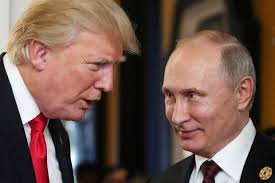
‘Aren‘t you the boss?’ Maddow supercut shows Trump being ‘palpably scared’ to talk about Putinn
The detail and scope of President Donald Trump’s conversations with Russian President Vladimir Putin are still murky, and MSNBC host Rachel Maddow is drawing attention to how uncharacteristically cagey Trump has been when asked about his conversations with the Russian dictator.
On her Tuesday, February 18 show, Maddow played a supercut of various instances in which he refused to tell reporters about the details of his conversations with Putin. Maddow observed that Trump would only respond with: “I don’t want to say” whenever a reporter asks him how often he’s talked to Russia’s leader.
“I don’t want to say? There’s nothing that this man doesn’t want to say. This man wants to say everything that has ever crossed his mind. He’s the freest man in the world,” the MSNBC host said. “Aren’t you the boss?”
READ MORE: What we learned from Trump and Putin’s phone call
Maddow observed that this is a pattern with Trump. She played several clips in succession of Trump speaking to reporters in the Oval Office, on Air Force One and elsewhere insisting that the details of his calls with the Russian leader remain confidential.
“We’ll be we’ll be speaking. We are having discussions, yes,” Trump said in one clip. When a reporter followed up to ask if the calls were “already scheduled” or “ongoing,” Trump said “I don’t want to say that.”
“Can you tell us about your conversation with Vladimir Putin?” Another reporter asked in a clip of Trump taking questions on Air Force One.
“I don’t want to do that,” he responded. Another journalist asked the president: “Are you trying to set up a meeting with [Putin]?”
“Well, I can’t tell you what I’m talking about,” Trump said.
Maddow noted that while she doesn’t typically play video of Trump talking on her show, she said the clips were worth airing, saying it was “worth the exception just to see that this is something that he talks about, the way he talks about nothing else.”
“This is something that he’s palpably scared to say, or he feels constrained, like he’s not allowed to say,” she said. “Why is he so scared of this one thing?”
LikeLike
What we learned from Trump and Putin’s phone call
“Great Negotiator” caves in advance.
Annalena Baerbock, the German foreign minister, spoke for much of the European diplomatic community when she reacted to news of Donald Trump’s phone chat with Vladimir Putin: “This is the way the Trump administration operates,” she declared. “This is not how others do foreign policy, but this is now the reality.”
The resigned tone of Baerbock’s words was not matched by her colleague, defence minister Boris Pistorius, whose criticism that “the Trump administration has already made public concessions to Putin before negotiations have even begun” was rather more direct.
Their sentiments were echoed, not only by European leaders, but in the US itself: “Putin Scores a Big Victory, and Not on the Battlefield” read a headline in the New York Times. The newspaper opined that Trump’s call had succeeded in bringing Putin back in from the cold after three years in which Russia had become increasingly isolated both politically and economically.
This was not lost on the Russian media, where commentators boasted that the phone call “broke the west’s blockade”. The stock market gained 5% and the rouble strengthened against the dollar as a result.
Reflecting on the call, Putin’s spokesman, Dmitry Peskov, continued with operation flatter Donald Trump by comparing his attitude favourably with that of his predecessor in the White House, Joe Biden. “The previous US administration held the view that everything needed to be done to keep the war going. The current administration, as far as we understand, adheres to the point of view that everything must be done to stop the war and for peace to prevail.
“We are more impressed with the position of the current administration, and we are open to dialogue.”
Trump’s conversation with Putin roughly coincided with a meeting of senior European defence officials in Brussels which heard the new US secretary of defense, Pete Hegseth, outline America’s radical new outlook when it comes to European security. Namely that it’s not really America’s problem any more.
Hegseth also told the meeting in Brussels yesterday that the Trump administration’s position is that Nato membership for Ukraine has been taken off the table, that the idea it would get its 2014 borders back was unrealistic and that if Europe wanted to guarantee Ukraine’s security as part of any peace deal, that would be its business. Any peacekeeping force would not involve American troops and would not be a Nato operation, so it would not involve collective defence.
International security expert David Dunn believes that the fact that Trump considers himself a consummate deal maker makes the fact that his administration is willing to concede so much ground before negotiations proper have even got underway is remarkable. And not in a good way.
Dunn, who specialises in US foreign and security policy at the University of Birmingham, finds it significant that Trump spoke with Putin first and then called Ukraine’s president Volodymyr Zelensky to fill him in on the call. This order of priority, says Dunn, is a sign of the subordination of Ukraine’s role in the talks.
He concludes that “for the present at least, it appears that negotiations will be less about pressuring Putin to bring a just end to the war he started than forcing Ukraine to give in to the Russian leader’s demands”.
Galbreath notes that many European countries, particularly the newer ones such as Estonia and Latvia, sent troops to Iraq and Afghanistan. “The persistent justification I heard in the Baltic states was “we need to be there when the US needs us so that they will be there when we need them”.
That looks set to change.
The prospect of a profound shift in the world order are daunting after 80 years in which security – in Europe certainly – was guaranteed by successive US administrations and underpinned, not just by Nato but by a whole set of international agreements.
Now, instead of the US acting as the “world’s policeman”, we have a president talking seriously about taking control of Greenland, one way or another, who won’t rule out using force to seize the Panama Canal and who dreams of turning Gaza into a coastal “riviera” development.
Meanwhile Russia is engaged in a brutal war of conquest in Ukraine and is actively meddling in the affairs of several other countries. And in China, Xi Jinping regularly talks up the idea of reunifying with Taiwan, by force if necessary, and is fortifying islands in the South China Sea with a view to aggressively pursuing territorial claims there as well.
LikeLike