The Constitution prohibits the government from supporting or opposing any religion.
Christians (e.g., Evangelicals, Baptists, Pentecostals, Later Day Saints, Jehovah’s Witnesses) are known for their proselytizing efforts. Others (e.g., Judaism, Hinduism, Buddhism, Shinto) are not.
The question becomes: Is a display of one or more versions of the Ten Commandments a form of support and proselytizing or merely education?
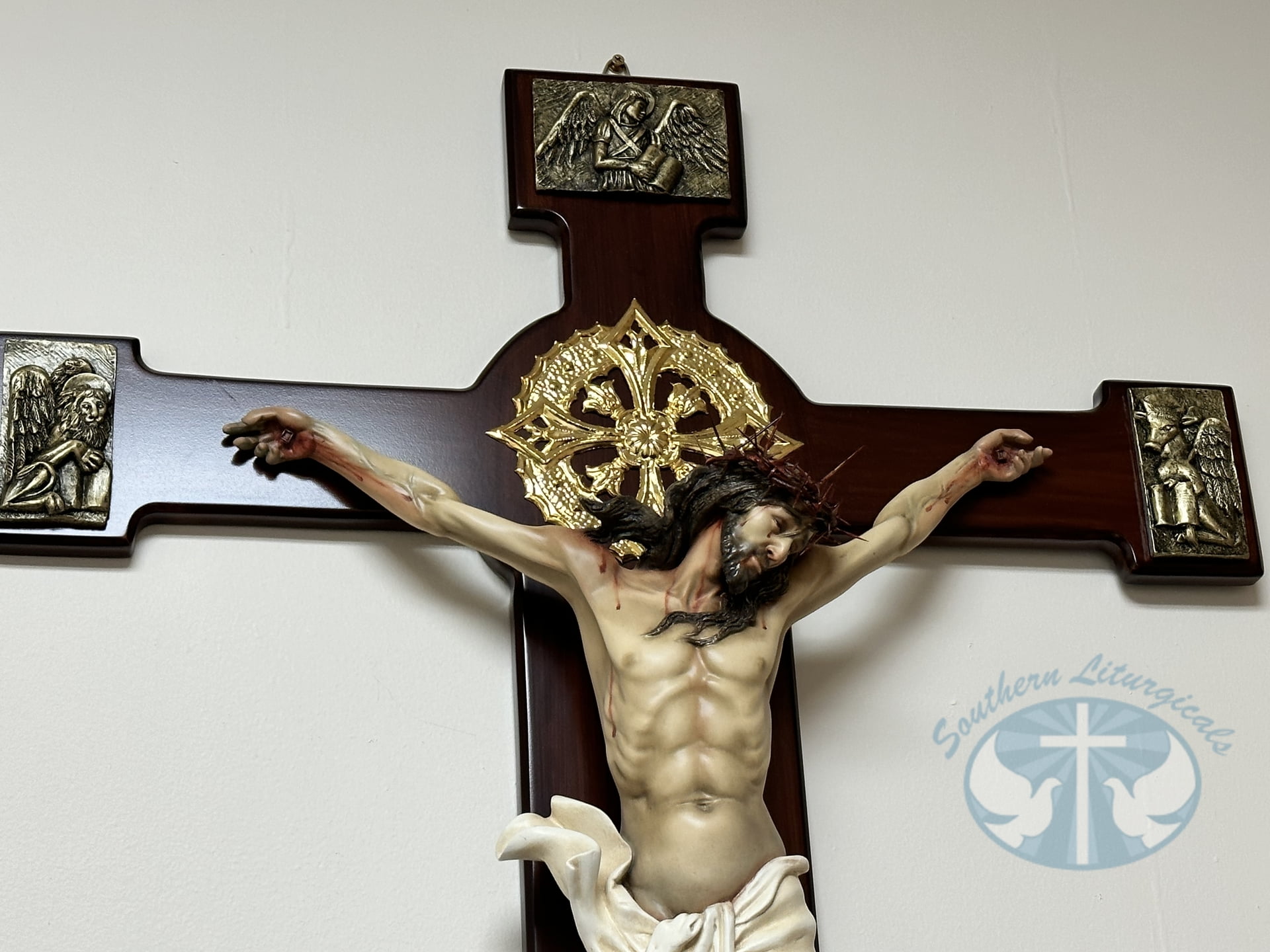
Is this art or religion? Should it hang in any government-funded place?Imagine you are a Supreme Court Justice. I would very much like your opinion regarding:
Can something titled “The Ten Commandments” exist outside religion as purely secular?
Should the government support teaching religious concepts purely as an educational exercise?
Is there a bright line between religious and secular teaching that allows for teaching religious concepts?
Would a secular course about “The life and teachings of Christ, Moses, and God” be allowed in a secular class.”
In a public school class, do atheists have the right to teach that God does not exist? Should the words and beliefs of Siddhartha Gautama (the Buddha), or the words of Vedas, Upanishads, Mahabharata, Ramayana, or the words of Allah and prophet Muhammed be taught?
How can we ensure that a secular approach to teaching about religions does not turn into the promotion of a single religion’s beliefs?
Should displays of religious-themed artwork be allowed in a secular class? What about an art history class?
Is this art or religion? Should it be displayed in any government-funded place?
The following article appeared in the Florida Sun-Sentinel.
More Christianity in classrooms?
Trump’s victory may embolden efforts by lawmakers on right
Text of the Ten Commandments is posted with other documents June 20 at the Georgia Capitol in Atlanta. John Bazemore/APBy Moriah Balingit, Associated Press
What is the “10 Commandments”? The above picture is shown in the article.
It is similar to the Protestant version of the “10 Commandments” because of the “graven image” line. The Catholic version does not mention graven images. There are other versions. It’s not clear whether others will be posted in the Georgia Capital.
WASHINGTON — Conservative lawmakers across the country are pushing to introduce more Christianity to public school classrooms, testing the separation of church and state by inserting Bible references into reading lessons and requiring teachers to post the Ten Commandments.
The efforts come as President-elect Donald Trump prepares to take office pledging to champion the First Amendment right to pray and read the Bible in school, practices that are already allowed as long as they are not government sponsored.
While the federal government is explicitly barred from directing states on what to teach, Trump can indirectly influence what is taught in public schools and his election may embolden state-level activists.Trump and his fellow Republicans support school choice, hoping to expand the practice of using taxpayer-funded vouchers to help parents send their children to religious schools.
Technically, federal spending is not taxpayer-funded. As Monetary Sovereignty teaches, federal spending is funded by federal money creation.
That said, what would you, as a SCOTUS justice, say about federal funding of vouchers for religious schools?
What about federal funding of secular schools that include one religious class? What about tax breaksfor private schools that include one religious course?
What are your thoughts on the Pledge of Allegiance that young students often recite (sometimes getting the words wrong)? While it may not genuinely foster “allegiance,” it still seems to hold significance for some lawmakers.
“I pledge allegiance to the Flag of the United States of America, and to the Republic for which it stands, one Nation under God, indivisible, with liberty and justice for all.”
It would be noteworthy to find even one person whose patriotism has been strengthened by this pledge. Yet, despite its lack of usefulness, it effectively excludes those who do not believe in God or who have a different understanding of divinity.
As a SCOTUS Justice, what is your opinion?
There is a push to incorporate more Christianity into the mainstream public schools that serve the overwhelming majority of students, including those of other faiths.
And with the help of judicial appointees from Trump’s first presidential term, courts have begun to bless the notion of more religion in the public sphere, including in schools.Trump’s Jewish family. Are they concerned? Are Trump, SCOTUS, MAGA concerned? Is anyone?
“The effect of even Trump being the president-elect, let alone the president again, is Christian nationalists are emboldened like never before,” said Rachel Laser, the president and CEO of Americans United for Separation of Church and State.
One wonders what Trump’s Jewish daughter, Ivanka, and his Jewish grandchildren, Arabella, Joseph, and Theodore Kushner, think about all this Christian nationalism.
Large numbers of Americans believe the founders intended the U.S. to be a Christian nation.
A smaller group, part of a movement widely called Christian nationalism, champions a fusion of American and Christian identity and believes the U.S. has a mandate to build a Christian society.
Many historians argue the opposite, claiming the framers created the United States as an alternative to European monarchies with official state churches and oppression of religious minorities.
Efforts to introduce more Christianity into classrooms have taken hold in several states.In Louisiana, Republicans passed a law requiring every public school classroom to post the Ten Commandments. In Texas, officials approved a curriculum intertwining language arts with biblical lessons. And in Oklahoma, the state superintendent of education has called for lessons to incorporate the Bible from grades 5 through 12, a requirement schools have declined to follow.
Utah state lawmakers designated the Ten Commandments a historical document, in the same category as the Declaration of Independence and the Constitution, so teachers could post it in their classrooms. And attorneys general from 17 GOP-led states recently filed a brief supporting Louisiana’s Ten Commandments mandate.
Schools are allowed — and even encouraged — to teach about religion and to expose students to religious texts. But some say the new measures are indoctrinating students, not educating them.
Some states have allowed teachers to use videos from Prager U, a nonprofit founded by a conservative talk show host, despite criticism that the videos positively highlight the spread of Christianity and include Christian nationalist talking points.
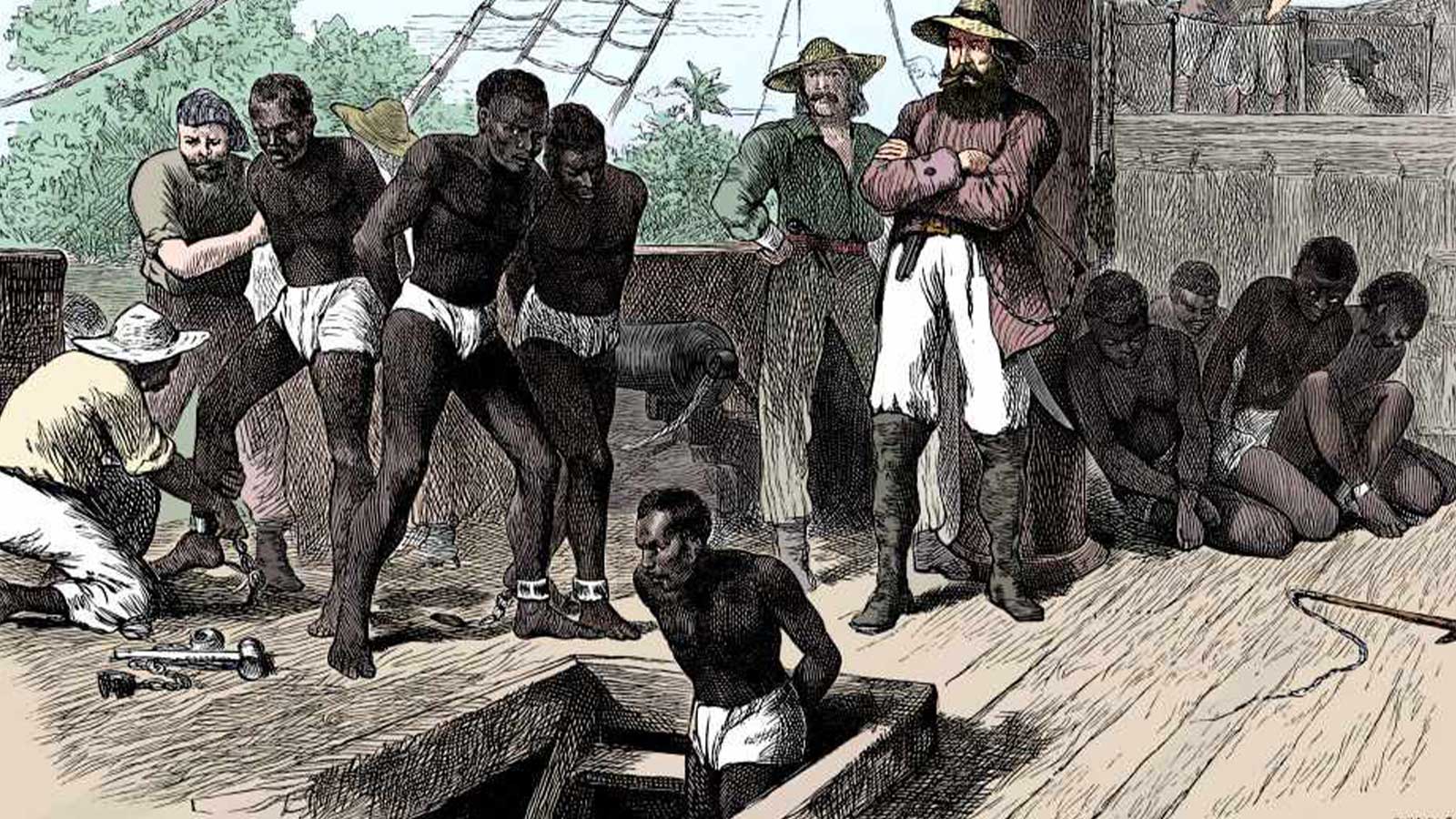
Trump commissioned the 1776 Project. It was panned by historians and scholars who said it credited Christianity for many of the positive turns in U.S. history without mentioning the religion’s role in perpetuating slavery, for example.
The project was developed into a curriculum and is now taught in a network of publicly funded charter schools supported. It also has influenced state standards in South Dakota.
Challenges to some state measures are now working their way through the courts, which have grown friendlier to religious interests thanks to Trump’s judicial appointments.
In 2022, a football coach was fired for praying with players at midfield after a game. The high court said a public school can’t restrict an employee’s religious activity just because it could be construed as an endorsement of religion, reversing a five-decade precedent.
In God’s name
“Could be construed” as an endorsement without actually being an endorsement? Who does the construing? What if a student construed it as an endorsement?
The ruling could pave the way for conservatives to introduce more Christianityin public schools, said Derek Black, a law professor at the University of South Carolina. “Donald Trump’s judicial appointees have emboldened states” to test the separation of church and state, he said.
Joseph Davis of Becket, a public interest law firm focused on religious freedom that is defending Louisiana over its Ten Commandments mandate said the Supreme Court has endorsed the idea that “it’s OK to have religious expression in the public spaces,” Davis said, “and that we should sort of expect that … if it’s a big part of our history.”
But critics say some measures to introduce more historical references to Christianity in classrooms have taken things too far, inserting biblical references gratuitously, while erasing the role Christianity played in justifying atrocities perpetuated by Americans, like genocide of Native people and slavery.
The background for the “separation of church and state” is based on history. A theocracy, where religious leaders wield governmental power, inevitably suppresses dissent by claiming divine authority. Questioning the government becomes tantamount to questioning the divine.
The Inquisition and the Puritan witch trials are instances where religious authority was used to justify persecution and maintain control. (Ironically, Trump often claims his criminal trials were “witch trials.”)
Part of American history anti-woke wishes to deny. It was approved by SCOTUS.
The separation of church and state is a foundational concept that protects religious liberty for all, not just a few.
Ironically, again, the governments that now wish to include Christian teaching in publicly funded places also wish to ban a related concept called “woke.”
Woke culture emphasizes the importance of addressing and rectifying social injustices, including systemic racism, sexism, and other forms of discrimination.
“Woke” advocates for equal rights and opportunities for all individuals, regardless of their background, and promotes inclusivity in various aspects of society.
It encourages individuals, especially those from privileged backgrounds, to support marginalized groups.
If Jesus were to speak on the concept of being “woke,” it’s likely that His message would focus on the same empathy, justice, and love for all individuals, regardless of their background or circumstances that woke does.
“Woke” would seem to be identical to the values expressed by Jesus and most religions.
Yet, the most pious Christians oppose “woke” because they feel it is overly sensitive, divisive, excessive in political correctness, and most importantly, critical of white-supported slavery.
The Christian right interprets “religious freedom” as meaning freedom for Christians to rule America.
How would you, as a SCOTUS judge, interpret “Congress shall make no law respecting an establishment of religion, or prohibiting the free exercise thereof”?
In the next four years, interpretations of that simple sentence may become the most influential decisions by SCOTUS for America’s future democracy.
There definitely needs to be acknowledgement of the importance of morality: don’t kill or harm anyone, physically or emotionally; don’t steal from anyone; don’t deceive anyone in a way to cause anyone harm; don’t renege on commitments; don’t be superstitious; don’t conspire against anyone; don’t shirk responsibility for dependents. Etc.
As a SCOTUS, I would agree with the United States Constitution on the government prohibiting, supporting or opposing any religion. I would prefer a secular Humanist Ten Commandments public display
I think religious education has already gone too far into public schools. Get rid of new religious holidays; we can keep Xmas/Winter Solstice because it’s mostly secularized now and it would probably tank the economy to take it out, and wouldn’t be practically possible anyway. But in NYC at least, there are now so many religious holidays that it’s getting hard to fit the required 180 days into the remaining school year.
Ans it’s a competition between religions, with Islam in particular demanding more days off.
Islam, in particular, is a far bigger problem than the other religions you listed. It is intolerant, seeking to disallow other religions wherever it gets the chance, and forcing conversion, a tax, or outright violence against non-believers whenever it gains control. Christianity used to be just as bad but it was forced to reform in the middle ages and, for now, it’s better behaved. Jews never had the population to force their religion on anyone, and besides, it’s not their way.
Religious schools foster ignorance and superstition and should be regulated to make them include the same testing standards as everyone else (we have an ongoing scandal here in NYC where Yeshivas aren’t teaching students, especially boys, the skills they need in modern life).
From what I’ve read, including here, there is no single “10 commandments” in the first place. In that case, any choice is biased and maybe arbitrary. None have any place as “the” 10 commandments, though maybe schools could teach them as part of a comparative religious history course, which I favor because it introduces healthy skepticism to all religions. Children need that healthy skepticism more than ever in a world which rewards fraud and grifting so much.
Here’s what Grok had to say:
Yes, there are different versions and interpretations of the Ten Commandments, primarily due to variations in religious traditions, translations, and textual interpretations. Here’s an overview:
Biblical Sources:
Exodus 20:2-17 and Deuteronomy 5:6-21: These are the two primary passages in the Hebrew Bible (Old Testament) where the commandments are listed. Although they largely overlap, there are slight differences in wording and structure between these two accounts.
Numbering and Division:
Jewish, Protestant, and Catholic/Orthodox Traditions:
Jewish Tradition: Typically divides the commandments into 10 by considering the prohibition against other gods and idol worship as one commandment. This leaves the coveting commandment as one rather than split into two.
Protestant Tradition: Generally follows a similar division to the Jewish one but might differ slightly in emphasis or interpretation.
Catholic and Orthodox Christianity: Treats the prohibition against other gods, idols, and taking God’s name in vain as one commandment, which results in splitting the commandment about coveting into two parts (coveting a neighbor’s house and coveting a neighbor’s wife, etc.).
Textual Variations:
Masoretic Text vs. Septuagint: The Hebrew Masoretic Text and the Greek Septuagint (LXX) have some differences in phrasing which might slightly alter the interpretation. The Septuagint was used by early Christians and still influences Orthodox interpretations.
Interpretations:
Moral, Ceremonial, and Judicial Laws: Some Christian theologians categorize the commandments differently, seeing some as moral (still applicable), ceremonial (related to worship practices), or judicial (pertaining to ancient Israelite law).
Ethical Interpretations: Over time, interpretations have expanded to apply the commandments to contemporary ethical issues, sometimes leading to different emphases or applications.
Cultural and Linguistic Factors:
Languages and Translations: Each translation from Hebrew to another language might interpret or emphasize different aspects of the commandments. For example, the English word “kill” in “Thou shalt not kill” might be translated as “murder” in other versions to clarify intent.
Religious Context:
Samaritan Version: The Samaritan Pentateuch, which has some textual differences from the Masoretic Text, also presents a version of the Ten Commandments.
Islamic Perspective: While not explicitly called the “Ten Commandments,” Islamic teachings share moral directives with the commandments, though they are not numbered or presented identically.
In summary, while the core ethical principles are consistent across most versions, the exact wording, division into ten, and interpretations can vary significantly based on religious tradition, scriptural version, and cultural context.
If they want to treat the Jewish/Christian 10 commandments as history, that’s fine. They have significantly influenced history. But that means they need to be treated as history, not as religion, not as propaganda, not as material by which to indoctrinate secular school children into a particular religion. And if they want to go beyond the proper positioning and treatment of historical documents, they’ll have to accept similar documents from competing beliefs — even from pagans, satanists, practitioners of witchcraft, and so on.
In a similar manner, if history or social studies courses include bits about religion, I’d say that’s fine; but again, it needs to be treated in an even-handed way for all religions, mentioning both the good and bad for each. Basically, just report the historical facts and leave all the religious significance and personal application for things outside the official, government endorsed/required training.
“..even from pagans, satanists, practitioners of witchcraft,” mmm..
not sure enough on those, call me unbalanced if you like, basically i think lets not waste time on stuff that does not work, including too much screen stuff, we have become unbalanced. In defence of real Christianity (teachings of Jesus – ) are they too far wrong? given really clear examples in the parables, sermon on mount..etc?
regarding your emotive pictures, for example slavery, there were good slave owners, most of the text is against it, but as a semi-slave as a child (pittance pocket-money) i was told it would be fair to be expected to work half my free time in return for food , clothing, bed, home life. I agreed then and still think it now. Small amount of pocket money helped me spread my wings to find work at the market rate. At 10 years to 13 years in holidays i was a useful employee on neighboiring orchards. where are those orchards now – cnsolidated and mechanised. no work for local kids (health and safety bullshit cut most of that work out on big orchards for small kids. No simple fun and real freedom anymore stuck on screens. see above –
re SCOTUS – see Balance piece today if you can kindly allow that to stay.. TCP.
in summary- balanced scientific deternminism ok
religious dogmatism contradicts itself, eg love they neighbour etc thank you for your hard work – i call it “treasure in heaven” “Whatever you conceive it to be” (see Desiderata, about as simple and reliable as you can get it – so wastes less time) [and allow this, pls]
VERY MUCH THANK YOU, for all your amazing accomplishment, and hard work continuing, may it long be available
ps are you aware of similar work by UKs Richard Murphy? i think you and he could do with quite a bit on “private money” (for Definition and reason for focus see Sir Jon Cunliffes May 2021 SPEECH to electronic money-makers – still avail on Bank of England website)
many thanks, thanks, thanks. not ewnough governance, nor morality, ethics, not enough perseverence to discuss – too much having to earn money!




 #Monetary Sovereignty - Mitchell
Education should be about first-hand truth, not second-hand data handed down by non-science. No wonder we’re in trouble everywhere.
LikeLike
There definitely needs to be acknowledgement of the importance of morality: don’t kill or harm anyone, physically or emotionally; don’t steal from anyone; don’t deceive anyone in a way to cause anyone harm; don’t renege on commitments; don’t be superstitious; don’t conspire against anyone; don’t shirk responsibility for dependents. Etc.
LikeLike
As a SCOTUS, I would agree with the United States Constitution on the government prohibiting, supporting or opposing any religion. I would prefer a secular Humanist Ten Commandments public display
. Which can be found at https://www.thehumanist.com in an article by Christian Hagen, 30 October 2013.
(The Humanist Ten Commandments).
LikeLike
Actually, the Humanist Ten Commandments can be found at https://americanhumanist.org/wp-content/uploads/2017/10/tencommitments.pdf.
LikeLike
I think religious education has already gone too far into public schools. Get rid of new religious holidays; we can keep Xmas/Winter Solstice because it’s mostly secularized now and it would probably tank the economy to take it out, and wouldn’t be practically possible anyway. But in NYC at least, there are now so many religious holidays that it’s getting hard to fit the required 180 days into the remaining school year.
Ans it’s a competition between religions, with Islam in particular demanding more days off.
Islam, in particular, is a far bigger problem than the other religions you listed. It is intolerant, seeking to disallow other religions wherever it gets the chance, and forcing conversion, a tax, or outright violence against non-believers whenever it gains control. Christianity used to be just as bad but it was forced to reform in the middle ages and, for now, it’s better behaved. Jews never had the population to force their religion on anyone, and besides, it’s not their way.
Religious schools foster ignorance and superstition and should be regulated to make them include the same testing standards as everyone else (we have an ongoing scandal here in NYC where Yeshivas aren’t teaching students, especially boys, the skills they need in modern life).
LikeLike
Scott, any thoughts on the 10 Commandments issue?
LikeLike
From what I’ve read, including here, there is no single “10 commandments” in the first place. In that case, any choice is biased and maybe arbitrary. None have any place as “the” 10 commandments, though maybe schools could teach them as part of a comparative religious history course, which I favor because it introduces healthy skepticism to all religions. Children need that healthy skepticism more than ever in a world which rewards fraud and grifting so much.
Here’s what Grok had to say:
Yes, there are different versions and interpretations of the Ten Commandments, primarily due to variations in religious traditions, translations, and textual interpretations. Here’s an overview:
Biblical Sources:
Numbering and Division:
Textual Variations:
Interpretations:
Cultural and Linguistic Factors:
Religious Context:
In summary, while the core ethical principles are consistent across most versions, the exact wording, division into ten, and interpretations can vary significantly based on religious tradition, scriptural version, and cultural context.
LikeLike
If they want to treat the Jewish/Christian 10 commandments as history, that’s fine. They have significantly influenced history. But that means they need to be treated as history, not as religion, not as propaganda, not as material by which to indoctrinate secular school children into a particular religion. And if they want to go beyond the proper positioning and treatment of historical documents, they’ll have to accept similar documents from competing beliefs — even from pagans, satanists, practitioners of witchcraft, and so on.
In a similar manner, if history or social studies courses include bits about religion, I’d say that’s fine; but again, it needs to be treated in an even-handed way for all religions, mentioning both the good and bad for each. Basically, just report the historical facts and leave all the religious significance and personal application for things outside the official, government endorsed/required training.
LikeLike
I agree with the “even-handed” concept, but have difficulty with allowing religion into politics at all.
LikeLike
“..even from pagans, satanists, practitioners of witchcraft,” mmm..
not sure enough on those, call me unbalanced if you like, basically i think lets not waste time on stuff that does not work, including too much screen stuff, we have become unbalanced. In defence of real Christianity (teachings of Jesus – ) are they too far wrong? given really clear examples in the parables, sermon on mount..etc?
regarding your emotive pictures, for example slavery, there were good slave owners, most of the text is against it, but as a semi-slave as a child (pittance pocket-money) i was told it would be fair to be expected to work half my free time in return for food , clothing, bed, home life. I agreed then and still think it now. Small amount of pocket money helped me spread my wings to find work at the market rate. At 10 years to 13 years in holidays i was a useful employee on neighboiring orchards. where are those orchards now – cnsolidated and mechanised. no work for local kids (health and safety bullshit cut most of that work out on big orchards for small kids. No simple fun and real freedom anymore stuck on screens. see above –
re SCOTUS – see Balance piece today if you can kindly allow that to stay.. TCP.
in summary- balanced scientific deternminism ok
religious dogmatism contradicts itself, eg love they neighbour etc thank you for your hard work – i call it “treasure in heaven” “Whatever you conceive it to be” (see Desiderata, about as simple and reliable as you can get it – so wastes less time) [and allow this, pls]
VERY MUCH THANK YOU, for all your amazing accomplishment, and hard work continuing, may it long be available
ps are you aware of similar work by UKs Richard Murphy? i think you and he could do with quite a bit on “private money” (for Definition and reason for focus see Sir Jon Cunliffes May 2021 SPEECH to electronic money-makers – still avail on Bank of England website)
many thanks, thanks, thanks. not ewnough governance, nor morality, ethics, not enough perseverence to discuss – too much having to earn money!
ian G +44(0)7702 569 077
LikeLike