Because the odds favor them, not by a lot on any individual bet — that would be too obvious to the bettors — but just by a little.
All the casinos need is a tiny margin, and if you make a lot of bets, you eventually will lose.
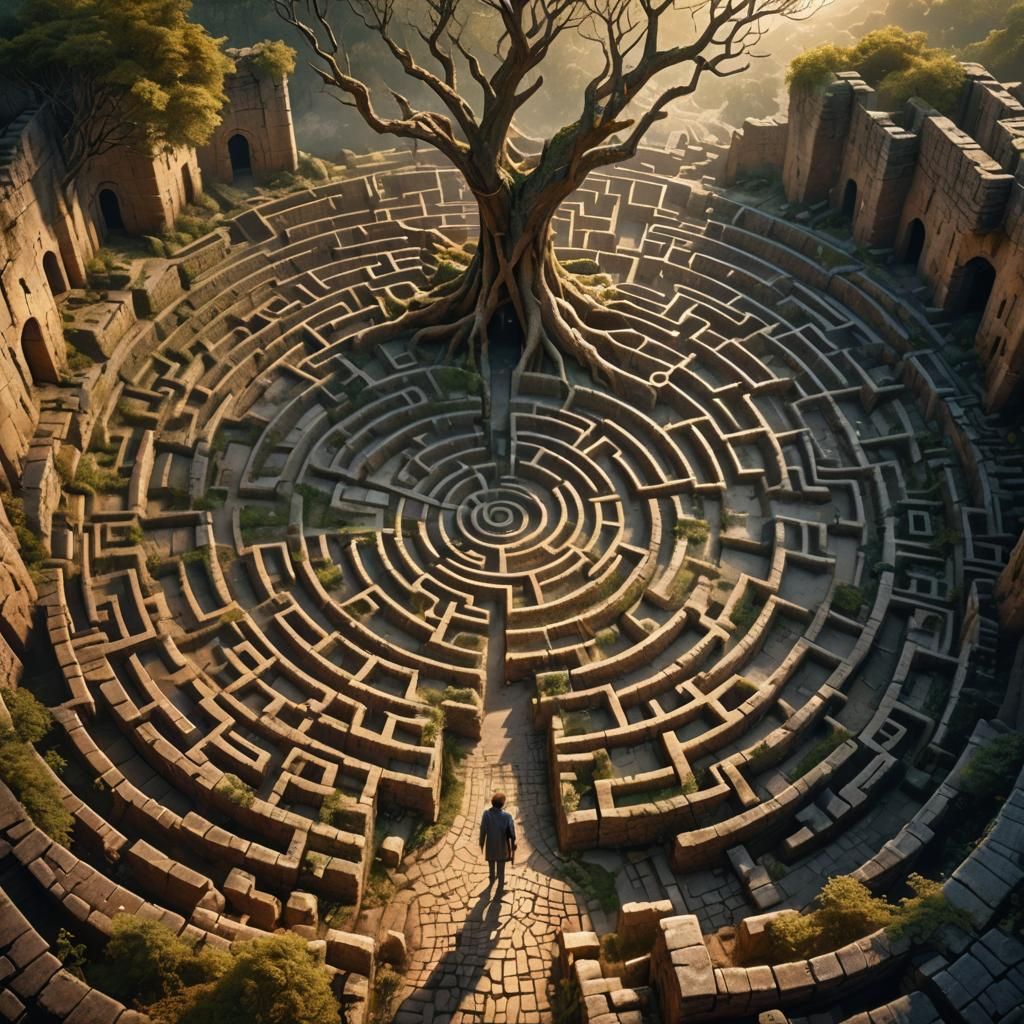
Your GPS stopped working. Which route will you take?
Imagine you are flipping an evenly balanced coin, and you bet $10 on each flip.
The house takes only one tiny cent per flip.
If you flip 100 times, on average, you’ll lose $1.00. That minuscule $.01 adds when you do something 100 times.
Now, rather than coin flips, let’s talk about decisions.
How many do you make each day? (Stand, sit, step, chew, inhale, what to wear, pee, business decisions, life decisions, etc., etc.)
Perhaps millions? Maybe billions?
And each of those decisions is influenced in your brain by such inputs as: Cortisol, Thyroid Hormones, Estrogen and Testosterone, Insulin. Melatonin, Serotonin, Dopamine. Ghrelin, Leptin, Alcohol, Caffeine, and Nicotine, along with physical exhaustion, thirst, hunger, odors, sound, touch, pain, temperature, disease, age, and all the other physical and psychological inputs.
And any one of those decisions could change your life.
Examples: What you say to your boss, to your child, to your wife, whether to drive or walk, the route you take, what to eat for breakfast, whether to get a haircut, scratch an itch, play a game, wash your hands — the list is almost endless — and every single decision you make is influenced by a whole multitude of influences on your brain.
Given the massive number of decisions you make and how much each can influence your life and future choices (there is a multiplying effect), how much “free will” do you think you really have?
Read these excerpts from a recent Scientific American Magazine article:
Research suggests a range of psychological phenomena—such as our emotional state, dietand exercise habits, sexual activity and even color preferences—fluctuate throughout the year.
And now a study in the Proceedings of the National Academy of Sciences USA demonstrates how moral values can also shift.
If all those decisions are affected by simple seasonal changes, imagine how much your decision-making is affected by thousands or millions of other inputs your brain receives every minute of every day.
For the study, researchers analyzed more than 230,000 online survey responses—a decade’s worth—from people in the U.S., along with smaller groups in Canada and Australia.
That is a huge study.
The questions were based on a standardized framework social scientists use to assess people’s judgments of right and wrong.
This framework, called moral foundations theory, sets up a taxonomy of “five pretty fundamental values that shape human social behavior,” says lead author Ian Hohm, a psychology graduate student at the University of British Columbia.
Is it possible? Why did you try? Why didn’t you?
Keep those words in mind: “Shape human social behavior.”
The framework considers loyalty (devotion to one’s own group), authority (respect for leaders and rules), and purity (cleanliness and piety) to be “binding” values that promote group cohesion and conformity.
It’s doubtful that anyone could question whether these values affect your decision-making.
These principles, often associated with political conservatism, consistently received weaker endorsements in summer and winter.
And in summer, the more extreme the seasonal weather differences, the more pronounced the effect.
One explanation for seasonal swings could be anxiety.
Using a 90,000-respondent survey dataset, as well as data on Internet search frequencies, the researchers found that anxiety levels also peak in spring and fall.
“There is a close relationship between anxiety and threat,” says University of Nottingham psychologist and study co-author Brian O’Shea.
Other studies have shown that people who feel more vulnerable to seasonal illnesses tend to be more distrustful, more xenophobic and more likely to conform to majority opinion.
Again, these have a strong influence on your decisions and actions, It’s fascinating how even subtle changes in our environment can impactour judgments and behaviors. (No “free will” there.)
“When you’re threatened,” O’Shea explains, “you then want to get protection from your in-group.” These findings suggest seasonal timing could affect jury decisions, vaccination campaigns—and even election outcomes, the study authors say.
People in juries feel they are making “free will” decisions. I “feel” (but I knowbetter) that my many decisions to be vaccinated and my voting were the result of my “free will.”
But, of course, they were not.
They were heavily influenced by massive numbers of inputs to my brain each minute.
Howard University psychologist Ivory A. Toldson, whose work involves practical applications of statistics, notes that the study relies on data from “Western, educated, industrialized, rich and democratic (WEIRD)” populations and cautions that generalizing from such results runs the risk of “overlooking the unique moral experiences of marginalized groups.”
In other words, he says everyone’s experiences (brain inputs) are different, which affects their decisions differently.
Hohm agrees that such a pattern wouldn’t affect everyone the same way but emphasizes that the study highlights the seasons’ effect on human psychology.
“One thing that this article is showing is that we are very seasonal creatures,” says Georgetown University School of Medicine psychiatrist Norman Rosenthal, a leading expert on seasonal affective disorder who coined the term in the 1980s.
“The internal state definitely affects your behavior.”
It also shows us that “free will” does not exist. It is an illusion—a strong illusion—created by your brain to make sense of the gigantic number of inputs it continuously receives.
Even your decision to believe this, argue with this, or discuss it with someone is affected by every input your brain receives every minute of every day.
Have you ever said, “I didn’t feel like it, ” “I wasn’t in the mood, ” “It’s not worth the effort,” or “It’s too much hassle?”
That may have felt like free will, but it was the accumulation of inputs to your brain.
You do not control your brain; your brain controls you. You just don’t feel it because your brain doesn’t let you.
26 thoughts on “For those who still believe in “free will.””
If our will isn’t free, then what got us to where we are, for better or for worse? Where does common sense enter? We don’t eat lunch in traffic or build skyscrapers out of straw. When survival is on the line, we tend to make good choices; otherwise, we’d be dead by now.
Because of previous inputs, you already know of the dangers. Those already have been put in your brain.
Why don’t we build skyscrapers out of straw? Same reason.
An infant, lacking inputs, will crawl out into traffic because it doesn’t have experience (I.e. inputs) to tell it not to.
There is no “magical me” separate from your physical brain. Free will really is just an illusion. Your every thought, decision, and action stems from the intricate workings of your neural networks, influenced by countless inputs throughout your life.
Free will implies something that is not affected by inputs over which you have no control. The more you think about free will, the more you will understand it isn’t physically possible. Every idea is affected by some brain inputs.
You are pushing too far now, Rodger. Gambling? Morality? What have they to do with Free Will?
I will say this to you this way: if there is no free will, life is not wort h living!
Whatever your purpose is in writing these blogs, they just tell me you have no idea what Free Will even is.
Sorry, but it is the correct answer. What is in it for you to comment? That is exactly what is in it for me to comment? Anyway, I’m not interested in your motivation, and you shouldn’t care about mine. Go on to the subject at hand — or not.
It’s all driven by chemicals and brain infrastructure for Mitchell. He can’t help himself because he has no Free Will to refuse.
This is true even after I pointed out that studies show different people react to the same chemical stimulants – alcohol, drugs, etc. – differently. Even after I showed him the case of Phineas Gage, whose normally controlled, responsible personality was radically transformed when a steel rod exploded through his limbic system in the mid 19th century while working on a road crew; psychiatrists agree that the limbic system which normally regulate emotions was damaged by the accident, and unconscious impulses which we all have were left unregulated in the poor Mr. Gage’s brain.
There’s another study that even shows different cultural responses to alcohol. Getting drunk is not the automatic response most Americans think it is. The reaction by Finns or French people is significantly different, even to greater levels of alcohol. It has to do with pre-expectations of future behavior, not just the chemical reactions. Personally, I was drunk enough once when I was 20 to have a terrible hangover the next day. That was enough for me. I didn’t enjoy any part of that experience and never did it again. I don’t even drink alcohol now, or for all but 2 weeks of the last 40+ years. I’d look the study up, but it’s old, like me, and my brain chemicals won’t let me get motivated to do it today. Oh well….
” . . . different people react to the same chemical stimulants – alcohol, drugs, etc. – differently.” How does reacting to chemicals show that free will exists? Reacting to chemicals is what demonstrates free will does not exist. Acting differently under the influence of alcohol, or having a pipe shoved through your head. simply shows free will doesn’t exist.
Show me the evidence that such brain inputs as Cortisol, Thyroid Hormones, Estrogen and Testosterone, Insulin. Melatonin, Serotonin, Dopamine. Ghrelin, Leptin, Alcohol, Caffeine, and Nicotine, along with physical exhaustion, thirst, hunger, odors, sound, touch, pain, temperature, disease, age, and all the other physical and psychological inputs do not affect thinking — that in some mysterious way your thoughts are not physical manifestations of your brain chemistry.
What I meant by “differently” is differently form other people with the same or at least similar chemical stimulants. That is, I have a different reaction from getting drunk than you, or person X, does. Well, you could say that my brain is wired differently to begin with so the outcome is different too, but then WHY is my brain wired differently? Could it be that Free Will rewires the brain? Why not? Why are only external forces capable of rewiring the brain? After all, Zen masters have demonstrably different alpha waves after years of practice. Baseball players with high batting averages have better developed eye-hand coordination and this can be seen in brain scans. People who can remember exactly what happened on a specific day in their life have larger hypothalamus, etc. Practice makes perfect, as they say, but wasn’t it Free Will that drove someone to practice in the first place?
Or, look at it form the other direction: why do some people resist the temptation to do bad things for quick rewards, while other do not? Isn’t that an example of Free Will too? Isn’t there a choice being made to forgo immediate gratification for some other kind of reward later, or at least different internally? It’s hard to see the chemical reward when there isn’t even evidence of ANY chemical reward in the first place.
What do you think free will is? Your words, “. . .reaction from getting drunk . . . ” indicate you know alcohol causes a reaction. Any reaction is evidence against free will.
First, let me see your definition of free will. Your comments indicate you think “free will” is like “will power.” Two completely different concepts. If your next comment includes your definition of “free will” it will be published. Without your definition this conversation is useless. No definition; no publish.
Will power is part of Free Will, but that’s not the same for everyone. Some people are more tempted to chemically alter their brains than others, for example. But Free Will includes the ability to defer chemically satisfying brain stimulants: Endorphins, Oxycotin, for example, but there are many others, known and unknown – in favor of things the mind values that have no chemical reward. They DO have electrical responses, but that’s just a product of decision-making, not the cause of it. Going back to Gage again, he had all kinds of electrical impulses going on in his brain, just like all of us, but when he suffered brain damage, he was unable to suppress the “bad” ones, and to let the good ones come out instead. You could say his Free Will organ was damaged. But the larger point is that all these impulses are germinating unconsciously all the time. The brain is a voting mechanism, shaped by experience, thought, and SOME reward centers, but, again, chemical rewards are not the only thing people make decisions for.
His “Free Will organ”???
Whew, it’s like pulling teeth. This is my very last attempt and then I’m done. Finish this sentence: “Free will is . . . ”
You should be able to do it in a dozen words or so.
Last chance.
Free Will is the ability to weigh alternatives and choose which ones align with one’s values, goals, abilities and desires, or any combination of these traits.
You can say it’s all chemically driven if you want (actually, I think scientifically, it has more to do with electrical impulses, but neither addresses Free Will per se), but I maintain for all the reasons already given that there is Free Will beyond these simple inputs. The law has it right, but if it didn’t, it would not mean everyone was not responsible for his actions, just that we should make sentences longer, perhaps indefinite, since we don’t know how to change brains chemically to change behavior to the wy society wants – however you define that – and changing behavior itself is hard enough but at least partly doable. Free Will is the more humane view of humanity.
“Free Will is the ability to weigh alternatives and choose which ones align with one’s values, goals, abilities and desires, or any combination of these traits.”
“The ability to weigh alternatives and choose which ones align with one’s values, goals, abilities and desires” is known as “thinking.” It’s “making choices.”
It’s what every animal does, and possibly every bacterium, too. Is “making choices” your example of “free will”?
But then you go into mysticism: “Free Will is BEYOND these simple inputs.” Oooooh, have we now transitioned into religion?
How does your brain manage to go “beyond” chemical, electrical, and physical? Are you saying there is no cause for what we think and do? It just wondrously happens? And that’s called “free will”?
What decisions have you ever made that were not the result of chemical, electrical, and/or physical stimuli? You are ascribing magical, undefinable, unlocatable attributes to an agglomeration of neurons. That has no basis in science.
As for making people legally responsible for their actions, that is a false premise. The law is not science. Nor are mores. The law and mores are people making rules, making arbitrary decisions.
The law has a “not guilty by reason of insanity” escape clause. But there is no “not guilty by reason of being drunk” clause. Nor is there a “not guilty by reason of being under the influence of illegal drugs” clause. Any science to that?
What about a person who does something bad because of a legal drug administered by a doctor? You come out of anesthesia totally confused and injure someone. Guilty? How would the law treat the guy with the pole through his head if he hurt someone? Again, the law is not science.
Which of the above defines “free will”?
Finally, what about AI? At what point could computers have “free will” or is it forever to be defined as “Something humans have but no other entity in the universe has. We can’t locate it because it’s not in the brain — well, it’s sort of in the brain, but it has nothing to do with anything physical, chemical, or electrical, but we know it’s there. How do we know? BECAUSE OUR INTUITION SAYS SO.”
You say “It’s what every animal does, and possibly every bacterium, too. Is “making choices” your example of “free will”?”
Yep. Each of these has a limited capacity, compared to humans, for free will. Humans are limited too, as I pointed out several comments ago, but it’s harder for us to understand that, being confined to our own senses and ability to imagine. But science offers some clues: e.g. bumblebees see in the UV spectrum. Bats and Elephants hear sounds we can’t hear. All of these and more allow for Free WIll responses to things we can’t even perceive ourselves. I never said we make choices in a vacuum. Indeed, I listed 4 traits that influence our Free Will, none of which are chemical or electrical.
You’re still looking for binary off-on switches to Free Will. But it’s an emergent property, somewhat present even in bacteria, more so in mammals, most of all, so far, in humans. In a sense, evolution is about Freeing ourselves from chemical and electrical dependencies over billions of years. AI will never do this as long as it has not evolved. It’s evolution that gave us values, goals, abilities and desires (well, ability is present in AI too, but it has a different meaning when a conscious entity – us – engineers it vs. ability arising from evolution).
You ask “How does your brain manage to go “beyond” chemical, electrical, and physical? Are you saying there is no cause for what we think and do? It just wondrously happens?” Yes, in a sense. That is the purpose of my Gage example. Gage had all sorts of impulses, as we all do, but they were laid out in the open once his Free Will to suppress them was impaired. And yes, he would and was, allowed some leeway in his behavior because of his well-known brain damage, even in the primitive mid 19th century. Reports conflict, but it seems his case was followed closely while his brain rewired itself to some degree over the rest of his life and he regained SOME of the Free Will he had previously. And yes, alcohol impairment is a reason to not hold, for example, rape victims responsible for their actions, though they ARE responsible for allowing themselves to become drunk in the first place (though not if they were slipped a “roofie” etc.). This is actually a Western concept though. In Islamic lands, rape victims are considered guilty of provoking rape. Women can be, and are, stoned and killed for being victims of rape. Islam does not believe in Free Will the way Judaeo-Christian societies more-or-less do. I guess you would get along with them.
In short, positing a lack of Free Will opens the door to excusing all kinds of bad behavior. Instead of the “devil made me do it” we’d have “the chemicals X,Y,Z made me do it.”
I know this is not what you believe. You repeatedly call for holding Trump accountable for his crimes – and I agree! But Trump is a fat&salt addicted McDonald’s burger and soda addict. He’s clinically obese – which can affect thinking – and possibly suffering early signs of dementia. Should he get a pass on all his bad behaviors because of these inputs?
“AI will never do this as long as it has not evolved.” I’m not sure what evolution has to do with Free Will, but anyway, you’re saying
AI has not evolved????? Wow! Apparently, you haven’t used AI lately.
As for Gage, one part of his brain fought against another part of his brain, but that doesn’t show he always was not subject to the inputs I’ve mentioned earlier. Those inputs prevented him from having free will. Now some inputs are gone, and others have taken over.
You keep thinking “will power” is the same as free will. Will power is just an example of some inputs overriding others.
Will power happens when all your influences — physical, chemical and electrical — produce a desire to do or not do something.
Give me one example of your will power, and I will tell you which input it came from. Also, give me a specific example of your free will, and I will tell you what inputs caused it.
You don’t create any desires from thin air. They all have to do with the physical, chemical, and electrical inputs you receive every second of every day.
Your intuition keeps telling you there is a magical “me” making decisions that can’t be attributed to your biological programming. There is no magical “me.”
You are nothing more than the biological version of a computer, being rebuilt and reprogrammed every day. There is no non-physical “soul” making your decisions.
For your amusement, here is a list of examples of why humans don’t have free will. It is a list of phobias. And please don’t tell me humans overcome phobias by free will. Overcoming desires is just another demonstration that some inputs have more effect than others.
If you have acrophobia and still climb a ladder, it’s because another fear or desire was stronger. All your fears and desires stem from inputs put there by chemical, electrical, or physical sources.
Here’s your list. It lists 127 reasons why you don’t have free will. Pick out the phobias nature programmed into your central processor.
By evolution, I mean natural evolution, not programmed by humans, which is just iteration in the quest for some kind of output humans desire. Evolution actually hews closer to your point about chemical, physical, electrical inputs controlling outcomes, including long-term ones controlling evolution.
My point is that Free Will is an emergent property, coming out of these influences originally, but guided by things you don’t like to include, such as Will Power, Ability to defer gratification (something lacking in most criminals, BTW), setting goals for the Greater Good, etc. that are really a stretch to say they are created by chemicals, physical constraints, electrical inputs. Yes, yes, we all USE these things to decide what actions to take/not take, but it’s (limited) Free Will that allows us to decide these actions.
I supposed the ultimate example of Free Will would be God, since He/She/It is unconstrained by any physical, chemical, electrical factors. But as an atheist, I conjecture God as a crutch, or a figment of human imagination, literally not real, but as a good contrast point for our limited Free Will. I’ve already described the limits on our Free Will so I won’t repeat them here. Still, Free Will exists. Not everyone becomes drug addicted when using recreational drugs (see: Vietnam Vet study, sited earlier), some people can control even their chemical, electrical reactions (see: Buddhist Monks, cited earlier, as confirmed by EKGs), etc. Nothing about humans is 100% one way or the other, but Free Will is still a valid concept, legally, morally, socially, behaviorally. There are major implications for society if it starts disbelieving in Free Will (see: Islam rejects Free Will, cited earlier).
As for phobias, YES, some of them have natural origins, such as fear of spiders or snakes – which are bad, sometimes fatally, more often than good. Fear of heights, a reasonable fear that can become exaggerated. Nature is imperfect, always testing new programming through evolution. We are not the end product, we are the product right now only.
What you think of as “free will” is only what your mommy and daddy and society and books taught you. You are programmed by your construction and your inputs, just like every other computer.
You cannot go beyond that. You cannot imagine infinity because you are not programmed to. You cannot imagine the color of radio waves because you are not constructed to.
You cannot imagine 5 physical dimensions. You cannot imagine sounds a dog can hear. You cannot imagine the flavor of light, because your taste buds don’t respond to photons.
Your ego makes you believe you are part of some ultimate thinking machine, because you cannot imagine what you cannot imagine.
You refuse to believe you simply are a carbon-based machine, governed by all the laws of physics. Instead, you think of yourself as above physics, and belonging to some godly class that employs some mystical “free will” other machines lack.
You claim that bacteria may have some rudimentary form of “free will,” but even the most sophisticated man-made computer never will. Do you realize how ego-driven and ridiculous that is?
There may be creatures in the universe that visualize infinity perfectly well. But even they are constrained by structure and inputs. You do not know what you do not know, and you cannot imagine what you cannot imagine.
Your superiority complex refuses to believe that the universe and its infinite complexity might be able to think and imagine what you cannot. You cannot imagine what the sun feels or what a planet knows. And yet, even the universe must follow physical realities, while you claim your brain doesn’t need to, because your brain has some undefinable something called “free will.”. How conceited can you be?
What physical laws does “free will” obey? If “free will” obeys Quantum Mechanics or Relativity, it isn’t free. So what does it obey?
You are the kid, sitting in the back seat of the car with your toy steering wheel. You claim you are steering the car, Sometimes the car goes in the direction you steer. Sometimes it doesn’t.
You think you are exerting “free will” but when your “free will” doesn’t produce desired results, you resort to hope and prayer.
Why don’t you use your “free will” to become a billionaire or a great thinker, or artist, or writer? Why has your free will stopped at wherever you are?
I won’t address most of this because it falls under the ad hominem rubric; you can look that up since you seem to not understand what that is, despite my bringing it up several times.
As for ego, no, just understanding, based on my own dabbling in AI 4 decades ago and seeing that the fundamental reality that a computer is unawares applies as much today as it did then. Simulated Intelligence, yes. Artificial Intelligence along human or even animal characteristics – which is what developers constantly compare it to as a goal, even of AGI – no. We’re not only not there, we’re no closer. We need evolution to create true desire, feelings, fears&hopes, Free Will… You can’t just “program it in.” I was a programmer for over 2 decades too. It doesn’t work that way.
As for why I don’t just Free Will my way to becoming a billionaire or a great thinker, or artist, or writer? Others have thoughts on the first of those and it’s never been a goal of mine anyway; actually I don’t think it was an original goal of actual billionaires either; people who think about how rich they’ll become rarely if ever achieve it. People who think of insanely great products, new technology, or doing things in a way that’s never been done before sometimes do, but it’s an effect of markets, luck, other people etc. too.
s for #s 3 & 4, I’m both of those things, having both been traditionally published and self-published. You can look for my works on Amazon if you’re interested, or not. Your Free Will to do either. Great thinker? Well, I did write a book on 4 multi-trillion dollar boosts to the American economy, and your Monetary Sovereignty was a part of one of those. See: America is Not Broke! if you want to. Your choice (Free Will strikes again!). I also modeled, with a partner, a 7,630 unit East River spanning building, with >40 spreadsheets, half a dozen presentations for various audiences, an independent energy analysis showing 62% energy self-sufficiency, and an entry into the NYSERDA Buildings of Excellence competition. You can look for the RiverArch on Youtube and join the other 10,000+ viewers who have spent 3 minutes viewing the tour. We might have won too, but we can’t get the land; it turned out to be unavailable at any price, though it took years to finally find that out. Great thinker? You’ve already decided that for me.
You forgot to include that your brain is unique in the universe. It doesn’t obey any laws of physics. It isn’t affected by stimuli — not by the chemicals its bathed in, not by the electricity coursing through it. No, your brain stands apart, creating free will from nothingness.
Others may, as you say, be affected “by markets, luck, other people, etc.” but your brain is affected by none of those. It has free will.
What if we call it “free-to-will” instead of free will?
Free-to-will means humans. We’re free to choose our future where other forms are guided by their DNA. We’re guided for better or worse by how we think and use our feelings + genius. Lower life forms are extremely limited in their “brain” equipment and choices of environments to live in. Our uniquely inventive minds are free to will our existence anywhere– land, sea, or sky, in ways that nothing else can.
Call it “free to believe in intuition instead of science” if you like. Call it, “I’m uniquely free to choose my future where other forms are guided by their DNA.” Call it what you want. (By the way, what future did you choose?)
Just don’t call it “free will” so long as your desires, beliefs and actions are affected by any of the following:
Cortisol,
Thyroid Hormones,
Estrogen
Testosterone,
Insulin.
Melatonin,
Serotonin,
Dopamine.
Ghrelin,
Leptin,
Alcohol,
Caffeine,
Nicotine,
Mercury & other poisons,
Physical exhaustion,
Allergies,
The sun’s rays
Thirst,
Words,
Hunger,
Odors,
Sounds,
Sights,
Emotions,
Temptation,
Hope,
Touch,
Pain,
Temperature,
Disease,
Age,
Memories,
Confinement,
Wealth,
Personal history,
All other physical and psychological inputs you receive every minute.
You may be the one person in human history whose desires, beliefs and actions are not affected by any of the above. If so, congratulations, you have free will.
“Free Will” is the supposed ability to make decisions that are divorced from physical, chemical, or electrical stimuli to the brain.
But, the evidence overwhelmingly suggests that all decisions are influenced by physical, chemical, and electrical processes in the brain, processes over which we have no direct control.
While it might feel like we’re making choices independently, these processes are deeply rooted in the brain’s biology.
Making decisions divorced from these influences doesn’t align with current scientific understanding.
By the way, when you said, “I’d look the study up, but it’s old, like me, and my brain chemicals won’t let me get motivated to do it today.” you were exactly correct.


 #Monetary Sovereignty - Mitchell
If our will isn’t free, then what got us to where we are, for better or for worse? Where does common sense enter? We don’t eat lunch in traffic or build skyscrapers out of straw. When survival is on the line, we tend to make good choices; otherwise, we’d be dead by now.
LikeLike
Take it back one step.
Why don’t you eat lunch in traffic?.
Because of previous inputs, you already know of the dangers. Those already have been put in your brain.
Why don’t we build skyscrapers out of straw? Same reason.
An infant, lacking inputs, will crawl out into traffic because it doesn’t have experience (I.e. inputs) to tell it not to.
There is no “magical me” separate from your physical brain. Free will really is just an illusion. Your every thought, decision, and action stems from the intricate workings of your neural networks, influenced by countless inputs throughout your life.
Free will implies something that is not affected by inputs over which you have no control. The more you think about free will, the more you will understand it isn’t physically possible. Every idea is affected by some brain inputs.
LikeLike
You are pushing too far now, Rodger. Gambling? Morality? What have they to do with Free Will?
I will say this to you this way: if there is no free will, life is not wort h living!
Whatever your purpose is in writing these blogs, they just tell me you have no idea what Free Will even is.
LikeLike
You’re right. I have no idea what free will is. Please tell me.
Whatever it is, apparently you feel it is unrelated to the desire to gamble or act in a moral manner.
LikeLike
Not until you rell me why it is so important to you to tell evrryone that free will does not exist. WHAT IS IN IT FOR YOU?
LikeLike
Same thing that’s in it for you to comment on this blog.
LikeLike
That is a non-answer if ever I heard one.
LikeLike
Sorry, but it is the correct answer. What is in it for you to comment? That is exactly what is in it for me to comment? Anyway, I’m not interested in your motivation, and you shouldn’t care about mine. Go on to the subject at hand — or not.
LikeLike
LikeLike
” . . . different people react to the same chemical stimulants – alcohol, drugs, etc. – differently.” How does reacting to chemicals show that free will exists? Reacting to chemicals is what demonstrates free will does not exist. Acting differently under the influence of alcohol, or having a pipe shoved through your head. simply shows free will doesn’t exist.
Show me the evidence that such brain inputs as Cortisol, Thyroid Hormones, Estrogen and Testosterone, Insulin. Melatonin, Serotonin, Dopamine. Ghrelin, Leptin, Alcohol, Caffeine, and Nicotine, along with physical exhaustion, thirst, hunger, odors, sound, touch, pain, temperature, disease, age, and all the other physical and psychological inputs do not affect thinking — that in some mysterious way your thoughts are not physical manifestations of your brain chemistry.
LikeLike
What I meant by “differently” is differently form other people with the same or at least similar chemical stimulants. That is, I have a different reaction from getting drunk than you, or person X, does. Well, you could say that my brain is wired differently to begin with so the outcome is different too, but then WHY is my brain wired differently? Could it be that Free Will rewires the brain? Why not? Why are only external forces capable of rewiring the brain? After all, Zen masters have demonstrably different alpha waves after years of practice. Baseball players with high batting averages have better developed eye-hand coordination and this can be seen in brain scans. People who can remember exactly what happened on a specific day in their life have larger hypothalamus, etc. Practice makes perfect, as they say, but wasn’t it Free Will that drove someone to practice in the first place?
Or, look at it form the other direction: why do some people resist the temptation to do bad things for quick rewards, while other do not? Isn’t that an example of Free Will too? Isn’t there a choice being made to forgo immediate gratification for some other kind of reward later, or at least different internally? It’s hard to see the chemical reward when there isn’t even evidence of ANY chemical reward in the first place.
LikeLike
What do you think free will is? Your words, “. . .reaction from getting drunk . . . ” indicate you know alcohol causes a reaction. Any reaction is evidence against free will.
First, let me see your definition of free will. Your comments indicate you think “free will” is like “will power.” Two completely different concepts. If your next comment includes your definition of “free will” it will be published. Without your definition this conversation is useless. No definition; no publish.
LikeLike
Will power is part of Free Will, but that’s not the same for everyone. Some people are more tempted to chemically alter their brains than others, for example. But Free Will includes the ability to defer chemically satisfying brain stimulants: Endorphins, Oxycotin, for example, but there are many others, known and unknown – in favor of things the mind values that have no chemical reward. They DO have electrical responses, but that’s just a product of decision-making, not the cause of it. Going back to Gage again, he had all kinds of electrical impulses going on in his brain, just like all of us, but when he suffered brain damage, he was unable to suppress the “bad” ones, and to let the good ones come out instead. You could say his Free Will organ was damaged. But the larger point is that all these impulses are germinating unconsciously all the time. The brain is a voting mechanism, shaped by experience, thought, and SOME reward centers, but, again, chemical rewards are not the only thing people make decisions for.
LikeLike
His “Free Will organ”???
Whew, it’s like pulling teeth. This is my very last attempt and then I’m done. Finish this sentence: “Free will is . . . ”
You should be able to do it in a dozen words or so.
Last chance.
LikeLike
Free Will is the ability to weigh alternatives and choose which ones align with one’s values, goals, abilities and desires, or any combination of these traits.
You can say it’s all chemically driven if you want (actually, I think scientifically, it has more to do with electrical impulses, but neither addresses Free Will per se), but I maintain for all the reasons already given that there is Free Will beyond these simple inputs. The law has it right, but if it didn’t, it would not mean everyone was not responsible for his actions, just that we should make sentences longer, perhaps indefinite, since we don’t know how to change brains chemically to change behavior to the wy society wants – however you define that – and changing behavior itself is hard enough but at least partly doable. Free Will is the more humane view of humanity.
LikeLike
“Free Will is the ability to weigh alternatives and choose which ones align with one’s values, goals, abilities and desires, or any combination of these traits.”
“The ability to weigh alternatives and choose which ones align with one’s values, goals, abilities and desires” is known as “thinking.” It’s “making choices.”
It’s what every animal does, and possibly every bacterium, too. Is “making choices” your example of “free will”?
But then you go into mysticism: “Free Will is BEYOND these simple inputs.” Oooooh, have we now transitioned into religion?
How does your brain manage to go “beyond” chemical, electrical, and physical? Are you saying there is no cause for what we think and do? It just wondrously happens? And that’s called “free will”?
What decisions have you ever made that were not the result of chemical, electrical, and/or physical stimuli? You are ascribing magical, undefinable, unlocatable attributes to an agglomeration of neurons. That has no basis in science.
As for making people legally responsible for their actions, that is a false premise. The law is not science. Nor are mores. The law and mores are people making rules, making arbitrary decisions.
The law has a “not guilty by reason of insanity” escape clause. But there is no “not guilty by reason of being drunk” clause. Nor is there a “not guilty by reason of being under the influence of illegal drugs” clause. Any science to that?
What about a person who does something bad because of a legal drug administered by a doctor? You come out of anesthesia totally confused and injure someone. Guilty? How would the law treat the guy with the pole through his head if he hurt someone? Again, the law is not science.
Which of the above defines “free will”?
Finally, what about AI? At what point could computers have “free will” or is it forever to be defined as “Something humans have but no other entity in the universe has. We can’t locate it because it’s not in the brain — well, it’s sort of in the brain, but it has nothing to do with anything physical, chemical, or electrical, but we know it’s there. How do we know? BECAUSE OUR INTUITION SAYS SO.”
Does that about cover it?
LikeLike
You say “It’s what every animal does, and possibly every bacterium, too. Is “making choices” your example of “free will”?”
Yep. Each of these has a limited capacity, compared to humans, for free will. Humans are limited too, as I pointed out several comments ago, but it’s harder for us to understand that, being confined to our own senses and ability to imagine. But science offers some clues: e.g. bumblebees see in the UV spectrum. Bats and Elephants hear sounds we can’t hear. All of these and more allow for Free WIll responses to things we can’t even perceive ourselves. I never said we make choices in a vacuum. Indeed, I listed 4 traits that influence our Free Will, none of which are chemical or electrical.
You’re still looking for binary off-on switches to Free Will. But it’s an emergent property, somewhat present even in bacteria, more so in mammals, most of all, so far, in humans. In a sense, evolution is about Freeing ourselves from chemical and electrical dependencies over billions of years. AI will never do this as long as it has not evolved. It’s evolution that gave us values, goals, abilities and desires (well, ability is present in AI too, but it has a different meaning when a conscious entity – us – engineers it vs. ability arising from evolution).
You ask “How does your brain manage to go “beyond” chemical, electrical, and physical? Are you saying there is no cause for what we think and do? It just wondrously happens?” Yes, in a sense. That is the purpose of my Gage example. Gage had all sorts of impulses, as we all do, but they were laid out in the open once his Free Will to suppress them was impaired. And yes, he would and was, allowed some leeway in his behavior because of his well-known brain damage, even in the primitive mid 19th century. Reports conflict, but it seems his case was followed closely while his brain rewired itself to some degree over the rest of his life and he regained SOME of the Free Will he had previously. And yes, alcohol impairment is a reason to not hold, for example, rape victims responsible for their actions, though they ARE responsible for allowing themselves to become drunk in the first place (though not if they were slipped a “roofie” etc.). This is actually a Western concept though. In Islamic lands, rape victims are considered guilty of provoking rape. Women can be, and are, stoned and killed for being victims of rape. Islam does not believe in Free Will the way Judaeo-Christian societies more-or-less do. I guess you would get along with them.
In short, positing a lack of Free Will opens the door to excusing all kinds of bad behavior. Instead of the “devil made me do it” we’d have “the chemicals X,Y,Z made me do it.”
I know this is not what you believe. You repeatedly call for holding Trump accountable for his crimes – and I agree! But Trump is a fat&salt addicted McDonald’s burger and soda addict. He’s clinically obese – which can affect thinking – and possibly suffering early signs of dementia. Should he get a pass on all his bad behaviors because of these inputs?
LikeLike
“AI will never do this as long as it has not evolved.” I’m not sure what evolution has to do with Free Will, but anyway, you’re saying
AI has not evolved????? Wow! Apparently, you haven’t used AI lately.
As for Gage, one part of his brain fought against another part of his brain, but that doesn’t show he always was not subject to the inputs I’ve mentioned earlier. Those inputs prevented him from having free will. Now some inputs are gone, and others have taken over.
You keep thinking “will power” is the same as free will. Will power is just an example of some inputs overriding others.
Will power happens when all your influences — physical, chemical and electrical — produce a desire to do or not do something.
Give me one example of your will power, and I will tell you which input it came from. Also, give me a specific example of your free will, and I will tell you what inputs caused it.
You don’t create any desires from thin air. They all have to do with the physical, chemical, and electrical inputs you receive every second of every day.
Your intuition keeps telling you there is a magical “me” making decisions that can’t be attributed to your biological programming. There is no magical “me.”
You are nothing more than the biological version of a computer, being rebuilt and reprogrammed every day. There is no non-physical “soul” making your decisions.
For your amusement, here is a list of examples of why humans don’t have free will. It is a list of phobias. And please don’t tell me humans overcome phobias by free will. Overcoming desires is just another demonstration that some inputs have more effect than others.
If you have acrophobia and still climb a ladder, it’s because another fear or desire was stronger. All your fears and desires stem from inputs put there by chemical, electrical, or physical sources.
Here’s your list. It lists 127 reasons why you don’t have free will. Pick out the phobias nature programmed into your central processor.
https://www.bing.com/search?pglt=41&q=list+of+phobias&cvid=af741ab673e64e70979812e4c4958365&gs_lcrp=EgRlZGdlKgYIABBFGDkyBggAEEUYOTIGCAEQABhAMgYIAhAAGEAyBggDEAAYQDIGCAQQABhAMgYIBRAAGEAyBggGEAAYQDIGCAcQABhAMgYICBAAGEDSAQg0Njk4ajBqMagCCLACAQ&FORM=ANNTA1&PC=U531
And don’t get me started on manias.
LikeLike
LikeLike
What you think of as “free will” is only what your mommy and daddy and society and books taught you. You are programmed by your construction and your inputs, just like every other computer.
You cannot go beyond that. You cannot imagine infinity because you are not programmed to. You cannot imagine the color of radio waves because you are not constructed to.
You cannot imagine 5 physical dimensions. You cannot imagine sounds a dog can hear. You cannot imagine the flavor of light, because your taste buds don’t respond to photons.
Your ego makes you believe you are part of some ultimate thinking machine, because you cannot imagine what you cannot imagine.
You refuse to believe you simply are a carbon-based machine, governed by all the laws of physics. Instead, you think of yourself as above physics, and belonging to some godly class that employs some mystical “free will” other machines lack.
You claim that bacteria may have some rudimentary form of “free will,” but even the most sophisticated man-made computer never will. Do you realize how ego-driven and ridiculous that is?
There may be creatures in the universe that visualize infinity perfectly well. But even they are constrained by structure and inputs. You do not know what you do not know, and you cannot imagine what you cannot imagine.
Your superiority complex refuses to believe that the universe and its infinite complexity might be able to think and imagine what you cannot. You cannot imagine what the sun feels or what a planet knows. And yet, even the universe must follow physical realities, while you claim your brain doesn’t need to, because your brain has some undefinable something called “free will.”. How conceited can you be?
What physical laws does “free will” obey? If “free will” obeys Quantum Mechanics or Relativity, it isn’t free. So what does it obey?
You are the kid, sitting in the back seat of the car with your toy steering wheel. You claim you are steering the car, Sometimes the car goes in the direction you steer. Sometimes it doesn’t.
You think you are exerting “free will” but when your “free will” doesn’t produce desired results, you resort to hope and prayer.
Why don’t you use your “free will” to become a billionaire or a great thinker, or artist, or writer? Why has your free will stopped at wherever you are?
LikeLike
LikeLike
Feel better now?
You forgot to include that your brain is unique in the universe. It doesn’t obey any laws of physics. It isn’t affected by stimuli — not by the chemicals its bathed in, not by the electricity coursing through it. No, your brain stands apart, creating free will from nothingness.
Others may, as you say, be affected “by markets, luck, other people, etc.” but your brain is affected by none of those. It has free will.
LikeLike
What if we call it “free-to-will” instead of free will?
Free-to-will means humans. We’re free to choose our future where other forms are guided by their DNA. We’re guided for better or worse by how we think and use our feelings + genius. Lower life forms are extremely limited in their “brain” equipment and choices of environments to live in. Our uniquely inventive minds are free to will our existence anywhere– land, sea, or sky, in ways that nothing else can.
LikeLike
Call it “free to believe in intuition instead of science” if you like. Call it, “I’m uniquely free to choose my future where other forms are guided by their DNA.” Call it what you want. (By the way, what future did you choose?)
Just don’t call it “free will” so long as your desires, beliefs and actions are affected by any of the following:
Cortisol,
Thyroid Hormones,
Estrogen
Testosterone,
Insulin.
Melatonin,
Serotonin,
Dopamine.
Ghrelin,
Leptin,
Alcohol,
Caffeine,
Nicotine,
Mercury & other poisons,
Physical exhaustion,
Allergies,
The sun’s rays
Thirst,
Words,
Hunger,
Odors,
Sounds,
Sights,
Emotions,
Temptation,
Hope,
Touch,
Pain,
Temperature,
Disease,
Age,
Memories,
Confinement,
Wealth,
Personal history,
All other physical and psychological inputs you receive every minute.
You may be the one person in human history whose desires, beliefs and actions are not affected by any of the above. If so, congratulations, you have free will.
LikeLike
“Free Will” is the supposed ability to make decisions that are divorced from physical, chemical, or electrical stimuli to the brain.
But, the evidence overwhelmingly suggests that all decisions are influenced by physical, chemical, and electrical processes in the brain, processes over which we have no direct control.
While it might feel like we’re making choices independently, these processes are deeply rooted in the brain’s biology.
Making decisions divorced from these influences doesn’t align with current scientific understanding.
By the way, when you said, “I’d look the study up, but it’s old, like me, and my brain chemicals won’t let me get motivated to do it today.” you were exactly correct.
LikeLike
What You Do Now Can Affect Your Brain for 2 Weeks | The Epoch Times
Free will??
LikeLike