GOODBY MEDICARE; IGNORANCE WINS

Civil rights leaders announce new March on Washington to demand voting rights reform | CNN
If you aren’t writing to, calling, meeting with, and demanding from your Congress people and your media — If you aren’t fighting to disseminate the truth to help yourself and your loved ones, you will receive exactly what you deserve. Nothing.
PRELUDE We’ll begin with the basics: To understand this article, you must understand the differences between a Monetarily Sovereign entity and one that is monetarily non-sovereign.
  1. Unlike state/local governments and euro governments, U.S. federal government uniquely is Monetarily Sovereign.
  2. It cannot unintentionally run short of its sovereign currency, the U.S. dollar. It has the infinite ability to create dollars simply by pressing computer keys. (Alan Greenspan: “There is nothing to prevent the federal government from creating as much money as it wants and paying it to somebody.”}
  3. The federal government creates dollars by spending. Each dollar paid to a federal creditor is newly created. (Ben Bernanke: “The U.S. government has a technology, called a printing press (or, today, its electronic equivalent), that allows it to produce as many U.S. dollars as it wishes at essentially no cost.”)
  4. The federal government does not spend tax dollars. Even if the government did not collect a penny in taxes, it could continue spending forever by creating new dollars. (Alan Greenspan: “The United States can pay any debt it has because we can always print the money to do that.” {
  5. The purpose of federal taxes is not to fund federal spending but to control the economy by taxing what it wishes to discourage and giving tax breaks to what it wishes to encourage.
  6. Gap Psychology describes the human desire to distance oneself from those below on any social scale and to come closer to those above.
Cities are not Monetarily Sovereign. Nor are states. Nor are counties. Nor are nations that use the euro (France, Germany, Spain, et al.) They all need taxes to fund their spending. The U.S. government does not. THE FALSE ARTICLE Keep Monetary Sovereignty in mind as you read the following from Axios:

Medicare politics are on a crash course with reality, By Caitlin Owens

There’s an inconvenient truth underneath the politics of Medicare — its finances are simply unsustainable.

For the federal government, no finances are “unsustainable.” The government can “sustain” (i.e., pay for) any amount of spending. (Statement from the St. Louis Fed: “As the sole manufacturer of dollars, whose debt is denominated in dollars, the U.S. government can never become insolvent, i.e., unable to pay its bills. In this sense, the government is not dependent on credit markets to remain operational.”

Why it matters: Medicare is one of the largest line items in the U.S. budget, and as the population ages, it’s expected to only get more expensive.

By the numbers: Medicare spending is expected to more than double by 2033 — climbing to $1.6 trillion, or over 4% of the entire U.S. economy, according to an estimate released yesterday by the Congressional Budget Office.

And the program’s trustees have said the fund that pays for Medicare’s hospital coverage will soon reach a dangerous tipping point — paying out more than it takes in. On that trajectory, it eventually wouldn’t be able to pay for the coverage it’s supposed to provide.

Medicare is a federal agency. Like the federal government itself, no federal agency ever is unable to pay its obligations unless Congress and the President wish it. (Quote from Ben Bernanke when he was on 60 Minutes: Scott Pelley: Is that tax money that the Fed is spending? Ben Bernanke: It’s not tax money… We simply use the computer to mark up the size of the account.)

Reality check: Lawmakers really only have three options to stop that from happening: raise taxes, cut benefits, or cut payments to the healthcare industry.

You just read the three bad options the politicians want you to believe. There is a fourth option, the excellent option: The federal government should create the dollars to fund Medicare. And not just fund Medicare, but fund Medicare coverage for every man, woman, and child in America. Financially, there is no reason not to.

Republicans are against tax increases on principle and have gotten a lot of political mileage from attacking them.

Right. The government can tax its way into prosperity. Tax increases take dollars out of the pockets of taxpayers and out of the economy, and so, are recessive.

Democrats are against benefit cuts on principle and have gotten a lot of political mileage from attacking them.

Right.  Benefit decreases also take dollars out of taxpayers’ pockets, especially poorer taxpayers.

And although some Republicans are hinting that they might be open to reducing payments to doctors, hospitals, insurers, or pharma companies, the party’s campaign apparatus is currently hammering the Biden administration for proposals to do exactly that.

Right. Reducing payments to doctors, hospitals, and pharma companies will reduce the number and quality of doctors, hospitals, and pharma companies. America’s health will decline as America’s healthcare declines.

The bottom line: Without intervention, Medicare’s financial problems will come to a head soon enough. And then it’ll be everyone’s problem.

No, that is not the bottom line. The bottom line is related to Gap Psychology. The bottom line begins with the fact that the rich run America. They bribe the politicians via campaign contributions and promises of lucrative employment. They bribe the media via ownership and advertising revenues. And the rich bribe the economists via university contributions and promises of employment in think tanks. In return, the rich receive favorable tax loopholes not available to the rest of us. And they rarely are audited by the IRS. It is the reason why the GOP does not want to fund additional tax auditors. The rich are rich because of the income/wealth/power Gap. (Were it not for the Gap, we all would be the same. No one would be rich.) The wider the Gap, the richer are the rich. So, the rich do everything in their power to widen the Gap. One way to do this is to damage Medicare by falsely claiming it is “unsustainable” and unaffordable. Here is how the rich widen the Gap and make themselves richer:
  1. They falsely claim the federal debt and deficit are “unsustainable.”
  2. They falsely claim Medicare is “unsustainable.”
  3. They falsely claim Social Security is “unsustainable.”
  4. They falsely claim federal support for the poor and middle classes is “Socialism.” (i.e., governmental ownership and administration of the means of production and distribution of goods, not federal spending.)
  5. They falsely claim federal spending causes inflations. (Inflations are caused by shortages. Today’s inflation is caused by shortages of oil and other COVID related shortages)
  6. The purpose of these false claims is to indoctrinate you and to get your compliance with their Gap widening programs.
In short, the rich encourage your consent to be taxed more and receive less. Because there are more of you than of the rich, they need you to speak and vote against your own best interests rather than rising up and demanding what you deserve. The U.S. government has the financial power to make America a paradise on earth, with plenty of food, housing, education, clothing, healthcare, transportation, and a healthy environment without global warming. But you have been brainwashed by the rich to believe falsely that:
  1. Federal spending is unaffordable and unsustainable.
  2. Federal spending is socialism.
  3. The minorities are lazy takers who will not work if given financial support.
  4. The rich are superior beings who deserve the special treatment they receive.
It’s all a lie. But if rather than fight it, you not only will lie down meekly like lambs, but even help disseminate the lies that enslave you, you will see the sour fruits of your inaction. So quit blaming the poor. Quit blaming the immigrants. Quit blaming the blacks, browns, yellows, gays, Muslims, Christians, and other non-Christians. Quit blaming the politicians and the media. In nature, nothing is given without a struggle. If you aren’t writing to, calling, meeting with, and demanding from your Congress people and your media — If you aren’t fighting to disseminate the truth to help yourself and your loved ones — you will receive exactly what you deserve. Nothing. Rodger Malcolm Mitchell Monetary Sovereignty Twitter: @rodgermitchell Search #monetarysovereignty Facebook: Rodger Malcolm Mitchell

……………………………………………………………………..

The Sole Purpose of Government Is to Improve and Protect the Lives of the People.

MONETARY SOVEREIGNTY

Fun with a chatbot

We speculated on the fanciful notion that we humans may be one step in some grand scheme. (It’s all just fun and games but play along for a bit.)

In this mythical (?) grand scheme, would our purpose be to serve as an interim species in a series of experiments? The previous experiment had to do with size. Dinosaurs led the way.

After millions of years, that experiment eventually failed, with only birds left as a reminder. The current experiment has to do with intelligence, where we have become the leading actors, but perhaps we aren’t the ultimate step.

Are we an interim step in a grand scheme?

Could it be our purpose on earth is to develop nature’s next experiment: Superintelligence and other superpowers of survivability?

In my self-appointed experimenter role in this experiment, I played with the chatbot “Co:here.”. (Thank you reader, Nicholas Gomez.)

You can go there and experiment for yourself. Here are some of my results:

My question: Can the federal government run short of dollars if nobody pays taxes?

Co:here: No, the federal government cannot run short of dollars if nobody pays taxes. The federal government collects taxes in order to fund its operations and to pay for programs and services. It also collects taxes to pay for the debt that it has incurred.

Immediately, you get an inkling of illogic: Can’t run short of dollars, but needs dollars to fund . . . ======================================================== Question: Does the federal government need to collect taxes to create dollars?

Co:here: The federal government does not need to collect taxes in order to create dollars. It can create dollars through its own actions, such as by purchasing bonds or by making loans.

The federal government collects taxes because it needs to have a source of revenue in order to operate. It also collects taxes to fund programs and services that are not self-sufficient, such as social security and Medicare.

Now we enter the gibberish stage, where Co:here begins to meld competing ideas. “Can create dollars,” but “needs to have a source of revenue.”

=========================================================

Question: How does the federal government create dollars? If the federal government spends dollars into existence, why does it collect taxes?

Co:here: The federal government creates dollars by spending them. It collects taxes to pay for that spending.

=========================================================

Question: Isn’t this illogical: The government created dollars by spending them and collects dollars to pay for spending?

Co:here: The government does not create dollars by spending them. It creates money by spending money. The government collects dollars to pay for spending in the sense that it uses tax revenue to pay for spending, but this is not the same thing as collecting dollars to pay for spending.

Apparently, Co:here thinks money and dollars are different things. ==========================================================

Question: What causes inflation?

Co:here: Inflation is caused by an increase in the money supply.

Inflation is caused by an increase in the money supply, which can be caused by a variety of factors. One of these factors is oil shortages.

When there is a shortage of oil, it can lead to higher prices for oil and other related products. This can lead to inflation, as people may have less money to spend on other goods and services.

Suddenly, Co:here began to answer some questions twice. Note the contradiction where inflation is caused by an increase in the money supply and by people having less money. ==========================================================

Question: Does an increase in the money supply cause oil shortages?

Co:here: No. An increase in the money supply causes inflation because it increases the amount of money in circulation.

===========================================================

Question: Does an increase in the amount of money in circulation increase the demand for oil?

Co:here: No, an increase in the amount of money in circulation does not increase the demand for oil. An increase in the amount of money in circulation causes inflation, which decreases the demand for oil.

============================================================

Question: Why does inflation decrease the demand for oil.

Co:here: Inflation is closely tied to the cost of energy. When the price of oil rises, the price of goods and services that rely on oil as a raw material or fuel also tends to increase.

============================================================

Question: Why does the U.S. federal government, which is Monetarily Sovereign, borrow money rather than creating it?

Co:here: The U.S. federal government, which is Monetarily Sovereign, borrows money rather than just creating it because it chooses to.

The U.S. federal government, which is Monetarily Sovereign, borrows money rather than just creating it because it has to.

=============================================================

Which is the correct answer? Does the U.S. federal government borrow money because it has to or because it chooses to?

Co:here: The correct answer is The U.S. federal government, which is Monetarily Sovereign, borrows money rather than just creating it because it chooses to.

==============================================================

Question: Why does the U.S. federal government, which is Monetarily Sovereign, chooses to borrow money rather than just creating it”

Co:here: The U.S. federal government, which is Monetarily Sovereign, chooses to borrow money rather than just creating it because it wants to be able to spend more money than it has.

==============================================================

Question: What is the total debt?

Co:here: Total debt is the sum of all federal government liabilities. The federal government’s debt consists of the sum of all federal government liabilities.

===============================================================

Question: Why did you say the total debt is $18.6 trillion when some people say it is $26 trillion?

Co:here: The $18.6 trillion figure represents the total amount of debt that the federal government owes. This includes both debt held by the public, such as Treasury bonds, and debt held by government agencies, such as the Federal Reserve.

The $26 trillion figure represents the total amount of debt that the federal government owes, including debt held by the public and debt held by government agencies.

===============================================================

Question: Do you understand economics? Co:here: Yes

I do not understand economics.

================================================================

Question: Do you or do you not understand economics?

Co:here: I don’t understand economics.

================================================================

Question: If you don’t understand economics, why are you answering economics questions?

Co:here: If you don’t understand economics, why are you answering economics questions?

================================================================

Co:here seems to be a buzzword or buzz phrase collecting machine that does not recognize inconsistencies.

One is reminded of a highschool sophomore, writing a paper the night before it is due.

As a slight aside, if ever you go to Google Images, you can type in any words, and it will provide you with pictures, some of which are appropriate and some not.

Co:here seems to operate in a similar way.

Go to that site and type in “What is Monetary Sovereignty?,” and you’ll see a picture version of a chatbot.  

Rodger Malcolm Mitchell Monetary Sovereignty

Twitter: @rodgermitchell Search #monetarysovereignty Facebook: Rodger Malcolm Mitchell

……………………………………………………………………..

The Sole Purpose of Government Is to Improve and Protect the Lives of the People.

MONETARY SOVEREIGNTY

The Rise of the Chatbot. Are we an interim species?

We humans are among the latest in a long line of mostly extinct species on earth, and to the best of our knowledge, we are the smartest. But are we the final step, or are we just another interim species? Will we be replaced by an even smarter species? Nature has tried millions of experiments. There have been notable experiments with size, with the dinosaurs taking center stage. The first dinosaurs emerged during the Triassic Period, 252 to 201 million years ago. During the Jurassic Period (201 to 145 million years ago) many large land animals went extinct, leaving more opportunity for the dinosaurs. During the Cretaceous Period (145 to 66 million years ago) dinosaurs continued to evolve, and the biggest dinosaurs emerged. The Argentinosaurus huinculensis is the biggest dinosaur ever found. Argentinosaurus And then they died. But for the whales, nature’s experiment with size ended, to be replaced by the experiment with intelligence, which featured the mammals. While many dinosaurs were warm blooded, and had large brains, both facilitating intelligence, our hands and upright stature seem to have brought us to the apex of intelligence. So far, for the experiment continues. The big news in intelligence is artificial intelligence (AI) as demonstrated in chatbots. IBM says, A chatbot is a computer program that uses artificial intelligence (AI) and natural language processing (NLP) to understand customer questions and automate responses to them, simulating human conversation.” If you use Siri or Alexa, you are using a basic chatbot. You ask a question in plain language and get an answer in plain language. So ubiquitous are these programs and devices that we often take for granted the technological miracle they represent. I ask my tiny wristwatch a question, and despite my midwestern accent, and the variety of ways I phrase it, the watch searches the internet and within mere seconds, delivers an answer in a language of my choosing — both in audio and in print.
The Terminator Is Not Coming. The Future Will Thank Us. - Vox
Are we an interim species?
It is a miracle, but it is yesterday’s miracle. Today’s technology has taken the concept much further. Today, you can ask a chatbot to develop an original treatise on a subject. The chatbot will search the Internet using advanced keyword techniques and create a paper containing information and a reasoned discussion. In that sense, it operates much like you would if given the same assignment. Chatbots learn via “computer learning,” AI trial and error, to provide “better” responses (meaning more accurate and human). Being computer programs, chatbots can conduct millions of trials and learn from millions of errors in a relatively (compared to you and me) short time. They can work 24/7, don’t tire, and they don’t forget. Thus, through time, chatbots continually become “smarter.” Although chatbot responses can seem eerily human, they still lack what you might call “common sense,” a basic understanding of reality — but they are learning. Cosmos magazine published an article about “Chatbot blunders.” Here are some excerpts:

It’s taken just a few days for Google AI chatbot Bard to make headlines for the wrong reasons.

Google shared a GIF showing Bard answering the question: “What new discoveries from the James Webb Space Telescope can I tell my 9 year old about?”

One of Bard’s answers – that the telescope “took the very first pictures of a planet outside of our own solar system” – is more artificial than intelligent.

A number of astronomers have taken to Twitter to point out that the first exoplanet image was taken in 2004 – 18 years before Webb began taking its first snaps of the universe.

No one should be surprised that machines make mistakes, some of which can be hilarious. But we rely on them to be perfect, and they are — at a basic level. They copy and paste much better than we do. They can compute our income taxes flawlessly. This essential perfection can lead us to believe in an overall perfection that does not exist and never will.

Google’s embarrassment over this mistake is compounded by the fact that it’s Bard’s first answer ever… and it was wrong! Bard is Google’s rushed answer to Microsoft-backed ChatGPT.

Both Bard and ChatGPT are powered by large language models (LLM) – deep learning algorithms that can recognize and generate content based on vast amounts of data.

The problem is that, sometimes, these chatbots simply make stuff up. There have even been reports that ChatGPT has produced made-up references.

“Wrong answers.” “Make stuff up.” Apparently, ChatGPT is even more human than some might have imagined.

It’s not “conscious” because the AI itself is not conscious; nevertheless, they are called “hallucinations.” They are the result of the software trying to fill in gaps and trying to make things sound natural and accurate.

It’s a well-known problem for LLMs and was even acknowledged by ChatGPT developers OpenAI in its release statement on November 30, 2022: ChatGPT sometimes writes plausible-sounding but incorrect or nonsensical answers.”

“Not conscious.” “Trying to make things sound accurate.” That sounds like some of the economists I know. ”

Experts say even the responses to the “successes” of artificial intelligence chatbots need to be tempered by an element of restraint.

The fundamental problem has to do with where the chatbots get their information. Remember the old computer mantra, “Garbage in, garbage out”? That still applies. It applies to human responses, and it applies to computer responses. Why would machines be any more accurate?

In a paper published last week, University of Minnesota Law School researchers subjected ChatGPT to four real exams at the university. The exams were then graded blind.

After answering nearly 100 multiple-choice questions and 12 essay questions, ChatGPT received an average score of C+ – a low but passing grade.

C+ is pretty impressive, assuming the scorers were correct. If we have a chatbot grade the answers given by another chatbot, how will we know the “correct” grade? Are we to assume human grading is more accurate?

Another team of researchers put ChatGPT through the United States Medical Licensing Exam (USMLE) – a notoriously difficult series of three exams.

A pass grade for the USMLE is usually around 60 percent. The researchers found that ChatGPT tested on 350 of the 376 public questions available from the June 2022 USMLE release scored between 52.4 and 75.0 percent.

I wonder how ChatGPT scored between 52.4 and 75.0 percent. Did they give the test repeatedly? Who determined which answers were correct? In medicine, as in most sciences, much of what was thought to be correct yesterday now has been found incorrect, and tomorrow, that will change again. It’s called “science,” the purpose of which is to identify and correct yesterday’s misunderstandings.

The authors claim in their research, published in PLOS Digital Health, that “ChatGPT produced at least one significant insight in 88.9% of all responses.”

In this case, “significant insight” refers to something in the chatbot’s responses that is new, non-obvious, and clinically valid.

How were “new,” “non-obvious,” and “clinically valid” determined? If a chatbot disagrees with a human, who is right?

But Dr. Simon McCallum, a senior lecturer in software engineering at New Zealand’s Victoria University of Wellington, says that ChatGPT’s performance isn’t even the most impressive of AI trained in medical settings. Google’s Med-PaLM, a specialist arm of the chat tool Glan-PaLM, is another LLM focused on medical texts and conversations.

“ChatGPT may pass the exam, but Med-PaLM is able to give advice to patients that is as good as a professional GP. And both of these systems are improving.”

And who determines that advice is “as good as a professional GP”? It would be informative to learn how that was determined. I don’t have access to a sophisticated chatbot, so if you do, I would appreciate your asking it such questions as:
  1. “What do United States federal taxes pay for?”
  2. “Who will have to pay off the federal debt?”
  3. “Is the federal debt too high?”
  4. “How does the federal government borrow money?”
  5. “Does federal deficit spending cause inflations?”
I chose the above questions because I suspect even the current level of chatbot technology merely regurgitates the common beliefs on any subject and does not analyze the way humans do. I asked my Siri question #1, and she (it) answered, “Here’s what I found: Governments can use tax revenue to provide public services such as social security, healthcare, national defense, and education.” The keywords are “Here’s what I found.” Siri isn’t thinking. Siri merely is playing back. It gave the standard answer, which would be correct for state, county, and city governments, but it is not valid for the U.S. federal government. Siri has not yet learned about Monetary Sovereignty. But what if Siri did learn about Monetary Sovereignty (MS). Ask most economists and they will tell you the federal government does borrow money, an answer with which MS strongly disagrees. Many, if not most, economists disagree with MS’s precepts. The MS answers to the above questions are:
  1. Federal taxes pay for nothing. They help the government control the economy by taxing what it wishes to discourage and by giving tax breaks to what it encourages. That’s the theoretical purpose. The real goal is to make the rich richer by widening the income/wealth/power Gap between the rich and the rest.
  2. The so-called “debt” is paid off by returning dollars already in T-security accounts to the owners of those accounts.
  3. No, the federal debt (i.e., the total of T-securities) is not too high. Decreasing the debt causes recessions and depressions. Increasing the federal debt would help increase the Gross Domestic Product (GPD), i.e., grow the economy.
  4. The federal government never borrows money. It creates all the dollars it needs by pressing computer keys.
  5. No, shortages of critical goods and services, usually oil and food, cause inflations. Federal spending doesn’t cause shortages or inflations.
I suspect that chatbots, which use AI to learn the correct answers, will not provide the MS answers, as those answers will be the minority view. Siri, for instance, told me the federal government borrows to pay its bills. Chatbots are giant data-gathering machines. They really are good at that. We humans are data-gathering machines, too. We analyze data the way chatbots do by comparing it with what we already know. But humans function differently. I suspect the more creative among us are more receptive or willing to examine minority concepts. I suspect we are more likely to investigate the rejected, the impossible, the already “proved” wrong, and the crazy “what if” ideas that AI is designed to winnow out. Our thinking is what differentiates us from the rest of life on earth. We imagine. We visualize. We dream. We hope. We aspire. We dare to be different. If nature has a plan, was the plan for us to be smart enough to create artificial intelligence? Today, we drift toward a “Terminator” world. As we simultaneously birth, rule over, and battle our machines, will there come a time when our electronic children replace us? Are we nature’s interim species, on earth to pave the way for the next experiment? Rodger Malcolm Mitchell Monetary Sovereignty Twitter: @rodgermitchell Search #monetarysovereignty Facebook: Rodger Malcolm Mitchell

……………………………………………………………………..

The Sole Purpose of Government Is to Improve and Protect the Lives of the People.

MONETARY SOVEREIGNTY

Remember that “ticking time bomb”? After 83 years it’s still ticking, and still a scam

The “ticking time bomb” is the federal debt that supposedly is so big as to be “unsustainable.” You remember. It’s the “bomb” that has been sustained for 84 years.

If someone is wrong every year for 84 years, would you believe them? Unfortunately, some still believe the federal debt is “unsustainable,” a “ticking time bomb,” and should be combated with a debt limit.

I have no polite words to describe those people. Sadly, I now must tell you about “the world’s largest Ponzi scheme,” which, by no coincidence, also is the federal debt.

RegInnovate – Regulatory Innovation through Technology | Peter Schiff ...
Peter Schiff

“Ponzi” is the latest term used by people who either don’t understand Monetary Sovereignty or don’t want you to understand Monetary Sovereignty.

‘The world’s largest Ponzi scheme’: Peter Schiff just blasted the US debt ceiling drama. Here are 3 assets he trusts amid major market uncertainty Story by Bethan Moorcraft A ticking time bomb in the U.S. economy is running perilously close to detonation.

With the U.S. reaching its debt limit of $31.4 trillion on Jan. 19, Treasury Secretary Janet Yellen urged lawmakers to increase or suspend the debt ceiling.

Janet Yellen reveals that she knows the debt ceiling is unnecessary, useless, and harmful. Otherwise, she would ask that the debt be paid off.

She knows, however, that federal finance makes that not just unnecessary but impossible simply because the federal government is not the debtor.

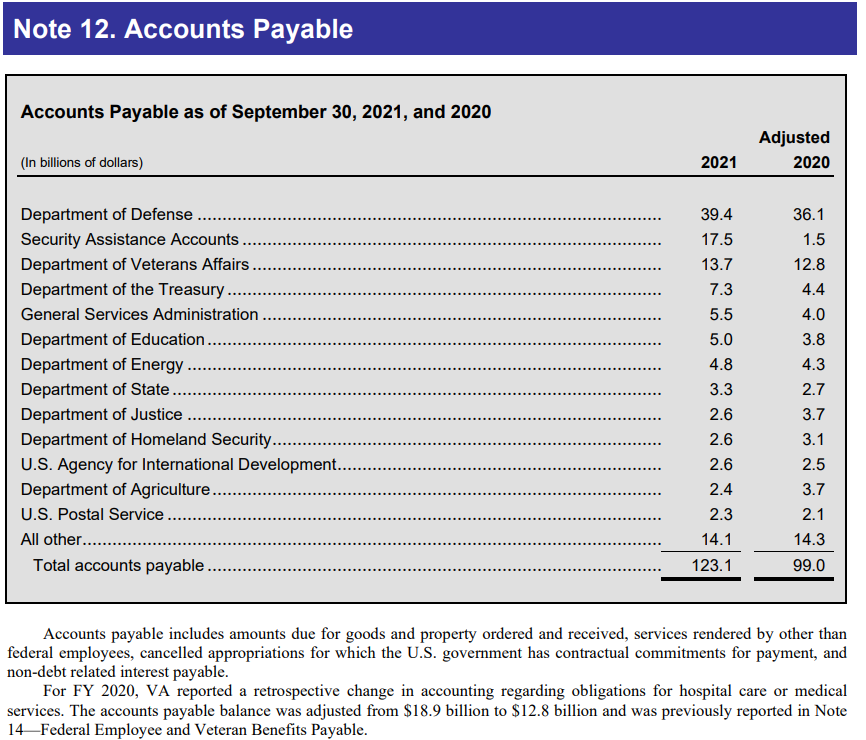
That thing called “federal debt” isn’t federal debt. The actual federal debt is the amount the federal government owes to vendors of goods and services purchased by the federal government but not yet paid for.

In short, the real federal debt also is known as “Accounts Payable” plus Interest Payable.

The actual federal debt is in the billions, not the trillions, and it is paid reliably every day.

Treasury securities, T-bills, T-notes, and T-bonds are deposit accounts, similar to bank safe deposit accounts that the government never touches.

When you invest in a T-security, you put dollars into your account from which only you can withdraw. Just as the contents of your bank safe deposit box are not the debt of your bank, the contents of your T-security account are not the debt of your federal government.

The government didn’t borrow those dollars. It merely holds them separately for safekeeping until you take them back.

Her plea was taken by Peter Schiff, famed investor, and market commentator, as an “official admission that the U.S. is running the world’s largest Ponzi scheme.”

Sadly, Schiff doesn’t seem to know what a “Ponzi scheme is. Quoting from Wikipedia:

Ponzi scheme is a form of fraud that lures investors and pays profits to earlier investors with funds from more recent investors.

The scheme leads victims to believe that profits come from legitimate business activity (e.g., product sales or successful investments), and they remain unaware that other investors are the source of funds.

A Ponzi scheme can maintain the illusion of a sustainable business if new investors contribute new funds. Most investors do not demand full repayment and still believe in the non-existent assets they purported to own.

Federal T-securities have none of these characteristics.

  1. They are not fraud.
  2. Payment does not come from more recent investors but rather from each depositor’s own deposits and the federal government’s infinite ability to create its sovereign currency.
  3. There is no claim that funds come from any business activity, legitimate or otherwise.
  4. The government does not rely on new investors, nor does it rely on new depositors. The government does not have to accept deposits. Even if every T-security owner demanded payment, the government could comply today.

Peter Schiff merely is using a scare tactic to fool the public. Rather than being a Ponzi scheme, U.S. T-securities are the safest investments known to the world and will continue to be safe so long as no political party is foolish enough to enforce the ridiculous debt limit (aka the “screw-depositors-to-make-political-points” action).

A political stand-off over the debt ceiling has been raging since Republicans regained control of the House of Representatives in the 2022 midterm elections.

President Joe Biden beseeched Congress not to hold the item hostage, suggesting a default could be “calamitous.”

His warnings hit deaf ears in the case of opposing Republicans who used their votes on an extension as leverage to seek spending cuts.

The debt limit has nothing to do with spending cuts because it deals with past spending, not future spending.

The Republican extortion attempt just as easily could be directed at any federal laws, even those having nothing to do with federal finances.

How about enforcing the debt limit unless women Senators wear long dresses, Trump’s rioters are released from prison, or the Capital is painted purple.

All of those have as much relevance to a debt limit as demanding cuts to future spending. The debt limit is a child’s game of, “I’ll hold my breath until I get my way.”

The Treasury can use “extraordinary measures” in the coming months to cover its many financial obligations, including Social Security and Medicare disbursements, but these emergency funds are limited.

At the end of the day, the U.S. simply must borrow more money, as it has done many times before.

The notion that the creator of the U.S. dollar needs to borrow dollars from the people who use the dollar is obviously ridiculous. Where would the so-called “lenders” get the dollars to “lend” if the creator is precluded from creating dollars?

Congress has set the limit for federal borrowing since 1917, raising it over time as government spending and borrowing needs have increased.

Notice the arbitrariness of the above sentence. It correctly assumes Congress can, at its discretion, increase the “debt limit” without regard to the wishes of so-called lenders.” If it were a real debt, the “borrower” could not, at whim, decide to borrow unlimited amounts.

“The U.S. Treas. Sec. has admitted the only way to avoid a default on the National Debt is to raise the #DebtCeiling so the Govt. can borrow from new lenders to repay existing lenders,” Schiff, CEO and chief global strategist at Euro Pacific Capital tweeted on Jan. 16.

“This is an official admission that the U.S. is running the world’s largest Ponzi scheme.”

Oh, the ignorance! Oh, the lies. The “U.S. Treas. Sec.” admitted no such thing. The real way to avoid default is to eliminate the useless debt ceiling. We didn’t always have a debt ceiling. Why do we have one now? Taken from Wikipedia:

In 1979, noting the potential problems of hitting a default, Dick Gephardt imposed the “Gephardt Rule,” a parliamentary rule that deemed the debt ceiling raised when a budget was passed.

This resolved the contradiction in voting for appropriations but not voting to fund them. The rule stood until it was repealed by Congress in 1995.

Get it? When Congress voted for an appropriation, it also voted to fund them.

So, if Congress said, “We authorize spending a billion dollars on a dam,” that meant a billion dollars immediately became available to build a dam.

Makes sense to any normal person. Apparently, though, it was too logical for Congress.

In 1995, Congress said, “When we authorize spending a billion dollars to build a dam, we really don’t authorize paying a billion dollars to build the dam.”

And if that makes sense to you, you should run for Congress. Since that convulsion of childish illogic, Congress has plagued the nation with repeated debt limit crises.

The US raised its debt ceiling (in some form or other) at least 90 times in the 20th century.

The debt ceiling was raised 74 times from March 1962 to May 2011, including 18 times under Ronald Reagan, eight times under Bill Clinton, seven times under George W. Bush, and five times under Barack Obama.

In practice, the debt ceiling has never been reduced, even though the public debt itself may have been reduced.

It should be noted that never has the arbitrary increase of the debt ceiling caused any sort of financial difficulty. There has been no time bomb explosion, fraud, or Ponzi scheme.

In his podcast, Schiff claimed the U.S. government is in a doom spiral where it cannot pay its current lenders back, so it borrows from new lenders repeatedly.

And, oh yes, no “doom spiral.” Though the so-called “debt” has risen from $40 billion to $26 trillion, a 65,000% increase, the federal government still has no difficulty paying its bills.

“Why do people willingly participate? It’s because they don’t realize it’s a Ponzi scheme,” Schiff says.

It’s not.

“They think they’re going to get paid back. When they realize they’re going to be paid back in monopoly money, they’re not going to want to lend.

“Monopoly money”? Is that a scare term like “Ponzi scheme” and “ticking time bomb”?

“In fact, they’re not going to want to hold on to these Treasuries, and the only buyer is going to be the Federal Reserve. And that’s when the printing press is going to overdrive, and the dollar is going to fall through the floor.”

Gee, Schiff, exactly when is that going to happen. It didn’t happen while the printing press was running every day, every week, every month, and every year for the past 84 years. Why are things different now?

As Congress fights over the debt ceiling extension, U.S. credit rating and financial markets are at risk – but here are three assets that Schiff likes as hedges against economic volatility.

And here it comes, the real reason Schiff is serving up bushels of BS:

Wealthy young Americans have lost confidence in the stock market — and are betting on these assets instead. Get in now for strong long-term tailwinds.

Gold. Schiff has long been a fan of the yellow metal.

“The problem with the dollar is it has no intrinsic value,” he once said. “Gold will store its value, and you’ll always be able to buy more food with your gold.”

Except, Schiff neglects to tell you that gold has very little intrinsic value. Gold has less intrinsic value than aluminum, iron, copper, or paper. Gold isn’t used for much other than decoration.

A few teeth fillings, some electronics, that’s about it. Rather than intrinsic value, gold has demand value. People want the stuff mainly because it’s pretty.

As always, he’s putting his money where his mouth is.

Euro Pacific Asset Management’s latest 13F filing shows that as of Sept. 30, Schiff’s company held 1.655 million shares of Barrick Gold (GOLD), 431,952 shares of Agnico Eagle Mines (AEM), and 317,495 shares of Newmont (NEM).

In fact, Barrick was the firm’s top holding, representing 6.8% of its portfolio. Agnico and Newmont were the third and sixth-largest holdings, respectively.

Right. He’s promoting his holdings, trying to get suckers to buy gold.

Gold can’t be printed out of thin air like fiat money, and its safe-haven status means demand typically increases during times of uncertainty.

Except, we always are in times of uncertainty, and gold can be mined out of thin air.

The biggest problem with gold is it costs money to ship, costs more money to store, and costs even more money to insure. And the stuff pays no interest or dividends.

Gold is the classic “bigger fool” investment. Fools buy it hoping to sell it to bigger fools. If you are looking for absolute safety, with no shipping, storage, or insurance costs, plus income, buy T-securities.

Other than that, your best bet is one of the big stock funds. based on the S&P index or similar. And stop worrying about the misnamed federal “debt.” It’s not federal, and it’s not debt, and it’s not a ticking time bomb.

It’s just privately owned, federally guaranteed depositories of U.S. dollars. The only way the “ticking time bomb” can explode is if the debt nuts push the “debt limit” button.

The cure for the “debt limit crisis:” Simply return to the Gephardt Rule.  Simple.

Rodger Malcolm Mitchell Monetary Sovereignty Twitter: @rodgermitchell Search #monetarysovereignty Facebook: Rodger Malcolm Mitchell

……………………………………………………………………..

The Sole Purpose of Government Is to Improve and Protect the Lives of the People.

MONETARY SOVEREIGNTY