–Why the crazy stock market fall

An alternative to popular faith

I recently read an article containing wonderment that despite good news (the April jobs report showed payrolls grew by 290,000) the stock market crashed. The author, John Curran, speculated: “One reason is that the Euro crisis in spite of all efforts remains very much a crisis, and that threatens the global economy. The second reason is that Thursday’s stock market blowout pointed up a dangerous vulnerability in the financial markets, one that we’ve known of (high frequency trading) but sort of forgotten. Third, the Labor Department’s jobs report while positive in some respects also contained a bit of negative news […] (increased unemployment).

While the Greek/EU situation is serious, it will not seiously affect the U.S. economy, so long as our government continues to deficit spend. Second, while high frequency, automated trading can cause short term, manic effects on the stock market, the longer term effects are minimal. Finally, the way unemployment is calculated (only those looking for a job are counted), makes it inevitable that when times improve, unemployment statistics rise. People who had given up, start again to look for jobs. So from that standpoint, the stock market is wrong.

There is one other scenario, that could have far greater significance than any of the above: The off shore oil well blowout. Not only will it cause enormous destruction in of itself, but it will prevent further offshore drilling for an unknown time. Weeks? Certainly. Months? Possibly. But weeks and months are no big deal.

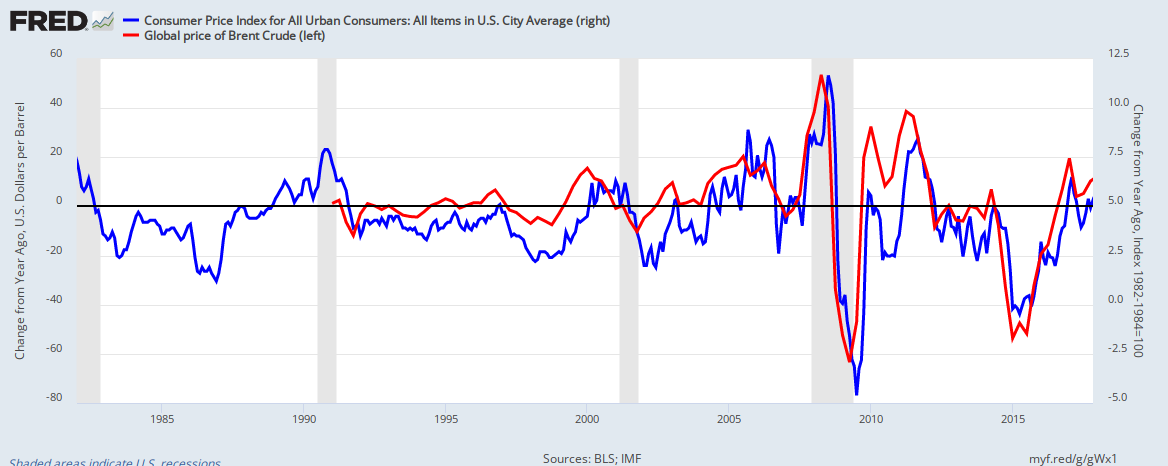
Perhaps even years, and that is a big deal for our economy. For the past few decades, inflation has been caused, not by deficit spending, but by Oil Prices.

Even with the worst case scenario, the actual supply loss won’t be felt soon, but if the projected loss of oil production is significant, it will cause oil prices to rise, thus causing inflation. The debt hawks will assume (wrongly) the inflation is caused by deficits, and will demand that taxes be increased and spending decreased — either of which will stall economic growth and move us into a recession.

And that will drop the stock market.

Rodger Malcolm Mitchell
http://www.rodgermitchell.com

No nation can tax itself into prosperity

–Federal deficit spending doesn’t cause inflation; oil does

An alternative to popular faith

Ask a debt hawk why he hates federal deficits and he will give you four main reasons:

1. Federal debt must be paid back by taxpayers. (But, because the federal government has the unlimited power to create the money to pay its bills, taxpayers do not fund federal spending.)

2. Federal debt adds to the government’s interest-paying burden. (Again, interest is no burden to a entity having the unlimited ability to create money.)

3. Federal debt uses up lending funds that otherwise would go to private needs. (But, federal spending adds money to the economy, making more, not less, funds available for private lending.)

4. By increasing the money supply, federal deficits reduce the value of money, thereby causing inflation. Readers of this blog have seen the graph (below) which shows no relationship between federal deficits — even large federal deficits — and inflation.

Note how the peaks and valleys of deficit growth do not match the peaks and valleys of inflation growth:

If deficits don’t cause inflation, what does? In a previous post “Is inflation too much money chasing too few goods”, we answered that question (“No.”), and we presented a graph indicating the real cause of inflation may be energy prices, more specifically, oil prices. See below:

The extreme movements of energy prices corresponding with the more modest movement of overall inflation, seem to indicate that energy costs “pull” inflation in either direction.

We can see this parallelism better by magnifing the CPI movement with a different vertical axis:

Monetary Sovereignty

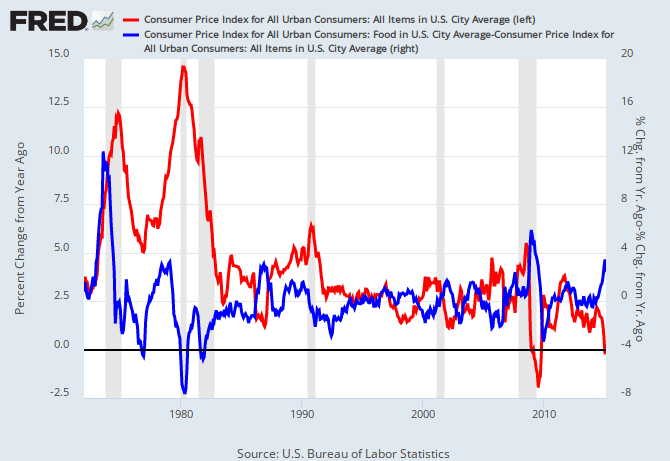
Now here is another graph that may substantiate the hypothesis that energy prices pull CPI:

monetary sovereignty

It compares inflation movements (red line) with the movement of energy prices less the movement of inflation (blue line). Notice how closely the two lines correspond.

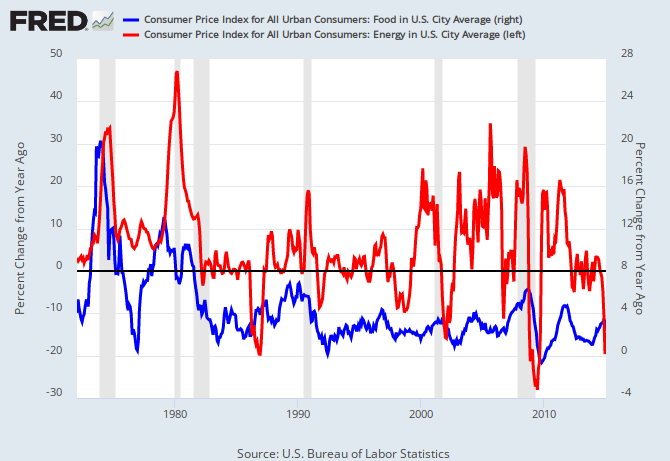
Compare that graph with the graph below. This graph is the same as the one above, except rather than comparing energy price changes with inflation, it compares food price changes. See how there is much less correlation.

monetary sovereignty

Food price changes do not seem to be the key inflation-causing factor. In fact, energy price changes seem to cause food price changes:

monetary sovereignty

Inflations are not caused by too much money. Inflations are caused by shortages.

Energy, and more specifically oil is, aside from food and water, the one universal need. It is the only commodity, the shortage of which, affects the prices of all other goods and services.

Rodger Malcolm Mitchell
http://www.rodgermitchell.com

No nation can tax itself into prosperity. Those who say the stimulus “didn’t work” remind me of the guy whose house is on fire. A neighbor runs with a garden hose and starts spraying, but the fire continues. The neighbor wants to call the fire department, which would bring the big hoses, but the guy says, “Don’t call. As you can see, water doesn’t put out fires.”