The conclusion was that consciousness is hard to define because we make false assumptions about it.
One assumption is that consciousness is a mystical reality concerning a brain’s self-awareness.
Or, we assume consciousness is a state occupied only by living creatures, animals only, “higher” animals only, or things that can recognize themselves in a mirror.
Thus, because there is no agreement on what consciousness is and who or what can have it, we have created a hard problem when, in fact, the “hardness” is of our own making.
Bacteria can communicate, and they speak multiple languages! Bacteria use chemicals as their “words.”
They use chemical communication to distinguish their own species from others and, in doing so, presumably reveal friend from foe.
Bacteria release their chemical communication molecules into the extracellular environment. When these chemicals build up to a critical level, a signal is relayed to the cell interior, which alerts each bacterial cell that other bacterial brethren are in the neighborhood and that they have reached a “quorum.”
The entire population of bacteria then acts as a large, coordinated group, carrying out tasks that would be unsuccessful if a single bacterium acted alone.
This process, called “quorum sensing,” controls bacterial behaviors ranging from symbiosis to virulence, biofilm formation, and natural product production.
By most reasonable measures, quorum sensing and other bacterial communications could be termed “consciousness.”
When a person dies, he/she loses some consciousness, but not every cell dies instantly. Often, some bodily functions continue for a time, and those cells continue to be conscious of the cells and chemicals around them.
We die, bit by bit. Even our brains die bit by bit. At what point is our consciousness gone?
A brain-dead person might be kept alive, artificially, by heart and breathing machines. His body will continue to be conscious of its internal workings — digestion and oxygen consumption. But he will have drifted down the consciousness continuum.
I suggest that rather than embracing the hard problem (actually impossible problem) of “consciousness,” we should talk about “sensingness,” the ability to sense and react to stimuli.
Consciousness is a “hard problem” only because philosophers arbitrarily have made it hard. They made the unnecessary decision that something they call “consciousness” requires life, and not just life, but so-called “advanced life,” having a human-style brain.
But why? Why does science limit consciousness to human-style brains.
It’s especially mystifying when you realize that many creatures have far superior abilities to sense their environment and to communicate than we do.
(One is reminded of geometry, where mathematicians arbitrarily decided the problems must be solved using only a compass and straightedge. Because some problems could not be solved using just those tools, the problems were considered impossible to solve.)
(One also is reminded of arguments about defining “beauty.” A bacterium might feel a warm, phosphorus laden pool is the ultimate of beauty.)
Rather than arbitrarily limiting our investigations to something called consciousness — something that has no real definition — we should decide how much sensingness each object has. “How sensing is an adult person? How sensing is a dog, an octopus, a sunflower, a virus?”
How much ability do they have to sense and react to stimuli?
Suddenly, the problem becomes straightforward. It’s a big number, a monster number, but there is an algorithm: A finite sequence of instructions to solve a problem.
List and measure every conceivable stimulus an object receives, and list the object’s reaction to each stimulus individually and in combination with all other stimuli, and you have its total sensingness.
Yes, we can argue about the relative values of different stimuli. Still, at least with sensingness, we would argue in concrete terms, not in the vague, hazy, undefined wonderworld of consciousness.
==========//////////==========
Conscious, thinking, or sensing?
In this regard, here are excerpts from an article in the February 2024 issue of Scientific American:
The answer may be ‘ yes, ‘ thanks to new research on slime molds.’
Scientists from the Wyss Institute at Harvard University and the Allen Discovery Center at Tufts University have discovered that a brainless slime mold called Physarum polycephalum uses its body to sense mechanical cues in its surrounding environment and performs computations similar to what we call ‘thinking‘ to decide in which direction to grow based on that information.
Unlike previous studies with Physarum, these results were obtained without giving the organism any food or chemical signals to influence its behavior. The study was published in Advanced Materials.
‘People are becoming more interested in Physarum because it doesn’t have a brain, but it can still perform a lot of the behaviors that we associate with thinking, like solving mazes, learning new things, and predicting events,’ said first author Nirosha Murugan, a former member of the Allen Discovery Center who is now an assistant professor at Algoma University in Canada.
‘Figuring out how proto-intelligent life manages this type of computation gives us more insight into the underpinnings of animal cognition and behavior, including our own.’
Think about it. The Physarum can solve problems. Is it conscious, or is it sensing?
Slimy action at a distance Slime molds are amoeba-like organisms that can grow up to several feet long and help break down decomposing matter in the environment, like rotting logs, mulch, and dead leaves.
A single Physarum creature consists of a membrane containing many cellular nuclei floating within a shared cytoplasm, creating a syncytium structure.
Physarum moves by shuttling its watery cytoplasm back and forth throughout the entire length of its body in regular waves, a unique process known as shuttle streaming.
‘With most animals, we can’t see what’s changing inside the brain as the animal makes decisions.
Physarum offers a fascinating scientific opportunity because we can observe its decisions about where to move in real-time by watching how its shuttle streaming behavior changes,’ said Murugan.
While previous studies have shown that Physarum moves in response to chemicals and light, Murugan and her team wanted to know if it could make decisions about where to move based on physical cues in its environment alone.
Again, does that sound like consciousness or more like sensingness?
The researchers placed Physarum specimens in the center of Petri dishes coated with a semi-flexible agar gel and put one or three small glass discs next to each other atop the gel on opposite sides of each dish.
They then allowed the organisms to grow freely in the dark over 24 hours and tracked their growth patterns.
For the first 12 to 14 hours, the Physarum grew outwards evenly in all directions; after that, however, the specimens extended a long branch that grew directly over the surface of the gel toward the three-disc region 70% of the time.
Remarkably, the Physarum chose to grow toward the greater mass without first physically exploring the area to confirm that it contained the larger object.
The Physarum “figure out” where the larger mass was. Is “figuring out” evidence of consciousness?
How did it accomplish this exploration of its surroundings before physically going there? The scientists were determined to find out.
The researchers experimented with several variables to see how they impacted Physarum’s growth decisions and noticed something unusual. When they stacked the same three discs on top of each other, the organism seemed to lose its ability to distinguish between the three discs and the single disc.
It grew toward both sides of the dish at roughly equal rates despite the three stacked discs still having greater mass. Clearly, Physarum was using another factor beyond mass to decide where to grow.
To figure out the missing piece of the puzzle, the scientists used computer modeling to create a simulation of their experiment to explore how changing the mass of the discs would impact the amount of stress (force) and strain (deformation) applied to the semi-flexible gel and the attached growing Physarum.
As they expected, larger masses increased the amount of strain, but the simulation revealed that the strain patterns the masses produced changed depending on the arrangement of the discs.
‘Imagine driving on the highway at night and looking for a town to stop at. You see two different arrangements of light on the horizon: a single bright point and a cluster of less bright points. While the single point is brighter, the cluster of points lights up a wider area more likely to indicate a town, so you head there,’ said co-author Richard Novak, PhD, a lead staff engineer at the Wyss Institute.
‘The light patterns in this example are analogous to the patterns of mechanical strain produced by different mass arrangements in our model. Our experiments confirmed that Physarum can physically sense them and make decisions based on patterns rather than signal intensity.’
Physarum makes decisions. That much is clear. Is making decisionsa sign of consciousness, or is it simply sensingness?
The team’s research demonstrated that this brainless creature was not simply growing towards the heaviest thing it could sense; it was making a calculated decision about where to grow based on the relative patterns of strain it detected in its environment.
“Making a calculated decision” seems to involve the question of consciousness vs. unconsciousness. If you struggle with defining “conscious,” what is your bright line separating conscious from unconscious.
Is the Physarum deciding to reach out toward a specific strain pattern more or less conscious than a human being under anesthesia?
But how was it detecting these strain patterns? The scientists suspected it had to do with Physarum’s ability to rhythmically contract and tug on its substrate because the pulsing and sensing the resultant changes in substrate deformation allows the organism to gain information about its surroundings.
Other animals have particular channel proteins in their cell membranes called TRP-like proteins that detect stretching. Coauthor and Wyss Institute Founding Director Donald Ingber, M.D., Ph.D., had previously shown that one of these TRP proteins mediates mechanosensing in human cells.
When the team created a potent TRP channel-blocking drug and applied it to Physarum, the organism lost its ability to distinguish between high and low masses, only selecting the high-mass region in 11% of the trials and selecting both high- and low-mass areas of 71% of trials.
Think about how you make decisions. Say your bottom hurts, so you decide to shift in your chair. That mechanosensing in your bottom’s cells led to your decision. How different is that from the Physarum’s mechanosensing that led to its decision to reach out?
I suggest it’s not different at all, and further, if you were under sedation and did not sense any discomfort, the Physarum was more conscious — or more sensing — than you were.
‘Our discovery of this slime mold’s use of biomechanics to probe and react to its surrounding environment underscores how early this ability evolved in living organisms and how closely related intelligence, behavior, and morphogenesis are.
In this organism, which grows out to interact with the world, its shape change is its behavior. Other research has shown that similar strategies are used by cells in more complex animals, including neurons, stem cells, and cancer cells.
This work in Physarum offers a new model to explore how evolution uses physics to implement primitive cognition that drives form and function,’ said corresponding author Mike Levin, Ph.D…. This Wyss associate faculty member is also the Vannevar Bush Chair and serves as director of the Allen Discovery Center at Tufts University.
“Cognition” is another part of consciousness.
‘This study confirms once again that mechanical forces play as important a role in the control of cell behavior and development as chemicals and genes, and the process of mechanosensation uncovered in this simple brainless organism is amazingly similar to what is seen in all species, including humans,’ said Ingber.
‘Thus, a deeper understanding of how organisms use biomechanical information to make decisions will help us to better understand our own bodies and brains, and perhaps even provide insight into new bioinspired forms of computation.’
Ingber is also the Judah Folkman Professor of Vascular Biology at Harvard Medical School and Boston Children’s Hospital and professor of bioengineering at the Harvard John A. Paulson School of Engineering and Applied Sciences.
The term “make decisions” hints at some mystical factors beyond the physical, chemical, or quantum. But I suggest there are no such factors.
Conscious, thinking, or sensing?
I suggest that all your decisions are the result of your entire body’s (not just your brain’s) reaction to everything your body experiences — gravity, heat, light, motion, odor, taste, sound, every field, every chemical in your environment and inside your body — now and in the past, even at the quantum level.
The word “reaction” is crucial. It is the measure of sensingness. You do not make decisions in a vacuum. Everything you touch and everything that touches you are part of your reaction, awareness, consciousness, and sensingness.
We call that “thinking.”
Animals sense and react. Plants sense and react. Bacteria, even viruses, sense and react. And depending on your bent, we could call those reactions “consciousness,” but more accurately, they are sensingness.
And there is no transition to thinking. They are one.
By that measure, the entire earth is sensing, or conscious, as changes in global weather patterns indicate. The earth has spawned life (however you define it), and life has done things the earth senses and reacts to; we are part of an enormous, sensing, one might say, “aware,” organism that reacts to everything on, in, and touching it.
The bottom line is that consciousness is not a thing but a continuum of reactions. The greater the reactions, the greater the consciousness, i.e. sensingness.
There is no mysticism involved. There is no special feature beyond chemical and quantum mechanics.
Arguing about whether something is conscious, thinking, aware, etc. is like debating the existence of angels. Fruitless. It’s all part of the sensing continuum.
Have you ever tried to define consciousness? Every definition seems to cover human consciousness or that, plus nearly everything else.
Wikipedia says,
Consciousness, at its simplest, is awareness of internal and external existence. However, its nature has led to millennia of analyses, explanations, and debates by philosophers, theologians, and all of science.
Opinions differ about what exactly needs to be studied or even considered consciousness. In some explanations, it is synonymous with the mind and at other times, an aspect of the mind.
In the past, it was one’s “inner life”, the world of introspection, private thought, imagination, and volition.
Today, it often includes any kind of cognition, experience, feeling, or perception.
It may be awareness, awareness of awareness, or self-awarenesseither continuously changing or not. The disparate range of research, notions, and speculations raises curiosity about whether the right questions are being asked.
Hmm. “Awareness, awareness of awareness, self-awareness, mind, aspect of the mind, introspection, thought, imagination, volition, cognition, experience, feeling, or perception” — well, that narrows it down.
Given those definitions, what is conscious? A human being? Yes, of course — except when the human is unconscious or semi-conscious (?).
Which of these is conscious: A sleeping human? A dreaming human? A lucid dreaming human? A chimpanzee? A dog?
A porpoise? A fish? A bee? A spider? A mosquito? A sperm? A tree? Grass? A computer? A lake? A stone? A flame? The sun? The earth? The universe?
Since generations and millennia of brilliant and not-so-brilliant thinkers have offered opinions, I might as well give you mine.
In quantum mechanics, at the smallest level, objects do not have definite states, but rather a probability range of states until they are measured, at which point they “collapse” into one state. I believe “consciousness” is similar.
Consciousness is not a “thing”; it is a range of “things,” with the “things” being reactions to stimuli.
Consciousness is like the wave function that collapses when measured. Since everything reacts to stimuli, everything is, to some degree, conscious. You can measure that range and call what you measure, “conscious.”
You believe your brain is conscious because that belief is part of how it reacts to stimuli. A stone is conscious because that is how it reacts to stimuli.
So, is a mosquito conscious? Yes, to a degree.
One might object that a mosquito lacks self-awareness and introspection. But does that mean a newborn human baby is not conscious? How, relative to consciousness, is that newborn different from a mosquito?
Consciousness isn’t just the brain: The body shapes your sense of self | New Scientist
So, are plants conscious? Yes, to a degree.
Here is what Microsoft Bing AI says about plants:
Tropisms: Plants grow towards or away from a stimulus, such as light, gravity, or touch 12.Nastic movements: These are reversible movements in response to stimuli, such as the opening and closing of flowers in response to light.Hormonal responses: Plants produce hormones that regulate growth and development in response to stimuli, such as the production of abscisic acid in response to drought stress.Electrical signals: Plants can generate electrical signals in response to stimuli, such as the Venus flytrap’s electrical signal in response to touch.Chemical responses: Plants can produce chemicals in response to stimuli, such as the production of alkaloids in response to herbivory.
One might object, that though plants do sense and react to stimuli, they lack emotions. But who is to say that plants really do lack emotions? In Plutchick’s Wheel of Emotions, each core emotion can be expressed at different intensities:
Joy ranges from serenity to ecstasy
Trust ranges from acceptance to admiration
Fear ranges from timidity to terror
Surprise ranges from uncertainty to amazement
Sadness ranges from gloominess to grief
Disgust ranges from dislike to loathing
Anger ranges from annoyance to fury
Anticipation ranges from interest to vigilance
Can a plant’s ability to grow towards or away from light, move, produce hormones, generate electrical signals, and produce chemicals, be considered plant emotions? Gardeners often say their plants show “distress” or look “sad.” They ascribe animal emotions to their plants.
Plants communicate via sounds and chemical signals. When a plant receives such a communication from a fellow plant, it reacts. Is that reaction akin to an emotion?
If having emotions is a criterion for consciousness, then is every animal conscious? Yes. An angry swarm of bees fits that definition of consciousness. And if bees, why not spiders, mosquitoes, and ants?
What about a stone? Depending on its ingredients, it reacts to heat, water, compression, impact, gravity, radiation, wind, light, sound, and various chemicals — as does your brain.
How do two new books on consciousness close in on the elusive field?The Four Realms of Existence by Joseph LeDoux and Consciousness by John Parrington tell us a lot about human cognition, brain structure and evolution – but most of all they demonstrate how far this most tricky of quests still has to go, by Susan Blackmore, 22 November 2023
LAST month, two new books on consciousness added to the growing pile of literature on this contentious and difficult subject. One claims to give us a “new view of what makes us who we are”; the other offers “a radical new theory of human consciousness”. Bold claims indeed, but do they succeed?
Both authors take an evolutionary approach to the origins of language, thought and self, and survey research on perception, learning and memory in humans and other animals. Both are materialists: they try to fit consciousness into the physical world of living bodies and brains, where everything, including mental states and consciousness, results from material interactions between material things.
LeDoux’s aim is to provide a new theory of being human by dividing our evolutionary past into four realms: biological at the bottom, then neurobiological, cognitive and conscious.
Along the way are excellent accounts of the evolution of brain structures and cognitive abilities. Exploring jellyfish that move and hunt without a brain, as well as the capabilities of flies, birds and mammals, LeDoux tries to place each in its realm.
Parrington also tells an evolutionary tale, but his aim is to explain inner speech and thought, as well as the human capacity for self-conscious awareness. For him, the critical abilities are language and tool use.
Both authors mention the “hard problem” of explaining how subjective experience arises from the objective workings of a physical brain, but neither questions whether this is a soluble or well-posed question.
They also imply that since most other animals can’t sustain higher-order thoughts, they can’t be conscious. LeDoux doesn’t deny they might be, but says that “consciousness itself must be measured” if we are to find out.
In the current state of consciousness science, we have no idea whether “consciousness itself” even exists, nor can we separate it from the functions of brain and behaviour – let alone measure it.
While LeDoux has neither solved nor seriously questioned the validity of the hard problem, he is at least talking about subjective experience.
Parrington is not. Weirdly, although “consciousness” is mentioned on almost every page, he doesn’t explain any of the major ideas about it or propose his own. His work is devoted to understanding the neural circuits involved in perception, action, behavioral control and self-modelling, and his goal is to develop “a material explanation of human consciousness”.
I’ll interrupt to opine that no bright line ever will be found between humanconsciousness and otherconsciousness, just as no line will be found between human life and other life, or non-life, or human existence and other existence.
I suggest the operative word is a “continuum.” Some things are more alive than others. The “alive-or-dead” debate about viruses demonstrates the difficulty.
He has done a great job of exploring material explanations of thought, perception, self-representation and behavioural control, but none of this gets at the deeper questions about subjective experience.
Equating consciousness with subjective experience at least moves us to declare that all living creatures are conscious, since all animals and even plants have what arguably could be called subjective experience.
That would include bacteria, and it’s only a short step to viruses, which mutate in response to immune responses.
Are we humans different from other creatures? With his materialist understanding, Parrington puts the burden on human tool use and the inner speech other creatures lack.
Except that many non-human animals use tools, and how do we know what “inner speech” plants may have?
Yet he gives us no clue as to how inner speech can give us the ineffable experiences of the sky’s blueness, the smell of coffee, emotions of fear or sensations of hunger.
Shall we admit that plants are capable of experiencing the color of the sky, odors, hunger, and something that resembles human fear in avoidance.
In consciousness studies, there have been three main ways of facing the hard problem. The first accepts the problem as valid but claims it is too hard and works instead on the “easy problems” of cognition, perception and so on.
The second approach also accepts the problem as valid and tries to explain how subjective experiences “arise” from brain processes. No one has succeeded in doing this, including these authors.
The third way is to reject the idea that consciousness arises from brain activity. This is known as “illusionism”, which, in several guises, calls for the hard problem to be replaced with the “illusion” problem of how our false ideas about consciousness arise.
I’m not sure how “illusionism” does not arise from brain activity, but in any event, what says that not having a brain indicates a lack of consciousness? Trees and jellyfish might disagree.
An octopus, which has nine brains, might experience the “illusion” of superiority.
These two books have much to teach us about human cognition, brain structure and evolution, but, above all, they show how far consciousness studies has to go.
In summary, the “hardness” of the consciousness problem lies with its definitions, or lack thereof. I suggest that consciousness is a range of reactions to stimuli, external and internal.
You are conscious of your internal systems, your feelings of hunger, fullness, pain, temperature, fear, etc. You sense these things and your sensing is your consciousness.
The “hardness” of the problem relates to the arbitrary requirement is that “consciousness” must be done by life — more specifically, “higher animal life” — and no one knows what life is, much less, “higher.”
Eliminate the “higher animal life” requirement and the problem becomes less hard.
The sun senses its internal and external systems; it is conscious of them, the number and type of elements it has created, its internal temperatures, its internal plazma flow, its corona and coronal ejections, the gravity of its planets, other objects, and gasses. It senses them and so, it reacts to them.
Since by that measure, everything can be said to be conscious. The question is not about conscious vs. unconscious or non-conscious, but rather how conscious. Where on the consciousness continuum does each thing lie?
The answer to that question requires an evaluation not of the thing, but of the thing’s ability t0 sense and react to what it senses.
If you prick a conscious person with a pin, they will react in a way far different from a semi-conscious person or an unconscious person.
But there are people who have CIPA, a rare disease that causes a person to not be able to feel pain or sweat. Prick them with a pin and they will not react. Are they conscious? Yes, but somewhat less so. They are not conscious of pain.
The blind and the deaf are lower on the continuum of consciousness, though some blind people have greater hearing ability, which would raise them up the consciousness continuum.
Many animals perceive light and sound at higher or lower frequencies than we can, so on those parts of the sensing continuum, they are higher. Plants can sense and react to chemicals we can’t sense, much less, react to.
Bacteria can sense, communicate and react.
Bacteria can communicate, and they speak multiple languages! Bacteria use chemicals as their “words.”
They use chemical communication to distinguish their own species from others, and in doing so, presumably reveal friend from foe.
Bacteria release their chemical communication molecules into the extracellular environment. When the level of these chemicals builds up to a critical level, a signal is relayed to the cell interior, which alerts each bacterial cell that other bacterial brethren are in the neighborhood and that they have reached a “quorum.”
The entire population of bacteria then act as a large, coordinated group, carrying out tasks that would be unsuccessful if a single bacterium acted alone. This process, called “quorum sensing,” controls bacterial behaviors ranging from symbiosis to virulence to biofilm formation to natural product production.
By most reasonable measures, quorum sensing and other bacterial communications, could be termed “consciousness.”
When a person dies he/she loses some consciousness, but not every cell dies instantly. Often, some bodily functions continue for a time, and those cells continue to be conscious of the cells and chemicals around them.
We die, bit by bit. Even our brains die bit by bit. At what point is our consciousness gone?
A person who is brain-dead, might be kept alive, artificially, by heart and breathing machines. His body will continue to be conscious of its internal workings — digestion and oxygen consumption for instance. But he will have drifted down the consciousness continuum.
I suggest that rather than embracing the hard problem (actually impossible problem) of “consciousness” we should talk about “sensingness,” the ability to sense and react to stimuli.
Consciousness is a “hard problem” only because philosophers arbitrarily have made it hard. They made the unnecessary decision that something they call “consciousness” requires life, and not just life, but so-called “advanced life,” having a human-style brain.
But why? Give me one good reason why science limits consciousness to human-style brains. I challenge you.
It’s especially mystifying when you realize that many creatures have far superior abilities to sense their environment, and to communicate, than we do.
(One is reminded of problems in geometry where mathematicians arbitrarily decided the problems must be solved using only a compass and straightedge. Because some problems could not be solved using just those tools, the problems were considered impossible to solve.)
(One also is reminded of arguments about defining “beauty.” A bacterium might feel a warm, phosphorus laden pool is the ultimate of beauty.)
Rather than arbitrarily limiting our investigations to something called consciousness — something that has no real definition — we should decide how much sensingness each object has. “How sensing is an adult person? How sensing is a dog, an octopus, a sunflower, a virus?”
How much ability do they have to sense and react to stimuli?
Suddenly, the problem becomes straightforward. It’s a big number, a monster number, but there is an algorithm: A finite sequence of instructions to solve a problem.List and measure every conceivable stimulus an object receives, and list the object’s reaction to each stimulus individually and in combination with all other stimuli, and you have its total sensingness.
Yes, we can argue about the relative values of different stimuli, but at least with sensingness, we would argue in concrete terms, not in the vague, hazy, undefined, wonderworld of consciousness.
Rodger Malcolm Mitchell
Monetary SovereigntyTwitter: @rodgermitchellSearch #monetarysovereigntyFacebook: Rodger Malcolm Mitchell
……………………………………………………………………..
The Sole Purpose of Government Is to Improve and Protect the Lives of the People.



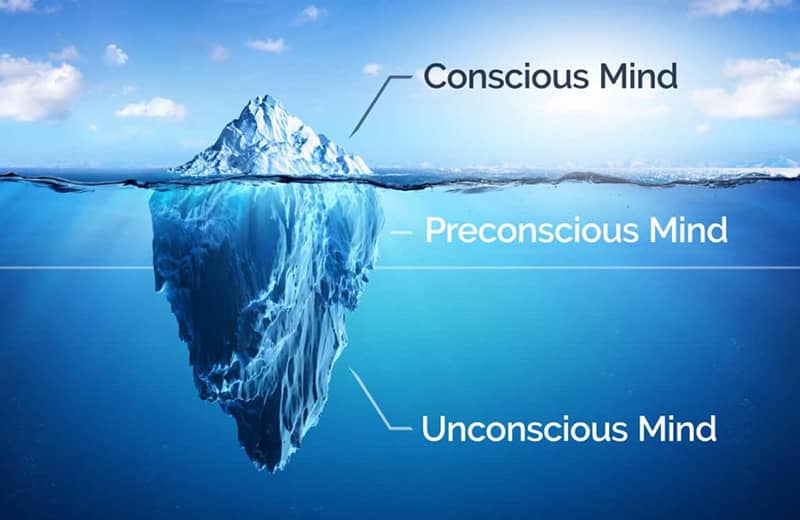 Given those definitions, what is conscious? A human being? Yes, of course — except when the human is unconscious or semi-conscious (?).
Which of these is conscious: A sleeping human? A dreaming human? A lucid dreaming human? A chimpanzee? A dog?
A porpoise? A fish? A bee? A spider? A mosquito? A sperm? A tree? Grass? A computer? A lake? A stone? A flame? The sun? The earth? The universe?
Since generations and millennia of brilliant and not-so-brilliant thinkers have offered opinions, I might as well give you mine.
In quantum mechanics, at the smallest level, objects do not have definite states, but rather a probability range of states until they are measured, at which point they “collapse” into one state. I believe “consciousness” is similar.
Consciousness is not a “thing”; it is a range of “things,” with the “things” being reactions to stimuli.
Consciousness is like the wave function that collapses when measured. Since everything reacts to stimuli, everything is, to some degree, conscious. You can measure that range and call what you measure, “conscious.”
You believe your brain is conscious because that belief is part of how it reacts to stimuli. A stone is conscious because that is how it reacts to stimuli.
So, is a mosquito conscious? Yes, to a degree.
One might object that a mosquito lacks self-awareness and introspection. But does that mean a newborn human baby is not conscious? How, relative to consciousness, is that newborn different from a mosquito?
Given those definitions, what is conscious? A human being? Yes, of course — except when the human is unconscious or semi-conscious (?).
Which of these is conscious: A sleeping human? A dreaming human? A lucid dreaming human? A chimpanzee? A dog?
A porpoise? A fish? A bee? A spider? A mosquito? A sperm? A tree? Grass? A computer? A lake? A stone? A flame? The sun? The earth? The universe?
Since generations and millennia of brilliant and not-so-brilliant thinkers have offered opinions, I might as well give you mine.
In quantum mechanics, at the smallest level, objects do not have definite states, but rather a probability range of states until they are measured, at which point they “collapse” into one state. I believe “consciousness” is similar.
Consciousness is not a “thing”; it is a range of “things,” with the “things” being reactions to stimuli.
Consciousness is like the wave function that collapses when measured. Since everything reacts to stimuli, everything is, to some degree, conscious. You can measure that range and call what you measure, “conscious.”
You believe your brain is conscious because that belief is part of how it reacts to stimuli. A stone is conscious because that is how it reacts to stimuli.
So, is a mosquito conscious? Yes, to a degree.
One might object that a mosquito lacks self-awareness and introspection. But does that mean a newborn human baby is not conscious? How, relative to consciousness, is that newborn different from a mosquito?

 #Monetary Sovereignty - Mitchell