Recently, I had a conversation with a young man who told me that federal deficit spending causes inflation.
If you took an economics course in school, you probably agree with him because that is what they teach. His logic was simple. He has been taught:
Federal deficit spending increases the supply of dollars. When one increases the supply of any product, without increasing demand, the value of that product decreases. When the value of the dollar decreases, we experience inflation.
Adding money to the economy increases demand, which, in the absence of increased supply, causes shortages, which create inflation.
The problem with #1 is that money is unlike any other product or service. The demand for money is relatively inelastic.
Example: You own a Tesla and learn that Teslas are now on sale at bargain prices. Will you buy an additional Tesla?
Or you see that tomatoes are on sale, but you have a dozen at home. Do you want additional tomatoes? Probably not.
But you have a million dollars and hear of an investment that will pay you another million at no risk. Do you want that additional million dollars? Probably so.
Currency printing didn’t cause inflation. Scarcities cause inflation, which causes a government to print currency.
The point: Federal deficit spending adds dollars to the economy, but that additional supply doesn’t reduce the dollar’s value.
In fact, if those extra dollars are used to obtain products or services that are in short supply, they can reduce the inflation caused by the shortages.
That is the problem with #2, because when the federal government spends dollars in the economy, the economy usually responds by increasing the supply of goods and services.
While deficit spending can be inflationary if it leads to excessive demand without corresponding increases in supply, spending can address supply-side constraints, boost productivity, and ultimately help reduce inflation.
There can be no economic growth without federal deficit spending.
The illusion that deficit spending causes inflation may come from hyperinflations, where governments print currencies in response to inflations.
It’s the “wheelbarrows filled with currency” visual we all have seen.
In those situations, inflation has been caused by scarcities of critical products and services, such as oil, food, labor, transportation, etc., and the additional dollars do nothing to relieve those scarcities.
When a government fails to address the real causes of inflation but instead prints currency, the inflation worsens,
The illusion of cause and effect is reversed. Money “printing” doesn’t cause inflation. Inflation can cause money printing if a government doesn’t understand what really causes inflation: Shortages of crucial goods and/or services.
It’s like a baseball team losing by five runs because it is short of good pitchers. So it trades its few decent pitchers for more hitters and starts losing by ten runs.
Here is a graph demonstrating the relationship (or rather, lack of relationship) between federal deficit spending and inflation:
The blue line shows the annual inflation rate in the U.S. The red line shows the annual deficit increase in the U.S. The lines are not parallel. Recessions (gray vertical bars) result from declining deficit growth and are cured by increased deficit growth.
Presumably, if federal deficit spending caused inflation, the two lines would generally be parallel. They are not. In fact, they tend to move in opposite directions.
One could use the above graph to demonstrate that federal deficit spending often cures inflation by reducing the shortages that do lead to inflation.
By comparison, please look at the following graph:
The blue line again shows the annual inflation rate. The green line shows the annual percentage changes in oil prices.
The lines in the above graph are essentially parallel, indicating a close relationship between oil prices and inflation.
Changes in oil supplies have had a far more profound and sudden effect on oil prices than changes in oil demand, which generally are slow.
Overall, the graphs suggest that federal deficit spending plays, at most, a minor role in inflation, and possibly none at all, while oil supplies (in addition to supplies of food, shipping, labor, and other products) are the main drivers of inflation.
Our most recent inflation was caused by COVID-related shortagesof oil, food, shipping, labor, metals, wood, and other products. When these shortages were eased by federal deficit spending, inflation eased.
This is an important fact because the threat of inflation is often used as an excuse for not federally funding social programs like Social Security, Medicare, and anti-poverty efforts.
The income/wealth/power Gapis what makes the rich wealthy. Without the Gap, no one would be rich; we would all be the same. The wider the Gap, the wealthier are the rich.
The wealthy are aware of this, and in their efforts to become even richer, they try to widen the Gap by increasing their own wealth and power and/or diminishing the resources of others.
One way they do this is by claiming that the social programs are becoming insolvent and so must be cut or taxes increased.
However, it is difficult for them to deny that the federal government could afford to fund these programs. Even the lie that the federal government would have to borrow dollars is easily debunked for two reasons:
As a Monetarily Sovereign entity, the federal government can create dollars at will by simply pressing keys on a computer.
Former Fed Chairman Ben Bernanke:“The U.S. government has a technology, called a printing press (or, today, its electronic equivalent), that allows it to produce as many U.S. dollars as it wishes at essentially no cost. It’s not tax money… We simply use the computer to mark up the size of the account.”
Even if the notion of future borrowing and increased interest payments were accurate (it isn’t), it would be of no significance to an entity that possesses the unlimited capacity to settle its debts by pressing computer keys. Statement from the St. Louis Fed:
“As the sole manufacturer of dollars, whose debt is denominated in dollars, the U.S. government can never become insolvent, i.e., unable to pay its bills. In this sense, the government is not dependent on credit markets to remain operational.”
So, the rich resort to the false claim that federal spending causes inflation.
What they fail to mention is the following graph, which highlights the relationships between federal deficits and recessions:
When federal deficit growth (red) decreases, we have recessions (vertical gray bars). Recessions always are cured by increases in federal deficit growth.
Economic growth requires money growth. Here is an example of the close relationship between economic growth and money growth
Gross Domestic Product (GDP) closely mirrors money (debt) growth.
The formula for Gross Domestic Product shows how money growth is necessary for economic growth:
GDP = Federal Spending + Non-Federal Spending + Net Exports
Net Exports generally are negative. (We import more than we export). So, GDP growth relies on federal and non-federal spending growth.
Federal Spending is a large part of M3, which in turn, is a large part of GDP. Federal Spending growth is necessary for GDP (economic) growth.
Then, of course, there is the fact that federal surpluses (the extreme version of deficit reduction) cause depressions (the extreme version of recessions). In fact, every depression in American history has resulted from surpluses.
1804-1812: U. S. Federal Debt reduced 48%. Depression began 1807.
1817-1821: U. S. Federal Debt reduced 29%. Depression began 1819.
1823-1836: U. S. Federal Debt reduced 99%. Depression began 1837.
1852-1857: U. S. Federal Debt reduced 59%. Depression began 1857.
1867-1873: U. S. Federal Debt reduced 27%. Depression began 1873.
1880-1893: U. S. Federal Debt reduced 57%. Depression began 1893.
1920-1930: U. S. Federal Debt reduced 36%. Depression began 1929.
1997-2001: U. S. Federal Debt reduced 15%. Recession began 2001.
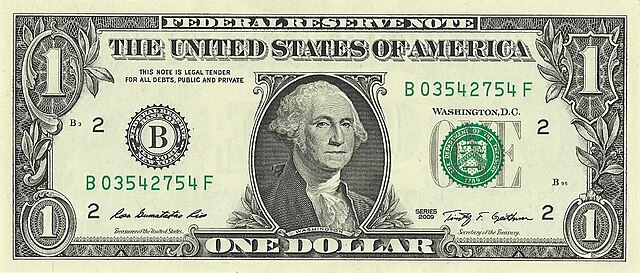
All money is a form of debt. Have you noticed that every dollar bill (“bill” is a word that denotes debt) is a Federal Reserve note (“note” is another word denoting debt)?
Each bill is signed by the Treasurer and the Secretary of the Treasury.
The U.S. dollar is nothing more than a number on the federal government’s books. It is not a physical entity. There are no physical dollars. The U.S. dollar bill is a title to a dollar showing that the bearer is owed a dollar by the United States government.
For example, an author owns a story he has written, though the story is not a physical entity. Similarly, the federal government is an author of federal dollars, though those dollars are not physical entities. And just as the author can create infinite stories, the government can create infinite dollars.
All debt requires collateral. The collateral for federal debt is “full faith and credit.”
This may sound nebulous to some, but it involves certain, specific, and valuable guarantees, among which are:
A. –The government will accept only U.S. currency in payment of debts to the government
B. –It unfailingly will pay all its dollar debts with U.S. dollars and will not default
C. –It will force all your domestic creditors to accept U.S. dollars if you offer them to satisfy your debt.
D. –It will not require domestic creditors to accept any other money
E. –It will take action to protect the value of the dollar.
F. –It will maintain a market for U.S. currency
G. –It will continue to use U.S. currency and will not change to another currency.
H. –All forms of U.S. currency will be reciprocal, that is five $1 bills always will equal one $5 bill and vice versa.
The value of debt, i.e., the U.S. dollar, is based in part on the value of its collateral. Should any of A – H no longer be in effect, the dollar’s value would plummet.
Another key factor influencing the value of the U.S. dollar is interest rates. Investments denominated in dollars, such as bonds and Treasury securities, are more sought after when they offer higher interest rates.
Be cautious with this, as the value of a bond decreases when interest rates rise. Newly issued bonds offer higher rates and compete with older bonds.
The key point is that dollars do not lose value, and inflation is not caused by the federal government’s increasing deficit spending. The government could easily fund Social Security and Medicare without imposing FICA taxes or triggering inflation.
The wealthy classes’ arguments for cutting SS and Medicare benefits and raising taxes are unfounded and based on misleading claims.
IN SUMMARY
Inflations are caused by scarcities, often due to oil and food shortages. Shortages of shipping, labor, metals, wood, and electronics can also be significant factors.
While deficit spending can be inflationary if it leads to excessive demand without corresponding increases in supply, spending can address supply-side constraints, boost productivity, and ultimately help reduce inflation.
Without federal deficit spending, there can be no economic growth and no solution to scarcity. The lack of federal debt growth causes recessions and depressions. Recessions are cured by federal (money) deficit growth.
The federal government could and should fund a comprehensive, no-deductible Medicare and Social Security for every man, woman, and child, regardless of age and income, while eliminating FICA.
We’ll end this post with excerpts from an article on the MSN website:
Some House Republicans (show) interest in reviving the party’s longtime passion for gutting the social safety net in the wake of Donald Trump’s reelection and the coming Republican trifecta.
Reports have surfaced about cuts to programs like Medicaid and food stamps to offset the cost of extending Trump’s 2017 tax cuts.
Others are openly suggesting that Medicare and Social Security may be on the chopping block as part of Elon Musk and Vivek Ramaswamy’s performative venture into government spending cuts through the new Department of Government Efficiency.
But MAGA Republicans on Capitol Hill who recently spoke to TPM were unwilling to be pinned down on the issue.
The Republican Party promulgates public ignorance about the differences between federal (Monetarily Sovereign) finances and personal (monetarily non-sovereign) finances to put forth a “small government” agenda that will widen the income/wealth/power Gap between the rich and the rest of us.
Rodger Malcolm Mitchell
Monetary SovereigntyTwitter: @rodgermitchellSearch #monetarysovereigntyFacebook: Rodger Malcolm Mitchell;MUCK RACK: https://muckrack.com/rodger-malcolm-mitchell; https://www.academia.edu/
……………………………………………………………………..
The Sole Purpose of Government Is to Improve and Protect the Lives of the People.
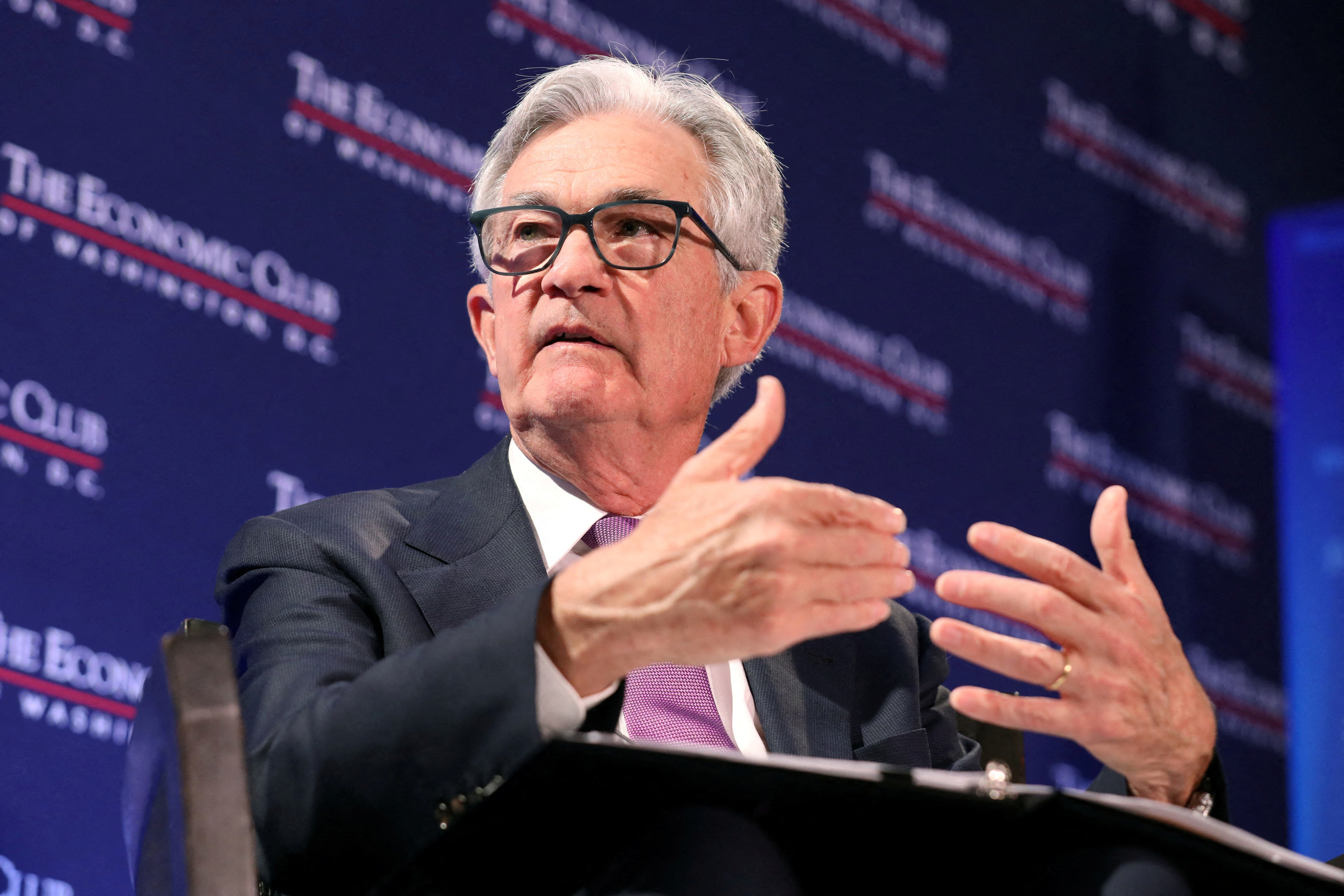
In the previous post, “Truly pitiful: Federal false helplessness in the face of inflation,” we discussed Federal Reserve Chairman Jerome Powell’s strange attempt to fight inflation by, of all things, raising prices!
Yes, that is precisely what he does when he raises interest rates, his sole inflation-fighting tool. Those higher interest rates increase the prices of virtually every product and service.
When businesses borrow, which most companies do, the higher interest increases their costs, which they must recoup by raising prices.
When farmers borrow, which most farmers do to pay for planting, they include interest costs in their selling prices when they harvest.
When you rent an apartment or house, the owner’s higher mortgage interest cost is reflected in your rental payment.
You may wonder, as I do, how the Fed (and many economists) concluded that raising interest rates reduced the prices of goods and services.
I suspect it comes from the belief that inflation comes from too much buying (Powell’s “overheated” economy). No one knows what an “overheated” economy is, but the phrase makes it sound like Powell knows what he’s talking about.
Since raising interest rates discourages people from borrowing, that seemingly would fight inflation. Of course, inflation itself discourages people from buying, so Powell intentionally causes inflation to cure inflation.
And if that weren’t nonsensical enough, discouraging people from buying is, by definition, causing a recession.
In short, Powell wants to cure inflation by causing it; to do so, he tries to cause a recession without actually causing one. If you understand it, please let me know.
Powell wants us to believe he is a baton-wielding maestro, using interest rates to masterfully conduct our economy as if it were a symphony orchestra, and he expertly navigates between inflation and recession.
In reality, he’s more like a carpenter with onlyone tool, a hammer, using it to remove scratches from furniture.
Here is an article that attempts to describe what I believe is the primary confusion he and his fellow economists suffer.
Inflation occurs when the prices of goods and services increase over a long period of time, causing your purchasing power to decrease.
High inflation can occur as the result of a variety of factors. However, economists often divide the root causes into two categories: demand-pull inflation and cost-push inflation.
And there it is. The common, perhaps universal, belief is that inflation either is demand-pull or cost-push.
I guess you’ve heard those terms. Most economics texts contain them. But what exactly do they mean? A few paragraphs later, the article will explain. But first, a bit of misinformation:
Soaring prices are not caused by “excessive” federal spending or by low interest rates. So, inflation cannot be cured by reduced federal spending or by raising interest rates.
Inflation is a normal part of the world’s economic cycles.
The concept that inflation is “normal” and is part of the world’s “economic cycles” is designed to make you believe it’s inevitable. It isn’t.
Inflation is not “normal.” It’s abnormal. Nothing is “normal” about inflations, hyperinflations, stagflations, recessions, or depressions. To call them “normal” is to call smallpox and broken legs, “normal.”
And it’s not part of any economic “cycle.” The definition of “cycle” is: “A round of years or a recurring period, especially when certain events or phenomena repeat themselves in the same order and at the same intervals.
To call inflations regular “cycles” is to say, “It’s no one’s fault. They just happen and are to be expected.” Inflations don’t just happen. They are caused by mismanagement and/or extraordinary events and certainly do not repeat at the same intervals.
Inflation occurs when the prices of goods and services increase over a long period of time, causing your purchasing power, or the amount of goods and services you can buy with a single unit of currency, to decrease.
In short, inflation means that your money may not be able to buy as much today as it could in the past.
That sounds exactly like what Powell’s raising interest rates does.
But why does inflation happen in the first place?
It often comes down to an imbalance between two different economic forces: supply and demand. Supply describes how much of a good or service is made and sold, and is driven by the businesses that are selling the good or service.
Demand, on the other hand, refers to how much of a good or service is purchased at a specific price, and is driven by consumers. If demand outpaces supply, inflation tends to follow.
Economists often divide the root causes into two categories: demand-pull inflation and cost-push inflation.
Demand-pull inflation is driven by an increase in total consumer demand. If consumers suddenly start spending more money than usual, businesses may find themselves selling more goods and services than they anticipated.
If these businesses are unable to keep up with the increased consumer demand, their remaining stock becomes more valuable, and prices may rise.
This kind of inflation tends to happen during periods of high consumer confidence, such as when unemployment rates are low and wages are high.
Cost-push inflation occurs when production costs rise. Unrelated to consumer demand, these increased production costs may lead to a decrease in total supply and a subsequent increase in prices to compensate.
These definitions exhibit some of the usual confusion about inflation. Inflation occurs when production costs rise (as was caused by Powell’s interest rate increases — to fight inflation).
Scarcity causes prices to rise. To cure inflation, the federal government should fund increased production of scarce goods.
However, increased production costs don’t lead to a decrease in total supply. It’s the reverse. A shortageof raw materials, parts, and labor leads to increased production costs.
This kind of inflation is commonly observed when the price of oil increases, making manufacturing operations more expensive. For example, the 1970s energy crisis was largely responsible for the cost-push inflation that occurred during that time period.
The energy crisis of the 1970s was very simply an oil shortage causing prices to increase—period. In fact, all inflations in history have been caused by shortages, most recently shortages of oil and/or food.
The still-current inflation was caused by COVID-19, which led to shortages of oil, food, lumber, steel, paper, computer chips, labor, and almost any other product or service.
It was not “cost-push.” It was not “demand-pull.” COVID-19 kept people home. We had a shortage of labor, which led to other shortages.
There is no “demand-pull inflation.” Consumers did not “suddenly start spending more money than usual.” They never do.
Consumers might suddenly start buying Furby dolls, Taylor Swift albums, or Ozempic® for weight loss, but consumers never suddenly start spending more money.
As for “cost-push” inflation, this is akin to saying, “The cause of inflation is inflation.” Cost-push is a meaningless definition.
Every inflation in world history has been caused by a shortage of critical goods and services, notably oil and/or food, which then causes other products and services to suffer shortages.
It’s also possible for inflation to result from factors unrelated to the economy. Natural disasters or major world events can disrupt supply chains and reduce theamount of goods available, driving up prices on the stock that remains.It’s also possible for a combination of these factors to occur simultaneously or for one to occur as the result of another.
In other words, all inflations are caused by shortages and not by excessive government spending, as so many economists claim.
How does inflation affect interest rates? Inflation is a complex issue, but one way to control it is through federal monetary policy.
When the Federal Reserve — America’s central banking system, also known as the Fed — detects rising inflation rates, it responds by raising the federal funds rate. This is a special interest rate related to lending between commercial banks.
An increase in the federal funds rate causes a corresponding rise in interest rates on auto loans, mortgages and other types of credit, making it more expensive to borrow money.
Increases in the cost of borrowing money can help to slow down consumer and business spending, allowing supply chains to catch up to the production of goods and services, which can in turn lead to a drop in prices.
Jerome Powell seems to say: “I cure inflation by raising the prices of everything you buy. If I were a doctor, I would cure anemia by applying leeches. Do you understand?”
Said simply, “The increased cost of borrowing increases the cost of goods and services, aka ‘inflation.’ The Fed fights inflation by causing more inflation.”
Ideally, this curbs inflation and stabilizes supply and demand without longer-term consequences such as a recession. When inflation is low once again, the Fed may decide to decrease interest rates, making it easier to borrow money and encouraging spending.
Wait! If high interest rates cure inflation, one should expect low rates to cause inflation.
But that hasn’t happened. For much of a decade, interest rates approached zero, and inflation was low. Only when the COVID-caused shortages hit did we have inflation.
The cause of inflation is scarcities of critical goods and services, mostly oil and food; how should we cure inflation? Cure the scarcity of oil and food.
Although Congress assigned the cure-inflation assignment to the Fed, Congress and the President have the tools to cure inflation, while the Fed does not.
The federal government has the infinite power to create stimulus dollars that would help the producers of scarce products to produce more.
Are we short of oil, food, computer chips, lumber, steel, paper, and shipping? Then, the federal government should give money and tax breaks to domestic producers and importers to alleviate the shortages.
Don’t try to cut federal spending, as many economists advise. Contrary to popular wisdom, federal spending has never caused inflation. If directed appropriately, it can cure inflation.
Those vivid photos of people pushing wheelbarrows full of currency are misleading. Printing higher currency paper didn’t cause hyperinflation; it was a harmful response to existing shortages.
Rodger Malcolm Mitchell
Monetary SovereigntyTwitter: @rodgermitchellSearch #monetarysovereigntyFacebook: Rodger Malcolm Mitchell
……………………………………………………………………..
The Sole Purpose of Government Is to Improve and Protect the Lives of the People.





 #Monetary Sovereignty - Mitchell