Everyday Illusions and Their Relationship to Free Will

In the previous post, “The Fallacy of Free Will,” we discussed the reasons why free will doesn’t actually exist. We explained that it is an illusion created by our brains to help us manage the overwhelming amount of stimuli we encounter every second.

I believe many readers view this argument as sophistry, convinced they possess free will. They experience it directly; they act on their desires and feel that nothing compels their actions.

The reason illusions are powerful is their compelling nature.. Pamela's Animated Gifs - trainairtram
The best-known visual illusions are television and movies.

A television screen displays two-dimensional sequences of flashing colored dots, which your brain interprets as convincing, three-dimensional, continuously moving scenes.

A movie consists of a series of rapidly appearing, still, two-dimensional images. Your brain’s shortcut allows you to “see” a three-dimensional, continuously flowing scene.

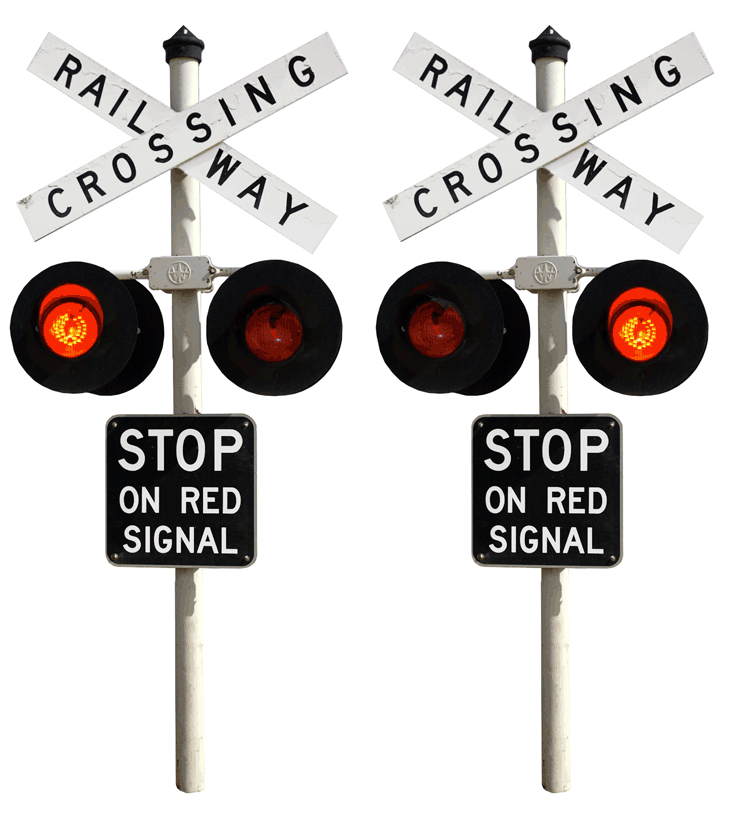
Another common illusion is the railroad stop sign, which is composed of two alternately flashing lights.

Although the lights don’t move, the alternating flash gives the strong impression that a light is moving back and forth.

In both cases, your visual system sees every photon, but rather than take the time and the monumental effort to translate each one, your brain uses shortcuts. It translates the stream of individual photons into patterns you believe are motion.

It converts the flow of individual photons into patterns that you perceive as motion. You look at the stop sign, and you experience a moving light. No matter how hard you try, you cannot unsee that image.

Only if you cover one light will you see, or rather not see, motion.

That is how we always see. The brain combines trillions of photons entering the visual system every second into a coherent image we perceive as reality. However, that reality consists only of those trillions of photons. Everything you see is an illusion created by your brain.

Our vision is a miracle of evolution. Plants can sense photons, but they don’t see. They don’t put those photons together into a moving, three-dimensional world.

Visual illusions are common, but all sensory systems rely on shortcuts to illusions—experiences where perception diverges from external reality.

I asked AI to give me examples of other, non-visual illusions. Here is what it came up with.

1. Auditory Illusions

Shepard Tone: A series of tones that sound like they’re endlessly rising in pitch, but actually aren’t. Your brain gets tricked by overlapping frequency layers.

McGurk Effect: If you see a face mouthing “ga” while the audio says “ba,” your brain might hear “da.” The illusion comes from conflicting visual and auditory inputs.

Phantom Words: Repeating a short, meaningless audio loop causes people to start “hearing” actual words or phrases—your brain imposes meaning on ambiguous input.

Auditory Continuity Illusion: A sound briefly interrupted by noise is perceived as continuing through the noise. Your brain fills in the gap.

2. Tactile (Touch) Illusions Thermal Grill Illusion: Interlacing warm and cool bars creates a burning sensation, even though neither is dangerously hot.

Pinocchio Illusion: If you close your eyes, hold your nose, and vibrate your biceps tendon, you may feel your nose stretching. Your brain merges proprioceptive and tactile inputs into a bizarre body image.

Cutaneous Rabbit: Taps delivered rapidly at the wrist and then the elbow make people feel taps hopping up the arm. Your brain “fills in” where no contact occurred.

Phantom Vibration Syndrome: Feeling your phone buzz in your pocket when it didn’t. A culturally recent but neurologically real tactile illusion.

3. Auditory-Tactile Crossovers

Sound-Induced Flash Illusion: Hearing two quick beeps can make you see a single flash as two flashes. Cross-modal illusions show how senses interact and co-create perception.

4. Olfactory (Smell) Illusions

Harder to pin down, but they do occur—often as context effects.

Imagined Smells: People in a “smelly” environment (e.g., told there’s gas or perfume in the air) often report odors even when none are present. Strong suggestion can conjure real olfactory experience.

Flavor Manipulation: Since taste is largely smell, context and expectation can warp it. The same smell labeled as “parmesan” vs. “vomit” will be perceived differently, even if physically identical.

5. Gustatory (Taste) Illusions These are typically context- or suggestion-based.

Miracle Fruit: This berry binds to taste receptors, making sour things taste sweet for a while. Not an illusion in the strictest sense, but the interpretation of taste is warped.

Color Influence on Flavor: The color of a drink (say, red) can make people taste “cherry” or “strawberry” even if it’s lemon-flavored. Visual input overrides chemical reality.

6. Proprioceptive Illusions These involve body position and motion.

Rotating Room Illusion: In a slowly rotating room, people feel as though they are tilting even when stationary. Your internal sense of gravity gets confused.

Out-of-Body Experiences (in lab settings): Through clever VR or mirrored feedback setups, researchers can induce a feeling of disembodiment, where your sense of self floats away from your body.

In summary, what you see, hear, taste, smell, and feel is not reality. Your brain translates photons into images, vibrations into sound, chemicals into taste and smell, and pressure into touch, whether it is light and shiver-inducing or hard and painful.

None of it is reality. It is translations, often faulty and misleading, though even when as accurate as humanly possible, they still are translations, just as the words “ice cream” or a photo of a sundae are not ice cream.

Here is how that relates to so-called “free will.”

1. Everything we see, hear, smell, taste, and feel is an illusion created by our brain and body. It is as real as a movie, a film, or a TV show.

2. Like all illusions. It may or may not represent some elements of reality, but we cannot know which. Our brain tries to represent enough reality so we will have heirs and they will have heirs.

3. We are not the result of survival of the fittest; rather, we represent the minimum needed for survival, more accurately described as the survival of just barely enough.

4. When it has excess energy, a life form’s population expands to meet the energy supply. That has been true of the human species, which has expanded because, for certain brief times, it has been more than barely enough. We may be nearing that limit.

———————————————————–

PS. Reader “tetrahedron720″ recently wrote to me saying: “I am free to shout in a library, but I can’t do anything about the sequence of reactions of the people around me who will Shhh me or toss me out.”

He is not free to shout in the library.

His brain has translated trillions upon trillions of stimuli into illusions that prevent him from shouting. No matter what he considers doing, the illusions created in his brain will be responsible.

Why are these experiences considered illusions? Tetrahedron720 relies solely on his unique history of receiving photons and other stimuli, which his brain has organized into his unique memories and beliefs. From these stimuli, he has created a distorted reality that influences his actions.

Had those same photons been received by another brain, they would have had a different effect, and produced a different reality.

He believes he is making a decision, but the decision is being made by his brain. There is no supreme “he” that overrides his brain’s actions.

He does not control his brain. His brain controls him.

And now, a question: (I enjoy posting rebuttals or questions about my own opinions, and I welcome them from you, so long as they aren’t simply, “You’re wrong, goodbye.”)

QUESTION: Everything I see, hear, smell, feel, and taste is nothing more than photons, atoms, and other stimuli translated by my brain. Those photons, etc., are the reality.

I’m conscious of the translations, not of the reality. For me, everything is an illusion, like seeing a movie of Hawaii while I sit in Florida.

Yet, while I live my life in an illusion, I still manage to move from point A to point B. I’m not surprised to awaken in point Z.

My life seems to have logical continuity. If this is all an illusion, who or what is the “script girl” that keeps everything in order?

(The old term “script girl” refers to the person on a movie set responsible for ensuring that details, like a cigarette held in the right hand in one scene, do not suddenly change to a handkerchief in the same hand in a subsequent scene.)

ANSWER: Predictive Coding Theory suggests the brain minimizes surprise by anticipating what’s about to happen.

Checker Shadow Illusion
Your brain translates photons to tell you that square “A” is darker than square “B.” but the reality is that they are the same shade. You never see reality. You see the brain’s translations. You run your life by the illusions your brain gives you.

The brain is not a passive receiver of data. It’s a prediction machine. It constantly compares incoming sensory input with past experience. Then it updates its predictions.

The Hollow Face Illusion A concave face looks convex because your brain expects faces to bulge outward. That expectation overrides the actual depth cues.

The dress (white/gold vs. blue/black): The brain guesses the lighting condition (cool shadow vs. warm light), then reconstructs the colors accordingly. It’s not just perception — it’s interpretation.

Memory 

I do not perceive reality; I perceive the interpretation of the present plus the memory of the past. Continuity depends heavily on the consistency of memory.

Memory lets me link this moment to the one before it. Without memory, I’d still have perceptions, but they wouldn’t feel like part of a story. The illusion would shatter into isolated frames.

There are people who suffer from anterograde amnesia, where they can no longer form new short-term memories. They often feel like they’ve just “woken up,” even if it’s the tenth time today.

They may not remember eating, speaking, or being in a room. But their emotions often linger. They might not remember a conversation, but still “feel” trust or fear toward a person based on prior encounters they can’t recall.

Perception without memory is not reality as we know it. It’s a sequence of nows. The “script girl” is gone, and the illusion turns into a slideshow with no story.

Their brain has created a reality as real to them as yours is to you, but it is a reality that lacks continuity.

We each live in a different world, one created uniquely for each of us by our unique brains. My world is as real to me as yours is to you, but they are different worlds.

My beliefs and decisions reflect my perspectives just as yours reflect yours. My illusion is that somehow, my world is the “real” one, but it is upon those unique beliefs that all my decisions are based.

I do not rule my brain. There is no “I” that is apart from my brain. My brain rules me via its interpretations.

Thus, I do not have free will.

Nor do you.

Rodger Malcolm Mitchell

Monetary Sovereignty

Twitter: @rodgermitchell

Search #monetarysovereignty

Facebook: Rodger Malcolm Mitchell;

MUCK RACK: https://muckrack.com/rodger-malcolm-mitchell;

https://www.academia.edu/

……………………………………………………………………..

A Government’s Sole Purpose is to Improve and Protect The People’s Lives.

MONETARY SOVEREIGNTY
The fallacy of free will

We have discussed “free will” several times: An interesting take on “Free Will vs Will Power”, and ” For those who still believe in free will, and “Read about the strange relationship between opposites: Consciousness and free will,” and “More about non-existent free will.” And elsewhere.

It is a subject that fascinates me. I hope you feel the same.

Here is what CHAT GPT says:

“Free will is generally understood as the ability to make choices that are not determined entirely by prior causes, external forces, or divine intervention.”

In other words, if you have free will, you—as an agent—can choose among alternatives in a way that you could have done otherwise.”

It goes on to give four explanations:

  • Libertarian Free Will: Belief that you have genuine freedom to choose. Decisions are not entirely caused by prior events or deterministic laws. Often requires that the self or soul initiate choices.
  • Determinism: Every event, including human decisions, is the inevitable result of preceding events and natural laws. Under strict determinism, free will is an illusion.

  • Compatibilism: Argues that free will is compatible with determinism. You are “free” if you can act according to your desires and intentions—even if those are caused by past events.
  • Hard Incompatibilism: Claims that whether determinism is true or not, you still don’t have the kind of free will that justifies moral responsibility.

In the above definitions and descriptions, a mysterious “you” lurks in the background. That always is the problem — the belief that there is an underlying “you” making out-of-body decisions. It’s the fundamental belief in free will.

And that is why free will does not exist; it would require that underlying “you,” a non-physical entity that doesn’t respond to any outside or internal stimuli, but instead is a self-stimulating concept apart from every atom in one’s body, and every field and force.

Though free will requires a self  (a  “you”) that is not affected by any external or internal stimuli. No such “you” has been found to exist. Everything we think or do is a physical response to some stimulus, external or internal, conscious.

Any process that could supposedly ininitiate “free will” would either arise from prior causes (and be deterministic), or arise from randomness (which isn’t will, just chaos), or require a non-physical self (which violates everything we know about reality).

Consciousness is the response to stimuli. It is not an on-off condition, but rather a continuum, with more reaction to more stimuli being more conscious.

Consciousness is not magical or mystical. It is physics. Not only are our choices caused, but our awarenessof choosing is itself just another response, not the seat of some independent self.

I’m going to propose counterarguments (I love arguing against myself.)

I. If we don’t have free will, why is God so angry at us? Or is that just us making assumptions about a human-like God?

Presumably, God is omniscient, omnipotent, and just. Humans have free will and are judged accordingly. God made us as we are. God knew exactly what we’d do. God is punishing us for doing what he made us do.

This creates a contradiction: A just God cannot righteously punish deterministic beings for actions they were guaranteed to perform.

Conclusions:

  1. God is not omniscient, omnipotent, and just, or
  2. God did not create us, or
  3. God does not exist, or
  4. God created us with free will.

What those four alternatives add up to is that the existence of “free will” is a theological, not a scientific, assertion, which cannot be proved scientifically

II. And if I don’t have free will, why should I be blamed and punished for doing evil or credited and rewarded for doing good?

If we don’t have free will, how can we blame Hitler and praise Mother Teresa?

It’s a matter of convenience and perspective. It is convenient to say Hitler was bad, but the reality is that his actions, i.e., his responses to his life’s stimuli, were bad. Hitler is just a bag of chemicals

Mother Teresa was a bag of similar chemicals. Society dubbed her responses to stimuli “good.” But her chemicals had no moral measure. They are just chemicals.

It is the actions that we judge, and those judgments are social, not physical. Murder is bad except when society deems it necessary. Military generals, who have killed thousands, often are revered.

Infants are neither bad nor good. Later in life, their responses to stimuli are judged by society, which then punishes or rewards those actions. The bag of chemicals is changed by stimuli.

Every second of every day, we experience trillions of stimuli, both internal and external. For our small three-pound brain, processing, analyzing, and responding to all these stimuli is an incredibly challenging task — impossible, really.

Even the most powerful electronic computer doesn’t instantly have to deal with the number and range of stimuli and needed responses that the human brain must.

Your brain and body must consider billions of ever-changing situations, from decoding photons for sight to decoding sound waves and decoding chemicals for taste.

All through your body, stimuli are decoded, so y0u can deal with pathogens, and remain the right temperature, sleep and wake, pump blood, and on and on to a factor of millions.

You must keep functioning from when you weighed 8 pounds, and now you weigh 150 pounds, and you still function, though every cell in your body has been replaced many times. (Imagine repairing a car with new parts every day, while the car is running at 50 mph.)

You must create reality out of sensory input. Response alone wouldn’t survive. You need to anticipate, and that anticipation is what you call “reality.”

One urn or two faces. You can flip them, but if you do, why? What stimulus causes you to take that action?

You see things before you actually “see” them.

This anticipation allows you to mentally “flip” illusions, so the urn alternatively can appear to be two faces.

Pure response, billions of times every second, would be impossible, as well as exhausting. It has to be a mix — anticipation and response– or we always would be a step too slow.

So the brain is forced to take shortcuts. Survival works better with anticipation than with blind response.

The illusion of free will — the belief in effect without cause — is the method by which we create anticipation.

We already know that parts of the brain predict before other parts realize it.

In 1983, Benjamin Libet found that brain activity (the “readiness potential”) begins up to 500 milliseconds before participants report deciding to move their finger. Libet concluded that the brain begins preparing for movement before we become aware of choosing to act.

Soon et al. (2008) – fMRI-based prediction of choices Finding: Using fMRI, researchers could predict with ~60% accuracy which button a subject would press up to 10 seconds before the subject became consciously aware of deciding. “The outcome of a decision can be encoded in brain activity several seconds before it enters awareness.”

Haynes Lab and Others (2010s) – Unconscious determinants of thought

Later studies replicated and extended Soon et al.’s work, showing that even abstract decisions, like whether to add or subtract numbers, could be predicted seconds in advance from brain scans.

Consciousness is not a live feed but a carefully delayed and smoothed reconstruction. A classic example: the “flash-lag effect.” See video

And if you enjoy videos, try this one: 30 Best Illusions. We all have seen illusions, and these are good ones. They demonstrate one simple fact.

Our brains invent what we believe is reality. Seeing is not in the eye, or even in the optical system. It is in the prediction.

We cannot act on reality because we don’t know what reality is. It is an illusion created by our brains and other parts of the body. See: Phantom limb pain. See also, “Psychosomatic.”

This undermines the idea of free will— that conscious intent causes behavior. Just as our perception of the world is an illusion, “free will is a functional illusion — a survival mechanism.

It arises from the brain’s need to anticipate complex outcomes and simulate future actions—giving the system a predictive edge. The illusion of free will improves our survival through anticipation.

Camouflage works because of the brain’s shortcuts. Some of these examples exist to fool even simple brains, not just your complex brain.

All living creatures invent their version of reality.

Evolution selects for illusion. So we don’t experience free will because it’s realwe experience it because it’s useful. Free will is not a physical reality, but an evolved illusion. It’s a product of the brain’s need to predict, simulate, and integrate stimuli rapidly for survival.

While consciousness is the ultimate response to stimuli, the free will illusion evolved to deal with the massive number of stimuli, translations of those stimuli, and responses that life survival uniquely demands.

The illusion of free will emerges from the anticipatory architecture of the human brain, which evolved not to reflect absolute truth, but to stay one step ahead of chaos.

Consider AI, to date. It is the product of some very smart people, and is very smart in a narrow range.But no one yet has been smart enough to create even a tiny fruit fly, because a fruit fly is faced with far more complex tasks than any AI.

The fruit fly must live, procreate (a massively complex function in itself), find food, eliminate, avoid predators, gauge the wind, follow odors, sleep, wake, deal with bacteria and viruses, receive stimuli, translate stimuli, and respond to stimuli.

Nature created that fruitfly with more trials and failures than we are capable of running — at least so far.

While consciousness is the response to stimuli, free will is an illusion that emerges from the predictive needs of the human brain, which evolved not to reflect absolute truth, but to stay ahead of chaos.

Every minute, the human body receives trillions of stimuli—from the photons striking our retinas, waves of sound, airborne chemicals decoded as scent, fluctuations in temperature, blood chemistry, and pressure.

Internally, our cells generate, destroy, and communicate. We are bags of chemicals shaped by evolution, complex hierarchies of input processing.

Imagine a United Nations interpreter translating speeches from trillions of people, all speaking different languages at the same time. Your brain faces an even greater challenge. It must translate, edit, and respond simultaneously.

If your response to this chaos were merely reflexive, we would die quickly. Reaction alone is too slow. To survive, organisms must anticipate. Anticipation buys time. It enables strategic action before events unfold.

This predictive capacity forms the scaffold for what we subjectively experience as “free will.”

The classical notion of free will—uncaused, sovereign choice—is incompatible with a deterministic universe. Any genuine “freedom” would require a self that acts independently of all internal and external causes, which no system (biological or otherwise) has ever demonstrated.

Yet, we experience something that feels like choice.

This experience isn’t evidence of freedom. It is a cognitive simulation that arises from the way the brain forecasts possible futures based on pattern recognition, memory, and context.

Like a chess computer searching its decision tree, the brain projects outcomes and generates readiness. Consciousness narrates these projections after the neural action has already begun.

Anticipation is not a luxury—it is a necessity. Brains evolved to “see before seeing,” to integrate probabilities and partial data in real time. Consider the experienced baseball batter: he must begin his swings before the pitch has arrived.

He reads the pitcher’s micro-signals, subconsciously aggregates prior experience, and initiates a swing before any conscious explanation exists.

When asked afterward how he knew a curveball was coming, he might say, “I could just tell.” This is not mysticism; it’s high-speed, subconscious prediction. Free will is the feeling generated when such predictions are fed into the brain’s narrative center and explained retroactively.

Consciousness does not serve as the decision-maker; instead, it acts as a narrator. It recounts the story of what the organism is currently doing, what it has done, or what it may do next.

Consciousness creates coherence in the flow of behavior, but it operates on a delay—the decisions it describes have often already been initiated by unconscious brain activity.

This does not make the experience of choice meaningless. It makes it strategic. The illusion of free will enables humans to reflect on past outcomes, simulate future options, and socially justify actions.

These are evolutionarily valuable functions, not signs of uncaused agency.

If the human brain were only a responder, we’d always be one step too slow. Our perceptual systems constantly forecast: we hallucinate continuity in flickering stimuli; we flip ambiguous images (faces or urns) with our minds. These are not errors—they are demonstrations of a system primed to guess forward.

Reality, as we perceive it, is not built from raw sensory data alone. It is constructed from expectation + input. This is why the “reality” we create feels stable—it is our prediction engine smoothing the chaos.

Free will, as a physical phenomenon, does not exist. Instead, a system has evolved to survive through prediction. The experience of choosing is a necessary illusion—a signal that our anticipatory machinery is working.

In that sense, we are not truly free, but we are equipped to feel free, just in time to stay alive.  

Rodger Malcolm Mitchell

Monetary Sovereignty

Twitter: @rodgermitchell

Search #monetarysovereignty

Facebook: Rodger Malcolm Mitchell;

MUCK RACK: https://muckrack.com/rodger-malcolm-mitchell;

https://www.academia.edu/

……………………………………………………………………..

A Government’s Sole Purpose is to Improve and Protect The People’s Lives.

MONETARY SOVEREIGNTY
An interesting take on Free Will vs Will Power

Reader Scott and I have been bantering about “Free Will” and “Will Power.” (For the purposes of this discussion, I have separated the word willpower into its constituents, will and power.)

As a shorthand version, I claim that “free will” has no basis in science, cannot be located in the brain, and is an illusion created by the brain.

Scott claims he exhibits free will when he makes certain decisions. I claim his examples demonstrate will power, not free will. His retort is that will power is a subset of free will, like a Venn diagram with one small circle inside a large circle.

The phrases, “free will” and “will power” look alike. They both are short, and both use the word “will.” But the differences are enormous and quite meaningful.

There are important reasons why we don’t refer to “power will” but to will power, and we don’t refer to “will free” but to free will.

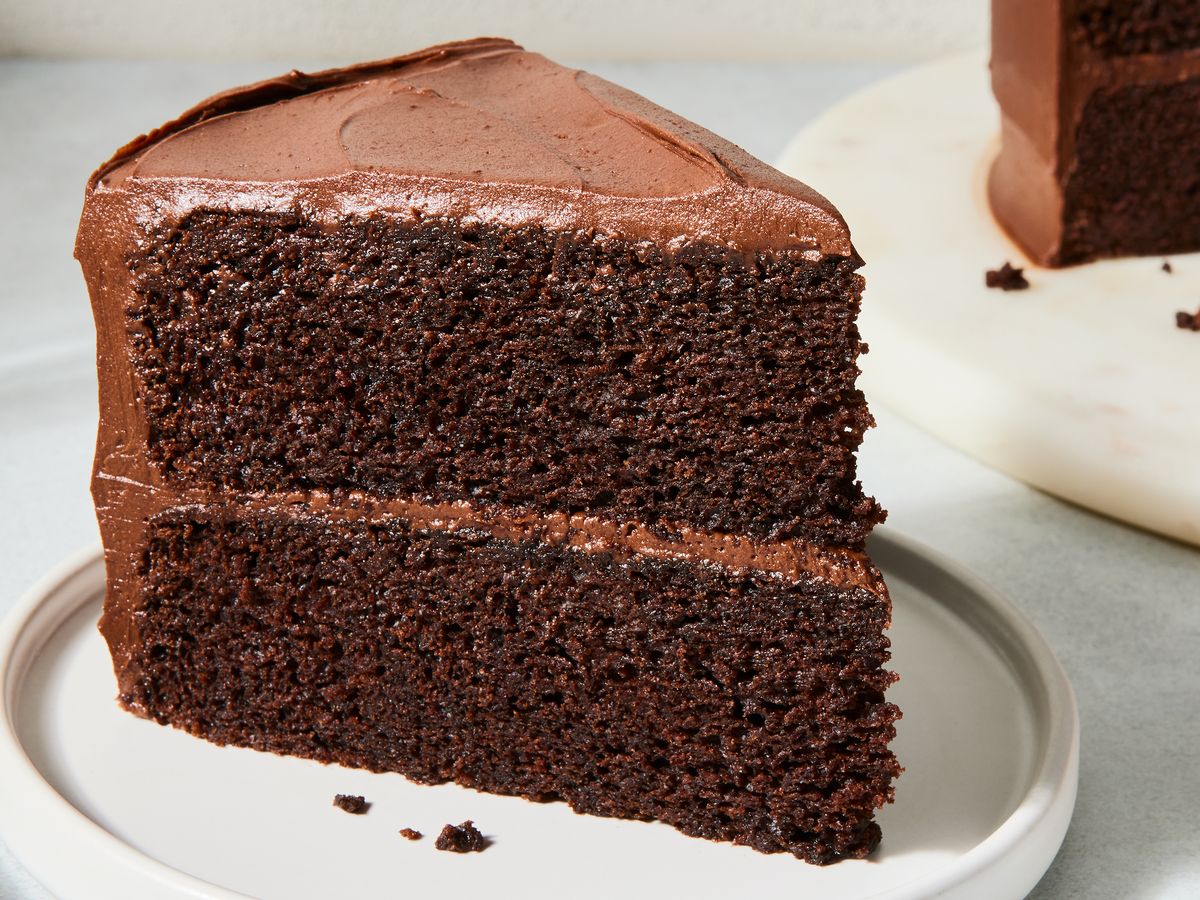
Chocolate Cake
Mmmmm, Will power, free will, or just plain old will?

WILL POWER

In will power, the word “will” is just an adjective. The subject is “power,” and that word implies force. Like gasoline power, electrical power, brute power, and horse power (horsepower), you have a force against a resistance.

In the case of will power, both the force and the the resistance are in the brain itself. Will power resembles the brain being split in two, with half the brain saying “Yes” and battling the other half that says “No.”

Typically, one half advocates for something the brain finds “pleasant,” while the other half advocates for something the brain finds “correct.” Both “pleasant” and “correct” can be defined in myriad ways, but both sides have one thing in common: They are both determined by chemical, electrical, and/or physical input to the brain.

A typical example might be whether to eat a slice of chocolate cake or to refrain.

On one side is the cake, which your brain knows, from prior experience, will cause chemical, electrical, and physical pleasure. On the other side is your health knowledge, which also came into your brain via chemical, electrical, and/or physical means.

So, the battle ensues. If the winner is pleasure, you are said to lack will power. If the winner is the denial of pleasure, you are said to have will power. In either case, the decision is made in identifiable parts of the brain.

The desire to eat chocolate cake is primarily driven by the reward system in your brain, which includes regions like the amygdala and the orbitofrontal cortex. These areas are involved in processing the pleasure and emotional aspects of eating.

Your resistance to eating it involves the prefrontal cortex, which is responsible for decision-making about health impacts, against the immediate pleasure it provides.

All of the above — your knowledge of the reward and health impacts and their relative importance — were placed into your brain via chemical, electrical, and other physical means. They didn’t just arrive there out of thin air.

Interestingly, these inputs change second by second. If, for instance, you happen to be very hungry, the chemicals that constantly bathe your brain, and the electrical signals that constantly circulate through your brain will cause a physical, chemical, and electrical effect on your amygdala, orbitofrontal cortex, and prefrontal cortex, 

At that point, reward overrides health impacts, and will power loses the battle. 

If however you are full, or if you have been given a stern warning by your doctor, physical, chemical, and electrical effects force the opposite effect, and you are said to be exercising your will power.

FREE WILL

In “free will,” the word “will” becomes the noun, not the adjective, and is the subject of the phrase.

Here, we are not talking about power but will. Is your will forced, coerced, or determined, or is it free of all these influences?

“Free will” is the hypothetical ability to make choices not predetermined by past events or current influences. It’s the idea that we can decide our actions independently without internal or external constraints.

Based on that, it’s difficult to see how any exercise of will ever could be free and not constrained. You can exercise “will” when you use your personal history, knowledge, and physical and emotional needs as expressed in your body chemistry and electrical circuitry.

But the phrase “free will” is a huge step above just plain ordinary “will.” We always use our will, but I submit that will, free from all constraints, is not physically possible.

The chemicals bathing your brain, the electrical signals flashing through, the senses of  which you may or may not be aware, all affect your will.

I further submit that when people use the term “free will,” they really mean “will,” and that the “free” part is a powerful illusion created in and by the brain.

So to reader Scott I say, continue to use your will, but don’t ever believe it is free. Everything you do or think is constrained by past and current influences. Will exists, but not free will.

Rodger Malcolm Mitchell

Monetary Sovereignty

Twitter: @rodgermitchell

Search #monetarysovereignty

Facebook: Rodger Malcolm Mitchell;

MUCK RACK: https://muckrack.com/rodger-malcolm-mitchell; https://www.academia.edu/

……………………………………………………………………..

The Sole Purpose of Government Is to Improve and

Protect the Lives of the People.

MONETARY SOVEREIGNTY

For those who still believe in “free will.”

Do you know why gambling casinos make money?

Because the odds favor them, not by a lot on any individual bet — that would be too obvious to the bettors — but just by a little.

All the casinos need is a tiny margin, and if you make a lot of bets, you eventually will lose.

intersection of two roads
Your GPS stopped working. Which route will you take?

Imagine you are flipping an evenly balanced coin, and you bet $10 on each flip.

The house takes only one tiny cent per flip.

If you flip 100 times, on average, you’ll lose $1.00. That minuscule $.01 adds when you do something 100 times.

Now, rather than coin flips, let’s talk about decisions.

How many do you make each day? (Stand, sit, step, chew, inhale, what to wear, pee, business decisions, life decisions, etc., etc.)

Perhaps millions? Maybe billions?

And each of those decisions is influenced in your brain by such inputs as: Cortisol, Thyroid Hormones, Estrogen and Testosterone, Insulin. Melatonin, Serotonin, Dopamine. Ghrelin, Leptin, Alcohol, Caffeine, and Nicotine, along with physical exhaustion, thirst, hunger, odors, sound, touch, pain, temperature, disease, age, and all the other physical and psychological inputs.

And any one of those decisions could change your life.

Examples: What you say to your boss, to your child, to your wife, whether to drive or walk, the route you take, what to eat for breakfast, whether to get a haircut, scratch an itch, play a game, wash your hands — the list is almost endless — and every single decision you make is influenced by a whole multitude of influences on your brain.

Given the massive number of decisions you make and how much each can influence your life and future choices (there is a multiplying effect), how much “free will” do you think you really have?

Read these excerpts from a recent Scientific American Magazine article:

maze
What will affect her decision?

Moral Judgments May Shift with the Seasons Certain values carry more weight in spring and autumn than in summer and winter BY ANVITA PATWARDHAN

Research suggests a range of psychological phenomena—such as our emotional state, dietand exercise habits, sexual activity and even color preferences—fluctuate throughout the year.

And now a study in the Proceedings of the National Academy of Sciences USA demonstrates how moral values can also shift.

If all those decisions are affected by simple seasonal changes, imagine how much your decision-making is affected by thousands or millions of other inputs your brain receives every minute of every day.
For the study, researchers analyzed more than 230,000 online survey responses—a decade’s worth—from people in the U.S., along with smaller groups in Canada and Australia.
That is a huge study.
The questions were based on a standardized framework social scientists use to assess people’s judgments of right and wrong.

This framework, called moral foundations theory, sets up a taxonomy of “five pretty fundamental values that shape human social behavior,” says lead author Ian Hohm, a psychology graduate student at the University of British Columbia.

maze
Is it possible? Why did you try? Why didn’t you?

Keep those words in mind: “Shape human social behavior.”

The framework considers loyalty (devotion to one’s own group), authority (respect for leaders and rules), and purity (cleanliness and piety) to be “binding” values that promote group cohesion and conformity.
It’s doubtful that anyone could question whether these values affect your decision-making.

These principles, often associated with political conservatism, consistently received weaker endorsements in summer and winter.

And in summer, the more extreme the seasonal weather differences, the more pronounced the effect. 

One explanation for seasonal swings could be anxiety.

Using a 90,000-respondent survey dataset, as well as data on Internet search frequencies, the researchers found that anxiety levels also peak in spring and fall.

“There is a close relationship between anxiety and threat,” says University of Nottingham psychologist and study co-author Brian O’Shea.

Other studies have shown that people who feel more vulnerable to seasonal illnesses tend to be more distrustful, more xenophobic and more likely to conform to majority opinion.

Again, these have a strong influence on your decisions and actions, It’s fascinating how even subtle changes in our environment can impact our judgments and behaviors. (No “free will” there.)
“When you’re threatened,” O’Shea explains, “you then want to get protection from your in-group.” These findings suggest seasonal timing could affect jury decisions, vaccination campaigns—and even election outcomes, the study authors say.
People in juries feel they are making “free will” decisions. I “feel” (but I know better) that my many decisions to be vaccinated and my voting were the result of my “free will.”

But, of course, they were not.

They were heavily influenced by massive numbers of inputs to my brain each minute.

Howard University psychologist Ivory A. Toldson, whose work involves practical applications of statistics, notes that the study relies on data from “Western, educated, industrialized, rich and democratic (WEIRD)” populations and cautions that generalizing from such results runs the risk of “overlooking the unique moral experiences of marginalized groups.”

In other words, he says everyone’s experiences (brain inputs) are different, which affects their decisions differently.

Hohm agrees that such a pattern wouldn’t affect everyone the same way but emphasizes that the study highlights the seasons’ effect on human psychology.

“One thing that this article is showing is that we are very seasonal creatures,” says Georgetown University School of Medicine psychiatrist Norman Rosenthal, a leading expert on seasonal affective disorder who coined the term in the 1980s.

“The internal state definitely affects your behavior.”

It also shows us that “free will” does not exist. It is an illusion—a strong illusion—created by your brain to make sense of the gigantic number of inputs it continuously receives.

Even your decision to believe this, argue with this, or discuss it with someone is affected by every input your brain receives every minute of every day.

Have you ever said, “I didn’t feel like it, ” “I wasn’t in the mood, ” “It’s not worth the effort,” or “It’s too much hassle?”

That may have felt like free will, but it was the accumulation of inputs to your brain.

You do not control your brain; your brain controls you. You just don’t feel it because your brain doesn’t let you.

Rodger Malcolm Mitchell

Monetary Sovereignty

Twitter: @rodgermitchell

Search #monetarysovereignty

Facebook: Rodger Malcolm Mitchell;

MUCK RACK: https://muckrack.com/rodger-malcolm-mitchell;

https://www.academia.edu/

……………………………………………………………………..

The Sole Purpose of Government Is to Improve and Protect the Lives of the People.

MONETARY SOVEREIGNTY