–Are poor people really as stupid as they vote? PART I

Twitter: @rodgermitchell; Search #monetarysovereignty
Facebook: Rodger Malcolm Mitchell

Mitchell’s laws:
●The more federal budgets are cut and taxes increased, the weaker an economy becomes.
●Austerity is the government’s method for widening the gap between rich and poor,
which leads to civil disorder.
●Until the 99% understand the need for federal deficits, the upper 1% will rule.
●To survive long term, a monetarily non-sovereign government must have a positive balance of payments.
●Those, who do not understand the differences between Monetary Sovereignty and monetary non-sovereignty, do not understand economics.
●The penalty for ignorance is slavery.
●Everything in economics devolves to motive.

=====================================================================

Most of the citizens of North Carolina are relatively poor.

The state ranks 39th for Median Household Income. Only 11 states are poorer than NC — MS, WV, AR, KY, AL, TN, LA, NM, SC, OK, ID – and all but one (New Mexico) voted conservative in the 2012 presidential election.
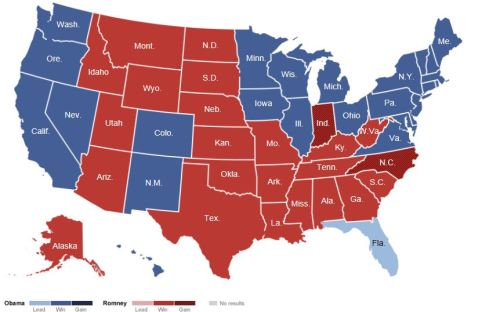
monetary sovereignty

Washington Post
In North Carolina, unimpeded GOP drives state hard to the right
By Michael A. Fletcher, Published: May 25, 2013

Since the recession hit, North Carolina has been saddled with one of the nation’s highest unemployment rates. The bad times helped prepare the way for a carefully executed strategy, with big financial support from a major conservative activist, that helped the GOP win control of both chambers of the state General Assembly in 2010.

Those victories were capped last year when Republican Pat McCrory was elected governor, giving the party control of all levers of state government for the first time since 1870.

The victories were aided by the strong financial support of Art Pope, a multimillionaire who spent heavily in support of the state’s GOP candidates. Pope’s advocacy network spent $2.2 million on 22 legislative races, winning 18.

One of McCrory’s first acts after being elected governor was to install Pope, a former legislator, as the state budget chief.

For only $2.2 million, the poor people of North Carolina sold their state to right winger, Art Pope. Here’s what he’s doing with it:

Legislators have slashed jobless benefits. They have also repealed a tax credit that supplemented the wages of low-income people, while moving to eliminate the estate tax.

Three quick steps to widen the gap between the rich and the rest — and that’s just the beginning:

[The right wing legislature has] voted against expanding Medicaid to add 500,000 poor North Carolinians to the Medicaid rolls.

Lawmakers are also considering proposals to reduce and flatten income tax rates while expanding the sales tax, perhaps to even include groceries and prescription drugs — which some advocates see as a first step toward eliminating the state income tax.

Two more steps to widen the gap between the rich and the rest.

But, there’s even more:

There are also measures pending to require drug testing for low-income people applying for job training and welfare benefits.

The sole purpose is to reduce the number of poor people receiving benefits — more widening of the gap.

And if all that weren’t enough, the beating of the poor expands further:

The North Carolina House has passed a law requiring voters to have a government-issued identification card, and legislators are considering bills to roll back the state’s law allowing same-day voter registration and to sharply limit early voting — measures that supporters of the current law say were integral to the high turnout of minority voters in the past several elections.

When you add up all these measures, you have a picture of a state that is expanding the gap – no, not the gap, the GULF – between the rich and the rest – in essence a return to the days of slavery.

And this time, it isn’t restricted to black slavery. The poor whites are being enslaved, too.

Why did all those poor voters — poor blacks and poor whites — in one of the poorest states in the union, vote to make themselves even poorer?

It’s not as though the right wing has hidden its intentions:

Other GOP-controlled legislatures have passed or considered similar measures. Florida, Missouri and Michigan have slashed jobless benefits. Texas, Louisiana and Wisconsin are among at least 15 states not participating in the Medicaid expansion called for in the Affordable Care Act. And West Virginia, Kansas and Texas have proposed bills requiring drug testing for welfare recipients.

After the (NC) state Senate unveiled its tax reform plan this month, the state chapter of Americans for Prosperity released a poll that it said showed widespread support across the state. Nearly two-thirds of respondents said the state tax code is in need of reform, and nearly half backed moving to totally eliminate the personal income tax within four years.

Eliminating the personal income tax helps the rich. And since the lost tax money needs to be replaced, the resultant increase in sales taxes will hurt the poor. And this is what the poor people of North Carolina want!

“Most of the laws that take us backwards do not come out of Congress but out of state legislatures,” said the Rev. William J. Barber II, head of the North Carolina chapter of the NAACP. “Conservative forces here have gone all out to implement these policies and to lock in their power by changing the voting laws.”

“This leadership wants to make our state a place of deeper stratification and inequality,” Barber said.

Well, duh, Reverend, but this is what the poor people of North Carolina voted for.

There is very little opponents can do to alter the will of the governing majority — something many of the protesters acknowledge.

“My hope is two-pronged,” said Derick Smith, an instructor at North Carolina A&T University who was arrested several weeks ago during a protest. “You want to bring attention to what’s happening. And you’ve got to hope that the governor will listen and back away from some of the more divisive provisions.”

In summary, the poor people of North Carolina have attempted suicide, and succeeded with self-mutilation, by voting for the rich. Now, some of them hope the rich-biased Republican governor, whom they intentionally elected, will take pity on them.

The rest of these poor people are perfectly delighted to continue voting conservative and have the rich continue to beat them down, down, down.

Are poor people really as stupid as they vote? It boggles.

Rodger Malcolm Mitchell
Monetary Sovereignty

====================================================================================================================================================

Nine Steps to Prosperity:
1. Eliminate FICA (Click here)
2. Medicare — parts A, B & D — for everyone
3. Send every American citizen an annual check for $5,000 or give every state $5,000 per capita (Click here)
4. Long-term nursing care for everyone
5. Free education (including post-grad) for everyone. Click here
6. Salary for attending school (Click here)
7. Eliminate corporate taxes
8. Increase the standard income tax deduction annually
9. Increase federal spending on the myriad initiatives that benefit America’s 99%

10 Steps to Economic Misery: (Click here:)
1. Maintain or increase the FICA tax..
2. Spread the myth Social Security, Medicare and the U.S. government are insolvent.
3. Cut federal employment in the military, post office, other federal agencies.
4. Broaden the income tax base so more lower income people will pay.
5. Cut financial assistance to the states.
6. Spread the myth federal taxes pay for federal spending.
7. Allow banks to trade for their own accounts; save them when their investments go sour.
8. Never prosecute any banker for criminal activity.
9. Nominate arch conservatives to the Supreme Court.
10. Reduce the federal deficit and debt

No nation can tax itself into prosperity, nor grow without money growth. Monetary Sovereignty: Cutting federal deficits to grow the economy is like applying leeches to cure anemia.
Two key equations in economics:
1. Federal Deficits – Net Imports = Net Private Savings
2. Gross Domestic Product = Federal Spending + Private Investment and Consumption – Net Imports

#MONETARY SOVEREIGNTY

–Why the cloud is is not the future. A return to face-to-face roots

Twitter: @rodgermitchell; Search #monetarysovereignty
Facebook: Rodger Malcolm Mitchell

Mitchell’s laws:
●The more federal budgets are cut and taxes increased, the weaker an economy becomes.
●Austerity is the government’s method for widening the gap between rich and poor,
which leads to civil disorder.
●Until the 99% understand the need for federal deficits, the upper 1% will rule.
●To survive long term, a monetarily non-sovereign government must have a positive balance of payments.
●Those, who do not understand the differences between Monetary Sovereignty and monetary non-sovereignty, do not understand economics.
●The penalty for ignorance is slavery.
●Everything in economics devolves to motive.

=====================================================================

I’m first to admit it. I’m a long way from geek status. Oh, about a million years ago, I did some rudimentary programming, but came before a whole lot of yesterdays. So I hope you’ll straighten me out if you think I’m headed in the wrong direction.

This “cloud” thing may be all the rage these days, especially with the proliferation of “smart” phones and pads, but I think the cloud is a dead-end street.

Essentially, the so-called “cloud” is a remote computer. You input a problem to your local computer, whether a PC, a smart phone or some similar device. Your device sends the problem to a remote computer (the “cloud”), which deals with the problem and returns the results to your local computer.

The “cloud” offers several advantages:

1. People can get the speed and storage advantages of a huge computer, while they themselves may need own a minimal, comparatively inexpensive, send/receive device.
2. Efficiency: Because of worldwide time differences, one central cloud computer can service people ’round the clock. When New York works at its maximum, Tokyo may work at its minimum.
3. The costs of maintaining and updating a cloud computer can be shared by thousands of users, who themselves don’t need continually to buy updates and service.
4. Cloud users have access to thousands of different, specialized computers, each providing unique services.

I can sit at home with my little PC, and using the cloud peer into all corners of this planet, including a ground-level view of most streets in America, while listening to thousands of music selections and keeping track of the stock market in real time. No way could my little smart phone handle that kind of assignment by itself.

To those who predict the cloud to be the future of the Internet, the following article may give pause:

When Will the Internet Reach Its Limit (and How Do We Stop That from Happening)?
By Larry Greenemeier

The number of smartphones, tablets and other network-connected gadgets will outnumber humans by the end of the year. Global mobile data grew 70 percent in 2012. Yet the capacity of the world’s networking infrastructure is finite, leaving many to wonder when we will hit the upper limit, and what to do when that happens.

There are ways to boost capacity of course, such as adding cables, packing those cables with more data-carrying optical fibers and off-loading traffic onto smaller satellite networks, but these steps simply delay the inevitable.

Imagine you’d like to find the cube root of 24,875. You have choices. One is to use your own computer, which if it has a root calculating function, will give you the answer: 29.19136230407+.

Or you can use the cloud. You can transmit the problem to a computer somewhere in Asia. It will do the calculation and transmit the answer back to you, thereby using up a tiny fraction of the world’s Internet capacity.

If enough people use the cloud, instead of their own device, the Internet will hit that “upper limit” Mr. Greenemeier mentions.

The solution is to make the infrastructure smarter. Two main components would be needed: computers and other devices that can filter their content before tossing it onto the network, along with a network that better understands what to do with this content, rather than numbly perceiving it as an endless, undifferentiated stream of bits and bytes.

Said simply, the first solution is little more than “do it yourself.” Instead of asking the cloud to compute that cube root, go back to the old way: Use your own device.

The second solution is far more sophisticated.

Scientific American recently spoke with Markus Hofmann, head of Bell Labs Research in New Jersey

How do we know we are approaching the limits of our current telecom infrastructure?
The signs are subtle, but they are there. When I use Skype to send my parents in Germany live video of my kids playing hockey, the video sometimes freezes at the most exciting moments. In all, it happens more frequently lately—a sign that networks are becoming stressed by the amount of data they’re asked to carry.

We know there are certain limits that Mother Nature gives us—only so much information you can transmit over certain communications channels. That phenomenon is called the nonlinear Shannon limit. Within the next four or five years—we will exceed the Shannon limit.

How do you keep the Internet from reaching “the limit”?
The most obvious way is to increase bandwidth by laying more fiber. Instead of having just one transatlantic fiber-optic cable, for example, you have two or five or 10. It’s very expensive—you need to dig up the ground and lay the fiber, you need multiple optical amplifiers, integrated transmitters and receivers, and so on.

Mr. Hoffman then goes on to describe a “smarter” Internet, which led to the following question:

Even if a smarter Net can move data around more intelligently, content is growing exponentially. How do you reduce the amount of traffic a network needs to handle?
We might move to a model where decisions are made about data before it is placed on the network. For example, if you have a security camera at an airport, you would program the camera or a small computer server controlling multiple cameras to perform facial recognition locally, based on a database stored in a camera or server.

Instead of bottlenecking the network with a stream of images, the camera would communicate with the network only when it finds a suspect.

See where this is headed? The solution to the inherent, quantum limits of the cloud, is to use non-cloud computing.

The cloud is a small, though fundamental, step for the Internet, something that always will be with us. But I predict, for longer term growth, we’ll return to our roots: More and more local computing.

Today, the cloud involves massive, two-way communication, between your little, relatively “dumb” local computer, and huge mainframes geographically distant.

But, one day, your refrigerator, your stove, your bathtub, every piece of clothing in your closet, every board, wire and pipe in your house and yes, even your own body, will contain micro-chips that will calculate and communicate with each other short range, and together will comprise one big, local computer, with a rated speed in Geopflops (a thousand, trillion floating-point operations per second). Each of your neighbors would have the same. The world will be filled with billions of personal “mainframe” computers.

And if your personal computer doesn’t know the answer, it first would ask your neighbor’s computer, in a short “off-the-grid” communication. And your neighbor’s computer might ask his neighbor’s computer, in a kind of local, crowd-sourcing exercise.

The cloud will be like a highway between distant cities — used seldom and only as a last resort — while the vast majority of traffic will be within each city block.

The future is not to devote all the time, money and brains building an ever wider highway for distant communication. Yes, we may need that, but the future is not the cloud. The future is to devote that time, money and brains merging our surroundings and our selves into individual, local computers, which will communicate locally, the way people have communicated for thousands of years.

That’s what I think.

Rodger Malcolm Mitchell
Monetary Sovereignty

====================================================================================================================================================

Nine Steps to Prosperity:
1. Eliminate FICA (Click here)
2. Medicare — parts A, B & D — for everyone
3. Send every American citizen an annual check for $5,000 or give every state $5,000 per capita (Click here)
4. Long-term nursing care for everyone
5. Free education (including post-grad) for everyone. Click here
6. Salary for attending school (Click here)
7. Eliminate corporate taxes
8. Increase the standard income tax deduction annually
9. Increase federal spending on the myriad initiatives that benefit America’s 99%

10 Steps to Economic Misery: (Click here:)
1. Maintain or increase the FICA tax..
2. Spread the myth Social Security, Medicare and the U.S. government are insolvent.
3. Cut federal employment in the military, post office, other federal agencies.
4. Broaden the income tax base so more lower income people will pay.
5. Cut financial assistance to the states.
6. Spread the myth federal taxes pay for federal spending.
7. Allow banks to trade for their own accounts; save them when their investments go sour.
8. Never prosecute any banker for criminal activity.
9. Nominate arch conservatives to the Supreme Court.
10. Reduce the federal deficit and debt

No nation can tax itself into prosperity, nor grow without money growth. Monetary Sovereignty: Cutting federal deficits to grow the economy is like applying leeches to cure anemia.
Two key equations in economics:
1. Federal Deficits – Net Imports = Net Private Savings
2. Gross Domestic Product = Federal Spending + Private Investment and Consumption – Net Imports

#MONETARY SOVEREIGNTY

Why (the fox) Bernanke is a genius

Mitchell’s laws:
●The more federal budgets are cut and taxes increased, the weaker an economy becomes.
●Austerity is the government’s method for widening the gap between rich and poor,
which leads to civil disorder.
●Until the 99% understand the need for federal deficits, the upper 1% will rule.
●To survive long term, a monetarily non-sovereign government must have a positive balance of payments.
●Those, who do not understand the differences between Monetary Sovereignty and monetary non-sovereignty, do not understand economics.
●The penalty for ignorance is slavery.
●Everything in economics devolves to motive.

=====================================================================

Federal Reserve chairman Ben Bernanke is an employee, and like any employee, he also must be a politician. His bosses are the President of the United States and Congress.

In his employee / politician role, he must produce expected results and he also must tell his bosses what they want to hear. But what does one do when producing results requires saying and doing the opposite of what his bosses want?

Have you ever been in that position?

If so, you may have found that one does both. You urge your bosses to do what really needs to be done now, while promising to do what the bosses want, later. You walk both sides of the fence, hoping no one notices.

In The National Memo article titled, “Fed Chair To Congress: It’s All Your Fault,” (May 22nd, 2013, by Jason Sattler), Bernanke is reported to have said:

“Most recently, the strengthening economy has improved the budgetary outlooks of most state and local governments, leading them to reduce their pace of fiscal tightening.

“At the same time, though, fiscal policy at the federal level has become significantly more restrictive.

“In particular, the expiration of the payroll tax cut, the enactment of tax increases, the effects of the budget caps on discretionary spending, the onset of the sequestration, and the declines in defense spending for overseas military operations are expected, collectively, to exert a substantial drag on the economy this year.

Exactly correct. Bernanke is well aware that deficit reduction is economic suicide. He knows Federal tax increases and spending cuts, together known as “austerity” or “deficit reduction,” always exert a drag on the economy. Period.

Those who claim otherwise fall into either of two classes: The economically ignorant or the dishonest.

In the economically ignorant category, you’ll find the vast majority of the American public, who over the years has been brainwashed into believing federal finances are like personal finances.

The American public has been lied to:

“The fact that we are here today to debate raising America’s debt limit is a sign of leadership failure.

It is a sign that the U.S. Government can’t pay its own bills.

It is a sign that we now depend on ongoing financial assistance from foreign countries to finance our Government’s reckless fiscal policies.

Increasing America’s debt weakens us domestically and internationally.

Washington is shifting the burden of bad choices today onto the backs of our children and grandchildren. America has a debt problem and a failure of leadership. Americans deserve better.”

Whose lies were those? They came to America courtesy of then Senator Barack Obama, in a floor speech, on March 20, 2006. And he hasn’t changed his lies, since.

Here’s what he said in February, 2011:

” . . . it’s time Washington acted as responsibly as our families do. And on Monday, I’m proposing a new budget that will help us live within our means while investing in our future.

My budget freezes annual domestic spending for the next five years – even on programs I care deeply about – which will reduce the deficit by more than $400 billion over the next decade.”

And, of course, Congress says the same things. So unless you believe that among the President of the United States, every member of Congress and all 400 economists in the Counsel of Economic Advisers, there is not one — NOT ONE — person who understands economic fact, you must know they are lying.

And as we repeatedly have said, they have been bribed to lie (via campaign contributions and promises of lucrative jobs later) by the upper .1% income group — bribed to cut benefits to the .99.9% and widen the gap between the rich and the rest.

The infamous Congressional “revolving door” is the notable example of this bribery. And watch carefully, as Barack Obama and family, become multi, multi-millionaires shortly after he leaves office (ala Bill Clinton).

(Obama’s latest nominee, billionaire Penny Pritzker, will help him along.)

So getting back to Bernanke: His bosses want to widen the gap, because that is what they have been bribed to do. But he knows, if he sinks the economy, history will judge him (unfairly) on his failure to grow the economy.

So what’s a guy to do? He straddles the fence. He says:

“Although near-term fiscal restraint has increased, much less has been done to address the federal government’s longer-term fiscal imbalances.

“Indeed, the [Congressional Budget Office] projects that, under current policies, the federal deficit and debt as a percentage of GDP will begin rising again in the latter part of this decade and move sharply upward thereafter.”

In short, Bernanke is saying, “I agree with my bosses, that we have to do something about those “fiscal imbalances.” But, fixing the economy requires more, not less deficit spending (and I can always say, ‘I told you so.’)

“Then later, (preferably after I’ve left office) you can slash spending and increase taxes, which of course will lead to the next depression, but by then it won’t be my fault, especially since I warned you.

“In fact, everyone will look back at the ‘Bernanke growth years’ and say what a genius I was, while my successor will be blasted as incompetent.

My predecessor Greenspan almost got away with this kind of double-talk, but he stayed on a little too long.”

Yes, Bernanke is a genius — a genius employee and a genius politician. He says that deficit cutting drags down the economy, but agrees with the President and Congress that deficit cutting is necessary — only later.

And there are some who think he’s dumb — right — like a fox.

Rodger Malcolm Mitchell
Monetary Sovereignty

====================================================================================================================================================

Nine Steps to Prosperity:
1. Eliminate FICA (Click here)
2. Medicare — parts A, B & D — for everyone
3. Send every American citizen an annual check for $5,000 or give every state $5,000 per capita (Click here)
4. Long-term nursing care for everyone
5. Free education (including post-grad) for everyone. Click here
6. Salary for attending school (Click here)
7. Eliminate corporate taxes
8. Increase the standard income tax deduction annually
9. Increase federal spending on the myriad initiatives that benefit America’s 99%

10 Steps to Economic Misery: (Click here:)
1. Maintain or increase the FICA tax..
2. Spread the myth Social Security, Medicare and the U.S. government are insolvent.
3. Cut federal employment in the military, post office, other federal agencies.
4. Broaden the income tax base so more lower income people will pay.
5. Cut financial assistance to the states.
6. Spread the myth federal taxes pay for federal spending.
7. Allow banks to trade for their own accounts; save them when their investments go sour.
8. Never prosecute any banker for criminal activity.
9. Nominate arch conservatives to the Supreme Court.
10. Reduce the federal deficit and debt

No nation can tax itself into prosperity, nor grow without money growth. Monetary Sovereignty: Cutting federal deficits to grow the economy is like applying leeches to cure anemia.
Two key equations in economics:
1. Federal Deficits – Net Imports = Net Private Savings
2. Gross Domestic Product = Federal Spending + Private Investment and Consumption – Net Imports

#MONETARY SOVEREIGNTY

–Oklahomans: You wanted Republican; you got Republican

Mitchell’s laws:
●The more federal budgets are cut and taxes increased, the weaker an economy becomes.
●Austerity is the government’s method for widening the gap between rich and poor,
which leads to civil disorder.
●Until the 99% understand the need for federal deficits, the upper 1% will rule.
●To survive long term, a monetarily non-sovereign government must have a positive balance of payments.
●Those, who do not understand the differences between Monetary Sovereignty and monetary non-sovereignty, do not understand economics.
●The penalty for ignorance is slavery.
●Everything in economics devolves to motive.

=====================================================================

President Barack Obama (Democrat) said to disaster victims, “You face a long road ahead, but you will not travel it alone. Your country will travel it with you.”

Apparently, a Republican senator from Oklahoma doesn’t feel as compassionate:

Oklahoma Senator Demands Spending Cuts In Exchange For Disaster Relief
May 21st, 2013 Henry Decker

Just hours after the storm hit, Senator Tom Coburn(R) told CQ Roll Call that he would not support providing disaster aid to his own constituents unless it is offset by other federal spending cuts.

Translation: “Until we cut spending elsewhere, the people of Oklahoma will simply have to suffer. Serves them right for voting for me. Hey, my house is O.K.”

“It is crass for critics to play disaster aid politics when first responders are pulling victims from the rubble,” the statement reads, ignoring the fact that Coburn himself barely waited before announcing his preemptive opposition to the still-undefined aid package.

The vast majority of victims are poor and middle class. But, Coburn is bribed by the upper 1% income group to widen the gap between the rich and the rest.

For Republicans, this is not an extreme position. They consistently have opposed all spending that would benefit the lower 99%, being far more concerned about a non-existent “debt problem” than about the real problems of real people.

There was a time when the Republicans had a morality. But, in the past 10 years, money-mad, power-mad, people-hating politicians have take over the party. They have convinced their followers that the compassionate are weak, while to be righteous, one must be cruel.

So these followers, most of whom are part of the 99%, obediently embrace the self-destructive, “widen-the-gap” views taught to them by the rich. Now, as Oklahomans sadly are learning, the mad dog returns to eat its keeper..

Yes, I know. The Democrats obey the 1%, too. But the Republicans have become far worse, so extreme in their anti-people views as to be Nazi.

Oklahomans. You voted Republican; you got Republican.

Ah, the irony.

Rodger Malcolm Mitchell
Monetary Sovereignty

====================================================================================================================================================

Nine Steps to Prosperity:
1. Eliminate FICA (Click here)
2. Medicare — parts A, B & D — for everyone
3. Send every American citizen an annual check for $5,000 or give every state $5,000 per capita (Click here)
4. Long-term nursing care for everyone
5. Free education (including post-grad) for everyone. Click here
6. Salary for attending school (Click here)
7. Eliminate corporate taxes
8. Increase the standard income tax deduction annually
9. Increase federal spending on the myriad initiatives that benefit America’s 99%

10 Steps to Economic Misery: (Click here:)
1. Maintain or increase the FICA tax..
2. Spread the myth Social Security, Medicare and the U.S. government are insolvent.
3. Cut federal employment in the military, post office, other federal agencies.
4. Broaden the income tax base so more lower income people will pay.
5. Cut financial assistance to the states.
6. Spread the myth federal taxes pay for federal spending.
7. Allow banks to trade for their own accounts; save them when their investments go sour.
8. Never prosecute any banker for criminal activity.
9. Nominate arch conservatives to the Supreme Court.
10. Reduce the federal deficit and debt

No nation can tax itself into prosperity, nor grow without money growth. Monetary Sovereignty: Cutting federal deficits to grow the economy is like applying leeches to cure anemia.
Two key equations in economics:
1. Federal Deficits – Net Imports = Net Private Savings
2. Gross Domestic Product = Federal Spending + Private Investment and Consumption – Net Imports

#MONETARY SOVEREIGNTY