As you read this post, think about these two simple questions. What would happen if your city, county, and state stopped collecting taxes. What would happen if the U.S. government stopped collecting taxes?
Later, if you’re in school, you can ask your economics professor. See if he/she knows.
—–/////—–
“Rich” is a comparative. A person earning $100,000 is rich if everyone else earns $10,000. But that person earning $10,00 is rich if everyone else earns $1,000.
The income/wealth/power Gap below you and above you determines how rich you are. The average annual income in 1930 was about $4,800. Adjusted for inflation, that’s equivalent to $85,000 today.
Thus, the wealthy need to make you poorer to make themselves richer. Here is how they plan to do it:
Graham commented while debating Sen. Bernie Sanders during a “Senate Project” debate.
There is not one legitimate reason why seniors will “have to” take less or pay more. Not one. The U.S. federal government, being Monetarily Sovereign, cannot run short of dollars.
Alan Greenspan: “A government cannot become insolvent with respect to obligations in its own currency. There is nothing to prevent the federal government from creating as much money as it wants and paying it to somebody. The United States can pay any debt it has because we can always print the money to do that.”
And because the federal government cannot become insolvent, no federal government agency can become insolvent unless that is what Congress and the President want.
Social Security and Medicare are not funded by FICA taxes or other taxes. Like every other federal agency, these agencies, including Congress, the Supreme Court, the White House, the armed services, etc., are funded by new dollar creation.
Ben Bernanke:“The U.S. government has a technology, called a printing press (or, today, its electronic equivalent), that allows it to produce as many U.S. dollars as it wishes at essentially no cost.”
Keep these facts in mind as you read the following:
Senator Sanders: Bring your Social Security plan to the floor. All it does is raise taxes. People like me must take a little less and pay a little more to get out of this mess.
Quote from 60 Minutes: Scott Pelley: Is that tax money that the Fed is spending? Ben Bernanke: It’s not tax money… We simply use the computer to mark up the size of the account.
Even Sanders, a proponent of Medicare for All and increased Social Security parrots the Big Lie that federal taxes fund federal spending.
We must adjust the age again like Ronald Reagan and Tip — Tip O’Neil did. There is a bipartisan way forward. You describe problems, but your answer is always the government — it’s always socialism,” Graham said.
Graham deceivingly uses the epithet “socialism.” But it’s not socialism. Socialism is government ownership and control, not government funding.
Strangely, he doesn’t use that word when describing his own salary, which, in fact, is socialism, as is the Veteran’s Administration Hospitals, the military, and the U.S. court system.
The cost of supporting SCOTUS, POTUS, Congress, and many other approximately 1,000 federal agencieshas increased, but we don’t hear that spending for those agencies needs to be cut.
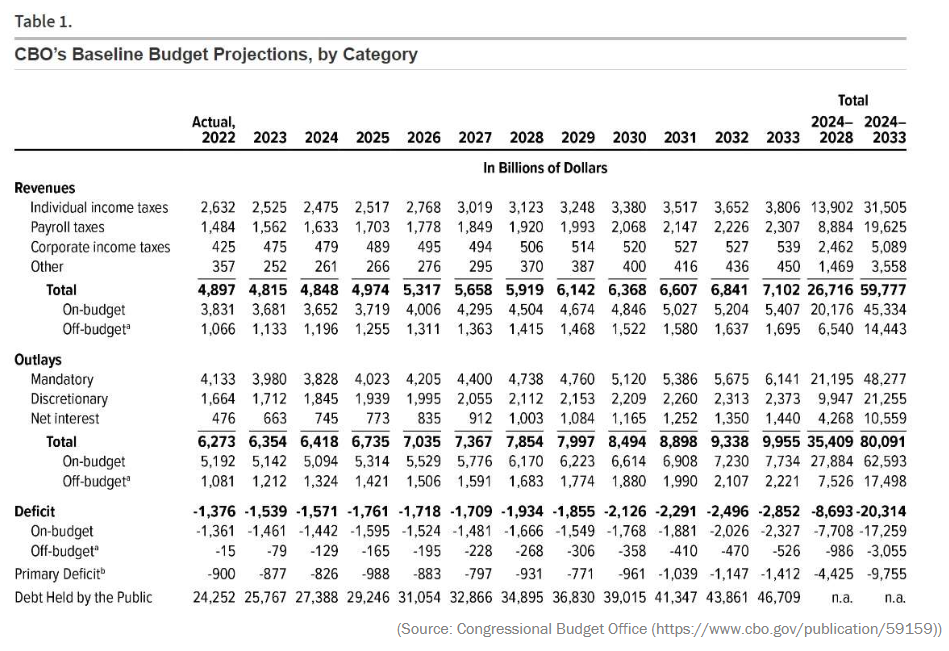
Instead, federal spending goes up to accommodate increased needs. In 2023, the federal government spent $1.7 trillion more than it collected in taxes.
The federal government has spent over $33 TRILLION more than it has collected in taxes.
The federal government has spent over $33 TRILLION more than it has collected in taxes. Yet, the government has no problem paying its creditors.
Federal deficits are not a burden or obligation on anyone. A federal deficit is merely the number of growth dollars the government pumps into the economy. You and I don’t owe those dollars. Even the government doesn’t owe those dollars. They have already been paid to creditors.
No one owes the federal deficit or debt. Those are just record-keeping numbers.
Why, then, do people who know better (or should know better) talk about having to raise taxes?
Sanders admitted that Social Security “has a solvency issue,” but his proposal — also backed by Sen. Elizabeth Warren — would extend solvency for 75 years while increasing benefits for recipients by $2,400 per year.
Sanders’s proposal would ostensibly fund this expansion of Social Security via a tax on high-earning households, per CNBC.
While I have no object to a tax on high-earning households, it has several problems:
It would have trouble passing Congress, whose members are bribed by the rich not to tax wealthy folk.
Even if high-income were taxed at higher rates, the rich don’t pay those rates. They slip through tax loopholes Congress has given them.
Most importantly, Social Security does not have a “solvency issue,” nor do taxes fund Social Security.
Social Security has an ignorance issue — Congress, the President, and the public wrongly claim FICA funds Social Security (and Medicare).
President Franklin D. Roosevelt, the originator of Social Security, instituted the FICA tax not to fund Social Security but to protect it. “We put those payroll contributions there to give the contributors a legal, moral, and political right to collect their pensions… With those taxes in there, no damn politician can ever scrap my Social Security program.”
Little did he expect that the “damn politicians” would find a way to kill Social Security by the death of a thousand cuts.
It resulted from a series of administrative rulings issued by the Treasury Department in the program’s early years.
In 1983, GOP President Ronald Reagan and Congress changed the law by explicitly authorizing the taxation of Social Security benefits. This was part of the 1983 Amendments, and this law overrode the earlier administrative rulings from the Treasury Department.
Aside from the fact that federal taxes don’t fund federal spending, the federal government taxing its own benefits — the right hand gives, and the left hand takes away — defies logic.
And here is the ultimate irony. People who earn more receive higher benefits. Why?
Why does a person earning $100,000 a year receive higher Social Security benefits than a person earning $30,000 a year? Shouldn’t it be the other way around?
Federal poverty benefits are based on how littleyou earn. But Social Security is based on how muchyou earn. It’s a senseless formula based on the Big Lie that federal taxes fund federal spending.
Federal taxes fund nothing. The purposes of federal taxes are:
To narrow the income/wealth/power Gapbetween the rich and the rest. (But because of tax loopholes, the rich pay a lower percentage of their income in taxes than the rest of us. Federal taxes actually widen the Gap.)
To assure demand for the U.S. dollar by requiring taxes to be paid in dollars. (But there is no shortage of demand for U.S. dollars. Even people, businesses, and nations that don’t pay taxes want dollars.)
To control the economy by taxing what the government wishes to discourage and giving tax breaks to what the government wishes to reward. (But by bribing Congress, the rich have twisted this purpose to their favor. They are the ones being rewarded with tax breaks.)
To fool the public into believing that their federal benefits are limited by taxes collected.
Does the White House have a solvency issue? The Supreme Court? Congress? The Army? The Air Force? The Central Intelligence Agency? The U.S. Treasury? The Federal Reserve?
No. These agencies never are said to be in danger of insolvency. Why do we see a special tax, ostensibly to support Social Security and Medicare, but no special taxes to support the White House, the Supreme Court, Congress, et al?
Because the function of FICA is not to fund Social Security and Medicarebut to provide political cover for limiting these programs. They are programs supposedly to benefit the powerless. But the federal government neither needs nor uses tax dollars.
Congress and the President claim that taxes fund spending so they can pretend to be “forced” to cut benefitsby blaming “insolvency.”
Graham also said that Sanders’ Medicare for All program would eliminate private-sector health care, which would be extremely costly.
“Costly” to whom? Cost means nothing to the federal government, which, being Monetarily Sovereign, has the infinite ability to pay any invoice to any creditor.
A “Medicare for All” would cost consumers nothing. That is the whole point of the program.
So, to whom would it be “costly.” Answer: The health insurance companies would lose all that lucrative income. That’s why every Senator in Congress has received bribes (aka “campaign contributions”) from health insurance companies — every single one.
Knewz reported that Sanders and 14 other senators introduced the Medicare for All plan in May to “guarantee health care in the United States as a fundamental human right to all.”
“There has to be some sense of responsibility here. You just can’t tax people into oblivion and turn every problem over to the government,” Graham said.
You can’t turn “every” problem over to the government. Still, we expect certain basics from our government — Enough food to feed our loved ones and ourselves, a safe place to live, and protection from attack by domestic criminals and foreigners. Education, and healthcare.
If you elected officials can’t provide those basics, who needs you? Get lost. We’ll elect someone who understands the purpose of government.
SUMMARY
The bottom line of this entire article is a straightforward truth. Unlike state/local governments, the U.S. federal government does not pay its bills with tax dollars. It destroys every tax dollar it receives.
State/local governments, being monetarily non-sovereign, survive on tax dollars. But, even if the federal government collected zero taxes, it could continue spending, forever. It cannot become insolvent.
Social Security and Medicare are federal agencies. They cannot become insolvent unless that is what Congress and the President want.
The government has the infinite ability to pay creditors by creating new dollars ad hoc. Having that infinite ability, the federal government does not borrow.
Treasury securities — T-bills, T-notes, and T-bonds– erroneously termed “borrowing” should be called “money storage.” The sole purposes of T-securities are:
To provide a safe place to store unused dollars and
To help the Federal Reserve control interest rates.
Every dollar deposited into T-security accounts remains the property of the depositors. They neither are touched, borrowed, nor owed by the government.
The federal government pays all its creditors on time and in full. Thus, the federal debt merely is an accounting number that shows how many growth dollars have been pumped into the economy. Increasing the misnamed “debt” increases the growth dollars added to Gross Domestic Product.
Far from being a worrisome burden, the growing federal “deficit” and “debt” are absolutely necessary for a healthy economy.
Why isn’t every economist in America broadcasting this truth? That is a mystery I’ve not been able to solve.
I believe the people at AARP understand that our government, being Monetarily Sovereign, never can run short of its own sovereign currency, the U.S. dollar.
They must know that even if all federal tax collections — income taxes, payroll taxes, etc. — and every other form of federal government income totaled zero, the government could continue spending forever.
The sole purposes of federal taxes (unlike state, local taxes) are not to provide the government with spending money, but:
To control the economy by taxing what the government wishes to discourage and by giving tax breaks to what the government wishes to reward.
To assure demand for the U.S. dollar by requiring taxes to be paid in dollars
And the hidden reason: To help the very rich become richer by widening the Gap between the rich and the rest.
Stated simply, the U.S. federal government can pay for anything it wishes without taxing anyone.
AARP claims it “is the nation’s largest nonprofit, nonpartisan organization dedicated to empowering Americans 50 and older to choose how they live as they age. Advocating for people age 50-plus is at the heart of our mission.”
So why does the AARP repeatedly indicate the federal government can’t afford to pay for a comprehensive, no deductible Medicare benefit for every man, woman, and child in America?
Could their lucrative insurance business be the reason?
Here are excerpts from an article in the October, 2023 AARP Bulletin: (By Dena Bunis, who covers Medicare, health care, health policy and Congress. She also writes the Medicare Made Easy column for the AARP Bulletin. An award-winning journalist, Bunis spent decades working for metropolitan daily newspapers, including as Washington bureau chief for The Orange County Register and as a health policy and workplace writer for Newsday.)
For decades, as Americans approached their 65th birthday, all they had to do to get Medicare, the nation’s government-sponsored health insurance for older adults, was sign up.
The program wasn’t all that complicated. You went to the doctor armed with your Medicare card. Your physician or hospital took care of you and billed Medicare. Then you —or the supplemental (Medigap) planyou bought — paid your out-of-pocket share. Easy.
Today’s Medicare isn’t your grandparents’ program. New enrollees have an immediate big decision to make: Should they enroll in original Medicare (also referred to as traditional Medicare) or sign up for the private insurance managed care alternative, Medicare Advantage (MA)?
But why? Why is a decision needed?
AARP doesn’t explain why there are two plans, and why people are forced to choose between them. AARP also doesn’t explain why everyone, young or old must pay for some form of healthcare insurance, or have an employer pay.
In short, AARP doesn’t discuss the true question: Why doesn’t the federal government simply pay for everyone’s healthcare?
AARP profits by providing in their words, “health security, financial stability and personal fulfillment. AARP also works for individuals in the marketplace by sparking new solutions and allowing carefully chosen, high-quality products and services to carry the AARP name.”
Clearly, Medicare for All would be a financial disaster for AARP.
The two options not only differ in how they operate but increasingly in what coverage and services they provide. Making the decision requires looking down two roads that more and more are heading in different directions.
Original Medicare’s biggest draw remains the freedom enrollees have to go to any doctor or hospital in the country that takes Medicare.
In most cases, you don’t need a referral to go to a specialist or get a covered procedure done. It’s a simple fee-for-service insurance structure that was once commonplace across America but has mostly vanished for those under 65.
InMedicare Advantage, plans can feel more familiar, as they closely resemble the managed care plans offered by many employers, often in the form of a health maintenance organization (HMO) or preferred provider organization (PPO).
An MA plan is the one-stop-shopping alternative that bundles hospital, doctor and prescription drug coverage.
Most offer extra benefits not in original Medicare. MA plans also cap how much beneficiaries must pay out of pocket each year, something original Medicare does not.
The sole purpose of government is to improve and protect the lives of the people. That said, there is no reason why a federally funded plan cannot do everything Medicare + Medicare Advantage + every company-funded plan does — and without charging the American people one cent.
That is one way our government should improve and protect our lives.
(And no, this isn’t “socialism,” which is government ownership and control. It’s merely government funding, which is what the government currently does millions of times a day.)
Another big difference: Original Medicare is managed entirely by the federal government (oversight by Congress, day-to-day operations by the Centers for Medicare & Medicaid Services (CMS), meaning it is not operated for a profit.
That’s not exactly correct. The payment is managed by the government, but the services come from the private sector. The doctors, hospitals, the technicians, etc. are in the private sector.
The exception is the VA health system, which is owned and operated by the federal government.
Advantage plans, by contrast, are operated by private and often for-profit organizations that get flat-rate payments from the government to provide health care to an enrollee.
The financial difference is more apparent than real. The federal government still pays, but with Medicare Advantage, private insurance companies and their profit requirements are inserted as (unnecessary) middlemen between the providers and the government.
MA’s promise of extra benefits and lower premiums has been effective. In 2008, only 22 percent of beneficiaries were in Advantage plans. Since then, enrollment in these managed care plans has more than doubled and continues to grow.
In 2023, more than half of Medicare’s 60 million beneficiaries who have both Medicare parts A and B are enrolled in an MA plan.
And that’s the irony of the entire system. The government pays for both medical plans, but they offer different benefits. Medicare could (and should) offer the same or even better benefits MA offers. But it doesn’t.
Why? Because Americans have been brainwashed into believing that Medicare “can’t afford” to provide such benefits, and that in some mysterious way, Medicare can run out of money.
Medicare now finds itself at a crossroads. Based on current patterns, it won’t be long before enrollment in MA plans substantially overtakes enrollment in original Medicare.
Does the original need to be changed to remain competitive with MA? More fundamentally, will original Medicare as envisioned by President Lyndon Johnson and Congress in 1965 cease to exist in the years to come?
“I genuinely do believe that the future of Medicare lies in Medicare Advantage,” says James E. Mathews, executive director of the Medicare Payment Advisory Commission (MedPAC), established by Congress to analyze the program and provide advice. Mathews expects there will be a “natural migration” to MA, but he’s not sure whether that means original Medicare will disappear.
“It remains to be seen whether there is going to be some subset of the Medicare population for whom Medicare Advantage simply will not work.”
Medicare and Medicare Advantage will work if the benefits of both plans are blended into a Medicare for All plan.
Preserving and strengthening Medicare is one of AARP’s key policy concerns. That includes maintaining original Medicare.
“We strongly believe that traditional Medicare should be protected and strengthened and that there has to be a level playing field between traditional Medicare and Medicare Advantage,” says Megan O’Reilly, AARP vice president for health and family issues.
CMS Administrator Chiquita Brooks-LaSure oversees all Medicare operations. She says her priority is to strengthen both options. “I believe it’s critical that people have a choice between traditional original Medicare and Medicare Advantage,” Brooks-LaSure said in aninterview with AARP.
It’s like claiming that people should have a choice between an all-meat diet and an all-vegetable diet. Most people would prefer to blend the two into one complete plan.
Even experts who are most bullish on Medicare Advantage say they don’t expect original Medicare to go away. The main reason is choice.
Chiquita Brooks-LaSure, Administrator of the Centers for Medicare & Medicaid Services. Does she really not know that the federal government can fund one plan that offers every benefit?
The case for keeping original Medicare
Under original Medicare, you can go to any doctor, lab or hospital in the U.S. that participates in the program (about 90 percent of medical professionals do).
In MA plans, enrollees mostly must go to providers within the plan’s network, and these networks are highly regionalized. Going out of network means facing a much higher copay for each visit. In some cases, the care may not be covered at all.
“There are always going to be a lot of people who are going to say, ‘Look, I want to go to a doctor I want, and I don’t want to be limited,’ ” says Tom Scully, who was CMS administrator from 2001 to 2003 and is a supporter of Medicare Advantage. As a result, “I think original Medicare will never go away.”
“I believe it’s critical that people have a choice between traditional original Medicare and Medicare Advantage.”
— Chiquita Brooks-LaSure, CMS Administrator
Until they enroll, many Americans don’t realize how costly and complicated Medicare can be. That is especially true if you choose original Medicare.
Most original enrollees must make three regular insurance payments: one for basic Part B coverage, one for a Part D prescription plan, and one more for a Medigap policy to cover some or all of the expenses that Medicare doesn’t.
And there are other expenses on top of the premiums; for example, original Medicare Part B has an annual deductible ($226 in 2023); there’s also a deductible for every hospital visit, which in 2023 is $1,600. Those charges take a heavy financial toll.
All those premiums, deductibles an lack of coverage are unnecessary. The federal government could, and should fund one program encompassing all benefits. Why force people to forego some benefits?
By contrast, an Advantage plan enrollee usually has just one recurring payment: It includes the government-mandated Part B coverage cost and, in some cases, a small additional premium, which varies by what plan you choose and where you live.
You pay various copays and deductibles for your services and doctor visits, but the rest is fully covered by the plan, and you know going in what the copay is for the different providers. Costs under MA can also add up, though, especially if you need hospital care; most plans have a per-day hospital charge.
An important dividing line when choosing a Medicare path is whether a beneficiary can afford to pay the added monthly costs of a Medigap policy to supplement original Medicare coverage, as well as for a separate Part D prescription plan.
The federal government could and should pay for the above coverages.
The difference in “choice” between original Medicare and an MA plan isn’t simply which doctor you can see.
In an MA plan, the care you need is likely to be more scrutinized than in an original plan.
Insurers that run MA plans often require what’s calledprior authorizationbefore paying for your tests and procedures; that means a doctor must get approval for recommended care from internal reviewers before the treatment will be covered.
Why does MA require prior authorization, while Medicare does not? MA is ruled by the profit motive, while Medicare is ruled by the political motive.
MA can refuse unprofitable procedures. Medicare can afford to fund procedures that have political support, regardless of cost.
Some MA plans also require referrals to specialists, meaning if you wish to see, say, a cardiologist, you’ll need your primary care doctor’s blessing.
People in original Medicare usually don’t need referrals to see specialists, and as long as Medicare covers a test or treatment a doctor orders, except in a few situations, Medicare will pay for it.
If you develop a health condition that requires specialized surgery or highly advanced therapies to treat; in an MA plan, you likely won’t be coveredif you seek care from a doctor or medical center that specializes in your issue but is out of the network.
The above is the result of the profitmotive taking precedence.
On the other hand, most MA plans have benefits that original Medicare does not. The out-of-pocket cap is a big one; in 2023, MA enrollees know they won’t have to pay more than $8,300 in total annual health costs, although many plans have lower out-of-pocket limits than that.
Once again, there is no out-of-pocket cap in original Medicare.
Why are people subject to any out-of-pocket costs, when the federal government has infinite money to pay for medical care? No reason outside of the false claims that the federal government can run short of money.
Most MA plans cover basic dental, vision and hearing services.
Why does Medicare not cover dental, vision and hearing? Again, no good reason. Just the Big Lie about federal finances.
Some provide what are called Medicare flex cards that beneficiaries can use to pay for over-the-counter medications and other drugstore items, as well as healthy food.
In recent years,Congress began allowing MA plansto pay for making improvements to beneficiaries’ homes, such as wheelchair ramps and shower grips in bathrooms. Some plans pay for gym membershipsor transportation to doctors’ offices.
These are benefits the federal government could and should support; they increase the health of the people.
David Lipschutz, associate director of the Center for Medicare Advocacy, supports the ability of Medicare to help pay for nonmedical services that can help keep an older American healthy.
But he says it’s not fair that enrollees must be in a Medicare Advantage plan to take advantage of those extras. “One should not be forced to enroll in a private plan to access such services,” Lipschutz says.
No, it’s not fair that people should be forced to pay for any medical benefits when the federal government has the infinite ability to pay.
Imagine you have a few trillion dollars to your name, and your daughter needs expensive surgery. Would you pay for her the life-saving health care? The government has many trillions. It should follow its mandate to protect our lives.
Advocates and patients agree that MA plans seem fine as long as you’re healthy. But too often, beneficiaries with serious illnesses find it more difficult to get the care they say they need.
A 2022 report from the Government Accountability Office (GAO), a congressional watchdog, found that “Medicare Advantage beneficiaries in the last year of life left the program to join traditional Medicare at twice the rate of other beneficiaries. This could indicate potential problems with their care.”
The profit motive incentivizes private insurance companies to be excellent premium collectors but reluctant health care providers.
“Denials may be more frequent in Medicare Advantage plans than in traditional Medicare for people who have serious health problems,” says Tricia Neuman, senior vice president and head of the Medicare program at KFF, formerly the Kaiser Family Foundation.
That could be a real concern. When people age into Medicare, they tend to be healthier than they will be as they grow older and have more health problems, and that may not be top of mind.”
A federally funded, comprehensive, no-deductible Medicare for All would not have that problem.
Original Medicare may have another disadvantage: television. Throughout the year, but most prominently during Medicare open enrollment season each fall, ads for Medicare Advantage plans blanket broadcast and cable television stations.
From NFL Hall of Famer Joe Namath to “Captain Kirk” William Shatner to Jimmie Walker of “dy-no-mite” fame, celebrities urge older adults to call an 800 number and get lots of extras and benefits from Medicare Advantage plans.
Individual insurers also run ads, and some Medigap plans take to the airwaves. There are no such commercials for original Medicare.
Plenty of money for advertising; not enough for benefits.
“There’s nothing that helps lay out the trade-offs” between original and Medicare Advantage, says Gretchen Jacobson, vice president of Medicare at the nonpartisan Commonwealth Fund. “So if you just pay attention to the Medicare Advantage marketing, you may not really understand what the advantages and disadvantages are.”
“When we did focus groups with brokers, many said they are paid more to put people into Medicare Advantage plans, sometimes much more”
— Gretchen Jacobson, vice president of Medicare at the nonpartisan Commonwealth Fund.
And here is where the profit motive really comes into play:
“When we did focus groups with brokers, many said they are paid more to put people into Medicare Advantage plans, sometimes much more,” Jacobson said. But “if they were going into Medicare tomorrow, most of them said they would choose to be in traditional Medicare.”
These brokers do not get any commission for helping someone enroll in original Medicare. Likewise, they said most Part D prescription plans don’t offer commissions; for those that do, the rate is low.
As for Medigap policies, an agent might get some money for signing people up, but agents say it’s not as much as what they get for a Medicare Advantage enrollment.
The combination of insurance company advertising and insurance broker commissions puts people into Medicare Advantage, when that may not be the wisest choice, and certainly not the least expensive choice (which would be federally funded Medicare for All).
Universal health care for everyone in the United States promises only government inefficiency and health care that ignores the realities of the country and the free market.
“The VA system is not only costly with inconsistent medical care results, it’s an American example of a single-payer, government-run system.
We should run from the attempts in our state to decrease competition in the health care system and increase government dependency, leaving our health care at the mercy of a monopolistic system that does not need to be timely or responsive to patients.
The above supposedly is a negative about Medicare for All, except it isn’t. It is a negative about something no one proposes: VA-style federally owned and operated hospitals with providers being employees of the government.
It’s a fake, perhaps intentionally misleading, negative that no one wants. Medicare for All would be federally funded, not owned and operated. It would be an expanded version of Medicare without the FICA tax.
2. The challenges of universal health care implementation are vastly different in the U.S. than in other countries, making the current patchwork of health care options the best fit for the country.
Though the majority of post-industrial Westernized nations employ a universal healthcare model, few—if any—of these nations are as geographically large, populous, or ethnically/racially diverse as the U.S.
Different regions in the U.S. are defined by distinct cultural identities, citizens have unique religious and political values, and the populace spans the socio–economic spectrum. Moreover, heterogenous climates and population densities confer different health needs and challenges across the U.S.
Thus, critics of universal healthcare in the U.S. argue that implementation would not be as feasible—organizationally or financially—as other developed nations.”
Yes, blah, blah, blah, America is too big, too diverse, too climate-challenged, all great arguments except for one small detail. Medicare already has solved those fake problems. It funds health care all over our big country, and is quite popular, thank you.
3. Government controlis a large driver of America’s health care problems.
Bureaucrats can’t revolutionize health care – only entrepreneurs can. By empowering health care entrepreneurs, we can create an American health care system that is more affordable, accessible, and productive for all,” explains Wayne Winegarden, Senior Fellow in Business and Economics, and Director of the Center for Medical Economics and Innovation at Pacific Research Institute.
Someone please tell Mr. Winegarden that bureaucrats wouldn’t be in charge of revolutionizing anything. They merely would write the checks, just as they do now for Medicare.
4. Universal health care would increase wait times for basic care and make Americans’ health worse.
If coverage was nearly universal, cost sharing was very limited, and the payment rates were reduced compared with current law, the demand for medical care would probably exceed the supply of care–with increased wait times for appointments or elective surgeries, greater wait times at doctors’ offices and other facilities, or the need to travel greater distances to receive medical care. Some demand for care might be unmet.
Rephrasing the objection: “If everyone could get free healthcare, there wouldn’t be enough doctors, nurses, and hospitals to treat us rich folks. It’s better that some poorer people do without, so we don’t have to.”
The same objection could have been made to original Medicare.
However, if the federal government, which can afford anything, pays enough to those doctors, nurses, and hospitals, more people will enter the profession and more hospitals will be built.
It is a fake objection, the purpose of which is to widen the income/wealth/power Gap between the rich and the rest.
5. Universal health care would raise costs for the federal government and, in turn, taxpayers.
Medicare-for-all, a recent universal health care proposal championed by Senator Bernie Sanders (I-VT), would cost an estimated $30 to $40 trillion over ten years.
The cost would be the largest single increase to the federal budget ever.
Here, we have come to the Big Lie in economics, the lie that federal taxes fund federal spending. It is a lie promulgated by the very rich to discourage those who aren’t rich from asking for benefits.
The rich use the confusion between monetarily non-sovereign local and state governments vs, Monetarily Sovereign federal government.
State and local governments cannot create dollars at will, so they rely on tax income to fund their spending. The federal government can create dollars at will, so it does not use tax dollars. In fact, the federal government destroys all your tax dollars upon receipt.
You pay your taxes with dollars from your checking account which are part of the M2 money supply measure. Once your tax dollars reach the U.S. Treasury, they no longer are part of any money supply measure. They effectively are destroyed.
The Federal Reserve creates dollars at willby purchasing securities from a bank (or securities dealer) and paying for the securities by adding a credit to the bank’s reserve(or to the dealer’s account) for the amount purchased. In short, the Fed creates dollars from thin air, whenever it wishes.
Former Fed Chair Alan Greenspan: “A government cannot become insolvent with respect to obligations in its own currency. There is nothing to prevent the federal government from creating as much money as it wants and paying it to somebody. The United States can pay any debt it has because we can always print the money to do that.”
Former Fed Chair Ben Bernanke: “The U.S. government has a technology, called a printing press (or, today, its electronic equivalent), that allows it to produce as many U.S. dollars as it wishes at essentially no cost.”
Thus, the federal government can, at the touch of a computer key, fund a free, comprehensive, no deductible, Medicare program to protect every man, woman, and child in America.
SUMMARY
There is not a single financial reason why the government doesn’t improve and protect the lives of the people’s health, one of the jobs for which it was formed.
Every argument against free Medicare for all is based on ignorance and/or a lie. In creating Medicare, we already have done the hard part. It is only left to us to expand Medicare while ending all medical taxes and fees, and voila, we have Medicare for All.
Sadly, the rich and the insurance companies prevent the government from doing its job.
You don’t have free, comprehensive, no-deductible health care. Don’t blame “insolvency,” lack of money, inflation, lack of caregivers, or any other factor.
Blame the rich and the private insurance providers like AARP et al, for promulgating theBig Lie.
Here is a letter from a doctor, a cardiologist, who begs the U.S. government to understand Monetary Sovereignty. But, he may not know it.
He may not know that the U.S. federal government is Monetarily Sovereign, so it never can run short of its sovereign currency, the U.S. dollar.
He may not know that despite the common but mistaken, bleating about the federal debt and deficits, the U.S. has, and always will have, plenty of money to pay any bills, foreseeable and unforeseeable.
Present the federal government with a billion-dollar invoice, and it could pay it in full today. Make that invoice a trillion dollars or a hundred trillion.
Same thing.
He may not know that even if the federal government also stopped collecting income tax dollars, FICA tax dollars, tariff dollars, student loan dollars, and all the other dollars it now receives, the government still could spend forever.
Even without collecting any money, the Monetarily Sovereign U.S. government could pay any obligation denominated in dollars. Creating massive deficits does not affect the federal government’s ability to pay its creditors.
The doctor may not know thatfederal deficits don’t cause inflation (Inflation is caused by shortages of crucial goods and services, most often oil and food.)
In short, the doctor may not know that the U.S. government is infinitely wealthy, and that federal spending is necessary to grow the economy.
And no, this has nothing to do with government ownership of the Mississippi River, the Rocky Mountains, the 200-mile Exclusive Economic Zone (EEZ), Lake Michigan, or the Statue of Liberty.
It has to do with the fact that a Monetarily Sovereign nation has the infinite ability to create its own sovereign currency.
This truth has been recognized by at least two respected Chairmen of the Federal Reserve, by a spokesperson for the St. Louis Federal Bank, by the head of the European Union, and by those of us who recognize the power of Monetary Sovereignty:
Alan Greenspan: “A government cannot become insolvent with respect to obligations in its own currency. There is nothing to prevent the federal government from creating as much money as it wantsand paying it to somebody. The United States can pay any debt it has because we can always print the money to do that.”
Ben Bernanke: “The U.S. government has a technology, called a printing press (or, today, its electronic equivalent), that allows it to produce as many U.S. dollars as it wishesat essentially no cost.”
Scott Pelley: Is that tax money that the Fed is spending?Ben Bernanke: It’s not tax money… We simply use the computer to mark up the size of the account.
Statement from the St. Louis Fed:“As the sole manufacturer of dollars, whose debt is denominated in dollars, the U.S. government can never become insolvent, i.e., unable to pay its bills. In this sense, the government is not dependent on credit markets to remain operational.”
Question: I am wondering: can the ECB ever run out of money?Mario Draghi, President of the Monetarily Sovereign ECB: “Technically, no. We cannot run out of money.”
Mentally juxtapose the above facts about Monetarily Sovereign money issuers with these facts:
By 2025, the firm forecasts a shortage of more than 400,000 home health aides and 29,400 nurse practitioners.
Sick, and waiting for a doctor.
A major factor is demographics: People are living longer, requiring more medical attention as they do, while members of the aging healthcare workforce are starting to retire faster than they can be replaced.
Other reasons include burnout(overworked employees are leaving the profession at an accelerating rate); the rise in chronic conditions such as diabetes, heart disease, cancer, and Alzheimer’s disease (leading to overextended staff at hospitals and long-term care facilities); and the nation’s inability to produce enough doctors and nurses to meet growing demand (partly because of faculty shortages at nursing and medical schools).
Shortages of certain kinds of healthcare practitioners, such as nurses and certified nursing assistants, are also due to the relatively low compensation levels, relatively high job demands, and education requirements in those fields.
In summary:
Our Monetarily Sovereign federal government has infinite dollars and infinite control over the value of its sovereign currency.
There is an increasingly severe shortage of doctors, nurses, other healthcare workers, and hospitals.
Does putting # numbers 1 and 2 together give you any ideas?
Now read the doctor’s letter:
The Broken Medicare System Is Forcing Physicians Out— Yet another physician pay cut will prevent timely access to careby Rick W. Snyder II, a cardiologist. November 20, 2023In any career, 25 years of dedicated work is much to let go of. In medicine, it amounts to hundreds of patient relationships and the blood, sweat, and tears that go into starting and maintaining a practice.
Yet, after all that time, one of my physician colleagues recently had to let go of her beloved private practice — not by choice and not without tears for her dear, elderly Medicare patients who now face fewer options for care.
Her story is, unfortunately not unique.
Physicians and their patients have suffered through more than 2 decades of uncertainty caused by precarious Medicare funding.
We’ve seen how these cuts have forced unwanted changes in medical practices. While their practices stay open, the Medicare system underpays our nation’s physicians to the point that some are forced to make difficult decisions about which patients they can care for.
Eventually, when these practices barely have their heads above water, that “next round of cuts” proves to be the last straw.
Like clockwork, another Medicare physician payment cut is on the horizon for January.
Why does an infinitely wealthy government cut payments to doctors, particularly when there is a growing shortage of doctors?
Who is at fault for this ridiculous situation?
I’m afraid the day is near — if not already here — that there will not be enough physiciansto care for Medicare patients.
Physicians who participate in the program are forced to do more with less, which leaves no good choices. The situation hinders our ability as physiciansto provide the complex, quality care these elderly and sometimes disabled patients need and prevents us from seeing as many Medicare patients as we would like.
Furthermore, it contributes to burnout and moral distress because we can’t do what we swore an oath to do: to put our patients first.
As president of the Texas Medical Association (TMA), I hear concerns from our physician members as they face ongoing practice viability challenges.
“If this additional [Medicare] payment cut goes through, in the midst of inflation and COVID causing rising costs for staff salaries and benefits, I would have no choice but to stop caring for these patients,” a worried physician shared with TMA.
“We are dying,” said another. “I can’t even keep a full staff. All the doctors I have referred patients to are leaving or gone.”
“I’m terrified for what this will mean for my elderly patients and their access to care,” yet another concerned doctor said.
“The mental stress of making ends meet is not good for patient care,” another colleague warned.
Not only is this system unsustainable for our nation’s physicians, but it’s also unfairly stacked against them.
It’s the same system that concurrently pays hospital-based clinics more for some of the same services an independent community physician provides. On top of that, Medicare helps hospitals cover uncompensated care.
I’m not saying hospitals don’t deserve to be paid for what they do. But when independent physician practices get swallowed up by a hospital or bought out by another entity just to survive, the cost of care can increase, creating ripple effects on our economy.
This kind of rapid consolidation is rampant in our healthcare system, partly because of payment incentives like those in Medicare.
“Our practice is already shutting its clinic doors as we instead focus on being a purely hospital-based practice due to already meager reimbursement,” another worried Texas physician shared with TMA.
“We simply cannot afford the overhead. Ongoing cuts to [Medicare] physician reimbursement not only hurt us — the physicians trying to provide the best quality care to our patients — but it ultimately hurts the patients and their loved ones suffering from life-altering conditions.”
“I barely scrape through making payrolls every pay period. Any more [Medicare] reimbursement [cuts are] going to put me and thousands of physicians like me underwater and force us to shut down or join [a private] equity company or [insurer-owned] clinics who put their wallets ahead of patient care,” said another frustrated physician.
We should be preserving independent medicine and patient choice — not undermining it. It’s time for Congress to address the root of the problem.
Solutions
The first simple step physicians and other healthcare professionals can take is to advocate for Congress to enact laws directed at paying physicians fairly for services provided to Medicare patients.
At a minimum, that entails pay that keeps pace with inflation. Like other industries’ labor costs are tied to the Consumer Price Index (CPI).
But even a tie to the CPI won’t cure the growing shortage of doctors. America needs more doctors, not just the same number.
Medicare physician payments should at least be tied to a similar physician practice cost inflation measure, the Medicare Economic Index (MEI).
Several physician members of Congress are leading the charge on such a reform with a bipartisan House bill that behooves support: H.R. 2474, the Strengthening Medicare for Patients and Providers Act.
The legislation’s centerpiece is an annual, inflation-based Medicare physician payment update based on the full MEI.
Our current predicament is tied to the fact that Medicare physician payments haven’t even come close to keeping up with inflation over more than 20 years.
Since 2001, Medicare physician payments have lagged 26% behind inflation while hospital and other health industry payments have kept pace, according to the American Medical Association. Over the same period, the CPI for physician services in U.S. cities increased by 65%.
Just think about that: What would you say if you worked more than 20 years with no raise and pay cuts to boot? I know what my colleagues across Texas are saying:
“If [another cut is] enacted, our [Medicare] reimbursement rate will be lower than what we received in 2012,” one physician calculated.
Another said, “My Medicare reimbursement, factoring for inflation, is less than half of what it was in 1998.”
The frustration and the effect of Medicare payment cuts on physician practice viability are real. Likewise, access to care concerns for Medicare patients is therefore very real, too.
Don’t let a broken Medicare system break the backbone of the healthcare system for our most vulnerable patients.
Rick W. Snyder II, MD, opens in a new tab or window is a cardiologist and president of the Texas Medical Association.
Who is at fault for the cuts to doctor’s reimbursement, when funding should be increased dramatically to support the need for more doctors?
Congress and the President, particularly the Libertarians and the Republicans, both of which care more about federal government money than the health of Americans.
The American people have not questioned why the finances of the Monetarily Sovereign government take precedence over the finances of the monetarily non-sovereign public.
For more than 30 years, those few who understand Monetary Sovereignty have been explaining why an infinitely wealthy, Monetarily Sovereign government has the infinite ability and the moral obligation to fund certain services to the public, including:
Education
Health
Shelter
The environment
Science
Energy
Elderly support
This does not imply government ownership (aka “socialism”) but rather, government fundingof the private sector.
The federal government already provides some funding for all these services, just not enough. The shortfall in funding results from the wrongheaded belief that federal funding is “unsustainable.”
This is despite all the evidence that the federal government can “sustain” any level of spending.
The government could provide a generous, comprehensive, no-deductible Medicarefor every man, woman, and child in America.
There should be no need for people to guess about whether they should buy a Medicare supplement policy, “A” through “N”, or whether to buy one of a dozen different Part D plans. All medical contingencies should and could be covered for everyone.
And there should be no need for doctors and other healthcare workers to struggle financially, a struggle that leads to shortages in all areas of medical care. These people (along with teachers) should be among the best compensated of all Americans. The federal government has the wherewithal to assure that happens.
The federal government could fund all education K through 16+ without collecting a penny in taxes.
Homelessness never should become a financial necessity. Clean air, water, and land should be available to all. Scientists, who make the discoveries that improve our lives, should not be forced to beg universities for funding. The elderly should not need to struggle, financially.
Dr. Snyder was forced by circumstance to write his letter. That is a disgrace to America. It is a disgrace that Libertarians and Republicans, and to a lesser degree Democrats, allow America’s rich to dictate impoverishing terms.
If it were up to right-leaning politicians and the right-leaning public, we would have no Medicare, no “Obamacare,” no public schools, and no renewable energy. Poverty, homelessness, and starvation would be even more rampant than now. Our air, water, and land would be dirtier. Climate change will become unbearable.
We would return to the times of royalty, where a handful of people lived utopian lives and the rest of use wallowed in misery.
All who claim federal deficit spending is “unsustainable” or that “government is the problem,” fall into just two categories.
The Liars, who do the bidding of the very rich and/or
The Economically Ignorant, who were taught that federal finances are like personal finances and who haven’t been shown the facts.
There are no other alternatives. I suspect Dr. Snyder falls into category # 2.
Shame on the liars of category #1 for destroying the American dream.
Rodger Malcolm Mitchell
Monetary SovereigntyTwitter: @rodgermitchellSearch #monetarysovereigntyFacebook: Rodger Malcolm Mitchell
……………………………………………………………………..
The Sole Purpose of Government Is to Improve and Protect the Lives of the People.
The Libertarians (the cruel shills for the Republican Party) have a non-solution for a non-problem.
The non-problem is that the U.S. federal government is running short of its sovereign currency, the U.S. dollar. The non-solution is to take dollars from the poor and middle-income people.
The headline implies at least four lies:
Lie #1. The federal government can’t afford to send money to the poor and middle-income people.
Lie #2. The solution would be for the government to take dollars from Social Security.
Lie #3. Congress doesn’t dare to take Social Security dollars from the poor and middle-income people.
Lie #4. The only recourse is to take welfare dollars from the poor.
Amid the fractious debate over the federal budget, Speaker of the House Kevin McCarthy (R–Calif.) has outlined plans for cutting several prominent welfare programs to save about $150 billion annually.
According to The Washington Post, those cuts would affect a wide range of federal safety net programs, including food stamps and Meals on Wheels, which help feed needy families.
Other cuts would affect Federal Pell Grants for low-income college students, grants that help families afford housing, and a program that helps offset high heating bills.
Notice that none of the Libertarian non-solutions to the non-problem involve taking dollars from the richby eliminating the kind of tax dodges that all people like Donald Trump to pay almost $0 federal taxes.
Regardless of whether you think the federal government should be in the business of funding any of those things in the first place, there’s no denying that sudden cuts to existing welfare programs can be disruptive to the individuals and families that have come to rely upon them.
Here, the Libertarian implies that the federal government should not help low-income college students, families that can’t afford housing, or low-income families that can’t pay their heating bills. This is typical for the heartless Libertarians and Republicans.
They don’t give a damn about people but are concerned with just two things: Saving government money for a government that has infinite money and helping the rich grow richer.
Ben Bernanke: “The U.S. government has a technology, called a printing press (or, today, its electronic equivalent), that allows it to produce as many U.S. dollars as it wishes at essentially no cost.”
It’s also true that, as Reason’s Liz Wolfe points out in this morning’s newsletter, the proposed cuts reflect the reality of a government that has been living beyond its means for too long.
You and I can “live beyond our means.” but the federal government cannot. It has infinite “means.”
Alan Greenspan: “The United States can pay any debt it has because we can always print the money to do that.
“It’s not exactly a winning PR move to slash the programs that serve needy toddlers and first-generation college kids, but there’s an important fundamental truth at the heart of the fiscal hawks’ concerns: government spending simply cannot continue at current levels with no consequences,” Wolfe writes.
This lie has been told since at least 1940 and probably beyond. That was the first year I found that the federal debt, or deficit, was called a “ticking time bomb.” The phony bomb still is ticking after eighty-three years.
And precisely what are the “consequences” to which Wolfe refers and Boehm agrees? You never will see that explained in any Libertarian screed. The reason: There are no consequences. Period.
That’s true. But here’s an element of this debate that doesn’t get talked about enough: Cutting welfare programs for needy families is necessary because Congress insists that relatively wealthy senior citizens get paid first.
And here it comes: The theory is that seniors are wealthy, and despite paying the useless FICA tax for their entire lives, they really don’t deserve anything for their investment. So, cut Social Security because that’s where the money — the infinitely available money — goes. And who cares about those old folks, anyway?
Budgeting is always, at its core, an exercise in priority-setting. That’s especially true when your budget is wildly out of whack, and you’ve been borrowing at an unsustainable rate, as Congress has done for years.
What part of budgeting is “wildly out of whack”? Would reducing the money going to the middle and the low be the best way to put the budget in “whack”?
And then for two more lies in just five words (Is that a world record?) “Borrowing at an unsustainable rate.”
Lie #5. The federal government borrows. No, the federal government does not borrow dollars. Why would it borrow when it has the infinite ability to create dollars?
Statement from the St. Louis Fed: “As the sole manufacturer of dollars, whose debt is denominated in dollars, the U.S. government can never become insolvent, i.e., unable to pay its bills. In this sense, the government is not dependent on credit markets to remain operational.”
The confusion arises because private sector bills, notes, and bonds differ entirely from T-bills, T-notes, and T-bonds
The former have to do with borrowing. The latter have to do with depositing. A borrower receives from a lender money that the borrower uses. But the federal government doesn’t use or even touch the dollars deposited into T-security accounts.
The federal government, unlike state/local governments, is Monetarily Sovereign. It pays all its creditors with newly created dollars, ad hoc.
Despite Monetary Sovereignty being the single most important difference between federal and personal finances, you will never see those words in any discussion of federal budgeting being “unsustainable.”
Lie #6. “Unsustainable rate.” No amount of spending is unsustainable for the federal government. It has the infinite ability to create dollars.
When there’s no longer enough money to go around, you’re faced with a difficult proposition: Who gets paid first, and who has to wait at the back of the line?
The federal government always has enough money to go around. It cannot run short of dollars. Ever. Boehm knows this.
Alan Greenspan: “There is nothing to prevent the federal government from creating as much money as it wants and paying it to somebody.”
In the federal budget, seniors get paid first. Everyone else has to wait.
Lie #7. No, the rich are paid first. They are paid by the tax loopholes that allow them not to pay taxes in the first place.
McCarthy and his fellow Republicans are not proposing any cuts or changes to Social Security and Medicaid, the Post notes. That’s despite the fact that the two major entitlement programs are driving most of the federal government’s long-term deficit.
The federal deficit is the government’s method for pumping growth dollars into the economy. If the government did not run deficits, we would have yearly recessions and depressions.
U.S. depressions tend to come on the heels of federal surpluses.
1804-1812: U. S. Federal Debt reduced 48%. Depression began 1807.
1817-1821: U. S. Federal Debt reduced 29%. Depression began 1819.
1823-1836: U. S. Federal Debt reduced 99%. Depression began 1837.
1852-1857: U. S. Federal Debt reduced 59%. Depression began 1857.
1867-1873: U. S. Federal Debt reduced 27%. Depression began 1873.
1880-1893: U. S. Federal Debt reduced 57%. Depression began 1893.
1920-1930: U. S. Federal Debt reduced 36%. Depression began 1929.
1997-2001: U. S. Federal Debt reduced 15%. Recession began 2001.
Over the next decade, discretionary spending—including those welfare programs the GOP aims to cut—is projected to decline relative to the size of the U.S. economy, according to the Congressional Budget Office’s (CBO) projections.
Meanwhile, Social Security and Medicare are growing, fast. By 2030, the CBO expects so-called “mandatory spending” on entitlement programs to consume more than 60 percent of the federal budget.
The federal budget is what Congress wishes it to be. If 60% is too much, the government merely can increase discretionary spending. This would reduce the meaningless percentage and increase the Gross Domestic Product.
Economic growth is both a direct and indirect result of federal spending. GDP=Federal Spending + Nonfederal Spending + Net Exports
Of course, because those programs are funded with a separate revenue stream—payroll taxes—it would be complicated for Congress to cut spending on Social Security to offset cuts on welfare programs.
Unlike state and local governments, the federal government does not fund programs via “revenue streams.” It supports all programs by creating new dollars, ad hoc. Tax dollars are destroyed upon receipt.
Even if all federal tax collections totaled #0, the federal government could continue spending forever.
Even so, the ongoing refusal of either major party to consider any long-term changes to the two major entitlement programs tells you all you need to know about the priorities in Washington.
What tells me all I need to know about priorities in Washington is the failure of either party to get rid of tax dodges by the rich.
There is no shortage of alternative ideas out there.
Congress could fiddle with the specifics of Social Security to make the program less expensive over the long term—raising the retirement age, for example, or changing how contributions and disbursements work.
Yes, soaking the elderly is the Libertarian mantra. But they don’t ask the rich to pay more by closing tax loopholes. That would reduce those luscious political contributions the politicians love so much.
It could (and should) allow younger Americans to opt out of the system retirement.
Boehm exceeds his stupidity allowance by suggesting that younger Americans opt out of Social Security. I can’t even go into how cruel and ignorant that idea is other than saying it does not surprise me coming from Libertarian Eric Boehm.
A pox on him and his descendants ten generations, hence.
Rodger Malcolm Mitchell
Monetary SovereigntyTwitter: @rodgermitchellSearch #monetarysovereigntyFacebook: Rodger Malcolm Mitchell
……………………………………………………………………..
The Sole Purpose of Government Is to Improve and Protect the Lives of the People.
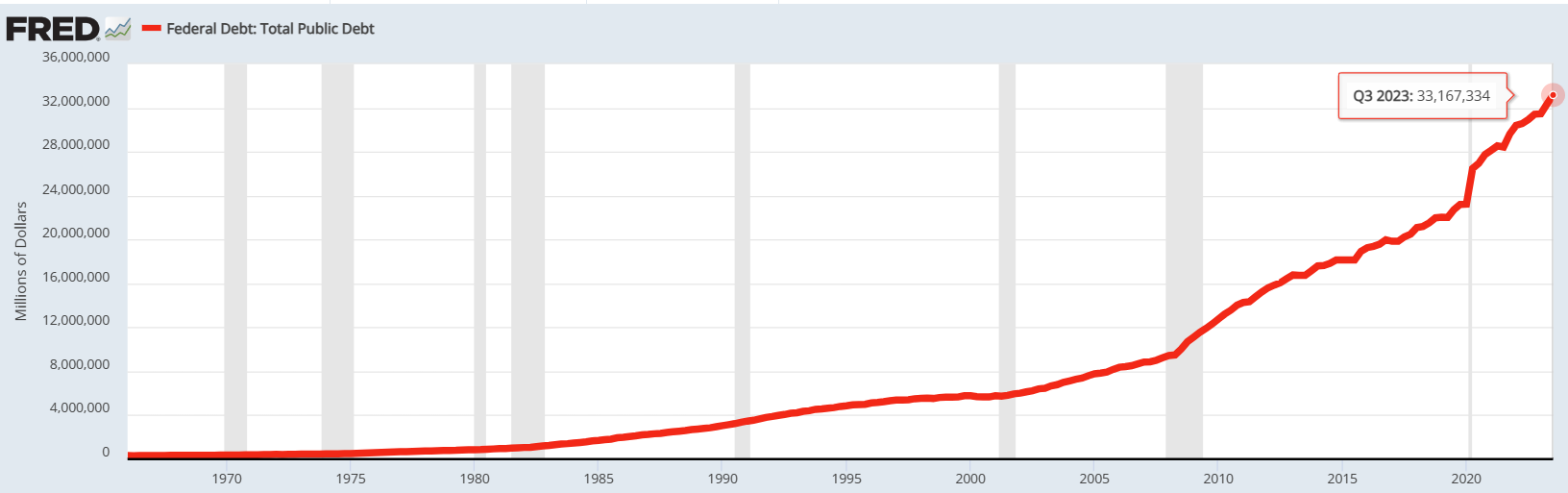

 Even without collecting any money, the Monetarily Sovereign U.S. government could pay any obligation denominated in dollars. Creating massive deficits does not affect the federal government’s ability to pay its creditors.
The doctor may not know that
Even without collecting any money, the Monetarily Sovereign U.S. government could pay any obligation denominated in dollars. Creating massive deficits does not affect the federal government’s ability to pay its creditors.
The doctor may not know that
 #Monetary Sovereignty - Mitchell