The conclusion is partly correct. People do pay more attention to negative news. The old, “If it bleeds, it leads” expression has been a mainstay of newsrooms for eons. But there is more to it. Who are the people most likely to believe we’re in a recession, unemployment is up, and the stock market is down? The same people also believe:A riptide of economic ignorance Americans can’t possibly be this ignorant about the economy, can they? Asked Catherine Rampbell of the Washington Post.
According to a recent Harris-Guardian poll most Americans (55%) think that the country is currently in a recession.
The poll “also found that roughly half (49%) of Americans believe the unemployment rate is a day 50-year high“ and that the stock market has been down since the beginning of the year.
On all three issues, the truth is almost completely the opposite. The economy isn’t shrinking: “by virtually every benchmark, we’re exceeding grow expectations“ and outperforming most other advanced economies.
Unemployment hasn’t been this low for this long since the Nixon administration and the S&P 500 is up more than 10% is year.
Why are the bad “vibes“ still here? Commentators are quick to “blame the media for the public’s economic illiteracy, “and I agree that the journalist “generally give more play to bad economic numbers than good ones,“ but if the media has a bad news, bias is because our audiences do, too.
“People are more likely to click, watch, listen to, and share content that induces outrage“ – a bias for negative news amplified by social media.
The most useful thing you can do to help the general public grow more informed is to reward good news with your attention.

- the election was stolen
- January 6 was not an insurrection; it was a normal tourist day
- Obama is not a citizen
- vaccinations cause disease and death
- vaccines implant microchips
- Trump helped create vaccines
- Biden orchestrated NY case against Trump
- Trump is innocent of all lawsuits
- COVID was a Chinese hoax, then a Chinese plot
- Wearing a COVID mask is unpatriotic
- Hillary Clinton runs a sex-trafficking ring in the basement of a fast-food restaurant

- global warming is a Chinese hoax
- FBI was ordered to kill Trump
- Biden/Ukraine/Shokin/ Burisma false scandal
- the deep state and the New World order are threats to America
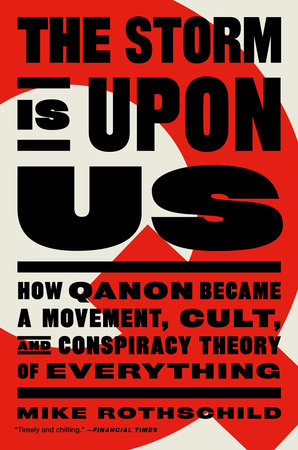
- QAnon postings
- Population control via secret methods — Agenda 21 death map
- The claims of Alex Jones, David Icke, Jim Marrs, Judy Mikovits, Jerome Corsi, Rudy Giuliani, Mike Lindell, Tucker Carlson
- The honesty and impartiality claims of Clarence Thomas, Neil Gorsuch, and Sam Alito.
- Every judge in Trump’s trials is dishonest and takes orders from Biden to weaponize the law (while Trump himself has claimed a long list of people who should be investigated, convicted, jailed, or worse.)
 Why is the right wing susceptible to so many obvious lies? They follow a leader like this one.
Forteen Characteristics of Cult Leaders
1. They’re narcissistic Cult leaders believe they’re special and are on a special mission to lead humanity to the light. They have fantasies of unlimited success and power. They’re constantly seeking the admiration of others and enjoy being the center of attention.
2. They’re charismatic Charisma is the ability to draw people to you by your charms and personality. Cult leaders tend to be highly charismatic. They’re masters at expressing their feelings and making their followers relate to them. Their social skills are above par.
3. They’re dominant As discussed earlier, projecting dominance is key to becoming a cult leader. Nobody wants to follow a submissive leader. A big part of dominance is putting down other dominant figures of society so you can look better than them.
This is why politicians, who share a lot of traits with cult leaders, demonize, belittle, and defame their competitors.
4. They demand obedience Projecting dominance helps cult leaders create a power imbalance between them and their followers. They’re high status, and their followers are of low status. If the followers obey and do as they’re told, they can raise their status too. They can be in a better place too.
In this way, cult leaders prey upon the low self-esteem of their followers.
5. They claim to have supernatural powers Cult leaders do this to highlight the power imbalance. “I’m special. You’re not special.” Cult leaders may claim magical powers like talking to aliens, healing, or telepathy.
(Or having special influence over dictators like Putin and Kim.)6. They’re arrogant and boastful Again, to remind their followers that they’re above them and to reinforce their high status.
7. They’re sociopaths/psychopaths (See: “A psychopath slipped into the White House . . .“) Lack of empathy is the hallmark of sociopathy/psychopathy. These tendencies make it easier for cult leaders to harm their followers without remorse.
8. They’re delusional Some cult leaders may suffer from mental illnesses like schizophrenia or temporal lobe epilepsy. These mental health conditions can induce psychosis or hallucinations. So, when they say they can talk to aliens, they may genuinely believe they do.
What’s interesting about this is that they can pull other people into their psychosis. As a result, the followers, driven by the conviction of their beliefs, may also see things that aren’t there. This condition is called shared psychotic disorder.
9. They’re persuasive Cult leaders are excellent marketers. They have to be, or they won’t be able to gain followers and raise their status. They know what makes people tick. They know how to cater to the basic needs of their followers.
10. They’re authoritative and controlling Cult leaders tend to control every little aspect of their followers’ lives. What to wear, what to eat, what to say, what not to say to keep the followers in line and reinforce their low status and power.
Some cult leaders also use fear and blackmail to control and retain followers.
Jim Jones, a cult leader responsible for 900 deaths, forced his followers to sign fake confession documents of criminal acts to blackmail them and deter them from leaving.
11. They’re exploitative The goal of all that authoritativeness and control is exploitation. Cult leaders make their followers submissive and weak to exploit them easily. Intelligent cult leaders exploit their followers that the followers don’t see as exploitation.
For instance, a cult leader may demand sexual access to female followers, making a ridiculous claim such as “This will purify our souls” or “It will bring us to a higher plane of existence”.
12. They’re underdogs Who is desperate to boost their status in society? Of course, low-status people. This is why cult leaders are often underdogs. They are rejects who failed multiple attempts to raise their status and are now resorting to desperate and unethical measures.
Who can relate to an underdog? Of course, other underdogs. Other low-status people. This is a big reason why cult leaders attract so many followers.
Cult leaders and followers band together to ‘overthrow the system’. For this to happen, the cult leader must act like an underdog so his followers can relate to him, but he must project dominance at the same time. An unusual mixture of being low status but projecting high status.
13. They’re intolerant of criticism Cult leaders can become enraged when they’re criticized. To them, criticism is a threat to their high status. That’s why they resort to extreme measures to prevent any criticism. Those who criticize are severely punished, humiliated, or even eliminated.
14. They’re visionaries Cult leaders infuse their followers with inspiration and hope for a better future (high status). They claim to take their followers to a better place, blissful and better off than non-followers.
Donald Trump meets the criteria for a cult leader and for a psychopath. See The Shared Psychosis of Donald Trump and His Loyalists. Are you a cult follower? Cult followers exhibit a range of traits and behaviors. Here are some common characteristics:- Unwavering devotion to the cult and its leadership.
- Willingness to sacrifice personal well-being or relationships for the group.
- Social withdrawal, often isolating themselves from non-members.
- Obedience to the leader, following the leader’s commands without question.
- Justification of contradictory beliefs and lies
- Suppression of independent, critical thinking
- Familial isolation: Relationships outside the cult are minimized.
- Obsession with the leader, intense focus on the leader
……………………………………………………………………..
The Sole Purpose of Government Is to Improve and Protect the Lives of the People.
MONETARY SOVEREIGNTY

 While politicians of all parties have been infamous for lying, two changes have taken place in the Republican party:

 #Monetary Sovereignty - Mitchell