Alan Greenspan
The UK government, like the US government, is Monetarily Sovereign. It has the infinite ability to create its own sovereign currency.
Former Federal Reserve Chairman Alan Greenspan: “A government cannot become insolvent with respect to obligations in its own currency.
“There is nothing to prevent the federal government from creating as much money as it wants and paying it to somebody.
“The United States can pay any debt it has because we can always print the money to do that.”
Other governments have this ability — the UK, Canada, Japan, Australia, the EU (though not its euro-usingnations), China, etc.
Not only can they create infinite amounts of their sovereign currency, but they are large enough to assure acceptance of, and demand for, their currencies.
The currencies of the above-named nations are backed by the full faith and credit of those nations, so there always is demand.
(By contrast, if you decided to create and distribute “mybucks” as your sovereign currency, you, too, would be Monetarily Sovereign, but few, if any, people would want it because your full faith and credit do not support a widely used currency.)
Sadly, the leaders of those nations have been paid by the rich to pretend they are not Monetarily Sovereign and that their “debt” is not “sustainable.” The purpose of the bribe: To widen the Gap between the rich and the rest.
In many posts on this blog, I have discussed the facts that:
Federal deficits are necessary to grow the economy, necessary to prevent recessions and depressions, and necessary to cure recessions.
Lest you believe the U.S. is the only Monetarily Sovereign government that pretends it isn’t Monetarily Sovereign, I give you the following demonstration of economic ignorance from the UK:
The UK’s growth outlook remains weak; quantitative easing has significantly increased the sensitivity of the UK’s debt to changes in short-term interest rates; and it is unclear whether the Government’s fiscal rule, as it relates to the national debt, is fit for purpose.
The committee’s inquiry will investigate whether the UK’s national debt is on a sustainable path; if not, what steps are required; and whether the Government’s fiscal rule regarding the national debt is meaningful.
There it is, the “sustainable” lie. Like the Monetarily Sovereign U.S. “debt,” the UK debt is infinitely sustainable.
Call for evidenceThe committee is seeking answers to the following questions:
1. What is meant by a “sustainable” national debt? Does the metric of debt as a percentage of GDP adequately capture sustainability?
Answer: No. The “debt”/GDP has no meaning with regard to a Monetarily Sovereign government’s ability to “sustain” its so-called “debt.”
2. The Government’s target is for public sector net debt (excluding the Bank of England) to be falling, as a percentage of GDP, by the fifth year of the OBR’s forecast. How meaningful is this target; and how does it inform an evaluation of the sustainability of our national debt?
Answer: The only way to decrease the “debt”/GDP ratio is to reduce deficit spending, a reduction that has repeatedly caused recessions.
3. How robust are the assumptions used by the Office for Budget Responsibility when forecasting our national debt?
Answer: Since the forecasts are meaningless, the “robustness” question also is meaningless.
4. What implications does the structure of the UK’s national debt have for its short and longer-term funding?
Answer: The debt is the net total of deficit spending, which already has been funded by money creation.
5. What are the market risks created by high levels of public debt; and what factors will influence the market’s appetite for this debt?
Answer: National government deficit spending adds growth dollars to the economy. The real market risks — i.e., recession and depression — come from insufficient deficit spending.
The government does not need to sell deposits into so-called “debt.” So, there is no government need for “market appetite.” The UK government can spend endlessly without selling even one pound of debt securities.
6. If we are to ensure our national debt is sustainable, what might this mean for fiscal policy?
Answer: There is no need to “ensure’ the national debt is sustainable. It is infinitely sustainable. For that reason, paying higher interest on the “debt” is not a burden on the government
Higher rates often can benefit the economy by adding dollars to the private sector, thus increasing GDP.
7. Should the definition of the national debt differentiate between debt incurred for investments (which generate revenue for the Government), and other areas of spending?
Answer: The so-called “national debt” is nothing like private (monetarily non-sovereign) debt. The more “national debt” there is, the healthier the economy.
The UK government has no need for revenue. Even if it didn’t collect a pound in income or taxes, it could continue spending forever.
And then there is this bit of nonsense:
Rishi Sunak came under fire for some Treasury forecasts of tax rises.
The Labour Party droned on about “change” while endlessly repeating some imaginary numbers about “investing” in the NHS and creating “green jobs”.
Over the course of the election campaign, the main parties have argued furiously about trivialities.
Yet there is an ugly truth lurking behind this election: Britain is far closer to bankruptcy than our political elites are willing to admit.
This is absolutely false scaremongering. The UK cannot go bankruptbecause it cannot run short of money. Period.
Taxes are already at a 70-year high, and yet we are nowhere close to balancing the books.
Every pound of taxes reduces GDP growth. National taxes absolutely should be cut. They do not fund (monetary sovereign) national government spending. (Taxes do fund local — monetarily non-sovereign –government spending.)
If the UK stops running deficits, it will have a depression that will make the Great Depression look like a picnic — a depression that only will be cured by massive deficit spending.
Over the course of this year, we will add another £87 billion, or around 3 per cent of GDP, to the national debt, according to the Office for Budget Responsibility (OBR).
And this is happening at a time when the economy is recovering, and the Government has pushed through a series of punishing tax rises.
Did it occur to the authors that GDP = National + local government spending + Net Exports? An economy recovers because of deficit spending, not in spite of it.
We should be paying back debt at this point in the cycle, not racking up even more.
“Paying back requires either more taxes or less spending, both of which will reduce GDP. It’s simple algebra.
Our debt to GDP ratio is close to 100 per cent, and tripled in the 16 years to 2023, according to the Resolution Foundation, the largest ever increase in peacetime.
We are very near to the 112 per cent level that has just led to the humiliating downgrade of France’s credit rating twice over the past six months.
The UK is Monetarily Sovereign. France is monetarily non-sovereign. Sadly, the authors don’t understand the difference, yet they write about economics. Shameful.
It doesn’t stop there. We are still racking up huge off-balance sheet debts. Such as? There is already £200 billion of outstanding student debt, and that is forecast to rise to over £400 billion by the 2040s.
Again, students are monetarily non-sovereign. The authors confuse the burden of private debt with the economic necessity of national debt, demonstrating unforgivable ignorance by national leaders.
The government should increase its deficits by helping fund students’ debt.
Few believe that graduates will earn enough to pay back their loans in full, especially as our zero-growth economy is hardly creating any new professional jobs to absorb them all.
Government deficit spending could grow the economy and create jobs.
We are on the hook for some £2.6 trillion in “unfunded” public sector pension entitlements.
There are zero “unfunded” public sector pension entitlements. They all are funded by government money creation.
The claim is an attempt to widen the income/wealth/power Gaps between the rich and the rest. The claim is funded by the rich to make themselves richer. The wider the Gaps, the richer are the wealthy.
As the state employs more and more people – we added another 135,000 to the government payroll in the year to September 2023 – that figure will carry on getting larger and larger.
That means 135,000 people receive money that is added to GDP.
We are legally mandated to hit a net zero target which the OBR has calculated could add at least another £300 billion to the government’s costs over three decades.
If a “net zero” target means zero deficits, the UK is headed for a depression. That target is beyond stupid. It is criminal.
In Wales, a staggering 28 per cent of working age people are now on benefits, depending on the state to support them, and the figures are little better in the rest of the country.
If “the state” is the national government, those payments add to GDP and do not cost anyone anything.
And at last, we come to one Britisher who understands Monetary Sovereignty. Delight in reading one informed man’s comments:
I’m frankly amazed you have to ask this question. Firstly, a brief explanation as to what the National Debt actually is. The debt is nothing more than a record of all government expenditure into the economy less taxes removed from the economy.
The issuance of Gilts to match the difference between spending and tax is not borrowing and does not provision government. The sale/purchase of Gilts is an Open Market Operation with the purpose of managing interest rates, it is a hangover from the gold standard days.
Gilt sales serve no real purpose other than to provide a safe way for pension funds and other financial institutions to make money.
They also help control interest rates, but the point is correct. They do not provide the government with spending funds.
Not a bad thing in itself but let’s not pretend that our government, that is the monopoly issuer of the pound, needs to borrow pounds that it has already issued.
And what is the mechanism behind this simple fact? Reserves accounts of commercial financial institutions held at the Bank of England solely consist of pounds issued/spent by the government or loaned by the government.
The pounds in the reserve accounts of commercial institutions put there by our government are then used by commercial institutions to purchase Gilts issued by our government! In effect the pounds in the reserve account are transferred to a Gilts account which pays interest.
That’s it. There is no way that in any sense of the word could this be considered as the UK government borrowing.
Next, although we’ve just seen that the National Debt is a mirage and better described as savings, we still insist that we have to pay interest (often described as nothing more than corporate welfare) on the pounds we have issued.
And that is a lot of interest. How sustainable are these interest payments? The answer is infinitely sustainable.
As I’ve already stated the irrefutable fact that the UK government is the monopoly issuer of the pound. The UK government can never involuntarily become bankrupt.
It can never run out of pounds. It can therefore always service its ‘debt’ as long as the debt is in pounds (which of course it is).
You only have to look at the example of Japan to realise that debt to GDP ratios are totally meaningless.
Last time I looked, end of 2023, Japan had a debt to GDP of 263% with low inflation, low interest rates, high levels of employment and excellent public services.
Any debt to GDP target is completely arbitrary and designed to hold down the spending of public money for public purpose, in other words it is politically motivated rather than having any economic basis.
Last, just want to reiterate that the idea that the UK government is dependent on the private sector or market to finance its ‘debt’ is total nonsense.
As I’ve already stated the pounds used by private financial institutions to buy Gilts were already issued by the government but we still have to go through the theatre of pretence by selling Gilts on the primary market.
BoE just used to buy them directly until it was forbidden, but that is entirely self-impose constraint. Now, ifthe market loses its appetite for debt the BoE just steps in and buys on the secondary market.
It’s about time the law-makers of our country understood that the UK government is monetarily sovereign. UK government finances are not like a household’s.
The UK government can never go broke, can never run out of money, and can always sustain its debt.
That, however, is not to say there are no limits to government expenditure. UK government expenditure is constrained by the real resources that are available to buy priced in pounds.
Asking how we are going deploy our government’s infinite financial resources to invest to sustain the real economy, mobilise our workforce and the finite resources of our country and, at the same time, sustainthe environment are the real questions we should be asking.
Not worrying about an imaginary problem about how to sustain an imaginary ‘debt’, caused by imaginary ‘borrowing’. 23 January 2024
Thank you, Professor Camden. We can now assure everyone that there is at least one informed, though lonesome, person in England. Is there another?
Oh, wait. I think Camden is an American and a chemist. If that is the case, perhaps it shows that chemists rely on proofs and facts, while economists rely on intuition and hearsay.
So, thank you again, Professor Jon Camden, for your excellent article.
Rodger Malcolm Mitchell
Monetary SovereigntyTwitter: @rodgermitchellSearch #monetarysovereigntyFacebook: Rodger Malcolm Mitchell;MUCK RACK: https://muckrack.com/rodger-malcolm-mitchell
……………………………………………………………………..
The Sole Purpose of Government Is to Improve and Protect the Lives of the People.
Public radio station WLRN aired a program describing the phenomenon of habituation, a fancy word for “getting used to.”
The program described how good experiences always seemed at their best early on. Then, as the experiences continued, people habituated to them, and they seemed less enjoyable.
Similarly, bad experiences were at their worst in the beginning but later seemed to moderate with time.
Example: I live in a country club that, by any rational evaluation, could be considered akin to paradise. The Florida climate and club grounds are beautiful. We have five outstanding restaurants on the grounds, plus fifty more within 15 minutes by car. There are nearby shopping centers, and a Costco is 10 minutes away, plus easy access to a freeway, a toll road, and two airports.
We are offered two in-club golf courses and many others nearby. Twenty-five soft tennis courts, a dozen pickleball courts, a great spa fitted with every exercise machine, coaching, steam rooms, and all sorts of classes are here for every member.
Enjoy cards? We have gin, poker, and bridge at all levels. A library in the clubhouse and a public library is ten minutes away. And don’t even ask about the ever-smiling, ever-courteous, ever-friendly service people. So, yes, it’s paradise.
And yes, after a while, people become so habituateds to paradise that they complain when things are not precisely perfect, and sometimes even when they are.
I’ve noticed that the people who complain most are those who have been here for a short while. The newcomers are awed by the service and the surroundings. And the long-termers, say fifteen years or more, are habituated to how the club operates.
I’ll admit this is just an observation and not statistically proven. (Also, there are regional differences in the effect of habituation, with Midwesterners and Canadians seeming more stoic).
Habituation can occur in various aspects of human behavior and emotion:
Lying: A person who frequently lies might initially feel a strong emotional response such as guilt or anxiety. Over time, as they continue to lie, they may become habituated to these feelings and no longer experience them as intensely.
Stealing: Similar to lying, a habitual thief might initially experience a rush or fear of getting caught. With repeated acts of stealing, these intense feelings may diminish, making it easier for the individual to continue the behavior and for his associates to countenance it.
Marriage: In the context of marriage, habituation might refer to the phenomenon where partners become so accustomed to each other’s presence and habits that they may take each other for granted, leading to a decrease in overt expressions of love or appreciation.
Enjoyment: Read a book, see a movie, hear a joke—usually, the first time is the best.
Love: The intense passion and excitement that characterize the early stages of a romantic relationship often give way to a more stable and less intense form of affection as partners become habituated to each other.
Pain: Chronic pain sufferers can sometimes become habituated to their pain, meaning that their psychological response to the pain decreases even though the physical sensation may remain constant.
Anger: Frequent exposure to situations that trigger anger can lead to habituation, where the individual’s emotional response to such triggers becomes less intense over time. Visualize our current vs. past responses to mass shootings.
Fear: Habituation is often used in therapy to help individuals overcome phobias. By gradually and repeatedly being exposed to the feared object or situation without any negative consequences, the individual’s fear response can diminish.
Hope: While not typically discussed in the context of habituation, it’s possible for individuals to become habituated to hope if they are repeatedly exposed to situations where their hopeful expectationsare met, potentially leading to a decreased emotional response to positive outcomes.
Habituation is related to expectations and is a normal and often adaptive process. But it can also contribute to negative behaviors if it reduces the emotional impact of harmful actions.
If someone regularly lies, cheats, or steals, the latest instances seem to draw less reaction from those who know them.
The recent debate between President Joe Biden and Donald Trump provides an example.
Biden enumerated his accomplishments; Trump lied and smirked.
Both drew yawns from the media because they were nothing new.
Biden’s twenty-second stumble and hoarse voice were all the media could remember of the entire ninety-minute debate, and that is what they promulgated.
Interestingly, the opposite of habituation can occur under certain circumstances. It’s called sensitization, and it, too, can be related to expectations. Pain, for example, can be felt more intensely in subsequent experiences.
Visualize a dentist’s drilling. The patient might begin to flinch even before the drill touches.
SUMMARY
Habituation plays a greater part in our lives than we often realize. The same circumstance may elicit different emotional responses, depending on whether and how we have experienced them earlier.
It partly has to do with expectations. Something that falls within the parameters of our expectations might cause less emotion than something unanticipated.
A joke with a new twist is funnier than one you’ve heard before. Horror movies and music rely on expectations for emotional impact. All the arts do.
We are programmed to pay more attention and be more emotional with the new and different and to ignore the usual. It is the appeal of games(each is different), infidelity (a different partner), and news. It supports curiosity. All lack the habituation that would dull our responses.
Habituation is why Trump’s lies and criminality don’t draw the public outrage that historically has followed other politicians’ misdeeds.
Habituation desensitizes. It’s why there was no outcry when Trump’s lawyer, accountant, and other associates have been jailed for doing what Trump ordered.
Though the public is habituated to Trump’s transgressions, his associates’ crimes are new.
Here are some definitions. Which American political party do they describe?
1. Fascism is a political ideology characterized by authoritarian ultranationalism, centralized control, suppression of opposition, and often a dictatorial leader.
It emphasizes bigotry, extreme militaristic nationalism, contempt for electoral democracy and political/cultural liberalism.
2. White supremacy is an ideology based on the belief that white people are superior to those of all other races and should, therefore, dominate society.
This belief system underpins various forms of racial discrimination and segregation.
3. Christian nationalism is a cultural framework that idealizes and advocates a fusion of Christianity with American civic life.
It is an ideology that emphasizes the idea that the United States was founded as a Christian nation and should continue to uphold Christian values in its laws and society.
Christian nationalists may believe that being a Christian is an important part of being a true American and that the government should recognize the U.S. as a Christian nation.
The movement can include various subgroups and ideas, such as the New Apostolic Reformation, which seeks a transformation of the U.S. into a Christian nation through what they see as a spiritual battle.
The term “white Christian nationalism” is sometimes used to describe a worldview that combines elements of white supremacy with Christian identity, often with a focus on political power and cultural dominance.
See: In their own words: How Americans describe ‘Christian nationalism’
Google Trends data shows a significant rise in searches for the term following the Jan. 6 riot at the U.S. Capitol. Searches for the term peaked in July 2022 after Rep. Marjorie Taylor Greene, R-Ga., declared in an interview that “We need to be the party of nationalism, and I’m a Christian, and I say it proudly, we should be Christian nationalists.”The survey asked 2,540 respondents who have heard at least “a little” about Christian nationalism: “In your own words, what does the phrase ‘Christian nationalism’ mean to you?”
Many describe “Christian nationalism” in terms of Christian dominance in society, while others associate the concept with racism, authoritarianism, bigotry and exclusion.A smaller portion of Americans describe it as the positive influence of faith and morals in society.
In a related news story:
Louisiana Gov. Jeff Landryis defending the state’s mandate to display the Ten Commandments in classrooms, explaining that the United States was founded upon “Judeo-Christian” principles.
There is nothing more religious than the 10 Commandments, and as is the case with all things religious, there are disagreements, interpretations, and claims of righteousness.
Which 10 Commandments will Gov. Landry post, and what about religions that don’t believe in the 10 Commandments?
There are multiple versions of the Ten Commandments, some of which are in fierce contention. Among the most notable is the “graven image” commandment. For centuries, arguments have raged about whether worshipping images of Jesus, Mary, and various saints violates thiscommandment.
Not all religions subscribe to the 10 Commandments as they are presented in the Bible.
For instance, Islam does not accept the Bible’s absolute authority, including the Ten Commandments, because it believes that the text has been corrupted over time. Hinduism has “the Yamas,” which serve a similar purpose to the Ten Commandments but are different in content and scope.
Are they, who follow these religions. less American?
Then, there is the Talmud, which lists 613 commandments. Which should be shown as the ten?
The U.S. Constitution addresses religion in the very First Amendment, which contains two clauses related to religion:
The Establishment Clause: This clause prohibits the federal government from creating an official church or favoring one religion over another.
It states, “Congress shall make no law respecting an establishment of religion…”
The Free Exercise Clause: This clause protects individuals’ rights to practice their religion as they please, without interference from the government. It says, “…or prohibiting the free exercise thereof.”
The purpose of these clauses is to prevent the government from sinking into a theocracy, the problems of which are:
Lack of Religious Freedom: The state endorses one religion, often leading to the suppression of other religious practices and beliefs
Potential for Intolerance: Theocratic societies may be intolerant towards immigrants, different cultures, or ethnic groups, especially those who do not share the state religion
Risk to Personal Freedoms: Disagreeing with the government can be seen as disagreeing with the divine authority itself, placing personal religious ideas or freedoms at risk.
Centralized Power: Theocracies often have centralized structures of power, which can limit debate and dissent in policy-making.
Societal Compliance: Compliance is often achieved through religious means, which can include the threat of spiritual consequences for non-compliance.
Theocracies quickly evolve into dictatorships, which are especially difficult to change because the leader claims to speak for God.
After reading the above, you can answer the title question for yourself: Which American political party is this, and is it what you want for America?
The sole purpose of government is to improve and protect the people’s lives.
Why else would we, the people, turn over control of our lives to a government?
Why else would we. the people, give our precious money and limited power to a small group that tells them what they are allowed to do and not allowed to do?
But the International Monetary Fund (IMF) has different purposes, according to their site:
1. Furthering international monetary cooperation for consultation and collaboration on international monetary problems. 2. Facilitating the expansion and balanced growth of international trade, and to contributing thereby to the promotion and maintenance of high levels of employment, real income and productive resources. 3. Promoting orderly exchangearrangements among members, and to avoiding competitive exchange depreciation. 4. The elimination of foreign exchangerestrictions which hamper the growth of world trade. 5. Making the resources of the Fund temporarily available to members to correct maladjustments in their balance of payments without measures destructive of prosperity. 6. Shortening the duration and lessening the degree of disequilibrium in the international balances of payments of memberss
Nowhere are improving and protecting the people’s lives mentioned. It’s all about the governments and their money.
That is why the IMF never met an austerity it didn’t love.
It almost always recommends some form of austerity as a cure for what it deems “excessive” government debt.
Here’s what austerity means:
Reducing Expenditure: Governments may cut spending on public services, welfare benefits, and salariesfor public sector workers. This can include limiting the terms of unemployment benefits, reducing government employees’ wages,or cutting programs for the poor.
Increasing Revenue: This can be achieved by raising taxes, targeting tax fraud and evasion, or privatizing government-owned businesses to raise capital.
Economic Impact: Austerity measures act like contractionary fiscal policy, which can slow economic growth. This is because they reduce the amount of money circulating in the economy, which can lead to lower consumer spending and investment.
Debt Management: The primary goal of austerity is to reduce the risk of default on government debt. High levels of debt can lead to creditors demanding higher interest rates, making it more expensive for a country to borrow money.
Cut benefits, increase taxes, slow growth, and ensure the government pays its obligations to other governments. That is about as pro-government and “non-people” as you can get.
It can be said sweetly and nobly as President John Kennedy with his “Ask not what your country can do for you — ask what you can do for your country” speech.
Ah, those lofty words that sound so patriotic and easy on the ear, but are a prescription for an impoverished nation living under a dictatorship.
I prefer to ask politicians, “What will you do for us in return for your salary, lifestyle, and the prestige we have given you?”
Alan Greenspan: “A government cannot become insolvent with respect to obligations in its own currency.”
The IMF functions as an employee of governments and not of the people.
Based on history and its own statements, the IMF may have a different maxim: The sole purpose of people is to improve and protect their government.
That is true in America. Here, the federal government has infinite money but still demands taxes from the people.
Here, politicians decry federal deficits, though the government can pay any invoice merely by pressing computer keys.
Here, our government pretends to struggle with funding benefits for the poor, though it has no trouble funding tax breaks for the rich.
“Improving and protecting the people’s lives” seems to be the last thing the IFM and U.S. politicians worry about.
U.S. government budget deficits and an escalating debt load pose “a growing risk” to the global economy, marring an otherwise stellar economic performance, the International Monetary Fund said on Thursday.
Translation: The federal government is putting more dollars into people’s pockets than it is taking out, and as a result, the economy is doing great.
The “growing risk” is that somehow the poor will discover the government’s infinite ability to fund benefits, and demand more and better.
The United States over the next several years faces “a pressing need” to reduce its debt burden, which could require broad-based income tax increases and cuts in popular entitlement programs, the fund said at the conclusion of its annual review of the U.S. economy.
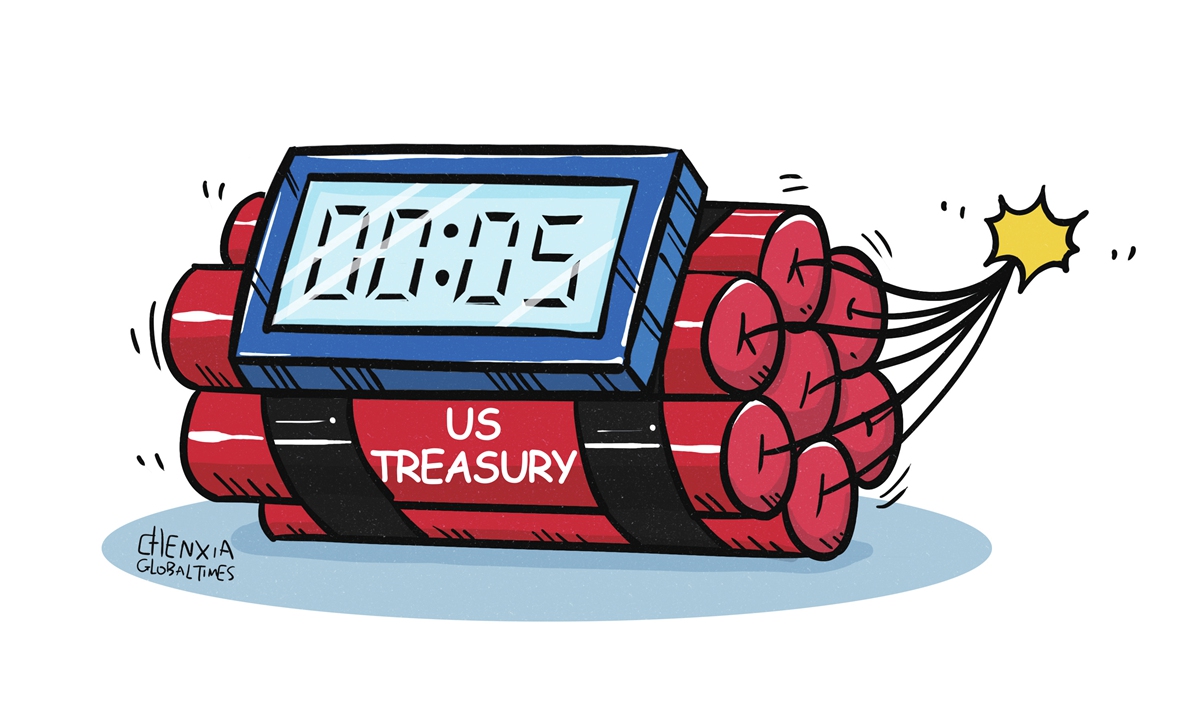
Translation: This “pressing need” often has been described as a “ticking time bomb,” which has been “ticking” for eighty-four years without exploding.
Our Monetarily Sovereign (MS) government has infinite dollars.
Why then does the IMF want, the government unnecessarily to take more money from the people and cut benefits to those who need them.
The required fiscal adjustment will mean “difficult political decisions over the course of multiple years,” the fund said, warning that an unchecked rise in debt could eventually sap U.S. growth and snowball into global financial distress.
Translation: “Difficult political decisions” are those that screw the people while sounding like the IMF is helping them.
For instance, raising Medicare, Social Security, and unemployment taxes with the false explanation that these taxes are needed to “save” the benefits.
These decisions are difficult, but we politicans, being heroic, are ready to sacrifice your lives to make the rich richer.
The rise in debt stimulated U.S. growth and “snowballed” into the people’s financial success. So, cut the debt.
“Now is a good time,” said Kristalina Georgieva, the fund’s managing director. “The U.S. economy is very strong, and it is in good times where you can do more to prepare yourself for risks in the future.”
Translation: The U.S. economy is very strong because the government has increased spending.
Therefore, now is a good time to weaken it by taking money out of the economy. GDP=Federal and Non-federal Spending + Net Exports.
You can be sure that if the economy was suffering, Ms. Georgieva would offer the same prescription: Austerity. It’s what they always recommend, regardless of the circumstances.
President Biden has ruled out at least one of the fund’s suggested remedies: Higher taxes on people making less than $400,000 a year.
Translation: The IMF wants to take dollars out of the pockets of the poorer people.
Apparently, these people should ask not what the country can do for them but what they can do for the rich people.
But debt aside, the IMF statement praised the U.S. economy for “a remarkable performance” in recent years.
Inflation has largely been brought under control without the sharp increase in unemployment that many economists had expected.
Gross domestic product (GDP) growth remains above expectations and is expected to continue.
Translation: We, the IMF, are completely clueless about how high levels of federal deficit spending can cause these remarkable outcomes, but whatever the reason, we want it stopped.
“The U.S. is the only G-20 economy whose GDP level now exceeds the pre-pandemic level. This is good for the U.S. and it is good for the global economy,” Georgieva told reporters.
Translation: The federal debt (that isn’t federal and isn’t debt — See: National Debt ) is up, and all this good stuff is happening. We of the IMF don’t understand why, and we want it stopped.
Despite the U.S. debt bulge, financial markets remain untroubled. The return that the government must offer to entice investors to purchase 10-year treasury securities hovers around 4.2 percent, below rates that were typical before the Great Recession.
Translation: The IMF is shocked that financial markets are untroubled by sales and profit growth.
Jerome Powell: “Look how well I’m driving.”
The U.S. government doesn’t really don’t care how many treasury securities are purchased.
Those dollars mean nothing to a government that has infinite dollars.
The government sets the interest rate at any level the Fed chooses.
It’s what the Fed does to make people think it is driving the car when, in fact, it is just going along for the ride.
The U.S. economy also is attracting an increasing share of global capital, according to Georgieva.
Before the pandemic, 18 percent of funds invested outside national borders was placed in the United States.
Today, the U.S. share of mobile finance is 33 percent, she said.
Translation: The so-called “federal debt” that bothers the IMF doesn’t seem to bother knowledgeable investors.
Debts and deficits will be an early challenge for the next president. In early 2025, Congress must lift the statutory debt ceiling or see the United States default on its debt.
Lawmakers also must decide by the end of 2025 to extend Trump’s 2017 tax cuts or allow them to expire, thus increasing taxes on most Americans.
Translation: Debts and deficits will grow the economy, but politicians, economists, the media and IMF will argue that the debt and deficits should be reduced. It’s what the very rich want us to say.
In April, as part of a separate review, IMF officials chided the United States for government deficits that stimulated the economy, saying they effectively made it more difficult for the Federal Reserve to cut interest rates.
Translation: Deficits grew the economy and enriched the private sector, but how is the Fed going to justify its existence if it can’t manipulate interest rates?
The IMF’s slogan should be: The sole purpose of people is to protect and improve their government and the rich people.
On Thursday, citing potential upside risks to inflation, the IMF said the Fed should wait to cut interest rates until “at least late 2024.”
Translation: Otherwise, it will be too easy for those who aren’t rich to buy cars, houses, refrigerators, furniture, and every other product whose price is increased by high interest rates (i.e., all products).
Thursday’s IMF statement is just the latest warning on the U.S. debt picture.
On Tuesday, the Organization for Economic Co-Operation and Development said that adding debt at a time of higher interest rateswill limit the ability of the United States to meet other needs, including defense, an aging population, and future economic shocks.
Translation: We have no idea what this means. The U.S. government has proved it has infinite moneyto meet all needs, including defense, an aging population, and future economic shocks. But, the IMF felt compelled to make a statement, however wrong.
Years of repeated tax cuts have narrowed the government’s revenue base at a time when it faces escalating spending commitments for programs such as Social Security and Medicare, as well as rising interest charges, the OECD said.
Translation: Federal taxes do not fund federal spending. Even if it collected zero taxes, it could continue spending forever.
But then, it couldn’t take dollars from the poor for social benefits or just limit those benefits altogether.
That is not what our real patrons, the rich, want.
As a share of the economy, corporate income tax payments are now less than half what they were in 1967, according to the Congressional Budget Office.
Interest expenses on the national debt over the same period have doubled to 2.4 percent of gross domestic product.
Translation: The government is taking comparatively less money from corporations, and adding more money to the economy in interest. This is working spectacularly, so it must be stopped???
The OECD, a group of more than three dozen advanced economies, called for a “sustained but steady multiyear” budget effort to curb debt.
Only Italy, Greece and Japan have higher gross debt-to-GDP ratios, the OECD said in its annual assessment of the U.S. economy.
Translation: Because the IMF is are clueless about the fundamental differences between a Monetarily Sovereign (MS) government and a monetarily non-sovereign government, it lumps Italy, Greece, and Japan into our comparison.
Italy and Greece, not being MS, must rely on the (EU) European Union to provide them with money. Japan, being MS, doesn’t need any help.
Government debt held by the public, which excludes Treasury securities in the Social Security Trust Fund, is equal to 99 percent of total U.S. output and is expected to hit 122 percent in 2034, according to the CBO.
Translation: The useless Debt/GDP ratio is the phony number of last resort for those who don’t understand MS; therefore, the IMF tries to fool you with it.
Many economists say the government’s growing debt burden must be addressed with a mix of spending cuts and tax increases.
Stabilizing the debt relative to the size of the economy is “a really important goal,” Jared Bernstein, the chairman of the White House Council of Economic Advisers, said at the Brookings Institution this week.
Someone please tell Mr. Bernstein that federal debt is two things, neither of which has any meaning relative to the size of our economy (which is GDP).
The two meanings of federal debt are:
The historical net total of federal deficits— the difference between federal spending and federal taxes. Simply add all the spending the government has ever done and subtract all the income the federal government has ever received. That’s the debt.
The current total of all outstanding Treasury Securities (T-bills, T-notes, T-bonds, etc.)
With regard to #1, the “debt” would have some meaning if the federal government was monetarily non-sovereign: it doesn’t use a currency it issues. This resembles city, county, and state governments, as well as businesses, you, and me.
It’s relevant because we monetarily non-sovereign types might have difficulty paying all those outstanding bills. The Monetarily Sovereign U.S. government has no such difficulty because it has the infinite ability to create dollars.
Regarding #2, Treasury Securities are accounts wholly owned by the depositors. The government doesn’t owe the contents of those accounts because it never takes ownership of the money. It just holds the dollars for safekeeping.
This resembles bank safe deposit boxes. The contents are not part of bank debt because the bank never owns them.
By contrast, city, county, and state notes and bonds are in accounts owed by the respective cities, counties, and states, which rely on income to pay them off.





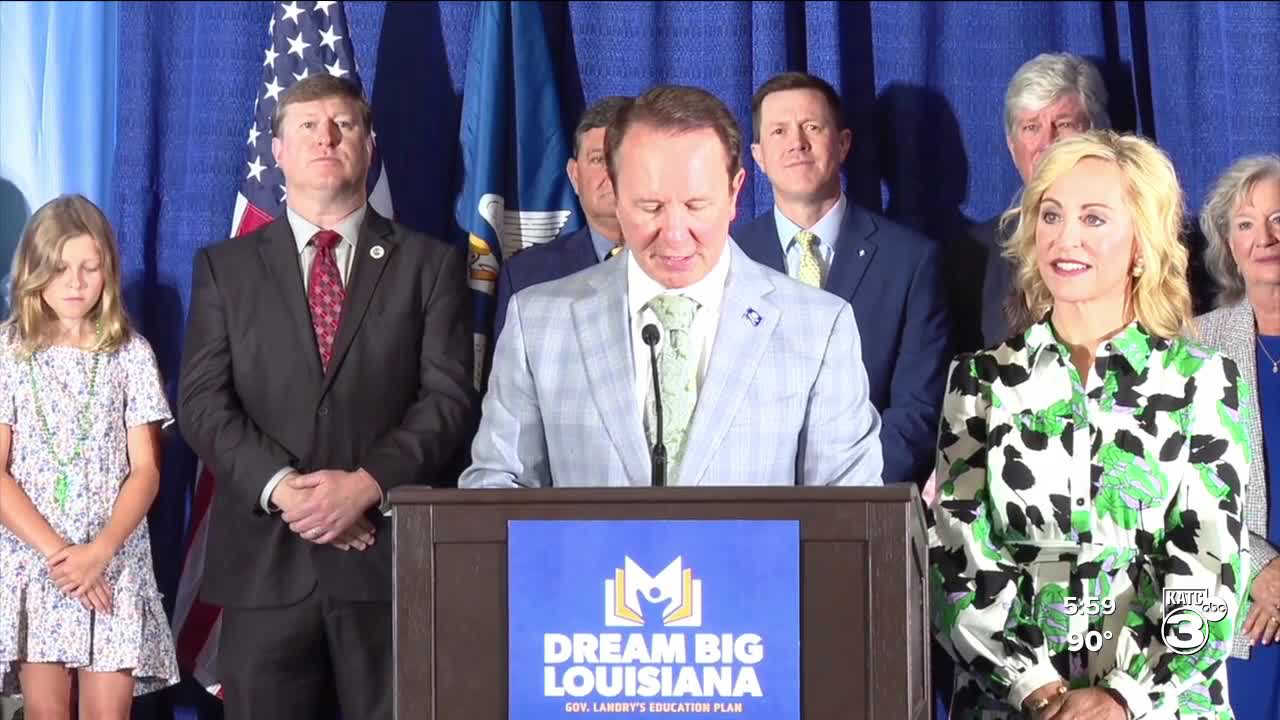 classrooms, explaining that the United States was founded upon “Judeo-Christian” principles.
:max_bytes(150000):strip_icc()/GettyImages-671519300-e1ecfe47b0734333a9ac17eb46f6f398.jpg)


 #Monetary Sovereignty - Mitchell