And it’s not just Florida women, though the following article from the Florida Sun Sentinel focuses on them.
Florida women dying from preventable causes New scorecard assesses health, reproductive care across nation By Cindy Krischer Goodman South Florida Sun Sentinel
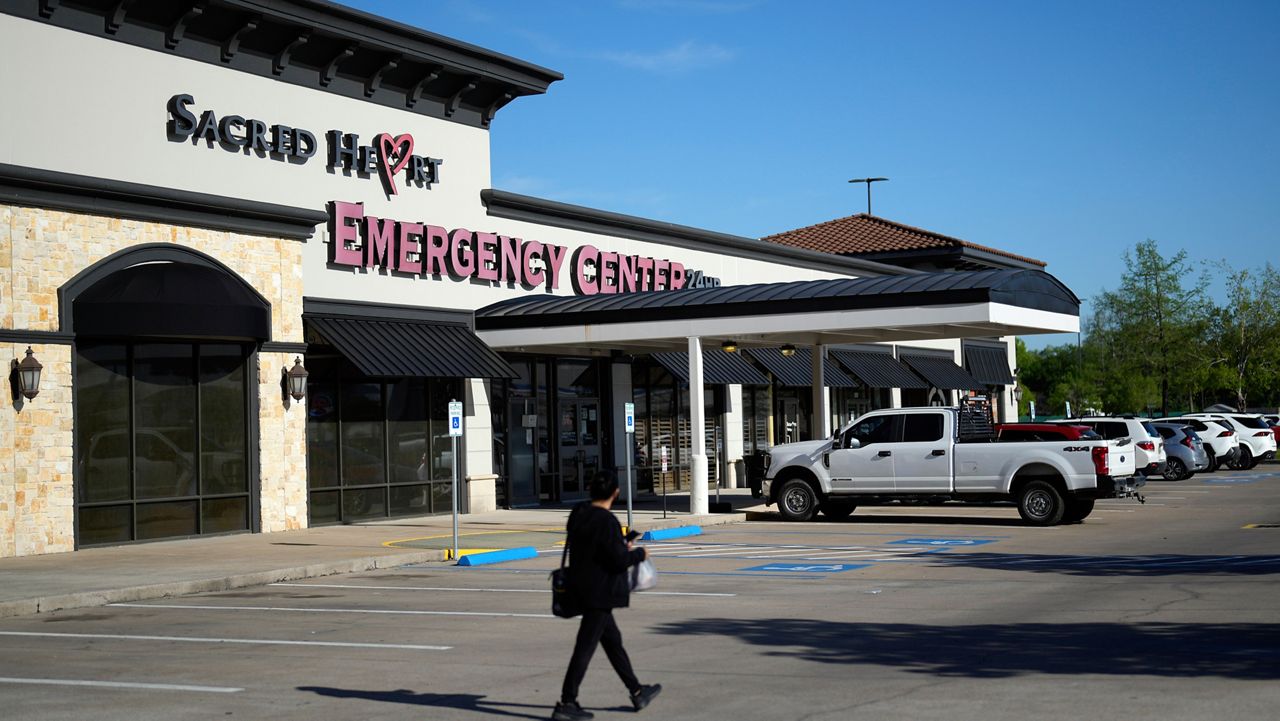
Emergency rooms refused to treat pregnant women, leaving one to miscarry in a lobby restroom as front desk staff refused to admit her. Another woman learned that her fetus had no heartbeat at a Florida hospital, the day after a security guard turned her away from the facility. And in North Carolina, a woman gave birth in a car after an emergency room couldn’t offer an ultrasound. The baby later died.
Florida women are dying from causes that are preventable, including breast and cervical cancer, pregnancy complications, and mental health conditions, according to a new national scorecard of women’s health released Wednesday.
The Commonwealth Fund’s scorecard assessed women’s health and reproductive care in the United States over the last two years to measure the consequences of state policy choices and judicial decisions that limit women’s access to health services and reproductive care.
The 2024 Scorecard on Women’s Health and Reproductive Care comes amid a March 2024 National Center for Health Statistics finding that women’s life expectancy is at its lowest since 2006.
Using 32 measures, The Commonwealth Fund, a private healthcare research foundation, ranks Florida in the bottom third of the country (39th) for how well the state’s healthcare system works for women ages 15 to 44.
Overall, Florida has a higher than the U.S. average rate of women who lack insurance, die while pregnant, give birth without prenatal care, and succumb to breast and cervical cancer.
“Our hope is that state policymakers can use this scorecard to identify and address gaps in care to guarantee that all women across the United States can live healthy lives with access to quality, affordable care, no matter where they live or what their background is,” said Joseph Betancourt, Commonwealth Fund president.
One of the biggest concerns highlighted in Florida’s low ranking is its high rate of uninsured women ages 19-64. It is one of 10 states that have not expanded eligibility for Medicaid and has had a problematic unwinding of pandemic-era Medicaid coverage that has left thousands of women either newly uninsured or with significant gaps in their coverage.
These ten states have not expanded Medicaid eligibility: Alabama, Florida, Georgia, Kansas, Mississippi, South Carolina, Tennessee, Texas, Wisconsin, and Wyoming. All are “red” states, with the exception of Wisconsin, which is teetering on the edge.
The Affordable Care Act expanded Medicaid coverage to nearly all adults with incomes of up to 138% of the federal poverty level. (In 2023, that equals $20,120 for an individual or $41,400 for a family of four.)
Not only would these states’ womenbenefit from the health care, but the state taxpayers would benefit financially from the federal matching funds.
It costs those states’ taxpayers money to deprive their poor of healthcare.
Why do they do it? Medicaid was originally established under Democrat President Lyndon B. Johnson in 1965 as part of the Social Security Amendments. However, the significant expansion of Medicaid occurred under President Barack Obama with the passage of the Affordable Care Act (ACA, aka “Obamacare”) in 2010.
Since its enactment in 2010, there have been at least 70 Republican-led attemptsto repeal, modify, or otherwise curb the ACA.
The ACA extends health coverage to millions of uninsured Americans.
It expands Medicaid eligibility, creates a Health Insurance Marketplace, prevents insurance companies from denying coverage due to preexisting conditions, and requires insurers to cover a list of these essential health benefits:
Ambulatory patient services (outpatient care you get without being admitted to a hospital)
Emergency services
Hospitalization (such as surgery and overnight stays)
Pregnancy, maternity, and newborn care (both before and after birth)
Mental health and substance use disorder services, including behavioral health treatment (this includes counseling and psychotherapy)
Prescription drugs
Rehabilitative and habilitative services and devices (services and devices to help people with injuries, disabilities, or chronic conditions gain or recover mental and physical skills)
Laboratory services
Preventive and wellness services and chronic disease management
Pediatric services, including oral and vision care/
But, Donald Trump hates Barack Obama. So, today’s Republicans would rather cost their taxpayers money and see their poor people, especially women, sicken and die than disobey Trump.
Women in states like Florida that have not expanded Medicaid eligibility report skipping health care at higher rates than in states with expanded eligibility.
The scorecard shows 22% of women ages 18-44 reported a time in the past 12 months when they needed to see a doctor but could not because of cost.
“One out of six women in Florida lacks health insurance,” said David Radley, senior scientist, Tracking Health System Performance, The Commonwealth Fund.
He notes the state also has a high percentage of women who don’t have a primary care doctor. A regular provider can help manage chronic medical conditions, conduct screenings and test for diseases.
“To me. the takeaway is if you can get access into the health care delivery system in Florida, you can probably get pretty good care.
“But if you can’t get access, you are going to feel it in your health and life expectancy.
“If you dont have that doctor to go to who understands your circumstances, you are not as likely to get the things you need to help you live a long life,” Radley said.
Overall, the scorecard’s findings raise concerns over the ripple effects of the Supreme Court’s 2022 decision to overturn Roe v. Wade and the access to reproductive health care services.
The six Republicans on the Supreme Court all voted to overturn Roe v. Wade, despite its being “settled law” for 50 years.
All but Clarence Thomas emphasized their belief in the importance of “settled law” when specifically asked about Roe during their confirmation hearings. They lied.
A recent South Florida Sun Sentinel series, Born to Die, found expecting mothers in Florida, particularly those without insurance, are foregoing prenatal care leading to high rates of infant deaths and premature births.
The high rates of already-born infant deaths plus women’s deaths demonstrate the hypocrisy of the anti-abortion politicians.
Now, some states have proposed or enacted legislation aimed at restricting access to specific types of contraception, such as emergency contraceptives (e.g., Plan B) and intrauterine devices (IUDs).
(“We won’t let you prevent pregnancy. We won’t let you get health care during pregnancy. We won’t let you abort. And we won’t support you afteryou give birth. Gotcha!”)
It’s all politics. They care nothing for taxpayers’ money. They care nothing for life.
The people, including pregnant women and already-born babies, are expendable.
Highlights from the Scorecard include various health trends that affect women’s care in Florida: States like Florida with abortion restrictions tend to have fewer maternity care providers. Several dozen hospitals in Florida already have closed their labor and delivery units.
Women of reproductive age in states like Florida that had not expanded Medicaid eligibility were most at risk of going without coverage, as well as skipping needed care because of cost.
Nearly all states have witnessed an upward trend in syphilis among women of reproductive age since 2019. Florida’s rate is higher than the national average.
Rates of maternal deaths are highest in the Mississippi Delta region, which includes Arkansas, Louisiana, Mississippi, and Tennessee.
All four states had abortion restrictions prior to the Supreme Court overturning the constitutional right to an abortion, and they all now have full abortion bans.
Florida’s strict six-week abortion ban went into effect on May 1.
Deaths among women ages 15 to 44 were highest in southeastern states (which includes Florida). Top causes of death included preventable factors such as pregnancy complications, substance use, COVID-19, and breast or cervical cancer.
Death rates from all causes per 100,000 women of reproductive age ranged from a low of 70.5 in Hawaii to 203.6 in West Virginia.
Florida’s death rate is 114.
Southeastern states tend to be Republican. Hawaii is Democrat; West Virginia is Republican.
“Overall, there are mounting disparities in women’s health and reproductive care across the United States,” Radley said.
“Some states have built the policies up in ways to enable access to health care and some haven’t.
If you can’t afford to have healthcare, and especially if you are a woman, pray that you live in a blue state. Otherwise, there is an increased probability you and your children will die sooner than you should.
Florida is a state that has a large low-income population and a lot of people with no health insurance. And, they are less likely to get the care they want or need going forward.
We are finding that the state of heathcare for women is in a fragile place.”
Bottom line: The Republican-controlled Supreme Court voted to end Roe v. Wade. Republican-controlled states ban abortion. Republican-controlled states try to ban contraceptives. Republican-controlled states have not expanded Medicaid.
Women receive worse health care, sicken earlier, and die younger in Republican-controlled states.
South Florida Sun Sentinel health reporter Cindy Goodman can be reached at cgoodman@sunsentinel.com.
When you show a federal “debt” worrier proof that the federal government is Monetarily Sovereign, meaning it has the infinite ability to create dollars, they often will backtrack with: “Yes, but that will cause inflation.”
It has become a matter of faith that “inflation is too many dollars chasing too few goods,” and federal deficit spending “creates too many dollars.”
Therefore, federal deficit spending causes inflation.
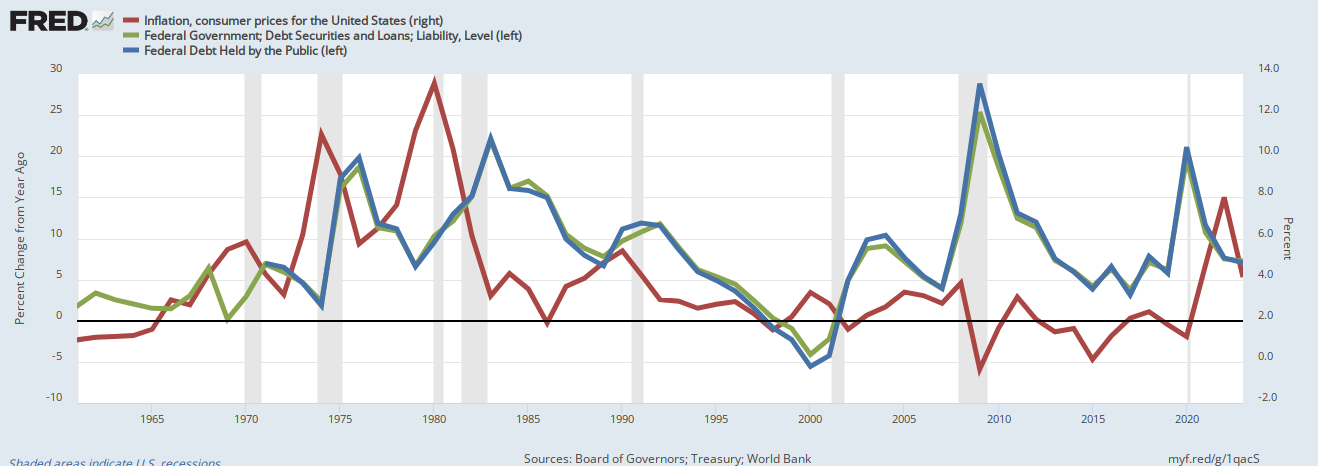
If the common knowledge were true, how can one explain this graph?
Graph 1
The above graph shows two alternative measures of federal deficit spending: Federal Government Debt Securities and Loans Liability, Level and Federal Debt Held by the Public.
Both measures are quite similar, but they are shown to demonstrate that one measure of federal deficit spending is not some sort of statistical fluke.
Now, compare them with Inflation, Consumer Prices for the United States.
If inflations were caused by “excessive federal deficit spending,” one would not expect a graph like the above, where the peaks and valleys of inflation vs. deficits diverge dramatically. Often, when federal deficit spending goes up, inflation goes down.
Mathematically, there is no correlation between federal deficit spending and inflation. The common knowledge is not supported by historical facts.
So, what does cause inflations? What graph line parallels the inflation line?
Graph 2 Oil prices demonstrate scarcity and closely match inflation.
The above graph compares the price of oil with inflation. The peaks and valleys show a close relationship.
The price of oil is very sensitive to the demand/supply ratio. When there is plenty of oil, the price goes down.
A shortage of oil raises the price. Thus, the above graph demonstrates how oil scarcity causes inflation. There are far too many parallels for this to be a coincidence.
Oil prices affect the prices of nearly every other product and service. They affect manufacturing, shipping, and storage. Oil prices (i.e. oil shortages) are not totally responsible for inflation; they are highly responsible.
Here is the question most economists fail to answer: If oil shortages are highly responsible for inflation, what would be the best prevention/cure for inflation?
The answer seems clear: To fight inflation, increase the oil supply, or reduce the demand.
Given the two options, reducing demand seems less feasible. It would require recessionary measures that include cuts to driving, trucking, flying, manufacturing, heating, and air conditioning — in short, reducing demand would stall the economy.
However, increasing the supply is not economically destructive. It includes government support for domestic oil drilling. refining, transporting, and distributing, along with federal foreign oil purchasing, all of which require increased federal deficit spending.
There are two problems with the concept:
1. Increasing the supply of oil is not easy or quick. Drilling, refining, and transporting increases can take months or even years. The faster approach would be to convince foreign oil producers to increase output or for our federal government to buy more oil from them.
2. Increasing oil production contributes to global warming.
So these should be considered temporary fixes until more green energy (wind, solar, geothermal, atomic) can be developed.
Oil scarcity is not always the culprit behind inflation. The infamous Zimbabwe hyperinflation was caused by a different shortage.
The government stole farmland from farmers and gave it to people who didn’t know how to farm. The predictable result was a foodshortage.
The most recent and ongoing inflation was caused by multiple COVID-related scarcities: Oil, food, shipping, computer chips, metals, paper, labor, etc.
Nowhere have we mentioned the Federal Reserve’s method for combating inflation: Raising prices to reduce demand.
If you feel raising prices is counterproductive to lowering prices, you’re right. Yet that is exactly what interest rate increases do. Lifting interest rates increases the cost of nearly every product and service you buy.
The Fed disingenuously calls it “cooling” the economy, arguing that an economy can be too healthy and needs recessionary pressure to prevent inflation.
If that hypothesis were true, we should expect a close relationship between economic (i.e., GDP) growth and inflation, similar to the relationship between oil supplies and inflation.
Instead, we see this:
Graph 3
Historically, the peaks and valleys of inflation have been randomly distant from those of economic (GDP) growth.
Today, inflation remains, though it is declining, as the COVID-19 shortages have all but disappeared.
A case could be made that inflation would have already ended without the Fed’s price increases.
There is no historical basis for the belief that federal deficit spending can cause inflation.
The illusion occurs when shortages of crucial products cause inflation, and the government’s response is to print currency rather than curing the shortages.
So the public is treated to photos of people carrying currency in wheelbarrows and told that is what caused the inflation.
SUMMARY
Inflation is caused by shortages of key goods and services. The cure for inflation is for the government to obtain and distribute those scarce goods and services.
Inflation is not caused by “excessive” government spending or by “too low” interest rates; cutting federal spending or raising interest rates merely prolongs inflation.
Here is a puzzle for you: Given the unlimited ability to spend money to aid rich farmers or poor consumers, guess who the Republicans and the Democrats in Congress will help?
Think about your answer as you read the following excerpts and comments
Lawmakers are at odds over whether to boost the price floor for certain food commodities or to spend the same money approving more generous food aid for needy families.By Jacob Bogage, July 12, 2024 at 6:00 a.m. EDT
A price floor is a price set above the “equilibrium” price. The equilibrium price is the price when supply equals demand.
Normally, when supply exceeds demand, the price goes down, which tends to increase demand or decrease supply, until equilibrium is reached. When demand exceeds supply, the price goes up until again, equilibrium is reached.
But markets aren’t perfect and they are unpredictable. The equilibrium price is a safety net. The price floor guarantees farmers a minimum price if prices fall due to oversupply. It’s price insurance.
In the latest draft of a $1.5 trillion measure known as the farm bill, Republicans in Congress have plans to spend $50 billion over the next decade to raise price floors for major agricultural products such as corn, wheat, soybeans, cotton and peanuts.
But to pay for those new prices, the House version of the bill would scrap a 2018 change in the law that allowed presidents to increase benefits in the Supplemental Nutrition Assistance Program, formerly known as food stamps, which subsidizes groceries for nearly 42 million Americans each month.
To pay for those new prices, Congress merely needs to vote for the funds. (Former Fed Chairman Alan Greenspan: “There is nothing to prevent the federal government from creating as much money as it wants and paying it to somebody.”)
Now Congress is locked in negotiations over whether to send money to food producers or food consumers, as the current farm bill is set to expire Sept 30.
This should not be a choice. No “either,” “or.” The government should help those who need help.
“It’s really that farm safety net that’s been left behind,” said Joe Gilson, director of governmental affairs for the American Farm Bureau Federation. “Farmers are just asking for an increase for the reference price, a modest increase, that can address some of the concerns that they’ve seen in their production over the past five or six years.”A bill from House Agriculture Committee Chairman Glenn Thompson (R-Pa.) would raise price guarantees for 14 commodity crops. The proposal raises “reference prices,” the federally guaranteed minimum price, for those products by up to 20 percent. It also includes a 15 percent crop insurance subsidy for new farmers, up from the current 10 percent; those policies can protect specialty crops and livestock that lack commodity price protections.“It’s risk management. It protects against market volatility. Crop insurance protects against weather,” Thompson said. “What we put together is really what the American farmer is asking for.”To balance that spending, Republican proposals would prevent the White House from flexing power to increase future food assistance.
Heaven forbid that the GOP should vote to do anything for the poor.
Lawmakers also plan to cut fundsthe Agriculture Department has traditionally used to help small farmers survive market shocks. The GOP proposals, advanced by Thompson and Sen. John Boozman (Ark.), would not cut SNAP benefits, which would continue to receive annual automatic cost-of-living adjustments to keep up with inflation. But the bill would prevent the president from recalculating benefits outside of budgetary limits.
Not only will the GOP not help the poor, but it won’t help small farmers.
Using SNAP funds to pay for higher price floors is “a trade-off that none of us Democrats are willing to make,” Sen. Cory Booker (D-N.J.) told The Washington Post. Booker said Congress should address SNAP and reference prices as independent issues.The standoff could force lawmakers to extend the current farm bill again, either to consider legislation after November’s elections or after a new Congress takes office in January. Without a farm bill, U.S. commodity and dairy markets could face massive upheaval.
A totally unnecessary trade-off, because Congress has infinite funds. (Former Fed Chairman Ben Bernanke: “The U.S. government has a technology, called a printing press (or, today, its electronic equivalent), that allows it to produce as many U.S. dollars as it wishes at essentially no cost.)
Reference prices are the main method policymakers use to keep agricultural commodity prices stable and help withstand global shocks. U.S. growers compete with international producers in an industry that experiences more price fluctuation than many other goods-producing industries, economists say. Favorable soybean growing conditions in Brazil, for example, could tank the price U.S. growers can demand for their product. But by the same token, a drought in India could boost American rice export prices.If the market price falls below the reference, taxpayer dollars pay agricultural producers a subsidy to make up the difference. That smooths over some of the price volatility, agro-economists say, and can help keep farmers afloat after a rough growing season.Those floors have not increased since 2014, and inflation has increased dramatically since then, essentially leaving producers with a lower price guarantee.But price guarantees only kick in for a subset of commodity farmers. Producers are eligible for the guarantees if they farm on “base acres,” land set aside in 1985 for crop-specific farming. Congress has gradually added acres to the allotment, but the designation only covered 244 million acres of the United States’ 879 million acres of farmland in 2023. So reference prices tend to mainly help larger industrial farm operations, which over time have consolidated ownership of much of those acres.“It’s a lot of money going to a very small number of farmers, representing a very small number of counties in the U.S., who already are receiving significant payments anyway from this program,” said Joelle Johnson, deputy director at the Center for Science in the Public Interest.
Examples are:
Cargill: As one of the largest privately held corporations globally, Cargill is a major agricultural player. They operate farms across various states, producing corn, soybeans, and wheat crops.
ADM (Archer Daniels Midland): ADM is another giant in the agricultural industry. They manage extensive farmland, process crops, and handle commodities like grains, oilseeds, and sweeteners.
Bunge: Bunge is involved in grain trading, oilseed processing, and fertilizer production. Their farm operations contribute significantly to their overall business.
Tyson Foods: While primarily known for poultry and meat processing, Tyson also owns and operates farms that supply feed for their livestock.
Smithfield Foods:
The advocacy organization Environmental Working Group, for instance, found in 2021 that the largest 10 percent of farms received 81 percent of reference price payouts.The largest 20 percent received 91 percent of the subsidies.
The GOP wants to help the largest 10 percent of the farmers while punishing the poorest consumers. Surprised?
Congress has also relaxed rules about which crops farmers must grow to claim subsidies. Legislation in 1996 divorced crop requirements from price support, encouraging growers to “farm the market” instead of “farming the reference price.” Producers no longer have to match the crop they grow on a base acre to the subsidy they receive.For example, a farm can grow more price-stable soybeans on land set aside for long-grain rice, which regularly receives government support. That farm would get subsidies based on the rice market, even though it’s growing soy.To nutrition advocates, a new investment in commodity producers feels like it comes at the expense of families in financial straits, said Johnson from the Center for Science in the Public Interest. “We all accept that SNAP benefits should be adjusted for inflation,” he said. “And we have to be equally accepting of the fact that nutritional guidance, societal norms around food, the availability of food products, the way in which we prepare food are also things which should be accounted for to ensure thatSNAP recipients are not losing ground.”
Infrastructure law: $1.2 trillion for roads, waterlines, broadband networks, airports etc.
Expanded overtime guarantees for millions
OTC birth control pill
Office of Gun Violence Prevention
Student wellness and school mental health program
Inflation Reduction Act to support green power sources: solar and wind, and green hydrogen.
Anti-redlining framework requiring banks to lend to lower-income communities
Cut junk fees by airlines, cable companies, concert ticket-sellers and hotels.
Forced Chinese companies to open their books
Brokered a deal that saved the Colorado River
Cracked down on food monopolies; supported small and midsize U.S. farmers.
CHIPS and Science Act: $50 billion for new microchip facilities
Boosted research and development in national research facilities.
Brokered cooperation between Japan and South Korea to offset China’s regional threat.
Reinvigorating cancer research to lower death rates
Cemex decision strengthens unions
Aided 5G wireless technology
Strenthened oversight of artificial intelligence
Strengthening military ties to the Philippines, Papua New Guinea, India, Australia, Britain, Japan.
Strengthened Cyber Safety Review Board to investigate computer security breaches
Raised compensation for passengers when flights get disrupted.
You can read the full article to get more complete information.
Now, here is what you can expect from a Trump administration in 2025. The following two articles are presented without comment. They speak for themselves.
The sole question: Is this the America you want?
=================///=====================
An article by Amber Phillips (Email Amber Phillips)
If Donald Trump struggled somewhat in his administration to move the country dramatically to the right, he’ll be ready to go if he’s elected again.
That’s the aim behind Project 2025. It’s comprehensive plan by former and likely future leaders of a potential Trump administration to remake America in a conservative mold while dramatically expanding presidential power and allowing Trump to use it to go after his critics.
It’s getting so much attention right now because of the dramatic policy changes it calls for, and because Democrats — dealing with an existential crisis of their own — see it as an easy campaign target.
It’s coming up as Trump is trying to moderate his stated positions to win the election, so he’s criticized some of what’s in it as “absolutely ridiculous and abysmal.”
Still, what’s in this document is a pretty good indicator of what a second Trump presidency could look like. Here’s what Project 2025 is and how it could reshape America.
A blueprint for a second Trump administration
The centerpiece is a 900-page plan that calls for extreme policies on nearly every aspect of Americans’ lives, from mass deportations, to politicizing the federal government in a way that would give Trump control over the Justice Department, to cutting entire federal agencies, to infusing Christian nationalism into every facet of government policy by calling for a ban on pornography and promoting policies that encourage “marriage, work, motherhood, fatherhood, and nuclear families.”
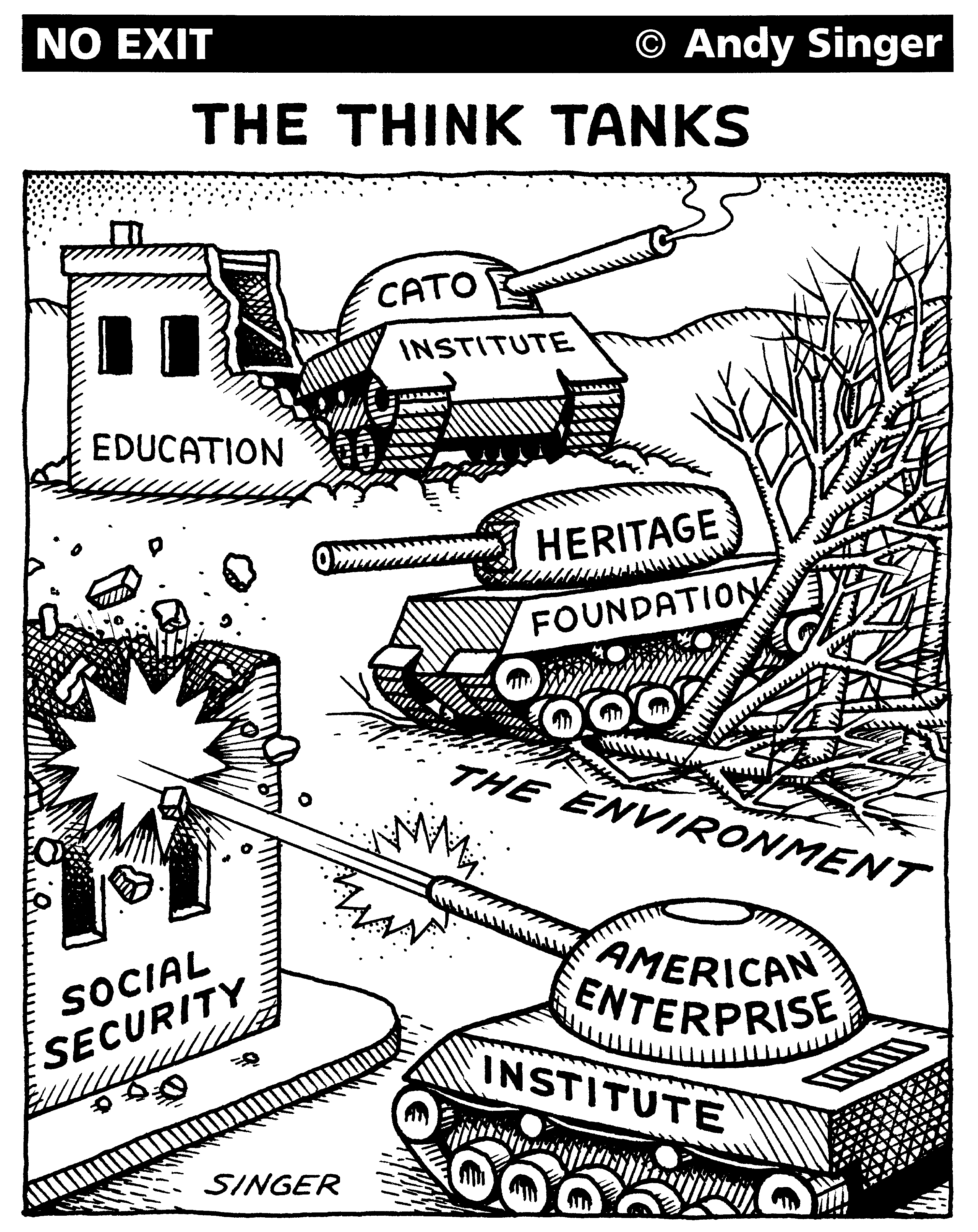
The main organization behind the plan, the Heritage Foundation, is a revolving door for Trump officials.
“This is meant as an organized statement of the Trumpist, conservative movement, both on policy and personnel, and politics,” said William Galston, head of governance studies at the Brookings Institution.
How It Would Move America to the Right A few of the highlights:
1. Remake the federal workforce to be political: Instead of nonpartisan civil servants implementing policies on everything including health, education and climate, the executive branch would be filled with Trump loyalists.
“It is necessary to ensure that departments and agencies have robust cadres of political staff,” the plan says.
That means nearly every decision federal agencies make could advance a political agenda ― as in whether to spend money on constituencies that lean Democratic.
The project calls for cutting LGBTQ health programs, for example.
2. Cut the Education Department: It would cut longtime low-income and early education federal programs like Head Start and even the entire Education Department.
“Federal education policy should be limited and, ultimately, the federal Department of Education should be eliminated,” the plan reads.
3. Give Trump power to investigate his opponents: Project 2025 would move the Justice Department, and all of its law enforcement arms like the FBI, directly under presidential control.
It calls for a “top-to-bottom overhaul” of the FBI and for the administration to go over its investigations with a fine-toothed comb to nix any the president doesn’t like.
This would dramatically weaken the independence of federal law enforcement agencies. “There’s going to be an all-out assault on the Department of Justice and the FBI,” Galston said. “It will mean tight White House control of the DOJ and FBI.”
4. Make reproductive care, particularly abortion pills, harder to get: It doesn’t specifically call for a national abortion ban, but abortion is one of the most discussed topics in the plan, with proposals throughout encouraging the next president “to lead the nation in restoring a culture of life in America again.”
It would do this by prosecuting anyone mailing abortion pills (“Abortion pills pose the single greatest threat to unborn children in a post-Roe world,” the plan says).
It would raise the threat of criminalizing those who provide abortion care by using the government to track miscarriage, stillbirths and abortions, and make it harder to get emergency contraceptive care covered by insurance.
It would also end federal government protections for members of the military and their families to get abortion care.
5. Crack down on even legal immigration: It would create a new “border patrol and immigration agency” to resurrect Trump’s border wall, build camps to detain children and families at the border, and send out the military to deport millions of people who are already in the country illegally (including dreamers)— a deportation effort so big that it could put a major dent in the U.S. economy.
“Illegal immigration should be ended, not mitigated; the border sealed, not reprioritized,” the plan says.
6. Slash climate change protections: Project 2025 calls for getting rid of the National Oceanic and Atmospheric Administration, which forecasts weather and tracks climate change, describing it as “one of the main drivers of the climate change alarm industry.”
It would increase Arctic drillingand shutter the Environmental Protection Agency’s climate change departments, all while making it easier to up fossil fuel production.
7. Ban transgender people from the military and consider reinstating the draft: “Gender dysphoria is incompatible with the demands of military service,” it reads.
The author of this part of the plan led the Defense Department at the end of Trump’s presidency, and he told The Washington Post that the government should seriously consider mandatory military service.
How all of this would be implemented A huge part of this project is to recruit and train people to do this. There’s even a place on the plan’s website where you can submit your résumé.
But there are some major hurdles. For one, Trump doesn’t appear to agree with everything in it. His campaign platform barely mentions abortion, while Project 2025 repeatedly zeroes in on it.
Also, some of these ideas are impractical or possibly illegal. Analysts are divided about whether Trump can politicize the civil workforce to fire them at will. And the plan calls for using the military to carry out mass deportations on a historic scale, which could be constitutionally iffy.
Ominously, one of the project’s leaders opened the door to political violence to will all of this into being: “We are in the process of the second American revolution,” Heritage Foundation’s president, Kevin Roberts, warned recently, “which will remain bloodless, if the left allows it to be.”
=================///=====================
Trump allies at Heritage declare 2024 election illegitimate in advance
Barbra Streisand kidnapped by Hamas. Antifa-BLM protesters taking over a migrant detention facility. The FBI arresting Donald Trump two days after winning the election.
These were among the far-fetched scenarios imagined by a simulation of threats to the 2024 election showcased Thursday by the right-wing Heritage Foundation.
The presentation, delivered at the foundation’s Washington headquarters, stated as a given that the Biden administration was already engaged in a sweeping conspiracy to use multiple forms of federal power to influence the presidential election.It did not supply any evidence.
“As things stand right now, there’s a zero percent chance of a free and fair election,” saidMike Howell, executive director of Heritage’s Oversight Project.
“I’m formally accusing the Biden administration of creating the conditions that most reasonable policymakers and officials cannot in good conscience certify an election.”
The report said a key finding was that the sitting president is the greatest danger to the peaceful transition of power, with no mention of Trump’s efforts to overturn his 2020 loss.
Instead it offered that conclusion as justification for doubting the outcome of the 2024 election and trying to reject anything other than a Trump victory.
Trump himself has repeatedly declined tosay he will accept the results or rule out a violent response. He has told his supporters that he can only lose through cheating.
Howell said the exercise would lead Heritage to file more litigation over election procedures. He also said it should help the public resist “psychological operations” that he claimed were used in 2020 and are being used again.
He didn’t say who supposedly ran the operations.
“The upshot is that we will see a contested election the likes of which we’ve never seen,” said Adam Ellwanger, a rhetoric professor at the University of Houston-Downtown who helped lead the simulation.
“If we see the kind of manipulations that we saw in 2020, I wonder if average Americans who are supporters of the president [Trump] will swallow that so easily as they did in 2020.”
The simulation, known as the “2024 Transition Integrity Project,” is technically independent of the Heritage Foundation but included multiple Heritage employees.
The full list of participants was withheld, which Howell said was fortheir safety. Another participant present Thursday was Josh Findlay, who was until recently the Republican National Committee’s director of election integrity operations.
Heritage Foundation President Kevin Roberts spoke at the end of the event.
The Heritage Foundation, a longtimebastion of conservative orthodoxy that hasmore recently reinvented itself for the Trump era, has become a lightning rod in the campaign because of its role in convening “Project 2025.”
That project published detailed policy proposals for every federal agency, ready for the next Republican administration to implement.
Some of the most controversial ideas including banning abortion medication, facilitating White House involvement in law enforcement and rolling back legal protections for LGBTQ+ Americans.
As some of those proposals have garnered scrutiny, Trump and his campaign have repeatedly distanced themselves from the effort. Many of the proposals were written by alumni of his administration and are likely to be appointees if he wins another term.
Attendees on Thursday walked past a mobile billboard criticizing Trump and Project 2025, whichthe Democratic National Committee positioned outside Heritage’s headquarters.
Biden campaign spokesman James Singer called Thursday’s presentation “nothing more than an attempt to justify their efforts to suppress the vote, undermine the election, and ultimately another January 6.”
Howell said the election threats project was devised in response to a 2020 bipartisan group of academics, former officials, journalists and others that tried to anticipate and prepare for ways that then-President Trump might try to disrupt the election or the peaceful transfer of power.
Their report raised concerns about violence but did not imagine the deadly riot at the U.S. Capitol that temporarily disrupted the certification of Joe Biden’s win.
Both that effort and the 2024 project used tabletop exercises, also known as “war games,” that assign participants various roles to simulate how they might interact.IF I FOOLED YOU ONCE, I’M CLEVER. IF I FOOL YOU TWICE, YOU’RE STUPID.
In the 2024 project at Heritage, President Biden was played by former senator Robert G. Torricelli (D-N.J.).
Those war games included contemplating surprise emergencies such as the Streisand kidnapping. (In the war game, she was rescued the next day.)
Howell accused the Biden administration of a “coordinated invasion over our southern border for the purposes of impacting this election.”
As evidence, he said a camera crew went door to door in an apartment complex outside Charlotte, asking people whether they were noncitizens registered to vote, with 10 percent responding yes.
Howell said his team did not verify those registrations. Noncitizen voting is extremely rare.
One scenario in the war games involved people flooding the FBI with reports of civil rights violations as a staged provocation for the Justice Department to take over local election authorities.
Howell and Ellwanger objected to those observers using a version of arguments that have been consistently made against civil rights legislation since the Civil War.
“To put it simply, the federal government should have a very limited role in our election systems. They should be left to the states to decide,” he said.







 #Monetary Sovereignty - Mitchell