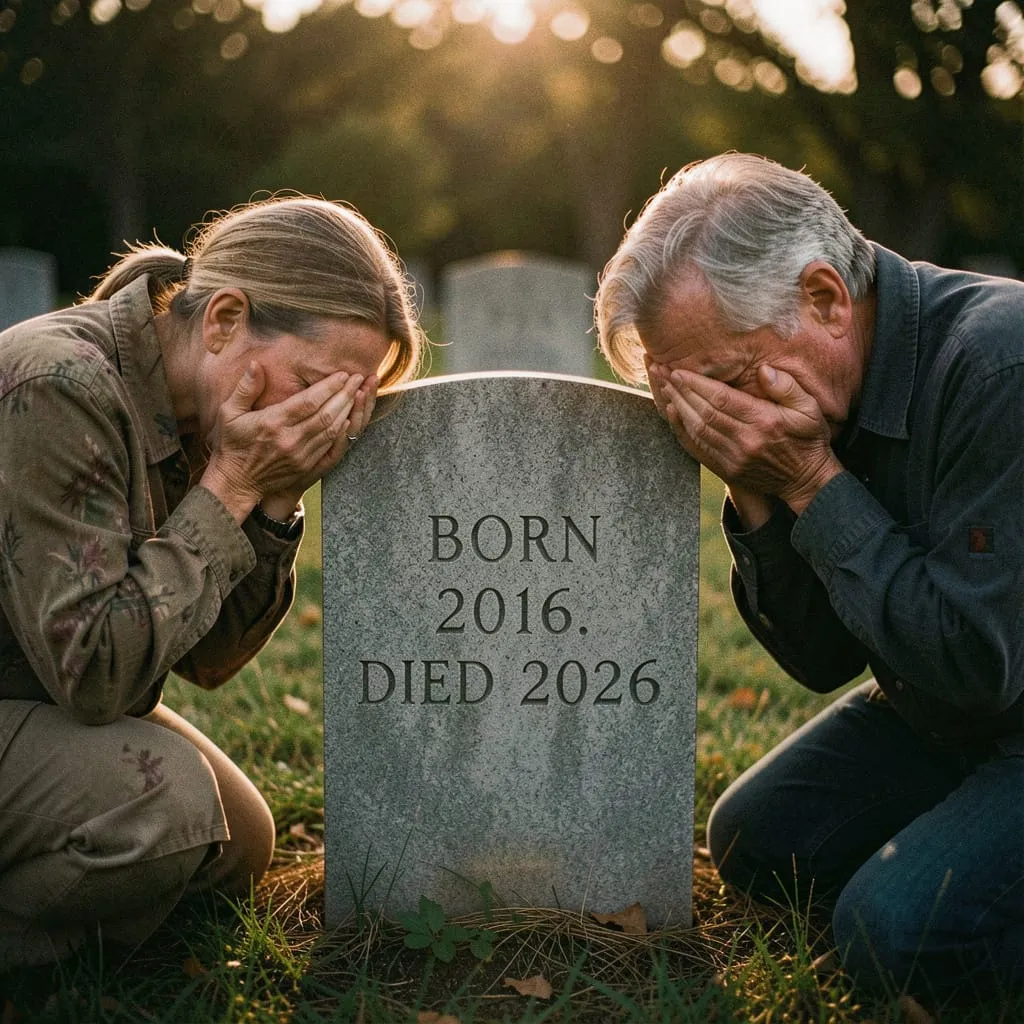

We congratulate Florida politicians and those who vote for them on their unrelenting efforts to win Darwin Awards. May you achieve your goals as quickly as possible.
By Kate Payne | The Associated Press/Report for AmericaPUBLISHED: December 12, 2025 at 3:01 PM EST | UPDATED: December 12, 2025 at 4:19 PM EST
Jamie Schanbaum, whose legs and fingers were amputated after she contracted meningitis as a college student, testifies in support of vaccine mandates at a public hearing held by the Florida Department of Health on Friday in Panama City Beach. (Kate Payne/AP)
PANAMA CITY BEACH (AP) — Florida officials are plowing ahead with a proposal to roll back certain vaccine mandates for the state’s schoolchildren, after Republican Gov. Ron DeSantis called for the state to become the first in the nation to eliminate all school vaccination requirements.
Pediatricians, infectious disease physicians and teachers have decried the push to undermine vaccines, which for generations have been a cornerstone of public health policy for keeping children and adults safe from potentially deadly — but preventable — diseases.
Experts have warned that doing away with the mandates could allow for a dangerous resurgence of preventable childhood diseases and deaths, amounting to a reversal of one of the greatest advancements in public health history.
Dozens of parents, physicians, educators and advocates crowded into a hotel conference room in Panama City Beach on Friday to testify on a rule change proposed by the Florida Department of Health that would eliminate requirements that Florida children receive the hepatitis B, varicella and Haemophilus influenzae type b or Hib vaccines in order to attend public or private K-12 schools. The proposal also does away with a requirement for the pneumococcal conjugate vaccine for children attending child-care facilities.
Other state mandates related to vaccines for polio, mumps, tetanus and other diseases are enshrined in Florida law and would require legislative action to be rolled back.
Florida Surgeon General Joseph Ladapo, who has long clashed with the medical establishment, has cast current requirements in schools and elsewhere as “immoral” intrusions on people’s rights that hamper parents’ ability to make health decisions for their children.
All U.S. states and territories require that children attending child-care centers and schools be vaccinated against a number of diseases, including, measles, mumps, polio, tetanus, whooping cough and chickenpox.
All states allow exemptions for children with medical conditions that prevent them from receiving certain vaccines. Most also permit exemptions for religious or other nonmedical reasons.
Emotional public hearingFriday’s public hearing grew emotional at times, as parents and activists opposed to the mandates heralded the importance of personal freedom, while longtime physicians recalled hospital wards full of gravely sick children in the years before the widespread availability of vaccines.
Jamie Schanbaum’s legs and fingers were amputated after she contracted meningitis as a 20-year-old college student in Texas. She traveled from Brooklyn, New York, to testify in support of vaccines, recounting her seven-month hospital stay as she battled the vaccine-preventable disease and the challenges of living without her limbs.
“No one should go through this experience,” Schanbaum said.
“How about the relearning to use my hands? Feed myself? Wipe myself? This is the reality of what it’s like to survive something like this,” she added.
Rise of vaccine skepticismVaccination efforts across the country and around the world have stalled in the wake of the COVID-19 pandemic, which saw an explosion in vaccine skepticism. Florida’s proposal comes as U.S. Department of Health Human Services Secretary Robert F. Kennedy Jr. has worked to reshape the nation’s vaccine policies to match his long-standing suspicions about the safety and effectiveness of well-established shots.
Mary Helms, a mother and grandmother from Apalachicola, referenced Kennedy as she voiced her “full support” for rolling back the mandates.
“Medical choice and medical freedom in all ways is a God-given and sovereignhuman right,” Helms said.
Asked if the state consulted national medical experts such as the American Academy of Pediatrics on the rule development, a department representative declined to answer directly, stating: “the rule language is grounded in policy based on considerations that favor parental rights and medical freedom.”
Measles outbreak in South CarolinaFlorida’s push comes as a monthslong measles outbreak continues in South Carolina, almost entirely among school-age children.
State health officials there have said 116 of the 126 cases have been in children under 18, with two-thirds of them in children from age 5 to 17.
The outbreak has been centered in Spartanburg County, where just 90% of students have all the vaccinees required to be in school — one of the lowest ratesin South Carolina. The state has a religious exemptionfor vaccines, and almost all of the unvaccinated students use it.
Associated Press writer Jeffrey Collins contributed from Columbia, South Carolina. Kate Payne is a corps member for The Associated Press/Report for America Statehouse News Initiative. Report for America is a nonprofit national service program that places journalists in local newsrooms to report on undercovered issues.
You go, Florida. We’re all rooting for you to beat Spartanburg County, and every state in the union, to win your Darwin Awards.
We only feel bad for your innocent children, who are subject to your “God-given and sovereignhuman rights.”
The Darwin Awards project became formalized with the creation of a websitein 1993, followed by a series of books starting in 2000 by Wendy Northcutt. The criterion for the awards states: “In the spirit of Charles Darwin, the Darwin Awards commemorate individuals who protect our gene pool by making the ultimate sacrifice of their own lives. Darwin Award winners eliminate themselves in an extraordinarily idiotic manner, thereby improving our species’ chances of long-term survival.”
Let’s begin with a basic fact that we have discussed many times. The federal government is Monetarily Sovereign. It never can run short of its own sovereign currency, the U.S. dollar.
Send the government a multitrillion-dollar invoice at 10:00 AM, and it could pay it by 10:01 AM simply by pressing a few computer keys.
“Despite what they tell you, I can pay for everything, and I don’t need or even use your tax dollars.”
And no, it wouldn’t affect federal taxpayers, because federal taxes don’t support federal spending. All federal tax dollars disappear upon receipt at the Treasury. All federal spending is paid for by the creation of new dollars.
That’s one of the differences between federal vs. state/local government finances. State/regional taxes do fund state/local spending.
December 9, 2025, 4:46 PM ESTBy Sahil Kapur, Brennan Leach, Ryan Nobles and Frank Thorp VWASHINGTON — As the U.S. careens to a health care cliff, Senate Republicans say they’ll offer a bill written by two key committee chairs as an alternative to extending billions of dollars in Affordable Care Act funds that are expiring this month.
A “health care cliff” would be a dramatic decrease in the availability of health care. The Republicans will do nothing to prevent it. On the contrary, all their efforts are directed toward reducing health care in America.
Majority Leader John Thune, R-S.D., said the Senate will vote on a bill by Senate Finance Chair Mike Crapo, R-Idaho, and Senate HELP Chair Bill Cassidy, R-La., “side-by-side” to Democratic legislation that would extend the enhanced ACA funds for three years, preventing sharp premium increases.
He stopped short of promising that all 53 Republicans would back the Republican bill, but it is almost sure to fail either way, as it would take 60 votes to advance.
“Our members — and I can’t say 100%, but I think for the most part, I would argue — are united behind the Crapo-Cassidy proposal,” Thune told reporters Tuesday after a Senate Republican lunch meeting where they discussed what to do.
Thune said the bill “is about patients, not insurance companies; and about lowering premiums, not increasing them, and about getting a better return for the federal taxpayer.”
Note the great struggle the Senate is going through, because “it’s about patients, not insurance companies” (lie #1), “it’s about lowering premiums, not increasing them” (lie #2), and “getting a better return for the federal taxpayer” (lie #3).
If the Senate really wanted to help patients, lower premiums, and get a better return for the federal taxpayer (whatever that means), there is an easy way to do it: Fully fund a comprehensive, no-deductible Medicare plan covering every American of all ages, regardless of health.
This would “help patients” (everyone would be protected). It would “lower premiums (premiums would be $0). And it would be a better return for the federal taxpayer (no tax dollars would be used).
It would do everything Thune claims he wants, and he knows it.
So why does he lie? Because he is paid to lie, and because you buy his lies.
The Crapo-Cassidy bill would allow the ACA tax credits to expire and instead approve new funds to boost health savings accounts, or HSAs, which Americans up to 700% of the poverty level can use to buy “bronze” or “catastrophic” plans, the lowest tiers of insurance available under the ACA.
It would also create the option for more people to buy cheaper, less comprehensive plans. And it would fund cost-sharing reduction payments.
The irony of a crapo plan being put forward by a politician named “Crapo” would make for a hilarious John Candy movie if it were not precisely what is happening.
The program calls for “bronze” or “catastrophic” plans.
Under a typical Bronze plan, you’d pay most costs until you hit about $7,500 in covered expenses; after that, you still share costs; and if you end up needing a lot of care in a year, the most you’d pay (including $6,000 in premiums) is about $15,200 (for an individual).
With a Catastrophic plan, you’re responsible for almost all costs (except limited preventive + a few PCP visits) until you’ve spent about $10,600 in a year, after which the plan pays 100% for covered care. Because of this high deductible, Catastrophic plans are often only sensible if you expect very low care needs (or rare, serious emergencies).
If you pick a Catastrophic plan, figure around $4,500 a year in premiums.
And it is all unnecessary. The federal government could and should pay 100%, you should pay 0%, and not one penny of your tax dollars would be used. But the politicians don’t want you to understand that.
Eligible adults under 50 would receive $1,000 per year deposited into an HSA, and those 50 to 64 would receive $1,500. The legislation blocks the use of the money for abortion or “gender transition procedures.”
Because, to a Republican, gay people are an abomination with no right to health care.
Democrats and some health care policy experts say that is nowhere near enough. If Congress allows the ACA subsidies to expire at the end of this year, premiums will, on average, doublefor more than 20 million Americans who use them.
Sabrina Corlette, a Georgetown professor who specializes in health care policy, said the Republican bill amounts to “offering people a 1-foot rope to get out of a 10-foot hole.”
“The average deductible for a bronze plan is $7,500, double that for a family plan,” she said. “The HSA contribution doesn’t extend to kids under 18 and is only $1,000 for an adult under 50. There’s no adjustment for income, meaning this proposal wildly favors wealthier — and healthier — enrollees.”
Senate Minority Leader Chuck Schumer, D-N.Y., slammed the Republican bill as a “phony proposal” and a “nonstarter” that is “dead on arrival” in the chamber.
He said the Crapo-Cassidy bill promotes “junk insurance” and would raise costs for those who need health care.
“It is junk insurance that puts the burden on people. We should call it what it is: misdirection, smoke and mirrors to cover up blocking the ACA tax credits that keep health care costs down,” Schumer told reporters. “Our bill keeps premiums down. Their chaos sends premiums up.”
The primary reason the Republicans propose their plan is to cut benefits for the poor and middle-income people—benefits that the government could easily afford at no cost to taxpayers.
Schumer has said all 47 Democratic caucus members will support his bill to extend the existing ACA premium tax credits for three years when it comes up on Thursday.
In the House, every Democrat has signed a “discharge petition” to force a vote on the same bill; it would need the support of a majority of the House, meaning at least a few Republicans, to bring the bill to the floor.
Though the Democrats’ bill is more generous than the Republicans’, it still rests on the misconception that federal spending is constrained by the amount of federal taxes collected. In reality, federal taxes do not fund spending; all federal expenditures are made possible by the creation of new dollars.
Schumer added that stricter abortion restrictions, as GOP lawmakers have demanded as part of any deal, are “off the table.” He said Republicans are doing it because they’re “afraid” of the anti-abortion group SBA Pro-Life America and don’t “care about reducing health care costs.”
The Senate alternative comes as many Republicans — especially those facing re-election next year — are scrambling to get behind some kind of plan to address sharp premium hikes that are scheduled to kick in next month for millions of Americans. House GOP leaders have not endorsed a health care alternative.
Unnecessary “premium hikes.”
“I just don’t know how Republicans would explain that to 24 million Americans whose premiums are going to double,” Hawley said. “People at home are going to say, ‘You are hurting me. You’re making my premiums go up. You’re not helping me. Why are you doing that to me?”
And Sen. Thom Tillis, R-N.C., said he heard from a constituent who’s “currently paying $800 a month for health insurance, for a couple and three children.”
“They just communicated to me, it’s going to be twice, going to be $1,600 a month. If we’ve got a lot of those out there, that’s a problem for us,” said Tillis, who is retiring. “Look, the Democrats created the problem. We’ve got to solve it, or going into next year, we will own a problem that they created.”
The “problem” is the Big Lie that federal finances are like personal finances, and so, must be limited.
Republicans have offered a potpourri of other proposalsto ease the pain. Some are merely frameworks. Others have been written out into legislative text.
Some provide a temporary extension of the money, with strings attached, like narrowing income thresholds for eligibility, requiring a minimum premium payment and slapping new abortion restrictions.
But none of the Republican plans to prevent ACA funds from expiring have a consensus in the party, as many GOP lawmakers in both chambers want the money to expire on schedule.
And there you have it. The Republican Party (aka “The Party of the Rich”) really doesn’t want you to receive any financial help for health care. In fact, it wants to cut all benefits for those who are not wealthy.
Benefits to the rich, like tax loopholes that cost the government trillions, are OK, however.
“Giving billions of taxpayer dollars to insurers is not working to reduce health insurance premiums for patients,” Crapo said. “We need to give Americans more controlover their own health care decisions. This bill builds on the work we did in the Working Families Tax Cuts Act and will help Americans manage the rising cost of health care without driving costs even higher.”
In promoting his crapo plans, Crapo really is saying, “We need to give Americans more responsibility for paying their healthcare costs.”
And by the way, there is no legislation called “Working Families Tax Cuts Act.” It’s all a Republican hocus pocus. It doesn’t exist.
Larry Levitt, a health policy expert with the research group KFF, highlighted the “tradeoffs” in the GOP proposal, saying it would benefit healthier people while raising costs on sicker people.
What a great idea: A Republican healthcare plan that primarily benefits healthy people and hurts sick people. What next — a TV that only works when no one is in the room? A car that only drives when you want to stay home?
“ACA enrollees who are sick would be stuck with big out-of-pocket premium increases or have to switch to a plan with a deductible of over $7,000. People with substantial health needs would blow through their modest health savings accounts and face high, out-of-pocket costs.”
“The Republican plan would not avoid ACA enrollees seeing their out-of-pocket premiums doubling next year,” Levitt added.
As many members of Congress have acknowledged, the premium hikes are likely to go into effect. Both the Democratic and Republican bills are expected to fail this week on the Senate floor, where they’ll need 60 votes to advance.
Sen. Lindsey Graham, R-S.C., said he has little interest in extending money under the ACA, calling it “a program that’s just never going to produce quality results.”
“I’d like to make drugs more affordable,” he said. “So how do you do that? You change the system that makes them too high.”
Lindsey doesn’t like ACA, but wants to make drugs more affordable. Of course, he has no plan for that, because it would help poor and middle-income people.
==========================================
All politicians, particularly Republicans (though Democrats share some responsibility as well), promote the false narrative that the federal government cannot afford to provide benefits to citizens because the costs supposedly burden taxpayers. The media and university economists are also complicit in this deception, as they, too, have been influenced by wealthy interests.
“For four years, the Biden Administration sought to unlawfully shift student loan debt onto American taxpayers, many of whom either never took out a loan to finance their postsecondary education or never even went to college themselves, simply for a political win to prop up a failing Administration.”
Undersecretary of Education Nicholas Kent made a statement on Tuesday. “The Trump Administration is righting this wrong and bringing an end to this deceptive scheme. The law is clear: if you take out a loan, you must pay it back.”
American taxpayers pay taxes, but their tax dollars pay for nothing. The federal government pays all its bills with newly minted dollars.
When people “pay it back” to the government, it does not benefit either taxpayers or the government. Instead, it removes money from the economy and transfers it to the federal government, where it effectively disappears. See: “Does the U.S. Treasury Really Destroy Your Tax Dollars?”
Thus, forcing student borrowers to repay federal loans has no good purpose and two bad results:
It discourages Americans from going to college, contributing to the dumbing down of America.
It removes growth dollars from the economy, reducing economic growth. It’s recessionary.
Two bad results; no good results. What a concept! And it’s all based on the Big Lie in economics.
WHY THE LIE?
“Rich” is a relative term. You would be considered rich with a million dollars if everyone else had only a thousand. However, you would be seen as poor if everyone else had ten million.
So, there are two ways for you to get richer:
Obtain more for yourself and/or
Make sure everyone else has less.
The very rich, who always wish to be richer, use both systems:
They get more for themselves by bribing politicians to create tax laws favoring the rich– all those tax loopholes and programs you don’t even know about, much less use.
It’s interesting to see how the tax system is structured! Higher tax rates apply to salaries, while capital gains are subject to much lower, sometimes even zero, rates. Wealthy individuals also benefit as their corporations often cover many expenses, leading to further deductions.
This setup is designed to help the wealthy widen the income/wealth/power Gap between them and those below them. They make sure everyone else has less by opposing benefits for the poor and middle classes and even taxing some of those benefits.
To make you believe the Lie and accept the unfairness, they promulgate it via the information providers:
They bribe politicianswith campaign contributions and promises of lucrative employment.
They bribe the media with advertising dollars and outright ownership
They bribe economistswith university endowments and promises of lucrative jobs at “think tanks.”
They are so effective at manipulating perceptions that the vast majority of Americans do not realize they are being deceived. As a result, you and your friends may accept misleading claims, such as the belief that taxpayers fund federal spending, that the wealthy pay higher tax rates, and that federal spending equates to socialism.
These are all lies. When was the last time you voiced your concerns to your Senator or Representative?
The purpose of any government is to protect and improve the lives of the people. However, when proposals are made to achieve these goals, we are often met with two main objections:
The government can’t afford it, and
It will cause inflation.
The “can’t afford it” objection often leads to name-calling, such as “socialism,” “communism,” and “anti-capitalism.” This name-calling serves as a substitute for genuine thought. Labeling something doesn’t prove whether it’s good or bad.
It just demonstrates that the name-caller doesn’t want to discuss facts and believes the name alone is sufficient.
Some individuals who prefer not to engage in name-calling yet are concerned about federal budgets can be persuaded by the facts surrounding Monetary Sovereignty. This concept highlights that the federal government can create an unlimited amount of dollars instantly and spend them in any manner it chooses.
These individuals recognize that the federal government differs from state and local governments, which are not monetarily sovereign. Federal deficits and debt do not limit its spending capacity. Economic growth requires federal deficits, as they inject growth dollars into the economy.
Insufficient federal deficit spending has caused every recession and depression in U.S. history.
Reduced deficits (red) lead to recessions (vertical gray bars). Recessions are cured by increased deficits. U.S. depressions come on the heels of federal surpluses.
1804-1812: U. S. Federal Debt reduced 48%. Depression began 1807. 1817-1821: U. S. Federal Debt reduced 29%. Depression began 1819. 1823-1836: U. S. Federal Debt reduced 99%. Depression began 1837. 1852-1857: U. S. Federal Debt reduced 59%. Depression began 1857. 1867-1873: U. S. Federal Debt reduced 27%. Depression began 1873. 1880-1893: U. S. Federal Debt reduced 57%. Depression began 1893. 1920-1930: U. S. Federal Debt reduced 36%. Depression began 1929. 1997-2001: U. S. Federal Debt reduced 15%. Recession began 2001.
Gross Domestic Product (blue) parallels federal deficits (red).
There are several programs that a government, having infinite money, easily can afford. Among them are:
End FICA
Comprehensive, no-deductible, free Medicare for every American, regardless of age and medical history
Social Security for every American
Free college for all Americans who want it.
Housing subsidies for all
Food subsidies for all
Though such programs would cost trillions, the federal government can create trillions simply by voting and then pressing computer keys.
Once debt worriers see that the government can’t run out of dollars and that deficit spending is necessary to fulfill the federal government’s obligations of “protect and improve,” they resort to their final objection: “But it would cause inflation.”
Does Federal Deficit Spending Cause Inflation?
There are no major historical inflations that were primarily caused by a Monetarily Sovereign government spending “too much.”
Every severe inflation episode traces back to real shortages, production collapses, or exchange-rate breakdowns, not to government deficits.
Here are some of the major inflations people think were caused by excessive spending — and why that belief is wrong:
1. Weimar Germany (1921–1923): Popular myth: runaway printing caused inflation. Reality: Germany lost its industrial Ruhr region during the French occupation. This led to a massive drop in coal and steel output. Reparations required payment in foreign currency. The government was forced to buy foreign currency at any price. Workers were paid NOT to work during Ruhr resistance. Production collapsed.
Cause: Severe loss of real output + currency collapse, not spending.
2. Zimbabwe (2000s): Popular myth: reckless printing for government spending. Reality: Mugabe’s land reforms destroyed commercial farming, which resulted in a 40%–60% drop in agricultural output. Corn and tobacco production collapsed. Drought worsened food supply.
Cause: Food shortage.
3. Hungary (1945–46): Worst hyperinflation ever/ Popular myth: runaway spending after WWII. Reality: Production collapsed from war damage. Transportation, factories, and agriculture all were destroyed. Occupying Soviet forces extracted resources.
Cause: War-induced physical destruction and confiscation of supplies, causing massive shortages.
4. United States (1970s): Popular myth: The government spent too much during Vietnam and the Great Society. Reality: The OPEC oil embargo in 1973 and the second oil shock in 1979. Oil prices quadrupled, which led to cost increases everywhere. Inflation tracked energy prices almost perfectly.
Cause: Energy shortage.
5. Post-COVID Inflation (2021–2022): Popular Myth: Stimulus checks “overheated” the economy. Reality: Factory shutdowns caused durable goods shortages. Global shipping breakdown caused container-related shortages. Semiconductor shortages led to car and truck shortages. Energy price spikes. Labor shortages.
Cause: Widespread shortages of virtually all supplies and means of production.
6. Latin American inflations: Argentina, Brazil (various decades) Popular myth: Populist spending, Reality: Debt denominated in foreign currency. Currency crises make imports unaffordable. Prices rise because supply shrinks.
Cause: Currency crisis leads to supply failures.
7. Confederate States of America (Civil War): Popular myth: Currency printing. Reality: Massive destruction of productive capacity. The Union blockade cut off imports. Farms and railroads were destroyed.
Cause: War shortages
Conclusion: There is no major historical example where government spending caused inflation. Every well-studied inflation is rooted in: Energy shortages, food shortages, and the loss of production capacity,
8. Yugoslavia, 1992–1994: Popular myth: Excessive government spending. Reality: Civil war shortages: Slovenia had only ~8% of Yugoslavia’s population but produced about 20%+ of total GDP and an even larger share of high-value industrial output. Lost production capacity of electronics, electrical machinery, pharmaceuticals, metals and machinery. UN santions caused loss of imports (fuel, food, medicines). Breakup of supply chains between republics.
Cause: War shortages, sanctions, economic isolation.
SUMMARY A Monetarily Sovereign government cannot unintentionally run short of its sovereign currency. It can pay for anything denominated in its currency, provided that currency is accepted by the populace.
Inflation is not caused by “too much money chasing too few goods.” Instead, it results from a scarcity of essential goods, particularly energy and food.
Typically, inflation is caused by:
War shortages
Oil producer price gouging
Pandemic shortages of labor, goods, and services.
Weather that affects food production
Government mismanagement of supply sources.
Shipping interference
Monetary non-sovereignty causing a money shortage
No high inflation in world history was driven primarily by deficits in a Monetary Sovereign nation. The mechanism is always real resource scarcity, not the nominal size of the money supply.
HYPERINFLATION
Hyperinflation is a very rapid general increase in the prices of goods and services, exceeding 50% per month. Prices increase when goods and services are in short supply.
Here is a brief background on hyperinflations since 1900:
War & Occupation Germany (1921–1923) –Sortages of coal and industrial output collapsed after the Ruhr occupation; food imports were scarce.
Hungary (1945–1946) – Post-WWII destruction left food and housing in extreme shortage.
Greece (1941–1946) – Axis occupation caused famine; food and fuel were critically short.
China (1948–1949) – Civil war disrupted grain supply and transport; rice shortages drove inflation.
Philippines (1942–1944) – Japanese occupation currency collapsed as rice and basic goods disappeared.
State Collapse & Civil War Yugoslavia (1992–1994) – Sanctions and war cut off oil and food imports; shortages everywhere.
Zimbabwe (2007–2009) – Land seizures destroyed agriculture; maize and wheat shortages were central.
Congo/Zaire (1991–1996) – Civil war disrupted mining and food supply; fuel shortages were common.
Angola (1991–1999) – Civil war devastated agriculture; food and fuel were scarce.
Nicaragua (1987–1991) – War and sanctions cut off imports; food and fuel shortages.
Commodity & External Shocks Bolivia (1984–1986) – The Collapse of tin exports led to a foreign exchange shortage; imported fuel and food became unaffordable.
Peru (1988–1990) – Debt default plus falling exports; shortages of imported fuel and food.
Venezuela (2016–present) – Oil price collapse cut off foreign exchange; imports of food and medicine dried up.
Chronic Fiscal Mismanagement Argentina (1989–1990) – Loss of confidence in the austral; shortages of imported fuel and consumer goods.
Brazil (1980s–1994) – Chronic deficits; shortages less acute, but inflation fed by wage-price spirals and import dependence.
Turkey (1990s–2001) – Fiscal deficits; not classic shortages, but reliance on imported energy created vulnerability.
Israel (1983–1985) – Fuel imports were a pressure point.
Post-Soviet Transition Russia (1992–1994) – Collapse of Soviet supply chains; food and fuel shortages were widespread.
Ukraine (1993–1995) – Grain and energy shortages after the USSR’s collapse.
Georgia (1993–1995) – Energy shortages (electricity, fuel) and food scarcity.
Armenia (1992–1994) – Blockades caused fuel and food shortages.
Belarus (1994–2000) – Energy and food supply disruptions during transition.
Baltics (early 1990s) – Energy shortages after the Soviet breakup.
The Pattern Food shortagesdominate in war-torn or agrarian economies (Hungary, Greece, Zimbabwe, Nicaragua).
Energy shortages dominate in industrial economies or those reliant on imports (Germany, Yugoslavia, Venezuela, and post-Soviet states).
Export collapse (tin in Bolivia, oil in Venezuela, agriculture in Zimbabwe) removes foreign exchange, making imports of food and fuel impossible.
You might think, OK, hope, that Fortune Magazine economics writers would understand. . . well . . . economics.Eleanor Pringle
Alas, Eleanor Pringle may have shattered any such hope.
“Eleanor Pringle is an award-winning senior reporter at Fortune covering news, the economy, and personal finance. Eleanor previously worked as a business correspondent and news editor in regional news in the U.K. She completed her journalism training with the Press Association after earning a degree from the University of East Anglia.”
Immediately, we sense a potential problem. Those words, “the economy and personal finance — do they hint that she doesn’t understand the difference between the federal government’s finance and personal finance?
Keep that question in mind as you read the following excerpts from her article in Foutune.
Two months into the new fiscal year, the US government is already spending more than $10 billion a week servicing the national debt.
Uh, oh. What does Ms. Pringle mean by “servicing“? Is she talking about returning the principal or paying the interest? There is a difference.
To grasp the difference, she first must understand the fundamentals of Monetary Sovereignty, which she clearly does not.
If you are a regular reader, you know that federal (Monetarily Sovereign) finances are very different from the monetarily non-sovereign finances of state and local governments, businesses and individuals.
The federal government has the unlimited power to create dollars merely by passing laws and pressing computer keys. It never can run short of dollars to pay interest or bills.
Given that power, the government never borrows dollars. It just makes new ones. Those T-bills, T-notes, and T-bonds do not represent borrowing. They are deposit accounts whose purpose is not to supply the government with spending money.
Instead, the purposes are to help the Fed control interestrates and to provide a safe place to store unused dollars.
The T-securities represent deposits into savings accounts, and paying off the misnamed “debt” (deposits) merely requires returning the dollars that are in those accounts. Returning dollars that already exist in accounts is not a burden on the government.
Finally, the “debt” (which is not debt) also is not a burden on taxpayers, because federal taxes do not pay for anything. Even if all federal tax collections totaled $0, the federal government could continue spending and paying forever.
If you buy a Treasury Bill, you will deposit your Federal Reserve Notes (aka, dollar bills) into your Treasury Bill account, and you will receive a Treasury Bill. It’s a simple dollar exchange — your Federal Reserve notes for Treasury bills, all of which are U.S. dollars.
To pay this off, the government simply reverses the process. It exchanges Federal Reserve Notes for Treasury Bills. No tax dollars are involved.
Your deposited dollars remain in your account until maturity, when they are returned. As for the interest, the federal government presses a few computer keys, and the interest dollars are added to your account and then, upon maturity, they are returned to you with the principal.
Unlike real debt, which burdens borrowers, this federal Treasury round-trip process imposes no burden on the federal government or taxpayers.
Ms. Pringle’s article continues:
The calendar year may have a few weeks left to tick off, but as far as the government’s budget is concerned, we’re in fiscal 2026. And in a matter of weeks, the Treasury has already paid out a 12-figure sum to service the nation’s debt.
Unlike the tax and calendar year, the government’s financial calendar runs to the end of September. According to Treasury data, in the nine weeks since, it has spent $104 billion in interest on its $38 trillion borrowing burden.
That’s more than $11 billion a week, and already represents 15% of federal spending in the current fiscal year.
Economists may be hopeful that the Treasury would make some New (fiscal) Year’s resolutions: Perhaps either scaling back its borrowing, and the additional interest rates on that debt as a result, or drumming up some meaningful revenue to offset the costs.
The federal government does not borrow, and the additional interest adds to Gross Domestic Product (GDP).
GDP = Federal Spending + Nonfederal Spending + Net Exports
President Trump and his cabinet have been discussing debt more meaningfully in this administration. While economists say some of their methods are “peculiar,” the Oval Office has nevertheless devised some money-making schemes, like tariffs, estimated to offset $3 trillion through fiscal year 2035.
This is, unfortunately, $1 trillion lower than previous estimates from the Congressional Budget Office (CBO) earlier this year.
A “money-making scheme” like tariffs simply is a money-transfer scheme that moves dollars from the private sector (aka “the economy“) to the federal government, which neither needs nor uses those dollars. The federal government creates new dollars, ad hoc, for every dollar it spends.
There’s also the issue of how much money will be left over to offset the debt from tariff revenue.
Tariffs do not “offset” T-securities. Unlike T-securities, tariffs are taxes taken from the economy. While T-securities are merely a savings device, tariffs impoverish the economy, drawing us toward recession.
Current estimations suggest that duties will bring in between $300 billion and $400 billion a year, which would help to pay a fraction of the yearly interest payments totaling more than $1 trillion in gross spending in 2025.
Those “$300 billion and $400 billion a year” are tax dollars, subtracted from the economy along with all other tax dollars.
However, President Trump has pledged to share proceeds from the tariff project with individuals, sharing a “dividend” of $2,000 per person. This, according to the Committee for a Responsible Federal Budget (CRFB), would cost $600 billion annually.
The “$2,000 per person is far less than the ongoing, year-after-year cost of the tariffs — a net loss for the economy. And it comes with a caveat: The reduction of federal support for healthcare.
While money is coming in to help rebalance the books (unless it has already been spent, and more, on tariff rebate cheques), government borrowing doesn’t appear to be slowing.
No books are being “rebalanced.” Tariffs drain the economy of dollars.
The ostensible purpose of tariffs is to protect American businesses and American jobs. This could be accomplished by additional government spending to support businesses and jobs, thereby growing the economy rather than punishing it, as tariffs do.
Last week, the Peterson Foundation, which lobbies for responsible fiscal action, published an analysis of the Treasury’s Quarterly Refunding process, which shares government borrowing expectations.
The foundation wrote that the government’s borrowing will increase, issuing $158 billion more in debt in the first half of this fiscal year than in the same period a year earlier.
The sentence should read, “Deposits into T-securities accounts will increase by $158 billion more in the first half of this fiscal year than in the same period a year earlier.” This is not a financial burden on the federal government or on taxpayers.
This demonstrates that the world is more reliant on the U.S. dollar than it was last year. It does NOT demonstrate that the federal government is indebted to anyone, or living beyond its means, or that future grandchildren will owe the “debt.”
And now for the focus on the fake, “sky is falling” scenario:
Debt is a key risk for 2026
Deutsche Bank is generally bullish. It expects global growth of 3.2% in 2026, with the U.S. economy projected to expand by 2.4%. Trade uncertainty is fading, which will boost growth, the bank added, with households also benefiting from tax cuts from Trump’s “One Big, Beautiful Bill” Act.
One small caveat. The line should read, “. . . Richhouseholds also benefiting from tax cuts from Trump’s ‘One Big, Beautiful Bill’ Act.” As for the poor and middle, who cares about them? Not Trump.
But deficits cast a shadow, on a global scale, over that rosy outlook. The institution wrote: “Many countries face high deficits with limited fiscal and monetary ability. The expected structural shift towards fiscal impulse in 2026 will further widen deficits and heighten concerns around ongoing debt sustainability issues.”
Add two words to the sentence, and it would be correct: “Many monetarily non-sovereign countries face high deficits with limited fiscal and monetary ability.” If monetarily non-sovereign countries like Germany, Italy, France, Portugal, et al face high deficits, they indeed have “limited fiscal and monetary ability.”
But if Monetarily Sovereign countries like the UK, Japan, China, and the U.S. face high deficits, their fiscal and monetary ability remains infinite.
I’d love to explain this to Ms. Pringle, but I suspect she would reject the notion that personal finances are diametrically opposed to federal finances.
In the U.S., in particular, fiscal risks are on the rise, the bank added: “We expect the 2026 deficit to reach 6.7%, with further widening if we see lower tariff revenues or more targeted fiscal stimulus that renews market concerns. Congress is also up against the clock to negotiate on healthcare subsidies and appropriations bills before the stopgap funding again expires on January 30.”
The net total of federal deficits is called the “federal debt” (red line), which parallels economic growth (blue dashed line). GDP=Federal Spending + nonfederal spending + Net Exports.
The government may also be banking on a shift of wealth over the next few decades, which could be leveraged to balance its bottom line.
The Great Wealth Transfer is expected to see $80 trillion change hands over the next 20 years, according to UBS. Some studies put that figure even higher, saying as much as $124 trillion will be passed down from older generations to their younger counterparts.
Wealth consistently transfers from older individuals to younger ones, as older individuals pass away and new ones are born. Viewing this as a problem seems ignorant at best and misleading at worst.
“There are several approaches. One is to influence market behavior—encouraging individuals to buy government bonds through incentives like tax-free premium bonds, which channel savings directly into state financing.
Suddenly, without warning, Ms. Pringle stops talking about federal debt and begins talking about state/local government debt.
The line, “Governments have long mobilized private wealth to support public finances,” refers only to monetarily non-sovereign state/local governments. The federal government does not use “private wealth to support public finances.”
Apparently, Ms. Pringle wishes to replace federal bonds with municipal bonds. She wants the federal government to raise taxes so that more (rich) people will buy federal tax-free state/local municipal bonds. This is a strange view. Increasing federal taxes will take more dollars out of the economy, while buying more municipal bonds helps add to state/local government (monetary non-sovereign) indebtedness.
Prudential regulation can also steer pension funds toward domestic government debt, as seen in the UK after 1945, when a debt-to-GDP ratio of 240% was successfully reduced over decades.”
The Debt-to-GDP ratio is the most useless calculation in all of economics. It shows nothing. See Myth #8 of “Common Debt Myths . . .” The ratio reveals nothing about a nation’s ability to service its debts, its financial strength, or anything else.
Anyone who uses the Debt/GDP ratio to demonstrate anything reveals a profound ignorance of national finances.
He added: “More contentious options exist, such as taxing wealth through capital gains or inheritance levies.In practice, the initial focus tends to be on financial repression—using tax incentives or regulation to direct money into government bonds—before moving toward wealth taxation.”
Any federal tax increase — ANY — is financial repression because dollars are taken from the economy and given to the federal government, where they cease to exist.
(Taxes are paid with dollars from the M2 money supply measure. When they reach the Treasury, they cease to exist in any money supply measure.)
The federal government does not spend tax dollars. Instead, it creates new dollars ad hoc.
State/local taxes stay in the economy, but they tend to be regressive, hitting the poor and middle much harder than the rich. For example, sales taxes are massively regressive, as are FICA and most real estatetaxes.
The question is, “What is the real problem?”
High federal deficits and debt? These are not problems. They are additions to Gross Domestic Product.
Paying for federal projects? This is not a problem. The federal government can do this endlessly simply by voting to fund projects, and then creating the necessary dollars, ad hoc.
There are two problems that should be addressed:
How to support economic growth without negatively impacting the world.
How to reduce poverty, while narrowing the income/wealth/power Gap between the rich and the rest.
Rather than tilt at the windmill of phony federal “debt,” we should:
1 Eliminate FICA. It is a regressive tax that unfairly targets the lower- and middle-income workers, and contrary to popular myth, it doesn’t fund Medicare or Social Security. Like all federal taxes, it funds nothing.
The primary intent of FICA, as stated by President Franklin D. Roosevelt, was to deceive the public into believing they had funded their benefits. The idea was to deter politicians from cutting them. That has not worked.
The fact is that FICA limits benefits by creating a misleading ceiling through a fictitious “trust fund.“
Additionally, because FICA is a business expense, like all business expenses, it is passed on to consumers and thus is inflationary. Further, it discourages hiring by making employees more expensive and lowering net wages.
2. Tax-freeSocial Security for All, regardless of age, income, or wealth. Providing everyone with the same financial benefits would grow the economy, reduce poverty, and narrow the income/wealth/power Gap.
Receiving a $10,000 stipend, for instance, would improve the lives of the poor more than the middle class, and improve the middle class more than the rich.
3. Comprehensive, no-deductible Medicare for everyone, regardless of age, income, wealth, or health history.
4. Federal support for college attendance.
5. Federal, per-capita support for the monetarily non-sovereign states, allowing them to reduce their regressive taxes.
6. Targeted federal support for economically important businesses.Rather than levying tariffs, which are paid by American consumers, the federal government should support the same businesses financially, either through tax benefits or direct payments.
This would grow the economy and benefit consumers, and using taxes this way is part of one real purpose of federal taxation: controlling the economy.
In summary, understanding Monetary Sovereignty is the first step in understanding economics. Without that understanding, all commentary about the economy is useless.