Recently, I had a conversation with a young man who told me that federal deficit spending causes inflation.
If you took an economics course in school, you probably agree with him because that is what they teach. His logic was simple. He has been taught:
Federal deficit spending increases the supply of dollars. When one increases the supply of any product, without increasing demand, the value of that product decreases. When the value of the dollar decreases, we experience inflation.
Adding money to the economy increases demand, which, in the absence of increased supply, causes shortages, which create inflation.
The problem with #1 is that money is unlike any other product or service. The demand for money is relatively inelastic.
Example: You own a Tesla and learn that Teslas are now on sale at bargain prices. Will you buy an additional Tesla?
Or you see that tomatoes are on sale, but you have a dozen at home. Do you want additional tomatoes? Probably not.
But you have a million dollars and hear of an investment that will pay you another million at no risk. Do you want that additional million dollars? Probably so.
Currency printing didn’t cause inflation. Scarcities cause inflation, which causes a government to print currency.
The point: Federal deficit spending adds dollars to the economy, but that additional supply doesn’t reduce the dollar’s value.
In fact, if those extra dollars are used to obtain products or services that are in short supply, they can reduce the inflation caused by the shortages.
That is the problem with #2, because when the federal government spends dollars in the economy, the economy usually responds by increasing the supply of goods and services.
While deficit spending can be inflationary if it leads to excessive demand without corresponding increases in supply, spending can address supply-side constraints, boost productivity, and ultimately help reduce inflation.
There can be no economic growth without federal deficit spending.
The illusion that deficit spending causes inflation may come from hyperinflations, where governments print currencies in response to inflations.
It’s the “wheelbarrows filled with currency” visual we all have seen.
In those situations, inflation has been caused by scarcities of critical products and services, such as oil, food, labor, transportation, etc., and the additional dollars do nothing to relieve those scarcities.
When a government fails to address the real causes of inflation but instead prints currency, the inflation worsens,
The illusion of cause and effect is reversed. Money “printing” doesn’t cause inflation. Inflation can cause money printing if a government doesn’t understand what really causes inflation: Shortages of crucial goods and/or services.
It’s like a baseball team losing by five runs because it is short of good pitchers. So it trades its few decent pitchers for more hitters and starts losing by ten runs.
Here is a graph demonstrating the relationship (or rather, lack of relationship) between federal deficit spending and inflation:
The blue line shows the annual inflation rate in the U.S. The red line shows the annual deficit increase in the U.S. The lines are not parallel. Recessions (gray vertical bars) result from declining deficit growth and are cured by increased deficit growth.
Presumably, if federal deficit spending caused inflation, the two lines would generally be parallel. They are not. In fact, they tend to move in opposite directions.
One could use the above graph to demonstrate that federal deficit spending often cures inflation by reducing the shortages that do lead to inflation.
By comparison, please look at the following graph:
The blue line again shows the annual inflation rate. The green line shows the annual percentage changes in oil prices.
The lines in the above graph are essentially parallel, indicating a close relationship between oil prices and inflation.
Changes in oil supplies have had a far more profound and sudden effect on oil prices than changes in oil demand, which generally are slow.
Overall, the graphs suggest that federal deficit spending plays, at most, a minor role in inflation, and possibly none at all, while oil supplies (in addition to supplies of food, shipping, labor, and other products) are the main drivers of inflation.
Our most recent inflation was caused by COVID-related shortagesof oil, food, shipping, labor, metals, wood, and other products. When these shortages were eased by federal deficit spending, inflation eased.
This is an important fact because the threat of inflation is often used as an excuse for not federally funding social programs like Social Security, Medicare, and anti-poverty efforts.
The income/wealth/power Gapis what makes the rich wealthy. Without the Gap, no one would be rich; we would all be the same. The wider the Gap, the wealthier are the rich.
The wealthy are aware of this, and in their efforts to become even richer, they try to widen the Gap by increasing their own wealth and power and/or diminishing the resources of others.
One way they do this is by claiming that the social programs are becoming insolvent and so must be cut or taxes increased.
However, it is difficult for them to deny that the federal government could afford to fund these programs. Even the lie that the federal government would have to borrow dollars is easily debunked for two reasons:
As a Monetarily Sovereign entity, the federal government can create dollars at will by simply pressing keys on a computer.
Former Fed Chairman Ben Bernanke:“The U.S. government has a technology, called a printing press (or, today, its electronic equivalent), that allows it to produce as many U.S. dollars as it wishes at essentially no cost. It’s not tax money… We simply use the computer to mark up the size of the account.”
Even if the notion of future borrowing and increased interest payments were accurate (it isn’t), it would be of no significance to an entity that possesses the unlimited capacity to settle its debts by pressing computer keys. Statement from the St. Louis Fed:
“As the sole manufacturer of dollars, whose debt is denominated in dollars, the U.S. government can never become insolvent, i.e., unable to pay its bills. In this sense, the government is not dependent on credit markets to remain operational.”
So, the rich resort to the false claim that federal spending causes inflation.
What they fail to mention is the following graph, which highlights the relationships between federal deficits and recessions:
When federal deficit growth (red) decreases, we have recessions (vertical gray bars). Recessions always are cured by increases in federal deficit growth.
Economic growth requires money growth. Here is an example of the close relationship between economic growth and money growth
Gross Domestic Product (GDP) closely mirrors money (debt) growth.
The formula for Gross Domestic Product shows how money growth is necessary for economic growth:
GDP = Federal Spending + Non-Federal Spending + Net Exports
Net Exports generally are negative. (We import more than we export). So, GDP growth relies on federal and non-federal spending growth.
Federal Spending is a large part of M3, which in turn, is a large part of GDP. Federal Spending growth is necessary for GDP (economic) growth.
Then, of course, there is the fact that federal surpluses (the extreme version of deficit reduction) cause depressions (the extreme version of recessions). In fact, every depression in American history has resulted from surpluses.
1804-1812: U. S. Federal Debt reduced 48%. Depression began 1807.
1817-1821: U. S. Federal Debt reduced 29%. Depression began 1819.
1823-1836: U. S. Federal Debt reduced 99%. Depression began 1837.
1852-1857: U. S. Federal Debt reduced 59%. Depression began 1857.
1867-1873: U. S. Federal Debt reduced 27%. Depression began 1873.
1880-1893: U. S. Federal Debt reduced 57%. Depression began 1893.
1920-1930: U. S. Federal Debt reduced 36%. Depression began 1929.
1997-2001: U. S. Federal Debt reduced 15%. Recession began 2001.
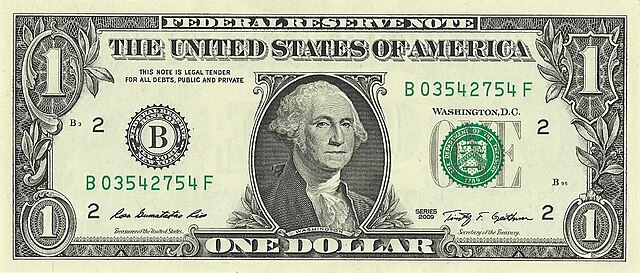
All money is a form of debt. Have you noticed that every dollar bill (“bill” is a word that denotes debt) is a Federal Reserve note (“note” is another word denoting debt)?
Each bill is signed by the Treasurer and the Secretary of the Treasury.
The U.S. dollar is nothing more than a number on the federal government’s books. It is not a physical entity. There are no physical dollars. The U.S. dollar bill is a title to a dollar showing that the bearer is owed a dollar by the United States government.
For example, an author owns a story he has written, though the story is not a physical entity. Similarly, the federal government is an author of federal dollars, though those dollars are not physical entities. And just as the author can create infinite stories, the government can create infinite dollars.
All debt requires collateral. The collateral for federal debt is “full faith and credit.”
This may sound nebulous to some, but it involves certain, specific, and valuable guarantees, among which are:
A. –The government will accept only U.S. currency in payment of debts to the government
B. –It unfailingly will pay all its dollar debts with U.S. dollars and will not default
C. –It will force all your domestic creditors to accept U.S. dollars if you offer them to satisfy your debt.
D. –It will not require domestic creditors to accept any other money
E. –It will take action to protect the value of the dollar.
F. –It will maintain a market for U.S. currency
G. –It will continue to use U.S. currency and will not change to another currency.
H. –All forms of U.S. currency will be reciprocal, that is five $1 bills always will equal one $5 bill and vice versa.
The value of debt, i.e., the U.S. dollar, is based in part on the value of its collateral. Should any of A – H no longer be in effect, the dollar’s value would plummet.
Another key factor influencing the value of the U.S. dollar is interest rates. Investments denominated in dollars, such as bonds and Treasury securities, are more sought after when they offer higher interest rates.
Be cautious with this, as the value of a bond decreases when interest rates rise. Newly issued bonds offer higher rates and compete with older bonds.
The key point is that dollars do not lose value, and inflation is not caused by the federal government’s increasing deficit spending. The government could easily fund Social Security and Medicare without imposing FICA taxes or triggering inflation.
The wealthy classes’ arguments for cutting SS and Medicare benefits and raising taxes are unfounded and based on misleading claims.
IN SUMMARY
Inflations are caused by scarcities, often due to oil and food shortages. Shortages of shipping, labor, metals, wood, and electronics can also be significant factors.
While deficit spending can be inflationary if it leads to excessive demand without corresponding increases in supply, spending can address supply-side constraints, boost productivity, and ultimately help reduce inflation.
Without federal deficit spending, there can be no economic growth and no solution to scarcity. The lack of federal debt growth causes recessions and depressions. Recessions are cured by federal (money) deficit growth.
The federal government could and should fund a comprehensive, no-deductible Medicare and Social Security for every man, woman, and child, regardless of age and income, while eliminating FICA.
We’ll end this post with excerpts from an article on the MSN website:
Some House Republicans (show) interest in reviving the party’s longtime passion for gutting the social safety net in the wake of Donald Trump’s reelection and the coming Republican trifecta.
Reports have surfaced about cuts to programs like Medicaid and food stamps to offset the cost of extending Trump’s 2017 tax cuts.
Others are openly suggesting that Medicare and Social Security may be on the chopping block as part of Elon Musk and Vivek Ramaswamy’s performative venture into government spending cuts through the new Department of Government Efficiency.
But MAGA Republicans on Capitol Hill who recently spoke to TPM were unwilling to be pinned down on the issue.
The Republican Party promulgates public ignorance about the differences between federal (Monetarily Sovereign) finances and personal (monetarily non-sovereign) finances to put forth a “small government” agenda that will widen the income/wealth/power Gap between the rich and the rest of us.
Rodger Malcolm Mitchell
Monetary SovereigntyTwitter: @rodgermitchellSearch #monetarysovereigntyFacebook: Rodger Malcolm Mitchell;MUCK RACK: https://muckrack.com/rodger-malcolm-mitchell; https://www.academia.edu/
……………………………………………………………………..
The Sole Purpose of Government Is to Improve and Protect the Lives of the People.
Donald Trump swore he would unite America and “make America great again.” He seems to have done the opposite: Divide America and move it toward a banana republic dictatorship.
We offer this flag of the Divided State of America to honor Trump’s imminent commitment.
The official flag of the Divided State of America now is available*
The flag’s symbols are explained:
This picture symbolizes Trump’s focus on his own financial enrichment and power rather than America’s.
This picture symbolizes the innocents who will suffer from Trump’s needless cruelty, which will do nothing to benefit America but will cause great harm, financially and morally.
The stripes symbolize the clothing Trump should wear, the criminals he hires for his administration, and the guilty Jan 6th criminals he will set free.
The phrase “IN SCOTUS, WE DON’T TRUST” reflects the U.S. Supreme Court’s claims to be “originalist.” Sadly, this Court has established a Presidency that operates above the law—the exact opposite of what the Constitution’s original framers intended and what the Revolutionary War was fought to end.
There are no stars on the Divided State of America flag because there are no stars in the leadership.
*Unlike Trump, we aren’t asking you to send us money for pieces of crap. After he is sworn in and begins to implement his cruel, expensive deporting and his costly tariffs, you’ll need to save every dime you can.
Donald Trump wishes to deport all undocumented immigrants, not just criminals but all, including those families that have worked, paid taxes, been assets to our economy, and broken no laws. He also wishes to deport birthright children.
Here is Trump’s America in two pictures. Will this be your America?
Soon, you will begin to see photos like this. Is this cruelty necessary? Is this how your America treats the less fortunate?
The following SUN SENTINEL Editorial was written by Opinion Editor Steve Bousquet, Deputy Opinion Editor Dan Sweeney, editorial writers Pat Beall and Martin Dyckman, and Editor-in-Chief Julie Anderson.
It contains the usual misstatements about Social Security and its imminent “shortfall,” i.e., the Big Lie in economics.
It’s the Big Lie the rich want you to believe because it sets the stage for widening the income/wealth/power Gap between the rich and you. If you believe the Lie, this permits the rich to chip away at your SS benefits while increasing your FICA taxes.
Use good sense, not slogans, on Social Security shortfall
Watching Social Security burn.
If only the Sun Sentinel editors followed their own advice. This editorial is filled with false slogans and barely an ounce of good sense.
Social Security is not a Red-Blue issue. Although wrapped in Washington rhetoric about the budget deficit, at its heart, it’s not a political issue, either.For millions of Americans, Social Security is a matter of survival. It’s especially true for the growing number of South Florida seniors relying on Social Security checks to keep a roof over their head and food on the table.Left unaddressed, a budget shortfall could leave retirees with roughly 79% of their benefits starting in eight years.
This is all true, with one slight caveat. There is no shortfall. The federal government has infinite dollars to fund Social Security.
Key political figures would like to place the burden of that failure and any fix on the backs of beneficiaries. Cut benefits, goes the argument, because only that will solve the problem.Don’t believe a word of it.
Good advice. Don’t believe a word of it because there is no shortfall. It’s an invention of those who want to destroy Social Security or perhaps merely privatize it to the benefit of rich insurance companies.
The shortfall is serious. It is also manageable without taking money away from people who earned it.But you wouldn’t know it to hear the rising chorus of budget axe-wielders.
The shortfall is non-existent, but you wouldn’t know it from reading the Sun-Sentinel
Rep. Rich McCormick, who represents one of Georgia’s wealthiest counties, announced it was time to make “some hard decisions.”“We know how to do it,” he said. “We just have to have the stomach to actually take those challenges on.”Utah Sen. Mike Lee, once on Donald Trump’s short list for attorney general, railed against it on X, decrying it as a Ponzi scheme, a term Donald Trump once used.
Donald Trump said it. That pretty much proves it’s a lie, doesn’t it?
A Ponzi scheme is a fraudulent investment operation where returns to earlier investors are paid from the contributions of newer investors rather than from profit earned by the operation of a legitimate business.
Social Security would be a Ponzi scheme if benefits were paid by FICA taxes. But they are not. Federal taxes fund nothing. ALL federal spending is funded by new dollar creation.
While state and local taxes do fund state and local spending, federal taxes have much more limited purposes:
They help the government control the economy by penalizing what the government wishes to discourage, and by giving tax breaks to what the government wishes to reward, and
They help create demand for the U.S. dollar by requiring dollars be used for tax payments.
To pay its bills, the federal government sends instructions (not dollars) in the form of checks or wires to creditors’ banks, telling the banks to increase the balances in the creditors’ checking accounts.
When the banks do as instructed, new dollars are added to the M2 money supply measure.
This is the government’s primary method of creating dollars, and no tax dollars are involved. Because the government has the infinite ability to create laws and send instructions, it has the infinite ability to pay for anything without levying taxes.
This often is referred to as “printing” dollars, but the so-called “printing” is just number manipulation in checking accounts.
Former Federal Reserve Chairman Ben Bernanke: “The U.S. government has a technology, called a printing press (or, today, its electronic equivalent), that allows it to produce as many U.S. dollars as it wishes at essentially no cost. It’s not tax money… We simply use the computer to mark up the size of the account.”
“Interesting thread,” replied Trump-whisperer Elon Musk, who has done his own railing against “entitlement” programs as he searches for $2 trillion in budget cuts on Trump’s behalf. “Everyone’s going to have to take a haircut,” said Musk, the richest man in the world. (Everyone, except Musk).
Trump has pledged to eliminate Social Security taxes while leaving benefits untouched. It would be a well-intentioned disaster, generating pennies in benefits.
“Well-intentioned”?
While unelected Musk discusses “haircuts” for those who need money most, Trump makes promises he could keep but won’t.
Financially, the federal government could and should eliminate Social Security taxes. They fund nothing.
But even with Trump’s control over Congress, his rich backers and ignorant media like the Sun Sentinel won’t let him do it.
So Trump will pretend to try to eliminate FICA but he will surrender to “them.” Instead, benefits will be cut, probably via the same older qualification ages.
Household incomes between $32,000 and $60,000 would get an average break of just $90. Only households with income of $5 million or more would get a solid break of about $2,500.
Surprise! The rich will benefit more from the Trump administration (though it was the poor and middle-income people who voted him into office. Ah, the price of ignorance.
Worse, Medicare reserves would run dry in five years instead of 11, leading to payment cuts. Social Security checks would be shorted starting in 2032, not 2033.
No, there is no Social Security Trust fund. It’s all a fake.A federal trust fund is an accounting mechanism used by the federal government to track earmarked receipts (money designated for a specific purpose or program) and corresponding expenditures.The largest and best-known trust funds finance Social Security, portions of Medicare, highways and mass transit, and pensions for government employees.Federal trust funds bear little resemblance to their private-sector counterparts, and therefore the name can be misleading.A “trust fund” implies a secure source of funding. However, a federal trust fund is simply an accounting mechanism used to track inflows and outflows for specific programs.In private-sector trust funds, receipts are deposited and assets are held and invested by trustees on behalf of the stated beneficiaries.In federal trust funds, the federal government does not set aside the receipts or invest them in private assets.Rather, the receipts are recorded as accounting credits in the trust funds, and then combined with other receipts that the Treasury collects and spends.Further, the federal government owns the accounts and can, by changing the law, unilaterally alter the purposes of the accounts and raise or lower collections and expenditures.
Thus, the federal government can do whatever it wishes with the “trust funds.” It can add to them, subtract from them, or change them from the wrongly presumed mission of supporting federal expenditures.
At the click of a computer key or the passage of a law, the balance in the federal “trust funds” could be changed to $100 trillion or $0, and neither would affect taxpayers.
With the clock ticking, ideas abound on how to pick current and future recipients’ pockets.
Lower cost-of-living increases.
Paying a flat amount below the average benefit, currently less than $2,000 a month.
Gamble the entire Social Security Trust Fund by putting it into the stock market and pray that stocks won’t slide.
Or let people use their Social Security benefits in an individual retirement account, so that they can personally gamble their futures on the market.
There’s the widows-and-orphans solution: Cut survivor benefits for minor children, widows and widowers. All were floated by the General Accounting Office. (But there are other ideas, and Florida members of Congress and senators have an obligation to seriously address them before any talk of cuts.)
First, significantly raise or eliminate Social Security’s cap on taxable wages. Right now, anyone earning more than $176,100 doesn’t pay payroll taxes on income over that amount. One piece of legislation addressing the cap could help extend the program’s ability to pay full benefits by 32 years, the Social Security Office of the Chief Actuary estimated last year.
It is just one idea among many with broad support, the University of Maryland found. Closing the billionaire borrowing tax loophole would raise $100 billion.
Closing just one aspect of the death tax loophole would raise another $100 billion over 10 years, largely from millionaires and billionaires.There is no secret about what I am. But, you voted for me, so quit whining. You’ll get whatever is left after I get mine.
The one thing missing from the list is the real solution: Have the federal government pay for Social Security the same way it pays for Congressional salaries, the White House, the Supreme Court, the military, and almost every other one of the thousand federal agencies: By voting and budgeting.
There are no fake “trust funds” for the military, Congress, SCOTUS, etc. Congress and the President vote, and the money magically appears.
That is exactly how Social Security and Medicare should be funded.
Don’t expect automatic sympathy for those options by the 11 billionaires and near-billionaires tapped for key posts in the incoming administration — among them, Frank Bisignano, the multi-millionaire tapped to head the Social Security Administration.
And certainly don’t expect sympathy from President Trump and his $400 billion whisperer, Elon Musk.
Your financial problems mean nothing to them. Their sole concern is power, not yours, theirs.
They do not have the life experience of having to stand in line at a food bank, where increasing numbers of Florida seniors can be found.And don’t be distracted by bad arguments. The old are not robbing from the young by insisting on benefits.
Correct. FICA dollars paid by young workers do not fund Social Security or Medicare.
Fighting for the program now will keep it solvent for young people when they retire. Nor is it unfair to subject people with six-figure incomes to fork over the same payroll taxes tens of millions of lower-income Americans already pay.
It may not be unfair, but it is unnecessary. Payroll taxes are a waste of money and are recessive. They remove growth dollars from the economy.
Whatever the proposed fix, it will wind up on the Resolute Desk for Trump’s signature. He won the right to sit at that desk in part because he pledged to ease the economic burdens of ordinary people. It’s a pledge we expect him to honor.
They expect Donald Trump to honor his pledges???!!! THEY EXPECT DONALD TRUMP TO HONOR HIS PLEDGES???!!!
Are these people really that naive?
When will you get angry enough to pick up the phone and call your Congressperson?
Ever?
Rodger Malcolm Mitchell
Monetary SovereigntyTwitter: @rodgermitchellSearch #monetarysovereigntyFacebook: Rodger Malcolm Mitchell;MUCK RACK: https://muckrack.com/rodger-malcolm-mitchell; https://www.academia.edu/
……………………………………………………………………..
The Sole Purpose of Government Is to Improve and Protect the Lives of the People.











 #Monetary Sovereignty - Mitchell