Should the President of the United States be allowed to offer unlimited pardons, no matter what offense?
What if the President is a convicted felon?
Why does the President have that right?
Should state Governors or other elected or unelected officials have the right of pardon?
We then listed President Trump’s pardons together with the convicted criminals’ names, offenses, and sentences.
By way of reminder, Article II, Section 2, Clause 1 of the Constitution states: “The President… shall have Power to grant Reprieves and Pardons for Offences against the United States, except in Cases of Impeachment.”
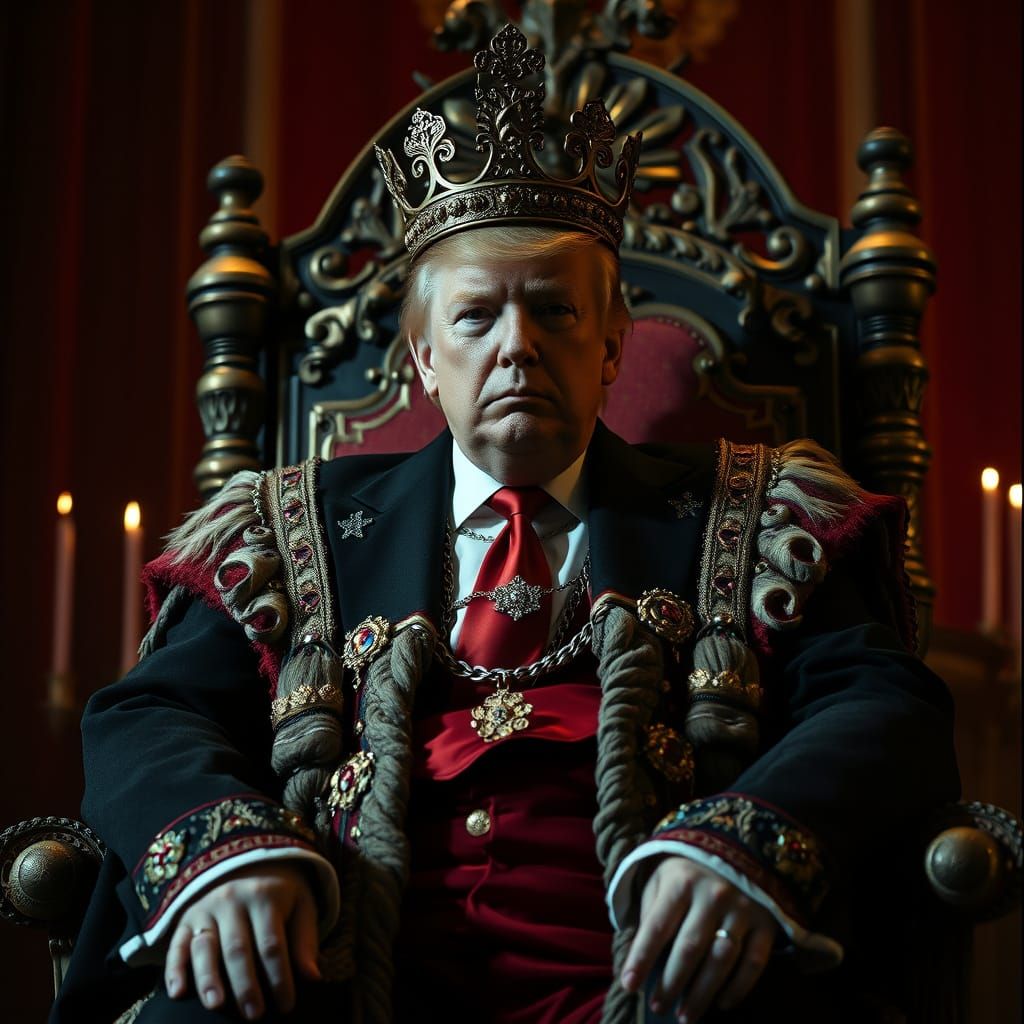
Don’t worry. No matter what crimes I tell you to commit, they can’t do a thing. I’ll just pardon everyone and say your conviction was “unfair.”
Given today’s circumstances, we asked you also to consider more specifically the unlimited right to pardon all criminals, along with the SCOTUS decision that a President cannot be prosecuted for “official actions.”
Laws are bounded by extremes, and Trump tests those boundaries.
Should a President have the unlimited right to enlist people to commit crimes by promising them immunity from prosecution and conviction?
This question has special relevance today, when the President himself is a convicted felon.
We have already seen Trump attempt to game the Constitution by invoking the Alien Enemies Act of 1798. He tries to justify deportations without trial, claiming that the United States is facing an “invasion” by foreign criminal gangs such as Venezuela’s Tren de Aragua.
The Alien Enemies Act is a wartime statute enacted in 1798, originally designed to allow the president to detain or deport non-citizens from nations with which the U.S. is at war or under threat of invasion.
Only by the widest stretch of meaning could one consider the U.S. to be “at war with” or under threat of “invasion by” a gang of criminals.
Though the Supreme Court blocked this attempt for lack of due process, it highlights this administration’s, and possibly future administrations’, attempts to bend the Constitution in ways not anticipated.
Another example of Trump’s willingness to distort and stretch the meaning of the Constitution: His attempt to end the Constitutionally permitted birthright citizenship for children born in America of non-citizen parents by claiming that the children are not “subject to the jurisdiction” of the United States.
(This outrageous claim would mean the children could commit any crime and not be punished.)
Trump’s proclivity, if allowed, sets a precedent. He does America a service by demonstrating how far a corrupt President would go if unchecked by Congress and the Supreme Court.
Why was the President given the right of pardon?
Alexander Hamilton said, “Humanity and good policy demand a power of clemency in the executive, especially in seasons of insurrection or rebellion.” Are we now in a season of insurrection or rebellion?
To correct judicial mistakes: Courts can err. A pardon lets the President fix unjust convictions or excessive sentences when the law provides no other remedy. Have Trump’s pardon corrected judicial mistakes?
To promote national unity and reconciliation. In times of crisis—rebellions, civil wars, insurrections—the President might need to pardon large numbers of people to restore peace. Did Trump’s pardons come at time of rebellion, civil war or insurrection? Did they help restore national unity, reconciliation, and peace?
To act swiftly and decisively: A single executive could act faster and more compassionately than a board or legislature. The framers feared delay and indecision. Hamilton said, “A well-timed offer of pardon to the insurgents may restore the tranquility of the commonwealth.” Did Trump’s pardons restore tranquility?
To demonstrate moral judgement. The pardon power reflects trust in the president’s character and judgment. It is difficult to see the words, “moral,” “character,” and “judgement” in the same sentence as “Donald Trump” without laughing.
Most of Trump’s pardons have been given to political allies who committed crimes, some of which were in furtherance of Trump’s political agenda, and some were for personal reasons.
Consider that the President of the United States takes an oath in which he promises to “preserve, protect, and defend the Constitution of the United States.”
He has broken this oath not only by defying any reasonable interpretation of the Constitution.He also has raged against the legal foundations of Ameirca by calling called judges who rule against him, “a “so-called judge,” a “troublemaker” an “agitator,” a “radical lunatic, ” “unfair,” “unhinged,” “disgraceful,” having “Trump degrangement syndrome,” a “hater,” a “Mexican” (for a judge born in Indiana), and a “certified Trump hater.”
I have been alive for 90+ years and never have I heard anyone, let alone a President, publicly disrespect the Judiciary like Trump does. The man is a vicious hatemonger, spreading contempt for all those who do not exhibit total fealty to him — judges, the media, economists, other politicians, businesspeople, voters, vote counters, anyone.
As we have said, laws are bounded by the extremes, and Trump is an extreme case, never seen before and not anticipated by the founders.
So the question is, what shall be done to prevent his extremism from becoming the future standard?
Here are some thoughts:
The President’s rights would not be for a pardon, but to order a new trial during which a new judge and a jury would hear and re-evaluate the evidence given at the original trial. No lawyers. Just a reading of all the evidence presented at the trial to determine whether the decision was appropriate.
Or, same as above but with new lawyers, provided by the Justice Department, plus any new evidence not presented at the previous trial(s).
Or, the President would be able to require a totally new trial. Start from the presumption of innocence.
For mass pardons in the name of unity and reconciliation, Congress would have to agree.
The goal would be to prevent amoral Presidents from creating crime syndicates that commit every sort of felony with no laws to prevent or punish them, while allowing for the preference to free a guilty person over punishing an innocent one.
Should the President of the United States be allowed to offer unlimited pardons, no matter what offense?
What if the President is a convicted felon?
Why does the President have that right?
Should state Governors or other elected or unelected officials have the right of pardon?
By comparison:
Most U.S. governors have pardon power, which allows them to: Pardon state crimes, Commute sentences, Issue reprieves or clemency. Some states restrict this power, requiring: A recommendation from a state board of pardons or approval by other officials
For example: The Governor of California can grant clemency, but must get a majority recommendation from the state Supreme Court for multiple-offense felons.
The Governor of Texas needs a recommendation from the Board of Pardons and Paroles. In Georgia, the State Board of Pardons and Paroles, not the governor, holds that power.
To provide context to the questions, here are some examples found on the Internet. We have not checked these for accuracy. The data was posted by the U.S. Department of Justice.
As you go through the list, you will find many different kinds of offenses, from contempt of court to murder. If there is any reasonably common element, it might be the support of right-wing causes or, more specifically, the support of Donald Trump, regardless of the seriousness of the offense or whether the conviction was questionable..
So the question becomes: Does the unlimited right to pardon all criminals, along with the SCOTUS decision that a President cannot be prosecuted for “official actions,” give a lawless President the unlimited right to enlist people to commit crimes by promising them immunity from prosecution and conviction?
That is, what exactly is an action that Donald Trump or future Presidents could not claim is an “official action”?
12 months’ imprisonment and three years’ supervised release, conditioned upon six months’ home confinement and the performance of 100 hours’ community service (August 19, 2016)
Five years’ probation, conditioned upon eight months’ community confinement and the performance of one full day per week of community service; $30,000 fine (September 23, 2014)
Four months’ imprisonment; three years’ supervised release (May 25, 1995)
Conspiracy to steal firearms and other goods as part of an interstate shipment; theft from shipment in interstate commerce; theft of firearms shipped in interstate commerce
24 months’ imprisonment (as amended); three years’ supervised release; 5,400 hours of community service; $200 million fine (August 5, 1992)
Conspiracy; securities fraud; mail fraud; tax fraud; filing false reports with the Securities and Exchange Commission (SEC); assisting a brokerage firm in violating its net capital requirements
Obstructing the administration of the Internal Revenue Laws; aiding in the preparation of a false income tax return; making false statements on a loan application; making false statements (five counts)
Life imprisonment; five years’ supervised release (March 21, 1997)
Conspiracy to possess with intent to distribute cocaine; attempted possession of 12 kilos of cocaine with intent to distribute; attempted possession of 9 kilos of cocaine; attempted possession of 75 kilos of cocaine; attempted possession of 10 kilos of cocaine; conspiracy to commit money laundering; money laundering ($1.5 million); structuring monetary transactions
Conspiracy to operate off-road vehicles on public land closed to off-road vehicles; operation of off-road vehicle on public lands closed to off-road vehicles
660 months and one day’s imprisonment (amended to time served); 36 months’ supervised release (November 16, 2004)
Possession with intent to distribute marijuana (five counts); possession of a firearm in furtherance of a drug trafficking crime (three counts); possession of a stolen firearm (two counts); possession of a firearm with a removed serial number; use of a controlled substance in possession of a firearm (two counts); money laundering (three counts)
30 days’ imprisonment; two months’ supervised release conditioned upon compliance with the immigration process of the Bureau of Immigration and Customs Enforcement; $20,000 fine (April 3, 2018)
Three years’ probation, conditioned upon one year’s home confinement and 100 hours’ community service; $250,000 fine; $44,579.47 restitution (March 20, 2008)
180 months’ imprisonment; 36 months’ supervised release (as amended on September 5, 2019) (April 13, 2015)
Voluntary manslaughter, aiding and abetting and causing an act to be done (13 counts); attempt to commit voluntary manslaughter, aiding and abetting and causing an act to be done (17 counts); using and discharging a firearm during and in relation to a crime of violence and aiding and abetting and causing an act to be done
168 months’ imprisonment; 36 months’ supervised release (as amended on September 5, 2019) (April 13, 2015)
Voluntary manslaughter, aiding and abetting and causing an act to be done (eight counts); attempt to commit voluntary manslaughter, aiding and abetting and causing an act to be done (12 counts); using and discharging a firearm during and in relation to a crime of violence and aiding and abetting and causing an act to be done
151 months’ imprisonment; 36 months’ supervised release (as amended on September 5, 2019) (April 13, 2015)
Voluntary manslaughter, aiding and abetting and causing an act to be done (six counts); attempt to commit voluntary manslaughter, aiding and abetting and causing an act to be done (11 counts); using and discharging a firearm during and in relation to a crime of violence and aiding and abetting and causing an act to be done
144 months’ imprisonment; three years’ supervised release; $2,000 fine (as amended November 12, 2008) (October 19, 2006)
Assault with a dangerous weapon, and aiding and abetting; assault with serious bodily injury, and aiding and abetting; discharge of a firearm in relation to a crime of violence; deprivation of rights under color of law
132 months’ imprisonment; three years’ supervised release; $2,000 fine (as amended November 13, 2008) (October 19, 2006)
Assault with a dangerous weapon and aiding and abetting; assault with serious bodily injury and aiding and abetting; discharge of a firearm in relation to a crime of violence; deprivation of rights under color of law
40 months’ imprisonment; 24 months’ supervised release conditioned upon performance of 250 hours’ community service; $20,000.00 fine (February 20, 2020)
Obstruction of proceeding; false statements (five counts); witness tampering
1. Eastern District of Virginia2. District of Columbia
1. 47 months’ imprisonment; three years’ supervised release; $50,000 fine; $25,497,487.60 restitution (as amended by court order on March 21, 2019) (March 7, 2019)2. 73 months’ imprisonment; 36 months’ supervised release (concurrent); $6,164,032 restitution (March 13, 2019)
1. Subscribing to false United States individual income tax returns for 2010-2014 tax years (five counts); failure to file reports of foreign bank and financial accounts for calendar years 2011-2014; bank fraud/Lender B/$3.4 million loan; bank fraud/Lender C/$1 million loan2. Conspiracy against the United States; conspiracy to obstruct justice (witness tampering)
1. Northern District of Georgia2. Northern District of Georgia3. Northern District of Georgia
1. 12 months’ imprisonment; three years’ supervised release; $20,000 fine (July 1, 1998)2. 27 months’ imprisonment (concurrent); three years’ supervised release (August 26, 1999)3. 27 months’ imprisonment (concurrent); two years’ supervised release; $1,100,000 restitution (as amended on February 12, 2004) (May 29, 2002)
1. Structuring transactions to avoid reporting requirements (four counts)2. Willfully attempting to evade personal income tax (three counts)3. Wire fraud
52 months’ imprisonment (as amended by the Bureau of Prisons pursuant to court orders on March 5, 2014, and November 2, 2015); five years’ supervised release (January 11, 2013)
Conspiracy to possess with intent to distribute cocaine hydrochloride
Two years’ probation conditioned upon 100 hours’ community service per year and continued payment of balance owing to the Securities and Exchange Commission (August 15, 1995)
One year’s probation conditioned upon four months’ home confinement; $10,000 fine; restitution in accordance with the plea agreement (December 6, 1999)
Two years’ probation conditioned upon six months’ home confinement and 160 hours’ community service; $10,000 fine (as amended on October 3, 2016) (September 20, 2016)
Conspiracy to commit an offense against the United States; causing false records; causing false campaign contribution reports; false statements scheme
1. Eastern District of Arkansas2. Southern District of Indiana3. Eastern District of Arkansas4. Western District of Kentucky5. Western District of Kentucky
1. Three years’ imprisonment; five years’ probation (February 4, 1985)2. 33 days’ imprisonment (September 26, 1986)3. 407 days’ imprisonment; five years’ probation (January 20, 1987)4. Three years and 120 days’ imprisonment (May 23, 1990)5. 508 days’ imprisonment (February 20, 1992)
1. Conspiracy to distribute cocaine2. Violation3. Violation4. Violation5. Violation
84 months’ imprisonment; three years’ supervised release; and a $2,500 fine (September 23, 2013)
Conspiracy to obstruct justice; destruction, alteration, falsification of records, aiding and abetting, causing an act to be done; accessory after the fact; obstruction of justice, aiding and abetting
Conspiracy to defraud the United States; fraud by wire, radio, or television (35 counts); scheme to defraud: money, state tax stamps (transportation of stolen property (14 counts); money laundering – racketeering (laundering monetary instruments conspiracy) (indicted – no further resolution to date)
45 days’ imprisonment; two years’ supervised release, conditioned upon an unspecified term of home confinement and community service; $20,000 fine (as amended) (January 20, 1995)
18 months’ imprisonment, including approximately four months’ community confinement; three years’ supervised release; as amended June 7 and June 19, 1994 (May 7, 1993)
Conspiracy to possess with intent to distribute and to distribute marijuana and cocaine
1. District of Connecticut2. District of South Carolina
1. Three years’ probation, conditioned upon cooperation with the IRS in resolving $100,000 in unpaid taxes for the years 1991 and 1992; $4,000 fine (June 9, 2000)2. Five years’ probation, conditioned upon six months’ home confinement; $412,000 restitution
1. Payment to non-licensed physician; attempt to evade or defeat tax2. Mail Fraud
36 months’ imprisonment; three years supervised release; $25,000 fine (October 28, 2013)
Conspiracy to commit extortion, attempted extortion and wire and mail fraud; honest wire services wire fraud (six counts); conspiracy to commit money laundering; concealment of money laundering; transactions with criminally derived funds (two counts); extortion under color of official right (two counts); conspiracy to make false statement; insurance fraud (two counts); racketeering
18 months’ imprisonment; two years’ supervised release; $15,000,000 fine (June 24, 2010)
Conspiracy to commit securities and mail fraud; fraud in connection with Brocade stock, aiding, abetting and willfully causing; false SEC filing, aiding, abetting and willfully causing (three counts); falsifying books, records and accounts, aiding, abetting and willfully causing; false statement to accountant, aiding, abetting and willfully causing (four counts)
Espionage – conspiracy to gather or deliver national defense information (two counts); violation of Subversive Activities Control Act – receiving or obtaining classified information by foreign agent
Conspiracy to commit mail and wire fraud and honest services mail and wire fraud; conspiracy to commit federal programs bribery; money laundering conspiracy; wire fraud and honest services wire fraud (six counts); federal programs bribery (two counts); filing a false tax return
Kwame Kilpatrick Conviction: Racketeering conspiracy, extortion, bribery, mail and wire fraud, and tax offenses during his tenure as Detroit mayor. Sentence: 28 years in prison. Commutation: Sentence commuted by President Trump in January 2021
January 6 Capitol Riot Pardons In a sweeping move, President Trump granted full pardons to individuals convicted of offenses related to the January 6, 2021, Capitol attack. Notable recipients include: Joseph Hackett Ethan Nordean Joseph Biggs Zachary Rehl Dominic Pezzola Jeremy Bertino GQ
Reports indicate that dozens of the convicted individuals had prior criminal convictions, including serious offenses such as rape, manslaughter, domestic violence, and drug trafficking.
The following story appeared today online. It purports to tell you why you’ll have a benefit cut if Social Security benefits are not taxed.
That’s right. The article claims that either you allow the government to take away part of your benefits via taxes, or it will take away part of your benefits via benefit cuts.
This Hobson’s choice is brought to you by the rich, who want to widen the income/wealth/power Gap between them and you.
Spoiler alert: Here’s the “why” mentioned in the headline of this post: The lies of the rich and the ignorance of the populace.
“If you dare to ask for more, I’ll give you lesss. So shut up and be grateful for what you get. I have rich people to take care of. “
Trump-backed tax plan may slash Social Security benefits by 33%, raising solvency concerns /
Retirees across the United States may soon face a daunting financial challenge. A proposed tax plan, supported by President Trump and several legislators, aims to eliminate federal income taxes on Social Security benefits, tips, and overtime.
While this might initially seem beneficial, experts warn it could lead to a significant reduction in Social Security benefits, potentially cutting them by 33% by 2035.
Proposed tax plan details
The tax proposal suggests removing federal income taxes on Social Security benefits, a move that could eliminate a crucial revenue stream for the program.
Currently, Social Security is funded primarily through payroll taxes (91%), with a smaller portion coming from taxes on benefits (4%) and interest from trust fund assets (5%). The elimination of these taxes could severely impact the program’s financial health.
Not one word of the above paragraph is true. All federal spending, including spending for the Supreme Court, for Congress, for the Senate, for the House, for the military — ALL federal spending — is funded the same way: By federal new money creation.
Congress and the President vote for spending, and the money is automatically created. No fake “trust funds”are involved.
The federal government, being Monetarily Sovereign, cannot run short of dollars, nor can any agency of the federal government run short unless Congress and the President want it to.
The financial helplessness implied in the article is a lie. The federal government has ownership and control over the Social Security agency, and so can add as many dollars as it wishes at any time it wishes.
Social Security faces financial challenges due to a growing retiree population and a slower-growing workforce.
The Congressional Budget Office (CBO) estimates that under current law, the Social Security Trust Fund will be depleted by 2034. If this occurs, benefits would need to be reduced to about 77% of scheduled payments, equating to a 23% cut.
The Social Security “trust fund” is not a trust fund. It is merely a record of payments.
As a record, and only a record, it “has” no money. It’s just a balance sheet for informational purposes. The purpose of FICA taxes (according to the SS founder, President Franklin D. Roosevelt) is to give you the illusion of ownership, so you will protest against cuts.
FICA does not fund SS benefits. It actually limitsbenefits as practiced by Congress.
Impact of eliminating benefit taxesRemoving taxes on Social Security benefits would eliminate a revenue source expected to contribute $1.1 trillion over the next decade.
False. The “revenue” source is not FICA taxes. The revenue source is the federal government, which has the unlimited power to credit those taxes to Social Security — or not — or to credit some other figure.
The amount of FICA does not control how much Social Security is allowed to spend. Congress and the President do.
If Congress and the President wished, they could pass a law saying, for instance, that every person living in America receives double the current level of SS benefits. That law would be funded by Congressional fiat just as taxing benefits now is reverse funded by fiat.
This would exacerbate the program’s deficit, potentially depleting the trust fund sooner. The Committee for a Responsible Federal Budget (CRFB) estimates that eliminating these taxes could advance the fund’s depletion by one year, while Penn Wharton suggests it could be two years.
The CRFB is a libertarian-leaning mouthpiece that likes to express shock at how many growth dollars the federal government pumps into the economy. Their solution to the non-problem invariably tends toward cutting benefits to the middle- and lower-income groups, but seldom suggests cutting tax loopholes enjoyed by the rich.
How much you need to save in order to retire
If taxes on Social Security, tips, and overtime are all eliminated, as proposed by President Trump, the CRFB estimates the trust fund could be depleted three years earlier.
This scenario could lead to benefit cuts as early as 2032, rather than 2035, putting additional financial strain on retirees.
Again, the above is a lie or ignorance, hoping that you will believe the lie or share the ignorance. The bottom line: The author claims that any increase in your benefits will result in a decrease in your benefits, so shut up and accept your losses.
Magnitude of potential benefit cutsThe proposed tax eliminations could reduce Social Security revenues by up to $2 trillion over the next decade.
Translation: The proposed tax eliminations could increase Social Security benefits by up to $2 trillion over the next decade, while also increasing the number of growth dollars added to the economy by those same $2 trillion.
This would necessitate deeper benefit cuts than currently projected. The CRFB estimates that benefits could be reduced by 33% by 2035, compared to the 23% cut projected by the CBO under existing law.
The same old lie: “Don’t you dare ask for more or we’ll give you even less than you currently receive. And by the way, we’re giving the rich another tax break, but that doesn’t count.”
Experts like Nancy Altman, President of Social Security Works, caution against the proposed tax eliminations. Altman argues that while eliminating taxes might increase benefits for some, the overall impact would be detrimental, leading to drastic benefit reductions. She describes the proposal as “not honest,” highlighting the potential long-term harm to retirees.
Ms. Altman, with all your experience, you should know better. Eliminating taxes would not “lead to benefit reductions” if you told America that the federal government can easily fund SS forever.
The proposed tax plan, while seemingly beneficial in the short term, poses significant risks to the financial stability of Social Security. Retirees could face earlier and more severe benefit cuts, underscoring the need for careful consideration of the plan’s long-term implications.
As the debate continues, stakeholders must weigh the immediate benefits against the potential for substantial future losses.
If ever the stakeholders, i.e. SS current and future recipients, ever begin to understand the truth, there will be an uprising and (gasp!) the income/wealth/power Gap between the rich and the rest will narrow.
MAGAs, it may come as a great surprise to you that white, Christian American citizens who are born here to American citizens are not the only smart, hardworking, honest, taxpaying people in the world.
Yes, really.
There actually are very smart, hardworking, honest, taxpaying, valuable to America, black, brown, yellow, red, South American, Canadian, Mexican, Central American, Australian, European, Asian, African, Caribbean, other island, Jewish, Muslim, Buddhist, people of other religions, and citizens of all other nations.
If you are a MAGA, you probably didn’t know that, because your unquestioned leader wants to deport all those people from our walled-in, frightened nation.
Why? Many reasons are given, mostly regarding jobs, taxes, and crime. But those given reasons have been disproven by (gasp) actual data.
No, they are phony, convenient excuses, not the real reason you want those people, and even their children born here, deported.
C’mon, you know the real reason. Fess up now. It’s bigotry, pure and simple, promulgated by your cult leader.
It’s pretty good, but I’m still afraid of them. Can you make it bigger?
You MAGAs fear and hate them because they are not your kindof people, i.e. not white, Christian, hatemongering, native-born to citizens who look and act just like you.
In other words, you want to limit America to people who don’t threaten you by outthinking you and outworking you, while outdefending our American democracy from bigots, dictators, and others just like you.
That is why you want to hide behind a high wall and toss all those “others” over it.
If you are a MAGA, don’t bother to read the following excerpts from an article in Scientific American, March 2025 issue. First, it’s in a science magazine, which deals in (horrors!) scientific facts.
And second, your God, Donald Trump, hasn’t told you to believe it.
But if you’re not a brain-dead MAGA, you will find the following informative:
Mass deportation is a stain on American morals, and it is economically senseless. Immigrants pay taxes, are less likely to commit crimes than native-born Americans, and are valuable workers and consumers in the American economy.
U.S. will need more than one million STEM workers in the next 10 years to stay competitive. Immigrants are critical to that future
In late December 2024 a social media storm erupted after entrepreneur Elon Musk blasted out support for the iconic H-1B visa.
The temporary work visa has long served as a ticket to jobs in the U.S. high-tech industry for skilled foreign-born scientists and engineers.
In response, President Donald Trump’s nativist backers pushed back immediately. Former Trump adviser Steve Bannon characterized Musk’s position as a ploy by tech oligarchs to take jobs from Americans.
The fact: America is woefully short of scientists and engineers. They are much in demand and have no difficulty finding jobs in America. Bannon is lying.
Headlines proclaimed the outbreak of a MAGA civil war. Musk’s remarks might seem self-serving, but he is right in highlighting the need for more engineering talent from overseas.
Foreign-born tech workers are essential to fuel America’s powerhouse economy, one that captures an outsized percentage of global gross domestic product compared with its population.
And they will be key for hiring the more than one million additional STEM workersthat will be needed in 2033 compared with 2023, according to the U.S. Bureau of Labor Statistics.
This increase marks a 10 percent growth rate, almost three times what is projected for any non-STEM industry during the same period. Immigrants are a big part of what has made America a global leader in science and technology;if Trump’s nativist faction prevails and restricts the entry of skilled workers, that will have profound effects on this leadership role, as well as on the U.S. economy.
Closing borders is a mistake. The tech elite know this. Musk, who was born in South Africa and now heads an advisory committee for the Trump administration called the Department of Government Efficiency, is one of many tech magnates who rely on the H-1B visa.
Musk’s Tesla company received approvals for 742 H-1B petitions for new hires during the 2024 federal fiscal year, more than double the number from a year earlier. Amazon (owned by Jeff Bezos) applied for nearly 3,900 H-1Bs in 2024.
Most of the 25 companies that made the most H-1B requests in 2024 are technology firms, including Microsoft, Infosys and Meta, the parent company of Facebook (run by Mark Zuckerberg). Cutting off the flow of foreign workers by rejecting H-1B applications can negatively impact local economies and even hurt U.S. workers.
Despite the claims from Bannon and other hard-right MAGA supporters that H-1Bs rob American citizens of skilled jobs, the pipeline for domestic talent alone is unlikely to fill looming employment gaps.
For 250 years, beginning with the Revolutionary War, Americans have fought and died to prevent this. Today, the Republican Party is making all that effort and lives lost for naught.
U.S. mathscores have dropped, and the educational infrastructure at the most basic level is often just not there: only half of U.S. high schools offer calculus, and 60 percent provide physics classes.
Both skills are critical for designing quantum computers and achieving innovations in artificial intelligence. According to study estimates, just 3 percent or so of America’s high school graduates join the ranks of STEM workers.
Prominent legislation to promote STEM education has not met its funding targets. The Biden administration’s CHIPS and Science Act set out to invest billions of dollars in STEM education, but the funding appropriated for the National Science Foundation has been hundreds of millions less than what was originally requested.
The MAGAs falsely believe our Monetarily Sovereign federal government should spend less. They think this will make the government more efficient and lower their taxes.
The facts: It will make the government less efficient and federal taxes do not fund federal spending. Unlike state and local governments, the federal government is Monetarily Sovereign.
The Federal government does not spend tax dollars. It creates new dollars, ad hoc, to pay all its bills.
(The purpose of federal taxes is to control the economy and to assure demand for the dollar, not to pay for anything.)
Even if the government collected zero dollars in taxes, it could continue spending, forever.
Within the next two years, MAGAs and the rest of us will feel the results of this misguided belief, as federal services decline and the private sector slides into recession.
In addition to industry jobs, the basic and applied research that takes place at the nation’s universities and tech hubs is highly reliant on overseas talent.
An August 2024 report from the National Academies of Sciences, Engineering and Medicine (NAS) notes that contributions from the large cadre of international students are critical to sustaining current levels of research in U.S. graduate programs.
Foreign-born employees make up 43 percent of U.S. STEM workers who hold doctoral degrees, and this number rises to nearly 60 percent in computer scienceand certain other fields.
In 2022 more than half of U.S. start-ups with valuations greater than $1 billion had at least one immigrant at their helm—and the value of foreign-born professionals in this country can be witnessed on the global stage at the highest levels of human achievement: 40 percent of American Nobel Prize winners in chemistry, medicine and physics in the past two decades have been immigrants.
And yet, America does everything it can to make immigration difficult and time-consuming. Unless you’re rich enough to pay for entry, you might wait years to become a citizen.
Under a Trump proposal, foreign investors would pay $5 millionto the U.S. government in exchange for permanent residency (green card privileges) and a pathway to citizenship.
This is not the government’s EB-5 program which requires a $1.05 million investment in a U.S. business, or $800,000 if investing in a Targeted Employment Area (TEA)— a rural area or one with high unemployment and a Job Creation Requirement to create or preserve at least 10 full-time jobs for U.S. workers within two years.
Why the $5 million payment? To keep the riff-raff out. (The “riff-raff” are the people at both ends of the labor spectrum– the people with advanced science degrees and the people who labor in the fields, in short, the people who will do the work America needs.)
Uncertainties about immigration for tech jobs—reflected by the internal strife in the Trump team and among its supporters—could result in fractured policymaking, with foreign-born STEM workers getting placed under the same anti-immigrant policymaking umbrella as undocumented immigrants.
In the fusillades of the MAGA civil war, Trump took Musk’s side, saying he has always been a big backer of H-1Bs, although the president has previously said the opposite.
He once called the visas “very, very bad for workers.”
In fact, during Trump’s first term, his administration set up a partial H-1B blockade.
The denial rate for the already short supply of the visas reached 24 percent in fiscal year 2018. It fell back to 2 percent in fiscal year 2022 after courts found his administration’s handling of these visas to be unlawful.
In one 2014 study, researchers looking at this issue found that cities across the nation with high H-1B denial rates experienced a drop in computer-related jobs, and this decline was accompanied by lower wageb- growth for native-born citizens who lived there.
The U.S. remains a prime destination for foreign-born students and professionals, but the status quo may not hold. Talent-recruitment programs began to emerge in many countries in the 2010s.
One prime example is Canada’s Tech Talent Strategy, which afforded three-year work permits to as many as 10,000 people in the U.S. who have H-1B visas.
Apparently, Canadians are less frightened of immigrants than are Americans.
The ultimate fix for the U.S.’s chronically broken immigration system would be to implement a long-sought massive overhaul through congressional legislation.
Such comprehensive immigration reform would rationalize the competing demands of border security and the need to equitably regulate both legal and illegal immigration. But this kind of all-encompassing measure has little chance of being adopted during the next four years.
“The next four years” is a euphemism for “during the xenophobic, hatemongering Trump administration.
In bringing wider attention to the role of legal immigration, the wrangling over H-1Bs may have an upside. On a podcast last year, Trump remarked that international college students, once they graduate, should be eligible for green cards, which confer permanent residency.
Waiting for them to graduate confers no advantages on America. Those who are students here are more likely to work and live here, giving America the educated people we need.
His administration could make good on some variation of this idea. Other steps might raise the caps on H-1B visas granted annually (currently 85,000 in total) and institute much needed reforms to the visa program—especially to ensure that visa holders are not exploited.
Employers could do their part by seeking out underutilized programs such as the 0-1A temporary work visa for individuals with “extraordinary ability.” If nothing is done on H-1Bs and other legal-immigration measures, the desirability of the U.S. as a destination for STEM students and tech workers will fade.
That already has happened. The door-kicking, Nazi-like harshness of (ICE) Immigration and Customs Enforcement under Trump has scared away many potential immigrants.
The 2024 NAS report notes that between 2019 and 2023, the U.S. fell from first to eighth worldwide in scores for attractiveness to highly educated workers. It will probably slip further.
The anti-immigrant atmosphere ushered in by the Trump administration’s promised mass deportation of undocumented immigrants is also likely to sour foreign students and engineers on coming to the U.S. And this outcome will benefit no one.
U.S. population growth has not been unmanageable. In fact, many experts argue the opposite: the U.S. now faces dangerously low population growth, and immigration is one of the few forces keeping it from shrinking.
SUMMARY
Birth rates in the U.S. have fallen steadily for decades and are now below replacement level (about 1.6 children per woman as of 2023).
Aging population: Millions of Baby Boomers are retiring, putting pressure on healthcare, Social Security, and the labor force.
Without immigration, the U.S. would already be in demographic decline, like Japan, South Korea, or some European countries.
Today, America has labor shortages (especially in caregiving, farming, construction, and tech)
If workers are deported, we will have a slowdown in GDP growth due to fewer workers
Today’s challenge isn’t too much growth — it’s too little. Immigration is increasingly seen by economists and demographers as essential to sustaining the U.S. economy and workforce.
Even Trump’s buddy, Elon Musk, and most economists warn of a looming population collapse and say we need more people, especially working-age individuals, to support aging societies and sustain innovation and economic growth.
Politically, immigrants are falsely scapegoated for job competition, crime, or cultural change, though those fears are unsupported by data.
Following the economic growth successes of the Biden administration, Trump has chosen a guaranteed-to-fail hate-promulgating, populist, bigotry-based program of applying leeches to cure anemia.
If the GOP remains cowardly and the Supreme Court continues to give Trump “get-out-of-jail-free” cards, the U.S. will endure a recession, followed by a depression, along with a fascist dictatorship, devoid of legal protections for the populace.
We, as a nation, cannot claim moral leadership — Trump destroyed that — and we soon will lose economic, financial, and military leadership.
Trump is elderly and growing senile, so we can only hope nature takes its course, sooner rather than later.




 #Monetary Sovereignty - Mitchell