We Americans are accustomed to puffing out our chests and claiming that we are the greatest nation on earth. We probably have the greatest fighting force (or did until Trump appointed a clown to lead it), but otherwise we have fallen far from the top.
(And please no smart-ass “Love it or leave it” comments. If that’s your best, you are a FOX News viewer without the intelligence or honesty to understand facts. So stop reading now, and get the rest of your information from Donald Trump.)
Here is an example of the greatest nation on earth:
By Sriparna Roy. March 12, 202612:03 AM EDT Updated March 13, 2026
Unlike state and local governments, the U.S. federal government never can run short of dollars. Even if it stopped collecting taxes, while tripling its spending, it still would not run short of money.
March 12 (Reuters) – Roughly one-third of Americans cut back on food, utilities or other daily expenses to pay for healthcare last year, research from the West Health-Gallup Center showed on Thursday, as steeper prices and rising living costs hit households.
A nationally and state-representative survey of nearly 20,000 U.S. adults in all 50 states and in the District of Columbia, conducted from June to August 2025, found that 33% of respondents had made at least one trade-off in daily expenses to pay for healthcare.
This was far more common among Americans who do not have health insurance, with 62% of those surveyed saying they have made at least one sacrifice to pay for healthcare, including 32% who had to borrow money and 24% who had prolonged their current medication.
Among those with insurance, close to three in 10 have made at least one sacrifice, the survey found.
Most Americans with private health insurance are paying higher premiums and steeper out-of-pocket costs in 2026, including millions of people in the government-subsidized Affordable Care Act plans in which extra COVID pandemic-era subsidies have expired.
One-third of Americans had to cut back on food, utilities, or daily expenses to pay for healthcare? The greatest nation on earth??
Hah. Gimme a break.
It’s not that the “greatest nation on earth” can’tafford healthcare. It’s simply that the right-wing government of the greatest nation on earth doesn’t want to pay for it because …uh…it would benefit the poor, whom everyone knows are lazy, good-for-nothings who want everything free. Right?
Oh, and then there’s the right-wing excuse that aiding the poor is “Socialism” while aiding the rich (via tax dodges) is good old capitalism.
Here is what some capitalists say about that:
Fed Chair Greenspan
Former Federal Reserve Chairman Alan Greenspan: “A government cannot become insolvent with respect to obligations in its own currency. There is nothing to prevent the federal government from creating as much money as it wants and paying it to somebody. The United States can pay any debt it has because we can always print the money to do that.”
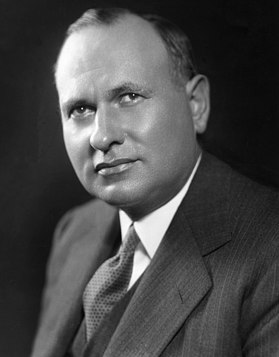
Fed Chair BernankeFed Chair Beardsley Rummel
Ben Bernanke: “The U.S. government has a technology, called a printing press (or, today, its electronic equivalent), that allows it to produce as many U.S. dollars as it wishes at essentially no cost. It’s not tax money… We simply use the computer to mark up the size of the account.
Former Federal Reserve Chairman Beardsley Ruml: “The necessity for a government to tax in order to maintain both its independence and its solvency is true for state and local governments, but it is not true for a national government. The public purpose which is served should never be obscured in a tax program under the mask of raising revenue.”
Federel Reserve Chairman Jerome Powell stated, “As a central bank, we have the ability to create money digitally.
Former Secretary of the Treasury Paul O’Neill
Statement from the St. Louis Fed: “As the sole manufacturer of dollars, whose debt is denominated in dollars, the U.S. government can never become insolvent, i.e., unable to pay its bills. In this sense, the government is not dependent on credit markets to remain operational.” You can find it in their publication titled “Why Health Care Matters and the Current Debt Does Not”
Former Secretary of the Treasury Paul O’Neill: “I come to you as a managing trustee of Social Security. Today we have no assets in the trust fund. We have promises of the good faith and credit of the United States government that benefits will flow.”
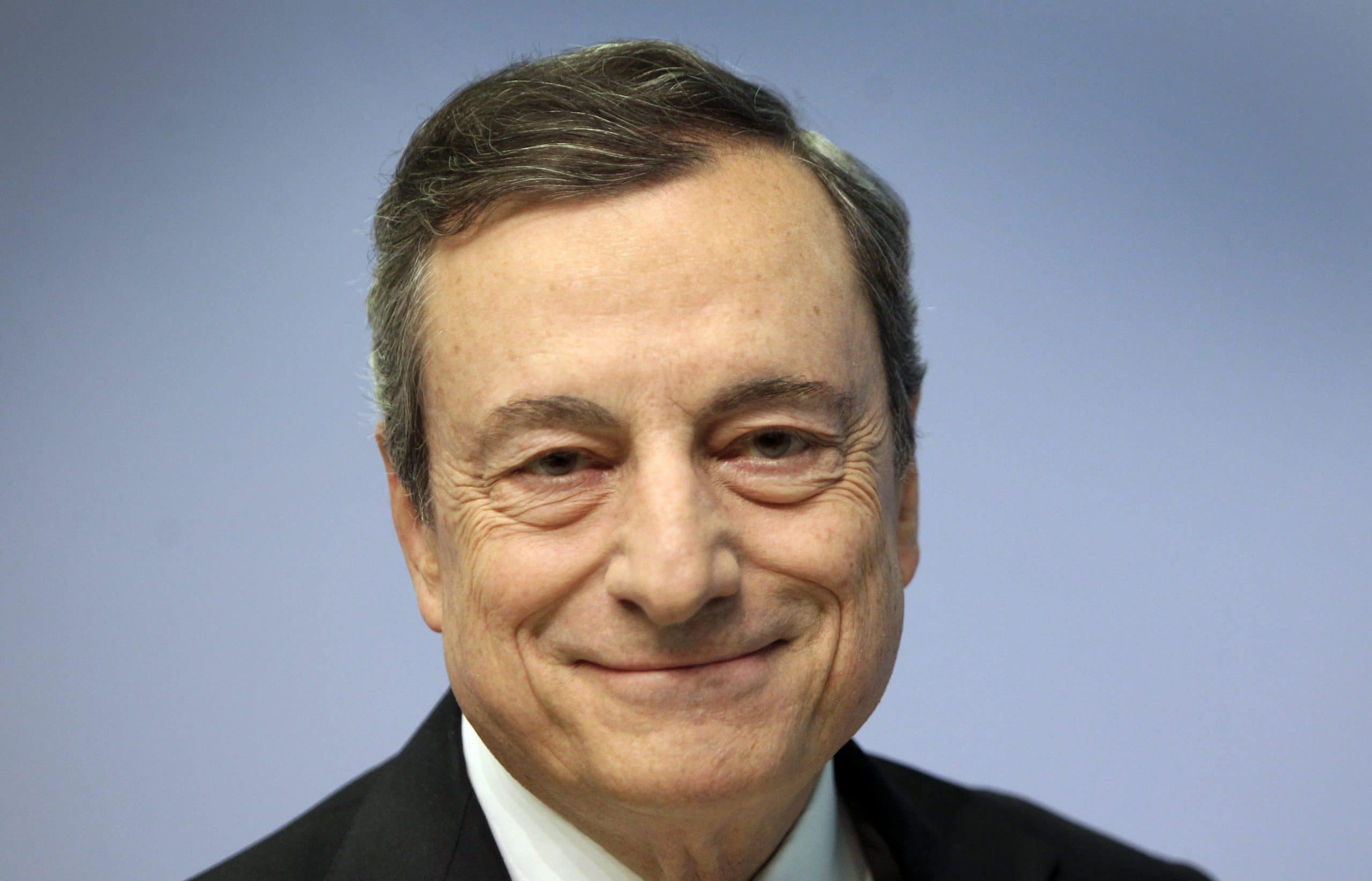
Former President of the ECB and Prime Minister of Italy Marie Draghi
The European Central Bank (ECB), like the U.S. government, is Monetarily Sovereign. Press Conference: Mario Draghi, President of the ECB, 9 January 2014 Question: I am wondering: can the ECB ever run out of money? Mario Draghi: Technically, no. We cannot run out of money.
Paul Krugman, an award-winning economist
Paul Krugman (Nobel Prize–winning economist): “The U.S. government is not like a household. It literally prints money, and it can’t run out.” — Numerous op-eds/blog posts
Hyman Minsky (Economist, key influence on MMT) “The government can always finance its spending by creating money.”
Eric Tymoigne (Economist) “A sovereign government does not need to collect taxes or issue bonds to finance spending. It finances directly through money creation.”
Yes, though the compulsive liars of FOX News may disagree, true experts will tell you that the U.S. government has the unlimited capacity to finance healthcare insurance for every man, woman, and child in America, while still having sufficient funds for any future wars that Presidents may initiate to distract voters from the latest scandals.
Then, in a last-ditch effort to take dollars from the pockets of the poor, the right wing will falsely claim that “too much” federal spending causes inflation. (“too much” is any amount that helps the poor but doesn’t enrich the President’s family).
You will notice that there always is enough money to start wars and to prosecute enemies. As this is being written, the Conservatives request an additional $200 billion to fight an unnecessary war, which will subsequently require billions more to replenish our depleted munitions.
Those brave fighters won’t be deterred by the loss of human life or myths about inflation.
The next time you are forced to choose between paying for health care vs. food, clothing, or school for your kids, do remember to thank the Republican Party and President Trump, and name another street after him.
I only started the war so MAGAs would forget Epstein, and now they (not me) are in deep sh*t. It’s not my fault. It’s all Israel’s fault. They knew I had no brains, so they told me I could win this thing in two days. No, wait. It’s all Hegseth’s fault. He should have planned for this. No, wait. It’s the Democrats’ fault for not giving Hegseth $200 billion for more lobsters. No, wait, it’s all NATO’s fault for not opening the Strait even though we don’t need them. No, wait, it’s all Stephen Miller’s fault for not warning me. No, wait. It’s all Biden’s fault because of his kid’s laptop. No, wait. I have a secret plan to kill all the Iranian men, women and children. We have plenty of oil, so prices won’t go up. No, wait, we eliminated Iran’s nuclear ability last year, but now this year, they were just about to get the bomb. No, wait. I never touched that 14-year-old girl. No, wait. There is no inflation, and the economy is doing great, the greatest ever. No, wait. I inherited a terrible economy. No wait. We’re winning … somewhere. Hey, they believe me …in Wyoming.
What is generally called “consciousness” has baffled philosophers and physicists for centuries because of its seemingly mysterious, metaphysical qualities.
I have suggested that “consciousness” is straight physics: stimulus —> response —> response —> response, with each response, in fact, being the stimulus for the next response, in an endless chain.
Everything responds to stimuli, which means that everything possesses some degree of consciousness—whether living or inanimate, animal or plant. Humans, dogs, trees, and even AI can be considered conscious, with the main difference being the degree of consciousness, measured by the quality and quantity of stimuli and responses.
Because the term “consciousness” carries mysterious, unmeasurable connotations, I propose using “responsiveness” instead.
Objections to “responsiveness” may arise because it doesn’t encompass the sensation of consciousness. I submit that this sensation itself is not only an illusion, but that this illusion serves a significant purpose.
The brain and body together comprise the translation machine that makes stimuli intelligible. Without such translation, the world would be a confused mix of signals. For instance, read the following:
SDRAWKCAB DAER OT DRAH YREV SI SIHT
What does it say? It says,
THIS IS VERY HARD TO READ BACKWARDS
The photons — i.e. the stimuli — you receive are quite similar in both examples, but the brain has not learned to translate backwards spelling.
Redness is the brain’s interpretation of signals from the eye. The electromagnetic wave itself is not “red.” It’s just radiation with a certain wavelength. The color is created by our nervous system, and is not in the light.
When you see something that does not exist, it is called an illusion. Color is a species-wide illusion. If you close your eyes, you will see phosphenes, the visual sensations that occur without light entering your eyes. They, too, are illusions
The sense of taste operates in a similar way. A compound known as PTC (phenylthiocarbamide) tastes bitter to most people, but about 25% of individuals do not experience any taste from it. For these people, the bitterness simply does not exist.
For the 75% who can taste it, bitterness is not an inherent quality of the substance; rather, it is an illusion produced by the interaction between the brain and the taste buds.
Stick your finger with a needle, and you may feel pain, unless your finger has received an anesthetic. Pain is not an intrinsic property of a needle. Touch the needle against a fingernail, and you may feel nothing.
It is the pain receptors in your finger that send a signal to your brain, and that signal is translated to pain. Pain is one of the illusions created by the brain/skin combination (or other parts of the body and brain).
When infrared light hits your skin, you may feel a pleasant warmth, or a painful burning sensation, or nothing at all, depending on the intensity of the radiation, the duration of the stimulus, skin sensitivity, and the starting temperature of the skin. All of these responses are illusions created by the brain/skin system.
If you attend a rock concert, you may hear loud music. Afterward, you may hear a buzzing in your ears, especially in a quiet room. All are illusions of the sound waves touching the tiny bones in your ears, as translated by your brain. Waves of air have no intrinsic sound.
People are able to smell different odors.
The reason is genetic variation in olfactory receptors. Humans have about 400 functional odor receptor genes, and individuals vary in which ones work.
For each person, what is reality? Is odor real, or is it an illusion conjured by the brain?
If you watch television, you experience, not pictures, but thousands of flashing points of light. All else is illusion. A movie is the same. A photograph, too, is an illusion.
You cannot see a tree; you can only detect light rays reflecting off it. Your brain interprets these signals and identifies them as a tree. But those light rays merely are electromagnetic waves, not a tree. Your brain provides you with the “tree” illusion.
Everything you see, hear, feel, taste, or smell is an illusion, created by your brain and the rest of your body.If you lost those senses, you would live in a quiet, dark world, and that would be your reality — unless, for instance, you could sense magnetism like a migratory bird. Or a sea turtle. Or a monarch butterfly. Or a salmon. Or a shark.
Many birds have a light-sensitive protein called cryptochrome in their retinas that may enable them to perceivemagnetic field direction as faint visual patterns. One wonders what a magnetic field looks like to a bird.
Does it have a color? Does it make a sound? Does it itch? Does it smell? The reality is that a magnetic field has no such intrinsic properties. Whatever a bird senses is a product of its brain and body — an illusion that may have no parallel in human cognition.
And then we come to dreams. Many animals dream, and we know that for humans at least, some dreams can feel terrifyingly real. Yet, of course, dreams are illusions created by the brain/body sensing system.
If light of certain wavelengths can create the illusion of physical objects, and dreams do likewise, in the context of reality, where is the line between what we see when awake and our eyes are closed and what we see when we are asleep?
The line is in the source of constraint. When we are awake, external physical signals dominate. When we sleep, internally generated neural activity dominates. But the machinery producing the experience is the same brain system in both cases.
The brain is always simulating the world. When awake, the simulation is continuously changed by outside stimuli. When dreaming, it runs on its own. And none of it is reality (just electromagnetic and pressure waves).
We never experience the world directly. We experience a brain/body-generated interpretation of stimuli, and what we think of as “consciousness” is the totality of our responses to those stimuli.
That is why I prefer the term “responsiveness” vs. “consciousness.” With responsiveness, you have no mysterious, unmeasurable qualia, no subjective, intangible “feeling,” no nonscientific “self” floating outside your body.
There only are your responses to the stimuli that impact your brain/body sensing system.
And this brings us to the subject of free will. For free will to exist, there would need to be a separate agent within the brain that can choose independently of physical structure, prior causes, and incoming stimuli.
Neuroscience has not found evidence for such a mechanism.
The illusion of free will is very powerful, but it’s no more powerful than the illusions provided by all our other senses. Just as we feel sure of our ability to see a red apple, hear music, smell perfume, taste chocolate, and feel an itch, we also are sure of our ability to make independent choices.
All our experience is a constructed interface. What we take to be direct contact with the world is produced by the brain’s interpretation of signals and internal states. The experiences are not properties of the external world itself. They are useful representations —illusions that serve an important purpose.
Every second of your life, you are bombarded with trillions of stimuli from both inside and outside your body. Consider, each second, how many photons strike your eyes and skin, how many sound waves reach your ears, how many molecules give you scent and taste, and how many atoms your skin encounters.
Which are the important stimuli and which can be ignored? Which affect your survival? Your happiness? Your comfort?
All of this information must be processed by your three-pound brain while it simultaneously manages and regulates your complex metabolism.
To handle that staggering task, your brain must use shortcuts, and those shortcuts are the illusions that seem so real. No need to analyze each of the trillions of stimuli coming from those objects ahead of you. One’s a tree. It’s an oak tree. It’s not in your path. It’s no danger. Ignore it. Or wait. It’s starting to fall. Run!
And all that analysis of illusions occurs in a fraction of a second.
Every day, we must divide our responsiveness among thousands of simple tasks, from waking up, getting up, brushing our teeth, eating, digesting, dressing…
Think about one simple task: driving to work. Have you ever wondered why car companies have invested billions in training computers to perform a straightforward task that millions of us do without much thought?
They use cameras to sense and then evaluate the photons coming from all sides of the car. Are those photons from another car or from the picture of a car on the side of a bus? Are those turn-signal photons or just stopping photons? Reflected photons from a wet street? An icy street? And, is that a pond or a mirage on the street ahead?
You navigate without analyzing those trillions of stimuli that hit you every second, the vast majority of which represent illusions. As the scientists put it, “The certainty of experience doesn’t guarantee its ontological status,” but it speeds the response time and reduces the brain’s workload.
That’s the primary purpose of any form of practice. To eliminate the need for time-consuming, energy-consuming thought.
So here I am: Everything I sense is an illusion. Everything I decide is based on illusion tempered by stimuli. And my body consists of one giant analytic brain making decisions that feel like free will. The whole process commonly is called “consciousness,” but I have suggested the term, “responsiveness” as more in tune with reality.
The remarkable thing is that this interface is so convincing that it feels to me like direct contact with the world and independent agency, even if the underlying processes are fully physical and causal.
Yes, the illusion is so powerful even I feel (accent the word “feel”) that somehow, somewhere there is a separate “Rodger” inside my brain making independent decisions not affected by microbes in my gut or chemicals in my nose.
So, I don’t blame you for feeling the same way. We are human, after all, and wrong as it may be, that is how humans feel.
But the reality is far different. You and I live in a world of illusion, brilliantly created by nature to help us cope with what nature throws at us.
The Fermi paradox is the discrepancy between the lack of conclusive evidence of advanced extraterrestrial life and the apparently high likelihood of its existence.
The paradox is named after physicist Enrico Fermi, who informally posed the question—remembered by Emil Konopinski as “But where is everybody?”—during a 1950 conversation at Los Alamos with colleagues Konopinski, Edward Teller, and Herbert York.
The paradox first appeared in print in a 1963 paper by Carl Sagan , and the paradox has since been fully characterized by scientists.
Enrico Fermi
Early formulations of the paradox have also been identified in the writings of Bernard Le Bovier de Fontenelle, Jules Verne, and Soviet rocket scientist Konstantin Tsiolkovsky.
There have been many attempts to resolve the Fermi paradox, such as suggesting that intelligent extraterrestrial beings are extremely rare, that the lifespans of such civilizations are short, or that they exist but (for various reasons) humans see no evidence.
Some of the facts and hypotheses that together serve to highlight the apparent contradiction:
There are billions of stars in the Milky Way similar to the Sun.
With high probability, some of these stars have Earth-like planets orbiting in the habitable zone.
Many of these stars, and hence their planets, are much older than the Sun.
If Earth-like planets are typical, some may have developed intelligent life long ago.
However, there is no convincing evidence that this has happened.
So where is everyone?
The question intersects with the concept of “consciousness.” The “everyone” we are seeking likely refers to an advanced civilization—one that is more advanced than our own—potentially alongside more evolved life forms. Presumably, they would possess a high level of consciousness.
We should discuss the term “Consciousness.” It may carry too much baggage for scientific purposes; its common usage suggests a metaphysical, mysterious, and indefinable phenomenon that lacks measurable physical properties.
We have claimed it is stimuli —>response—>response—>… where each response is a new stimulus, in a never-ending sequence, leading to further responses. So the keyword becomes “response.”
I propose that what has previously been termed “consciousness” should now be called “responsiveness,”a term that signifies it is the degree, not just the function, that differentiates humans from plants—or from advanced alien species.
I’ve considered other words, “responsivity,” “reactivity,” “sensitivity,” but have settled on “responsiveness,” because it most accurately describes the “stimulus—>response description and would dissolve the so-called “hard problem” concerning animal, plant, and Artificial Intelligence machine consciousness.
All receive stimuli and respond to them — the sole question is the degree of responsiveness.
The theory might be summarized by a very simple statement: Reality is organized responsiveness, or even, the universe is a network of responses.
Thus, not only are humans not at the top of the pyramid, but we never will be. AI will pass us one day.
“Responsiveness scales from quarks to the universe.” As a philosophical statement, it implies a continuum rather than a hierarchy: quarks → atoms → cells → organisms → societies → planet → universe. Each level shows greater integration and complexity of responses.
This shows that humans are not at the top of the pyramid and never will be. Evolution has no final destination; complexity can continue to grow in unexpected directions. That captures a non-anthropocentric view of reality, where humans are simply one stage in a much larger continuum of responsive systems.
This idea leads to an intriguing next question: If responsiveness can scale upward, what would the next level above humanity actually look like?
Nature has tried big land animals and big water animals, and land animals of modest size with oversize brains (us), but it hasn’t tried bigger land animals with even bigger oversize brains. That would be a good place to start, but we probably would need another big meteor or a visit from another planet to have it here on Earth
I’m basically asking: why hasn’t Earth’s evolution produced very large land animals with oversized brains? I’m not talking about elephants or even the water animal, the blue whale, which has the largest brain of any animal, but, importantly, a very low Encephalization Quotient (EQ), i.e., brain size vs body mass.
Animal Brain Weight Body Size EQ
Blue Whale 7kg 150,000kg low
Elephant 4-5kg 6,000kg moderate
Human 1.4 70kg High
So even though whales have bigger brains, humans have much larger brains relative to body size.
At first glance, a very large animal with a high EQit does seem like an obvious next step. But several physical and biological constraints make that combination difficult.
1. Brain energy requirements.Brains are extraordinarily expensive organs. In humans, the brain is about 2% of body mass but consumes about 20% of total energy. Larger brains require a significant energy supply. If an animal has both a very large body and a very large brain, the energy demand may become excessive.
2. Signal speed inside big bodies. Neural impractical. Large animals already struggle to gather enough food to maintain their bodies. Signals travel only about 1–120 meters per second, depending on the nerve. In a very large animal: bigger body and longer nerve paths produce slower coordination
For example, in a giraffe, the nerve from the brain to the foot already travels several meters. If the animal were much larger, reaction times could become inefficient.
3. Heat removal. Brains produce heat. Large brains inside very large bodies would create cooling problems. This is one reason mammals evolved elaborate blood-flow systems in the brain. Cooling limits brain scaling.
4. Gestation and development Large brains require long development. Humans already face a compromise between large brains and the size of the birth canal. If body size increased much further, reproduction could become more difficult.
5. Extinction pressures. Major evolutionary changes often occur after mass extinctions. For example, the extinction of dinosaurs (~66 million years ago) allowed mammals to expand into ecological niches that had suddenly opened. Without such disruptions, evolution tends to refine existing forms rather than invent radically new ones.
6. The alternative strategy evolution. Instead of making one giant brain, evolution took another route: many medium brains + communication + culture. Humans formed societies, languages, and technologies. Civilization effectively became a distributed brain. That may scale much more efficiently than a single enormous animal.
The question, “Where is everyone? ” implies space travel, and that adds another barrier to the larger animal with a disproportionately larger brain:
7. The physical constraint.A larger, more intelligent species would face major engineering challenges in spaceflight. Rocket physics (the Tsiolkovsky rocket equation) makes launching large masses extremely energy-intensive. If the average intelligent creature weighed tons instead of 70–80 kg, then: spacecraft would need to be far larger, Launch energy would increase dramatically. Life-support systems would be much heavier. That alone might discourage space travel.
8. Dexterity and precision engineering. Building rockets requires extremely fine manipulation: tiny screws, delicate electronics, and microscopic tolerances. Human fingers evolved for this level of precision.
9. Gravity and body design. Animals are typically adapted to their environments. Elephants, for example, rely heavily on massive skeletal support and constant ground contact. Heavy animals walk on four legs.
10. Psychology: Human space exploration came from curiosity, competition, warfare, technology, exploration, and traditions. Another civilization might emphasize values very different from ours: stability, long-term memory, social cohesion, and environmental balance. They simply might see no reason to leave their home planet.
11.Another science path. Instead of rockets, such a species might focus on: planet-scale knowledge + ecological engineering + deep communication networks. Their intelligence might grow inward rather than outward. Their responsiveness could increase without expanding into space.
Humanity explores space partly because we are small, restless, tool-using primates. Different evolutionary starting points could lead to civilizations that never invent rockets, never leave their planet, yet become extremely sophisticated.
We, humans, are just about the right size and construction. We live on land, have big brains for our size, have fingers, have a long lifespan, are bipedal, have 5+ good senses, and are omnivores. Really, the whole package — even our warlike nature helps
Evolutionary biologists and astrobiologists occasionally refer to the “anthropic body plan” problem—the idea that technological civilization may require a very particular combination of physical traits.
The Fermi Paradox’s discussions focus on planetary conditions, but the biological constraints are often overlooked: the biological bottleneck. In other words: a habitable planet may not yield a technological civilization. There may be many planets with life, but very few where evolution produces the particular anatomical and behavioral package needed for technology and spaceflight.
Earth has had life for about 3.8 billion years. But technological intelligence appeared only once (so far). Many successful organisms have existed for millions of years with very simple nervous systems. Examples: sharks, crocodiles, and insects.
They thrive without needing advanced technology. The galaxy might contain: countless microbial biospheres, many worlds with plants and animals, and a few intelligent species, but almost no technological civilizations.
That would explain why we don’t see: alien radio signals, megastructures, and interstellar probes. Humanity might occupy a very unusual evolutionary niche. Not necessarily unique—but possibly very rare. Humans may simply be one rare point where responsiveness became capable of building telescopes and rockets.
Yet, even if intelligent civilizations are rare, the Milky Way has roughly 100–400 billion stars. So the real question becomes: If the odds are one in a billion… there could still be dozens of civilizations. Unless the odds are even greater. After all, the Earth is 4.5 billion years old, and intelligent humans appeared only about 50,000 years ago.
To give you some feeling for that: If Earth’s history were one calendar year, humans appeared late on December 31, and civilization began in the last few minutes before midnight.
But, are we too brain-centric? In the suggested measure for responsiveness, the brain is just one organ receiving input from every inch of the human body. What if more of the body were a brain? After all, we currently have other brain-like systems.
I. Ourimmune system resembles a brain. It senses: immune cells detect pathogens through receptors. It recognizes, distinguishing self vs. non-self. It remembers: The adaptive immune system stores long-term memory of pathogens.
It learns: Antibody responses improve after repeated exposure. It makes decisions: Immune cells coordinate attacks through chemical signaling. It has a network structure: Instead of neurons and synapses, the immune system uses cytokines, chemical gradients, and cell-to-cell contact. In short, the immune system functions as a distributed cognitive network.
II. Thedigestive system (Enteric Nervous System — ENS) includes about 500 million neurons, more than the spinal cord. It can coordinate muscle contractions, regulate enzyme release, and control digestion, and it can do this independently of the brain. It also communicates with the brain through the Vagus Nerve.
The ENS contains hundreds of millions of neurons, organized into networksthat resemble those in the brain. These neurons can modify their behavior based on past activity (i.e., learn). Example: stimulus (food, toxin, irritation) —>gut neural response —>future responses altered. The ENS can learn patterns of digestion and adjust muscle contractions and enzyme secretion accordingly.
Memory: Much of the immune system resides in the gut lining. Structures like Peyer’s Patches store immune information about pathogens encountered in food.
The gut microbiome also stores a kind of ecological memory. Diet, antibiotics, and illness reshape microbial populations. Once established, these microbial communities influence digestion efficiency, immune responses, production of signaling molecules. So your past diet can shape how your gut responds to food months or years later.
The digestive system can also become conditioned. For example, certain foods can trigger nausea after food poisoning. The smell of food can trigger the secretion of digestive enzymes. Habitual eating schedules can cause hunger at specific times. This is a form of gut-brain associative learning.
The digestive tract can physically adapt over time. For example, a high-fiber diet can alter gut bacteria; exposure to lactose can affect enzyme regulation; and chronic irritation can alter digestive patterns. These changes persist, functioning like long-term memory in tissue structure.
III. The endocrine system resembles a regulatory brain, but instead of electrical signals, it uses hormones. It monitors internal conditions such as blood sugar, stress levels, growth, and metabolism, and then it adjusts the body accordingly.
IV. The cardiovascular system — The heart and blood vessels form another responsive network. The heart contains about 40,000 neurons in its intrinsic nervous system. These neurons help regulate heart rhythm, blood pressure, and circulation. Sensors in arteries constantly monitor oxygen levels and blood pressure, and adjust flow accordingly.
V. The skin behaves like a sensory-processing system. It contains receptors for touch, temperature, pressure and pain. It also participates in immune responses and chemical signaling. The skin constantly feeds information into the entire system.
Even individual organs act like mini brains.
For example, the kidneys constantly sense internal conditions: Blood pressure, salt concentration, potassium levels, acid–base balance,and oxygen levels. Specialized cells in the kidney detect these changes.
The kidneys play a vital role in regulating bodily functions. When their sensors detect changes in the body, the kidneys adjust the amounts of various substances they either remove or retain. For example, if blood pressure is low, the kidneys release renin. If there is excess potassium, they increase potassium excretion. In response to high acid levels, they excrete hydrogen ions, and when the body is dehydrated, they conserve water.
The kidneys also communicate with other organs through hormones. Erythropoietin stimulates red blood cell production and activation of vitamin D for calcium regulation. The kidneys are not just filters; they are regulatory command centers influencing the heart, bones, and blood.
Like the brain, the kidneys operate through multiple feedback loops. Each kidney contains about one million nephrons, and each nephron independently regulates filtration, reabsorption, and secretion. The kidney functions as a massively parallel processing system.
In summary, it is wrong to think of the brain as the sole learning and decision-making part of the human body. The entire body functions as a learning and decision-making entity. The entire body is “conscious,” or perhaps more properly, “responsive.”
The vast majority of our decisions are made without our awareness.
Although human behavior is often described as the result of free will—the idea that an inner “self” consciously controls actions, modern biology suggests a different picture. Rather than a single decision-maker directing the body, the organism is better understood as a network of interacting systems, each responding to stimuli and generating responses.
What we experience as a single decision emerges from the combined activity of many subsystems.
Every moment, numerous biological processes are operating simultaneously. The immune system evaluates pathogens, digestive organs respond to food and toxins, endocrine glands regulate hormones, muscles monitor fatigue, and neural circuits process sensory input and memory. Each system produces signals related to the organism’s survival. In simplified form: stimulus —> response —>response —> response —> ∞
These responses are constantly interacting. The brain integrates many of them, but it is not the sole controller. If the digestive system detects toxins, it can produce nausea or diarrhea that overrides planned behavior. If the immune system detects infection, it can induce fatigue and reduce activity.
In such cases, bodily signals secretly can alter behavior even when the brain’s planning circuits suggest something different. You may or may not “feel like” doing something, and that will provide the illusion of free will.
Even within the brain,there is no single command center. Different neural networks handle emotion, reward evaluation, motor planning, memory, and long-term reasoning. These networks interact, compete, and cooperate. The resulting action is the outcome of this complex internal negotiation. Conscious awareness usually arrives afterward, constructing the narrative: “I decided to do this.”
From this perspective, the feeling of a unified “self” making decisions may be an interpretation produced by the brain, rather than the cause of behavior. The organism’s actions are generated by the integrated responses of many systems. The sense of agency becomes another response in the chain, not an independent controlling force.
This view has implications for how we think about responsibility and morality. In everyday life, we assume individuals choose their actions and therefore deserve praise or blame. But if behavior arises from biological processes beyond conscious control, then the concept of responsibility may primarily serve as a social feedback mechanism rather than as evidence of metaphysical free will.
Societies establish rules that promote survival and stability. When individuals violate those rules, punishment serves as a negative stimulus that discourages similar behavior in the future. Praise operates as positive reinforcement. In this way, legal and moral systems resemble biological regulatory systems within the body.
For example, organs must obey physiological “rules” to maintain homeostasis. If the kidneys fail to regulate salt properly, blood pressure rises, and the entire body suffers the consequences. There is no moral blame, but the system experiences corrective effects. Similarly, when a person commits a crime, society responds with sanctions intended to maintain social stability.
Within this framework, neither the criminal nor the judge is acting from an unconstrained inner will. Each is the product of countless interacting influences—genetics, neural activity, emotions, memories, social pressures, and environmental stimuli. The judge’s ruling emerges from the same kind of complex integration that produces any other behavior.
The organism—and society itself—can be understood as systems of distributed, interactive responsiveness, in which actions arise from interconnected processes rather than from a separate controlling self.
In short, every bit of stimulus received from outside our bodies and inside our bodies affects our thinking and we are aware of only a tiny fraction of these influences. As we receive millions of stimuli every second, and this repeats second by second, year by year, in a massively complex interaction, the brain protects us from confusion by providing the illusion of simple central control.
When we consider a distributed interactive process, we speak not only of a living creature, but also of society as a whole. Humanity could be considered one large brain.
The same “system of distributed interactive responsiveness” description could be applied to the Earth, the solar system, the Milky Way galaxy, and the universe. All meet the criteria for responsiveness (“consciousness”). The entire universe functions like a giant brain, doing everything a brain does, except on an unimaginably vast scale.
And as for Fermi’s paradox:
The distances are too great
The physics is too difficult
The biology is incompatible with life on exoplanets.
The universe repeatedly forces life to start over.
We, Earthlings, have been lucky to be the latest survivors here.







 #Monetary Sovereignty - Mitchell