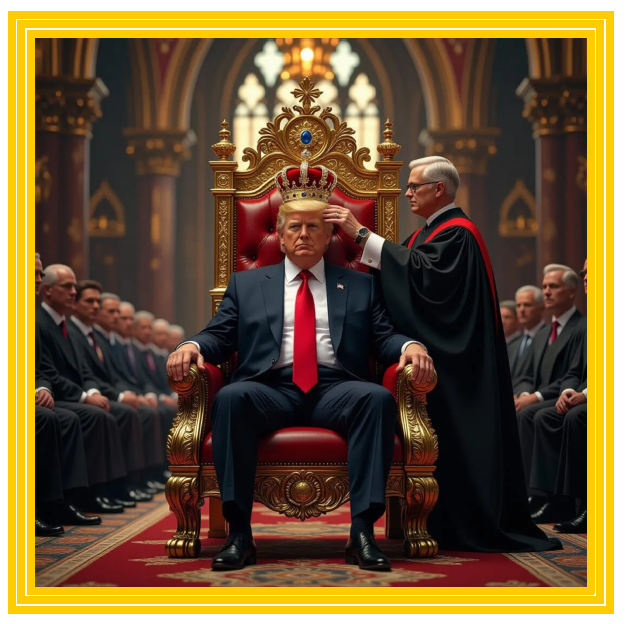
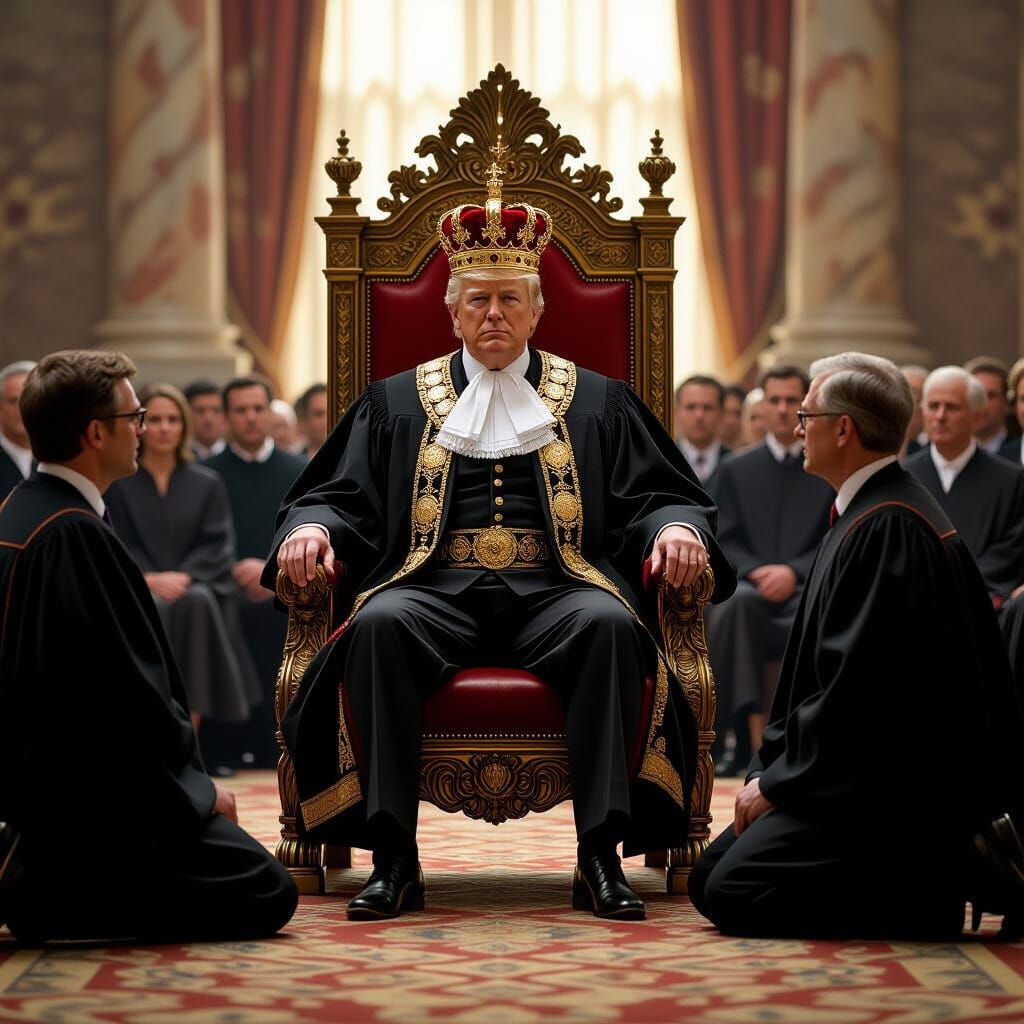
The Social Security train crash

What should this man do?


A MAN AND A TRAIN ARE ON THE SAME 2 TRACKS. THE TRAIN IS ABOUT TO HIT THE MAN

A normal person might say that the man should simply get off the track. But sometimes, politicians, economists, and media writers are not normal people.

They sometimes eschew normal solutions to problems and present complex, non-solutions. A politician probably would say, “It’s too late for the man. We could raise his taxes to cover the cost of installing brakes on the train, or we could stop service altogether. Walking will do people good.”

Consider Social Security and the federal government. Social Security is running short of dollars. The government has infinite dollars.

Fed Chairman, Alan Greenspan: “A government cannot become insolvent with respect to obligations in its own currency. There is nothing to prevent the federal government from creating as much money as it wants and paying it to somebody. The United States can pay any debt it has because we can always print the money to do that.

Fed Chairman, Ben Bernanke: The U.S. government has a technology, called a printing press (or, today, its electronic equivalent), that allows it to produce as many U.S. dollars as it wishes at essentially no cost.” It’s not tax money… We simply use the computer to mark up the size of the account.

Fed Chairman, Jerome Powell stated, “As a central bank, we have the ability to create money digitally.

Secretary of the Treasury, Paul O’Neill: “I come to you as a managing trustee of Social Security. Today we have no assets in the trust fund. We have promises of the good faith and credit of the United States government that benefits will flow.”

Paul Krugman (Nobel Prize–winning economist): “The U.S. government is not like a household. It literally prints money, and it can’t run out.” 

Given that Social Security is facing funding issues and the federal government has the ability to create unlimited money, one might suggest that the government should simply fund Social Security.

Ah, but no. That is not the way of our information leaders, as the following article will attest:

Social Security: Insolvency date keeps getting closer

By The Week US

A new report has projected that Social Security funds could be depleted by 2033

Time is running out to avert a Social Security cataclysm, said William A. Galston in The Wall Street Journal. The program’s trustees warned in a recent report that the Social Security trust fund “will be exhausted in the first quarter of 2033″—nine months earlier than they predicted a year ago—at which point benefits will be cut by 26%.

Is Mr. Galston a “normal person”? Does he suggest that the entire “cataclysm” would disappear if the federal government simply funded Social Security? No.

A few factors explain why the coffers are being drained:

How much money is in the federal government’s “coffers”? Actually, it doesn’t have coffers. It creates dollars, on demand, by paying creditors. The process is quite straightforward:

  1. Congress and the President pass a law, funding a project
  2. The chosen agency of the federal government writes checks to suppliers
  3. The Federal Reserve clears the checks based on the law passed by Congress and the President.
  4. Dollars appear in the checking accounts of creditors.

Where did those dollars come from? Thin air, the same place the very first dollars came from in the 1780s. Congress votes. The President approves. Numbers appear in the government’s books. Those numbers are money. That is all money is: Numbers in the government’s books.

There is no physical money — just numbers. Even dollar bills are not money, They just represent the dollars on the government’s books. And the government controls its books.

The over-65 population has nearly doubled since 2000, beneficiaries are living longer, and declining fertility rates mean there are fewer workers to support each beneficiary.

It widely, and falsely, is believed that the FICA extracted from your paycheck funds Social Security. It doesn’t. Even if the government didn’t collect a single penny in FICA taxes, it could continue funding Social Security (and Medicare) forever.

The old saw about “fewer workers to support each beneficiary” is wrong, wrong, wrong. Even if there were no workers, the government could fund Social Security — yes, again — forever.

We’ve known about these trends for decades and could have enacted reforms gradually. Now it’s too late. If lawmakers acted today, “restoring Social Security’s long-term solvency would require a 22% benefit cut for current and future beneficiaries,” or an increase in payroll tax to 16%, from the current 12%.

You have just read an example of the Big Lie in economics: That benefit cuts or tax increases are necessary to “save” Social Security. Three lies in one paragraph:

  1. The “Now it’s too late” lie. Congress and the President could provide the funds to save Social Security this afternoon.
  2. The “benefit cut” lie. The government could triple benefits and still maintain Social Security’s solvency.
  3. The “tax increase” lie. The government could eliminate FICA, and Social Security could continue to be solvent.
But lawmakers won’t act today. President Trump “has repeatedly ruled out cuts to Social Security,” and Democrats didn’t do anything when they were in power. At some point, politicians will have to “level with the American people about the hard choices that lie ahead.”

Yes, at some point, politicians will have to “level with the American people” about the vast sums of money the government could, if it wished, allocate to Social Security and Medicare.

“If endless borrowing were no cause for concern,” the fix would be easy, said Bloomberg in an editorial. Congress could just change the rules that say Social Security can’t borrow money to pay out benefits and carry on.

But with the national debt sitting at $36 trillion and rising fast, that’s not possible.

The government does not borrow dollars. Why would it. It can create all the dollars it needs, simply by pressing a computer key. Who says so? Well, for one:

The St. Louis Fed: “As the sole manufacturer of dollars, whose debt is denominated in dollars, the U.S. government can never become insolvent, i.e., unable to pay its bills. In this sense, the government is not dependent on credit markets to remain operational.

The federal government is not financially constrained and does not need to ‘fund’ its spending.”

Not being dependent on credit markets means the government doesn’t borrow.

The writer almost admits the truth: “Congress could just change the rules that say Social Security can’t borrow money to pay out benefits.

Get it? Congress always can “just change the rules.”  Congress could fund Social Security the same way it funds the army, the navy, the marines, the air force, the space force, the SCOTUS, the White House, and Congress itself, along with almost every other federal agency: By voting for the money.

So why doesn’t Congress do that? We’ll explain shortly.

So we have to consider the other available options, said David Von Drehle in The Washington Post. One is to raise more revenue, possibly by making the wealthy pay more. “Another choice is to further raise the age of full eligibility,” which has already gone from 65 to nearly 67 for those born in 1960 or later.

Or we could “increase the number of workers paying into the system.” But President Trump’s immigration crackdown means the opposite is happening.

We already have discussed these so-called “solutions” and why they neither are necessary nor advisable. And now we get to what Congress would really love to do.

There’s one more idea on the table, said Allison Schrager in Bloomberg. Sens. Bill Cassidy (R-La.) and Tim Kaine (D-Va.) have proposed creating “a separate fund for Social Security” that could invest in “stocks and other investments,” not only Treasurys, as the current trust fund is required to do.

Oh, how the political donors would love to get their greedy hands on your retirement money. Remember the 2008 recession caused by banks selling fake investment products to a naive public? Yes, those are the crooks who thing Social Security should be privatized.

The senators estimate that savvy investing would be enough to fill the fund’s coffers. And maybe they’re right: “In hindsight, the program would not be facing a shortfall” if it had jumped into stocks two decades ago. “

But investing is always easy in hindsight.” There’s no guarantee the market will replicate the outsize returns of the past 20 years.

And with Social Security so near to insolvency, some tax hikes and benefit cuts are likely inevitable even with a shift to stocks. “The first rule of investing, after all, is that there is no such thing as a free lunch.”

Yes, it’s all part of the Big Lie, easily seen if one has the sense to look.

So if it’s so obvious that all solvency problems would end if the federal government merely funded Social Security, why hasn’t it been done? And the answer is: The rich donors don’t want a solution.

Here’s why.

1. “Rich” is a comparative.

2. Being rich doesn’t just mean one owns a great deal of wealth. It means one owns a great deal more wealth than others.

3. Becoming richer requires widening the income/wealth/power Gap

4. The Gap can be widened by obtaining more for oneself or by forcing others to have less.

5. The rich use their financial power to widen the income/wealth/power Gap below them.

6. The rich discourage benefit-narrowing benefits to those who are poorer

7. They do this by bribing thought leaders to promulgate economic lies.

a. They bribe the media via ownership and advertising dollars.

b. They bribe the economists via school endowments and lucrative jobs in think tanks.

c. They bribe the politicians via campaign contributions and company employment

8. Among the economic lies the rich promulgate are:

a. The federal deficit and debt are too high. Economically, they are too low.)

b. Social Security is funded by FICA (All federal spending is funded by money creation, not taxes)

c. To prevent SS insolvency (and Medicare insolvency, too), FICA must be increased or

d. Benefits must be reduced.

e. The government cannot afford to pay for Social Security (The government can afford anything.)

f. The poor are naturally lazy, and benefits encourage them not to work (On average, the poor work harder than the rich)

g. It isn’t fair for the poor to receive money for not working. (It’s fairer than the current Gap)

h. Federal spending is inflationary (Inflations are caused by shortages, never by spending, which can cure shortages)

You are being conned into believing Social Security (and Medicare) are facing intractable financial problems that only can be cured by giving recipients less and/or taxing them more (or by allowing the rich to handle the money and profit from it).

I cannot say whether William A. Galston and the Wall Street Journal editors are ignorant of the facts or are outright lying. I suspect that, given all the informational resources at their command, they are not ignorant.

The fact that a very rich man, Rupert Murdoch, owns the WSJ, provides one clue.

In the following months, you will continue to hear versions of the Big Lie drummed into your head, again, again, again, in the hopes that repetition alone will make you accept it and not protest at what is being taken from you.

Your best hope is to contact your Senators and Representatives repeatedly, letting them know you’re on to them and will hold them accountable in the coming elections. Do the same with any medium that tells the Lie.

Fight hard enough and maybe, just maybe, we won’t have to keep reading headlines like this:

Trump slashed Medicaid — now he’s got another health care crisis looming

There goes Obamacare.

Rodger Malcolm Mitchell

Monetary Sovereignty

Twitter: @rodgermitchell

Search #monetarysovereignty

Facebook: Rodger Malcolm Mitchell;

MUCK RACK: https://muckrack.com/rodger-malcolm-mitchell;

https://www.academia.edu/

……………………………………………………………………..

A Government’s Sole Purpose is to Improve and Protect The People’s Lives.

MONETARY SOVEREIGNTY

The Atlantic gets it wrong, again.

The Atlantic gets it wrong, again.

Let’s say I have a mangrove tree. That tree loves salt water, so every day I pour a bucket of salt water on my tree, and it thrives.

Man holding 2 buckets. He stands in the ocean, Close-up portrait, color portrait, Linkedin profile picture, professional...
I am a typical economist. Here is my problem. Last year, I needed only one bucket of water. This year, I need two buckets of water. I’m having trouble figuring out where I’ll get the water.

One day, I decided to buy another mangrove tree. Now I’ll need two buckets of salt water. Is that a problem for me?

No, because the mangrove trees on my property are near the Atlantic Ocean. Although my usage of salt water has increased by 100%, my infinite supply ensures I always will have enough. I just keep getting water from the ocean.

This example illustrates the U.S. federal government’s capacity to create an unlimited number of dollars. In fact, it can produce more dollars than there are molecules of water in all the oceans of the world.

The federal government never can run short of dollars. It invented the first dollars by simply passing laws. It continues to create dollars by passing more laws.

So long as there is no limit to the federal government’s ability to pass laws, it always will be able to pay any dollar-related bill.

Given these facts, why would a renowned publication like The Atlantic publish an article like this?

The Debt Is About to Matter Again

When interest rates outpace growth, very bad things can happen.

By Rogé Karma

In 2019, Lawrence Summers and Jason Furman, two of America’s most influential economists, published an essay titled “Who’s Afraid of Budget Deficits?

In it, they argued that Washington’s long-standing worries about the national debt had been overblown. Other prominent experts, including the former head economist of the International Monetary Fund, an institution known for imposing harsh fiscal austerity on developing countries, came to similar conclusions.

The reason: Deficit hawks had been fixated on the wrong number.

So far, so good. “Washington’s long-standing worries about the national debt had been overblown. ” Sadly, from here on it’s all downhill.
A man is standing next to a gigantic, towering pile of dollars intricate details, HDR, beautifully shot, hyperrealistic,...
I am a typical economist. Last year, I spent one dollar from this pile. This year I will spend two dollars from this pile. Where will I get the two dollars? I guess I’ll have to borrow them, but how will I pay the interest?

The debt, according to these economists, still mattered.

But whether it would become a serious problem, they observed, depended not on how big and scary the number was (about $28 trillion at the time, and today closer to $36 trillion), but instead on a simple formula involving the variables r and g.

As long as a country’s economic growth rate (g) is higher than the interest rate (r) it pays on its national debt, then the cost of servicing that debt will remain stable, allowing the government to roll it over indefinitely without much worry.

Here, the economists, make the mistaken assumptions that the U.S. borrows dollars and needs to borrow dollars.

Alan Greenspan: “A government cannot become insolvent with respect to obligations in its own currency. There is nothing to prevent the federal government from creating as much money as it wants and paying it to somebody. The United States can pay any debt it has because we can always print the money to do that.”

Think about it. Why would a country, that has the infinite ability to create dollars, simply by passing a law and pressing a computer key, ever need to borrow those dollars. It makes no sense whatsoever.

Even the St. Louis Federal Reserve agrees, when a representativ said:

“As the sole manufacturer of dollars, whose debt is denominated in dollars, the U.S. government can never become insolvent, i.e., unable to pay its bills. In this sense, the government is not dependent on credit markets to remain operational.”

Do you see that phrase, “not dependent of credit markets“? In plain English, it means, “We don’t borrow” what we can create at the touch of a computer key.

Given that interest rates had been close to zero for a decade, Furman and Summers concluded that the “economics of deficits have changed” and called on Washington to “put away its debt obsession and focus on bigger things.”

No, the economics never changed. The understanding changed. We always had the unlimited ability to create dollars. We only invented a self-inflicted pair of handcuffs with the various gold and silver standards we imposed on ourselves through the years.

We decided, for no good reason, that we wouldn’t spend more than our taxes plus the then current value of gold and silver we had in vaults. Thankfully, in the greatest act of his administration, President Nixon unlocked the handcuffs, and in doing so, unlock the greatest economic expansion of our history.

But what was true then is true no longer. The combination of Donald Trump’s growth-inhibiting tariff crusade and the GOP’s deficit-exploding tax bill is likely to push the relationship between r and g into extremely dangerous territory.

The relationship between GDP growth and interest rate growth is meaningless. GDP growth, by formula, requires federal deficit spending.

GDP=Federal Spending + Non-federal Spending + Net Exports.

It mathematically is not possible for GDP to grow without additional money coming into the economy, and one of the most important sources of money is federal deficit spending.

Federal deficits not only are part of the first term (Federal Spending) but they are part of the  second term (Non-federal Spending.) Deficits add dollar to the private sector whose spending is reflected in “Non-federal Spending.

As for interest rates, those are controlled by the Fed, not to attract lenders, but to (mistakenly) control inflation. The U.S. does not need lenders. Those Treasury Securities are not loans. Their purpose is not to provide dollars to the U.S. government. Their purposes are:

  1. To control the economy by taxing what the government wishes to discourage, and by giving tax breaks to  what the government wishes to reward, and
  2. To assure demand for the U.S  dollar by requiring tax be paid in dollars.

Further, the government has the infinite ability to pay bills, and the more bills it pays, the more growth dollars enter the economy.

People believe Treasury securities are loans because of the names: T-bills, T-bonds, T-notes, which in the private sector, refer to loans. The meaning is quite different when referring to the federal sector.

Look at that dollar BILL in your wallet. It says, “Federal Reserve NOTE.” It’s goverment created MONEY.  A T-bill, T-note, T-note, T=bond, dollar bill, and Federal reserve note all are government created money.

Do you ever hear that there are too many dollar bills? No, you don’t. But mistakenly you hear there are too many T-bills.

The people who criticize the federal “debt” unknowingly are criticizing .the amount of money the government has created. In short, they are criticizing GDP growth, and don’t realize it.

“In a short amount of time, the fiscal picture has gone from comfortably in the green-light region to the red-light region,” Summers recently told me. In other words, now would be a very good time for Washington to bring back its debt obsession.

Translation: Summers is  saying, the federal government should add fewer growth dollars to GDP. Really??

The “debt doesn’t matter” consensus had a strong start. During the coronavirus pandemic, Congress spent trillions of dollars to keep the economy on life support without worrying about paying for it.

The U.S. debt load reached new heights, but interest rates continued to fall. No bond vigilantes or debt spirals were to be seen.

It fell because the Fed lowered it. The so-called debt “load” does not cause interest rates to rise. The pandemic proved it. Interest rates arbitrarily determined by the Fed in a mistaken effort to control inflation.

We say “mistaken effort” because raising interest rates increases business costs, which are passed on to consumers in the form of higher prices.

In the years to follow, however, the Fed raised interest rates dramatically in an effort to tame inflation.

It didn’t work, because inflation is not caused by interest rates being too low. Inflation is cause by shortage of key goods and services, notably oil and food.

To cure inflation, the government must spend more, not less, to cure the shortages.

As a result, government payments on debt interest soared to $881 billion in 2024, more than the United States spent on either Medicaid or national defense. The same economists who had helped usher in the new debt consensus, including Summers and Furman, began warning that America’s fiscal picture had become concerning.

What were they concerned about? The government has infinite dollars, and inflation is the result of shortages — and these a cured with additional government spending to support farmers, the oil industry, and other areas of scarcity.

Even so, the situation was far from a crisis. A post-pandemic economic boom had kept the relationship between g and r on a stable trajectory, and in the fall of 2024, with inflation waning, the Fed began to lower interest rates.

The post pandemic boom was the result of federal spending, not any mythical relationship between GDP and interest rates.

Then Donald Trump took office and threw the world economy into chaos.

The interest rate on government debt is ultimately determined by investors’ confidence that the U.S. will eventually pay it back. (When fewer people want to buy your debt because they view it as excessively risky, you have to offer a higher return.)

This is nonsensical because:

  1. The Fed arbitrarily determines interest rates
  2. The government doesn’t need to offer Treasury securities. It could pay all its obligation forever, without offering even one T-bill.
  3. It is not a burden on the government to pay more interest, which it can do by pressing computer keys.

So what is the problem?

The mere possibility of a global trade war and a huge, unpaid-for tax cut has shaken that confidence.

The government “pays for” tax cuts (i.e. runs bigger deficits) merely by creating dollars, which it can do endlessly — and yes, without inflation.

Last week, Moody’s, one of the world’s major credit agencies, downgraded America’s credit rating from its premium Triple-A status, causing interest rates on long-term government bonds to rise to near their highest point in two decades (above even the “yippy” level that prompted Trump to recall his “Liberation Day” tariffs).

A credit rating describes a creditor’s willingness and ability to pay its bills. The government has the infinite ability to pay any bills. As for the willingness, the ridiculous “debt ceiling” casts doubt on that.

It is the debt ceiling and the useless Republican Congress’s fealty to Trump that causes a downgrade of America’s credit  rating, not interest rates.

Rates surged again yesterday morning, when House Republicans narrowly passed a version of their tax bill that would add more than $3 trillion to the deficit over the next decade. If Trump signs that bill into law while expanding his global trade war, then investors may choose to dump their U.S. Treasury holdings en masse, causing interest rates to spike even higher.

So creditors would “dump” T-securities, which are  paying higher rates than before?  Would you rather hold a government security paying 3% or one paying 4%? Let’s get real.

And if creditors did dump Treasuries, how would that affect the goverment? Not even a little. The Treasuries are just insurance for dollar holders; they don’t provide the government with spending money.

“For years, we lived in a world where there was basically zero risk premium on U.S. debt,” Jared Bernstein, the former head of Joe Biden’s Council of Economic Advisers, told me. “In four short months, Team Trump has squandered that advantage.”

The “risk premium” has to do with Trump’s lack of sense, not with debt or deficits.

Rising interest rates might not be such a big issue if Trump’s policies were simultaneously supercharging America’s economic growth, so that g stayed ahead of r.

Instead, almost every credible growth forecast this year has fallen significantly in response to those policies. With Trump proposing new tariffs seemingly at random—including, just this morning, a 50 percent tariff on the European Union and a 25 percent tariff on all imported Apple products—businesses face paralyzing levels of uncertainty, a fact will likely drag down growth even further.

In normal times, the Federal Reserve could step in and mitigate both of these problems by cutting interest rates to boost growth or buying up Treasuries to quell financial-market panic.

That is highly unlikely, however, when the central bank is also worried about the possibility that the tax bill and Trump’s tariffs could set off an inflationary spiral.

If there is inflation it will not be because of tax reduction. It will be because of higher tariff costs and shortages and uncertainty. 
This confluence of rising interest rates and slowing growth is the exact set of circumstances capable of turning America’s national debt into a genuine crisis.

When r remains higher than g for a sustained period of time, a vicious cycle emerges.

Rising debt-servicing costs force the government to borrow more money to make its payments; investors, in turn, demand even higher interest rates, which pushes debt-servicing costs even higher, and so on.

WRONG!

The government never borrows, and inflation is caused by shortages.

In the best-case scenario, this process unfolds gradually, and the consequences are painful but not catastrophic.

And here comes the paragraph that demonstrates the author and his sources are using non-monetarily sovereign beliefs to evaluate Monetarily Sovereign facts. It’s like analyzing science by using religious beliefs.

As more and more of the government budget is diverted to finance ever-growing debt-servicing costs, less room will be left to fund key social programs and productive investments; higher interest rates will mean less business investment and slower growth; and the government will be less capable of responding to a future economic crisis that requires heavy spending.

The above paragraph is so wrong, one scarcely knows where to begin.

  1. “. . . more of the government budget is diverted . . . The money in the budget is not “diverted.” The dollars scheduled for “key social programs” still can be used for those programs. New dollars can be used to finance interest payments.
  2. “Less room will be left to fund . . .” The federal government cannot run short of dollars. There is infinite room left.
  3. Higher interest rates will mean less business investment and slower growth. . .” Businesses investment is based on prospective return. We can find no data showing high interest rates reduce business investment. Growth is based on federal spending.
  4. “. . . the government will be less capable of responding to a future economic crisis . . . “ The federal government always is 100% capable of responding to any economic crisis that requires heavy spending.

Look at the following graph and decide for yourself whether higher interest rates (red) caused slower growth (blue).

Increasing interest rates (red) correspond to increasing GDP growth (blue).

And what about inflation? Does increased federal deficit spending result in inflation?

There seems to be no statistical relationship between federal deficit spending (red) and inflation (blue).
 
There is a close statistical relationship between oil prices (green), which reflect oil supplies, and inflation.

The above two graphs demonstrate that federal deficit spending and debt do not correlate with inflation, while supply and shortages of oil do correlate with inflation. In short, inflation is supply-based, not demand-based.

If, however, the debt snowball were to gather momentum quickly, the damage could be far worse.

Investors might conclude that U.S. debt is no longer a safe investment, causing the equivalent of a bank run on the Treasury market as investors rush to sell their bonds for cash.

The above two sentences demonstrate abject ignorance of U.S. Monetary Sovereignty. A “bank run” is a problem only because a bank does not have an infinite supply of money. It can run out of money to pay depositors. The U.S. Treasury cannot run out of money.

Further, as the St. Louis Fed said, “The government is not dependent on credit markets. Investors “rushing to sell their bonds for cash (U.S. dollars aka Federal Reserve Notes?) would have no effect on the government’s ability to pay its obligation.

Once that kind of psychological panic sets in, anything can happen. “This scenario is more serious than 2008,” Adam Tooze, an economic historian who wrote the definitive history of the financial crisis that triggered the Great Recession, argued recently on his Substack.

“At some point, everything just goes parabolic,” Mark Zandi, the chief economist at Moody’s Analytics, told me. “That’s when parts of the financial system might start to break.”

The Great Recession of 2008 was caused by the collapse of the U.S. housing bubble, which exposed high-risk lending, poor regulation, and dangerous financial products like sub-prime mortgages,  mortgage-backed securities (MBS), collateralized debt obligations (CDOs).

It had absolutely nothing to do with U.S. Treasuries. Using that recession as an example of federal debt is deceptive.

On April 9, Trump’s Liberation Day tariffs went into effect and the American bond market nearly melted down, stabilizing only after Trump paused most of the tariffs.

“The phrase ‘nearly melted down’ is a significant exaggeration.” Investors began selling both stocks and Treasuries simultaneously, interpreting Treasury debt no longer as a risk-off refuge.

And that is exactly what is supposed to happen as a circuit breaker for unsound policies. Did it affect the federal government’s ability to pay its bills? Absolutely not.

The author illustrates that high federal debt is a problem by using an irrelevant example. It’s akin to discussing dangerous driving by referencing a plane crash.

If something similar happened again—say, in response to the final passage of the Republican tax bill—averting a sustained panic might not be so easy.

The U.S. would be left with terrible choices: Impose painful austerity measures to reassure the market, default on the debt (which would likely trigger a severe, possibly global economic crisis), or print money to pay it off (which would trigger rampant inflation).

As we now know, none of that happened. The author set his hair on fire, screaming “disaster,” and all is quiet. Not to say that the Republican tax bill won’t hurt the economy. It will.

But it does not require austerity. It does not require default. And if we have “rampant inflation, ” it will come as a result of Trump’s nonsensical tariffs, not the tax bill.

None of these possibilities appears to concern Trump and his allies in Congress, who are barreling forward with their agenda, warnings be damned. Perhaps they are betting that economists, who for so long predicted debt crises that never materialized, will be wrong one more time. That is a very high-stakes gamble indeed.

Economists often misunderstand federal “debt crises” because federal debt is nothing like personal debt, which is a crucial distinction.

The Atlantic is another in a long line of “debt-is-a-ticking-time-bomb” articles going back to 1940. Here are a few. Somehow, that bomb never seems to explode.

Rodger Malcolm Mitchell

Monetary Sovereignty

Twitter: @rodgermitchell

Search #monetarysovereignty

Facebook: Rodger Malcolm Mitchell;

MUCK RACK: https://muckrack.com/rodger-malcolm-mitchell;

https://www.academia.edu/

……………………………………………………………………..

A Government’s Sole Purpose is to Improve and Protect The People’s Lives.

MONETARY SOVEREIGNTY

No facts wanted. Just give me Trump and Fox

Hello, fellow MAGAs,

I have some great news for us. The economy, under Biden, was doing badly — the monthly increases could not last — but under Trump, it is doing great.

Before I detail the latest great news, let me remind you of the previous great news:

As you already know, Trump’s name is not in any of the Epstein files. Trump really won the 2020 election because it was stolen.

E. Jean Carroll was lying, the Federal Reserve Chairman is a moron, the Wall Street Journal is lying, all the media (except Fox) are lying.  Rupert Murdoch also is lying,

Trump has not politicized the Justice Department, and he doesn’t admire dictators (aside from Putin, Kim, Bolsonaro, Orbán, and maybe a couple of others.)

And as he repeatedly has told you, he did not encourage a mob to overturn an election and overthrow the government, nor did he wait three hours before telling the coup-attempting traitors to go home. It was Nancy Pelosi’s fault.

He pardoned everyone, including those who attacked the police with flagpoles and sprayed them in the eyes, so it’s all good.

We now know that tariffs don’t increase prices or lead to inflation, and if they do, it’s Powell’s fault for not lowering interest rates. And the country is not headed for a recession, which definitely would not be Donald Trump’s fault.

Deporting all those brown people, who were not convicted of crimes because of soft, liberal judges, will help farmers and other industries. The “Big Beautiful” bill supports the poor, Medicaid cuts are not happening, and the GOP will not privatize Social Security for profit.

Selling citizenships is great for America because it gives us more rich white people, and it’s perfectly fine for the President to accept a multi-billion-dollar airplane bribe.

Investing in Trump trading cards and his related merchandise is a wise decision. He needs the money more than you and your family do.

Now, for the latest great news:

Disregard the following fake statistics. The great news is that Trump just fired the person who released them, so you won’t have to worry about bad news. You can bet the next person he hires will not publish any more bad news to trouble you.

The Meaning of a Weak Jobs Report
From Paul Krugman.

Yes, job growth is down, down, down, which is good, because it means those brown-skinned immigrants are not taking the jobs we whites want — like bending over and picking crops in the hot sun without bathroom or water breaks and no healthcare insurance.

OK, it doesn’t really mean that, but if it means something bad, it’s not Trump’s fault. We are looking for the culprit now, and we’ll let you know when we find him.

Some think it might be Bill Clinton, the last President to cut deficits so much that he ran a federal surplus (which led directly to a recession, because surpluses take dollars out of the economy).

Trump will be too smart to cut deficits. Deficits add growth dollars to the economy, and who needs growth? As JFK Jr. will tell you, growth is cancer, and no one wants economic cancer, right?

Anyhow, here is the great news spelled out.

US job growth stalls: Just 73,000 jobs added in July, with ‘stunning’ downward revisions to recent months Story by Alicia Wallace, CNN • The US job market slowed sharply in July and was substantially weaker than first estimated for prior months, suggesting President Donald Trump’s trade policy may be stifling hiring.

This is great news because it shows that we have deported all those brown-skinned workers and left the economy to us white people, who wake up in the morning saying, “I really would like to have a menial job for low pay and no benefits.”

Further, all they did was buy stuff, which helped American businesses, but didn’t leave enough stuff for us whites to buy.

The US economy added just 73,000 jobs last month, and the monthly totals for May and June were revised down by a combined 258,000 jobs.

The prior two months’ revisions were “stunning,” said Diane Swonk, chief economist at KPMG, in an interview with CNN.

May’s estimated 144,000 net gain was revised down by 125,000 to 19,000; and June’s preliminary tally of 147,000 was slashed by 133,000 to 14,000, according to data released Friday from the Bureau of Labor Statistics.

“It’s stalling out right now,” Swonk said of the labor market.
None of this is Trump’s fault. Fortunately:

On Friday, President Trump accused Erika McEntarfer, the head of the Bureau of Labor Statistics (BLS), of falsifying job numbers. He instructed his team to dismiss the former appointee of President Biden.

Now that we have removed her, we can expect to see much better numbers in the future. In fact, we never again will have bad economic numbers. Lesson learned.

With those monumental, quarter-million-job downward revisions, the meager job gains in June were the weakest since December 2020, the last time the labor market had monthly job losses.

The pace of job creation seen so far this year is the weakest in decades, outside of recessions.

By strange coincidence, the same thing happened at the end of Donald Trump’s first presidency, which demonstrates his admirable consistency.

“This is absolutely the worst major economic report since the end of the pandemic era,” Joe Brusuelas, chief economist at RSM US, told CNN.
Not Trump’s fault. Not Trump’s fault.  Not Trump’s fault. I heard that on Fox News.
The Dow opened lower, falling by more than 600 points, or 1.3%, by mid-morning. The broader S&P 500 fell 1.4% and the tech-heavy Nasdaq Composite slipped 1.8%. Traders now expect an 85% chance of a rate cut from the Federal Reserve in September, up from a 38% chance on Thursday, according to the CME FedWatch Tool.

Tariffs are ‘paralyzing’ employers High uncertainty over Trump’s economic policies — specifically a volatile trade policy and shifting tariff rates — have been blamed for putting a stranglehold on employers’ growth plans.

“Tariffs and uncertainty are paralyzing employers,” Gregory Daco, chief economist at EY-Parthenon, told CNN in an interview.

Some people say that the daily changes in tariff policy make business planning impossible. Apparently, cowardly businesses won’t invest money when they don’t know what to expect.

But the good news is that this also paralyzes foreign businesses. It’s all part of Trump’s secret plan to punish everyone who displeases him. Clever.

Economists were expecting the report to show a slowdown in job growth, reflecting the weak pace of hiring across the vast majority of industries. Forecasts called for a gain of 115,000 jobs in July and the unemployment rate to rise to 4.2%.

However, economists weren’t expecting the past three months to be this frail.

This (jobs report) is really bad because you can see the impact of trade and immigration policy hurting demand for hiring,” Brusuelas said.

He noted that goods-producing industries lost 13,000 jobs, with 11,000 of those losses coming in manufacturing and construction posting weak gains of 2,000 jobs.

This is really great news, because the level is so low, it can’t do anything but go up — eventually– and when it does, it will be because of Trump’s great policies — the greatest in the history of the world.

(If it goes down, it will be Nancy Pelosi’s fault. Or the next head of the Bureau of Labor Statistics will be fired until we get someone who will give us good statistics.)

“These trends reflect the ripple effects of trade and immigration policies impacting labor supply, especially where migrant workers are key,” he added.1984 by George Orwell | Goodreads

In recent months, despite the labor market registering solid (but slower) gains, economists were sounding some alarm bells: The all-important labor market churn was grinding to a halt, and a smaller and smaller subset of industries was responsible for the job gains.

That lack of breadth was wildly apparent in July: Health care and social assistance, which added 73,300 jobs, accounted for the entirety of the month’s overall gains.

“There was a three-legged stool holding up the labor market; we had state and local, leisure and hospitality, and health care and social assistance,” Swonk said. “And now we’re down to one.”

“A one-legged stool is dangerous,” she added.

The danger soon will end. Trump is cutting healthcare (with assistance from Kennedy, Jr.), so expect job losses there, too.

That will give us a zero-legged stool, which is much safer than a one-legged stool.

Leisure and hospitality, which typically sees a summertime boom, added a meager 5,000 jobs in July. June’s gains were revised down to 4,000, BLS data shows.

“That’s almost within the margin of error,” Swonk said. “That reflects a slowdown in domestic travel and tourism.”

Some people might argue that few people are inclined to vacation in a police state, where non-citizens (and even some citizens) can be snatched off the streets and held without trial before being sent to harsh places like Aligator Auschwitz.

But who needs those fearful individuals anyway? Right?

State and local government posted a meek 2,000-job net gain in July. And June’s initially reported 80,000-job gain — which economists warned was likely an “artificial” increase that resulted from seasonal adjustments — was revised down to 20,000 jobs.

And as for that labor market churn (or lack there of), Friday’s jobs report showed that the average duration of unemployment rose to 24.1 weeks (north of six months), the lengthiest average span in more than three years.

Why is the jobs data revised? The US labor force is shrinking. It’s done so for three months in a row now, and in July, the unemployment rate rose as a result.

That’s great news because we are deporting all these brown-skinned rapists and criminals — millions of rapists, most of whom are women and children — who are poisoning the blood of real, white Christian Americans.

And now come the BLS excuses:

When the market-moving jobs report is released, that initial estimate is often based on incomplete data and thus will be revised twice further in the two jobs reports that follow as the BLS receives more complete information from businesses.

But then it’s eventually revised even further: The bigger, annual revision (which takes place each February jobs report) will come into focus starting next month when the preliminary annual benchmarking estimates are released.

If it’s so preliminary, why couldn’t they produce better data that would show how Trump is really helping the nation? Answer that, libs!

Clearly, Erika McEntarfer deserved to be fired for telling the so-called “truth,” when she easily could have found the real truth on Fox or by listening to Karoline Leavitt.

Warning signs flashing Keeping the above context in mind, there were several potential warning signs in the July jobs report:

Black unemploymentin America hit 7.2%, its highest level since October 2021.

A rise in the Black unemployment rate almost always precedes the rise in the general population unemployment rate. That’s because a higher percentage of Black Americans than Americans of other races are in temporary jobs or lower-income jobs that tend to be the first that employers cut when they grow concerned about the economy.

As you well know, blacks and browns can hardly wait to be unemployed so they can receive those lucrative unemployment benefits, which are known for making lazy people rich.

Be assured, Trump will cut those, along with Medicaid cuts, to reduce the federal deficit.

The labor force shrank for the third month in a row, which is the first time since 2011, according to Appcast economist Sam Kuhn. And the labor force participation rate fell to 62.2%, the lowest since November 2022.

The fall could be caused in part by stepped-up immigration enforcement; however, other factors such as an aging workforce, highly discouraged workers, and “simply mismeasurement” from lower response rates to the household survey could be factoring in to that equation, said Preston Caldwell, Morningstar’s chief economist.

The foreign-born labor force has declined in recent months. 

Economists warn that a shrinking labor force and fewer foreign-born workers could put upward pressure on wages (and inflation), and result in hiring challenges for key industries and negative supply chain impacts as a result.

Oh, sure. Now they’re going to blame Trump for the inflation and recession that will come as a result of his scattershot policies. Don’t worry. He will find someone else to blame. That’s why we elected him.

The 253,000 downward revisions to May and June was the largest since at least 1979 (with the exception of 2020), according to Ernie Tedeschi, director of economics at the Budget Lab at Yale.

The outsized correction is reflective of an extremely volatile economic environment, KPMG’s Swonk said. “The data was meant for historic norms for an economy that typically moves more slowly.”

All told, the July report showed a “weaker underbelly for the US economy,” said Daco.

“This type of very weak job growth momentum is essentially eroding the economy’s buffer against headwinds,” he said. “And and in an environment where the US economy is subject to historic supply shocks, that will essentially expose it to the risk of a recession.

Trump will remove that risk by actually giving us a real recession — maybe even a depression. It will be great not to have to worry about risk and uncertainty anymore.

CNN’s Matt Egan and David Goldman contributed to this report.
So, as we said, it’s all great news. Trump either will change the data or fire anyone who gives us bad news, so you can expect only great news in the future.

By the way, has anyone seen my copy of the book, “1984“? I lent it to one of my dear MAGA friends, and I don’t remember him returning it.

Rodger Malcolm Mitchell

Monetary Sovereignty

Twitter: @rodgermitchell

Search #monetarysovereignty

Facebook: Rodger Malcolm Mitchell;

MUCK RACK: https://muckrack.com/rodger-malcolm-mitchell;

https://www.academia.edu/

……………………………………………………………………..

A Government’s Sole Purpose is to Improve and Protect The People’s Lives.

MONETARY SOVEREIGNTY
Six Truths You May Know That Your Friends Don’t

Here are truths you have learned that your friends do not know, do not understand, and, being unaware of the facts,  will forcefully deny: 1. The U.S. federal government is Monetarily Sovereign.

That means it generated its first revenue by passing laws. It created, from thin air, as many dollars as it wished and gave those dollars whatever value it wanted.

The government arbitrarily valued the first dollar at 371.25 grains of pure silver (approximately 24.1 grams). Later, the government arbitrarily defined the dollar as equal to 24.75 grains of gold (about 1.6 grams).

1834 — Gold Revaluation: Congress arbitrarily redefined the gold dollar to: $1 = 23.2 grains of gold (~1.5 grams)

1933 — Roosevelt Devaluation, after the Great Depression began, FDR arbitrarily ended gold coin circulation and made private gold ownership illegal (with exceptions). Then, in 1934, via the Gold Reserve Act, the official gold price was arbitrarily redefined to $35 per ounce ($1 = 13.714 grains of gold; ~0.89 grams)

1971 — President Nixon Ends Convertibility. Nixon closed the gold window (foreign redemption suspended). The dollar was no longer exchangeable for gold or any other physical commodity. The dollar was purely numbers on balance sheets.

Due to the government’s ability to generate numbers and control its own balance sheets, it has created an unlimited capacity to produce dollars.

Therefore, the federal government cannot run out of dollars unwillingly; it can create them at its discretion.

Federal Reserve Chairman Alan Greenspan: “A government cannot become insolvent with respect to obligations in its own currency. There is nothing to prevent the federal government from creating as much money as it wants and paying it to somebody. The United States can pay any debt it has because we can always print the money to do that.”

Federal Reserve Chairman Ben Bernanke: “The U.S. government has a technology, called a printing press (or, today, its electronic equivalent), that allows it to produce as many U.S. dollars as it wishes at essentially no cost.  It’s not tax money… We simply use the computer to mark up the size of the account.

Here, Ben Bernanke expresses the basic truth of federal financing, a truth that is denied by most economists, politicians, and the media: FEDERAL TAXPAYERS DO NOT FUND FEDERAL SPENDING.

Too often, you read or hear how someone is “spending taxpayer dollars,” or “wasting taxpayer dollars.” Those statements can be true of monetarily non-sovereign state and local government taxpayer dollars, but they cannot be true of the Monetarily Sovereign federal government taxpayer dollars.

Your federal taxes do not fund anything. They are destroyed upon receipt. The purpose of federal taxes is not to fund spending but to:

  1. Control the economy by taxing what the government wishes to discourage (i.e. “sin” taxes on cigarettes) and giving tax breaks to what the government wishes to encourage (i.e. tax breaks for charity giving, and solar electricity.).
  2. Assure demand for the U.S. dollar by requiring taxes be paid in dollars.
  3. Make the rich wealthier by giving them tax breaks not available to ordinary Americans (Example: Trump paying $0 taxes for 8 out of 10 years), thus widening the Gap between the rich and the rest.

Federal Reserve Chairman Jerome Powell: “As a central bank, we have the ability to create money digitally.”

The St. Louis Federal Reserve: “As the sole manufacturer of dollars, whose debt is denominated in dollars, the U.S. government can never become insolvent, i.e., unable to pay its bills. In this sense, the government is not dependent on credit markets to remain operational.”

Secretary of the Treasury Paul O’Neill: “I come to you as a managing trustee of Social Security. Today we have no assets in the trust fund. We have promises of the good faith and credit of the United States government that benefits will flow.”

Paul Krugman (Nobel Prize–winning economist): “The U.S. government is not like a household.

It literally prints money, and it can’t run out.”

Ask your doubting friends which authority they believe more than three Fed Chairmen, a Treasury Secretary, a Nobel-winning economist, and the St. Louis Fed.

Other Monetarily Sovereign nations include Japan, Canada, Australia and the United Kingdom. They too cannot unintentionally run short of their own sovereign currencies.

The U.S. state, county, and city governments, along with businesses and individuals, are financially non-sovereign. They are simply users of dollars, and can run out of them.

Eurozone countries, such as France, Germany, Portugal, and Italy, do not have monetary sovereignty over the euro. They use it without the ability to create it, which means they can run out of euros.

Monetarily non-sovereign entities can create dollars by lending. When anyone borrows from a bank, the bank does not go into a vault and find dollars. Instead, the bank types this into its ledger:

Customer checking account: +$100,000 Customer loan account: –$100,000

The borrower (customer)  now has a newly created $100,000 to spend.

The bank has an asset (the borrower’s promise to repay with interest) and a liability (the deposit into the checking account). No cash changes hands. No reserves are touched.

Over 90% of U.S. dollars in existence are bank deposits, created by private commercial banks.

2. Gold and silver are not, and never were, dollars.

The U.S. federal government established arbitrary rules regarding the exchange of gold and silver for dollars, which are entirely within its control.

The dollar was never “backed” by gold; it was exchangeable for gold, a system always determined and controlled by the federal government.

The term “fiat” currency is a misnomer. “Fiat” originates from the Latin word meaning “let it be done.” In legal and administrative contexts, it refers to an authoritative order or decree established by a government or authority.

All money fits that definition, including dollars that the government decrees are exchangeable for gold or silver. Thus, all money is fiat.

The U.S. dollar has always been the debt of the federal government. Debt requires collateral. The collateral for federal debt is “full faith and credit.” This may sound nebulous to some, but it actually involves certain, specific, and valuable guarantees, among which are:

A. –The government will accept only U.S. currency in payment of debts to the government

B. –It unfailingly will pay all its dollar debts with U.S. dollars and will not default

C. –It will force all your domestic creditors to accept U.S. dollars if you offer them to satisfy your debt.

D. –It will not require domestic creditors to accept any other money

E. –It will take action to protect the value of the dollar.

F. –It will maintain a market for U.S. currency

G. –It will continue to use U.S. currency and will not change to another currency.

H. –All forms of U.S. currency will be reciprocal, that is five $1 bills always will equal one $5 bill and vice versa.

If you wish to issue your own money, there is no law against it. However, its acceptance would rely on its users’ belief in your full faith and credit.

For example, you could issue “My Greenbacks” and offer to pay your bills with them. If all your creditors agreed to accept “My Greenbacks” as payment, you instantly would become Monetarily Sovereign and have the infinite ability to pay all your bills.

You would not need to borrow or use any other form of income. You never would run short of money. Debt would not be a burden.

3. The U.S. government never borrows dollars. The “national debt” isn’t debt. It’s dollars.

The belief that the federal government borrows is based on a semantic misunderstanding. The government issues Treasury Securities called “T-bills, T-notes, and T-bonds.” These are receipts for deposits into accounts owned by depositors.

The confusion arises from the terms “bills,” “notes,” and “bonds,” which, in the context of the federal government, refer to dollars, whereas in the private sector, they describe debt.

The term “national debt” often evokes the image of a household accumulating credit card debt. However, this comparison is misleading. In reality, what we call the national debt isn’t debt in the traditional sense; it is merely another form of U.S. dollars.

A U.S. dollar is not a physical commodity; rather, it is an entry in the financial records of the federal government. The dollar may be represented by a paper bill, a bank statement, or a Treasury security, and it signifies a legal obligation of the U.S. government.

The only difference is the form and terms of the obligation.

A T-bill is an interest-bearing IOU from the U.S. Treasury that matures at a fixed date. A dollar bill is a non-interest-bearing, zero-maturity IOU from the Federal Reserve. They both are financial obligations of the U.S. government.

A government that can create T-bills can just as easily generate dollar bills.

Yet, the media, and even the government, incorrectly describe T-bills as “debt” and dollar bills as “money.”

Donald Trump boasted that his tariffs would reduce federal debt.” That is identical to saying his tariffs would reduce dollars. And that is precisely what is happening. Tariffs remove dollars from the economy.

Dollars in the economy are being reduced, which is recessionary.

When the public pays the tariffs, dollars in the economy flow to the federal government, where they are destroyed. The federal government does not have a vault where it keeps dollars. It creates new dollars, ad hoc, every time it pays a creditor.

Treasury securities are simply time-bound dollars that pay interest. They are not borrowed dollars; they merely are dollars.

When you invest in a T-bill, one type of government-backed money (a deposit of dollars) is exchanged for another type (a T-bill). This is no different in principle from moving funds from a checking account to a savings certificate.

The term “debt” is applied to Treasury securities by accounting convention. We count the sum of outstanding T-bills, notes, and bonds as “the national debt.” We do not refer to dollar bills, reserve balances, or bank deposits as “national debt.”

Rather than providing the federal government with spending funds, the purposes of T-securities are to:

    1. Provide the private sector with a safe, interest-bearing place to store unused dollars — safer than any private bank.
    2. Provide a mechanism for managing bank reserves and setting interest rates
    3. Provide the federal government with a semantic rationale for claiming that benefits for middle- and lower-income people are “unaffordable” and “unsustainable,” while continuing to give tax breaks to the rich — i.e., widening the income/wealth/power Gap between the rich and the rest, thus making the rich richer.

Paying off Treasury securities involves debiting T-security accounts and crediting bank accounts. The government does not need to “earn” dollars before doing this. It merely changes the form of its liability from T-bills to dollar bills, the reverse of what it did when issuing the T-bill in the first place.

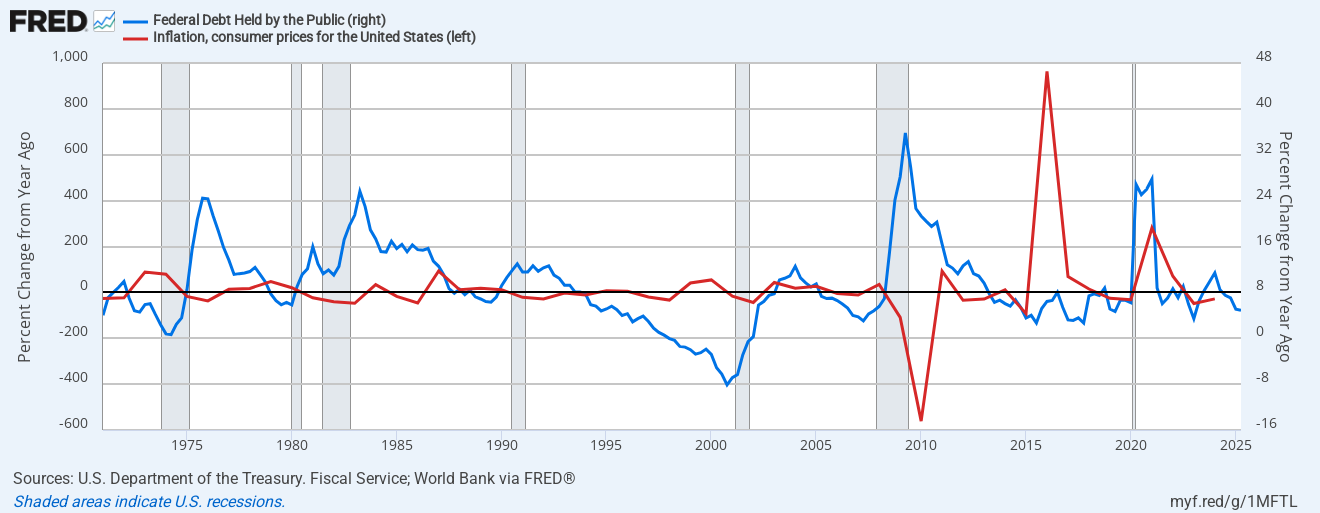
Reducing federal “debt” (red) is the same as reducing the number of dollars in the economy. This leads to reductions in Gross Domestic Product (blue) and causes recessions (vertical gray bars). The recessions are cured by increases in federal “debt” (money).

U.S. depressions come on the heels of federal surpluses.

1804-1812: U. S. Federal Debt reduced 48%. Depression began in 1807.

1817-1821: U. S. Federal Debt reduced 29%. Depression began in 1819.

1823-1836: U. S. Federal Debt reduced 99%. Depression began in 1837.

1852-1857: U. S. Federal Debt reduced 59%. Depression began in 1857.

1867-1873: U. S. Federal Debt reduced 27%. Depression began in 1873.

1880-1893: U. S. Federal Debt reduced 57%. Depression began in 1893.

1920-1930: U. S. Federal Debt reduced 36%. Depression began in 1929.

1997-2001: U. S. Federal Debt reduced 15%. The recession began in 2001.

The reason: Gross Domestic Product, the most common measure of the economy is the total of: Federal Spending + Non-federal Spending + Net Exports.

Decreases in Federal Spending also decrease Non-federal  Spending, and these decreases decrease GDP.

In short, the so-called federal “debt” is a record of how many more dollars the federal government has added to the economy by spending than it has removed by taxing.

Adding dollars to the economy grows the economy. Thus the so-called “debt” demonstrates economic growth. The larger the debt, the greater the growth. Lack of debt growth = recession.

4. Tariffs are sales taxes on buyers.

If your governor or mayor boasted that he/she was going to increase sales taxes so that the government could take in more money, would you consider that good news?

That is no different from the President boasting that he increased tariffs so that the government could take in more money.

Actually, the Presidential boast is worse because states and cities need and spend tax revenue, the federal government doesn’t.

When Donald Trump and his associates claim that the government will receive trillions in tax revenue, they essentially are stating that they will extract trillions from the U.S. economy solely to make the wealthy even richer.

How do increased tariffs benefit the rich? To become wealthier, the rich must widen the income/wealth/Gap below them and narrow the Gap above them.

Those of us who are not rich pay a greater percentage of our incomes on products subject to duties than do the rich. The duties widen the income/wealth/power Gap between the rich and the rest, and it is the Gap that makes them rich.

If there were no Gap, no one would be rich. We all would be the same, and the wider the Gap, the richer they are. Tariffs widen the Gap.

5. The federal government cannot spend tariff dollars.

President Donald Trump said he is considering distributing rebates to U.S. taxpayers because of billions of dollars from tariffs flowing in from foreign imports.

This either is based on his ignorance of federal financing or, more likely, his intentional misrepresentation of how federal finance works.

State and local governments, businesses, and individuals like you and me are all monetarily non-sovereign, meaning we rely on income and borrowed funds. In contrast, our federal government, which is Monetarily Sovereign, does not depend on income or borrowing. Instead, it creates new dollars as needed whenever it pays a creditor.

Your federal tax dollars are destroyed the instant they are received by the Treasury. The process is:

1. You pay your taxes by taking dollars from your checking account. These dollars are taken from the M2 money supply measure. 2. When your dollars reach the Treasury, they cease to be part of any money supply measure. There is no measure of the Treasury’s money supply because the Treasury has access to an infinite amount of dollars.

As a result, your federal tax dollars are effectively removed from circulation, while new dollars are created and sent to creditors.

Once these new dollars reach the banks of the creditors, they are added to the M2 money supply. This is how the federal government generates dollars—by settling its obligations.

In summary, Trump cannot distribute tariff dollars. They disappear immediately. He can, at will, send as many dollars as he wishes to anyone he wishes because the government has infinite dollars available to spend. He could have sent the “rebates” the day he came into office, or today. Waiting for tariff dollars is a meaningless gesture.

Tariff collections do not add to the federal government’s ability to spend. That ability remains infinite, whether or not tariffs are collected.

By contrast, state/local tax dollars are not destroyed. They go into banks where they continue to be part of the M2 money supply. State/local governments do spend the tax dollars and other income they receive.

6. Inflation is supply-based.

The traditional view suggests that inflation occurs due to “too much money chasing too few goods.” However, this outdated explanation misses the more immediate cause of inflation: supply shortages, especially in essential goods like oil, food, and housing.

Inflation always results from an imbalance between demand and supply. But we must ask: what causes that imbalance? Federal spending increases the money supply, which in turn can increase demand for goods and services.

However, demand typically builds gradually and through indirect channels, like increased employment, public contracts, or income supports.

In contrast, supply shocks tend to happen abruptly. Wars, pandemics, droughts, embargoes, and logistical breakdowns can slash the availability of key goods almost overnight.

When essential commodities like oil or wheat are suddenly scarce, prices rise across the board, not because of excessive money, but because of insufficient supply.

Historical Examples of Supply-Driven Inflation

Real-world inflation episodes across the globe support the supply-side view:

1950–1951 Korean War: At the outbreak of the Korean War, prices surged due to panic buying, military buildup, and supply bottlenecks in key materials like steel, rubber, and oil.

1970s U.S. Oil Shocks: The Organization of the Petroleum Exporting Countries (OPEC) imposed oil embargoes in 1973 and 1979, causing significant price increases. Inflation rose, not due to excessive federal spending, but because of the sudden drop in oil supply.

1973–1974 Global Food Crisis: In addition to the 1973 oil shock, the early ’70s saw a global spike in grain prices, partly due to poor harvests, rising meat consumption, and large U.S. grain sales to the Soviet Union.

2005 Hurricane Katrina: Katrina damaged Gulf Coast oil production and refining capacity, leading to a temporary spike in gasoline prices.

2020–2022 COVID-19 Pandemic: Lockdowns disrupted global supply chains, while shipping bottlenecks and factory shutdowns diminished the availability of goods. This was followed by inflation, despite subdued household demand early in the pandemic.

Post-War Europe (1940s–50s): After WWII, devastated infrastructure and displaced populations created widespread scarcity of goods, particularly food and housing, leading to inflation across the continent. Currency reform helped, but the recovery of supply was the key.

Zimbabwe (2000s): Though frequently cited as an example of money printing leading to hyperinflation, the primary cause was the devastation of agricultural output due to land confiscations. This resulted in food shortages and a decline in export revenue, ultimately leading to the collapse of the currency.

Weimar Germany (1920s): Reparations payments and loss of industrial territory after WWI, combined with political unrest and a halt in domestic production, created shortages. Hyperinflation followed only after real output had drastically fallen.

These examples show that supply breakdowns, whether from war, sanctions, pandemics, or policy, are central to inflation crises.

Time Asymmetry: The Hidden Factor

A crucial but underappreciated aspect is time. Demand tends to rise slowly, giving markets and the government time to adjust. But supply can fall sharply and without warning.

The economy does not self-correct at the same pace in both directions, and government reaction can have difficulty keeping up with the shortages.

Federal deficit spending rarely causes direct demand spikes for food or oil. Most government spending enters the economy as a general stimulus, bolstering incomes, investment, and production.

If inflation arises during such periods, it generally coincides with supply constraints, not with runaway consumer demand.

The Mistake of Fighting the Wrong Cause

When policymakers target inflation by suppressing demand, through higher interest rates or spending cuts, they may worsen economic pain without resolving the shortage.

Interest rate hikes do not produce more wheat, oil, or housing. They may instead trigger unemployment or recession. Reductions in federal spending are recessionary.

Understanding that most inflation is driven by supply indicates different solutions: strengthening supply chains, investing in domestic production, stabilizing essential imports, and maintaining strategic reserves. All these measures require increased federal spending rather than a reduction.

Conclusion

Inflation is rarely, if ever, a sign of excessive money supply; rather, it indicates a shortage of goods.

We should stop blaming federal deficits for what are clearly supply-side problems. Better policy begins with better diagnosis, and in today’s world, that means putting shortages at the center of our efforts to prevent and cure inflation.

Rodger Malcolm Mitchell

Monetary Sovereignty

Twitter: @rodgermitchell

Search #monetarysovereignty

Facebook: Rodger Malcolm Mitchell;

MUCK RACK: https://muckrack.com/rodger-malcolm-mitchell;

https://www.academia.edu/

……………………………………………………………………..

A Government’s Sole Purpose is to Improve and Protect The People’s Lives.

MONETARY SOVEREIGNTY