Finally, you can be proud that America has had enough of Trump’s right-wing craziness, bigotry, and cruelty in savagely rounding up anddeporting good men, women, and children.
Finally, people have begun to ask, “Why are we doing this? The immigrants harm no one, and as consumers,savagethey help the economy. They do jobs others refuse. They pay taxes for services they don’t even receive.”
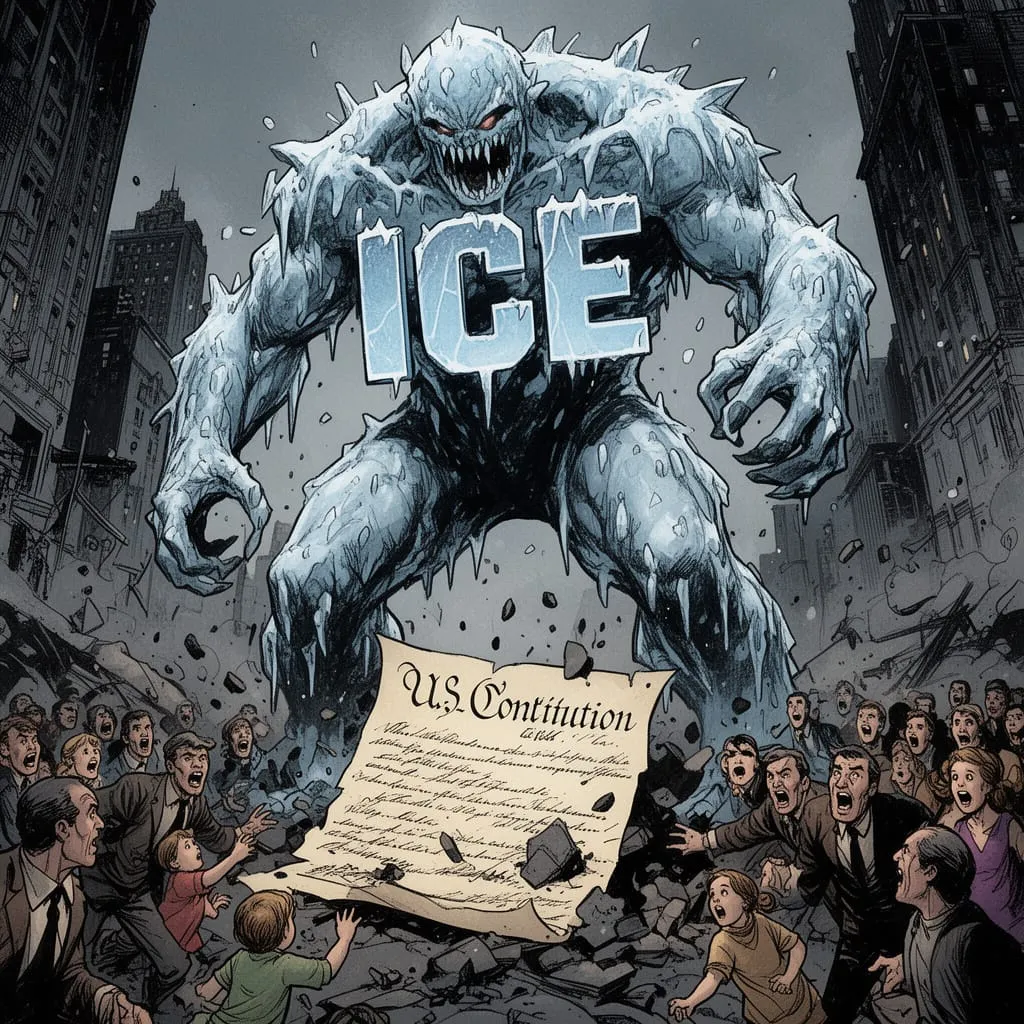
Trump’s Gestapo rampages against harmless people and the Constitution, while Trump pardons Proud Boys and the other traitors who attempted a violent coup on Jan 6.
Enough is enough. Just as we fought King George and his cruel excesses, Americans are fighting back against wannabe king Trump and his insane hatreds.
Demonstrations defy ICE, cold
Protesters arrested at Minnesota airport during general strike By Giovanna Dell’Orto and Sarah Raza Associated Press
Excerpts- 1/24/2026
MINNEAPOLIS — Police arrested anti-immigration enforcement demonstrators at Minnesota’s largest airport Friday after they overstepped their permit, officials said, as a mass mobilization to protest the Trump administratio’s crackdown began across Minnesota despite Arctic temperatures seizing the state.
A network of labor unions, progressive organizations and clergy had urged Minnesotans to stay away from work, school, and even shops on Friday to protest the immigration enforcement surge in Minneapolis and St. Paul.
“Roughly 100 clergy” were arrested, according to Trevor Cochlin of Faith in Minnesota, one of the groups organizing the protest at Minneapolis-St. Paul International Airport. They were protesting the involvement of Delta Airlines in the deportation of immigrants.
Bishop Dwayne Royster, leader of Faith in Action, arrived in Minnesota on Wednesday from Washington, D.C. “We want ICE out of Minnesota,” he said. “We want them out of all the cities around the country where they’re exercising extreme overreach.”
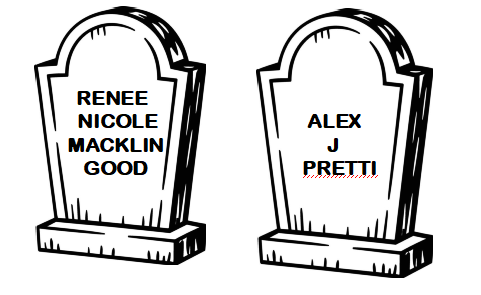
Protesters have gathered daily in the Twin Cities since Jan. 7, when Renee Good was fatally shot by an Immigration and Customs Enforcement officer. Federal law enforcement officers have repeatedly squared off with community members and activists who track their movements.
Organizers said Friday morning that more than 700 businesses statewide have closed in solidarity with the protest, from a bookstore in tiny Grand Marais near the Canadian border to the landmark Guthrie Theater in downtown Minneapolis.
“We’re achieving something historic,” said Kate Havelin of Indivisible Twin Cities, one of the more than 100 participating groups.
A 2-year-old named Chloe was detained with her father as they drove home from a grocery store in South Minneapolis on Thursday.
According to an emergency petition filed in federal court, a district judge granted an emergency injunction ordering Chloe’s release into the custody of her lawyer. The child, a citizen of Ecuador who was brought to Minneapolis as a newborn, has a pending asylum application and is not subject to a final order of removal.
The family’s attorney Marc Prokosch found nothing in state records to suggest Liam’s father has a criminal history.
On Friday, Border Patrol commander Gregory Bovino sought to shift the narrative away from Liam’s detention by attacking the news media.
Never forget that a woman was killed when an ICE representative fired not just one shot, butthree— two well after her vehicle had passed him.He was in no danger, but he kept shooting at her out of hatred and the belief that he was free to do anything without punishment.
When a psychopathic president arms masked men with guns, clubs, and poison gas, and tells them they have “absolute immunity,” brutality inevitably follows. The power-mad Vice President repeated that “absolute immunity” claim.
This is not our America, our “shining city on a hill.” This is a banana republic ruled by a demented dictator, surrounded by immoral sycophants who lie about the invented dangers of immigrants.
(Statistics show that undocumented immigrants are more law-abiding than the average American citizen, and far more law-abiding than the vicious criminals Trump pardoned.)
Your city could be next. Enough is enough. America is fighting back. Organize for the coming elections and throw the traitors out.
In September 2025, a Florida First District Court of Appeal struck down the long-standing state ban on open carrying firearms as unconstitutional under the U.S. Constitution’s Second Amendment.
Following that ruling and a 15-day appeal period, the state’s Attorney General has directed law enforcement not to enforce the ban, effectively making open carry legal statewide.
This change means a person can generally carry a firearm visibly (e.g., in a holster or slung) in public without needing a special permit, similar to how permitless concealed carry works (allowed in Florida since 2023).
Let’s see. Alcohol is dangerous in the wrong hands because it makes bad people shoot guns, but guns in the wrong hands aren’t dangerous because bad people don’t use guns. They just drink. Do I have that about right?
Story by Nick Lichtenberg, Jan 22, 2026 • The United States national debt has reached a precarious milestone, hitting 100% of Gross Domestic Product (GDP) and placing the nation on a trajectory that could trigger six distinct types of fiscal crises, according to an ominousnewwarning issued Thursday by the Committee for a Responsible Federal Budget (CRFB).
Well, in the first paragraph, we see “precarious,” “crises,” “ominous,” and “warning.” Get the picture?
First, it’s not a new warning; it’s an old warning. The precarious, ominous warning about crises comes from none other than the Committee for a Responsible Federal Budget, the notorious scaremonger that has been making exactly the same wrong claim since 1981 and still seems not to have learned anything from its ongoing abject failures.
With the national debt now effectively equal to the size of the entire U.S. economy, the nonpartisan watchdog’s latest report, “What Would a Fiscal Crisis Look Like?” outlined a dangerousfuture ahead.
“If the national debt continues to grow faster than the economy,” the report said, “the country could ultimately experience a financial crisis, an inflation crisis, an austerity crisis, a currency crisis, a default crisis, a gradual crisis, or some combination of crises. Any of these would cause massive disruption and substantially reduce living standards for Americans and people across the world.”
That’s a lot of crises to have predicted but never seen come true.
The report warned that unless policymakers enact a “thoughtful pro-growth deficit reduction package,” disaster likely lies ahead.”The United States is deeply indebted, and its finances are on an unsustainable long-term trajectory,” the report concluded. While it’s “impossible” to know when disaster will strike, “some form of crisis is almost inevitable” without a course correction, the CRFB said.
The “Austerity Crisis”: Historic economic collapse
Among the most alarming scenarios detailed is the “Austerity Crisis.” In this potential future, a loss of market confidence would force lawmakers to enact abrupt, massive spending cuts or tax hikes to quell panic. While deficit reduction is necessary, the CRFB warned that rapid implementation of such austerity measures during a weak economy could trigger the worst economic contraction in nearly a century.
Let’s pause to catch our breath from the “disaster,” “unsustainable.” and “alarming” situation to ask, why there would be a “loss of market confidence.”
We have been on the same “long-term trajectory” for 85 years, during which time the economy (Gross Domestic Product) has grown from about $50 Billionto to about $38 Trillion, an increase of about 76 THOUSAND percent.
And here we are, after that 76,000% increase with the strongest economy in our history and in the world. No disaster, no crises, none of the terrible events the CRFB and others have predicted.
The report estimated that a fiscal contractionequivalent to 5% of GDP could reverse modest growth into a 3% economic shrinkage. This would mark a recession deeper than any recorded in the postwar era, with U.S. output not shrinking by more than 2% year over year since 1950. Such a scenario would likely cause unemployment to spike and business closures to multiply, creating a self-reinforcing depression.
What fiscal contraction? The economy is measured by the formula: GDP = Federal Spending + Nonfederal Spending + Net Exports.
Federal “debt” rises when Federal Spending increases. while federal taxes decrease (allowing Nonfederal Spending to increase).
So the CRFB’s suggestion to cut federal spending and/or increase taxes is precisely what is required to reduce GDP, i.e., cause a recession if we are lucky and a depression if we aren’t so lucky.Recessions (vertical gray bars) are caused by reductions in federal deficit spending and are cured by increases in deficit spending.
Here is precisely what the CRFD wishes to do:
U.S. depressions come on the heels of federal surpluses.
1804-1812: U. S. Federal Debt reduced 48%. Depression began 1807.
1817-1821: U. S. Federal Debt reduced 29%. Depression began 1819.
1823-1836: U. S. Federal Debt reduced 99%. Depression began 1837.
1852-1857: U. S. Federal Debt reduced 59%. Depression began 1857.
1867-1873: U. S. Federal Debt reduced 27%. Depression began 1873.
1880-1893: U. S. Federal Debt reduced 57%. Depression began 1893.
1920-1930: U. S. Federal Debt reduced 36%. Depression began 1929.
1997-2001: U. S. Federal Debt reduced 15%. Recession began 2001.
The following paragraph demonstrates CRFB’s economic ignorance.
As an example of such an austerity crisis, the CRFB pointed to Greece in the 2010s during the Great Recession, when economic weakness led to an “untenable spike” in borrowing and bond yields, prompting a painful set of austerity measures that decimated the economy and pushed the unemployment rate to record levels.
Portugal and Spain had similar, less severe crises during this period.
The problem with that example is that Greece, Portugal, and Spain are monetarily non-sovereign, while the U.S. is Monetarily Sovereign. Clearly, they don’t know the difference, which is like an accountant not knowing the difference between a profit and a loss.
America, as a large, Monetarily Sovereign, has the infinite ability to create dollars. It never borrows dollars, and it sets its bond yields at whatever level it wishes, because it does not need to sell bonds to spend money.
(The purpose of U.S. bonds is to provide a safe storage place for unused dollars. This helps stabilize the dollar and make it attractive for use worldwide.)
By contrast, Greece, Portugal, and Spain cannot create their currency, the euro. They are monetary non-sovereigns. They do borrow by issuing bonds, and the interest they pay is determined by the markets.
In short, it is impossible for the U.S. to have an “untenable spike” in borrowing, and yields are set by the Fed. The U.S. cannot be forced into austerity.
You have seen that the CRFD is ignorant of basic economics. Keep that in mind as you read the following.
Crisis scenarios: five more potential outcomes
Beyond forced austerity, the watchdog identified five other crisis scenarios:
1. Financial Crisis: If investors lose confidence in the U.S. Treasury market, interest rates could spike uncontrollably.
The Monetarily Sovereign federal government chooses to sell bonds; it does not need to sell bonds. If Investors lose confidence in U.S. bonds, they won’t buy bonds. No problem for the U.S.
The report cited the 2023 collapse of Silicon Valley Bank as a “small-scale” preview of how rapid rate increases can destabilize the banking sector.
In the early 1980’s, the government chose to raise interest rates to extreme levels, in a misguided effort to fight inflation (not to sell bonds). The government can raise or lower rates at will. The Silicon Valley Bank was an example of mismanagement, not of a destabilized banking sector.
More broadly, though, it pointed to 2007 as a famous example of a financial crisis, driven by collapsing valuations of subprime mortgage-backed securities, leading to a Global Financial Crisis where hundreds of financial institutions closed, housing values declined by one-quarter, output shrank 4%, unemployment rose to 10%, and the economy took years to recover.
The subprime mortgage-backed securities were an example of criminal lending and had nothing to do with federal debt. The CRFB is simply giving random financial problems as examples of excessive federal debt.
2. Inflation Crisis: To avoid default or bank failures, the Federal Reserve might be pressured to “monetize” the debt—printing money to buy Treasury bonds. This could spark spiraling inflation, eroding savings and purchasing power, similar to historical crises in Argentina or the Weimar Republic.
Contrary to popular belief, federal spending never causes inflation (a sustained, economy-wide rise in prices.) All inflations have been caused by shortages of crucial products having a national usage base, like oil and food. See: The inflation myths debunked. It’s never “money-printing.” It’s always shortages.
Hedge fund billionaire Ray Dalio has been consistently warning, including in conversation this week with Fortune from Davos, Switzerland, about the risks of the U.S. monetizing its debt.
Apparently, making a ton of money by running a hedge fund doesn’t make one a knowledgeable economist. There is no relationship between federal spending and inflation.
The peaks and valleys of federal spending (red) do not correspond to inflation (green).
So, if federal spending doesn’t correspond with inflation, what does? How about oil prices?
The peaks and valleys of oil prices correspond to inflation. Oil shortages are the biggest driver of inflation.
3. Currency Crisis: Reckless fiscal policy could lead to a sudden depreciation of the U.S. dollar, undermining its status as the world’s dominant reserve currency.
It seems that “reckless fiscal policy doesn’t include federal debt. We have not seen the “sudden depreciation of the dollar” despite the 76,000% debt increase.
4. Default Crisis: Although considered “very unlikely,” a failure to payinterest or principal on the approximately $31 trillion in debt held by the public would be “catastrophic.” A default would freeze global credit markets, crash stock markets, and likely plunge the world into a deep recession.
Default cannot occur because the government can’t afford to pay interest or principal. It only could occur if Congress, ignorantly and needlessly fearing debt, arbitrarily decides not to pay —for example, if it decides to believe what CRFB preaches.
5. Gradual Crisis: Perhaps the most insidious scenario is a
slow decline where no acute event occurs. Instead, high debt crowds out investment, slowing growth over decades. Congressional Budget Office (CBO) models suggest this trajectory could leave real income per person 8% lower by 2050 than it would be otherwise.
The idea that high debt could “crowd out” investment is wrong on its surface. Federal spending adds investment dollars to the economy. So, what does ‘crowd out’ investment?
Austerity — Exactly the kind of spending reduction, tax increases (i.e., lower deficits) the CRFB proposes.
Triggers and warning signsThe report noted that a crisis does not require a single “tipping point” but can be sparked by various catalysts, including a recession, a “poor” Treasury auction in which demand for U.S. debt falters, or a breach of the debt limit.
As we have demonstrated, recessions are caused by reductions in federal deficit spending. A “poor” Treasury is meaningless.
The Federal Reserve has used the many tools at its disposal, among which are: buying Treasuries on the open market (Quantitative Easing), providing liquidity and emergency facilities to keep markets functioning, and influencing market expectations and liquidity conditions.
The warning comes as the fiscal situation deteriorates.
It only “deteriorates” if one doesn’t understand that federal “debt” isn’t federal and isn’t debt. It’s deposits, which are wholly owned by depositors. It is nothing like personal debt.
Interest costs on the debt surged to roughly $1 trillon last year, consuming a near-record 18% of federal revenue—an amount comparable to the entire Medicare budget.
Said another way, the federal government pumped $1 trillion in growth dollars into the economy last year, which increased GDP by $1 trillion more than if the government had spent nothing.
“With debt at 100% of GDP,” the report argued, “the U.S. has less fiscal space than any time in history in case of another war, pandemic, or recession.”
Finally, the federal government, being Monetarily Sovereign and able to create dollars at will, has infinite fiscal space.



 #Monetary Sovereignty - Mitchell