CONSCIOUSNESS
Regular readers of this blog know I have written many times about consciousness, the most recent post being, “If you can’t measure it, is it science? One more word on consciousness.”
I fundamentally reject the idea that consciousness is an undefinable, intuitive concept that we cannot observe through our senses—sight, sound, taste, touch, or smell—yet we assume it exists simply because we feel it does. Perhaps the article mentioned above should be titled, “If you can’t define it, is it really science?”
In the October 25, 2025 issue of New Scientist magazine article titled “A Landscape of Consciousness: Toward a Taxonomy of Explanations and Implications,” Robert Lawrence Kuhn provides dozens of different definitions, as a very tiny step above having no definitions at all.
Kuhn’s article discusses how philosopher David Chalmers famously defined the central challenge of explaining consciousness—accounting for “qualia,” the richly experienced interior aspects of perception and cognitive awareness—by introducing the memorable phrase, “the hard problem.”
It’s considered a “hard problem” because no one fully understands its nature, origin, existence, or how to measure it — a genuinely challenging issue, and perhaps a misguided one as well. This perspective makes an unfounded assumption that consciousness is solely a function of the brain, typically a human brain, which elevates humans to a godlike status above all other creatures and entities.
Isn’t it interesting that humans often consider themselves superior, despite the fact that many living entities, as well as non-living ones, possess remarkable abilities that we do not? For example, the ocean quahog can live for up to 500 years, glass sponges can survive for thousands of years, and the immortal jellyfish can potentially live indefinitely.
The bar-tailed godwit flies from Alaska to New Zealand or Australia, 800 miles without landing. The arctic tern migrates between the Arctic and Antarctic each year.
They navigate using magnetic sensing, the sun, stars, and landmarks as a compass, wind and atmospheric pressure cues, and possibly smell. Can you do that?
A bloodhound can smell a teaspoon of sugar dissolved in two Olympic swimming pools and detect where someone walked hours or days earlier. Polar bears can smell seals through 3 feet of snow. Sharks detect chemical gradients over long distances and combine olfactory cues with electrical sensing of prey.
Male moths can detect single molecules of female pheromones. Given their powerful sensing abilities, is it likely that these animals do not possess qualia, the subjective, first-person experience of sensations?
Qualia come in various forms: Physicalism asserts that qualia are entirely brain processes. Dualism posits that qualia are non-physical. Illusionism argues that qualia feel real but are cognitive illusions. Panpsychism suggests that qualia exist to some extent everywhere. The list goes on.
It’s not to suggest that qualia are essential for consciousness. Rather, they serve as a means for us to distinguish ourselves from “lower” entities. For example, when we observe a spider weaving a new web, amidst unfamiliar objects, moved by wind and rain, we may wonder if it could perform such a task without its own qualia.
Those who argue that qualia are essential to consciousness often reference the famous thought experiment known as “Mary the color scientist.”
In this scenario, Mary knows everything there is to know about the physics of color but has spent he r entire life in a black-and-white room. When she finally sees red for the first time, does she gain new knowledge? If she does, this suggests that qualia exist independently of physical knowledge.
This raises the question: if qualia are tied to emotions, does that mean other creatures do not experience emotions? And what are emotions if not coordinated brain–body response patterns triggered by internal or external stimuli that help an organism evaluate situations and guide behavior (i.e., the consciousness all entities have)
Every discussion of consciousness must devolve to three questions:
- Is this conscious?
- Why or why not?
- If it is conscious, how conscious is it? That is, how is consciousness measured?
Then we provide a list to which we apply the three questions above.
- An awake, adult human
- A sleeping human
- An “unconscious” human
- A newborn human
- A human fetus
- A brain-dead living human
- A corpse
- A chimpanzee
- A dog
- A bee
- An ant
- A tree
- A bacterium
- A virus
- An atom
- A rock
- A flame
- A cloud
- The earth
- The universe
How would you answer the three questions for each item on the list?
When you try to apply various definitions of consciousness to that list, you may find yourself feeling completely confused as you struggle to justify your choices. However, this becomes much simpler if you accept the following definition: Consciousness is… (Before I offer the answer, please read on.)
Philosopher Philip Goff seems to agree with my view that consciousness is a real, measurable physical phenomenon, although I may have extended the idea further than he has. Below are excerpts from his article in Scientific American Magazine:
Philosopher Philip Goff answers questions about “panpsychism” By Gareth Cook, March 2020 Issue
One of science’s most challenging problems is a question that can be stated easily: Where does consciousness come from?
Actually, I suggest that the question is, “What is consciousness?”
In her Scientific American article, Allison Parshall quotes Neuroscientist Anil Seth of the University of Sussex in England:
“There’s still disagreement about how to define [consciousness], whether it exists or not, whether a science of consciousness is really possible or not, whether we’ll be able to say anything about consciousness in unusual situations like [artificial intelligence],” Seth says.
Parshall appears to believe that consciousness occurs solely in the brain, likely the human brain, and is somehow connected to a concept called “sentience.”
In his most recent book, Galileo’s Error: Foundations for a New Science of Consciousness, philosopher Philip Goff considers a radical perspective: What if consciousness is not something special that the brain does but instead is a quality inherent to all matter?
It is a theory known as panpsychism. He answered questions from former longtime Mind Matters editor Gareth Cook.
Cook: Can you explain, in simple terms, what you mean by panpsychism?
Goff: In our standard view of things, consciousness exists only in the brains of highly evolved organisms, and hence it exists only in a tiny part of the universe and only in very recent history.
According to panpsychism, consciousness pervades the universe and is a fundamental feature of it. This doesn’t mean that literally everything is conscious.
Here is where he gets into a bit of trouble, because he immediately contradicts himself:
The basic commitment is that the fundamental constituents of reality—perhaps electrons and quarks—have incredibly simple forms of experience, and the very complex experience of the human or animal brain is somehow derived from the experience of the brain’s most basic parts.
Electrons and quarks have some degree of consciousness (I agree), but not everything is conscious? Seems odd.
I should clarify that by “consciousness,” I don’t mean self-awareness or the capacity to reflect on one’s own existence. I simply mean “experience”: pleasure, pain, visual or auditory experience.
“Consciousness is the rate at which an entity converts all stimuli—both external (light, sound, chemicals) and internal (hunger pangs, pain signals, homeostatic alerts)—into responses per unit of time.”
The shorthand version is: Consciousness is the response to stimuli. Since everything responds to stimuli, everything, from a quark to the entire universe, is conscious by a measurable amount.
Human beings have a very rich and complex experience; horses less so, mice less so again. As we move to simpler forms of life, we find simpler forms of experience.
Perhaps at some point the light switches off, and consciousness disappears. But it’s at least coherent to suppose that this continuum of consciousness carries on into inorganic matter, with fundamental particles having unimaginably simple forms of experience.
Consciousness never disappears because the response to stimuli never does.
Just as he is grasping the solution, Goff hesitates and begins to discuss “intrinsic nature,” a vague concept that we sense but cannot quite identify, much less measure.
What does panpsychism seek to bring to physics?
Philosophers of science have realized that physical science, for all its richness, is confined to telling us about the behavior of matter, what it does. Physics tells us, for example, that matter has mass and charge.
These properties are completely defined in terms of behavior—things like attraction, repulsion, resistance to acceleration.
But those are exactly what demonstrate consciousness, even awareness, of the stimuli.
Physics tells us absolutely nothing about what philosophers like to call the intrinsic nature of matter: what matter is in and of itself.
Do you foresee a scenario in which panpsychism can be tested?
You can’t look inside an electron to see whether or not it is conscious, just as you can’t look inside someone’s head and see their feelings and experiences. We know that consciousness exists only because we are conscious.
We have now drifted into the realm of the supernatural and spiritual. We know consciousness exists because all things respond to stimuli and must therefore be aware of those stimuli.
Neuroscientists correlate certain kinds of brain activity with certain kinds of experience. We now know which kinds of brain activity are associated with feelings of hunger, pleasure, pain, and so on.
This is really important information, but what we ultimately want from a science of consciousness is an explanation of those correlations.
Why is a particular feeling correlated with a particular pattern of brain activity? As soon as you start to answer this question, you move beyond what can be, strictly speaking, tested, simply because consciousness is unobservable. We have to turn to philosophy.
Consciousness is observable. By providing stimuli, one can observe the response. Goff, having understood this truth, has now taken defeat from the jaws of victory and joined the ranks of dreamers.
Science gives us correlations between brain activity and experience. We then have to find the philosophical theory that best explains those correlations. In my view, the only theory that holds up to scrutiny is panpsychism.
Agreed, so long as one doesn’t surrender to mysticism.
As we said in a previous post, consciousness is a real, physical thing that can be measured:
1. Entity: Any Bound System: A human, worm, tree, thermostat, stone or colony of ants—all are “entities.” Each has a boundary (skin, bark, casing) inside of which stimuli are converted into internal changes.
2. Stimulus Translation = Information Inflow: Every interaction (light, chemical gradient, pressure wave) is translated inside and/or on that boundary into a change in the system’s state. We quantify that translation as bits of information entering the system.
3. Internal Processing = Information Transformation: Once inside, that information is processed (neurons fire, cells shift biochemistry, circuits reroute, temperature or electrical charge changes). This step can also be measured in bits, i.e., how many bits are combined, compared, or stored.
4. Response = Information Outflow / Action: The system responds by changing — moving, secreting chemicals, growing roots, or updating an internal variable. That response itself can be translated back into bits (for instance, the choice among different motor programs, metabolic pathways, or output signals). Stronger stimulus —> Stronger response—> More response bits.
The Consciousness Measure: Total response bits per second by the entity: For example, a human, having trillions of neural and body-wide events, might provide trillions of response bits.
A worm might provide millions of response bits. A tree, with liquid responses, growth decisions, and chemical signaling, might provide millions of response bits, and a stone, with thermal fluctuations, physical erosion, and quantum state changes, might provide thousands of response bits.
Thus, we have a measure of consciousness that doesn’t rely on a “brain” or neural tissue, just on measurable state changes. You can add up all forms of processing and responses in any system. Entities can be ranked by their raw information-processing speed.
Consciousness can be measured, compared, and ranked, not in vague or romantic terms, and not as art, but as science.
And that brings us to free will. What is it, and does it even exist?
FREE WILL
We discuss free will here, “The fallacy of free will,” here. “Everyday Illusions and Their Relationship to Free Will,” An interesting take on “Free Will vs Will Power”, and ” For those who still believe in free will, and “Read about the strange relationship between opposites: Consciousness and free will,” and “More about non-existent free will.” And elsewhere.
We have concluded that “free will”, like consciousness, is an illusion we create to give ourselves purpose and control over a universe that seems to work against our continued existence.
Research shows that gut microbes produce or affect the availability of neuroactive chemicals (e.g., serotonin, GABA, dopamine) that influence mood and emotional states. Studies have found correlations between microbiome composition and personality traits such as sociability or neuroticism.
Experimentally altering the gut microbiome can affect social decision-making in economic games, suggesting a causal influence on behavior.
Functional connections exist in animals in which gut bacteria transfer can alter anxiety-like behaviors, and early studies in humans have shown changes in emotional brain responses after altering gut bacteria.
Does that sound like free will? And that’s just gut bacteria. Throw in all the sensory effects — sounds, touch, taste, temperature, pain, odors, sickness, sleep, companionship and then add all our history, very little of which we control.
Functional connections in animals demonstrate that changes in gut bacteria can alter anxiety-like behaviors. Additionally, early studies in humans have indicated that modifying gut bacteria leads to changes in emotional brain responses.
Many articles on this topic talk about how the microbiome affects mood, cognition, personality, and even social decisions or beliefs:
The secret signals our organs send to repair tissues and slow ageing
Your organs are constantly talking to each other in ways we’re only beginning to understand. Tapping into these communication networks is opening up radical new ways to boost health.
By Claire Ainsworth, 2 February 2026, New Scientist Magazine.
Biologist Chunyi Li, noticed something odd that happened when deer regrew their antlers each year. This regrowth coincided with healthier-looking animals that healed their wounds faster and had less scarring, leading him to suspect that the regenerating antlers somehow promoted regeneration in the rest of the body.
Li’s hunch was confirmed last year when he and his colleagues at Changchun Sci-Tech University in Jilin, China, found that growing antlers release signals that prompt other parts of the body to shift into regenerative wound-healing mode – evidence of a previously hidden communication network that connects distant organs.
Different parts of your body communicate with each other, listen to one another, and take action based on their interactions. This seems to align with the definition of consciousness.
When I think about free will, I reflect on how our actions are shaped by everything we’ve experienced throughout our lives. This includes the influence of various chemicals, our past decisions, illnesses, pain, emotions, and countless experiences—billions and trillions of stimuli and memories, whether accurate or not.
I envision a tall, thin, and unstable tower of historical influences, with my decision today representing the very top. Every stone added or removed from this tower impacts the tip; every emotion, belief, and action is influenced by it.
You, your organs, your dog, ChatGPT, and I all have two things in common.
- We all transform stimuli—external (light, sound, chemicals) and internal (hunger pangs, pain signals, homeostatic alerts)—into responses and therefore are conscious.
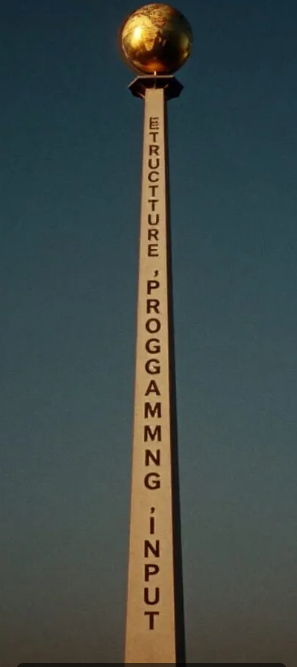
- Everything we do, believe, or feel is based on structure, programming, and/or input over which we have no control, and therefore, we have no free will.
Those two points are true of every entity in the universe, and the universe itself.
Rodger Malcolm Mitchell
Twitter: @rodgermitchell
Search #monetarysovereignty
Facebook: Rodger Malcolm Mitchell;
MUCK RACK: https://muckrack.com/rodger-malcolm-mitchell;
……………………………………………………………………..
A Government’s Sole Purpose is to Improve and Protect The People’s Lives.
REIGNTY
 #Monetary Sovereignty - Mitchell
Going back to the end of the last century, reading fMRI studies convinced me that consciousness was an illusion (as is free will). Your fascinating posts on the subject are giving me a new perspective. I save them to my science folder. And, yes, I love your posts on monetary sovereignty, as well.
LikeLike