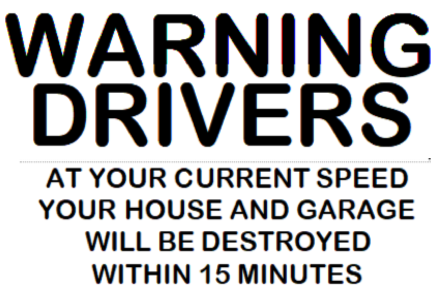
What would you think if you received the following urgent notice?
YOU WILL VIOLENTLY CRASH THROUGH THE DOORS AND CONTINUE THROUGH THE BACK WALL, DESTROYING EVERYTHING IN YOUR PATH.Would you think, “That is the silliest thing I have ever seen”?Would you say to yourself, “I will simply slow down, come to a stop, open the doors, glide slowly in, and close the doors behind me? What’s the problem?”
No, you wouldn’t, at least not if you were to believe a ridiculous warning article published repeatedly, for years and years, by the Committee for a Responsible Federal Budget (CRFB) and by other self-appointed experts.
Here are excerpts from my least favorite liars—least favorite because they seem to have the ears of many in Congress while explaining why you should have less Social Security and more taxes — the fearmongering CRFB.
And what makes me even angrier. The public, especially those who need Social Security more and can afford tax increases less, believe the lies being promulgated by the rich — and do nothing. Or they don’t believe the lies, and still do nothing.
We believe that the federal government is running short of money, so please sheer us. Then eat us.
The Social Security and Medicare Trustees released their annual reports today on the financial status of the Social Security and Medicare programs over the next 75 years.
The latest Social Security projections show that the program is quickly approaching insolvency and highlight the need for trust fund solutions sooner rather than later to prevent across-the-board benefit cuts or abrupt changes to tax or benefit levels.
In other words, Social Security, which is 100% funded and controlled by the Federal Government,will run out of funds unless the Government adds dollars to the program, which it easily could do at the touch of a computer key. Crazy.
Before we detail the lies, here are the truths.
The U.S. Federal Government is Monetarily Sovereign. You can look it up here. The shorthand version is that it never can run short of dollars unintentionally. Even if it didn’t collect a single penny in taxes, it could continue spending forever—even at ten times the current rate.The government also has absolute control over the dollar’s value (i.e., inflation) and has arbitrarily changed the value many times. -1792: The Coinage Act of 1792 established a bimetallic standard, setting the dollar’s value at 371.25 grains of silver or 24.75 grains of gold, with a gold-to-silver ratio of 15:1. -1834: The Coinage Act of 1834 changed the gold-to-silver ratio to 16:1 by reducing the weight of gold coins. 1873: The Coinage Act of 1873 effectively demonetized silver, ending the bimetallic standard and making gold the sole standard. -1933: President Franklin D. Roosevelt took the U.S. off the gold standard domestically, allowing the dollar to float against gold. =1971: President Richard Nixon ended the dollar’s international convertibility into gold, marking the end of the Bretton Woods system and the transition to a floating value system.
Because the Federal Government cannot run short of dollars, no agency of the Federal Government can run short of dollars unless that is what Congress and the President want.
Social Security and Medicare are federal government agencies. As with all federal agencies, their expenses are paid not by taxes but by federal dollar creation. Here is the process:
The creditor’s invoice is approved by the federal agency, which has been told by the federal government how much it could approve.
Payment is made, not by dollars, but by instructions (check or wire), telling the creditor’s bank to increase the balance in the creditor’s checking account. This creates new dollars (no tax dollars are used), which are added to the M2 money supply measure.
To balance its books, the bank obtains approval of the transaction from the Federal Reserve, which has been told by Congress how much to approve.
Yes, they’re going to have us for dinner, but it’s way too much trouble to protest. Bah, bah, bah.
Returning to the CRFB article:
Social Security is approaching insolvency. Under current law, Social Security cannot guarantee full benefits to current retirees.
Note the words “current law.”
Nothing prevents the federal government from changing any law, which it does thousands of times each year.
Essentially, the CRFB says, “Your car will crash into your garage door unless you put on the brakes and/or open the door, which you do every evening when you come home.”
The Trustees project the Social Security Old-Age and Survivors Insurance (OASI) trust fund will deplete its reserves by 2033, when today’s 58-year-olds reach the full retirement age and today’s youngest retirees turn 71.
First, the so-called “Trust Fund” isn’t a trust fund. It’s just a bookkeeping line item:
A “trust fund” implies a secure source of funding. However, a federal trust fund is simply a bookkeeping mechanism used to track inflows and outflows for specific programs.
In private-sectortrust funds, receipts are deposited and assets are held and invested by trustees on behalf of the stated beneficiaries.
In federal trust funds, the federal government does not set aside the receipts or invest them in private assets.
Rather, the receipts are recorded as accounting credits in the trust funds and then combined with other receipts that the Treasury collects and spends.
Second, the federal government owns the accounts and can unilaterally alter their purposes and raise or lower collections and expenditures by changing the law.
Thus, Congress could solve the insolvency “problem” simply by passing a rule and clicking a computer key. The government does not need to collect a single tax penny or cut benefits.
It’s a fake problem.
Returning to the misleading CRFB scare article:
Upon insolvency, all beneficiaries will face a 21 percent across-the-board benefit cut. Including the Disability Insurance (SSDI) trust fund, the theoretically combined trust funds will be insolvent by 2035 and beneficiaries would face a 17 percent cut.
Right, and tonight, when you return home, you will crash into your garage door, unless you park in the street — or, you simply could touch the brakes and open the door.
Social Security faces large and rising imbalances. According to the Trustees, Social Security will run cash deficits of $3 trillion over the next decade, the equivalent of 2.3 percent of taxable payroll or 0.8 percent of Gross Domestic Product (GDP).
Annual deficits will grow to 3.4 percent of payroll (1.2 percent of GDP) by 2050 and 4.6 percent of payroll (1.6 percent of GDP) by 2098. Social Security’s 75-year actuarial imbalance totals 3.5 percent of payroll, which is over 1.2 percent of GDP or nearly $24 trillion in present value terms.
Gee, you mean the federal government really can’t run short of dollars? Nobody told us that. Bah, bah, bah
All of the above is meaningless for a Monetarily Sovereign government agency, although it would be correct for monetarily non-sovereign state/local government agencies.
In short, the CRFB, whether by intent or ignorance, confuses Monetarily Sovereign problems with monetarily non-sovereign problems. It’s like telling you that eating a piece of chocolate is dangerous for you because it happens to be dangerous for dogs. Such is the ignorance being promulgated.
The nonsense continues:
Social Security’s finances have improved from last year but remain perilous. Its 75-year solvency gap was reduced from 3.61 to 3.50 percent of payroll due to stronger-than-expected economic performance and fewer expected disability applicants, partially offset by lower expected birth rates in future years.
Time is running out to save Social Security. Policymakers have only a few years left to restore solvency to the program, and the longer they wait, the larger and more costly the necessary adjustments will be.
Acting sooner allows more policy options to be considered, allows for more gradual phase in, and gives employees and employers time to plan.
What the CRFB really means by “time to plan” is “time to raise taxes and/or cut benefits, two wholly unnecessary options.
Who wants such terrible options? The rich, because those options will make the rich richer by widening the income/wealth/power Gap between the rich and the rest.
Cutting Social Security benefits and/or raising FICA taxes scarcely affect the rich, but they affect you, by making the rich richer. The CRFB is shilling for the rich at your expense.
The idiocy goes on and on:
Social Security’s retirement program is only nine years from insolvency, and action must be taken soon to prevent an across-the-board benefit cut for many current and future beneficiaries.
The action that “must be taken” is for the federal government simply to put dollars into the fake “trust fund.” Better yet, the government could eliminate the fake “trust fund” and just pay for Social Security the same way it pays for Congress’s salaries: By voting and budgeting.
Best yet, the federal government could and should provide generous Social Security benefits to every man, woman, and child in America (aka Universal Basic Income) and stop lying to the public.
The Trustees project the Social Security Old-Age and Survivors’ Insurance (OASI) trust fund will deplete its reservesby 2033; the SSDI trust fund is in much stronger shape and will remain solvent over the next 75 years. On a theoretically combined basis – assuming revenue is reallocated between the trust funds – Social Security will become insolvent by 2035.
Upon insolvency of the OASI fund, all retirees – regardless of age, income, or need – will face a 21 percent across-the-board benefit cut,which will grow to 31 percent by the end of the 75-year projection window. We previously estimated that a typical couple retiring in the year of insolvency would face a $17,400 cut in their annual benefits.
On a combined basis, insolvency would lead to a 17 percent initial cut, growing to 27 percent by the end of the window.
Everyone says we must be shorn and eaten, so it must be so. We care, but it’s too much trouble to protest.
The article goes on and on interminably, quoting misleading facts and figures and presenting ridiculous graphs, all designed to make you believe the federal government is running short of the dollars it creates every day from thin air.
We used to be sheep, but we decided it was too much trouble to do anything about . . . .
I won’t bore you with the rest, partly because I can’t handle the nauseating lies, and you shouldn’t be forced to.
IN SUMMARY
Suppose you decide it is too much trouble to protest to your Congressperson and/or even believe the lies. In that case, your benefits will be cut — unnecessarily, your taxes will be increased — unnecessarily — and you will only have yourself to blame.
If you’re angry that your favorite team’s quarterback throws to the wrong jersey color and your favorite singer wasn’t nominated for a Grammy, save some of that emotion for the fact that you are being royally screwed by the people you just voted for, and you aren’t doing a damn thing about it.
Money is a legal thing, not a reality. Legal is abundant in its ability to resolve issues or make everything worse. It’s a matter of choosing utopia or annihilation.
It’s an excellent paper that only like-minded economists will read and understand. Even this paper only touches on the key problems with just a few mentions:
1. The government has infinite money.
2. Deficits and debt are not a problem; they are necessary to grow the economy.
3. Inflation is caused by shortages, not by deficits.
It will take a visionary with great political power, to teach America the facts. We have someone with great political power (Trump) but his vision is directed toward self-promotion.
If Trump understood, and cared about the facts, he has the power to be great. Sadly, that will not happen.
The fundamentals remain. When prices are not artificially controlled, inflation remains a function of supply and demand — mostly supply — and not just any supply, but the supply of certain critical products and services.
Oil and food are top of the list. Ironically, they are not included in “core inflation,” which I never have understood, because they, in fact, are the core of pricing.
The most recent inflation included COVID-caused diminished supply of oil, food, shipping, metals, lumber, computer chips, labor, and a few other things.
Why does short supply and not increased demand cause inflation? Because overall demand changes slowly, giving suppliers time to adjust production. But supply can change quickly, faster that suppliers can adjust, thus inflation.
What does NOT cause inflation is federal spending. It can increase demand, but as the dollars seep into the economy, it’s a slower, and easily anticipated (by suppliers) effect.
By contrast, a production cut by OPEC or crop failures cannot be offset by demand decreases, thus inflation.
Rodger, thanks for reading and responding. I’m not so sure I would go so far as to say federal spending cannot ever cause inflation. For example, in the very hypothetical and unlikely scenario of progressive tax cuts with no exogenous factors affecting supply, I suspect that would bleed into prices fairly rapidly after debt repayment. Or the very hypothetical and unlikely scenario of Trump dumping lots of money into infrastructure in a tight labor market. But, I take your point.
Ed, I would love to see the kind of tax cuts that could cause inflation because:
1. They would have to be tax cuts for the lower 90% of income earners, which would narrow the income/wealth/power Gap between the rich and the rest. No other tax cuts would budge the needle.
2. That inflation would quickly be met by supply increases in manufactured goods. It probably would have little effect on oil and food. (I doubt the people will drive farther or eat more, just because they pay less taxes)
All in all, I suspect tax cuts would go into debt reduction, medical, and savings, after which they would land on a car and maybe better shelter and clothing — all easily dealt with.
But, you are right: Hypothetical and unlikely.
By the way, I met Randy and Stephanie twenty years ago at UMKC when I gave a talk there. At the time, I didn’t realize MMT paralleled my thinking. Since then, I have on occasion corresponded with Stephanie and with Warren, though my negative beliefs about the Jobs Guarantee and inflation have made me somewhat of a persona non grata amongst the group, especially Randy, who once described me in unflattering four letter terms. Gotta love the guy.
Twenty plus years of preaching the same simple truths, and nary an inch of progress. That will be on my tombstone.
Oil and food are not in the core inflation because they are volatile. They are volatile because they are controlled by speculative markets that are outside the control of supply and demand. For example, the price of a barrel of oil in the futures market at the peak in 2008 was over $120. 7 months later it was, briefly, under $0! It hovered around $20 during the depths of the Great Recession and dozens of small oil&gas companies went bankrupt. In the summer of 2008, Goldman Sachs parked oil tankers off the Gulf coast and made a killing while prices skyrocketed. They have never been fined for this blatant market manipulation, which was well known at the time. Expect more of the same when Trump gets into office and deregulates everything, while Musk additionally “moves fast and breaks things” especially the government.
A different way of pricing oil and food (hog bellies, etc.) should be found that actually corresponds to demand and supply with reasonable projections no more than a month out, should be found, but that didn’t happen even with the Democrats in power. It certainly won’t with the Republicans in power at every level of government.
Trump will have more power than any president in history – including absolute immunity from almost anything, thanks to the Supreme Court he chose 1/3 of last time. When he blows everything up, MAGAs will have no one to blame but themselves. Problem is, we may not have a country to go back to then.
Yes, volatility is the reason given, but all that means is inflation is volatile. If someone tells me, “Oil just spiked because OPEC shut off the spigot, but don’t worry, core inflation will be OK,” I will just laugh.


 #Monetary Sovereignty - Mitchell
https://www.levyinstitute.org/publications/saving-social-security
LikeLike
Money is a legal thing, not a reality. Legal is abundant in its ability to resolve issues or make everything worse. It’s a matter of choosing utopia or annihilation.
LikeLike
It’s an excellent paper that only like-minded economists will read and understand. Even this paper only touches on the key problems with just a few mentions:
1. The government has infinite money.
2. Deficits and debt are not a problem; they are necessary to grow the economy.
3. Inflation is caused by shortages, not by deficits.
It will take a visionary with great political power, to teach America the facts. We have someone with great political power (Trump) but his vision is directed toward self-promotion.
If Trump understood, and cared about the facts, he has the power to be great. Sadly, that will not happen.
LikeLike
https://www.levyinstitute.org/publications/?docid=2835
LikeLike
Thanks Ed,
The fundamentals remain. When prices are not artificially controlled, inflation remains a function of supply and demand — mostly supply — and not just any supply, but the supply of certain critical products and services.
Oil and food are top of the list. Ironically, they are not included in “core inflation,” which I never have understood, because they, in fact, are the core of pricing.
The most recent inflation included COVID-caused diminished supply of oil, food, shipping, metals, lumber, computer chips, labor, and a few other things.
Why does short supply and not increased demand cause inflation? Because overall demand changes slowly, giving suppliers time to adjust production. But supply can change quickly, faster that suppliers can adjust, thus inflation.
What does NOT cause inflation is federal spending. It can increase demand, but as the dollars seep into the economy, it’s a slower, and easily anticipated (by suppliers) effect.
By contrast, a production cut by OPEC or crop failures cannot be offset by demand decreases, thus inflation.
LikeLike
Rodger, thanks for reading and responding. I’m not so sure I would go so far as to say federal spending cannot ever cause inflation. For example, in the very hypothetical and unlikely scenario of progressive tax cuts with no exogenous factors affecting supply, I suspect that would bleed into prices fairly rapidly after debt repayment. Or the very hypothetical and unlikely scenario of Trump dumping lots of money into infrastructure in a tight labor market. But, I take your point.
LikeLike
Ed, I would love to see the kind of tax cuts that could cause inflation because:
1. They would have to be tax cuts for the lower 90% of income earners, which would narrow the income/wealth/power Gap between the rich and the rest. No other tax cuts would budge the needle.
2. That inflation would quickly be met by supply increases in manufactured goods. It probably would have little effect on oil and food. (I doubt the people will drive farther or eat more, just because they pay less taxes)
All in all, I suspect tax cuts would go into debt reduction, medical, and savings, after which they would land on a car and maybe better shelter and clothing — all easily dealt with.
But, you are right: Hypothetical and unlikely.
By the way, I met Randy and Stephanie twenty years ago at UMKC when I gave a talk there. At the time, I didn’t realize MMT paralleled my thinking. Since then, I have on occasion corresponded with Stephanie and with Warren, though my negative beliefs about the Jobs Guarantee and inflation have made me somewhat of a persona non grata amongst the group, especially Randy, who once described me in unflattering four letter terms. Gotta love the guy.
Twenty plus years of preaching the same simple truths, and nary an inch of progress. That will be on my tombstone.
LikeLike
Randy can be a hoot but I’ve learned more economics from him than in all my years as an actuary.
Good to make your acquaintance and to read your stuff.
LikeLike
Oil and food are not in the core inflation because they are volatile. They are volatile because they are controlled by speculative markets that are outside the control of supply and demand. For example, the price of a barrel of oil in the futures market at the peak in 2008 was over $120. 7 months later it was, briefly, under $0! It hovered around $20 during the depths of the Great Recession and dozens of small oil&gas companies went bankrupt. In the summer of 2008, Goldman Sachs parked oil tankers off the Gulf coast and made a killing while prices skyrocketed. They have never been fined for this blatant market manipulation, which was well known at the time. Expect more of the same when Trump gets into office and deregulates everything, while Musk additionally “moves fast and breaks things” especially the government.
A different way of pricing oil and food (hog bellies, etc.) should be found that actually corresponds to demand and supply with reasonable projections no more than a month out, should be found, but that didn’t happen even with the Democrats in power. It certainly won’t with the Republicans in power at every level of government.
Trump will have more power than any president in history – including absolute immunity from almost anything, thanks to the Supreme Court he chose 1/3 of last time. When he blows everything up, MAGAs will have no one to blame but themselves. Problem is, we may not have a country to go back to then.
LikeLike
Yes, volatility is the reason given, but all that means is inflation is volatile. If someone tells me, “Oil just spiked because OPEC shut off the spigot, but don’t worry, core inflation will be OK,” I will just laugh.
LikeLike